The best water damage company for your home carries a current state contractor license, proof of general liability insurance and workers' compensation, and technicians who are IICRC certified. Ask for a written estimate that lists the water's category and class, get at least two quotes for anything beyond a small leak, and walk away from anyone who demands full payment before inspecting your property.
It's usually eleven at night when you're doing this research: a supply line let go behind the washer, or a water heater split at the seam, and now you're standing in an inch of water typing "water damage company near me" into your phone. The search results are a wall of ads and five-star badges that all look identical, and somewhere in that list is a genuinely good water damage company next to two or three outfits that will hand you a bill for twice the going rate and a drywall patch that's still damp behind the paint.
This guide is the checklist for telling them apart before you sign anything: what license and insurance to ask for, what IICRC certified actually means and why it matters more than a five-star rating, the six red flags that show up most often in restoration complaints, what a real written estimate contains, and what the job should reasonably cost so you can tell whether a quote is fair. It also covers where insurance fits into the decision, since the company you hire affects how smoothly that claim goes.
Nothing here names a specific company as the best water damage company for your address, because that answer depends on who's licensed and available where you live. What follows is how to find that answer yourself, using public records and a handful of direct questions, in the time it takes water to keep spreading across your floor.
Why the Water Damage Company You Pick Matters More Than the Price
Water damage and freezing accounted for 27.6% of homeowners insurance losses in 2022, the second-largest cause behind wind and hail, and the average claim ran $13,954, according to the Insurance Information Institute's analysis of ISO claims data. FEMA puts it in more visceral terms: just one inch of standing water can cause roughly $25,000 in damage. Those numbers are the reason this decision is worth more than five minutes of scrolling reviews.
A company that under-dries a wall cavity doesn't just leave you with a slightly damp baseboard. It leaves you with a mold problem that can start colonizing damp material within 24 to 48 hours, per the U.S. EPA, on top of the original repair bill. The EPA's own target for that drying is relative humidity back under 60 percent, ideally between 30 and 50 percent, which is what the equipment running in your house for the next several days is actually working toward. A company that mishandles your insurance paperwork can leave you fighting for a payout you were otherwise entitled to. The cheapest quote and the best water damage company are not always the same company, and figuring out which is which is what the rest of this guide covers.
If water is still actively coming into your house right now, don't spend this time reading reviews — call 888-407-9931 and describe what you're seeing, the source, how fast it's rising, whether it looks clean or contaminated, so whoever answers can route the right kind of help. Our first-hour emergency guide covers what to do before anyone arrives; the rest of this page covers how to pick who shows up.
Restoration Company Red Flags, Ranked by How Often They Show Up
The signs that separate a company worth hiring from one worth skipping.
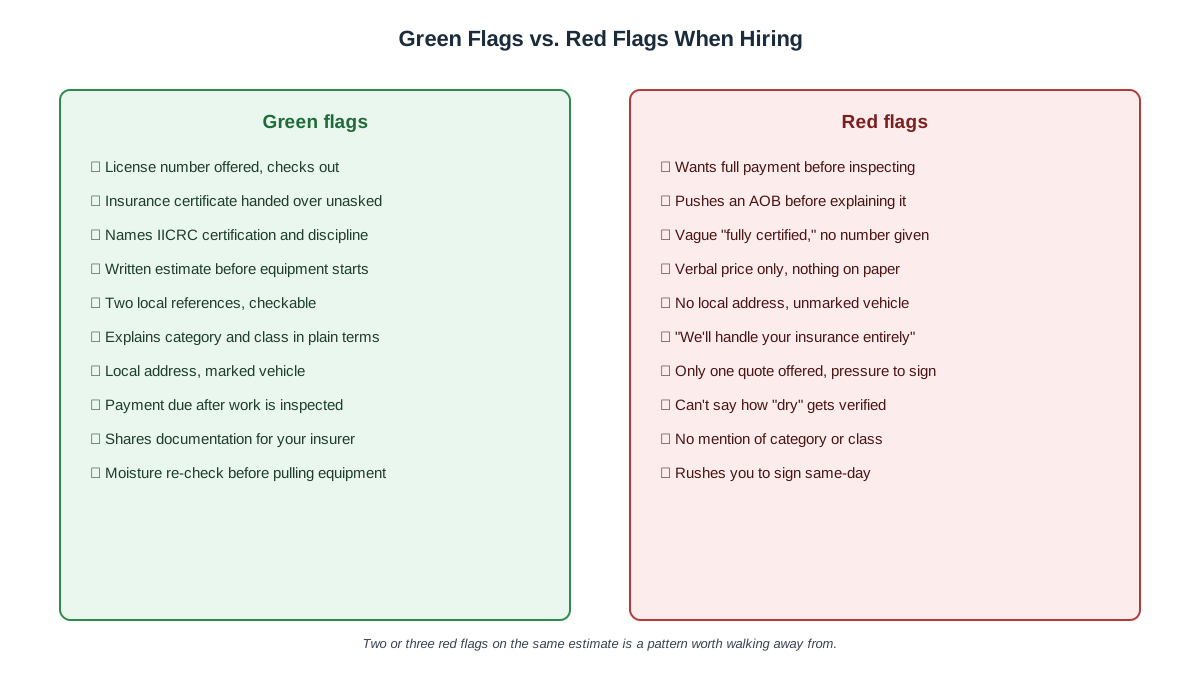
Most water damage restoration companies are exactly what they advertise: a licensed local crew doing careful, unglamorous work for a fair price. These are the restoration company red flags that come up most often, roughly in the order homeowners run into them, from the moment a truck pulls into the driveway to the moment the invoice arrives.
Red flag
What it looks like
Why it matters
Demands full payment or a large deposit before inspecting
Asks for a card number over the phone before anyone has seen the water
A real estimate requires an in-person walkthrough; upfront demands are the single most common complaint pattern
Pushes an assignment of benefits (AOB) on the spot
Hands you a tablet at the door before explaining what it does
An assignment of benefits signs your right to negotiate your own claim over to the company
Can't name an IICRC certification when asked
A vague "we're fully licensed and certified" with no number offered
Certification numbers are checkable; a technician who's actually IICRC certified knows theirs
No local address or an unmarked vehicle
A P.O. box only, a rental van with no company markings
Legitimate crews usually carry visible insurance and a real place of business you can find
Verbal estimate only, nothing in writing
"It'll run about three grand, trust me" with no paper or email follow-up
A written scope is what protects you if the job runs longer, or shorter, than promised
Offers to "handle everything" with your insurer
Says you won't need to talk to your adjuster at all
You're still the policyholder; you should see every document before it goes to your insurer
None of these alone is automatically disqualifying — a small local crew might genuinely not have a marked van yet. But two or three of these together on the same estimate is a pattern worth walking away from, especially the first one on the list.
How to Vet a Water Damage Company, Step by Step
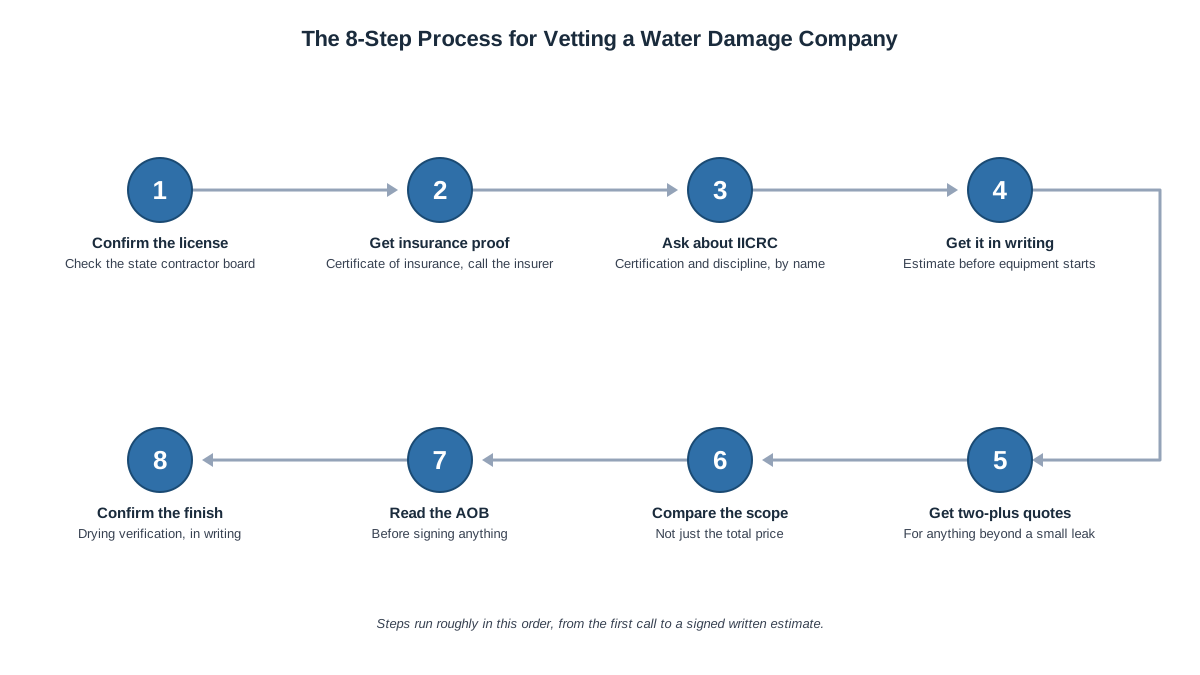
If you're vetting a company after water is already loose in the house, 888-407-9931 connects you with a water damage company that serves your area — describe what you're seeing, then run through these steps with whoever responds while the crew is in transit.
Confirm the business name and license number, then look it up on your state's contractor licensing board website rather than taking the number at face value.
Ask for a certificate of insurance showing general liability coverage and workers' compensation, and call the insurer listed on it to confirm the policy is currently active.
Ask which technicians on the job are IICRC certified, and in what discipline — water damage restoration, applied structural drying, or microbial remediation are the relevant ones. Our categories and classes guide explains the terms a technician should be using.
Request a written estimate before any equipment gets plugged in, not after the fact.
Get at least two quotes for anything beyond a small, contained leak; a single quote is a price, not a comparison.
Compare the scope of each quote, not just the total — a low bid that skips containment or moisture verification usually costs more once it's finished twice.
Read any insurance paperwork, including an assignment of benefits, before signing it, and ask directly what rights it hands over.
Get it in writing when equipment is scheduled to come out and how "dry" will be verified before it does.
None of these steps takes long individually, and together they're the difference between hiring a water damage company you can hold to a written scope and hiring one you're taking entirely on faith.
The vetting checklist above, laid out as one visual flow you can follow start to finish.
Licenses, Insurance and Certifications That Actually Matter
Three separate pieces of paper matter here, and a legitimate company can produce all three without hesitation. This table covers what each one is for and how to check it yourself, rather than taking a company's word for it.
Credential
Who issues or verifies it
What it protects you from
How to check it
State contractor license
Your state's contractor licensing board
Unlicensed, unaccountable work with no regulatory recourse
Search the license number on the state board's public lookup tool
General liability insurance
A commercial insurer
Being on the hook for property damage the crew itself causes
Ask for a certificate of insurance (COI) and call the insurer directly
Workers' compensation
State-mandated coverage
Liability if a worker is injured while working in your home
Ask for proof; a company without it can shift that liability onto you
IICRC certification (S500 water damage, S520 mold)
Institute of Inspection, Cleaning and Restoration Certification
Untrained handling of contaminated water, mold, or structural drying
Ask the technician for their certification and discipline by name
The IICRC is the standards body most of the industry, including the reference standards cited throughout our other water damage guides, is built around: water damage work follows the ANSI/IICRC S500 standard (Fifth Edition, 2021), and mold remediation follows the S520 standard (Fourth Edition, 2024). A company that's IICRC certified isn't guaranteed to be flawless, but a company that can't answer a direct question about it is telling you something too.
What a Real Water Damage Estimate Should Include
A one-line total on a sticky note is not a water damage estimate, and it shouldn't be treated as a contract. What a real, written estimate should actually spell out, in six specific items:
The water's category (how contaminated it is) and class (how much material absorbed it), and how the technician determined both.
Which equipment is being used — air movers, dehumidifiers, extraction units — and roughly how many days it will run.
What's being dried in place versus removed and replaced, itemized by material and room.
Whether pricing is itemized by task and material, or a lump sum with no breakdown.
The payment schedule, including whether any deposit is required before work starts.
How and when moisture will be re-tested before equipment is pulled and the job is called finished.
The dry-versus-replace call has real money behind it: drywall that has to come out typically runs $300 to $850 to replace, and a saturated ceiling runs $450 to $1,600, so a technician recommending removal should be able to explain why drying in place isn't an option rather than defaulting to the pricier route.
Ask for this on paper or by email, not a verbal number over the phone. If a company balks at putting any of these six items in writing, that alone is worth treating as a red flag, not a formality you can skip to save time.
What Water Damage Restoration Typically Costs, So You Can Tell If a Quote Is Fair
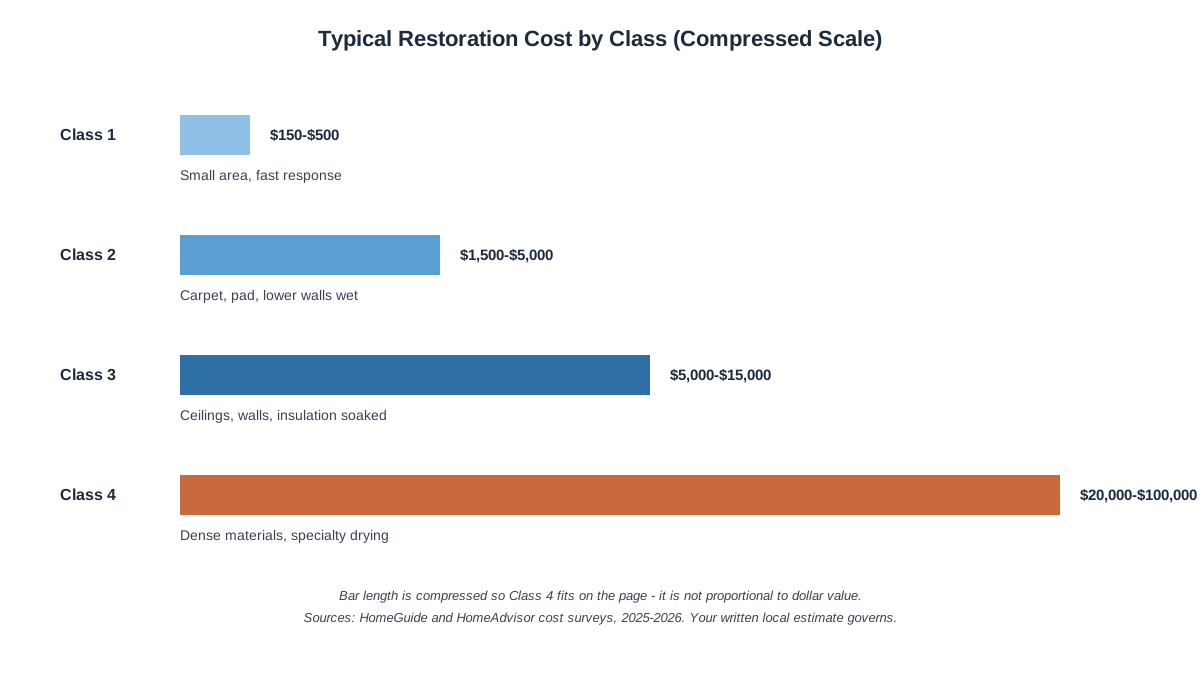
What the job typically costs by class, before your local written estimate.
There's no single number here, since a $400 job and a $60,000 job can both start the same way. What follows is what several national cost-survey publishers reported for 2025 and 2026 — use it to sanity-check a quote, not to predict yours to the dollar. Our full water damage restoration cost guide breaks these ranges down further by job type; a written estimate from whoever actually inspects your property is still the only number that applies to your house.
Job or job type
Typical range
What moves the price
Source
Overall restoration job (national average)
$1,383-$6,369 (avg. $3,868)
Category of water, square footage, how long it sat before extraction
HomeAdvisor
Overall restoration job (secondary survey)
$2,000-$6,000
Same drivers; wider low-high spread runs $150-$100,000
HomeGuide
Overall restoration job (third survey)
$1,200-$5,000 (avg. $3,000)
Category, square footage, access
Fixr
Class 1 - minimal, small area
$150-$500
Fast response, small footprint, easy access
HomeGuide
Class 2 - significant absorption
$1,500-$5,000
Carpet, pad and lower wall material wicking up moisture
HomeGuide
Class 3 - extensive, overhead source
$5,000-$15,000
Saturated ceilings, walls and insulation
HomeGuide
Class 4 - specialty drying
$20,000-$100,000
Dense, low-porosity materials that trap moisture
HomeAdvisor; Fixr
Mold remediation, if drying is missed or delayed
$1,100-$3,400 (avg. $2,225)
Square footage affected, containment needed
HomeAdvisor
Sewage cleanup (Category 3 source)
$2,000-$15,000+ ($7-$15+ per sq ft)
Volume of sewage, how long it sat, number of rooms
HomeGuide
Many estimates break the total into phases rather than one lump sum: water extraction alone commonly runs $4 to $6 per square foot for clean, Category 1 water, $6 to $9 per square foot for gray, Category 2 water, and $9 to $12 per square foot once the water is Category 3 and contaminated, before drying equipment, materials and labor get added on top. Seeing extraction priced per square foot on an itemized estimate is normal; seeing the whole job folded into one number with no way to check the math is one more reason to ask for that breakdown.
How we got these numbers: each row above is a national range published by an established cost-survey site, not a figure we generated. None of them account for your local labor market or your specific home, which is exactly why a written local estimate, not this table, is what you should sign off on. If two quotes for the same scope of work differ by more than a few hundred dollars, ask both companies to itemize by task so you can see where the gap actually is.
Insurance, Claims and the Paperwork a Good Company Handles Right
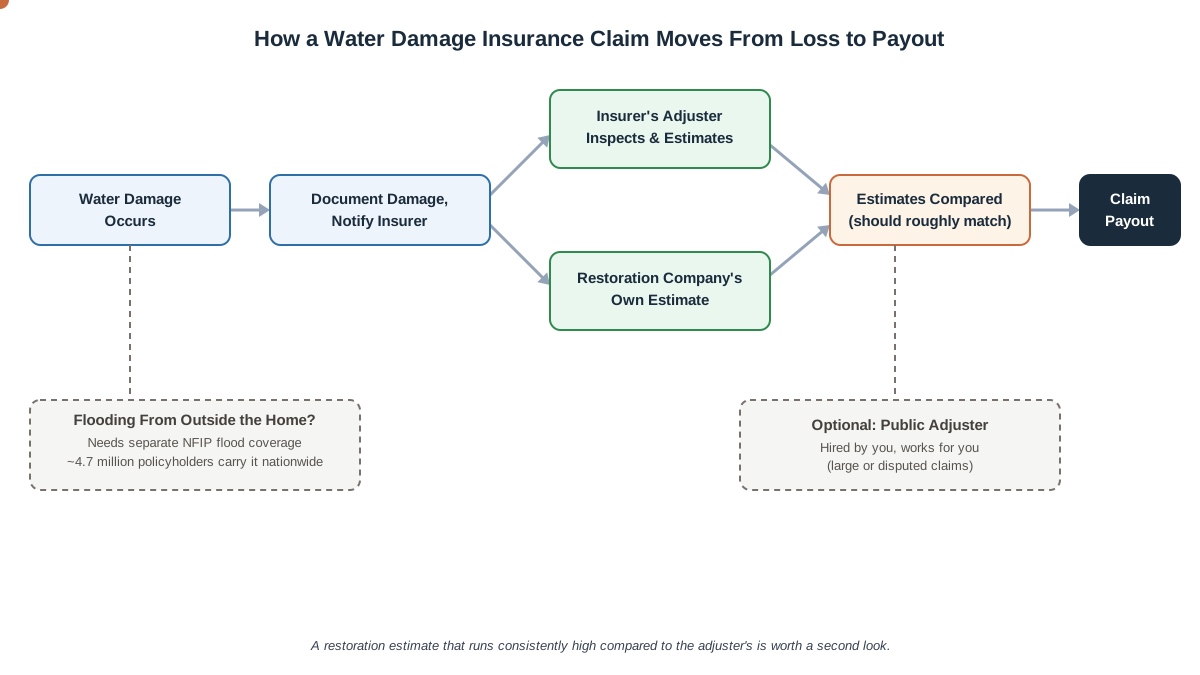
A standard HO-3 policy typically covers water damage that's sudden and accidental — a burst pipe, a failed water heater, an appliance that let go without warning. It typically excludes gradual leaks that built up over months and flooding that comes from outside the home, which needs separate flood coverage — nationwide, FEMA counts roughly 4.7 million NFIP flood policyholders who carry that coverage precisely because a standard homeowners policy stops at that line.
Your insurer will usually send its own adjuster to inspect the loss and estimate the payout. A public adjuster is a separate, licensed professional you can hire yourself, working for you rather than the insurance company, typically for a percentage of the claim; most homeowners don't need one for a straightforward burst-pipe claim, but a large or disputed loss is where hiring one starts to make sense. Either way, the restoration company's own estimate is a third document, and it should roughly line up with whatever your insurer's adjuster produces — a company whose numbers run consistently high compared to the adjuster's is worth a second look.
Documentation makes or breaks a disputed claim: photograph everything before cleanup starts, keep the moisture readings your technician records, list damaged contents room by room, and save every receipt tied to the loss. A good water damage company hands you copies of its own documentation without being asked twice; a company that's cagey about paperwork is usually cagey about its pricing too. Our water damage insurance claim guide walks through the full documentation checklist and the claim timeline.
Where the restoration company's estimate fits alongside your insurer's adjuster in a typical claim.
Questions to Ask a Restoration Company Before You Sign Anything
These are the direct questions to ask a restoration company once you've narrowed it down to one or two candidates. A confident, specific answer to each one is a good sign; a dodge is not.
What is the category and class of this water, and how did you determine it?
Can I see your IICRC certification and your state contractor license number?
What's included in this estimate, and what gets billed separately if it comes up?
Will you dry materials in place or remove them, and what decides which?
How will you verify the space is actually dry before equipment comes out?
Do you bill my insurance directly, and will I see the invoice before it's submitted?
What happens to the price if the job runs longer than this estimate?
Can you give me two local references from jobs completed in the last year?
A company that answers all eight without hesitation has probably answered them a hundred times before, for a hundred other homeowners standing exactly where you are now.
When You Can Wait for Quotes, and When You Can't
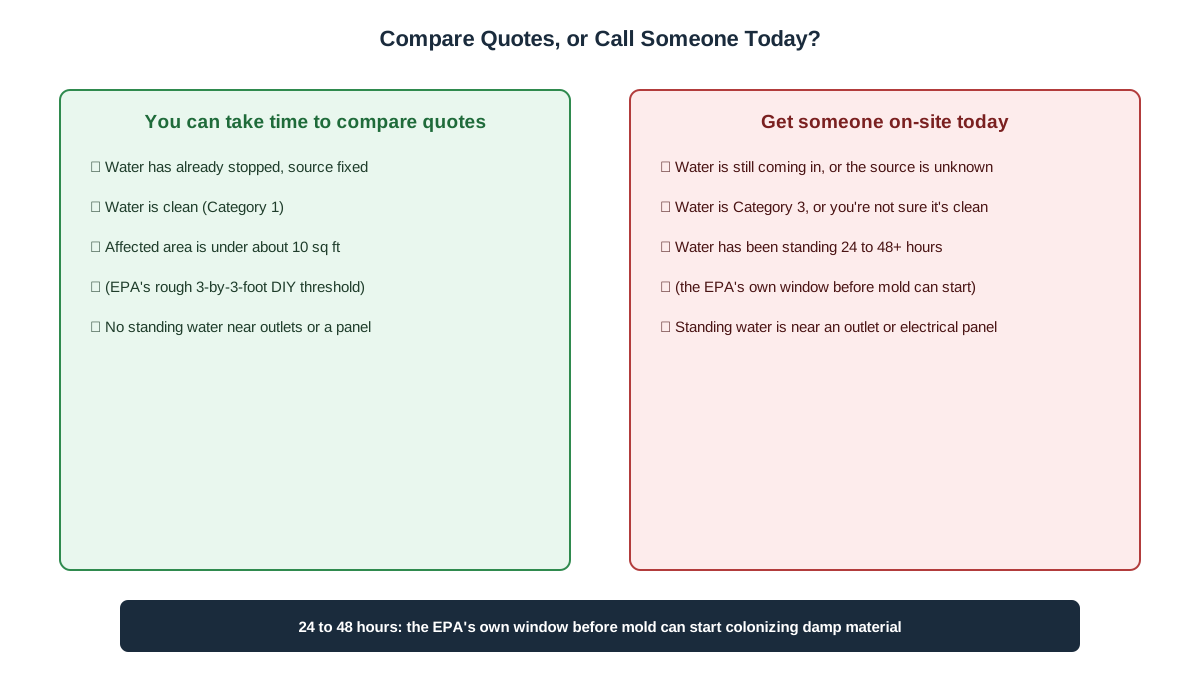
Some of this vetting process takes time, and that's fine when the loss allows it. A small, clean-water leak that's already stopped, a dishwasher line that dripped for an hour before anyone noticed, gives you room to call two or three companies, compare written estimates, and pick carefully. The EPA's guidance sets a rough 10-square-foot threshold, about a three-by-three-foot patch, as the upper limit of what a homeowner should try to clean and dry without professional help.
If water has been standing for more than 24 to 48 hours, or you're not sure it's clean, stop comparing quotes and get a professional assessment today — the EPA's own guidance is that mold can begin colonizing damp material inside that same 24-to-48-hour window, and waiting to save a little on a decision this size usually costs more once mold enters the picture.
Category 3 water — sewage, floodwater, anything that's been sitting long enough to turn — removes the luxury of shopping around slowly. So does a wall cavity you can't see into, or standing water anywhere near an outlet or panel. In those situations, get someone qualified on-site today and do the license and insurance verification while they're already working, not before you'll let anyone through the door. If mold has already started, our mold after water damage guide covers what changes once it does.
The EPA's 10-square-foot DIY threshold and 24-to-48-hour mold window, applied to the decision to keep shopping quotes or call now.
Regional Notes: What Changes by Climate and State
Where you live changes what to ask about, even though the vetting steps above stay the same everywhere. In states that see hard winters, a frozen and split pipe is the most common call a restoration company fields once temperatures drop below the 32°F freezing point for more than a few hours, and it's worth asking a candidate company directly whether they staff up for cold snaps or whether response time slows once every crew in town gets the same call on the same night. The pipe repair itself, separate from the water damage cleanup, commonly runs $150 to $250 per linear foot of pipe replaced, so expect two invoices rather than one when a burst pipe is the cause.
Along the Gulf Coast and the Atlantic seaboard, storm-driven and flood-related water is more often Category 3, and demand for restoration companies spikes hard right after a named storm moves through — which is exactly the wrong time to be vetting a company for the first time. Our storm damage restoration guide covers what that kind of loss involves. Many states also license mold remediation separately from a general contractor or water damage restoration license; confirm both are current for the specific work being done, and check your state contractor licensing board's site directly rather than relying on what a company tells you over the phone.
Frequently asked questions
What does IICRC certified mean?+
It means a technician has completed training and testing through the Institute of Inspection, Cleaning and Restoration Certification, the body behind the S500 water damage and S520 mold remediation standards most of the industry works from. It's not a government license, but it is a checkable credential — a legitimately certified technician can name their certification and discipline without hesitation when asked.
How much does water damage restoration cost?+
Nationally, published averages run from about $2,000 to $6,000 for a typical job, with small Class 1 leaks running a few hundred dollars and severe Class 4 losses running into six figures. The real driver is the water's category and class plus how much square footage it reached. A written estimate from a company that's inspected your property is the only number worth planning your budget around.
Does homeowners insurance cover water damage restoration?+
Usually, if the damage was sudden and accidental, like a burst pipe or a failed appliance, a standard HO-3 policy typically covers it. Gradual leaks that built up over time and flooding from outside the home are the most common exclusions, and flooding specifically needs a separate flood insurance policy through the NFIP or a private carrier.
How do I know if a water damage company is legitimate?+
Verify three things before you sign anything: an active state contractor license you can look up yourself, a current certificate of general liability and workers' compensation insurance, and technicians who can name their IICRC certification and discipline. A company that hesitates on any of the three, or asks for full payment before inspecting your property, is worth passing on.
Should I get more than one quote for water damage restoration?+
Yes, for anything beyond a small, contained leak. Get at least two written estimates and compare the scope of work, not just the total price — a lower bid that skips containment, moisture verification, or a clear drying plan often ends up costing more once the job has to be redone.
What is an assignment of benefits in a water damage claim?+
An assignment of benefits, or AOB, is a document that transfers your right to negotiate and collect on your insurance claim directly to the restoration company. It can speed up payment in some cases, but it also means you lose direct control over the claim, so read it fully and ask what it hands over before signing, ideally before any work starts.
Is the cheapest water damage quote the best deal?+
Not necessarily. A low bid that skips a moisture-verification step, cuts equipment run time short, or dries in place what should have been removed can leave hidden dampness behind that turns into a mold problem later. Compare what each estimate actually includes before assuming the lowest number is the better deal.
How long does water damage restoration take?+
It depends on the category and class of the water. A small, quickly caught Category 1 leak can wrap up extraction and drying in a few days. Anything involving Category 3 water, or dense materials like hardwood and plaster that trap moisture, commonly stretches structural drying and repairs well past two weeks.
What happens if I wait too long to call a restoration company?+
The EPA notes that mold can begin colonizing damp material within 24 to 48 hours, so a delay of even a day or two can turn a straightforward drying job into a mold remediation job stacked on top of it. If water has been standing that long already, prioritize getting someone on-site over comparing additional quotes.
Who pays for water damage repairs, me or my insurance?+
It depends on the cause. Sudden, accidental damage like a burst pipe is typically covered by a standard HO-3 policy, minus your deductible. Damage from poor maintenance, gradual leaks, or flooding from outside the home is typically excluded, and flooding needs a separate flood insurance policy to be covered at all.