Water damage prevention means catching small failures — a cracked washing machine hose, an aging water heater, an untested sump pump — before they become the average $13,954 insurance claim. It combines a room-by-room inspection routine, specific fixes like braided hoses and water leak sensors, and knowing when to call a professional instead of guessing at a repair.
Water and freezing damage made up 27.6% of all homeowners insurance losses in 2022, according to the Insurance Information Institute, trailing only wind and hail. Separate claims data cited by This Old House puts the water-and-freezing share of claims at 22.6%, with roughly one in every 67 insured homeowners filing a water damage claim in a given year, at an average payout of $15,400. Almost none of that starts with a flood. Most of it starts with a rubber hose behind a washing machine, a water heater that quietly outlived its rated life, or a sump pump nobody tested since last spring. Water damage prevention is the unglamorous, mostly free work of catching those small failures before an adjuster ever gets involved.
This guide walks through how to prevent water damage room by room: what to check under every sink and behind every appliance, when a cheap hose clamp beats a multi-thousand-dollar repair, where water leak sensors and an automatic water shutoff valve actually earn their keep, and how to winterize pipes before the first hard freeze. Every dollar figure below comes from a named cost survey or from FEMA; where no publisher tracks a reliable national number for something, that's stated plainly instead of guessed at.
If you're not doing a preventive walkthrough right now, and water is actively coming in, this isn't the guide you need this minute. Our emergency water damage first hour guide and flooded basement guide cover what to shut off and who to call before you read another word here.
What Water Damage Prevention Actually Covers
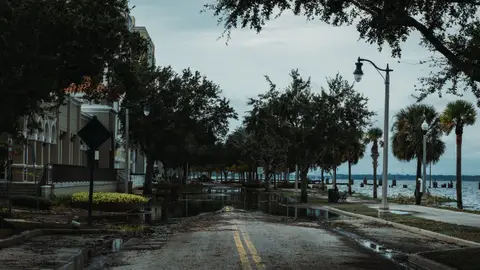
Most homeowners picture water damage as a flood: a hurricane surge, a river overflowing its banks, a storm drain that can't keep up. That version exists, and FEMA runs a whole federal program around it, the National Flood Insurance Program, which currently covers 4.7 million policyholders with nearly $1.3 trillion of coverage in force across 22,600 participating communities. But the water damage that shows up most often on a homeowners claim isn't a flood at all. It's a supply line, a hose, a drain pan or a pipe failing inside a house that never saw a drop of rain that day.
The restoration industry sorts water into three categories the moment a crew walks in the door, and knowing the language matters before you start a prevention checklist, because it tells you how urgent a given leak actually is. Category 1 water is clean, straight from a supply line or a fresh appliance leak. Category 2, sometimes called gray water, carries some contamination, like water backing up from a washing machine or dishwasher. Category 3 is grossly contaminated — sewage or floodwater — and it's never a do-it-yourself cleanup. The Institute of Inspection, Cleaning and Restoration Certification (IICRC) sets the industry standard for handling each category, under its ANSI/IICRC S500 standard, now in its Fifth Edition (2021). The category also drives what a cleanup costs: HomeAdvisor's cost data puts clean Category 1 water extraction around $3.50 per square foot against roughly $7.50 per square foot for grossly contaminated Category 3 water, the same square footage costing more than double because of what has to be removed and disinfected.
One more number matters before you start: the U.S. Environmental Protection Agency says wet materials need to dry out within 24 to 48 hours or they start growing mold, and recommends keeping indoor humidity below 60 percent, ideally 30 to 50 percent, the rest of the time. That window is the entire logic behind a prevention checklist. A washing machine hose that fails while you're at work can run for eight hours before anyone notices; a sensor that catches it in the first ten minutes is the difference between a load of wet towels and a gutted laundry room.
Where Preventable Water Damage Actually Starts, Ranked by How Often It Happens
Not every source of water damage carries equal risk, and most of it is genuinely preventable once you know where to look. Roughly in order of how often each one turns out to be the cause:
Supply line and hose failures — the rubber or braided lines feeding your washing machine, dishwasher, refrigerator icemaker and toilets. Rubber degrades from the inside; a hose that looks fine can burst without warning.
Water heater failure — tanks corrode from the inside over years, and most fail without a single visible warning sign until the tank itself splits.
Frozen and burst pipes — a pipe in an unheated crawl space or an exterior wall that freezes, expands and splits, then floods the house the moment it thaws.
Sump pump failure — a pump that fails from age, a stuck check valve, or a power outage during the very storm it was installed to handle.
HVAC condensate line clogs — algae and debris block the drain line, and the overflow pan fills and spills onto a ceiling or closet floor below.
Roof and gutter neglect — clogged gutters and aging flashing that let water track into an attic long before anyone sees a stain on the ceiling below.
Toilet and drain overflows — a clogged line or a failed wax ring that lets water spread across a bathroom floor and into the subfloor beneath it.
The pattern across nearly all seven: something mechanical fails quietly, inside a wall, cabinet or ceiling, days or months before anyone notices. That's why a scheduled walkthrough, not a reactive one, is the actual point of a water damage prevention routine.
How to Walk Your House and Find the Weak Points Before They Fail
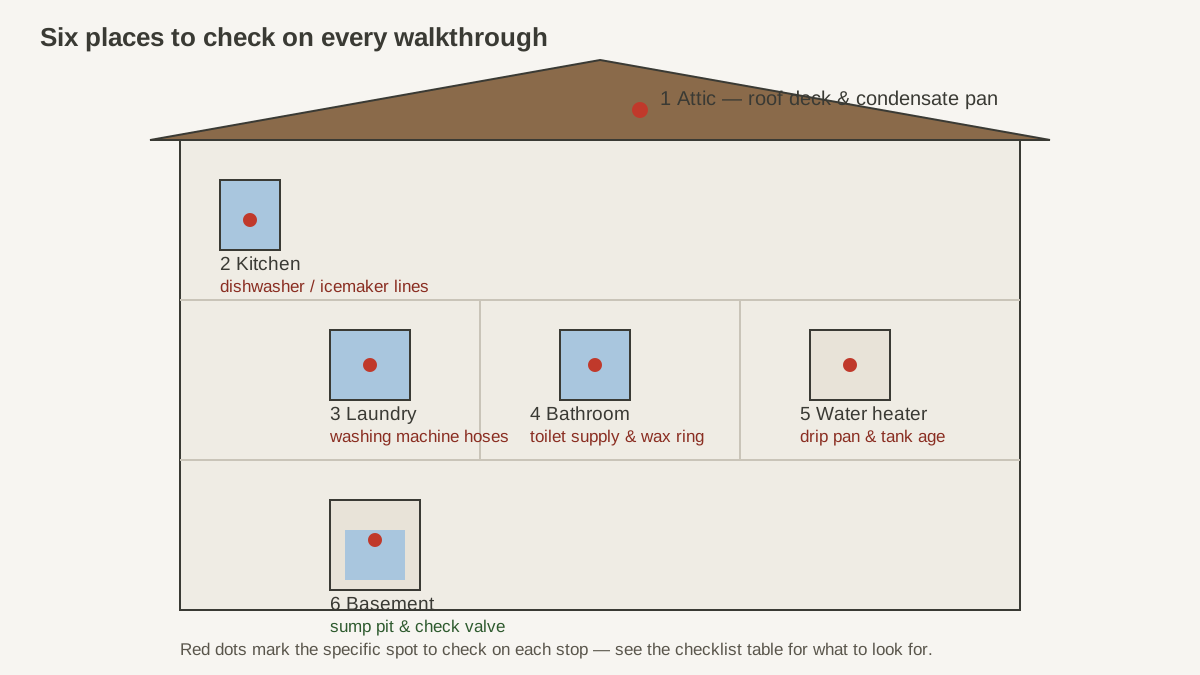
Where preventable water damage starts — check these six spots on every walkthrough.
A full prevention walkthrough takes most homeowners under an hour, and it pays to do it on a set schedule rather than only after something has already gone wrong. Work through the house in this order:
Open every cabinet under a sink and check the supply lines and shutoff valves (the small handles feeding each fixture) for corrosion, drips or a valve that won't turn.
Pull the washing machine forward a few inches and inspect both hoses along their full length, not just at the connections, for cracking, bulging or a hard, brittle feel.
Check the water heater's drip pan and the area around its base for staining, and note the installation date on its rating plate — a tank running well past its manufacturer-rated service life is far more likely to fail without warning.
If there's a sump pump, pour a bucket of water into the pit and confirm the pump activates, discharges outside, and that the check valve isn't stuck open or closed.
Locate your home's main water shutoff valve, confirm it actually turns (a valve that's seized from disuse is useless in an emergency), and make sure everyone in the house knows where it is.
In the attic, look for water stains on the underside of the roof deck, check the HVAC condensate line for standing water in the overflow pan, and confirm gutters aren't overflowing at the fascia.
Outside, check hose bib connections, confirm the ground slopes away from the foundation, and clear debris from window wells if the house has a basement.
If you're leaving home for more than a few days, shut the main water valve off before you go: nobody catches a slow leak inside an empty house, and that single habit prevents more high-dollar claims than any device on this list.
The Room-by-Room Checklist
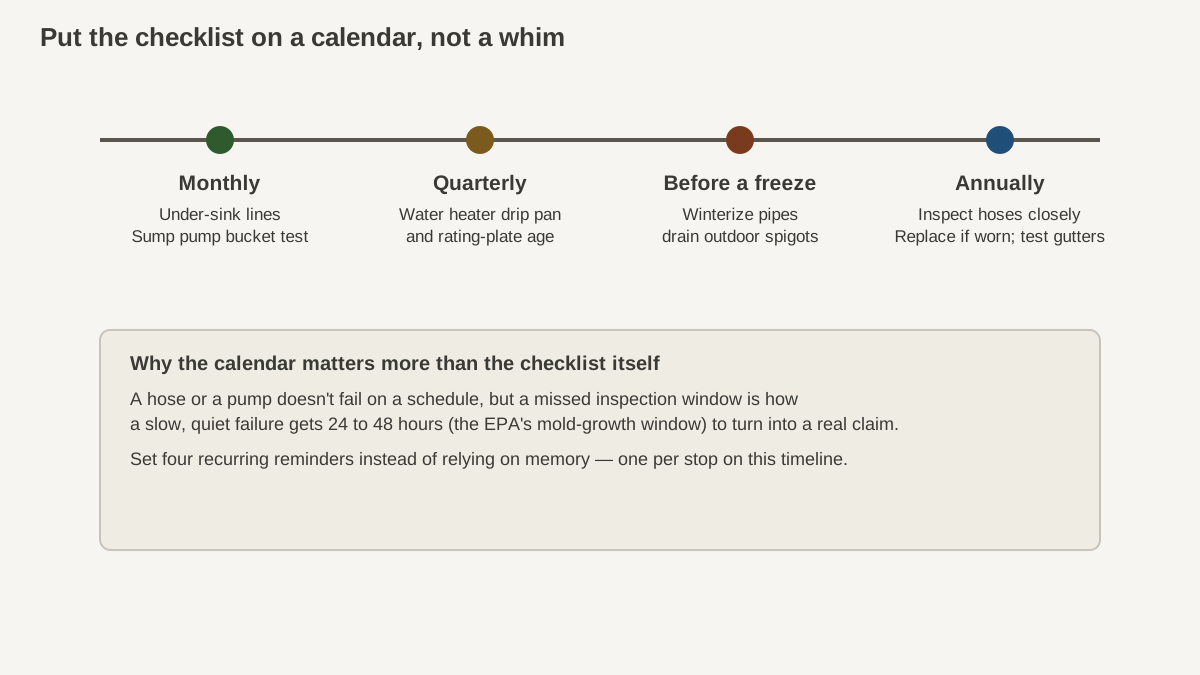
A maintenance calendar turns the checklist into a habit instead of a one-time chore.
Once you know where to look, the actual maintenance is mostly cheap and mechanical. This is the home water damage checklist worth taping inside a cabinet door:
Cleaning gutters and extending downspouts is DIY; regrading a large area is a contractor job
Two items on that table deserve extra weight, because they show up so often in claims data. Washing machine hoses are rubber by default on most machines, and rubber has a real service life; swapping them for braided stainless steel hoses costs little more than the rubber originals and cuts failure risk substantially, since braided lines resist the ballooning and splitting that eventually kills rubber ones. And a water heater running past its manufacturer-rated service life sits closer to failure than a new one; if yours doesn't have a documented installation date, most manufacturers print one inside the serial number stamped on the rating plate.
Water Leak Sensors and Automatic Shutoff Valves: What They Actually Do
Two categories of hardware sit above basic maintenance, and they solve different problems. Water leak sensors are small, battery-powered pucks placed near the highest-risk spots — under the water heater, behind the washing machine, under the kitchen sink — that send a phone alert the moment they detect moisture. They don't stop water; they just catch a leak in minutes instead of days, which matters directly against that 24-to-48-hour drying window from the EPA.
An automatic water shutoff valve goes a step further: it sits on the main water line and physically closes it, either on its own, by reading flow patterns and closing when it sees a sign of a burst pipe (water running continuously for an unusual length of time), or when it's triggered by a paired leak sensor elsewhere in the house. That's the meaningful upgrade over a sensor alone. A sensor tells you about a problem; a shutoff valve stops it, even if you're at work, asleep, or three states away.
None of the national cost-survey publishers this guide draws on report a reliable average price for either category, because pricing swings widely with the number of zones you want covered, whether the system is Wi-Fi-based or hardwired, and on whether a licensed plumber ties the shutoff valve into your main line or you install a device yourself. Treat any single number you see quoted online with skepticism, and get an actual written quote instead. Before anyone ties into your main line, verify they're licensed through your state's contractor licensing board and confirm they carry current liability insurance — a written quote from an unlicensed installer isn't worth much if the connection fails later and there's no coverage behind it. If you want a plumber's opinion on whether a whole-house shutoff valve fits your specific plumbing, a restoration company that serves your area can usually point you toward one — call 888-407-9931 and describe your setup.
Winterizing Pipes Before the First Hard Freeze
Frozen pipes are one of the most preventable and most expensive failures on this list, because the fix is almost entirely free and the failure is not. Water freezes at 32°F, and a pipe doesn't need a deep freeze to reach that point — a few consecutive hours below freezing inside an unheated crawl space, garage or exterior wall cavity is enough. Learning to winterize pipes means getting ahead of a freeze, not reacting to it once a pipe has already split.
Disconnect garden hoses from every exterior spigot before the first freeze; a hose left attached traps water in the spigot itself and is a common cause of a split fitting.
Drain and shut off any dedicated exterior spigot line, if your house has one, using the interior shutoff built for that purpose.
Insulate exposed pipe runs in unheated spaces — a crawl space, garage or attic — with foam pipe sleeves, focusing on any pipe that runs along an exterior wall.
During a hard freeze warning, open cabinet doors under sinks on exterior walls so warm room air can reach the pipes inside.
Let a faucet fed by an at-risk line drip slightly during the coldest stretch; moving water is far less likely to freeze solid than standing water.
If you're leaving town during freezing weather, don't just lower the thermostat — leave it at a normal heating setpoint, or better yet, follow the shutoff-and-drain routine above.
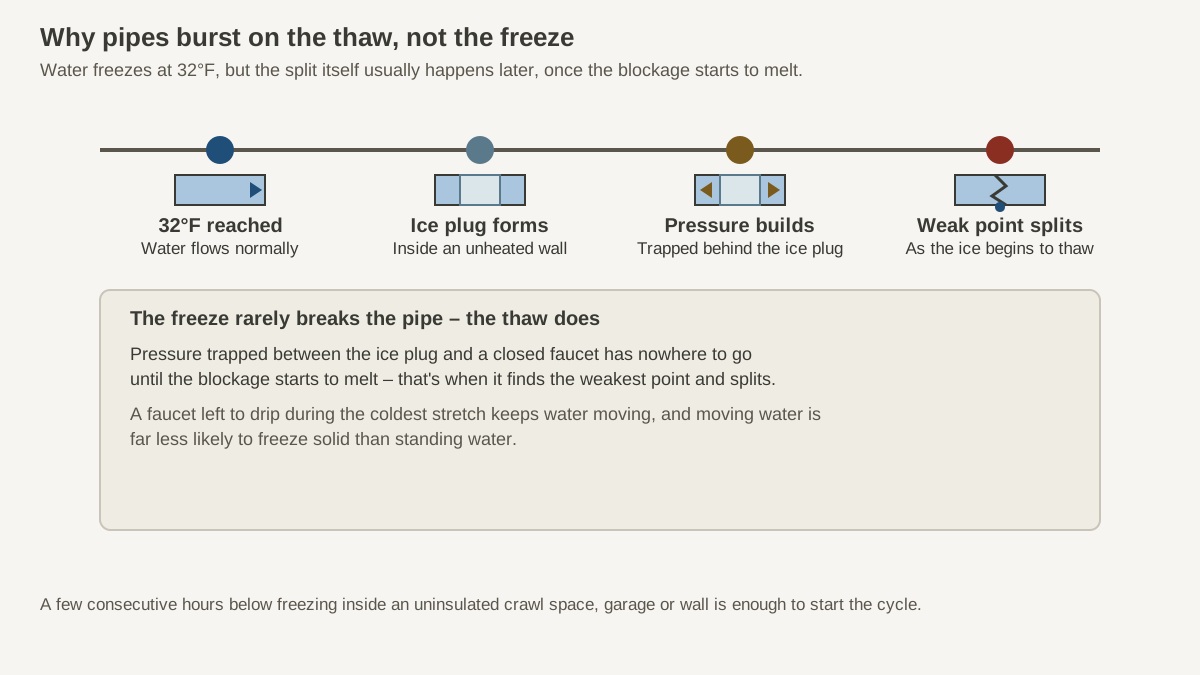
A pipe that freezes doesn't usually cause damage at the moment it freezes; the damage happens on the thaw, once pressure trapped between the ice blockage and a closed faucet finds the weak point in the pipe and splits it. That's why the emergency fix for a frozen-but-not-yet-burst pipe is to open a faucet slightly and apply gentle heat, rather than doing nothing and hoping it thaws safely on its own.
The freeze itself rarely breaks the pipe — the split usually happens once the blockage starts to thaw.
What Prevention Costs, and What Skipping It Costs
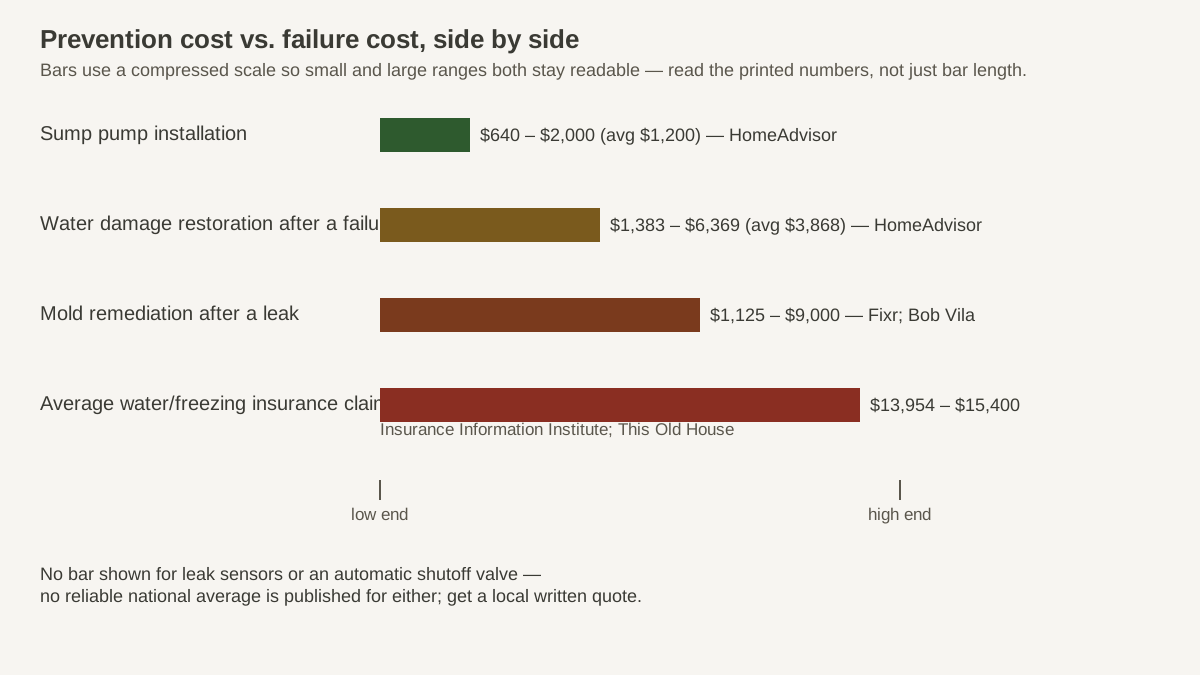
What prevention costs next to what a failure costs, using published national ranges.
The honest way to look at water damage prevention costs is side by side with what a failure costs, because the numbers make the case better than a sales pitch could. These are researched ranges pulled from national cost-survey publishers and FEMA, not a quote for your specific job — actual cost still varies by region, how easy the damaged area is to access, and how much a crew finds once they open up a wall or a subfloor. No local pricing index exists for a national guide like this one, so treat every range below as a starting point, and treat only a written estimate from a local, licensed contractor as binding.
Item
Typical range
What moves the price
Source
Sump pump installation
$640 – $2,000 (avg. $1,200)
Pit depth, pump horsepower, battery backup
HomeAdvisor
Water leak sensors / automatic shutoff valve
No published national figure — get a written local quote
Number of zones, Wi-Fi vs. hardwired, professional install vs. DIY
n/a — local estimate required
Water damage restoration after a failure (national average)
$1,383 – $6,369 (avg. $3,868)
Water category (1, 2 or 3) and how long it sat before drying
HomeAdvisor
Mold remediation after a leak (range across surveys)
$1,125 – $9,000
Square footage affected, whether HVAC was involved
Fixr; Bob Vila
Average homeowners insurance claim for water/freezing damage
$13,954 – $15,400
Category and extent of damage
Insurance Information Institute; This Old House
FEMA puts it more bluntly than any cost table can: a single inch of standing water can cause roughly $25,000 in damage to a home. Set next to that, a $1,200 sump pump, or a modest sensor system with no published price tag at all, starts to look less like an optional upgrade and more like the cheapest insurance you can buy that isn't technically insurance.
When to Stop the Checklist and Call a Professional Instead
Most of this guide is DIY-friendly. A few situations during a walkthrough deserve more caution than swapping a hose or clearing a drain line.
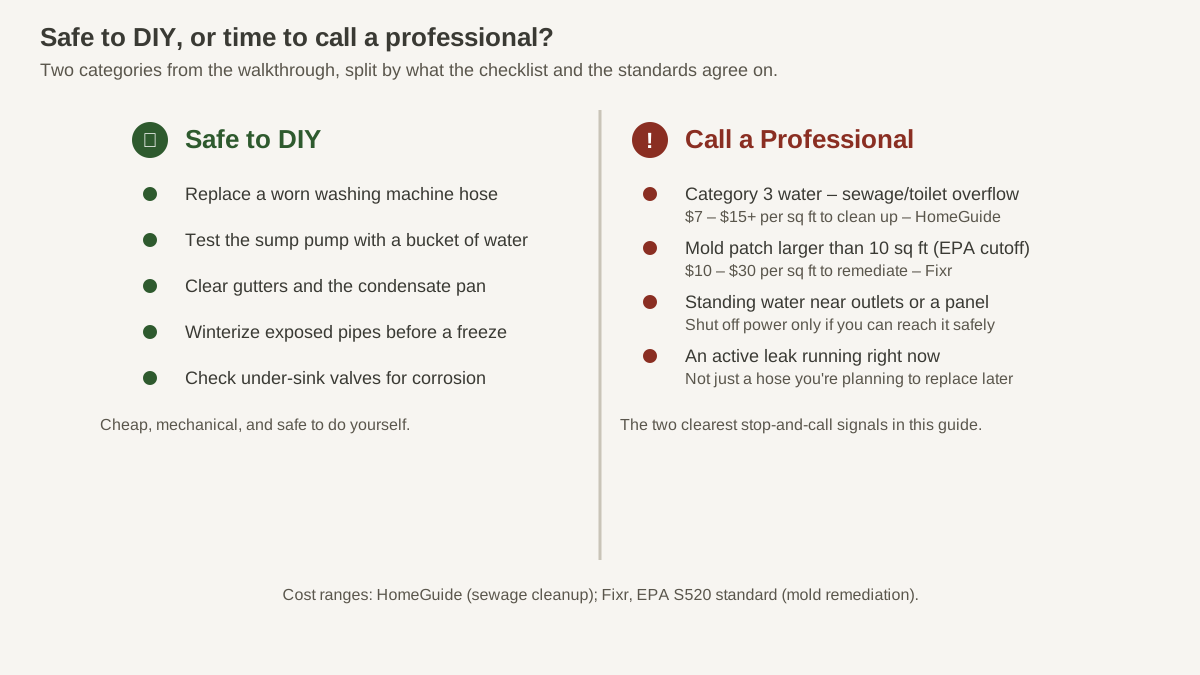
Contaminated water changes everything. If a drain backs up and smells like sewage, or water is coming from a toilet overflow rather than a clean supply line, that's Category 3 water under the IICRC's classification, and it's not a do-it-yourself cleanup regardless of how small the puddle looks. Professional sewage cleanup runs $7 to $15 or more per square foot, precisely because of what has to be removed, disinfected and sometimes torn out. The same goes for any mold patch larger than about 10 square feet (roughly 3 feet by 3 feet), which is the EPA's own line between a homeowner cleanup and a job for a remediation professional working to the industry's ANSI/IICRC S520 mold standard, where cleanup typically runs $10 to $30 per square foot.
Standing water near electrical outlets, cords or a panel is a stop-everything situation: don't step into it, shut off power at the breaker only if you can reach it without touching the water, and call an electrician or a restoration company before doing anything else.
And if a walkthrough turns up an active leak rather than a preventable risk — water actually running right now, not just a worn hose you're planning to replace — a restoration company that serves your area can talk you through what to shut off and what to expect next. Call 888-407-9931 and describe what you're seeing. If the leak has already turned into standing water, our emergency water damage first hour guide covers the immediate steps.
Category 3 water and mold patches over 10 sq ft — the EPA's own DIY cutoff — are the two clearest signals to stop and call a pro.
How Prevention Affects Your Insurance Position
A standard homeowners policy (an HO-3, the most common form) generally covers sudden and accidental water damage, like a supply line that bursts without warning, but it typically excludes damage from a gradual leak the insurer can argue you should have caught, like a slow drip behind a wall that ran for months. That distinction is why the walkthrough habit matters for your insurance position, not just your wallet: a documented maintenance routine, dated photos of hose replacements, and a water heater you can prove you were tracking the age of, all support an argument that a failure was sudden rather than neglected.
Water damage and flood aren't the same thing in insurance terms, either, and the difference matters. A standard homeowners policy does not cover flooding, defined as rising water from an outside source like a river, storm surge or heavy regional rainfall; that's what the National Flood Insurance Program exists for, currently covering 4.7 million policyholders with nearly $1.3 trillion in coverage. FEMA notes that over 40% of flood claims come from outside the officially mapped high-risk zones, and that 99% of U.S. counties have experienced a flooding event since 1998 — a fair argument for at least pricing out flood coverage even if your home sits outside a mapped flood zone. Our guide to what homeowners insurance covers for water damage and our water damage insurance claim guide go deeper into documentation and the claims process itself.
Regional Notes: Freeze Belt, Hurricane Coast and Everywhere Between
A water damage prevention routine that ignores climate is only doing half the job. What fails first, and what matters most to fix, shifts by region.
Freeze-thaw regions
Across the Midwest and Northeast, winter cold snaps are the single biggest predictable risk on this whole list. Pipes in uninsulated crawl spaces, garages and exterior walls need the winterizing routine above every year without exception, and homes that sit empty during a cold snap, whether for a vacation or as a second home, are disproportionately represented in burst-pipe claims.
Clay soil and shifting-ground regions
Parts of Texas and the broader Southeast sit on expansive clay soil that swells and shrinks with moisture, which can stress underground supply and drain lines independent of anything happening inside the house. In these areas, a slab leak often shows up first as an unexplained spike in the water bill, before it shows up as visible damage, so checking the water meter periodically belongs on the routine too.
Coastal and storm-prone areas
Along hurricane-exposed coasts, power outages tend to hit right when a sump pump or an automatic shutoff valve is needed most. A battery backup for any pump, and a shutoff valve that doesn't depend on grid power to function, is less of a luxury and more of a baseline requirement in these regions.
Snowmelt regions
The Upper Midwest and Great Lakes states see a different seasonal spike: spring snowmelt can saturate the ground and overwhelm a sump system that was only ever sized for an average summer storm. Testing the pump every fall, before the ground freezes, catches a failing unit while it's still an easy fix.
Frequently asked questions
What Causes the Most Preventable Water Damage at Home?+
Supply line and hose failures — the lines feeding a washing machine, dishwasher, refrigerator icemaker and toilets — cause more preventable water damage than any other single source, followed closely by water heater failures. Both fail quietly, often inside a wall or cabinet, which is why a scheduled walkthrough catches problems a reactive one misses entirely.
How Often Should You Replace Washing Machine Hoses?+
Regularly, on a set schedule rather than a wait-and-see one, and immediately if you notice bulging, cracking or a hard, brittle feel along the hose. Swapping standard rubber hoses for braided stainless steel ones costs little more and substantially cuts the risk of a sudden burst, since braided lines resist the ballooning that eventually splits rubber.
Are Water Leak Sensors Worth the Money?+
For most homes, yes. A sensor placed near a water heater, washing machine or under a kitchen sink catches a leak within minutes rather than days, which matters directly against the EPA's 24-to-48-hour window before wet materials start growing mold. No national cost survey tracks a reliable average price for them, so compare written quotes rather than assuming a single number.
What Does an Automatic Water Shutoff Valve Actually Do?+
It sits on your main water line and physically shuts the water off, either on its own by reading abnormal flow patterns or when triggered by a paired leak sensor elsewhere in the house. That's the real upgrade over a sensor alone: a sensor reports a leak, while a shutoff valve stops it even if nobody's home to respond.
How Much Does Water Damage Prevention Cost?+
It varies by what you're installing. A stand-alone sump pump runs $640 to $2,000, averaging about $1,200, according to HomeAdvisor. Leak sensors and automatic shutoff valves don't have a published national average, so get a local written quote. Weighed against an average water-damage insurance claim of $13,954 to $15,400, most prevention spending pays for itself if it heads off even one claim.
Does Homeowners Insurance Cover Water Damage Prevention Devices?+
Generally not the devices themselves; a standard policy pays for damage after a covered loss, not for the equipment that might have prevented it. What the devices do help with is documentation: a maintenance history and dated proof of upgrades supports the argument that a later failure was sudden rather than a neglected, gradual leak, which is often the line insurers use to deny a claim.
How Do You Winterize Pipes Before a Freeze?+
Disconnect garden hoses from exterior spigots, drain and shut off any dedicated outdoor spigot line, insulate exposed pipes in unheated crawl spaces or garages, and open cabinet doors under sinks on exterior walls during a hard freeze so warm air can reach the pipes. Letting an at-risk faucet drip slightly during the coldest stretch also helps, since moving water resists freezing better than standing water.
Should You Shut Off the Water Before Leaving on Vacation?+
Yes, especially for trips longer than a few days. Nobody catches a slow leak inside an empty house, and an extended absence is a common thread behind some of the highest-dollar water damage claims. Locate the main shutoff valve, confirm it actually turns before you rely on it, and close it before you leave.
How Do I Know If My Sump Pump Will Work When I Need It?+
Test it directly: pour a bucket of water into the pit and confirm the pump activates, discharges outside, and that the check valve isn't stuck. A battery backup matters as much as the pump itself, since power outages often hit during the very storms a sump pump exists to handle.
What's the Difference Between Flood Damage and Water Damage for Insurance?+
Flood damage means rising water from an outside source, like a river or storm surge, and it's excluded from standard homeowners policies; covering it requires a separate National Flood Insurance Program policy. Water damage from an internal source, like a burst supply line, is typically covered by a standard HO-3 policy when it's sudden and accidental rather than a long-neglected drip.
How Much Damage Can a Small Amount of Water Cause?+
More than most homeowners expect. FEMA estimates that a single inch of standing water can cause roughly $25,000 in damage to a home, factoring in flooring, drywall, and the drying and remediation work that follows. That's the entire argument for catching a leak in its first hours rather than its first day.
When Should I Call a Professional Instead of Handling a Leak Myself?+
Call a professional for any contaminated water, such as sewage or water from a backed-up drain, any mold patch larger than about 10 square feet per the EPA's guidance, standing water anywhere near an electrical outlet or panel, or any leak that's been running for more than a day. Everything short of those situations is generally within reach of a careful homeowner.