A washing machine flood usually comes from a burst supply hose, a clogged drain backing up, or a failed door seal on a front loader. Shut off the water and power, then start washing machine flood cleanup with extraction and fans within the hour to beat the mold clock. Water that sat over a day, or reached drywall, needs a professional, not a wet vac.
The laundry room is usually the last place anyone checks before bed, which is exactly why a washing machine flood catches people off guard. A rubber supply hose gives out overnight, or a top-load washer keeps filling because a sensor stuck, and by morning there is an inch of water working its way under the baseboard and into the hallway.
None of this requires a dramatic storm or a burst pipe deep inside a wall. A rubber hose that has never been swapped out in twenty years is enough, on its own, to put water clear across the room by morning. So is a drain line clogged with lint and detergent scale, backing water up through the machine and out onto the floor mid-cycle.
This guide walks through why washing machines flood, how to tell which of the usual suspects is yours, and what to do in the first hour. It covers where the line sits between a job for a wet vac and a job for a restoration crew with commercial dehumidifiers, what washing machine flood cleanup and repair typically cost, what a standard homeowners policy does and does not pay for, and the handful of cheap fixes that keep this from happening twice.
Why Washing Machines Flood the Laundry Room
Most washing machine floods come down to one of five things, and they are not equally common. Roughly in order of how often they show up:
A supply hose lets go. The rubber or braided hoses feeding hot and cold water into the machine sit under full household water pressure around the clock, whether the washer is running or not. A cracked, bulging, or simply old washing machine hose burst is the single most common flood cause, and it is also the fastest: a full-pressure hose failure empties across the floor before anyone in the house even hears it.
The drain hose or standpipe backs up. Lint, detergent residue, and small items work their way into the drain line over years. When the standpipe (the vertical drain pipe the washer's hose empties into) cannot keep up with the pump discharging a full tub, water comes back out around the hose instead of down the drain.
The door seal fails on a front-load washer. The rubber gasket around a front loader's door opening keeps water inside the drum during the wash and spin cycles. A torn, moldy, or improperly seated gasket lets water past it, usually a slow drip during the cycle rather than a sudden gush.
The machine overfills. A stuck water-level sensor, a failed inlet valve that will not shut off, or excess suds from the wrong detergent can all keep water entering the tub past the point it should stop, and a top loader with no locking lid has nowhere for that extra water to go but the floor.
The pump or a hose clamp fails internally. Less common, but a cracked pump housing or a clamp that worked loose over years of vibration can leak steadily from underneath the machine, often for weeks before anyone notices the flooring starting to swell.
The pattern that matters for cleanup: a hose burst floods fast with clean supply water, while a drain backup or overfill often carries detergent and lint, closer to gray water than clean water in how it needs to be handled. Washing machine leaking from underneath, discovered days after it started, is a different problem than water actively pouring across the floor right now, and the two call for different first moves. For a similar appliance-caused flood from a different machine, see our guide on dishwasher leak water damage.
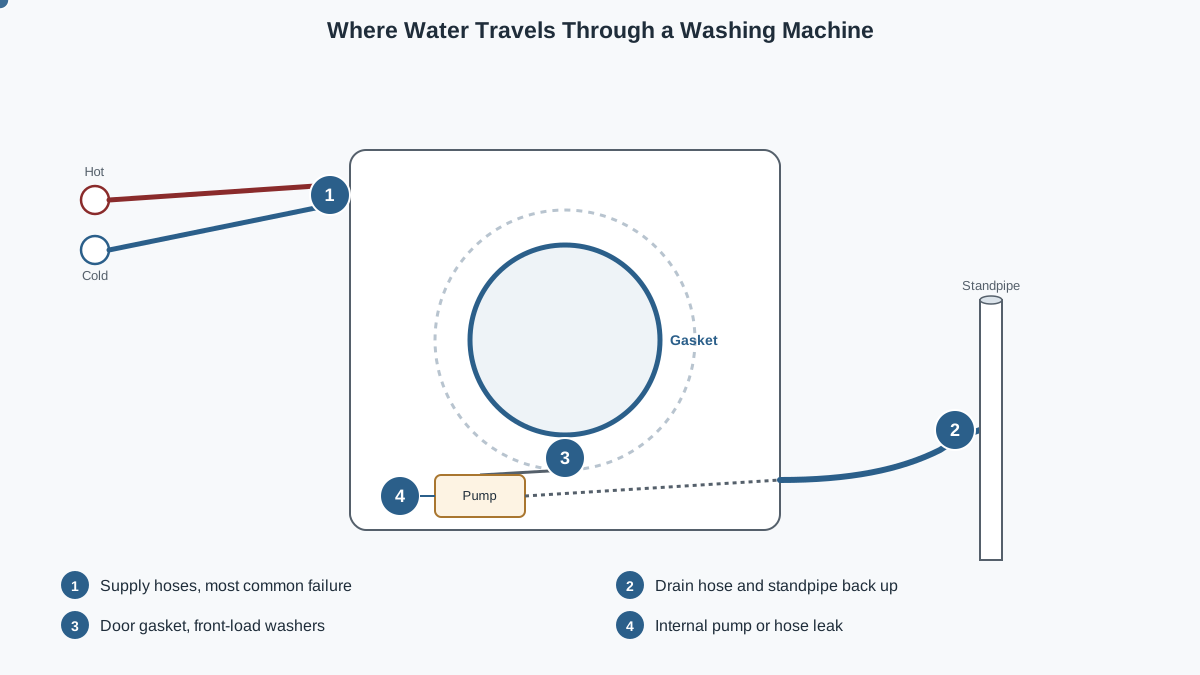
The same four checkpoints as the diagnosis flow above, shown along the machine's actual water path from supply valve to standpipe.
How to Diagnose Where the Water Is Coming From
Before cleanup, spend two minutes figuring out what actually failed. It changes both how urgent this is and what a repair technician needs to know.
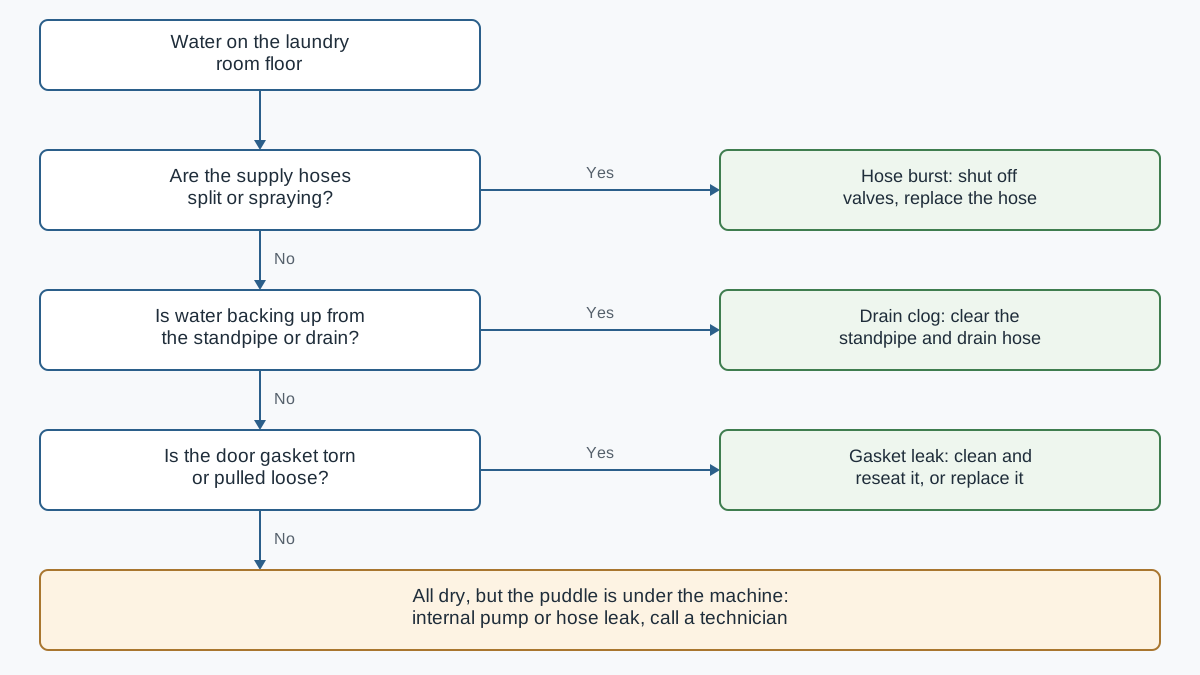
Work through the supply hoses, the drain, and the gasket, in that order, to find the source fast.
Shut off the water and power first. Turn both hot and cold shutoff valves behind the machine to off, and unplug the washer, or shut its breaker, before touching anything wet.
Look at the supply hoses. A hose that is split, disconnected, or spraying at the connection means a burst hose, and the fix is a hardware-store part, not a service call.
Check the drain hose and standpipe. If water is backing up out of the standpipe or the drain hose connection rather than spraying from a supply line, the drain is clogged somewhere downstream.
On a front-load machine, run a hand around the door gasket for tears, mold, or a section pulled away from the drum. A gasket leak usually shows as a puddle directly in front of the door rather than spreading out from behind the machine.
Pull the washer out from the wall, carefully, and look underneath and behind it. Water pooled only under the machine, with dry hoses and a dry drain connection, points to an internal leak: the pump, tub seal, or an internal hose.
Note how long it has likely been running. A puddle still spreading is an active leak; a dried water ring or warped flooring around the machine means it has been going on for a while, which changes how much has already soaked into the subfloor.
Write down what you find, hose, drain, gasket, or internal, before calling anyone. That one detail is usually enough for a plumber or appliance repair technician to bring the right part on the first visit instead of a second trip.
What to Do in the First 15 Minutes
Once the water and power are off, the next few minutes are about limiting how far the water spreads and how much it soaks in:
Keep people and pets off the wet floor near any outlet, power strip, or the electrical panel if it is in the laundry room, until you are sure the circuit is dead.
Move anything on the floor, storage boxes, pet beds, a stack of shoes, off the wet area before it wicks water further.
Start extracting water immediately with a wet vac, towels, or a mop and bucket, whatever is on hand; every extra minute the water sits is time it has to travel into flooring, subfloor, and baseboards.
Check the room next door and the ceiling below if the laundry room is not on the ground floor. Laundry room water damage spreads sideways more than people expect, and an overflow that ran a while can show up as a stain on a ceiling one story down before anyone notices water on the floor above.
If the water is still coming in and you cannot get it stopped at the shutoff valves, call 888-407-9931 and describe what is happening: which hose or connection it is coming from, how fast it is spreading, and whether the water looks clean or carries detergent and lint. A water damage restoration company that serves your area can talk you through the next steps while someone gets there.
Two things matter most in the first hour: getting the water off the floor, and getting air moving. A box fan pointed at the wet area and a window cracked, if the outside air is drier, both start the clock working in your favor instead of against it.
DIY Cleanup You Can Handle Yourself
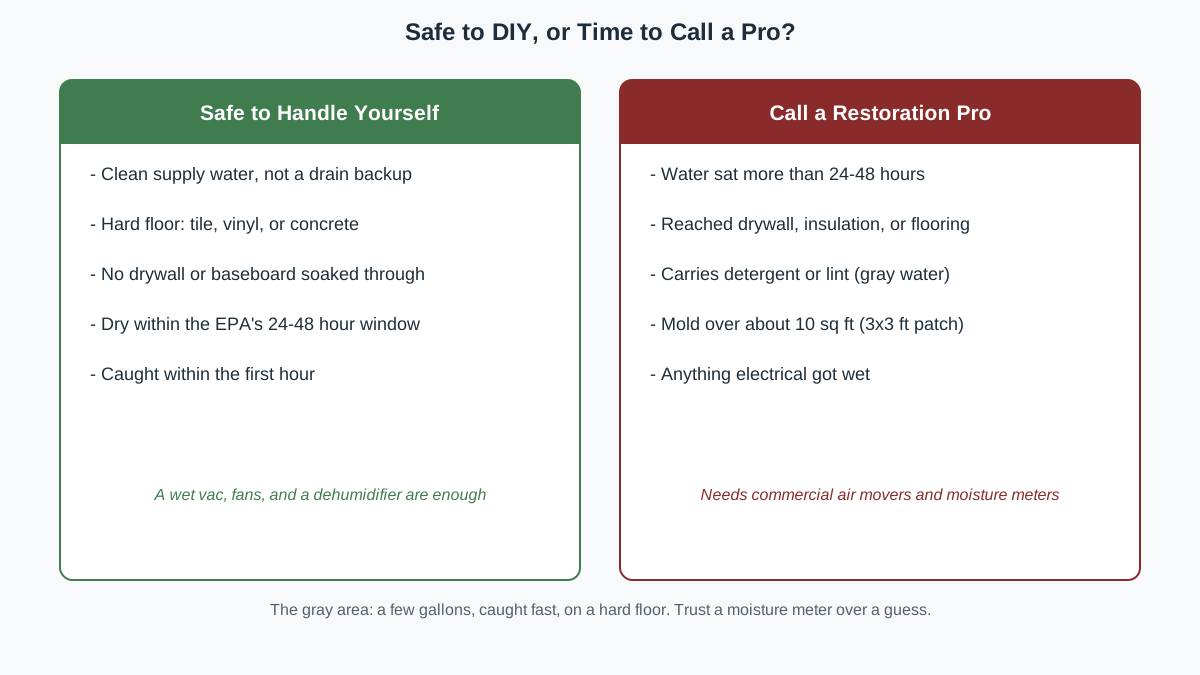
A washing machine flood caught early, clean supply water, on a hard floor, with no drywall or baseboard soaked through, is realistic to clean up yourself:
Extract standing water with a wet vac or by mopping repeatedly with clean towels, wringing them into a bucket rather than letting water sit and get pushed around.
Pull up anything absorbent that got wet, a bath mat, cardboard boxes, a rug, before it transfers moisture back into a floor you already dried.
Run fans and a dehumidifier continuously, not just during the day, aimed at the wet area and, if the laundry room has one, toward the baseboard where water tends to hide longest.
Pull the baseboard along the wet wall if you are comfortable doing it; water trapped behind a baseboard against drywall is exactly the kind of hidden moisture that turns a one-day dry-out into a mold problem three weeks later.
Wipe down the washer itself, the drum, gasket, and detergent drawer, since spilled or overflowed detergent left to dry becomes a sticky residue that is harder to remove later and can leave the machine smelling musty.
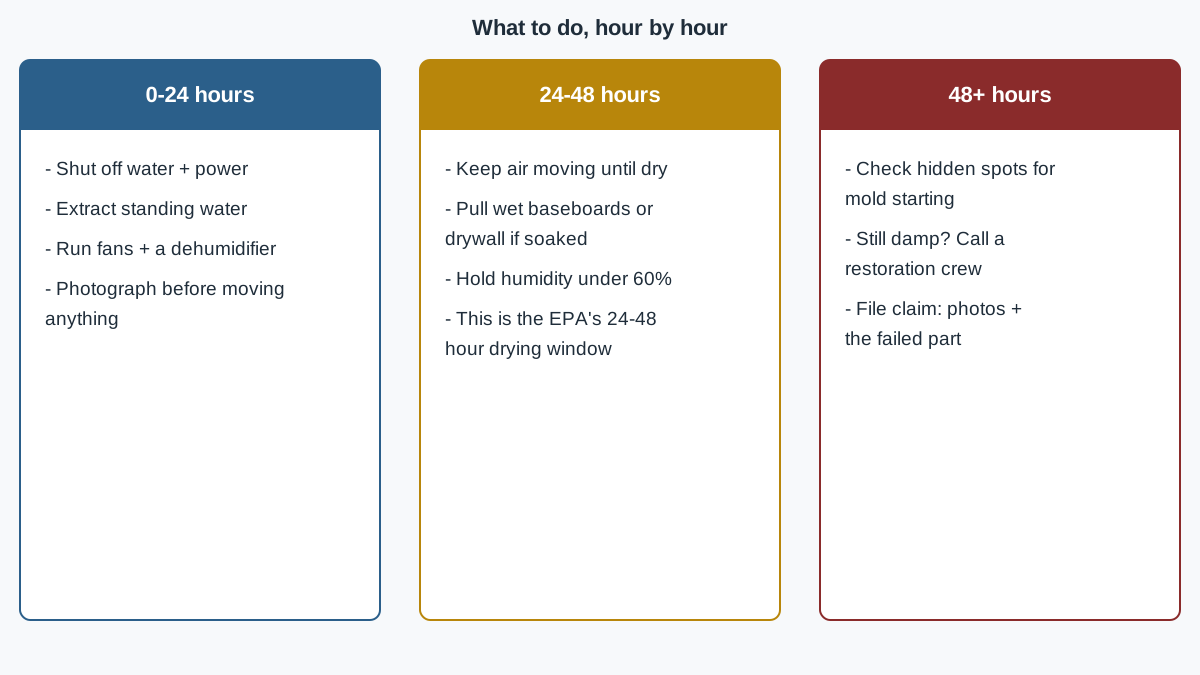
The EPA's 24-48 hour drying window is the deadline that matters most for keeping mold out.
The drying window is the number that matters most here. The EPA recommends drying water-damaged materials within 24 to 48 hours to keep mold from taking hold, and holding indoor humidity below 60 percent, ideally between 30 and 50, while the space dries. If flooring, baseboard, or the wall behind the washer is still damp after two full days of fans and a dehumidifier, that is past what a DIY setup reliably dries, even if it looks dry on the surface. For the complete version of this process, including which materials to test with a moisture meter, see our guide on how to dry out water damage yourself, and when you shouldn't.
When a Washing Machine Flood Stops Being a DIY Job
A few signals mean this has moved past a wet vac and a box fan:
Water that sat more than 24 to 48 hours before anyone found it, especially behind the machine where it is easy to miss for days.
Water that reached drywall, insulation, cabinetry, or a finished floor rather than staying on tile, vinyl, or concrete.
Water carrying detergent, lint, or backup from the drain line, which behaves closer to gray water than the clean water coming out of a burst supply hose, and needs different cleaning and disinfecting.
Visible mold covering more than about 10 square feet, roughly a 3-by-3-foot patch, the point the EPA puts past what a homeowner should clean without containment. Do not disturb it; call a restoration crew instead.
The laundry room is upstairs and water has traveled into a ceiling or wall below, since drying a multi-floor path usually needs commercial air movers and moisture meters a homeowner does not have.
Anything electrical got wet: an outlet, the washer's control board, or a nearby power strip.
The gray area is the harder call: a few gallons, caught within the hour, on a hard floor with dry baseboards. If a moisture meter, or your best judgment after two days of fans, says the area is truly dry, you likely handled it. If damp spots are still showing up on day three, or the smell has not cleared, that is the signal to bring in someone with equipment that actually measures it rather than guesses.
If any call-a-pro condition applies, especially water past the EPA's 24-48 hour drying window, treat it as a professional job.
What Washing Machine Flood Cleanup Costs
Washing machine flood cleanup splits into two separate costs: drying out and repairing the room, and fixing or replacing the washer itself. Here is what national cost surveys report for the cleanup side, with the source that published each figure:
Job
Typical range
What moves the price
Source
Clean-water extraction and drying (Category 1, a supply hose burst)
about $3-$4.25 per sq. ft.
Square footage affected, how fast extraction starts, flooring type
HomeAdvisor; Fixr; Bob Vila
Gray-water extraction (drain backup or detergent-contaminated water)
about $4-$6.50 per sq. ft.
Contamination level, how far the water traveled
Fixr; Bob Vila
Class 1 damage (minimal, caught fast)
$150-$500
How much material got wet, how quickly it was caught
HomeAdvisor; HomeGuide
Class 2 damage (carpet, pad, some drywall wicking)
$500-$1,000
How far up the wall it traveled
HomeAdvisor
Class 3 damage (saturation across most of the room)
$1,000-$3,000
Ceiling and wall saturation, how much material is removed
HomeAdvisor
Mold remediation, if it gets that far
$1,100-$3,400 (avg. $2,225), up to $9,000 for larger jobs
Square footage affected, containment needed, whether HVAC is involved
HomeAdvisor; Fixr
Repairing or replacing the washer (hose, pump, gasket or control board)
no set national figure; priced per part and labor
Which part failed, machine age and brand, parts availability
Local written estimate required
National survey ranges by damage class; a local written estimate is the only number that reflects the actual job.
How we got these numbers: the cleanup ranges come from national homeowner-survey data; none of the underlying surveys break pricing out by state or metro, so treat them as a starting point, not a quote. The washer repair line has no reliable national figure at all. Appliance repair pricing depends too much on the specific part, brand, and whether it is in stock, so a technician's on-site diagnosis is genuinely the only honest number for that half of the bill. For the fuller cost breakdown across every water damage job type, see our water damage restoration cost guide.
Insurance and Your Washing Machine Flood
Whether a washing machine flood is covered by insurance usually comes down to one question: was it sudden, or was it slow? A standard HO-3 policy typically pays for water damage from a sudden, accidental failure, a burst hose or valve, but not for damage that built up gradually behind or under a leaking machine over weeks or months. That distinction is exactly why so many people search for washing machine leak insurance only after the water is already on the floor, wanting to know which category their situation falls into.
Some context on how often this kind of claim happens and what it costs when it does. Water damage and freezing caused 27.6 percent of homeowners insurance losses in 2022, more than any category except wind and hail, according to the Insurance Information Institute, citing ISO, a Verisk Analytics business. The average water-damage-and-freezing claim ran $13,954, with a claim frequency of roughly 1.6 per 100 house-years. Speed matters more than most people expect, too: FEMA estimates that just one inch of standing water can cause roughly $25,000 in damage, part of why the first hour of response counts as much as the crew you eventually call.
If you are filing a claim, document before you clean:
Photograph and video the standing water, the machine, and everything it touched before moving anything.
Keep the failed hose, gasket, or part; an adjuster or the manufacturer may want to see it, and it is evidence the failure was sudden rather than a slow leak you should have caught.
Keep receipts for anything bought for emergency mitigation: a wet vac rental, fans, a hotel night if the room is unlivable.
Write down when you first noticed the water and what you did in the first hour.
Ask the adjuster directly, in writing, whether they are treating this as sudden accidental discharge or as long-term seepage, since that single classification decides the claim.
A payout that comes back lower than the actual damage is where a public adjuster, paid a percentage of the claim rather than by the insurance company, earns their fee: negotiating on your behalf, separate from the adjuster the insurer sends out. For the full walkthrough of documentation and what a standard policy does and does not cover, see water damage insurance claims: what's covered, what's not.
How to Choose a Restoration Company
If the flood is bigger than a mop-up job, or the water carried lint and detergent from a drain backup, a few things are worth checking before anyone starts equipment in your home:
IICRC training. Ask whether technicians hold current certification under the ANSI/IICRC S500 water damage restoration standard, and S520 if mold has already started. It is the industry standard for how extraction, drying, and monitoring are supposed to be done.
Proof of insurance, specifically general liability and workers' compensation, before equipment or crew comes through the door.
A written scope and estimate before work starts: what is being extracted, how many drying days are planned, and what daily equipment monitoring looks like.
State contractor licensing where your state requires it for this kind of work; check your state's licensing board directly instead of taking a company's word for it.
Red flags: a crew that wants full payment before starting, no written estimate, or pressure to sign an insurance assignment before you have read it.
If you are still assessing the situation and need to talk it through, 888-407-9931 connects you with a restoration company that serves your area; describe how the water started, how long it has been sitting, and whether it looks clean or carries detergent and lint so they can bring the right equipment on the first trip. For a deeper checklist on vetting companies and what a legitimate estimate includes, see how to choose a water damage company, and spot the ones to avoid.
Cleaning and Maintaining the Washer After a Flood
Once the room is dry, the washer itself needs attention before it gets trusted with another load. A machine that just overflowed or backed up often has detergent residue, lint, and sometimes odor working its way into places a normal cycle never reaches.
Front-load washers
On a front loading washing machine, wipe out the door gasket fold by fold, that is where lint, hair, and standing water collect and where mold gets a foothold first, then run an empty hot-water cycle with a washing-machine cleaner or a cup of white vinegar to flush the drum and drain path. Leave the door propped open between loads afterward so the gasket actually dries instead of staying damp in a closed, dark space, which is also the most common fix for a front-load washer that has started foaming excessively or smelling musty.
Top-load washers
On a top loading washing machine, check the tub-to-cabinet gap and the underside of the lid for residue, then run the same empty hot cycle with cleaner to clear anything left from the overflow. If the machine kept filling past where it should have stopped, that is usually the water-level sensor or the inlet valve, not something a cleaning cycle fixes; that is a part for an appliance technician, not a DIY job.
If the washing machine drain line was the source of the backup in the first place, clearing lint and buildup from the standpipe and drain hose now is what keeps the next load from doing the same thing again. A shop vac at the standpipe opening, or a plumber's snake if the clog sits further down, usually clears it; if water keeps backing up after that, the clog is likely further into the household drain line and worth a plumber's look before running another cycle.
How to Stop the Next Washing Machine Flood
Prevention here is inexpensive compared to the cost of a repeat flood, and most of it takes an afternoon:
Prevention option
What it does
Best fit
Braided stainless-steel supply hoses
Replace the rubber hoses that are the top cause of failure; resist bursting far longer under constant pressure
Every washer; swap rubber hoses on a 5-year schedule even if they look fine
Floodstop-style shutoff valve
Automatically cuts water to the machine the instant a floor sensor detects moisture
Laundry rooms on an upper floor or over finished space below
Washing machine drain pan
Catches drips and small overflows before they reach the floor; only helps if it is plumbed to a drain
Any washer, especially on upper floors or over living space
Standalone water sensor alarm
Alerts you the moment water is detected; does not shut anything off on its own
A cheap add-on to any of the above, never a substitute for a shutoff
Beyond hardware, a short habit list catches most problems before they become a flood: inspect supply hoses for bulges, cracks, or rust at the connection every few months, turn off the water supply valves when leaving home for more than a few days, and avoid running the washer overnight or while out if the hoses are more than five years old. Clean the lint filter and drain line on a schedule if the machine has one, and do not overload the tub past the manufacturer's fill line, a common, quiet cause of both leaks and drain backups.
Floodsafe hoses and other flood-stop systems built specifically for washing machines exist because supply hose failure is common enough that manufacturers built a whole product category around preventing it. If a flood already happened once, swapping standard rubber hoses for braided stainless-steel ones is the cheapest fix on this list, and pairing them with an auto-shutoff valve closes off the failure mode almost entirely.
Freeze Belt, Humid Climates, and Everywhere In Between
Where you live changes which failure mode to plan for first.
Freeze belt (Upper Midwest, Northeast, Rockies): a laundry room in an unheated basement or garage can see supply lines or a drain trap freeze and crack over a cold snap, then fail the moment things thaw and pressure returns. Insulating exposed pipe and keeping the space above freezing matters as much as the hoses themselves.
Hot, humid regions (Gulf Coast, Southeast): a laundry room that stays damp between loads gives mold a head start the moment a flood adds standing water on top of it. Keeping the space ventilated and the door gasket dry between cycles matters more here than almost anywhere else.
Upper-floor laundry rooms, common in newer builds regardless of climate: any of the causes above turn into a two-story problem fast, since water finds its way through subfloor and into the ceiling below before anyone upstairs notices. A drain pan plumbed to an actual drain, not just a catch tray, is worth the extra step here.
None of this changes what to do in the moment: cut the water, cut the power if needed, extract fast, and get air moving. It just changes which prevention step is worth doing first.
Frequently asked questions
How do I clean up a washing machine flood?+
Cut the water at the shutoff valves and unplug the machine, then extract standing water with a wet vac or towels as fast as possible. Pull up anything absorbent that got wet, run fans and a dehumidifier continuously, and pull the baseboard if water reached the wall behind the washer. If water sat more than a day or reached drywall and insulation, call a restoration company instead of finishing the job yourself.
What should I do when my washing machine floods?+
Shut off both water supply valves behind the machine and cut power to it first, since standing water near an outlet is a shock risk. Move anything on the floor out of the water, start extracting immediately, and check the room below if the laundry room is not on the ground floor. Once the water is out, get fans and a dehumidifier running right away.
Why did my washing machine flood?+
Most washing machine floods trace back to a burst supply hose, a clogged drain line backing up, or, on front-load machines, a failed door gasket. Less often it is an overfilling washer from a stuck sensor or bad inlet valve, or an internal pump leak. Checking the hoses, the drain connection, and the gasket, in that order, usually identifies which one happened.
How do I clean up a flooded laundry room?+
Extract the standing water first with a wet vac or towels, then remove anything absorbent, a rug, cardboard boxes, sitting in it. Run fans and a dehumidifier continuously and pull the baseboard along any wet wall so trapped moisture can actually dry. The EPA's 24-to-48-hour window is the deadline that matters most for keeping mold from taking hold.
Why is my washing machine leaking?+
Washing machine leaking usually points to one of four places: a cracked or loose supply hose, a clogged drain backing water up, a worn door gasket on a front loader, or an internal pump or hose failure underneath the machine. Pulling the washer out and checking each of those, hoses first, finds the source in most cases.
Why is my washing machine overflowing?+
A washing machine overflow usually means the machine kept filling past where it should have stopped, most often a stuck water-level sensor, a failed inlet valve that will not shut off, or excess suds from using too much or the wrong detergent. On a top loader with no locking lid, that extra water has nowhere to go but onto the floor.
What causes a washing machine drain to back up?+
Lint, detergent residue, and small debris build up inside the drain hose and standpipe over years until the pump can no longer push water out fast enough, so it comes back out around the connection instead. A clog further down the household drain line can cause the same symptom. Clearing the standpipe with a shop vac is usually the first thing worth trying.
Is washing machine flood damage covered by insurance?+
Often, yes, if the cause was sudden and accidental, a burst hose or a valve failure, since a standard HO-3 policy typically covers that kind of water discharge. It typically does not cover damage that built up gradually from a slow leak that could have been caught earlier. Keep the failed part and document everything before cleaning, since that evidence often decides which category an adjuster applies.
How much does washing machine flood cleanup cost?+
Clean-water extraction and drying commonly runs around $3 to $4.25 per square foot for a straightforward hose-burst flood, based on national cost surveys, more if the water carried detergent or lint from a drain backup. Mold remediation, if it gets that far, averages around $2,225. None of these are local numbers; a written estimate from a company that has actually seen the damage is the only figure that reflects the real situation.
How do I clean a front-load washing machine after a flood?+
Wipe out the door gasket fold by fold, since that is where lint and standing water collect and mold starts first, then run an empty hot-water cycle with a washing-machine cleaner or a cup of white vinegar to flush the drum and drain path. Leave the door propped open between loads afterward so the gasket dries instead of staying closed and damp.
Why is my washing machine foaming?+
Excess foaming almost always comes from using too much detergent, or from a regular detergent in a high-efficiency machine built for low-suds formulas. It can also come from residue built up in the drum or door gasket over time. Beyond wasting rinse water, heavy foaming is one of the more common causes of a washing machine overflow, since the machine reads foam as water level.
Why is my washing machine not cleaning clothes well after a flood?+
If clothes come out dingy or still soiled after a flood-related backup, the most likely cause is leftover detergent, lint, or drain residue from the backup itself rather than anything wrong with the wash cycle. Running an empty hot cycle with cleaner, plus checking that the drain line is now actually clear, usually resolves it within a load or two.