How long does water damage restoration take? There's no single number, and anyone who quotes one before seeing the damage is guessing. A small, clean-water spot with fans and a dehumidifier running right away can test dry inside the EPA's 24-to-48-hour window. A Class 3 or 4 loss with soaked hardwood or plaster often stays wet past that mark, and reconstruction takes separate time.
You called someone, or you're about to, and the first question isn't the invoice, it's when you get your house back. That's fair, and it's also the question restoration companies answer worst, because the honest answer depends on things nobody can see from the doorway: how far the water traveled behind a baseboard, whether the subfloor is particleboard or plywood, whether it sat for six hours or six days before anyone noticed.
What follows is the sequence a restoration crew actually runs, in the order the ANSI/IICRC S500 standard structures it: what happens in the first 24 hours, why the 24-to-48-hour mark matters more than any other number here, what pushes a straightforward drying job into a multi-week rebuild, and how to tell a crew that's genuinely tracking your walls from one that's just running a timer.
What "Restoration" Actually Means (and Why Nobody Can Give You One Number)
Ask five different restoration companies how long a job takes and expect five different answers, and none of them are lying to you. The confusion starts with the word itself. Mitigation is the emergency work: pulling standing water, hauling out anything that can't be saved, and getting air moving before mold gets a foothold. Restoration, in the strict sense, means drying the structure back down to a normal moisture reading. Reconstruction is the separate project after that: new drywall, new flooring, paint, sometimes cabinets. Someone asking how long water damage restoration takes is usually asking about all three projects at once, and they run on different clocks.
The standard most licensed crews follow, the ANSI/IICRC S500, sorts every loss into a water category (how contaminated the water is) and a class (how much material absorbed it and how fast that material gives the moisture back up). Class is the real timeline driver. A Class 1 loss involves so little wet material that there isn't much moisture left to release. A Class 4 loss involves materials, hardwood, plaster, brick, concrete, that hold water and release it slowly no matter how many fans point at them. Two jobs that look identical from the front door can be days apart in drying time because one soaked into plaster and the other didn't. That's the real shape of a water damage timeline: two projects, two clocks, one homeowner in the middle.
What Actually Determines How Long Your Job Takes
Ranked by how much weight each one carries, here's what actually decides your timeline:
How fast the water stopped and drying started. A leak caught within the hour behaves nothing like the same leak discovered after a weekend away.
The water category. Clean supply-line water dries faster than gray water (washing machine discharge, a dishwasher overflow) or black water (sewage, floodwater), which usually means tear-out instead of drying in place.
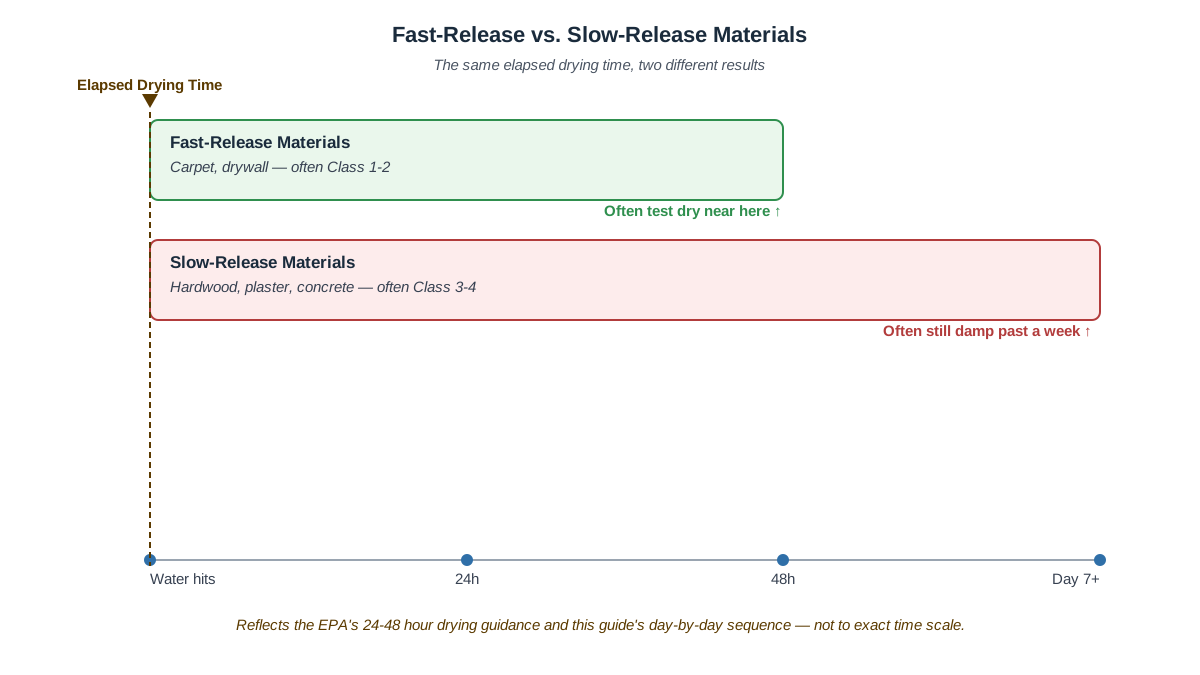
What got wet. Carpet and drywall give up moisture within days. Hardwood, plaster, and concrete slab can hold onto it for well over a week.
Square footage and room count. More affected area means more equipment on site, not necessarily more calendar days, as long as the crew has enough machines to cover it.
Ambient humidity. A dehumidifier fighting ninety-percent outdoor humidity through a propped-open door works far harder than one running in a sealed, air-conditioned room.
Insurance approval. Mitigation usually starts the same day, but reconstruction can stall for a stretch waiting on an adjuster's sign-off.
The class system explains most of this in one place. Our companion guide on water damage categories and classes walks through how a crew assigns your class on the first visit, and knowing your class tells you which end of every range in this guide actually applies to your house.
The same elapsed time dries carpet and drywall while hardwood, plaster, and concrete can stay damp for a week or more.
The Standard Timeline, Day by Day
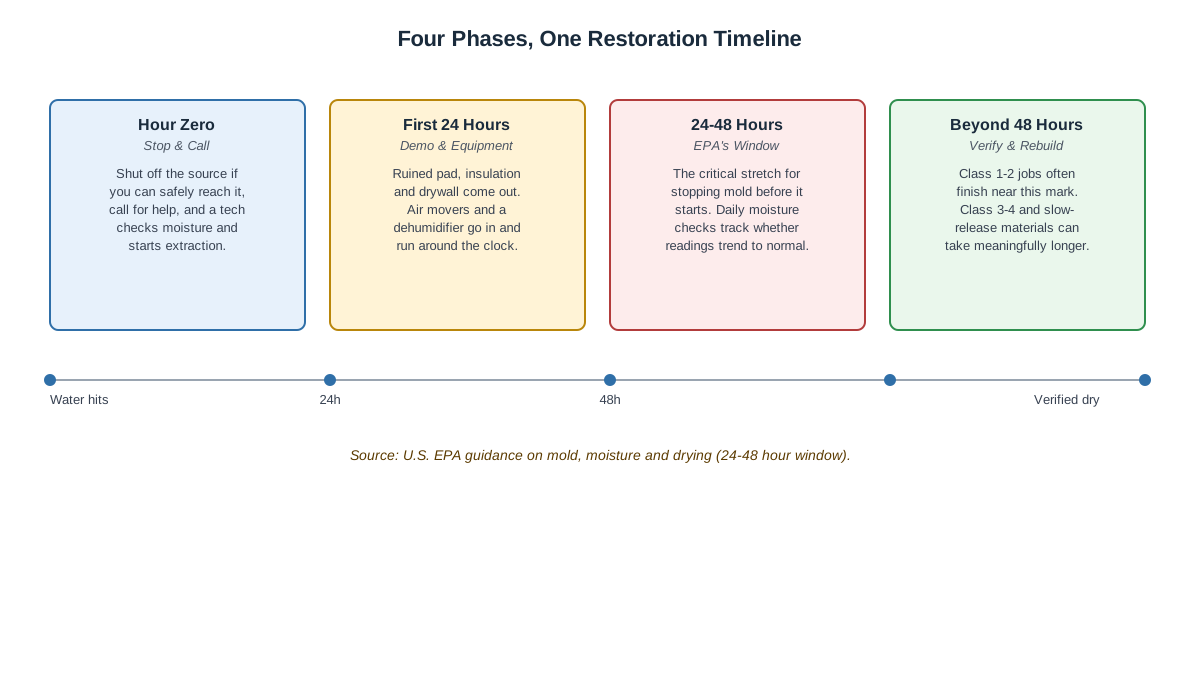
Here's the sequence a restoration crew actually runs on a mid-size residential loss, roughly in order. Hour zero to reconstruction: the sequence a restoration crew actually runs.
Hour zero: stop the source and call. If water's still coming in, shut off the supply if you can reach it safely, then call 888-407-9931 and describe what you're seeing to a restoration company that serves your area.
First few hours: inspection and extraction. A technician checks moisture with a meter, photographs the damage for the claim file, and starts pulling standing water with extraction equipment.
Same day: demolition of the unsalvageable. Soaked carpet pad, ruined insulation, and drywall that's wicked water more than a few inches up usually come out now, because drying material that's headed to the dumpster anyway wastes equipment time.
Within 24 hours: equipment goes in. Air movers and a dehumidifier get positioned and set to run continuously, starting the clock on the window that matters most.
Ongoing: daily moisture checks. A technician returns, typically once a day, with a meter to track whether materials are trending toward a normal reading. Equipment keeps running until the numbers match the unaffected parts of the house.
Once materials read dry: drying is verified complete. This is where the range widens the most. Class 1 and 2 losses often clear their meter readings not far past the 48-hour mark if the source stopped quickly. Class 3 and 4 losses, especially anything touching hardwood, plaster, or concrete, routinely take meaningfully longer, because those materials release moisture slowly by nature, not because anyone did the job wrong.
After drying is verified: reconstruction begins. New drywall, flooring, trim, and paint are a separate scope, often a separate contractor, and that timeline resets based on materials and permitting, not the drying clock.
The EPA recommends drying water-damaged materials within 24 to 48 hours, because that's the window before mold has a realistic chance to take hold. Everything else in this guide, DIY or professional, gets measured against that one number.
Mitigation vs. Reconstruction: Two Different Clocks
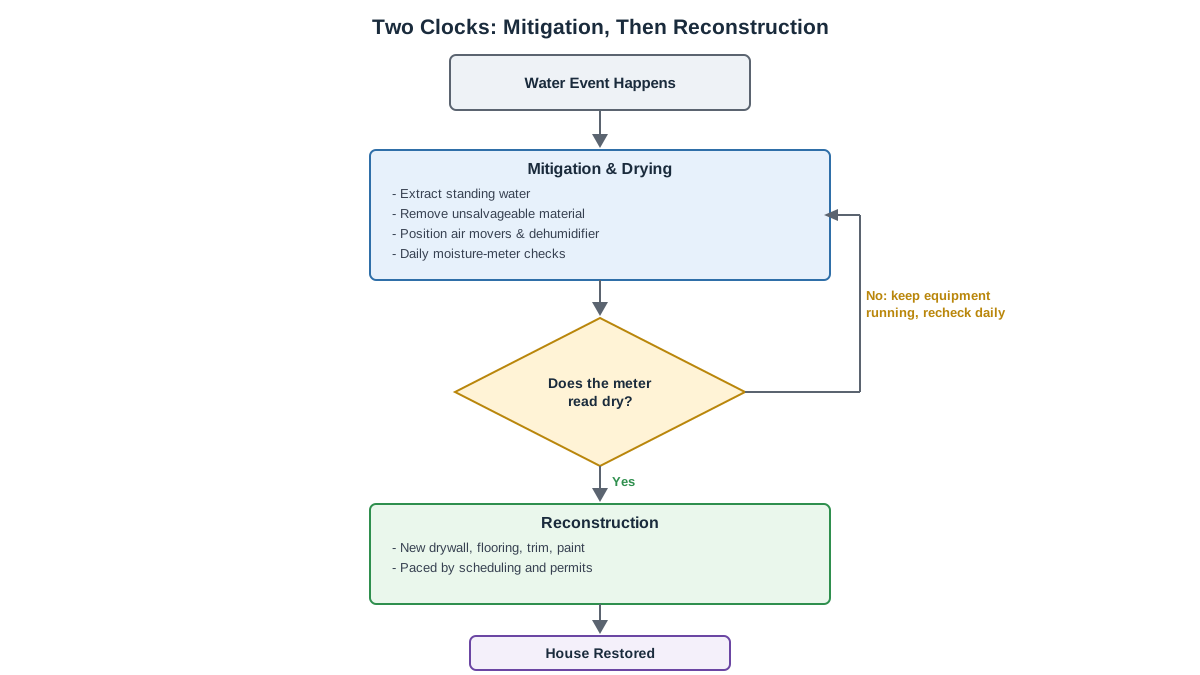
Most of the confusion around timelines disappears once you separate these two projects. Mitigation and reconstruction run on two different clocks. The table below shows what each phase actually covers and what tends to hold each one up.
Phase
What Happens
What Can Delay It
Mitigation & drying
Extraction, demolition of ruined material, equipment placement, daily monitoring until readings normalize
Delayed source shutoff, high ambient humidity, saturated slow-release materials like hardwood or plaster
Reconstruction
New drywall, flooring, trim, paint, sometimes cabinets
Insurance approval, contractor scheduling, material back-order, permitting on larger scopes
A crew can finish drying your living room in a handful of days and still leave you waiting weeks for the drywall crew to show up, and that's not a sign anything went wrong. It's two different companies, two different schedules, tied together by one insurance claim. Our guide to the water damage restoration process, step by step walks through the mitigation phase in more detail if you want the full sequence a technician follows room by room.
How Long Each Class of Job Typically Runs
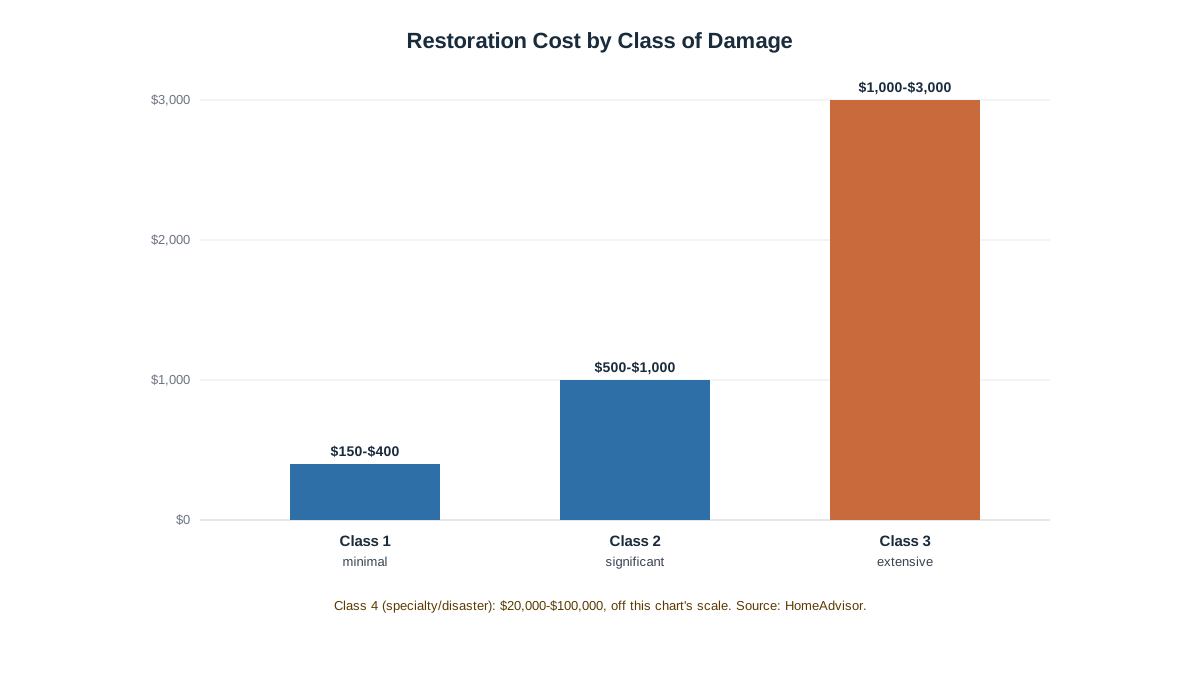
Cost is a reasonable stand-in for scope, and scope is what actually drives the schedule more than any single number in this guide. The wider the cost range, the more material there is to remove, dry, or replace, and the longer the calendar stretches. Cost tracks scope, and scope is what drives the schedule.
IICRC Class
What It Typically Involves
Typical Restoration Cost
Source
Class 1 (minimal)
A small, low-absorption area, like a closet or a single wet spot on a subfloor caught the same day
$150 - $400
HomeAdvisor
Class 2 (significant)
A full room: carpet and pad, water wicking a few inches up the drywall
$500 - $1,000
HomeAdvisor
Class 3 (extensive)
Saturation from the ceiling down, insulation, multiple rooms
$1,000 - $3,000
HomeAdvisor
Class 4 (specialty/disaster)
Hardwood, plaster, concrete, or crawl space materials that release moisture slowly
$20,000 - $100,000
HomeAdvisor
Class 1 jobs are the ones most likely to finish inside the EPA's 24-to-48-hour window, because there simply isn't much material holding onto water. Class 2 usually needs a few extra days of equipment run time and at least one more moisture check past that mark. Class 3 and 4 are where "how long does water damage restoration take" stops having a short answer: the same slow-release materials that push the cost up also push the drying time out, sometimes well past a week before reconstruction even starts. The ranges in the table above also vary by region, how easily a crew can get equipment to the damage, and what they actually find once material starts coming out, so read them as a starting point for the conversation, not a fixed price.
How Long Does It Take to Dry Out Water Damage Yourself?
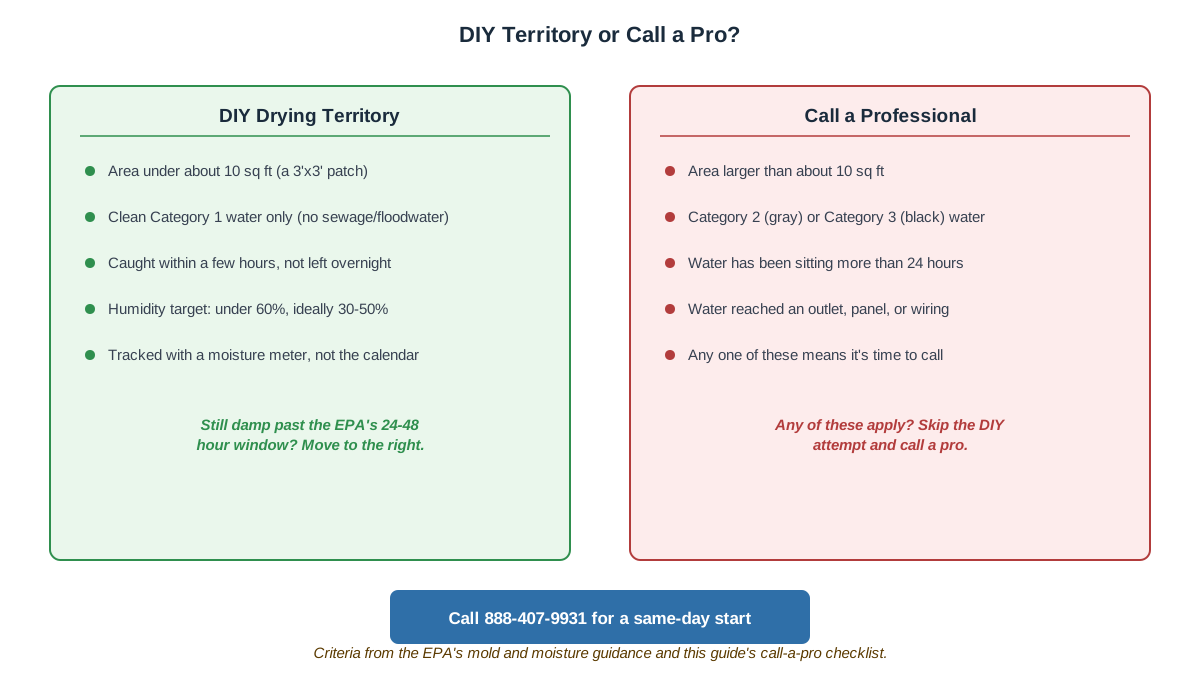
The EPA sets a real, usable boundary here: DIY drying is realistic for an area of less than about 10 square feet, roughly a 3-foot by 3-foot patch, and only for clean water. Anything bigger, or anything that touched a toilet line, floodwater, or an appliance discharge, is past the point where a box fan and a rented dehumidifier solve the problem safely.
Inside that small-area boundary, how long to dry out water damage yourself comes down to humidity, not the calendar. The EPA's target is getting the space below 60 percent relative humidity, ideally into the 30-to-50-percent range, and holding it there until a moisture meter confirms the material matches the rest of the house. For a single wet spot caught the same day, that can happen within a single afternoon and evening. For anything that sat overnight, or a subfloor instead of a surface, expect the dehumidifier to run for a stretch of several days rather than hours, with the meter, not the clock, telling you when to stop.
Dehumidifier drying time also depends on the machine itself. A small consumer unit pulling water out of a single closet works at a different pace than a commercial-grade unit sized for a whole room, and running an undersized machine just means a longer wait for the same result rather than a different result. If you're watching a rented unit's tank fill fast on day one and barely at all by day three, that's usually the humidity reading telling you the room is close, not that the machine failed.
Beyond the water category and class, a handful of things routinely add real days to a job that should have gone faster.
Insurance and Paperwork
Water damage and freezing account for a real share of homeowner claims, roughly 27.6 percent of homeowner insurance losses in 2022 according to the Insurance Information Institute, with an average claim severity in the same data near $13,954. Mitigation work is usually pre-approved because stopping active damage is in the insurer's interest too, but the reconstruction estimate often needs an adjuster's sign-off, and that review can stretch on longer than the physical drying ever does. See our guide on water damage insurance claims for the documentation that speeds this up.
Mold Discovered Mid-Project
If a crew opens a wall and finds active growth, the job typically pauses for mold remediation, a separate process governed by the ANSI/IICRC S520 standard, before drying or reconstruction picks back up. Remediation itself averages roughly $2,225 nationally according to HomeAdvisor, with a typical range of $1,100 to $3,400, and it's far more likely to come up on a loss that sat unnoticed for more than a day or two.
Hidden Moisture
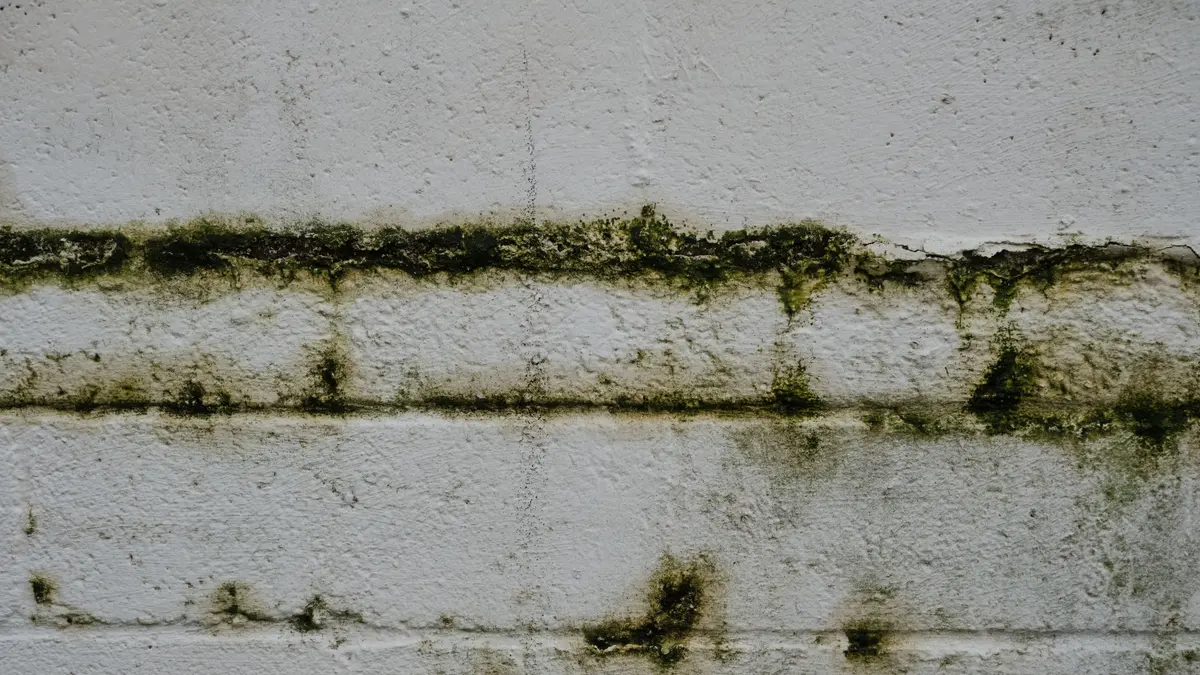
Moisture behind a wall or under a cabinet toe-kick doesn't show up on a walkthrough, only on a meter. A thorough technician checks these spots as a matter of course; a rushed one doesn't, and the surprise usually surfaces weeks later as a musty smell or a soft spot in the floor, restarting the whole process from a worse starting point.
What the Time Actually Costs
Time and cost move together here: every extra day of equipment run time and every extra crew visit adds to the invoice, which is part of why insurers care about a fast start. Nationally, water damage restoration averages $3,868, with most homeowners landing between $1,383 and $6,369, according to HomeAdvisor; small, contained jobs can run as little as $450, while most losses top out around $16,000, and the specialty Class 4 disasters covered in the table above climb far past that, into the tens of thousands. Every figure here comes from published cost surveys, not a quote for your house, so treat it as a researched range rather than a price: the only number that actually binds anyone is a written estimate from a contractor who's seen the damage in person.
Water Category
What It Means
Extraction Cost per Sq Ft
Source
Category 1 (clean)
Supply line, appliance overflow caught before it sits
$3.75 - $4.25
Fixr
Category 2 (gray)
Dishwasher or washing machine discharge, sump overflow
$4.10 - $6.50
Fixr
Category 3 (black)
Sewage, floodwater, or water that's sat and turned contaminated
$7.00 - $7.50
Fixr
Emergency or after-hours service typically carries its own fee on top of these ranges, commonly $50 to $200 according to Bob Vila, and hourly labor for restoration work runs $70 to $200 an hour. None of that buys a faster drying process by itself; it buys a faster start, which is the one lever that actually shortens the whole timeline, because every hour water sits before extraction is an hour it has to make up later. If sewage or standing floodwater is involved, our sewage backup cleanup guide covers the safety and cost specifics that a straightforward clean-water job doesn't need.
When to Call a Professional and Why Speed Matters
Professional help earns its cost fastest when speed is the whole point. FEMA notes that just one inch of standing water can cause roughly $25,000 in damage to a home, a useful reminder that the clock, not just the water level, is doing a lot of the damage. A quick call to 888-407-9931 connects you with a restoration company that serves your area and can get extraction equipment moving the same day, which is the single biggest factor in how long does water damage restoration take for your specific loss.
Call a professional, rather than handling it yourself, when any of these apply: the affected area is larger than the EPA's roughly 10-square-foot DIY threshold, the water came from a toilet, sewer line, or floodwater rather than a clean supply line, the water has been sitting for more than 24 hours, or it's reached an electrical outlet, panel, or any wiring. None of those situations get safer by waiting for a rental dehumidifier to catch up. Before work starts, verify the company's state contractor license is current and confirm they carry active liability insurance; a legitimate crew hands over both without hesitation, and checking costs you nothing.
Standing water near electrical systems is its own hazard entirely, separate from the mold clock. Shut off power at the breaker if you can reach it without stepping into water, and treat any outlet or fixture below the waterline as live until a professional confirms otherwise.
The EPA's do-it-yourself threshold on one side, this guide's call-a-pro checklist on the other.
How to Shorten Your Own Timeline
Some of the biggest time-savers are things you control before a professional ever walks in.
Call immediately, not after you've mopped up. Every hour water sits is an hour Category 1 water has a chance to become Category 2, and clean water has a chance to become a mold problem.
Photograph everything before you touch it. Wide shots of the room, close-ups of the water line on walls or cabinets, and the source itself if you can identify it.
Ask for daily moisture logs. A company that tracks and shares meter readings is one you can trust to call the job dry at the right time, not early and not late.
Respond to insurance requests the same day. Adjuster delays are the single most common thing that separates a two-week timeline from a six-week one.
Clear a path to the affected area. Moving furniture and boxes out of the way before the crew arrives saves real setup time, especially on a job with several rooms involved.
None of this changes how fast plaster or hardwood physically releases water, but it removes almost every delay that isn't physics, and in practice those non-physics delays are where most of the extra weeks come from.
Regional Notes: Freeze Belt vs. Hurricane Coast
The same square footage of water damage behaves differently depending on where the house sits.
Cold-Climate and Freeze-Belt Homes
In colder regions, the most common water event is a frozen and burst supply line, often in an uninsulated crawl space, attic, or exterior wall, and it tends to happen during or right after a hard freeze when a house is empty or the heat has been set back. Cold indoor air holds less moisture, which can help drying along, but running heat to compensate makes materials release water more slowly than a warm room would, and a burst pipe often means shutting off water to the whole house until it's repaired, not just the affected room.
Coastal and Storm-Prone Homes
Along the Gulf and Atlantic coasts, water damage is more likely to arrive as Category 3 water, storm surge, wind-driven rain, or backed-up storm drains, all of which usually mean tear-out rather than in-place drying. High ambient humidity, common for much of the year in these regions, fights every dehumidifier in the building, so equipment often has to run longer just to hold ground. FEMA notes that homes outside federally mapped high-risk flood zones still account for over 40 percent of flood insurance claims, one reason storm-belt homeowners without flood coverage are often the ones facing the longest, most expensive timelines with the least financial cushion.
Frequently asked questions
How long does water damage restoration take overall?+
Most losses split into two separate timelines: drying, which the EPA targets finishing within 24 to 48 hours for small, clean-water areas and which often runs longer for Class 3 or 4 damage involving hardwood, plaster, or concrete, and reconstruction, which starts once drying is verified and depends on materials, permits, and contractor scheduling rather than moisture readings. There's no single countdown that covers both.
How long does it take to dry a house after a flood?+
It depends entirely on the water's category and what it touched. A single clean-water room with fans and a dehumidifier running can test dry inside the EPA's 24-to-48-hour window. A house with floodwater, saturated hardwood, or drywall soaked to the ceiling routinely takes a good deal longer, because those materials release moisture slowly no matter how much equipment is running.
What's a typical drying time water damage crews aim for?+
Restoration crews don't aim for a fixed number of days; they aim for a moisture reading that matches the unaffected parts of the house, checked daily with a meter. The EPA's 24-to-48-hour window is the benchmark for small, clean-water areas. Larger losses or slow-release materials like hardwood and plaster commonly push well past that mark before the numbers even out.
How long should a dehumidifier run after water damage?+
Run it until a moisture meter confirms the material is dry, not for a preset number of days. The EPA's target is getting the space below 60 percent relative humidity, ideally into the 30-to-50-percent range, and holding it there. A small area might clear that in a single day; a larger or more saturated space usually needs several days of continuous run time.
Can water damage dry out on its own without any equipment?+
Sometimes, and only for genuinely minor cases: a small clean-water spill on a hard, sealed surface with good airflow can dry on its own in warm, low-humidity conditions. Anything involving carpet, drywall, subfloor, or standing water benefits from forced air and dehumidification, because passive drying lets moisture sit inside materials long enough for mold to start, well before the surface looks dry.
How long does a water damage insurance claim take to process?+
There's real variation, and it's a common source of delay separate from the physical drying work. Mitigation is usually approved fast because it prevents further loss, but a full reconstruction estimate can take longer to move through adjuster review, especially if documentation is thin. Photographing damage as you find it and keeping receipts speeds this part up more than almost anything else you control.
Does finding mold change the restoration timeline?+
Yes, and it can add real time. If a crew opens a wall or pulls flooring and finds active mold growth, work typically pauses for mold remediation, often under the separate ANSI/IICRC S520 standard, before drying or reconstruction continues. This is more likely on jobs where water sat for more than a couple of days before anyone caught it.
How long does it take to replace drywall after water damage?+
Once the subfloor and framing test dry, drywall installation itself is usually a matter of days: hanging, taping, and finishing coats each need time to cure before paint. The longer wait is usually upstream of that step, waiting on insurance approval or a contractor's schedule opening up, not the drywall work itself.
Is a faster restoration company always the better choice?+
Not automatically. A crew that skips daily moisture checks or pulls equipment before the meter confirms a dry reading can finish faster on paper and leave hidden moisture behind drywall or under flooring, which shows up later as mold or a soft subfloor. A written estimate with moisture-verification steps included is worth more than a fast promise.
How long does water damage restoration take if the water was sewage or floodwater?+
Longer, and by a meaningful margin. Category 3 water, sewage or floodwater, usually means more material has to be removed rather than dried in place, because it's not safe to keep contaminated porous materials like carpet or drywall. That tear-out and disposal work adds time on the front end, on top of whatever the drying and reconstruction phases already need.