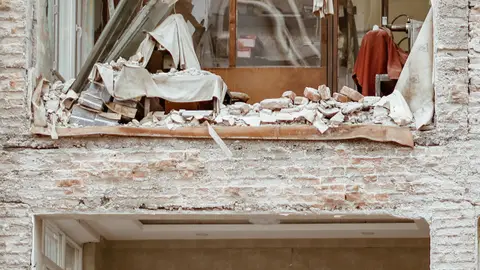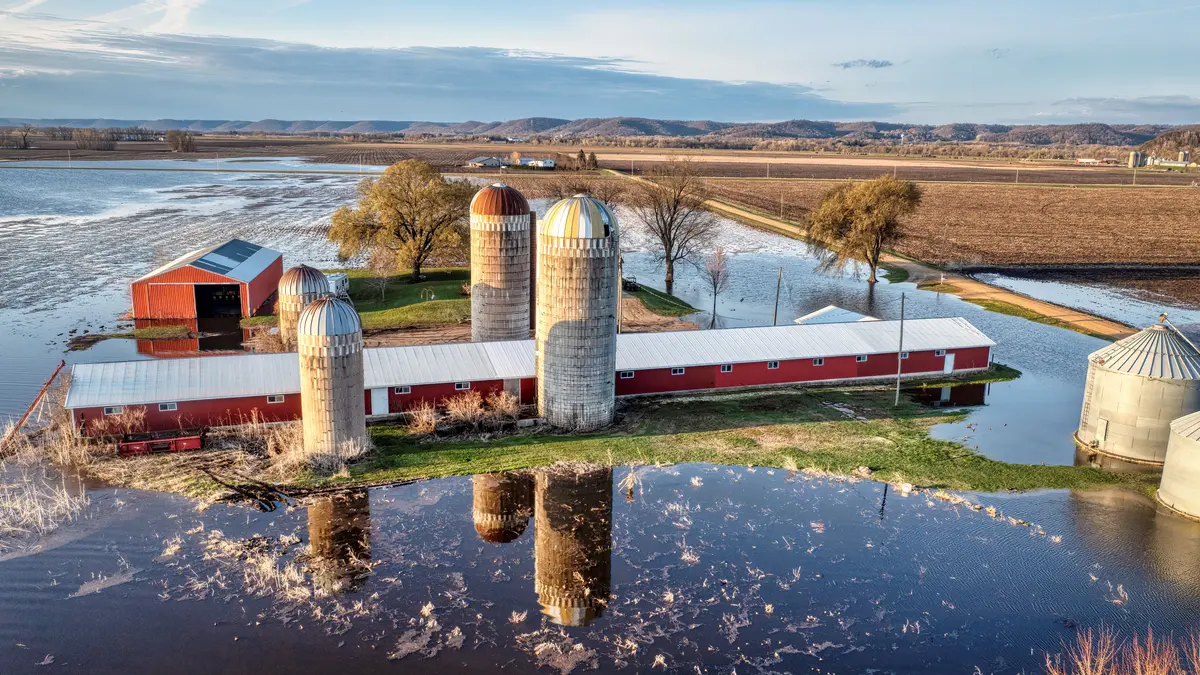
A pipe let go under a kitchen sink in a 1990s split-level, and by morning the homeowner had three different phone numbers scrawled on a notepad: a mitigation company, a restoration company, and a contractor for the rebuild. She assumed one of them was wrong. None of them were. Water damage repair, water mitigation and water damage restoration are three overlapping but genuinely different jobs, and the industry has never done a great job explaining which is which. Some companies handle all three under one roof. Others hand you off twice, once when the water stops moving, again when the drywall goes back up. Neither approach is wrong, but paying for the wrong one, or paying twice for the same step because nobody explained the handoff, happens constantly. This guide walks through what mitigation, restoration and repair actually mean, who typically performs each one, what they cost, and how to tell, before you make a single call, which phase your house is actually in.
What "Mitigation," "Repair," and "Restoration" Actually Mean
Ask five people in the restoration business to define these three words and you will usually get five overlapping but not identical answers, because the industry never agreed on hard boundaries between them. Still, most contractors who train against the IICRC S500 Standard for Professional Water Damage Restoration use the terms roughly the same way, and once you know the pattern, a confusing quote starts to make sense.
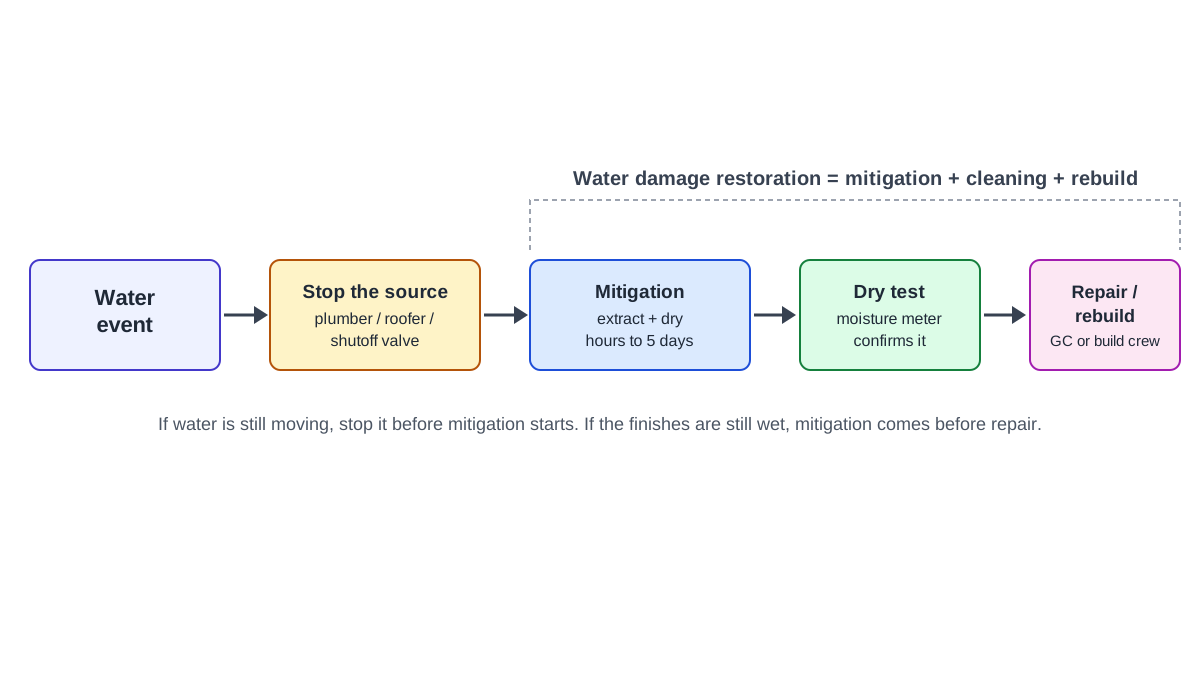
The emergency phase is water mitigation: stopping the source if it is still running, pumping or vacuuming out standing water, and setting up air movers and dehumidifiers to pull moisture out of the structure before it spreads or turns into mold. Mitigation happens fast, usually starting within hours of the call, and it is measured in days, not weeks. A mitigation crew's job is damage control, not cosmetics.
Broader than that is water damage restoration. It includes mitigation, plus the cleaning, sanitizing and deodorizing needed to bring an affected space back to a safe, pre-loss condition, and often the reconstruction that follows. When a company says it does "restoration," it usually means the whole arc, extraction through final walkthrough.
The narrowest of the three terms is water damage repair. It refers to fixing or replacing the specific things the water ruined, drywall, subfloor, cabinets, baseboards, insulation, once the structure is dry and safe to rebuild in. This is where the water damage restoration vs repair confusion usually starts: repair is a subset of restoration, not a competing service, but plenty of homeowners hear both words from different companies and assume they have to pick one.
| Phase | Goal | Typical timing | Who usually does it | Certification to ask about |
|---|---|---|---|---|
| Mitigation | Stop the damage from spreading | Starts within hours; runs 2-5 days | Restoration company's emergency crew | IICRC WRT |
| Restoration | Clean, sanitize and dry to pre-loss condition | Runs alongside and after mitigation | Restoration company | IICRC WRT; AMRT if mold is present |
| Repair / rebuild | Replace what could not be saved | Starts once the space tests dry | General contractor or the restoration company's build crew | State contractor's license |
Why These Terms Get Blurred (and Why It Costs You Money)
Three things create the confusion, roughly in order of how often they turn into a real billing dispute.
Most often, it is because many companies genuinely do all three. A local restoration outfit shows up for the emergency call, dries the structure, then hands you a second proposal to rebuild the drywall and flooring, all under one company name and one invoice. From the outside that looks like a single "water damage repair" job. From the inside it is mitigation, then restoration, then repair, billed as separate line items even if it feels like one visit.
Close behind that is insurance paperwork. Adjusters and estimating software break a claim into mitigation line items and repair or reconstruction line items, often with different approval steps, because insurers tend to treat "stop the damage from getting worse" (mitigation, frequently required under the policy) differently from "put it back the way it was" (repair, which gets scoped and sometimes negotiated). A homeowner reading two separate scopes can assume two separate problems when it is really one claim in two phases.
And then there is marketing. "Water damage repair near me" and "water mitigation" both get searched heavily, so a company that only does drying and extraction will still target "repair" in its ads, and a company that mostly does reconstruction will still call itself a mitigation specialist, because that is the term more people type. The label on a website does not always match the actual scope of work behind it.
How to Tell Which Phase Your Job Is In Right Now
Before you call anyone, a five-minute walk-through tells you which phase you are actually in, and which kind of company to call first.
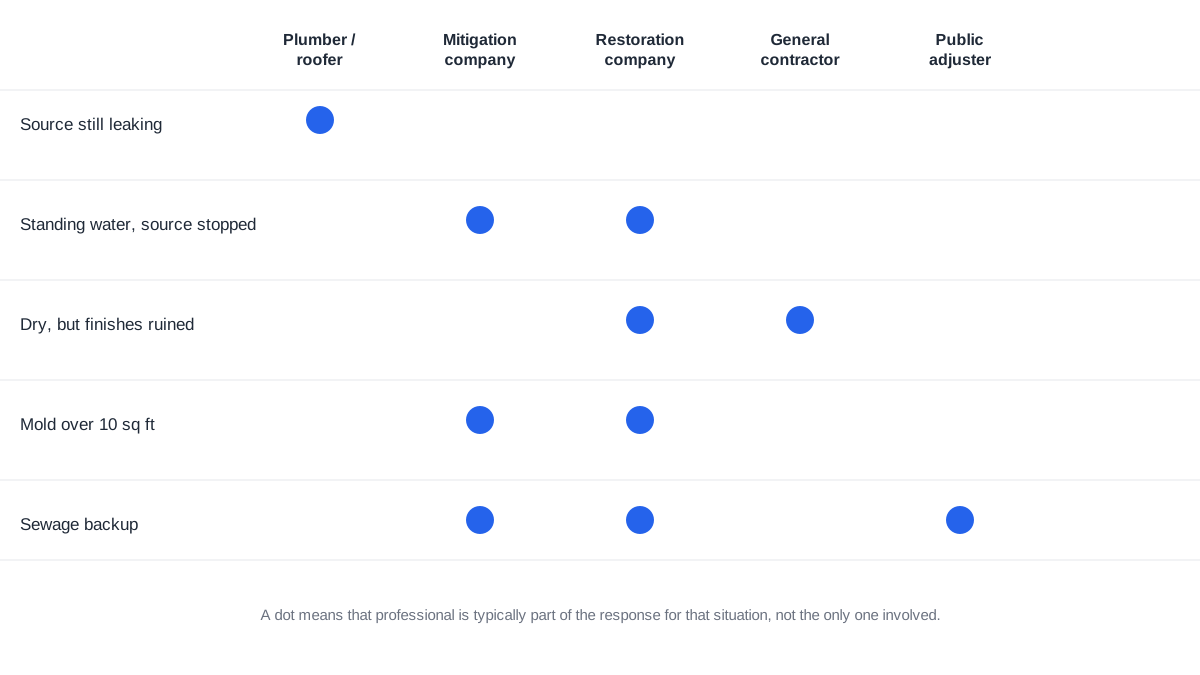
- Is water still moving? A running supply line, a roof actively leaking in the rain, or a sump pump still overwhelmed means the source needs to be stopped first, a plumber, a tarp, a shutoff valve, before mitigation can start.
- Is anything still wet? Carpet that squishes underfoot, drywall that is cool and damp to the touch, or a musty smell that was not there yesterday all mean you are in the mitigation window: extraction and drying, not repair yet.
- Has it been dried and tested? A restoration technician checks moisture content with a meter, not a guess, before calling a space dry. If nobody has done that, do not schedule drywall or flooring work no matter how dry it looks.
- Is the structure dry but the finishes are ruined? A stained ceiling, buckled hardwood, swollen baseboards or a delaminated cabinet bottom is the repair phase, replacing what got sacrificed to save the structure underneath it.
- Does the damage reach framing or subfloor, or is it confined to one material? A single soaked baseboard is a repair job. Wet subfloor, insulation or framing usually means full restoration: drying, then reconstruction, not just a patch. Our plain-English guide to water damage categories and classes walks through how a crew actually assigns that number.
If you are not sure which box you are in, say so out loud on the first call. A legitimate water damage contractor will ask about moisture readings and drying time before quoting a repair number, not skip straight to a demolition estimate.
Water Mitigation: What It Covers and What It Doesn't
Mitigation is triage, not renovation. A typical scope includes extracting standing water with truck-mounted or portable pumps, removing wet, unsalvageable materials like ruined carpet pad or soaked insulation, setting air movers and dehumidifiers, and daily moisture monitoring until every affected material reads dry on a meter. Most companies also handle content manipulation, moving or storing belongings out of the wet area, and antimicrobial treatment on framing and subfloor to slow mold growth while finishes dry.
What mitigation does not typically include: replacing drywall, refinishing floors, repainting, or any cosmetic work. A mitigation invoice ends when the space is dry and safe, not when it looks finished, which surprises homeowners expecting a fully repaired room at the end of the mitigation visit.
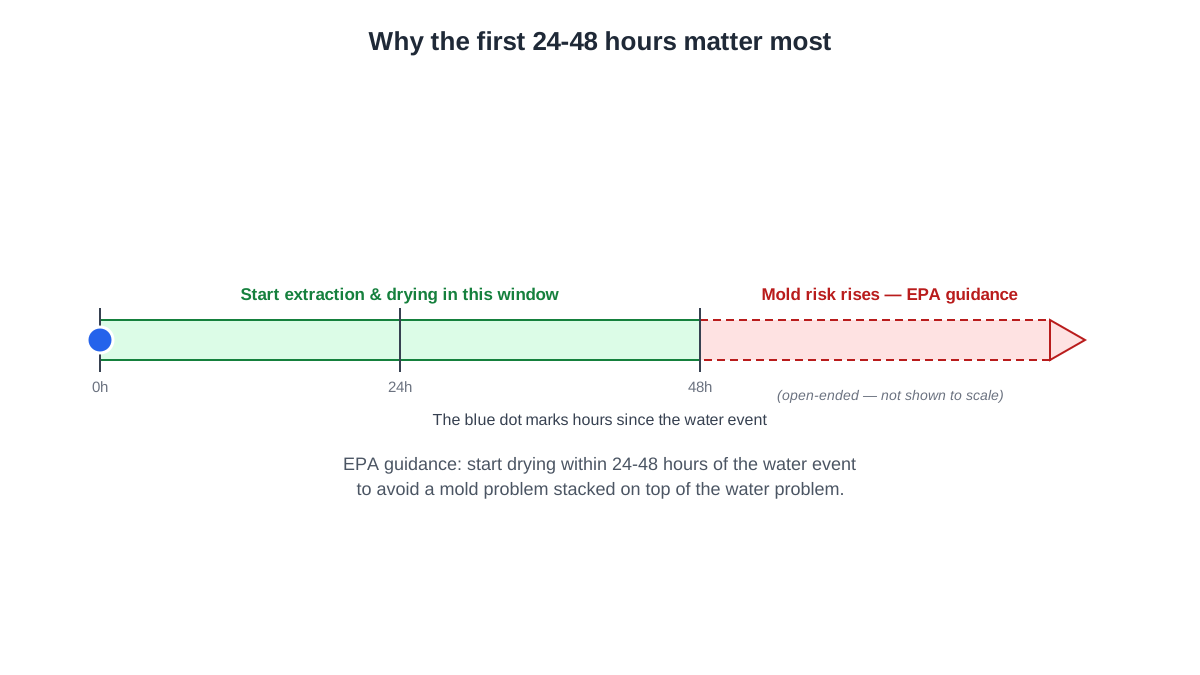
Timing matters more here than almost anywhere else in this process. Start mitigation, extraction and drying, within 24 to 48 hours of water intrusion, because that is the window before hidden moisture turns into a mold problem stacked on top of a water problem. That threshold comes from EPA guidance on mold and moisture, and it is close to the point where insurers start asking why mitigation was delayed, since most policies expect a homeowner to act promptly to prevent further damage.
The EPA also draws a size line worth knowing: a mold patch under roughly 10 square feet, about a 3-foot by 3-foot area, is generally something a careful homeowner can clean with gloves, an N95 and soap and water. Anything larger, or any mold following a sewage backup, calls for a professional trained under the mold-specific standard; see our guide to how fast mold grows after water damage for the details.
Water Damage Restoration: Drying, Cleaning and Reconstruction
Restoration is the umbrella term, and it is the one most homeowners mean when they say "water damage restoration" without thinking about the phases underneath it. A full restoration scope usually runs mitigation through reconstruction: extraction and drying first, then cleaning and sanitizing everything the water touched, walls, contents, HVAC if it was affected, then the repair and rebuild work that gets the space back to its pre-loss condition. Our step-by-step walkthrough of what actually happens during restoration covers each stage in order.
Companies that market themselves as full-service restoration contractors are betting most customers would rather sign one contract and deal with one project manager than coordinate a mitigation crew and then separately hire a general contractor for the rebuild. That is a reasonable trade for a lot of homeowners, especially on a larger loss where coordinating multiple contractors during an active insurance claim adds its own stress.
The tradeoff: a one-stop restoration company is not always the cheapest option for the rebuild portion specifically, because reconstruction work, drywall, paint, flooring, trim, is generally more competitively priced among general contractors who do it every day than among restoration companies for whom rebuild is a secondary service. Getting a second quote on the reconstruction phase alone, once mitigation is done and the insurance scope is set, is a common and reasonable move that does not require switching your mitigation company.
Restoration work, like mitigation, follows the IICRC S500 Standard for Professional Water Damage Restoration, and companies that hold IICRC certification, WRT (Water Damage Restoration Technician) at the baseline, AMRT (Applied Microbial Remediation Technician) if mold is involved, are following a documented process rather than guessing at drying times based on how a room looks.
Repair and Rebuild: Getting the Room Back to Normal
Once a space is confirmed dry, the rebuild after water damage phase looks a lot like ordinary renovation work, because at that point it mostly is. Drywall gets cut back to sound material and replaced (national cost guides put a typical section at $300 to $850). Trim, baseboards and cabinet toe-kicks that swelled or delaminated get replaced rather than dried, since particleboard and MDF rarely recover their shape once soaked. Flooring is judged case by case: solid hardwood can sometimes be sanded and refinished if it was not submerged long, while laminate and most engineered flooring with a soaked core almost always needs replacement, a distinction our full cost guide by job type breaks down further.
This is also where a general contractor, or a restoration company's in-house build crew, takes over from the drying technicians. The work requires standard trade licensing in most states, painting, drywall, flooring, sometimes electrical if outlets or wiring got wet, and it is worth confirming the crew carries current liability insurance and, where the state requires it, a contractor's license separate from any IICRC mitigation certification.
A ceiling that took water from a roof leak or an upstairs overflow typically runs $450 to $1,600 to repair, according to national cost data, depending on whether it is a stain-and-patch job or a full section replacement with new insulation. Kitchens hit by an appliance leak run considerably higher, $1,750 to $8,000 according to Fixr, once cabinets and flooring are involved, since those are the most expensive materials in the room to replace.
What Water Damage Repair, Mitigation and Restoration Cost
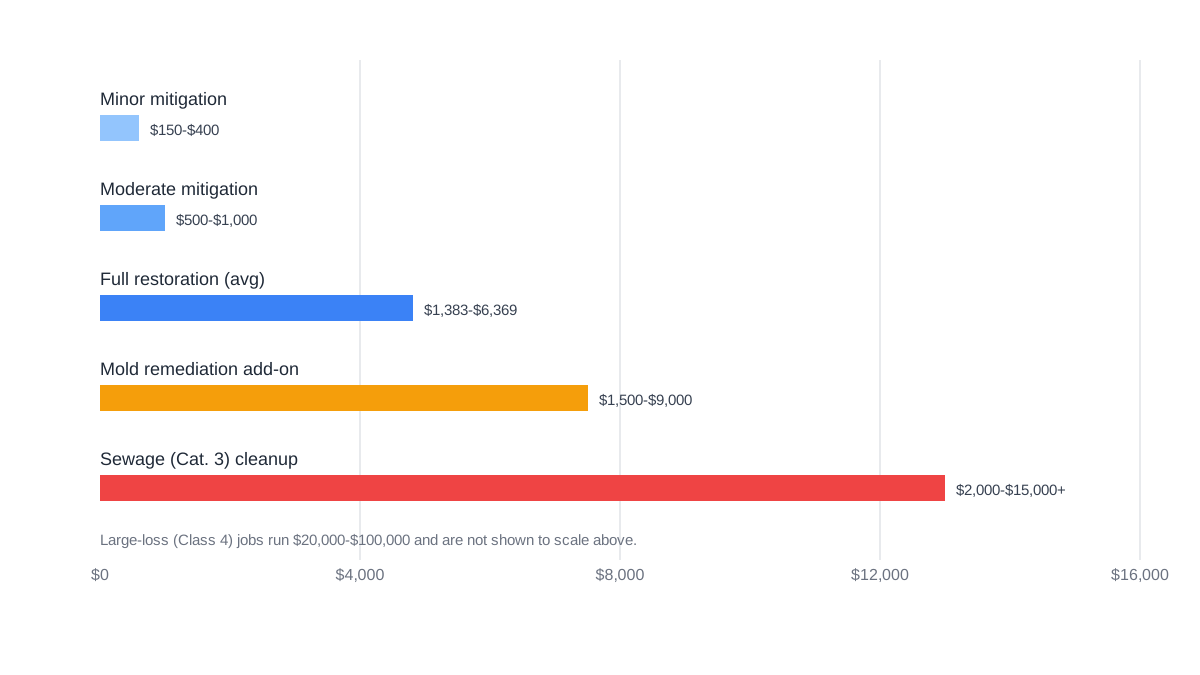
Because these three phases get billed differently depending on which company structure you are dealing with, it helps to see the ranges side by side. These are researched ranges pulled from major national cost-estimating publishers, not a quote for your specific house; only a written estimate from a contractor who has actually walked your property is binding, since final cost varies by region, access to the damaged area, and how much worse the damage turns out to be once material actually comes out of the walls.
| Job or phase | Typical range | What moves the price | Source |
|---|---|---|---|
| Minor mitigation only (Class 1, clean water) | $150 - $400 | Square footage, how fast you called | HomeAdvisor |
| Moderate mitigation (Class 2) | $500 - $1,000 | Carpet/pad removal, number of rooms | HomeAdvisor |
| Full restoration, average project | $1,383 - $6,369 (avg $3,868) | Water category, square footage, drying days | HomeAdvisor |
| Large loss / structural (Class 4) | $20,000 - $100,000 | Framing, subfloor, whole-structure drying | HomeAdvisor, Fixr |
| Sewage (Category 3) cleanup | $2,000 - $15,000+ | Contamination level, how long it sat | HomeGuide |
| Mold remediation add-on | $1,500 - $9,000 (avg $3,500) | Square footage, HVAC involvement | Fixr |
| Drywall repair (rebuild phase) | $300 - $850 | Section size, texture match | HomeAdvisor |
| Ceiling repair (rebuild phase) | $450 - $1,600 | Stain-and-patch vs full section | HomeAdvisor |
| Sump pump install (prevention) | $640 - $2,000 (avg $1,200) | Pit depth, battery backup | HomeAdvisor |
Notice mitigation and small repairs sit at the bottom of that table and large-loss restoration sits at the top, which is why a single water damage repair cost figure you see quoted online rarely matches your own bid: it depends entirely on which phase, or how many phases, the quote actually covers. When a company quotes low, ask directly whether the number includes drying and testing or only the visible repair.
What You Can Handle Yourself, and Where That Ends
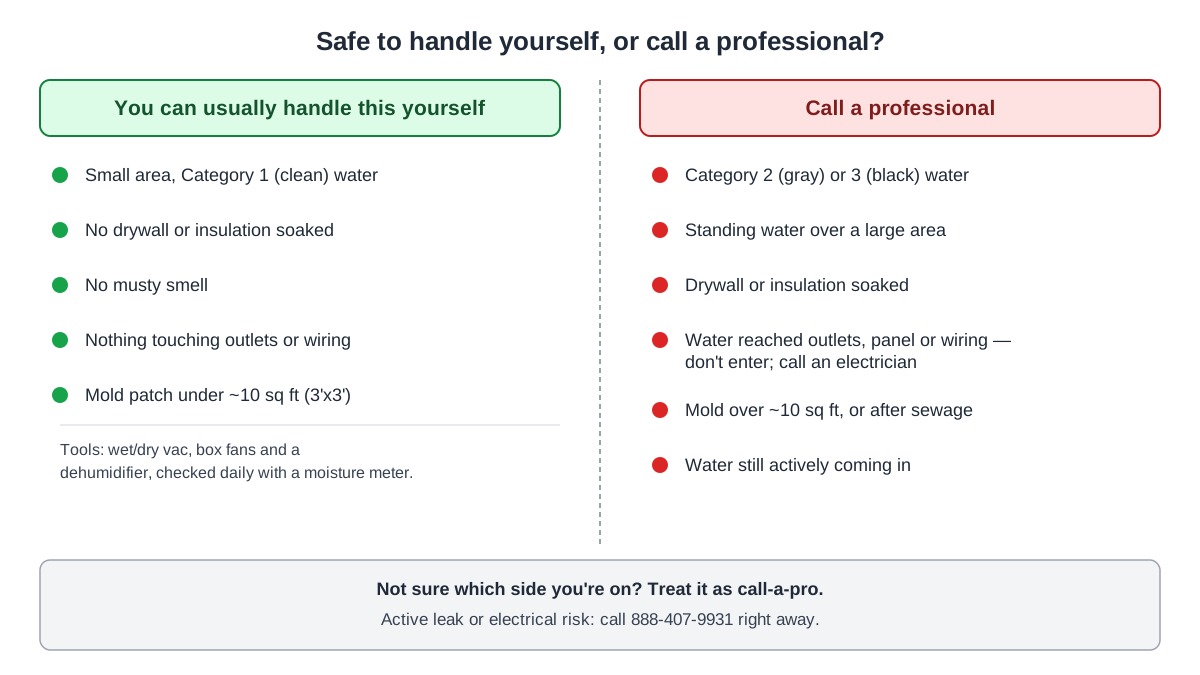
A homeowner with a wet/dry vac, a couple of box fans and a dehumidifier can reasonably handle a small, clean-water event: a supply line that dripped overnight and soaked a few square feet of vinyl or tile, with no drywall soaked and no smell. Extract what you can, point fans and a dehumidifier at the wet area, and check back daily with a moisture meter, or even just a bare hand, for lingering dampness over the next few days.
DIY ends where Category 2 or 3 water starts (gray water from appliances or backups, or black water from sewage and flooding), where standing water covers more than a small area, or where drywall or insulation is soaked, since both hold moisture and hide it from view. If water reached outlets, a switch plate, a panel or any wiring, stop where you are: do not step into the water, shut off power at the main breaker only if you can reach it without contact, and call an electrician or your utility before touching anything else. None of this is safe to handle without the right training.
If the water is still coming in, a supply line still spraying, a roof still leaking during an active storm, stop cleanup and get a professional moving first. Call 888-407-9931 and describe exactly what you see, standing water, a spraying line, an active leak, so whoever answers can tell you what to shut off while help is on the way.
The same EPA guidance that sets the 24-to-48-hour drying window also sets a size limit for DIY mold cleanup: under roughly 10 square feet, a 3-foot by 3-foot patch, a homeowner in gloves and an N95 can usually handle it with soap and water on hard surfaces. Bigger than that, or anywhere sewage was involved, is a job for someone trained under the IICRC S520 mold remediation standard.
How to Choose a Water Damage Contractor
Whether you hire one company for the whole job or split it across a mitigation specialist and a general contractor, vet each the same way you would vet any tradesperson working on your house.
- Verify the state contractor's license is current, most states post a free public license lookup online, where your state requires one for the rebuild portion, and confirm general liability insurance is active before any work starts, not just described in the sales pitch.
- Ask which IICRC certifications the technicians hold, WRT at minimum for water work, AMRT if mold shows up, and ask to see the certificate rather than just hearing the acronym.
- Get a written estimate that separates mitigation (extraction, drying, monitoring) from repair (materials, labor, finish work), even if one company is doing both, so you can see what you are paying for at each phase.
- Ask how they document moisture readings; photos and daily logs matter if you are filing an insurance claim, since the adjuster will want that record.
- Get a second opinion on the rebuild scope specifically if the number feels high, reconstruction pricing varies more by contractor than mitigation pricing does.
Red flags worth walking away from: a company that wants full payment before starting work, one that pressures you to sign an insurance assignment-of-benefits form you have not read, or one that cannot name which standard it follows when you ask directly. Our deeper guide to vetting a water damage company covers licensing lookups and interview questions state by state.
A search for "water damage repair near me" mostly returns local mitigation and restoration companies, which makes sense since that is where most of the search volume goes, but it is worth calling at least two before committing to anything beyond a small, clearly self-contained repair. If your loss involves standing water, a strong odor, or any doubt about how far it spread, 888-407-9931 reaches a water damage restoration company that serves your area and can send someone to assess it in person before you commit to a scope.
How Insurance Treats Mitigation, Restoration and Repair Differently
Most standard homeowners policies, HO-3 is the common form, cover water damage that is sudden and accidental: a pipe that bursts, an appliance that fails, a roof that suddenly leaks. They exclude gradual damage from a slow leak you should have caught, and almost always exclude flooding from rising water outside the home, which requires separate flood insurance through the National Flood Insurance Program or a private carrier. That distinction determines whether mitigation and restoration get paid by your homeowners insurer, a flood policy, or out of pocket, so knowing which kind of water you are dealing with matters before you call anyone.
| Typically covered under HO-3 | Typically excluded (check your policy) |
|---|---|
| Sudden pipe burst or appliance failure | Gradual, long-term leaks and neglected maintenance |
| Sudden storm-driven roof leak | Flooding from rising water outside the home (needs flood insurance) |
| Fire-suppression sprinkler discharge | Sewer or drain backup (often needs a policy rider) |
Water damage and freezing claims are common enough to plan for: they accounted for 27.6% of homeowners insurance losses in 2022, second only to wind and hail, with an average claim severity of $13,954, according to the Insurance Information Institute. A separate analysis citing 2023 data put water and freezing claims at 22.6% of the total, affecting roughly one in every 67 insured homes that year, with an average claim near $15,400, a reminder that this is not a rare event.
On documentation: photograph everything before you touch it, standing water, the source, any visible damage, keep the mitigation company's daily drying logs and moisture readings, and save every receipt, including a hotel stay if the home became unlivable. Most insurers assign their own adjuster to inspect and scope the loss; you are allowed to hire an independent public adjuster to represent your side of that negotiation, usually for a percentage of the settlement, which can be worth it on a large or disputed claim but rarely makes sense on a small mitigation-only claim. Our full guide to water damage insurance claims walks through the filing process step by step.
One more number worth knowing before you decide whether a claim is worth filing at all: FEMA estimates that just one inch of standing water can cause roughly $25,000 in damage. That is the scale that makes "should I file a claim" a real question with a real dollar answer behind it, even for a loss that looks minor from the doorway.
Regional Notes: Freeze Belt, Flood Zones and Hurricane Coast
The three phases stay the same everywhere, but which one dominates your risk depends heavily on where you live. In the freeze belt, the northern half of the country where winter lows regularly drop below freezing, frozen and burst supply lines are a leading cause of winter water damage claims, which is why insurers there frequently ask whether pipes were insulated and whether the heat was left on during a vacancy. FEMA's National Risk Index tracks relative hazard exposure by county for both winter weather and flooding, and it is worth a look before assuming your area matches the national averages in this guide.
Along the Gulf Coast and the Atlantic Seaboard, hurricane season (roughly June through November) shifts the mix toward larger, Category 3 sewage-contaminated losses and storm-surge flooding that homeowners insurance typically will not cover without a separate flood policy. NOAA's climate normals data shows how different rainfall intensity and storm frequency are region to region, part of why a typical restoration job in coastal Louisiana looks nothing like one in the arid Southwest.
In the arid Southwest and interior West, water damage skews toward appliance and plumbing failures rather than weather events, since there is less rainfall driving flooding, but older housing stock with galvanized or polybutylene plumbing still produces its share of slab leaks and sudden pipe failures. Wherever you are, the mitigation-then-repair sequence in this guide holds; only the odds of which cause you will face, and whether it is a homeowners-insurance issue or a flood-insurance issue, change by region.
Frequently asked questions
What is water damage repair?
What is water mitigation?
What's the difference between water mitigation and water damage restoration?
Who fixes water damage: a plumber, a restoration company, or a general contractor?
How long does water mitigation take?
How long does water damage restoration take?
Can water damage always be fixed, or is a total rebuild sometimes required?
Why is water mitigation so expensive?
Does homeowners insurance cover water damage restoration?
How do I estimate water damage repair costs before a contractor arrives?
What does "water mitigation system" mean, is that different from a mitigation service?
Sources and further reading
- ANSI/IICRC S500 Standard for Professional Water Damage Restoration — Institute of Inspection, Cleaning and Restoration Certification (IICRC), Fifth Edition, 2021
- ANSI/IICRC S520 Standard for Professional Mold Remediation — IICRC, Fourth Edition, 2024
- A Brief Guide to Mold, Moisture and Your Home — U.S. Environmental Protection Agency, Last updated February 18, 2026
- Water Damage Restoration Cost — HomeAdvisor, Updated June 17, 2026
- Mold Remediation Cost — Fixr, Updated August 29, 2025
- Sewage Cleanup Cost — HomeGuide, August 22, 2025
- Water Damage Restoration Cost — Today's Homeowner, Updated September 3, 2025
- Facts + Statistics: Homeowners and Renters Insurance — Insurance Information Institute
- Everyone Needs Flood Insurance — FEMA, Last updated January 21, 2025
- National Risk Index — FEMA
- U.S. Climate Normals — NOAA National Centers for Environmental Information
- Water Damage Statistics — This Old House (citing Triple-I), Updated March 27, 2026
- Water Damage Restoration Cost — Fixr, Updated January 31, 2025
People also search for
Related guides
Water Damage Restoration: What Actually Happens, Step by Step
· 19 min read
Water Damage Restoration Cost in 2026: Real Ranges by Job and Category
· 19 min read

Water Damage Categories and Classes (IICRC S500) Explained in Plain English
· 21 min read