Yes, standard homeowners insurance covers water damage when it's sudden and accidental, a burst pipe, a failed water heater, or an overflowing appliance, up to your dwelling and personal property limits, minus your deductible. It does not cover flooding from outside your home, sewer or sump backups without an added endorsement, or damage from a leak you let go unrepaired for weeks or months.
A supply line lets go behind the dishwasher at two in the morning, or a pipe in an exterior wall splits during the first hard freeze of the year, and by the time anyone notices, water has soaked into the flooring, the cabinet toe-kicks and the wall behind them. The cleanup call comes first. The insurance question comes right behind it: is any of this actually covered, or is this a check you're writing yourself?
This guide walks through homeowners insurance water damage coverage scenario by scenario, the sudden pipe burst versus the leak that sat for months, the sewer backup versus the burst dishwasher hose, the flood versus everything else, using real cost and claims data rather than guesswork. By the end you'll know which of your specific situations a standard HO-3 policy is built to pay for, what it excludes outright, and what a written estimate and a documented claim should look like either way.
The Short Answer: What a Standard Homeowners Policy Covers
A standard HO-3 homeowners policy, the kind most people in the US carry, pays for direct physical loss to your home and belongings from a specific list of causes the industry calls covered perils. Water damage is one of them, but only in its sudden and accidental form: a supply line that lets go overnight, a water heater tank that splits, a washing machine hose that blows off the fitting. The policy pays under two buckets, dwelling coverage for the structure and personal property coverage for what's inside it, both subject to your deductible and the limits printed on your declarations page.
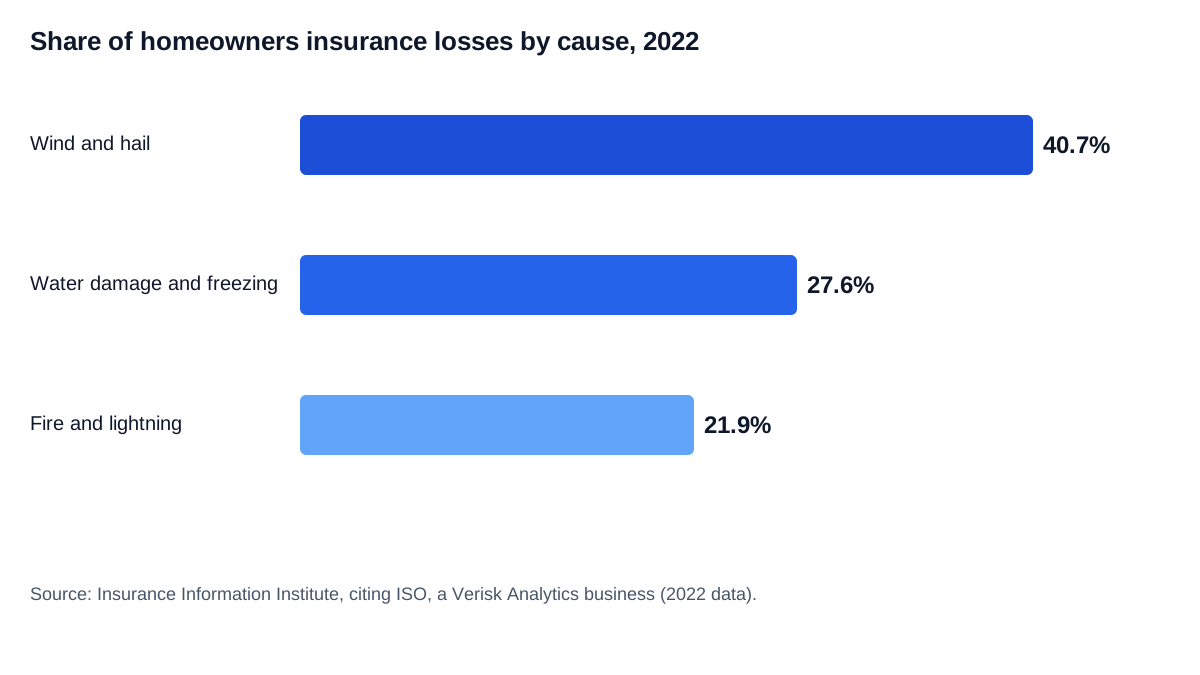
Water damage is not a rare event. The Insurance Information Institute reports that water damage and freezing accounted for 27.6% of homeowners insurance losses in 2022, behind only wind and hail at 40.7%, with an average claim severity of $13,954 and a frequency of 1.61 claims for every 100 house-years insured. Water damage and freezing is the second most common cause of homeowners insurance losses. Source: Insurance Information Institute, citing ISO, a Verisk Analytics business. Put another way, water is the second most common reason a homeowner files a claim, and each incident costs insurers more on average than nearly anything except fire.
None of that guarantees your specific leak gets paid. The word doing most of the work in your policy is "sudden." The next section is about that word, and about the leaks that don't qualify.
Sudden and Accidental vs Gradual: The Line Every Adjuster Draws
Every adjuster who inspects a water claim is trying to answer one question: did this happen suddenly, or did it happen slowly enough that a reasonable homeowner should have caught it? A pipe that splits from a hard freeze on a Tuesday night, once the water sitting inside a supply line drops to 32°F and turns to ice, and floods the kitchen by morning is sudden and accidental. A supply line under a bathroom sink that's been seeping for months, staining the cabinet floor and softening the subfloor before anyone notices, is treated as gradual, even though the homeowner never watched it happen.
If an adjuster can show the water intrusion went on for weeks or months before it was found, or that routine maintenance would have caught it, the claim gets denied as a maintenance issue rather than a covered loss. This is the single most expensive line in the whole policy to misunderstand: a slab leak or a slow flashing failure can run into tens of thousands of dollars in rot, mold and structural repair, and none of it comes back from the insurer.
The practical test insurers use isn't how long the leak lasted, it's whether reasonable care would have found it sooner. A leak inside a wall cavity nobody could have seen has a better shot at coverage than the same leak under a sink you open every day. Some homeowners search for gradual leak insurance, hoping there's a policy add-on that closes this gap. There isn't one. No standard endorsement converts a maintenance failure into a covered peril; the only real defense is catching leaks early through routine inspection, not buying a different kind of policy.
Scenario by Scenario: Is This Water Damage Covered?
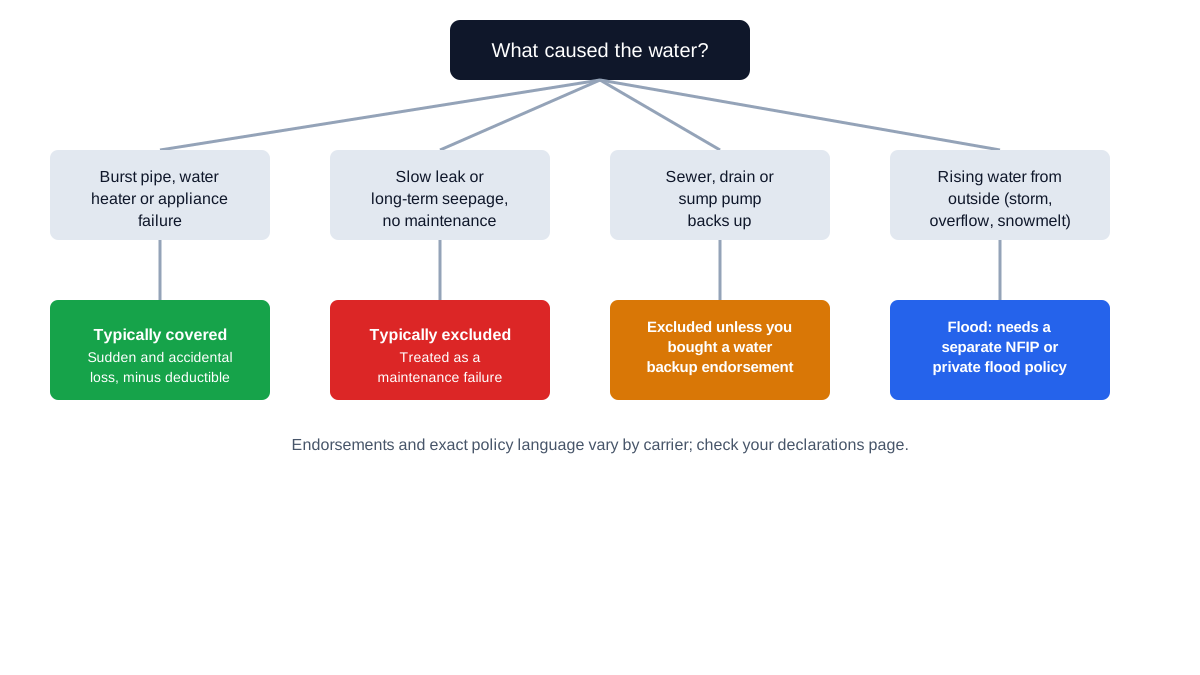
Instead of memorizing policy language, it helps to walk through the situations that actually generate calls to a restoration company. Here's how each one typically shakes out under a standard HO-3 policy, though your own declarations page and any endorsements you've added can shift the outcome. How a standard HO-3 policy typically treats four common causes of water damage.
Burst or frozen pipe
This is the textbook sudden and accidental loss. A supply line freezes, expands and splits, or a fitting simply fails under normal water pressure. A standard policy pays for the water damage cleanup and, usually, the cost to access and repair the pipe itself, minus your deductible, and the pipe repair itself typically runs $150 to $250 per linear foot once a wall or ceiling has to be opened to reach it. Burst pipe flooded the house covers the shutoff and cleanup steps in more detail.
Water heater failure
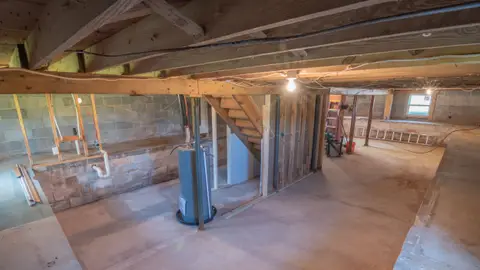
A water heater tank that rusts through and dumps 40 or 50 gallons onto the floor is also sudden and accidental, even though rust takes time, because the failure itself, the tank giving way, is the sudden event the policy is written around. Most insurers pay for the water damage cleanup and the flooring or drywall it ruins. The tank itself is usually treated as a mechanical breakdown and typically isn't covered unless you've added an equipment breakdown endorsement.
Washing machine or dishwasher leak
A supply hose blowing off a washing machine under the normal 40-to-80-psi pressure of a residential water line, or a dishwasher door seal failing mid-cycle, is a classic sudden loss, and the damage it causes to flooring, cabinets and the drywall behind them is typically covered the same way as a burst pipe. What isn't covered: replacing the appliance itself if it failed from age or a problem you already knew about, such as a hose you'd noticed was cracked.
Storm-driven roof leak
Wind-driven rain that gets in through an opening a storm just created in your roof is covered, because the wind damage is the covered peril and the water follows it in. A roof that's been leaking for two winters because of curling shingles nobody replaced is a different story: that's wear and maintenance, and the resulting water damage exclusions in most policies apply squarely to it.
Slab leak under the foundation
A slab leak, a supply or drain line failing beneath a concrete foundation, is usually covered as a sudden and accidental loss once it's discovered, but the rules split in an unusual way: many policies pay to repair the plumbing and to tear out and replace the flooring directly above the leak, yet cap or exclude the cost of breaking and repouring the slab itself unless you've added specific coverage. Read the water damage section of your policy closely if your home sits on a slab.
Slow leak under a sink or behind a wall
This is the gradual scenario from the last section in miniature. If cabinet staining, a soft floor or a musty smell was visible for any length of time before the leak was found, expect the adjuster to treat it as a maintenance failure rather than a covered loss. Catching those signs, staining, softness, a musty smell, while they're still small is the only thing standing between a homeowner and a denied claim.
Water Backup Coverage: The Endorsement Most Policies Leave Out
Water that comes up rather than down, a sewer main backing up into a basement drain, a sump pump that fails during a storm and lets groundwater rise through the floor, falls outside a standard HO-3 policy entirely. This is one of the most common gaps homeowners discover only after it's too late to matter: the policy that pays a burst-pipe claim without hesitation will deny a sewer backup outright unless you've purchased water backup coverage, sometimes sold as a sewer and drain backup endorsement, as a separate add-on. A sewage backup alone typically runs $2,000 to $15,000 or more, working out to roughly $7 to $15 per square foot, once contamination, drywall and flooring are factored in, according to HomeGuide's national cost survey, real money to have riding on an endorsement most homeowners never think to ask about.
The endorsement is typically added for a modest increase in premium, with the insurer setting its own coverage limit for backup claims, separate from your main dwelling limit. The exact cost and coverage limit vary by carrier and are printed on your policy, not standardized nationally, so ask your agent for the real numbers on your policy rather than assuming a figure that applies to somebody else's. Sump pump overflow or failure and sewage backup cleanup go deeper into the mechanics and the cleanup itself.
If you don't know whether you carry this endorsement, that's the first thing worth finding out, not during a backup, but this week, by calling your agent and asking directly whether water backup coverage is on your policy and what its limit is.
Flood vs Water Damage Insurance: Two Different Policies, Two Different Checks
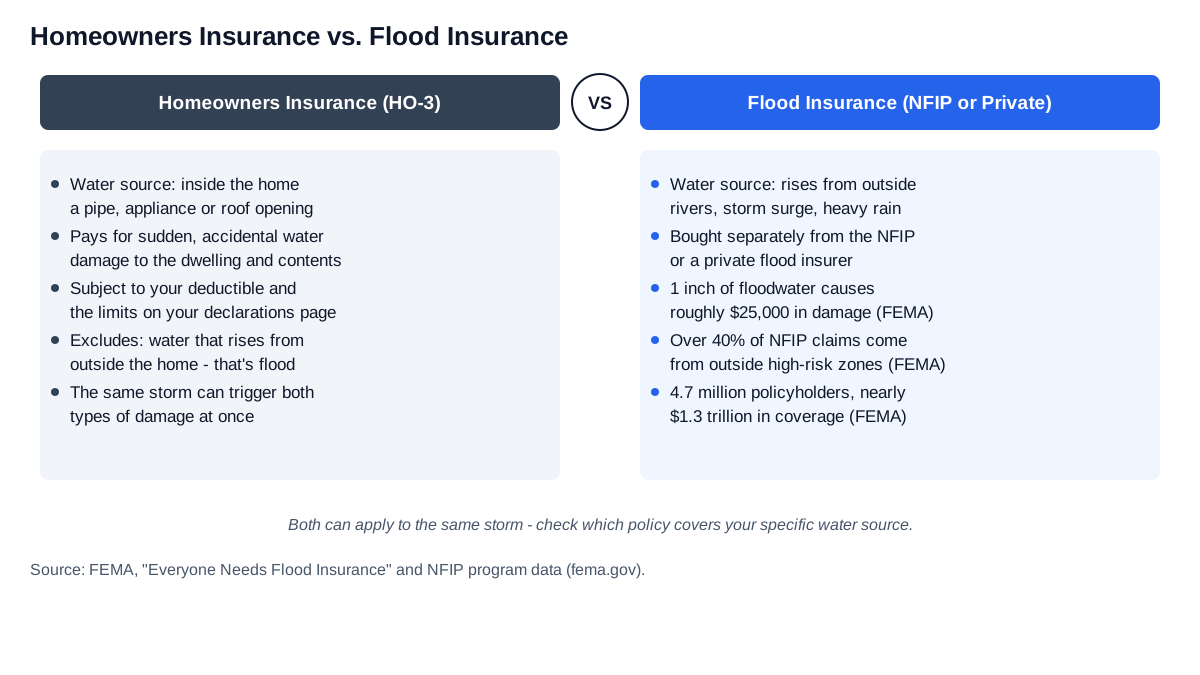
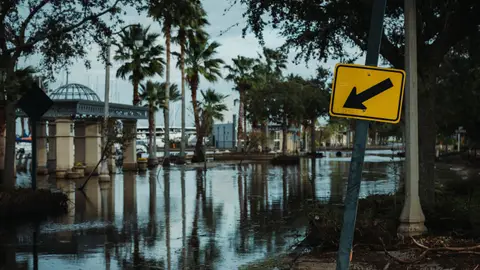
Flood vs water damage insurance is the distinction that catches the most homeowners off guard, because both start with the same idea and end in completely different claims processes. Water damage, in insurance terms, is water that originates inside your home or from a specific, identifiable event, a pipe, an appliance, a roof opening. Flood, in the same terms, is water that rises from outside and affects two or more properties or acres, a river overflowing its banks, storm surge, or heavy rain pooling faster than the ground or storm drains can absorb it. A standard homeowners policy excludes flood entirely, which is why the federal government runs the National Flood Insurance Program, or NFIP, as a wholly separate policy bought on top of homeowners coverage.
The numbers explain why this distinction matters. FEMA notes that just one inch of floodwater can cause roughly $25,000 in damage to a home, and that more than 40% of NFIP flood claims come from homes outside the government's designated high-risk flood zones, meaning a flood policy isn't only for people who live next to a river. FEMA also reports that 99% of US counties have experienced a flooding event since 1998. Nationally, the NFIP carries about 4.7 million policyholders with nearly $1.3 trillion in coverage in force across roughly 22,600 participating communities. Homeowners insurance and flood insurance are separate policies with separate claims processes. Source: FEMA.
If your basement fills during a hurricane because storm surge or overland flooding pushed in from outside, that's a flood claim, and without a separate NFIP or private flood policy, it isn't covered no matter how good your homeowners insurance is. Flood damage restoration and the NFIP claim process walks through what filing that separate claim looks like.
Mold After a Covered Leak: What's Paid and What's Capped
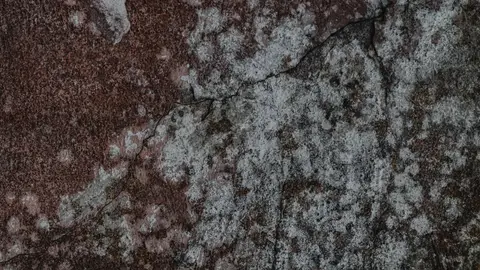
Mold coverage rides on the back of the water claim that caused it. If the water damage itself is covered, a sudden pipe burst, an appliance failure, a storm-driven roof leak, the mold that grows out of it in the following days is generally covered too, but almost every policy writes a sublimit into the fine print: a maximum dollar amount for mold remediation that's often far lower than the limit for the water damage itself. National cost data puts mold remediation at $1,500 to $9,000, averaging around $3,500 (Fixr), a range that can blow past a modest sublimit fast once professional testing and containment get added in. If the underlying water event isn't covered, whether that's a gradual leak or an uninsured flood, the mold that follows it isn't covered either.
Speed matters more here than almost anywhere else in this guide. The EPA's guidance on mold and moisture is specific: materials need to be dried within 24 to 48 hours to prevent mold from taking hold, indoor humidity should be brought back below 60 percent (ideally between 30 and 50 percent) while drying equipment runs, and once visible mold covers more than about 10 square feet, roughly a 3-by-3-foot patch, professional remediation following the ANSI/IICRC S520 standard is the appropriate response rather than a homeowner tackling it with bleach and a fan. Insurers know this timeline too, and a documented delay in starting dry-out gives an adjuster grounds to argue the mold resulted from your inaction rather than the covered water event. Mold after water damage covers the growth timeline and remediation process in full.
What Restoration Actually Costs, and How Much of the Bill Insurance Covers
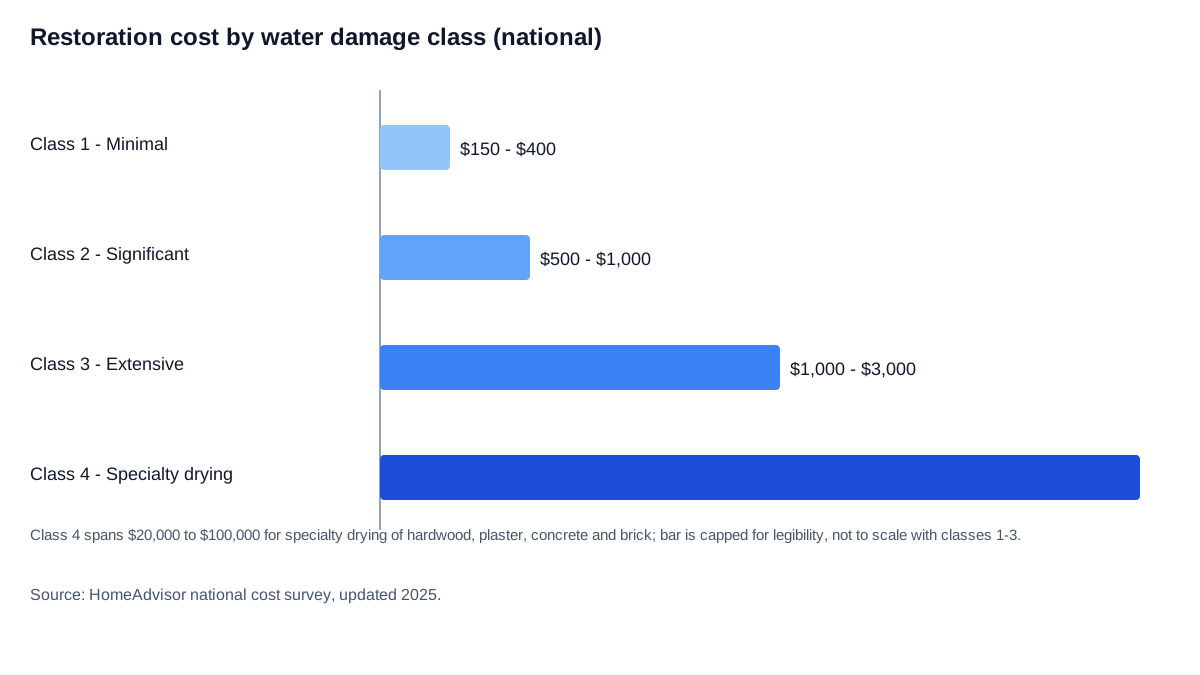
Two different numbers matter once a leak happens: what the repair actually costs, and how much of that your insurer is going to pay. National cost-survey data from four major publishers puts a typical water damage restoration job between about $1,200 and $6,400, with published national averages clustering between $3,000 and $3,868. Broken down by water extraction alone, HomeAdvisor's survey puts per-square-foot pricing at about $3.50 for Category 1 clean water, $5.25 for Category 2 gray water, and $7.50 for Category 3 black water, since more contaminated water needs more aggressive extraction and disposal. Actual bids run higher in expensive labor markets and lower in others, so treat these as a national starting point, not a quote. National restoration cost ranges by IICRC S500 water damage class. Source: HomeAdvisor.
Class (IICRC S500)
What it typically means
Typical cost
Source
Class 1 - Minimal
Least water absorbed, small area, one material type
$150 - $400
HomeAdvisor, 2025
Class 2 - Significant
Whole room, carpet and cushion soaked
$500 - $1,000
HomeAdvisor, 2025
Class 3 - Extensive
Water from overhead, saturated walls and insulation
$1,000 - $3,000
HomeAdvisor, 2025
Class 4 - Specialty drying
Hardwood, plaster, concrete or brick needing slow, specialized drying
$20,000 - $100,000
HomeAdvisor, 2025
Cost survey
National average
Typical range
HomeAdvisor
$3,868
$1,383 - $6,369
HomeGuide
not published
$2,000 - $6,000
Fixr
$3,000
$1,200 - $5,000
Bob Vila
$3,455
$1,305 - $5,707
How we got these numbers: the ranges above come from four independent cost-survey publishers who each aggregate contractor quotes nationally; none share ownership, and the fact that their averages land within a few hundred dollars of each other, roughly $3,000 to $3,868, is a reasonable sign the range is representative. None of these figures are region-specific; a written local estimate is the only number that applies to your actual job.
Once the repair is priced, the question becomes what your policy actually pays toward it. On a covered claim, a standard HO-3 pays the actual cash value or replacement cost of the loss, whichever your policy specifies, minus your deductible; a $3,868 job with a $1,000 deductible on a replacement-cost policy typically leaves you owing the deductible plus anything above your coverage limits or outside a sublimit, such as mold. On an uncovered claim, a gradual leak, a flood, an unendorsed backup, you're paying the entire number in the table yourself, which is exactly why the scenario section above matters more than the price tag.
Cause of water
Typically covered
Typically excluded or needs endorsement
Burst or frozen pipe
Yes, cleanup plus pipe access
-
Appliance hose or seal failure
Yes
Appliance replacement if from neglect
Water heater tank failure
Yes (water damage only)
Tank replacement (mechanical breakdown)
Storm-created roof opening
Yes
Long-term unrepaired roof leak
Sewer, drain or sump backup
No
Needs water backup endorsement
Flood (rising water from outside)
No
Needs separate NFIP or private flood policy
Slow or gradual leak
No
Treated as a maintenance failure
Documenting Damage So the Claim Doesn't Get Challenged
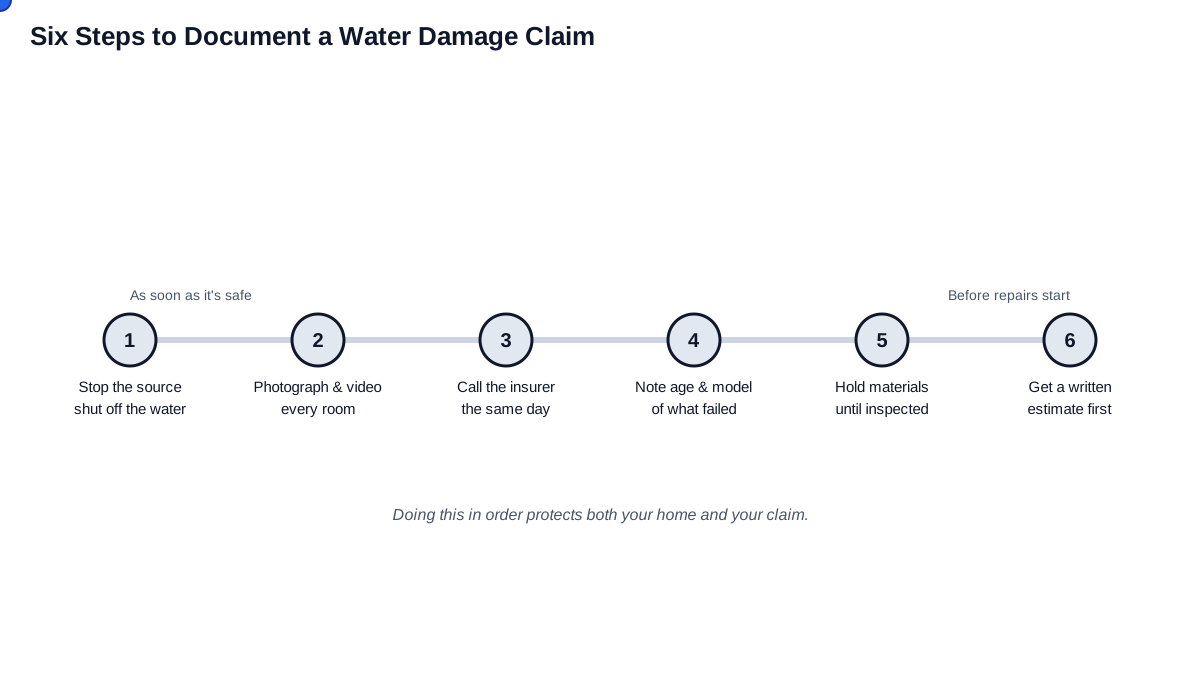
Every adjuster works from the same basic evidence, and the strength of your claim usually comes down to how much of it you gathered before the cleanup started.
Stop the source if it's safe to do so, shut off the water at the fixture or the main, and photograph the shutoff itself.
Photograph and video every affected room before you move or discard anything, including wide shots that show water lines on walls and close-ups of damaged flooring, cabinets and belongings.
Call your insurer or agent the same day; most policies expect prompt notice, and you should ask what your specific proof-of-loss deadline is.
Write down the age and, where you can find it, the model number of whatever failed, a water heater, a washing machine hose, a dishwasher, since the adjuster will ask.
Hold onto damaged materials until the adjuster has inspected them or explicitly told you it's fine to discard, unless leaving them in place creates a mold or safety hazard.
Get a written estimate from a restoration company, itemized by task and material, before repairs begin; it becomes the baseline the adjuster compares their own number against.
Insurers don't require you to use their preferred vendor, and you're free to hire your own restoration company. What they do require is documentation that supports the number on the estimate. A folder of timestamped photos, the written estimate and your notes from the first call to the insurer typically does more to move a claim toward payment than anything said over the phone. The order that keeps a water damage claim moving toward payment, from shutoff to written estimate.
When to Call a Restoration Company Before You Call Anyone Else
There's a sequence that protects both your home and your claim: stop the water, then call the restoration company, then call the insurer, roughly in that order and within the same hour when you can manage it. Standing water and wet materials start supporting mold growth inside the EPA's 24-to-48-hour window, and every hour of delay is an hour an adjuster can later point to as your own contribution to the damage.
If the water is still coming in or you're not sure where it's coming from, call 888-407-9931 and describe what you see. A restoration company that serves your area can talk you through the shutoff and get equipment moving before the insurer has even opened the file. This isn't a substitute for calling your insurer, it happens in parallel with it, and most policies expect you to limit further damage regardless of who inspects first.
Some situations skip the insurance question entirely and go straight to safety: standing water anywhere near an electrical panel or outlets, a ceiling visibly sagging under the weight of trapped water, or any water that's contacted a sewer line, which the ANSI/IICRC S500 standard classifies as Category 3, grossly contaminated water requiring specialized handling. None of those are do-it-yourself situations, regardless of what your policy says about coverage.
Choosing a Restoration Company Your Insurer Won't Fight You On
Insurers rarely dispute the fact that water needs to be extracted and structures need to be dried; what they push back on is scope and price. A company that documents its work the way an adjuster expects, moisture readings logged daily, a scope written to the ANSI/IICRC S500 standard, drying equipment counted and photographed, tends to get paid without a fight. One that shows up, runs a fan for two days and hands over a vague invoice tends to get its estimate cut.
Before you sign anything, confirm four things: a current state license where your state requires one, proof of general liability insurance, IICRC certification for the technicians (WRT for water, AMRT for mold), and a written estimate that breaks out equipment, labor, materials and square footage rather than a single lump sum. Red flags worth walking away from: a company that asks you to sign an insurance-proceeds assignment before it's inspected anything, one that can't produce proof of insurance on request, or a bid that's dramatically lower than every other estimate you've gathered.
If you're starting from zero, a restoration company that serves your area can be reached at 888-407-9931 to schedule an inspection. How to choose a water damage company goes deeper on vetting licenses and reading a written estimate line by line.
Preventing the Kind of Damage Insurers Deny
Since gradual damage is the single biggest reason water claims get denied, prevention is really a documentation and inspection habit more than a shopping list. Walk the mechanical parts of your home twice a year: look under every sink for staining or soft wood, check the supply lines on the washing machine and dishwasher for cracking or bulging, and look at the water heater's base and drain pan for any sign of a slow weep. Replacing rubber supply hoses with braided stainless ones cuts down on one of the more common sudden failures, too.
A few specific habits close the gaps this guide covers most directly. Installing a water leak detector near the water heater, under sinks and near the washing machine catches a slow leak while it's still a gradual problem, not yet a claim, which matters because catching it early is the only real defense against a water damage exclusions denial. If you've never confirmed whether you carry a water backup endorsement, this is the moment to call your agent and ask, before a storm backs up the sewer main, not after; a sump pump itself typically costs $640 to $2,000 installed, averaging around $1,200, and is a prevention expense your policy won't reimburse either way. And if your home sits in a flood-prone area, even one FEMA doesn't formally designate as high risk, keep in mind that more than 40% of NFIP claims come from exactly those "low risk" zones; a separate flood policy is worth pricing even where it isn't required.
Regional Notes: Flood Zones, Freeze Belts and State Rules
Where you live changes which part of this guide matters most, even though the underlying coverage rules are national. In colder states, frozen and burst pipes drive most winter water claims, which is why insurers in freeze-belt states are quick to deny a claim if a home sat unheated during a cold snap with nobody checking on it; most policies require you to maintain reasonable heat, or shut off and drain the water system, if a home will sit vacant in winter. In coastal and Gulf states, wind-driven rain and storm surge dominate, and many of those states also require a separate windstorm or named-storm deductible on top of the usual homeowners deductible, layered on top of the flood-versus-water-damage split covered above.
FEMA's flood data underscores why regional assumptions are risky: 99% of US counties have had a flooding event since 1998, and the agency's own numbers show more than four in ten NFIP claims come from properties outside the officially mapped high-risk zones. A homeowner two states from the nearest coastline can still file a flood claim after a slow-moving storm parks over their county for a weekend.
Deadlines for actually reporting a loss are set inside your specific policy contract rather than by a single nationwide rule, and they vary by carrier and sometimes by state insurance regulation, so the number that matters is the one printed on your declarations page, not a general rule of thumb. Homeowners in hurricane-prone states should treat that windstorm deductible as part of their baseline coverage math, not a rare add-on they'll never use.
Frequently asked questions
Does homeowners insurance cover water damage from a burst pipe?+
Yes. A pipe that bursts from a freeze, age, or a normal water-pressure failure is a sudden and accidental loss, and a standard HO-3 policy pays for the cleanup, drying and repairs it causes, along with reasonable costs to access the pipe itself, minus your deductible. What it usually won't cover is replacing the section of pipe if the failure traces back to a lack of routine maintenance, such as a known leak left unrepaired.
Is water damage covered by insurance when the cause is a slow, hidden leak?+
Generally, no. Insurers treat a slow leak that went unnoticed for weeks or months as a maintenance failure rather than a covered peril, even when the homeowner genuinely never saw it. The exception is damage inside a wall or floor cavity that truly couldn't have been discovered through reasonable inspection; documenting when and how you found it matters more than almost anything else in that kind of claim.
Does homeowners insurance cover a sewer or drain backup?+
Not under a standard policy. A sewer, drain or sump-pump backup is excluded from most HO-3 policies unless you've purchased a water backup endorsement, a low-cost add-on with its own separate coverage limit. Without it, cleanup and repair from a backup comes entirely out of pocket, which is why checking your declarations page for this endorsement is worth doing before a storm, not after one.
Does flood insurance come with a homeowners policy?+
No, flood coverage is always a separate policy, typically through the National Flood Insurance Program or a private flood insurer, and a standard homeowners policy excludes flooding entirely. FEMA notes that just one inch of floodwater can cause roughly $25,000 in damage, and that over 40% of flood claims come from outside officially mapped high-risk zones, so the coverage is worth pricing even outside a flood plain.
Will insurance pay for mold caused by water damage?+
Usually, if the water event that caused it was covered in the first place, but almost every policy caps mold remediation at a sublimit well below the main water damage limit. If the underlying leak was gradual or otherwise excluded, mold that grows from it is excluded too. Drying materials within the EPA's 24-to-48-hour window is the best defense against both the mold itself and a coverage dispute.
Does homeowners insurance cover a leaking roof?+
It depends on why the roof is leaking. Wind-driven rain that gets in through an opening a storm just created is typically covered as sudden and accidental damage. A roof that's been leaking for one or more seasons because of worn, curling or missing shingles nobody replaced is treated as deferred maintenance, and that water damage exclusion applies whether or not you knew about the leak.
What's the difference between water damage and flood damage for insurance purposes?+
Water damage originates inside the home or from a specific event, a pipe, an appliance, a storm-created roof opening, and falls under your homeowners policy. Flood is water that rises from outside and typically affects a wider area, a river, storm surge, or overland rainfall pooling faster than the ground can absorb it, and it's excluded from homeowners insurance entirely, covered only by a separate NFIP or private flood policy.
How much does water damage restoration cost if insurance denies the claim?+
National cost surveys put restoration between roughly $1,200 and $6,400 for a typical job, with published averages clustering between about $3,000 and $3,868, though small jobs run a few hundred dollars and major structural drying can reach tens of thousands. Get a written, itemized local estimate before starting work; these national ranges are a starting point, not a substitute for an actual quote on your job.
Does insurance cover water damage from a failed sump pump?+
Not under a standard homeowners policy. Sump pump failure, whether from a power outage, a worn motor or being overwhelmed in a storm, falls under the same backup exclusion as sewer and drain backups and needs a water backup endorsement to be covered. A battery or generator backup for the pump itself is a prevention step, not a form of insurance.
How long do I have to file a water damage claim?+
There's no single nationwide deadline; each insurer sets its own proof-of-loss timeline inside the policy contract, and it can be short. Read the proof-of-loss section of your declarations page or call your agent as soon as damage occurs rather than assuming you have months to decide, since a documented delay in reporting is one of the more common reasons adjusters cite when disputing a claim.
Will filing a water damage claim raise my premium?+
It can, since water damage and freezing already drive about 27.6% of homeowners losses industry-wide with an average severity near $13,954, and insurers price future risk partly on claims history. That's a separate question from whether the claim is legitimate, and it shouldn't stop you from filing for damage that's genuinely covered; talk to your agent about how a specific claim might affect renewal.