Mold from water damage can start colonizing within 24 to 48 hours if wet materials aren't dried, and it often becomes visible within one to two weeks. The type of mold matters less than most homeowners assume: any visible growth over about 10 square feet calls for a professional following the IICRC S520 standard, while smaller Category 1 spots are usually safe to clean yourself.
Water damage and mold are not the same event, but homeowners searching for mold from water damage are usually living through both at once. Maybe a supply line let go behind the dishwasher three days ago and nobody caught it until the toe-kick started to smell. Maybe a finished basement took on a couple inches from a summer storm, got mopped up over a weekend, and now there is a fuzzy gray patch climbing the drywall behind the couch. Either way, the question is the same: how fast is this actually growing, what can be handled without a crew, and at what point does this stop being a cleanup and start being a remediation job.
This guide walks through the timeline mold actually follows after a water event, what raises and lowers the risk, how to tell a surface stain from real colonization, and where the EPA's own guidance draws the DIY line. It also covers what professional mold remediation involves, what it tends to cost, how insurance usually treats mold that follows a covered water loss, and how to choose a company that does the job right instead of selling a spray and a promise.
How Fast Does Mold Grow After Water Damage?
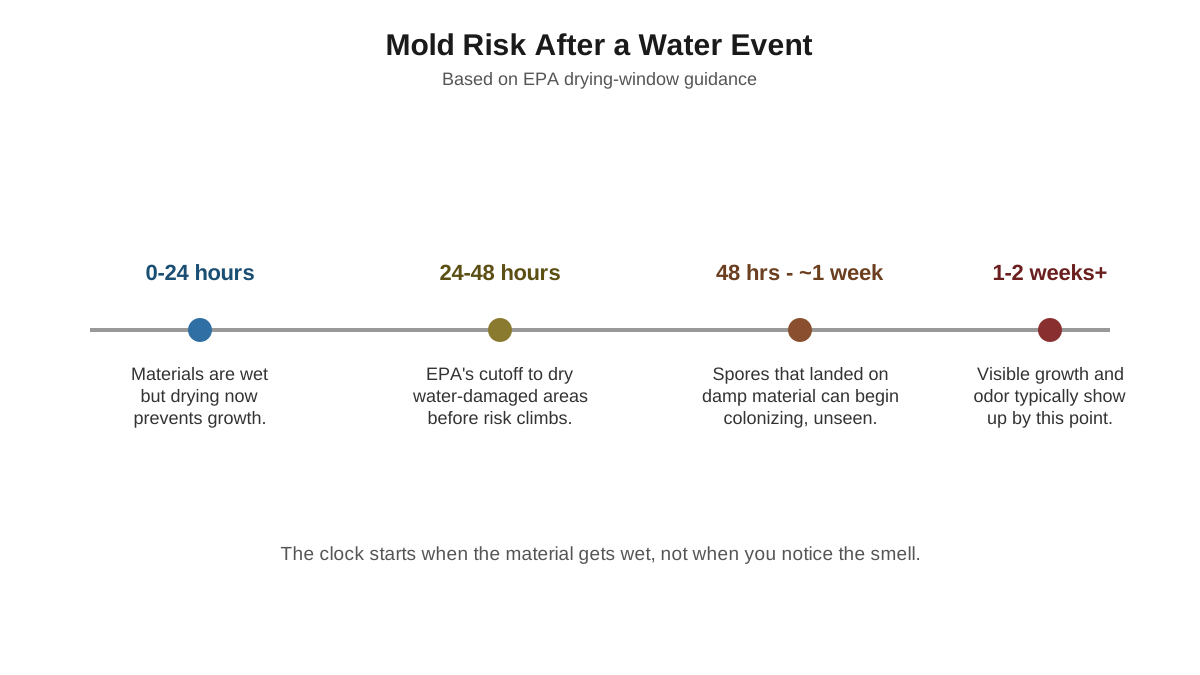
The honest answer is faster than most people expect and slower than the scare stories on social media claim. Mold spores are already present in almost every home's air and dust; a growing colony needs three things: moisture, a food source (drywall paper, wood, dust, and carpet backing all qualify), and time. Water damage supplies the first two instantly. Time is the only variable still in your control, and the window is short. The EPA's own guidance is specific about it: dry water-damaged materials within 24 to 48 hours, or accept that mold growth becomes likely.
Inside that window, wet drywall, baseboards, and carpet padding are still just wet. Spores that land on a damp surface can begin to germinate as it stays saturated, and once 48 hours pass without real drying, air movement, and reduced humidity, colonization is often already underway even though nothing is visible yet. Colonization is the stage where mold has established itself and started reproducing, rather than spores simply sitting dormant on a damp surface. Visible growth, a fuzzy patch, discoloration, a musty smell, typically shows up days after that, once the colony is dense enough to see without a flashlight.
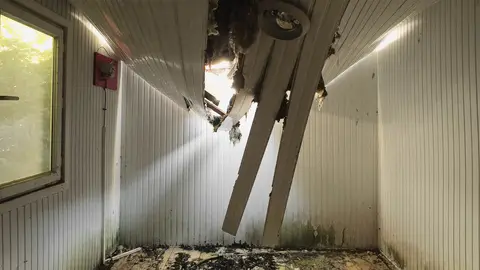
That gap between invisible colonization and an obvious problem is why so many mold from water damage cases get discovered late. A slow leak under a kitchen sink can run for weeks before anyone opens the cabinet. A flooded basement that got mopped and fan-dried on the surface can still leave the wall cavity and baseboard trim damp for days behind a floor that already reads bone-dry.
Mold risk climbs the longer wet materials go without drying, per EPA guidance.
What Actually Causes Mold After a Water Event, Ranked by Likelihood
Not every leak turns into a mold problem, and the difference usually comes down to how fast the water got extracted and how thoroughly the structure actually dried, not just how much water there was. In the order restoration crews report finding mold after water damage once they get called in, the usual causes are:
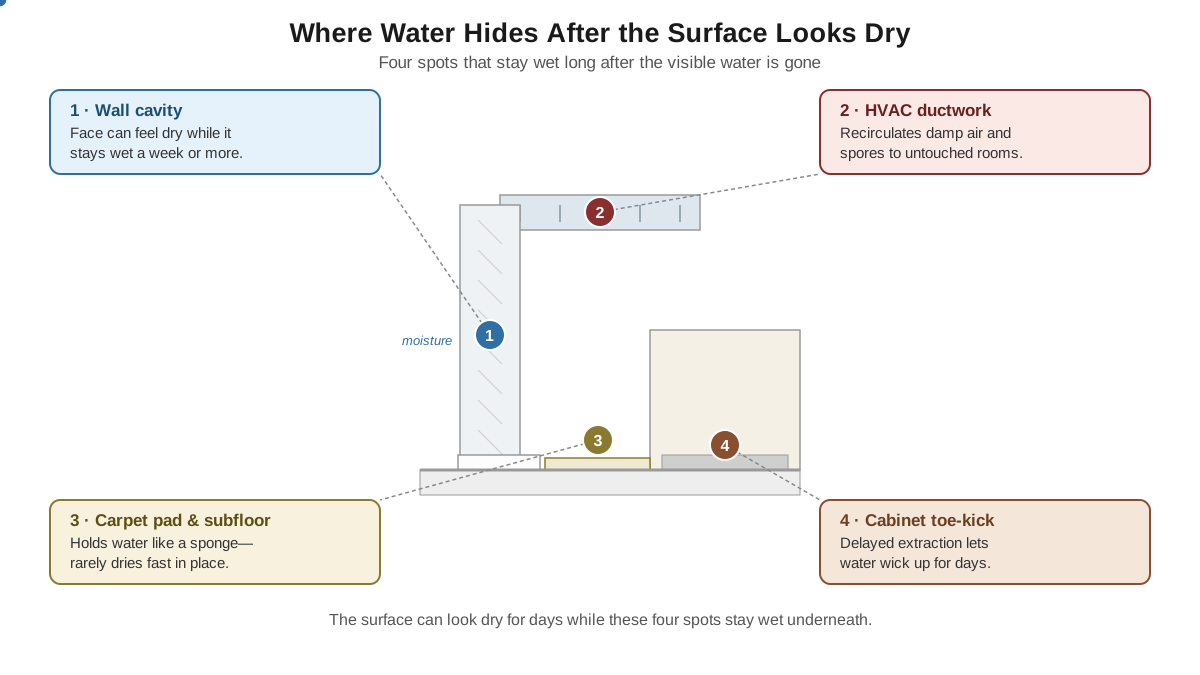
Delayed extraction and drying. The single biggest driver. A leak that gets mopped up the same day rarely turns into a remediation job. One that sits for three or four days before anyone calls a crew almost always does.
Moisture trapped behind finished surfaces. Drywall, baseboards, and cabinetry can look and feel dry on the face while the material behind them, or the wall cavity itself, stays wet for a week or more. Surface dryness is not structural dryness.
Elevated indoor humidity after the event. Running fans without a dehumidifier, or drying a space with the windows shut and no air exchange, can keep relative humidity above the 60 percent mark the EPA flags as the point mold risk climbs, even after standing water is gone.
HVAC systems that kept recirculating damp air during the event, pulling moisture and spores into ductwork and distributing them to rooms the water never touched.
Porous materials that never should have been dried in place. Carpet pad, insulation, and particleboard cabinet bases hold water like a sponge and rarely dry fast enough once soaked past a certain point, category of the water aside.
Category of the water matters too. Category 2 (gray) and Category 3 (black) water carry organic material and contamination that speed the whole process along, so a sewage backup or long-standing floodwater intrusion tends to produce visible growth faster than a clean supply-line break with the same drying delay. The water damage categories and classes guide covers how that classification works in more detail.
The surface can look and feel dry while these four spots stay wet underneath, per the causes restoration crews report most often.
What Mold From Water Damage Looks Like, and What the Color Doesn't Tell You
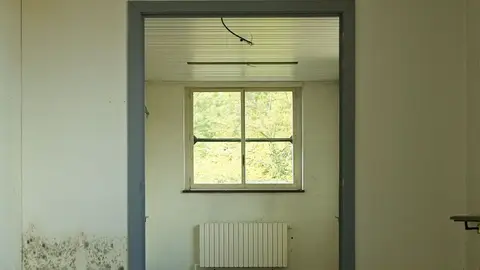
Homeowners searching for black mold water damage are usually trying to figure out whether what they're looking at is dangerous based on color alone, and that instinct is understandable but not especially useful. Mold shows up in a wide range of colors after a water event: white or gray fuzzy growth on drywall paper, black or dark green patches in corners and behind baseboards, brown staining on subfloor and framing, even a chalky blue-green bloom on lumber that got wet and stayed humid. Stachybotrys chartarum, the species most people mean when they say "black mold," is one of dozens of species that can colonize a water-damaged building, and it isn't reliably distinguishable from more common, less concerning species by sight.
The EPA's practical point is that color and species matter less than the extent of the growth and the moisture problem behind it. A small patch of black-colored mold and a larger patch of white mold both call for the same response: find and fix the moisture source, remove what can't be cleaned, and dry the area completely. Sampling to identify the exact species is rarely necessary for a routine residential cleanup and adds cost without changing the remediation plan in most cases.
What should get your attention faster than color: a musty, earthy smell that doesn't clear after airing the room out, a visibly fuzzy or slimy texture rather than a flat stain, and growth that keeps reappearing in the same spot after being wiped down, which usually means the moisture source was never actually fixed.
How to Tell Whether You Have a Real Mold Problem
Before deciding this is a wipe-down or a remediation job, work through it the way a competent inspector would instead of guessing from the doorway.
Look and smell first. Check baseboards, the underside of cabinets, behind and under any appliance that leaked, and the perimeter of any room that had standing water. A persistent musty odor without visible growth often means moisture is trapped somewhere you can't see yet.
Check with a moisture meter, not your hand. Drywall, subfloor, and framing can feel dry to the touch while still reading well above a safe moisture level. A basic pin-style meter is inexpensive and removes the guesswork from "is this actually dry yet."
Open a small section if hidden growth is suspected. A coin-sized hole in drywall near a baseboard, in an inconspicuous spot, tells you more than any surface inspection and is easy to patch afterward.
Bring in a professional inspection if the water event was Category 2 or 3, the affected area is large, or anyone in the household has a respiratory condition and you want documentation before remediation starts. A mold inspection typically runs in the low hundreds of dollars and is billed separately from remediation itself.
Air or surface sampling usually isn't necessary to confirm a problem worth fixing; if it can be seen or smelled, that's enough information to act. Sampling earns its cost mainly for pre-purchase inspections, insurance disputes, or clearance testing after remediation is finished, not for the initial "do I have a problem" question.
The 24-48 Hour Window: What You Can Still Handle Yourself
If the water event is still active, meaning a pipe is still leaking, a sump pump is still failing, or a roof is still letting rain in, stop reading and fix that first. Drying effort is wasted while water keeps arriving. If this is an active water emergency rather than a cleanup that's already stopped, reach a restoration crew that serves your area at 888-407-9931 and describe what you're looking at before doing anything else.
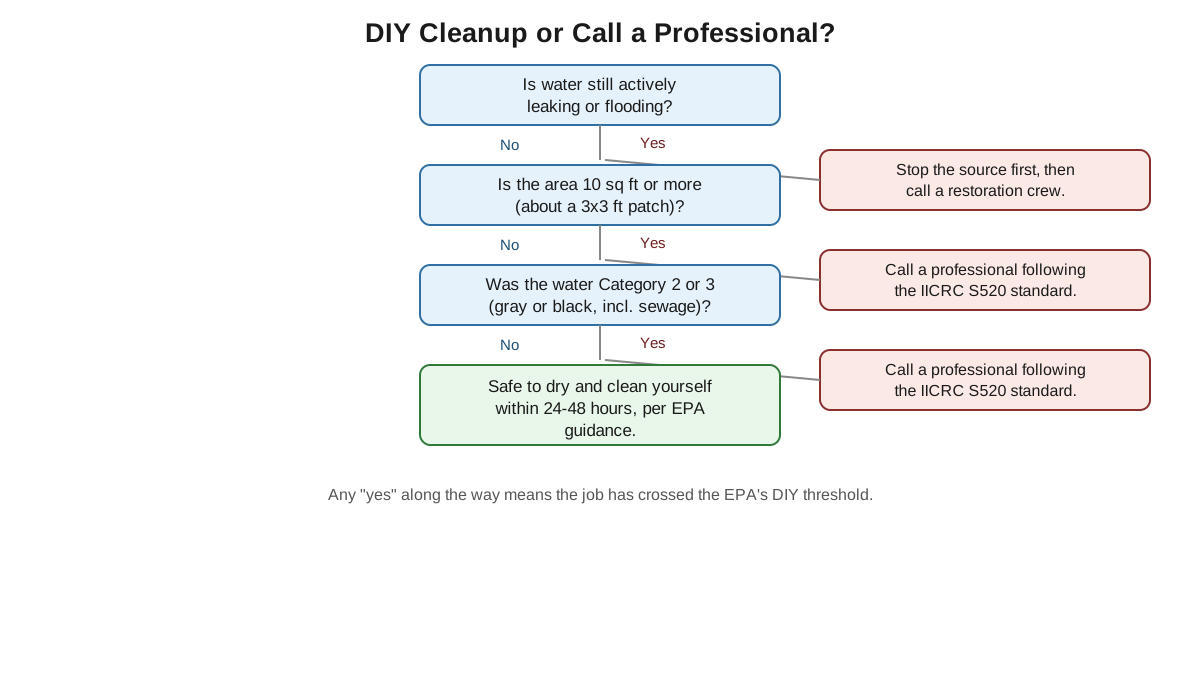
Once the source is stopped, the clock the EPA describes starts running. For a genuinely small, clean-water event, under roughly 10 square feet (about a 3-foot by 3-foot patch) and caused by Category 1 water, drying and any early mold can usually be handled without a crew:
Affected area
Water category
Who typically handles it
Under 10 sq ft (~3x3 ft)
Category 1 (clean), dried within 24-48 hrs
Homeowner, per EPA guidance
Under 10 sq ft
Category 2 or 3 (gray/black, sewage)
Professional, IICRC S520
10 sq ft or more
Any category
Professional, IICRC S520
HVAC system or ductwork involved
Any category
Professional; system may need shutdown
Whether a mold job is DIY or a call to a professional depends on the water source, the area size, and the water category.
Run fans and a dehumidifier together, not fans alone; air movement without moisture removal just spreads the humidity around the room.
Target relative humidity below 60 percent, ideally between 30 and 50 percent, until a moisture meter confirms the material is dry, not just until it feels dry.
Remove and discard porous materials that stayed wet more than 48 hours, carpet padding, particleboard, water-damaged insulation, since they rarely dry completely and are cheap to replace compared to the alternative.
Clean small areas of visible mold on hard, non-porous surfaces with detergent and water while wearing gloves and an N95 respirator, then dry the area completely and monitor it for a week.
This is where the EPA's own guidance draws a firm line, and it's the one rule on this page worth reading twice. If the affected area is 10 square feet or more, or the water that caused it was Category 2 or 3 (gray or black water, including sewage backups and most floodwater), the EPA's guidance is to bring in a professional rather than clean it up yourself. Past that line, the airborne spore disturbance from scrubbing and demolition, plus the contamination risk from the water itself, outweighs what a homeowner can safely manage with a spray bottle and a mask. The guide to drying out water damage yourself covers the mechanics of that first window in more depth.
What Professional Mold Remediation Involves, Step by Step
Once a job crosses the EPA's DIY threshold, the standard a legitimate remediation company works from is ANSI/IICRC S520, the mold remediation counterpart to the S500 standard restoration crews use for the water damage itself. The process looks different from a simple cleaning, and knowing the steps helps in judging whether a company's estimate actually matches the job.
A typical S520 job starts with containment: sealing off the work area with plastic sheeting and setting up negative air pressure so spores don't migrate to the rest of the house while work is underway. Technicians in respirators and protective suits then remove and bag contaminated porous materials, drywall, insulation, carpet, that can't be cleaned rather than treated, since sanding or scrubbing mold off drywall paper just aerosolizes spores without solving anything. Remaining surfaces get HEPA-vacuumed and treated with an EPA-registered antimicrobial, and the containment area runs through HEPA air scrubbers for a period after the physical work is done. The job typically closes with a post-remediation verification, sometimes a visual inspection, sometimes third-party clearance testing, confirming spore counts inside the work area are back in line with the rest of the house before containment comes down.
This is meaningfully different from the water extraction and drying most restoration companies also handle. On a job that involves both an active water loss and mold that's already established, ask directly whether the same crew handles both under S500 and S520, or whether mold work gets subcontracted; the handoff between the two is where jobs most often lose time. The water damage restoration process guide walks through the S500 side step by step.
What Mold Remediation Costs, With Sources
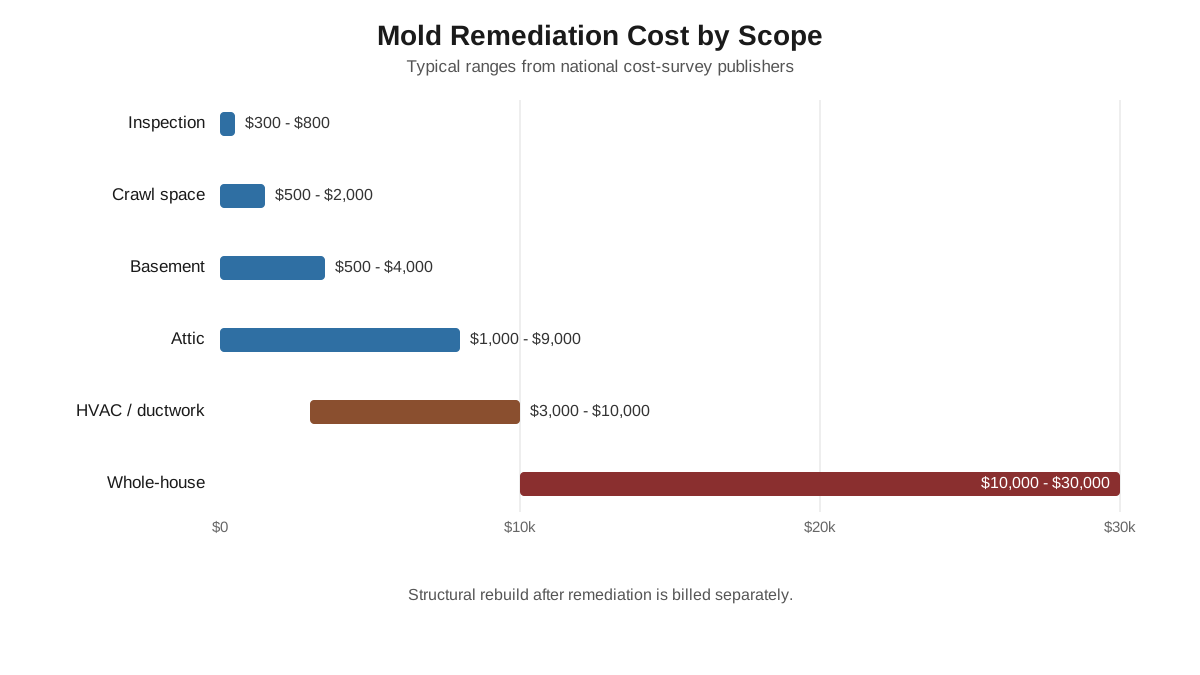
The figures below are researched ranges pulled from national cost-survey publishers, not a quote from any specific company, and every job still needs a written, in-person estimate before work starts. Final cost varies by region, how accessible the damaged area is, and how much contamination the crew actually finds once containment goes up and material starts coming out; scope and severity move the price more than any single published average can capture.
Duct length, whether the air handler itself is contaminated
Bob Vila; Fixr
Whole-house remediation
$10,000 - $30,000
Square footage, structural demolition and rebuild
Bob Vila; Fixr
Per square foot, national publishers put general mold remediation cost at roughly $10 to $30, and the overall national average across all job sizes lands somewhere between about $2,254 and $3,500 depending on the survey. Angi's published range for most residential jobs, $1,223 to $3,757, sits inside that same band.
Typical mold remediation cost ranges by scope of work, from national cost-survey publishers.
None of these figures include structural repair; replacing drywall or flooring that gets torn out is typically quoted separately from the remediation line item. If the mold followed a larger water event, extraction, drying, and structural drying equipment get billed separately too and can add substantially to the total. The water damage restoration cost guide breaks down that side of the bill in more detail.
Mold and Your Health: What's Established, What Isn't
The EPA's position, and the one most remediation standards are built around, is direct: mold exposure can trigger allergic reactions, asthma flare-ups, and general respiratory irritation, runny nose, coughing, wheezing, eye or skin irritation, in sensitive people, and anyone with mold allergies, asthma, or a compromised immune system faces a higher risk of a stronger reaction. What the agency does not do is rank mold species by toxicity for the purpose of a routine home cleanup, which is part of why testing isn't usually recommended before remediation begins.
That doesn't mean every household reacts the same way. One person might share a house with someone who develops a persistent cough within days of exposure to the same patch of growth while showing no reaction themselves. If anyone in the home has diagnosed asthma, a mold allergy, or a compromised immune system, that's reason enough to treat even a small patch more cautiously: ventilate the area, keep them out of the room during cleanup, and lean toward calling a professional rather than handling it solo, even if the area is technically under the EPA's DIY size threshold.
Persistent symptoms that improve away from the house and return once back inside are worth mentioning to a doctor, along with the recent water event and any visible or suspected mold. That history and symptom pattern is more useful to a physician than a mold species report from a lab.
Is Mold From Water Damage Covered by Insurance?
The short version: it depends on how the water got there and how fast you acted, and that answer applies whether the policy is with a large national carrier or a regional one, State Farm included, since standard homeowners policy language on this point is largely industry-wide rather than company-specific.
A standard HO-3 policy typically covers water damage that's sudden and accidental, a supply line that bursts, an appliance that fails, a pipe that freezes and splits, but treats gradual damage, a slow leak that should have been caught, ongoing seepage, long-term humidity, as a maintenance issue and excludes it. Mold that follows a covered sudden loss is often covered too, but many policies cap mold-specific coverage at a sublimit, sometimes a few thousand dollars, separate from the main water damage payout, and that cap can fall short of the remediation costs in the table above on a larger job. Mold that develops because the property wasn't dried promptly after a covered loss can also get pushed back on, since insurers generally expect a policyholder to take reasonable steps to prevent further damage once a loss is discovered.
Water damage and freezing losses aren't rare: they accounted for roughly 27.6 percent of homeowners insurance claims by cause in 2022, with an average claim severity near $13,954, according to Insurance Information Institute data citing ISO. That scale is part of why insurers pay close attention to how fast a policyholder acted and how well the drying and mold response gets documented.
Photograph everything before cleanup starts, keep receipts for any drying equipment rented or purchased, and get a written mold inspection or remediation estimate before major work begins if a claim is planned, since adjusters weigh documentation heavily on losses in this category. The homeowners insurance and water damage guide walks through what a standard policy covers scenario by scenario, including how mold sublimits typically work.
How to Choose a Mold Remediation Company
Mold remediation attracts opportunists the same way any disaster-adjacent trade does: someone going door to door after a storm, a "special today only" spray treatment, a quote with no written scope. A few checks separate a legitimate remediator from a liability:
Ask whether the technicians doing the work hold IICRC S520 certification specifically, not just a general contractor's license; mold remediation is a distinct credential from general water damage restoration.
Get a written scope of work before anything starts: what gets removed, what gets treated, the containment method, and whether post-work clearance testing is included or billed separately.
Confirm general liability insurance is current and ask for proof before work starts, not just a verbal assurance, especially for any job involving containment and demolition inside an occupied home.
Check the state's contractor or mold-specific licensing board and verify the license is current for both the company and the individual technician before you sign anything; many states require a separate registration or license for mold assessment and remediation work.
Be wary of anyone who both diagnoses the mold problem and sells the remediation without an independent inspection report, or who pushes same-day signing before a written estimate has been seen.
To get quotes, 888-407-9931 connects you with a restoration company that serves your area and can scope both the water damage and any mold remediation together. Compare at least two written estimates before choosing, and the guide to choosing a water damage company has the fuller vetting checklist; most of it applies to mold remediators too.
Preventing the Next Round, Wherever You Live
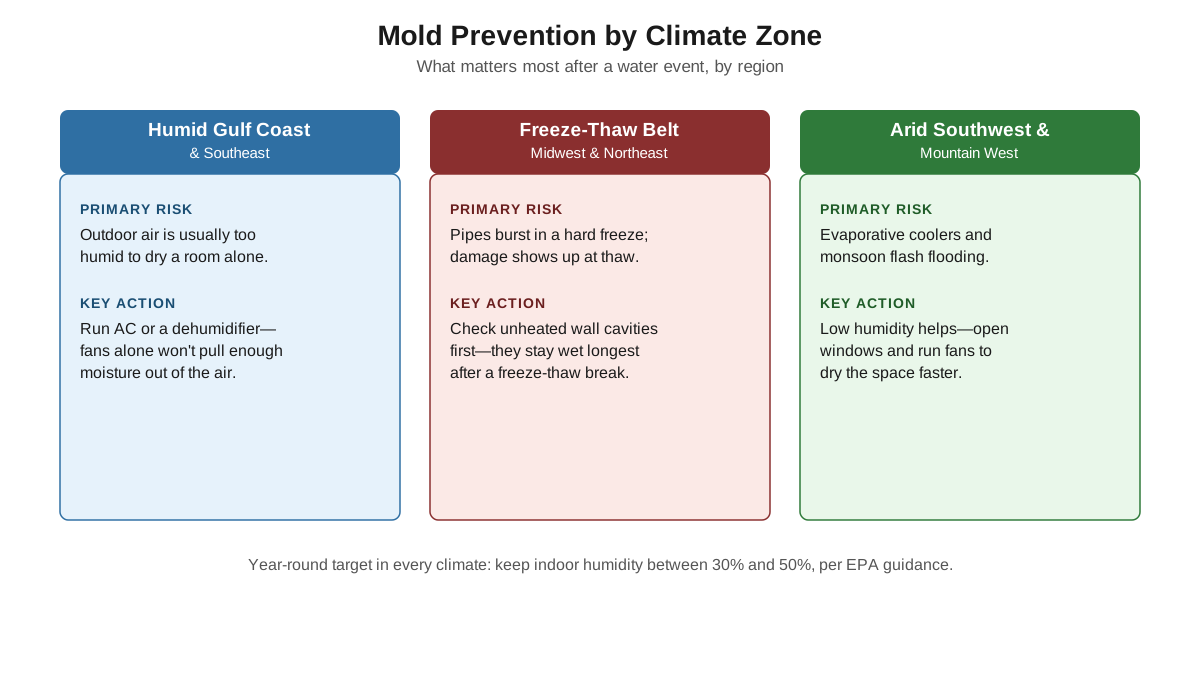
Climate changes which prevention habits matter most, since it drives how fast materials dry on their own and how much margin there is after a leak.
Humid, subtropical regions along the Gulf Coast and Southeast pose a specific problem: outdoor air is often too damp to help dry a water-damaged room even with the windows open, which makes mechanical dehumidification non-optional after any real water event, it's the only thing actually pulling moisture out of the air. Run air conditioning or a standalone dehumidifier rather than fans alone, and expect the drying phase to take longer than published averages assume.
In the freeze-thaw belt across the Midwest and Northeast, the bigger risk is a burst pipe during a hard freeze, with the damage discovered only once the thaw reveals it, sometimes days after the actual failure. Wall cavities in unheated or poorly insulated sections of a house can stay wet far longer than a floor exposed to room-temperature air, since the same cold that caused the break also slows evaporation once the leak is found.
Arid and semi-arid regions of the Southwest and Mountain West see a different pattern: evaporative coolers and monsoon-season flash flooding are the more common triggers, and low outdoor humidity is a genuine advantage for drying; opening windows and running fans does more useful work there than it does on the Gulf Coast.
Across every climate, the habits that actually prevent repeat problems are the same: fix leaks within days, not weeks, check under sinks, behind washing machines, and around water heaters on a regular schedule, and keep indoor humidity in the 30 to 50 percent range the EPA recommends year-round, not just after a known water event.
Prevention priorities shift by region, but the EPA's 30-50 percent indoor humidity target applies everywhere, year-round.
Frequently asked questions
Is mold from water damage dangerous?+
It can be, mainly through allergic reactions, asthma flare-ups, and respiratory irritation, and the risk is higher for anyone with existing mold allergies, asthma, or a compromised immune system. The EPA treats extent of growth and moisture, not color or species, as the deciding factor, so any visible growth is worth acting on rather than trying to judge danger by appearance.
Does mold from water damage smell?+
Usually yes. A musty, earthy odor is often the first sign of hidden growth, showing up before anything is visible, especially behind cabinets, under flooring, or inside wall cavities. If the smell persists after airing out the room and there's a recent water event in the home's history, that combination is worth investigating rather than ignoring.
Can mold from water damage make you sick?+
For sensitive individuals, yes, typical reactions include coughing, wheezing, nasal and eye irritation, and worsened asthma symptoms. People without mold sensitivities may have little to no reaction to the same growth. Persistent symptoms that improve away from the house and return once back inside are worth mentioning to a doctor along with the water damage history.
Does mold from water damage spread?+
Yes, as long as moisture and a food source are present, mold can spread across a wet surface and release spores that travel through the air or an HVAC system to other rooms. That's why professional remediation uses containment and negative air pressure on larger jobs, to stop spores from moving to unaffected parts of the house during the work itself.
What does black mold from water damage look like?+
Typically a dark, almost black patch with a fuzzy or slightly slimy texture, though it can also appear dark green depending on lighting and the surface it's growing on. Appearance alone is not a reliable way to identify the species; the EPA's guidance treats any visible mold the same regardless of color, since extent of growth matters more than shade.
Is all mold from water damage black mold?+
No. Mold after a water event can be white, gray, green, brown, or blue-green depending on the species and the material it's growing on. "Black mold" usually refers to Stachybotrys chartarum specifically, but dozens of other species can colonize water-damaged drywall, wood, and carpet, and most look nothing like the dark, dramatic patches people picture.
How do you test for mold from water damage?+
Most residential cases don't need formal testing; if growth is visible or the musty smell is persistent, that's enough to act on. When testing does make sense, a professional mold inspection, typically $300 to $800, uses moisture meters plus surface or air sampling, and is most useful for hidden-growth suspicion, pre-purchase inspections, or documenting a claim.
Is mold from water damage covered by homeowners insurance?+
Often, if it followed a sudden, accidental covered loss and the homeowner dried the property promptly, but many policies cap mold-specific coverage at a sublimit separate from the main water damage payout. Mold traced to a gradual leak, or to delayed drying after a covered loss, is more likely to be denied or only partially covered.
Does State Farm cover mold caused by water damage?+
Standard HO-3 policy language on sudden-and-accidental water damage versus gradual damage is largely consistent across major carriers, State Farm included, so the general rules in this guide apply, but mold sublimits and exact wording vary by policy and state. Checking the specific policy documents or calling the carrier directly is the only way to get a definitive answer.
How do you get rid of mold from water damage?+
For a small, Category 1 patch under about 10 square feet, clean hard surfaces with detergent and water while wearing gloves and an N95, discard porous materials that stayed wet, and dry the area fully. Anything larger, or caused by Category 2 or 3 water, calls for a professional following the IICRC S520 remediation standard instead.
How fast can mold grow from water damage?+
Colonization can begin within 24 to 48 hours on material that stays wet, per EPA guidance, and visible growth typically appears within one to two weeks after that. The exact timeline depends on humidity, temperature, and how contaminated the water was, but the 24-48 hour drying window is the number that actually determines the outcome.