Two rooms can look almost identical after a leak, soaked carpet, damp drywall, a puddle by the baseboard, and still call for completely different cleanup plans. The reason is usually buried in two numbers a restoration company assigns before they start work: the water's category and its class. One tells you how contaminated the water is. The other tells you how much of your house it soaked and how stubborn that moisture will be to remove. This guide breaks down what Category 1, 2, and 3 mean, what Class 1 through 4 mean, how the water's category can turn into a worse version of itself if it sits too long, and what each combination means for your safety, your timeline, and your bill.
What "Category" and "Class" Actually Mean
When a restoration technician walks your hallway with a moisture meter and says something like "this is a Category 2, Class 3 loss," that is not jargon for its own sake. The water damage categories system, built into the IICRC S500 standard, is how the whole job gets scoped before a single fan gets plugged in. Two separate numbers do two separate jobs, and mixing them up is the fastest way to misread an estimate or argue with an adjuster over something that was never in dispute.
Category is a 1-to-3 scale that describes how contaminated the water is, from a clean supply line break up to raw sewage. Class is a 1-to-4 scale that describes how much of the structure got wet and how hard that moisture will be to remove. A small Category 3 spill from a backed-up toilet can be a fast, contained job. A large Category 1 leak that soaked a finished basement overnight can be a slow, expensive one. This water damage classification is what tells a crew what kind of a job they're actually walking into, and it should tell you the same thing.
Every choice that follows, from what a technician wears to what gets torn out versus dried in place to what shows up on your invoice, traces back to these two numbers. Knowing them turns a confusing scope-of-work document into something you can actually read and question.
Category 1: Clean Water
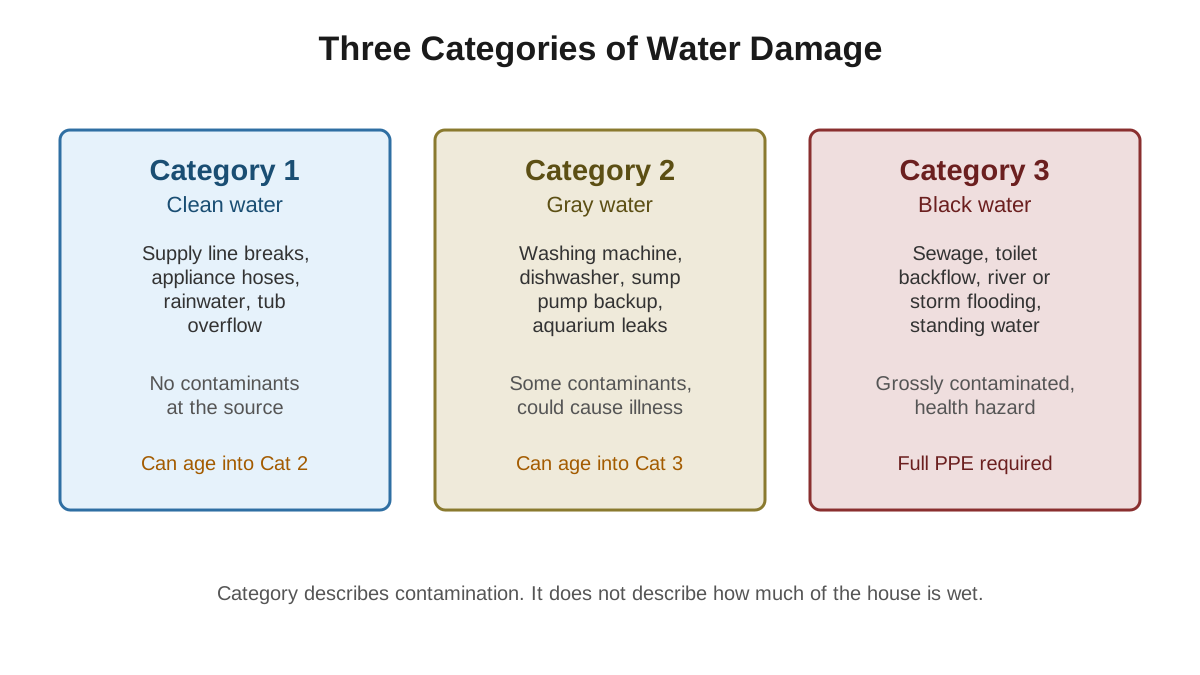
Category 1 water damage starts out as the cleanest tier on the scale. It comes from a source with no contaminants at the point of release: a burst supply line under a sink, a failed ice-maker hose, an overflowing tub with no soap or waste in it, or rainwater that got in through a window before it touched carpet or dirt. At the moment it hits your floor, this water poses no immediate health threat.
That is the good news, and it comes with a real condition attached. Category 1 water is only clean at the source. The moment it runs across a dusty subfloor, sits against baseboards, or soaks into carpet pad that hasn't been cleaned in a decade, it starts picking up whatever was already there. A restoration crew treats a fresh supply-line break in a finished living room very differently from the same water that has been sitting under a couch since a family went out of town for the weekend.
| Common Category 1 sources | Why it starts clean |
|---|---|
| Supply line or faucet failure | Municipal or well water, no wastewater involved |
| Water heater tank rupture (before it ages) | Same municipal-supply water, fresh release |
| Ice maker or washing machine fill hose | Fresh water feed, not discharge water |
| Rain intrusion through roof, window, or flashing | Rainwater itself carries minimal contamination |
The practical upshot: if you catch Category 1 water within the first few hours and get air moving, a lot of that material can be dried in place instead of removed. Wait two or three days and the same water in the same house often behaves like a dirtier category by the time anyone gets to it.
Category 2: Gray Water (Significant Contamination)
Category 2 water damage covers water that already carries a meaningful load of contaminants before it ever touches your floor. This is gray water: dishwasher and washing machine discharge, a sump pump that backed up rather than pumped out, an overflowing aquarium, or a toilet bowl overflow that involved urine but not solid waste. It could cause discomfort or illness if someone were exposed to it or ingested it, which is a meaningfully different risk profile than Category 1.
Gray water jobs call for more than a wet-vac and a box fan. Technicians typically wear gloves and, depending on the volume, respiratory protection, and they treat any porous material that absorbed the water as a candidate for removal rather than automatic drying. Carpet pad almost never survives a real Category 2 event; carpet itself sometimes does if it's caught fast and cleaned properly.
The distinction that trips people up is this: category 1 water damage and category 2 water damage can look identical on your floor. A puddle is a puddle. What separates them is the source and the history of that water, which is exactly why a technician asks where it came from before deciding how to treat it, not just how much there is.
Category 3: Black Water (Grossly Contaminated)
Category 3 water damage is the top of the scale, and it is treated as a biohazard job, not a cleanup job. This is black water: sewage backups, water from beyond a toilet trap, river or storm flooding that picked up soil and runoff on the way into your house, and any water that has been standing long enough to support bacterial or microbial growth. Rising floodwater is automatically treated as Category 3 regardless of where it started, which lines up with Ready.gov's guidance that floodwater should be treated as contaminated, since there's no practical way to know what it picked up on the way to your foundation.
On a Category 3 job, the rules change immediately. Full personal protective equipment, containment barriers between the affected area and the rest of the house, and antimicrobial treatment of hard surfaces are standard practice, not upsells, and it tracks with CDC guidance to treat any sewage-contaminated water as a health hazard rather than a nuisance. Porous materials that absorbed black water, carpet, pad, drywall up to the waterline, insulation, are generally removed and disposed of rather than dried, because you cannot fully decontaminate a material that has soaked up sewage. If your situation involves a backed-up sewer line or overflowing toilet with solid waste, our sewage backup cleanup guide walks through the specific safety steps before anyone, including you, gets near the water.
This is also the category where DIY cleanup has the narrowest safe boundary. A five-gallon bucket of Category 1 water is an annoyance. A five-gallon bucket of Category 3 water is a health exposure, and it should be handled that way even when the volume looks small.
How Clean Water Turns Into a Bigger Problem
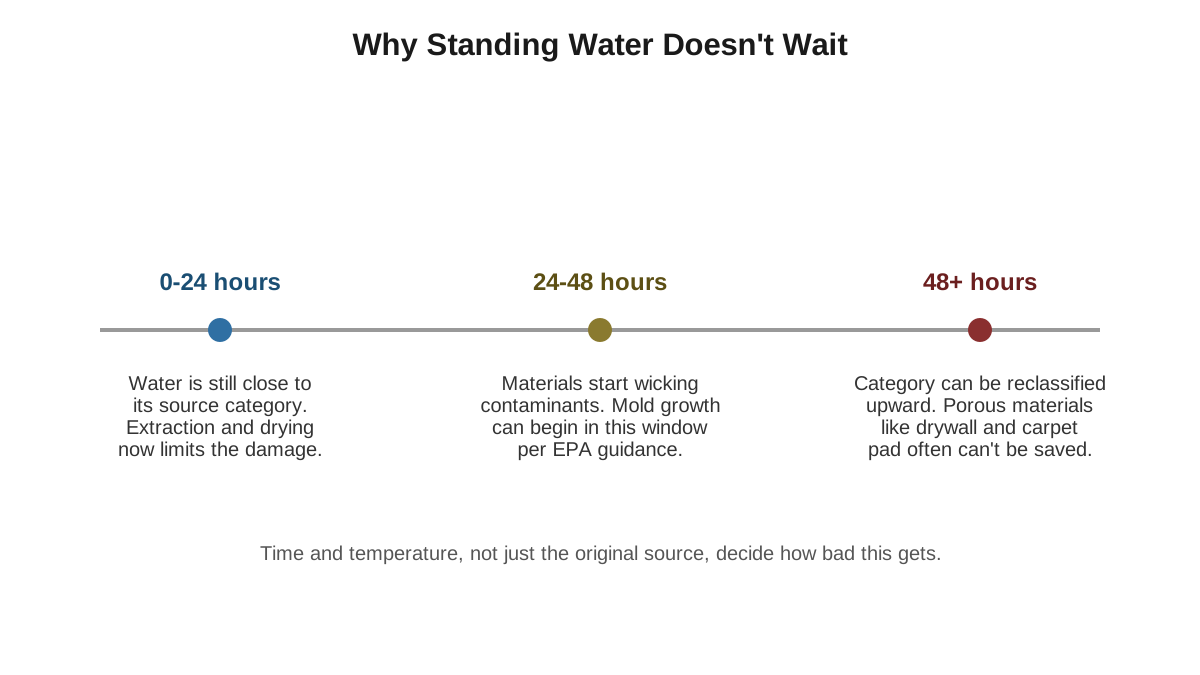
Category is not fixed at the moment water hits your floor. Under the IICRC S500 standard, water that starts clean can be reclassified upward the longer it sits, and understanding what drives that shift is more useful than memorizing the definitions above. Three factors matter most, roughly in order of how often they show up on a real job.
Time is the biggest factor
Stagnant water left in contact with flooring, subfloor, and wall materials begins absorbing whatever those materials are carrying, dust, adhesive residue, whatever biological material has accumulated in carpet fibers over years of foot traffic. Restoration techs call this window dwell time, and it's the single biggest variable in whether a loss stays put or gets worse. A Category 1 leak addressed within the first day often stays Category 1. The same leak left over a long weekend can reasonably be treated as Category 2 by the time a crew arrives, because the water is no longer chemically the same as what came out of the pipe.
Temperature and humidity accelerate the clock
Warm, humid conditions speed up microbial activity. Per EPA guidance on mold and moisture, mold can begin growing within 24 to 48 hours in the right conditions, which is exactly the window where a lingering water problem starts crossing from "damp and inconvenient" into "a mold problem." The EPA draws its own line for when that becomes a professional job: once mold coverage passes roughly 10 square feet, about a 3-foot-by-3-foot patch, its guidance calls for a remediation contractor rather than a spray bottle and a scrub brush. For how that risk plays out once it starts, see our guide on mold after water damage.
What the water contacts on the way
Water that travels across a garage floor, through a crawl space with exposed soil, or past a floor drain connected to a sewer line picks up contamination along the route even if the original source was clean. This is why the same burst pipe can produce two very different cleanup scopes depending on which direction the water ran.
Knowing gray water vs black water by sight matters less than knowing this: category is a snapshot, and the clock starts the moment the water hits the floor, not the moment someone notices it.
Classes 1 Through 4: How Much Is Wet, and How Hard It Is to Dry
If category tells you what's in the water, class tells you what the water is doing to your house. The S500 standard defines four classes based on how much moisture the affected materials absorbed and how fast that moisture evaporates back out, which in practice means how long drying equipment has to run.
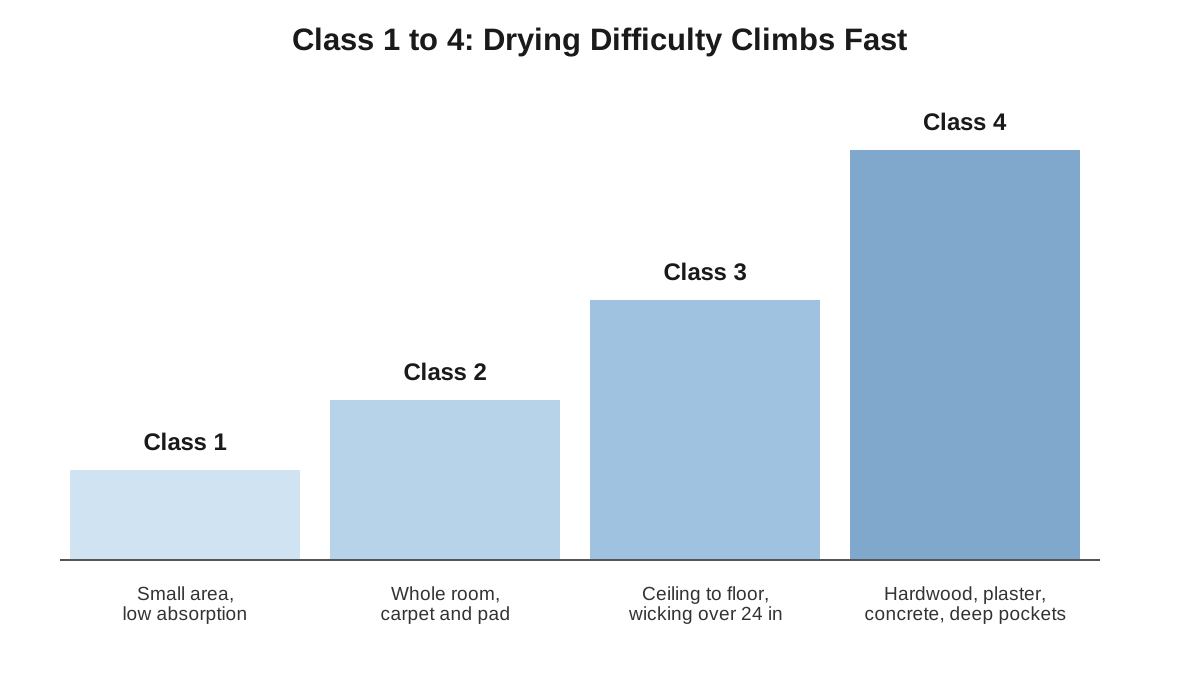
| Class | What it means | Typical example |
|---|---|---|
| Class 1 | Least water absorbed; affects only part of a room, low-porosity materials, minimal wicking | A quick appliance-hose leak caught within hours |
| Class 2 | Fast evaporation rate; affects an entire room including carpet and cushion, water wicked up walls under 24 inches | An overnight supply-line leak in a bedroom |
| Class 3 | Fastest evaporation rate; water came from overhead, walls, insulation, carpet, and subfloor are all saturated, wicking over 24 inches | A roof leak or overhead pipe break that ran for a day or more |
| Class 4 | Specialty drying situation; low-permeance materials like hardwood, plaster, brick, or concrete hold deep pockets of moisture that resist standard airflow | Water trapped under hardwood flooring or inside a plaster wall |
Class 2 and Class 3 both hinge on wicking, water climbing up a wall through capillary action, and the 24-inch line is the difference between drywall a crew can dry in place and drywall that has to come out. Class 4 water damage is the one that surprises homeowners most, because the surface can look almost dry while a moisture meter reads high underneath. Solid hardwood, old plaster, and poured concrete release water slowly no matter how many fans are running, which is why these jobs often need specialty tools, injection drying mats, deep-wall drying systems, longer equipment run times, rather than just more fans in the room.
National cost surveys put dollar figures on that difficulty curve: HomeAdvisor and Fixr both list Class 1 jobs around $150 to $400, Class 2 around $500 to $1,000, Class 3 around $1,000 to $3,000, and Class 4, the hardwood-and-plaster jobs, at $20,000 to $100,000 once specialty drying equipment gets involved. Treat that as a researched range to expect, not a number you can bank on, since only a written estimate after someone has actually looked at your damage is binding.
A single job can carry different classes in different rooms. A hallway might be Class 1 while the bedroom it fed into is Class 3, and the estimate should reflect class room by room rather than applying one number to the whole house.
How a Crew Figures Out Your Category and Class on the First Visit
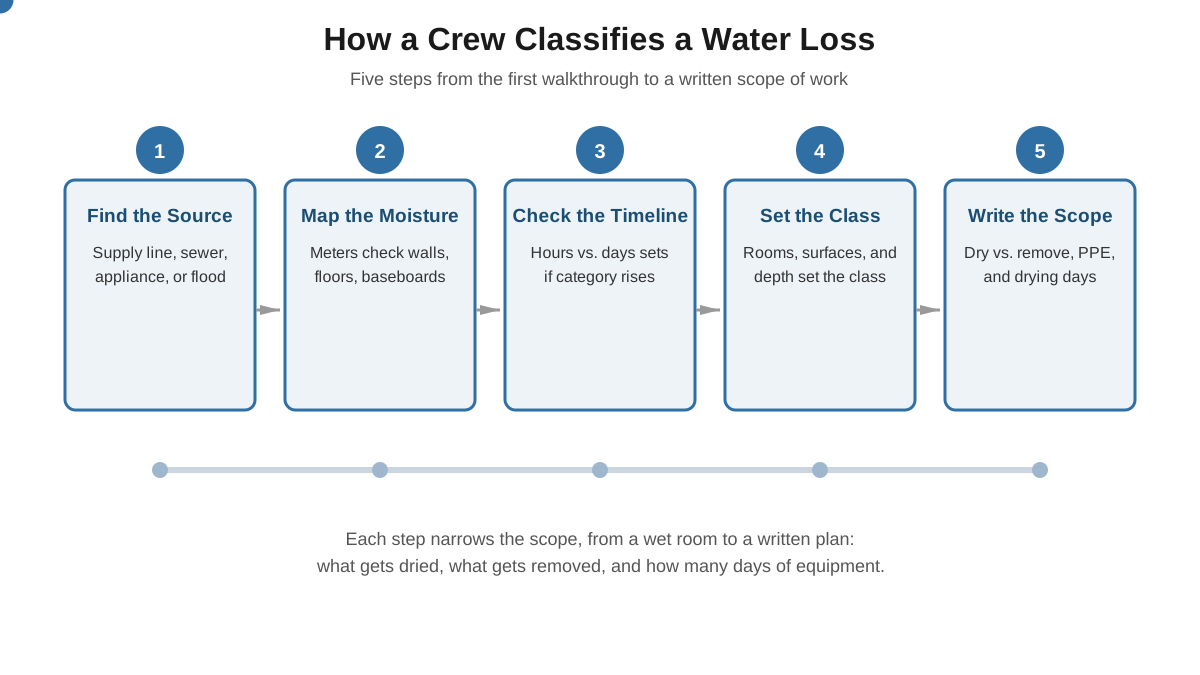
A competent technician does not guess at category and class. The assessment follows a fairly consistent sequence, and knowing it helps you tell a thorough inspection from a rushed one.
- Identify the source. A supply line, an appliance, a sewer line, or outside floodwater each points to a different starting category before anything else is measured.
- Map the moisture with meters. Non-invasive and pin-type moisture meters check walls, flooring, and baseboards well beyond what's visibly wet, since materials can hold water several feet past the edge of a visible stain.
- Assess how long the water has been present. A timeline, hours versus days, drives whether Category 1 water gets reclassified upward.
- Determine class from the moisture map. How many rooms, how many surfaces, and how deep the saturation goes sets the class and, with it, the equipment count.
- Write the scope of work. What gets dried in place versus removed, what antimicrobial treatment is needed, and how many drying days to expect all follow from steps one through four.
If you're the one who found the water and the source is still active, the classification conversation can wait. Shut off the water at the source if you can safely reach the valve, and if the water is still coming in or you're not sure what you're looking at, call 888-407-9931 and describe what you see so the right equipment gets sent the first time. For the full walk-through of everything that happens after this first visit, our water damage restoration process guide covers extraction through final drying verification.
What's Safe to Handle Yourself, and Where That Ends
Category and class aren't just billing categories, they're a safety guide. A Category 1 puddle from a supply line is something most homeowners can mop up, fan out, and monitor. A Category 2 or 3 loss changes that calculation, and mixing up the two is where people get hurt or make a problem worse.
Safe DIY territory generally stays inside Category 1, Class 1 or 2: small volumes of clean water, caught early, in a space without active electrical hazard. Open windows, run box fans and a dehumidifier if you have one, aiming to keep indoor humidity below 60 percent (EPA's guidance puts the ideal range at 30 to 50 percent), pull up area rugs, and lift furniture on foil or wood blocks to keep legs from wicking moisture. Photograph everything before you touch it.
Never enter standing water, or a room with sagging or bulging ceiling drywall, until the power to that area has been shut off at the breaker. Water and live wiring is the single most dangerous combination in any flooded structure, and it is not worth a phone photo or a few saved minutes to find out how close the two are. If you can't reach the breaker safely, or you're not sure which circuit feeds that room, call an electrician or your utility company before you go anywhere near the water.
Category 2 and 3 water, sagging ceilings, saturated insulation, and any job where you can't identify the source all belong to a professional. Sewage exposure in particular carries real infection risk, and no amount of bleach and paper towels substitutes for proper extraction and antimicrobial treatment. If you're staring at contaminated water and weighing whether to handle it yourself, that hesitation is your answer.
What Drives the Cost, Even Without a Number Yet
Category and class are the two biggest levers on a restoration invoice, well before square footage or materials enter the picture. A written, itemized estimate from a local company, based on an in-person moisture assessment, is the only reliable way to get an actual number for your house; national averages and this guide can only tell you what moves that number and in which direction.
| Cost driver | Why it moves the price | Source |
|---|---|---|
| Category (1 vs 2 vs 3) | Higher categories require PPE, containment, antimicrobial treatment, and disposal of contaminated materials rather than drying them | IICRC S500 standard |
| Class (1 through 4) | Higher classes mean more equipment, more rooms affected, and longer drying run times before moisture readings clear | IICRC S500 standard |
| Materials affected | Hardwood, plaster, and cabinetry take longer and cost more to dry or replace than exposed drywall and carpet | Restoration industry practice |
| How long water sat before mitigation | Longer exposure increases both category risk and the volume of material that needs removal instead of drying | EPA mold and moisture guidance |
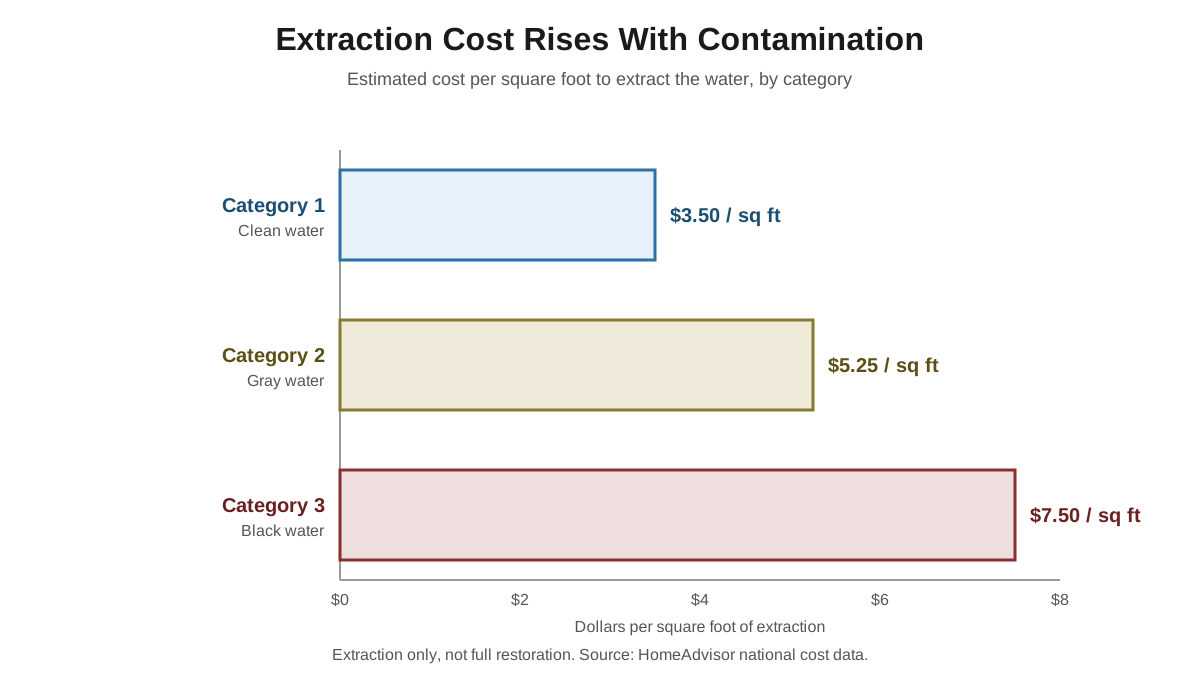
To put real numbers on that: HomeAdvisor's national breakdown puts Category 1 extraction around $3.50 per square foot, Category 2 around $5.25, and Category 3 around $7.50, a jump driven by PPE, containment, and disposal rather than extra scrubbing. FEMA notes that just 1 inch of standing water can cause roughly $25,000 in damage once it reaches subfloor and framing, which is a big part of why class moves the number as much as category does. These are researched ranges pulled from published cost surveys, not a quote for your house; the only number that's actually binding is a written estimate from a local contractor after they've opened up the wet materials and seen the damage firsthand.
Two houses with the same square footage of water intrusion can land on very different invoices once one turns out to be Category 3, Class 3 and the other is Category 1, Class 1. For a fuller breakdown of typical national cost ranges by job type, see our water damage restoration cost guide, and keep in mind that the final number varies by region, labor rates, and how easily a crew can access the affected area, and what they find once walls or flooring actually come up.
Why Your Insurance Adjuster Cares About the Category Too
Most standard HO-3 homeowners policies cover water damage that is sudden and accidental, a burst pipe, an appliance failure, a supply line break, but they typically exclude damage from flooding and often limit or exclude damage tied to long-term neglect, like a slow leak that ran for months. Water damage and freezing already account for a meaningful share of those claims, 27.6 percent of homeowner insurance losses in 2022 with an average claim severity of $13,954, according to III/ISO data, so adjusters see these files constantly and know exactly what documentation should look like. The Insurance Information Institute notes that flood losses require a separate flood insurance policy no matter how the standard homeowners policy reads. Category and class show up directly in that conversation, because they document both the source and the extent of the loss at the time it was found.
A detailed classification report, photos, moisture readings, a written timeline, gives an adjuster less room to argue that a Category 1 leak was actually a long-neglected Category 2 problem you should have caught sooner. It also documents why porous materials were removed rather than dried, which is often the line item that gets questioned first. Keep every moisture log and photo a restoration company generates; it is evidence, not paperwork. Our guide on water damage insurance claims covers documentation and the claims timeline in more detail.
How to Choose a Company That Gets the Classification Right
The classification is only as good as the person doing it. Ask any company you're considering how they determine category and class, and expect an answer that references moisture meters and the IICRC S500 standard (the ANSI/IICRC S500, now in its Fifth Edition, published in 2021), not a guess based on how the water looks. IICRC certification (the Institute of Inspection, Cleaning and Restoration Certification) is the baseline credential to ask about; a technician who's completed Water Damage Restoration Technician training has been tested on exactly this classification system.
Before work starts, get a written scope that states the category and class per room, what will be dried in place versus removed, and the expected number of drying days with a re-check of moisture readings before equipment comes out. A company that skips this and jumps straight to a lump-sum number is worth a second opinion. Before anyone starts tearing out material, verify the company's contractor license is active, many states run this through a searchable state contractor licensing board, and confirm they carry current general liability insurance; a legitimate company hands over both without hesitation. If you want a broader walkthrough of licensing, insurance proof, and red flags beyond classification specifically, see how to choose a water damage company. And if you're still standing in water trying to decide who to call, reaching a restoration company that serves your area starts with 888-407-9931.
Preventing the Jump From One Category or Class to the Next
You can't always prevent water damage, but you can often prevent it from climbing to a worse category or a higher class, and that's the more realistic goal for most homeowners.
The single most effective habit is speed: catching a leak within hours instead of days keeps Category 1 water Category 1 and keeps Class 1 damage from spreading into Class 2 or 3. Water sensors near washing machines, water heaters, and under sinks, the kind that send a phone alert, are inexpensive insurance against exactly the delay that turns a small job into a large one. Beyond that, routine habits matter: swap rubber supply hoses on washing machines and dishwashers for braided steel ones before the rubber ones crack and fail on their own schedule, keep gutters clear so roof water has somewhere to go besides your attic, and know where your main water shutoff valve is before you need it in a hurry.
Regional climate changes the odds more than it changes the categories themselves. In freeze-belt regions, burst pipes from frozen supply lines are a leading cause of sudden Category 1 losses every winter. Water expands as it freezes at 32°F, and that expansion is what splits copper and PVC lines from the inside, often in an uninsulated attic or crawl space where nobody notices until the thaw, which is exactly the delay that lets a clean leak sit long enough to become something worse. Along hurricane and flood-prone coasts, the bigger risk is Category 3 from the outset: storm surge and river flooding are automatically treated as grossly contaminated water regardless of how clean the source looked before the storm. If flooding is a realistic risk where you live, remember that a standard homeowners policy will not pay for it; that claim runs through the separate National Flood Insurance Program instead.
Frequently asked questions
What is the actual difference between category and class in water damage?
Category describes how contaminated the water is, Category 1 clean, Category 2 gray, Category 3 black. Class describes how much of the structure absorbed water and how hard it will be to dry, on a scale of Class 1 through Class 4. A job needs both numbers to be scoped correctly, since a small area of black water and a large area of clean water require very different responses.
Is Category 2 water dangerous to be around?
Category 2, gray water, can cause illness or discomfort if you're exposed to it or it's ingested, so it's more than a nuisance but less severe than Category 3. Wear gloves when handling it, avoid direct skin contact where you can, and treat any porous material it soaked, like carpet pad, as likely unsalvageable rather than something to just dry out.
Can Category 1 clean water turn into Category 3?
It's more common for Category 1 to degrade into Category 2 as it sits and picks up contaminants from flooring and building materials over time. A jump straight to Category 3 usually requires contact with sewage or an outside contamination source, but the S500 standard does allow reclassification upward whenever the actual condition of the water changes, regardless of how it started.
What does Class 4 water damage actually involve?
Class 4 describes water trapped in low-permeance materials, hardwood floors, plaster walls, brick, or concrete, that release moisture very slowly even with fans and dehumidifiers running. These jobs typically need specialty equipment like injection drying systems and take noticeably longer than a standard Class 1 or 2 job in the same square footage.
How long before gray water becomes black water?
There's no fixed hour count in the S500 standard, but warm, humid conditions can allow mold to begin growing within 24 to 48 hours per EPA guidance, and that same window is when stagnant gray water often gets treated as a higher-risk category. Getting extraction started on day one is the deciding factor, not a specific clock.
Does insurance treat Category 3 water damage differently from Category 1?
Coverage itself depends on the cause, not the category label, a standard HO-3 policy typically covers sudden accidental losses regardless of category, while flood-sourced Category 3 water usually requires separate flood insurance. What changes with category is the documentation an adjuster expects to see, since Category 3 claims usually include more removal and disposal line items to justify.
Can I clean up Category 2 water myself?
A small, fresh Category 2 spill in a non-porous area, like a dishwasher overflow on tile, is often manageable with gloves, extraction, and thorough drying. Once carpet, pad, or drywall has absorbed gray water, or the volume is more than a few gallons, it's past the point where DIY cleanup reliably protects your health or the structure.
What does IICRC S500 mean and who sets it?
IICRC S500 is the water damage restoration standard published by the Institute of Inspection, Cleaning and Restoration Certification, the industry body that certifies restoration technicians. It defines the category and class system covered in this guide along with procedures for extraction, drying, and monitoring, and it's the reference most professional restoration companies train their technicians against.
How do restoration companies actually test which category the water is?
Category is determined mainly by source and history rather than a lab test on-site, where did the water come from, and how long has it been sitting. Moisture meters map how far and how deep it traveled, which combined with the source informs both the category and the class assigned to each affected room.
Why does class sometimes affect the price more than category?
Class drives how much equipment runs and for how long, which is often the largest line item on a restoration invoice regardless of contamination level. A large Class 3 area of clean Category 1 water can cost more in equipment days than a small, contained Category 3 spill that gets extracted and treated quickly.
Do I need to replace carpet after Category 2 water damage?
Carpet pad almost never survives a genuine Category 2 event and is typically removed and replaced. The carpet itself can sometimes be saved if it's extracted, cleaned, and dried quickly, but a technician will check the backing and pad underneath before making that call rather than judging by the surface alone.
Sources and further reading
- IICRC S500 Standard for Professional Water Damage Restoration — Institute of Inspection, Cleaning and Restoration Certification (IICRC), Fifth Edition, 2021
- A Brief Guide to Mold, Moisture, and Your Home — U.S. Environmental Protection Agency (EPA), Last updated February 18, 2026
- Floods — Ready.gov / FEMA
- Insurance Information Institute: Homeowners Insurance — Insurance Information Institute (III)
- CDC — Centers for Disease Control and Prevention (CDC)
People also search for
water damage restoration processwater damage restoration costsewage backup cleanupmold after water damageemergency water damage first hourwater damage insurance claimhow to choose a water damage companyflooded basement what to doburst pipe flooded househow to dry out water damagesigns of hidden water damagedoes homeowners insurance cover water damagecrawl space floodingwater damage repair vs restorationhow long does water damage restoration takewater damage prevention checklistflood damage restoration
Related guides
Water Damagerestoration basics
Water Damage Restoration: What Actually Happens, Step by Step
· 19 min read
Water Damagecosts
Water Damage Restoration Cost in 2026: Real Ranges by Job and Category
· 19 min read