Sewage backup cleanup means treating everything the water touched as contaminated Category 3 water, not an ordinary spill. Stop using every drain, keep people and pets out of the area, and put on rubber gloves and boots before touching anything. Call a restoration company for anything beyond a small, contained spill, and disinfect every hard surface the water reached once it's out.
A sewage backup is the one water problem in a house that isn't really about the water. It's about what's riding along in it: bacteria, viruses, and parasites from wastewater that has already been through the drain system once and is now coming back the wrong way, usually through the lowest fixture in the house, a basement floor drain, a laundry sink, or a downstairs toilet. Restoration crews classify this as Category 3, or "black water," the most contaminated tier there is, and that classification changes almost every decision that follows: what you can safely touch, what has to be thrown out instead of cleaned, and how fast you need to move.
This guide walks through sewage backup cleanup in the order you'll actually need it: what's happening and why the water type matters, the health risks, what to do in the first few minutes, what typically causes a backup, how to figure out whether it's a local clog or a whole-house problem, the cleanup steps and where they stop being a do-it-yourself job, what the work costs, how homeowners insurance treats it, and how to keep it from happening again. It draws on the IICRC's S500 restoration standard and public health guidance from the EPA and CDC, not guesswork, and every number traces to a named source.
What a Sewage Backup Actually Is
A sewage backup happens when wastewater that should be leaving the house through the sewer line instead comes back into it, usually at the lowest drain available, because something downstream is blocking its path. That can be a clog inside your own plumbing, a break or root intrusion in the lateral line connecting your house to the street, or a municipal main that's overwhelmed and pushing back on every house tied into it.
The IICRC's S500 restoration standard (Fifth Edition, 2021) sorts water into three categories, and a sewage backup almost always lands in the worst one. Category 1 is clean water from a supply line. Category 2, sometimes called gray water, carries some contamination, a washing machine discharge or a sump pump sitting in dirty groundwater. Category 3 water damage, sometimes called black water, is grossly contaminated: sewage, water from a toilet with feces, or floodwater from outside. A basement sewage backup is a textbook Category 3 event from the moment it starts, whether it's a cup of overflow or six inches across the floor.
That classification is the reason sewage backup cleanup looks so different from mopping up a supply-line leak. Porous materials the water touched, carpet, carpet pad, upholstered furniture, drywall below the waterline, often can't be cleaned back to a safe condition and have to be removed instead. Hard, nonporous surfaces, concrete, tile, sealed wood, sometimes glazed ceramic, can usually be cleaned and disinfected if you get to them quickly. Knowing which category you're in from the first minute changes what's worth trying to save.
Is a Sewage Backup Dangerous? What's Actually in That Water
Yes, more than most homeowners expect. Raw or partially treated sewage carries bacteria, viruses, and parasites that cause real illness through skin contact with open cuts, through the mouth or eyes, or simply through breathing in the aerosols that come off standing wastewater. The CDC treats contact with sewage-contaminated water as a genuine infection risk, not just an unpleasant chore, and recommends full protective gear for anyone handling the cleanup.
Never touch sewage-contaminated water or anything it has soaked without rubber gloves, rubber boots, and eye protection, and keep any open cut or scrape fully covered until you're done. That single rule matters more than any product you use afterward.
Beyond direct contact, a few other risks stack up fast in a basement sewage backup. Standing wastewater that sits for more than a day or two starts feeding mold growth on top of the bacterial contamination, since the EPA's guidance treats roughly 24 to 48 hours as the window before mold becomes likely on wet drywall or wood. The EPA puts the do-it-yourself ceiling for mold cleanup at roughly 10 square feet, about a 3-by-3-foot patch; anything larger than that is a job for a mold remediation professional, not a spray bottle and a rag. If the backup reached an electrical outlet, cord, or appliance, treat the area as an electrical hazard until power to that circuit is confirmed off. And if a floor drain or toilet is actively overflowing, don't run any more water in the house, showers, laundry, dishwasher, until the blockage clears, since every gallon you send down a drain has to come back out somewhere.
Children, pets, anyone with a compromised immune system, and anyone with an open wound should stay out of the affected area entirely until cleanup and disinfection are finished, not just until the visible water is gone.
What to Do in the First Few Minutes
Speed matters here, but not more than safety. Work through roughly this order:
Keep people and pets away from the affected area, and don't let anyone walk through the water without rubber boots and gloves.
Stop using every drain in the house, toilets, sinks, showers, the washing machine, until you know what's causing the backup. Extra water has nowhere to go and can make the backup worse.
If the water is anywhere near an outlet, cord, or appliance, cut power to that area at the breaker if you can reach it safely; if you can't, leave it and call an electrician.
Put on rubber gloves and boots before you touch anything, including door handles or light switches in the affected room.
Take photos and a short video of the water level and what it's touching before you move or discard anything, for insurance purposes.
If it's a small, contained amount from a single fixture, begin removing it with a wet-dry vacuum rated for hazardous liquids; for anything deeper or wider than that, stop and call for help instead of wading further in.
If the backup is still active and rising, or if it's coming from more than one drain at once, that's the moment to bring in help rather than keep working alone. Call 888-407-9931 and describe what you're seeing, which drains are affected, how deep the water is, and whether it's still coming in, so a restoration company that serves your area knows what to send.
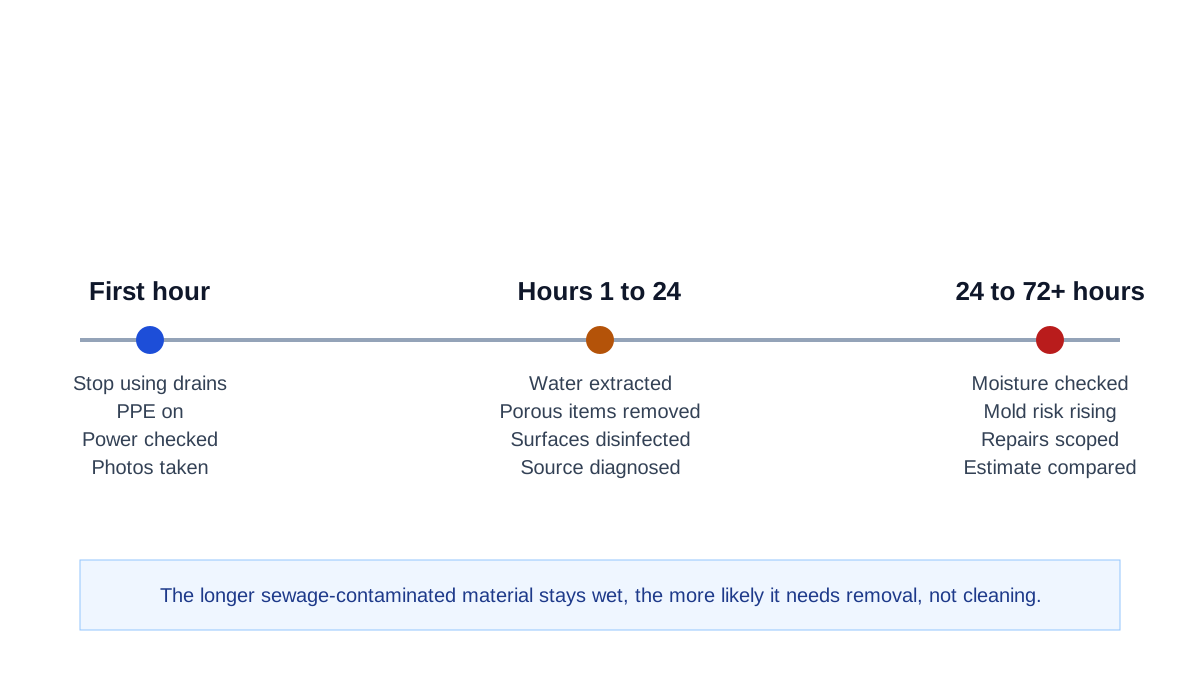
What to do in the first hour, the following day, and once the area is cleaned and disinfected.
What Causes Sewage Backup, Ranked by How Often It Happens
Ranked roughly by how often each one shows up in service calls, from most common to least:
Clogs inside your own line. Grease, wipes marked "flushable" (they generally aren't), paper towels, and hair build up over months or years until the pipe narrows enough to back up. This is the single most common cause of sewer backup in a house.
Tree roots in the lateral line. Roots seek out the moisture inside a sewer pipe and grow into joints and small cracks, slowly narrowing the line until it clogs outright, often years after the tree was planted nowhere near where you'd expect a pipe to run.
A municipal main overwhelmed by heavy rain. In cities with combined sewer and storm systems, or simply older infrastructure, a heavy storm can push more volume through the main than it can carry, forcing wastewater back up through the lowest connected fixture in every house on the line at once. This is what causes sewer backup in the street to turn into a backup in your basement even when your own plumbing is clear.
A missing or failed backwater valve. Homes without this one-way valve on the main line have no defense when the municipal system backs up; homes with one, and with the valve properly maintained, are largely protected from this specific cause.
A collapsed or broken lateral line. Older clay or cast-iron pipe can crack, shift, or collapse outright from ground movement or age, creating a permanent bottleneck rather than a clearable clog.
A septic system at or past capacity. For homes on septic rather than municipal sewer, a full tank, a failed drain field, or a pump that's stopped working produces the same basement symptoms with a different fix.
If you're asking why does my sewage keep backing up and it isn't a one-time storm event, the pattern usually points to something growing worse over time, roots, a narrowing clog, or a valve that never got installed, rather than bad luck striking twice.
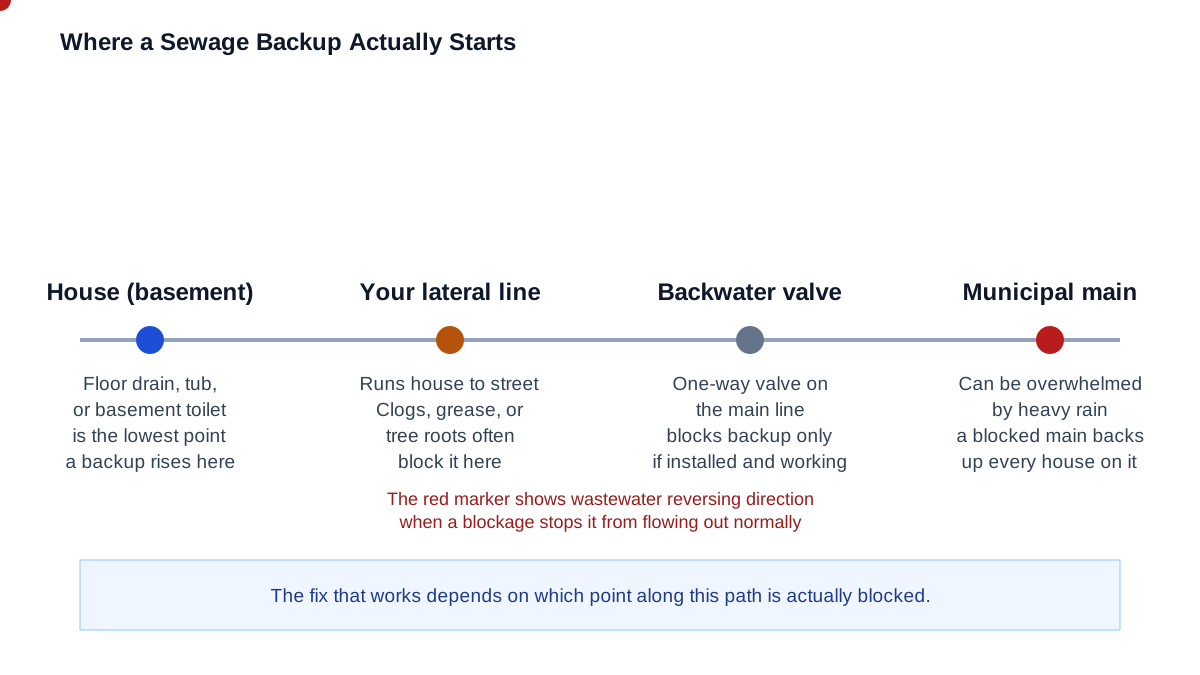
Wastewater normally flows out along this path; a clog, root intrusion, missing backwater valve, or an overwhelmed municipal main can push it back through the lowest drain in the house.
How to Tell Where the Backup Is Coming From
Not every sewer backup in basement plumbing means the same fix. A few minutes of observation before you call anyone will tell a technician most of what they'd ask on the phone anyway, and it tells you roughly how serious the problem is.
What you're seeing
Likely source
What it tells you
Only one toilet, tub, or sink backs up or drains slowly
A local clog in that fixture's own trap or branch line
Usually a plunger, snake, or drain-cleaning job, not a whole-house problem
Every fixture backs up together, starting with the lowest one in the house
A blockage in the main line between the house and the street, or the municipal main itself
A whole-house event; stop using all drains and get a sewer camera inspection
A floor drain bubbles or rises when you flush a toilet or run the washing machine
The main line is partially blocked and water is finding the lowest path out
Same main-line problem as above, just showing up at the floor drain first
Backups happen mainly during or right after heavy rain
A municipal system overwhelmed by stormwater, or a missing backwater valve
Points toward a backwater valve as the fix, not a one-time clog to clear
Gurgling sounds from drains with no backup, or a sewage smell with no visible water
An early-stage partial blockage or a dried-out drain trap letting sewer gas through
Worth addressing now, before it becomes a full backup
If it's the whole-house pattern, note the timing, whether it followed heavy rain, whether it's happened before, and which drain is lowest in the house, and have that ready when you call a plumber or restoration company. A sewer camera inspection, typically $125 to $500 depending on line length and access, is usually the fastest way to confirm exactly where the blockage sits, whether it's roots, a collapsed section, or debris, before anyone starts digging or billing for guesswork.
Sewage Backup Cleanup: The Steps, and Where DIY Stops
Once the source is identified and drains have stopped being used, cleanup follows a fairly consistent order, from the first stage a homeowner might handle to the work a crew takes over.
Cleaning Up After Sewage Backup, Step by Step
Put on rubber gloves, rubber boots, and eye protection before entering the area; add an N95 or better mask, rated to filter at least 95 percent of airborne particles, if the smell is strong or the space is enclosed.
Remove standing water with a wet-dry vacuum rated for hazardous liquids, or a sump or trash pump for anything deeper than an inch or two, working toward a floor drain or exit point.
Take out anything porous that touched the water and can't be fully sanitized: carpet, carpet pad, upholstered furniture, cardboard boxes, and drywall below the waterline. These generally aren't worth trying to save.
Scrub hard, nonporous surfaces, concrete, tile, sealed wood, with hot water and detergent first to remove solids, then disinfect with a product labeled effective against bacteria and viruses, following the label's contact time.
Run air movers and a dehumidifier once the area is cleaned and disinfected, and don't close up drywall or flooring until moisture readings confirm the space is actually dry, not just dry to the touch, and indoor relative humidity has come down to the EPA's target range of roughly 30 to 50 percent, no higher than 60 percent. Our guide on how to dry out water damage covers equipment placement and moisture targets in more detail.
Wash or discard any clothing, rags, or cleaning tools that contacted the water separately from your regular laundry, using hot water and detergent.
Where this stops being a reasonable do-it-yourself job: any backup covering more than a small, contained area, water that reached carpet, drywall, insulation, or an HVAC system, standing water more than an inch or two deep (FEMA puts the damage from a single inch of standing water at roughly $25,000), or anything that sat for more than a few hours before you found it. A raw sewage cleanup cost comparison is really a comparison of scope, and scope is exactly what a homeowner without commercial equipment can't safely handle once it goes past a fixture-level spill. Professional crews bring truck-mounted extraction, EPA-registered disinfectants rated for sewage, and moisture meters that read inside wall cavities, along with the training to know what has to come out versus what can be cleaned in place. Our guide to the water damage categories and classes covers how restoration crews make that call in more detail.
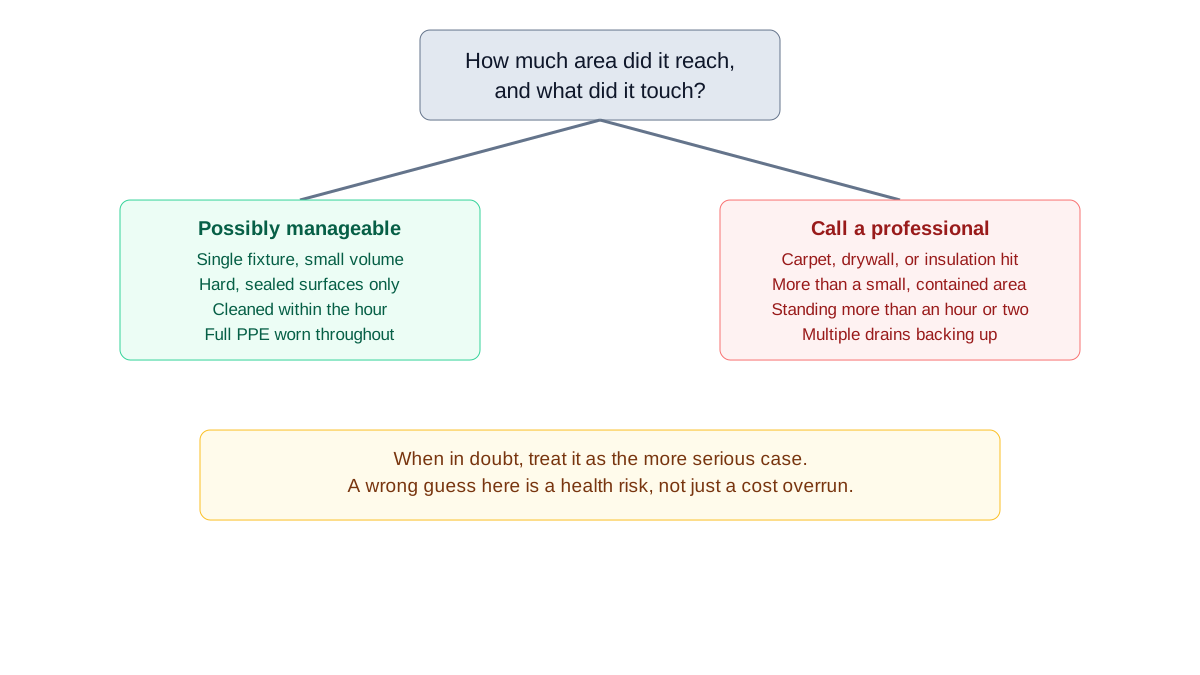
Whether a sewage backup is manageable yourself or needs a professional crew, based on how much area is affected and what it touched.
What Sewage Backup Cleanup Costs
There's no single number for sewage cleanup cost, because the job scales with square footage, how much has to be discarded versus disinfected, and how long the water sat before anyone started. What follows is what actually moves the price, with a source for each figure, rather than one average that won't match your situation.
Job scope
Typical range
What moves the price
Source
Small spill, single room, cleaned up fast
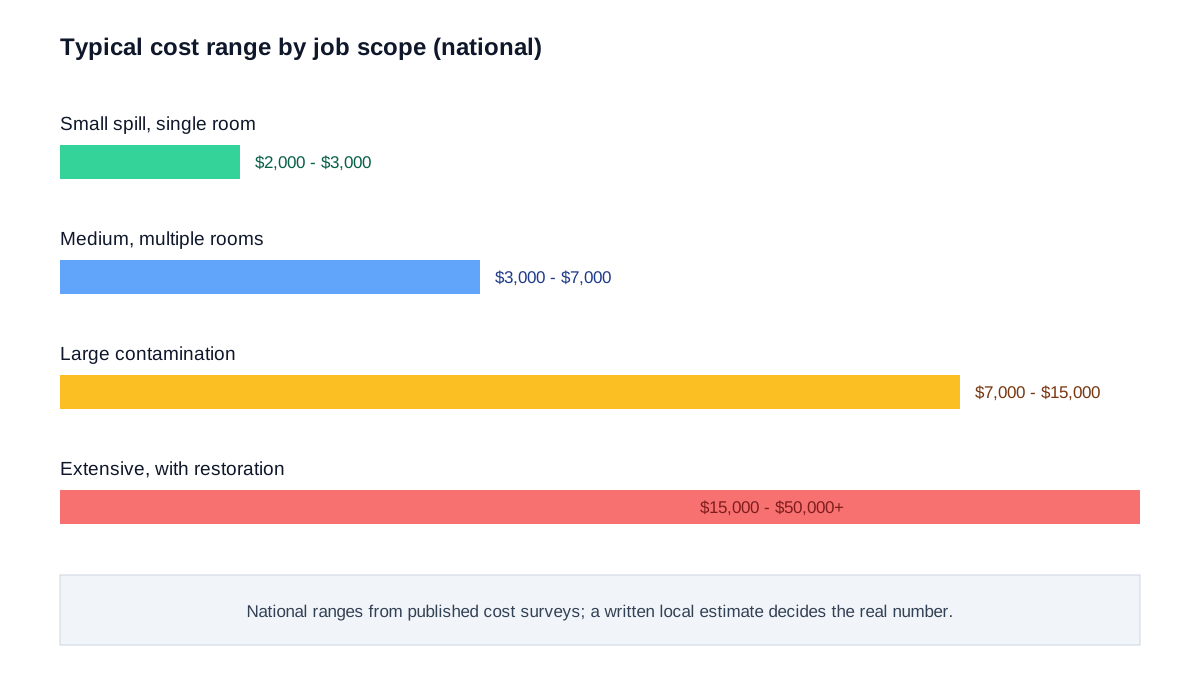
$2,000 - $3,000
Square footage, how quickly extraction started
HomeGuide
Medium backup across multiple rooms
$3,000 - $7,000
Number of rooms affected, flooring type, how much material has to be removed
HomeGuide
Large contamination, extensive area
$7,000 - $15,000
Contact with drywall or insulation, how long the water sat
HomeGuide
Extensive backup with structural restoration
$15,000 - $50,000+
Framing, subfloor, or finished-basement rebuild after removal
HomeGuide
Category 3 water extraction alone, per square foot, before sanitizing or repairs
roughly $7 - $12 per sq ft
Contamination level, equipment and labor needed
HomeAdvisor / HomeGuide / Fixr
Sewer camera inspection to locate the blockage
$125 - $500
Line length, access, whether a locator is needed
HomeGuide
Sewer line repair or replacement
$2,000 - $10,000
Trenchless versus open-trench, pipe length and depth
HomeGuide
Mold remediation, if drying was delayed
$15 - $30 per sq ft (project average roughly $1,500 - $9,000)
Square footage of visible growth, how long the area stayed wet
Fixr / HomeGuide
These are national ranges pulled from published cost surveys, not a quote for your address; the pack behind this guide doesn't include a regional price index, so treat every figure here as a starting point and get a written, itemized estimate before you agree to anything. A legitimate estimate breaks the job into extraction, disinfection, structural drying, and any repairs, rather than handing you one lump number.
Typical sewage backup cleanup cost by job scope, from a small single-room spill to an extensive backup needing structural restoration.
Does Homeowners Insurance Cover Sewage Backup?
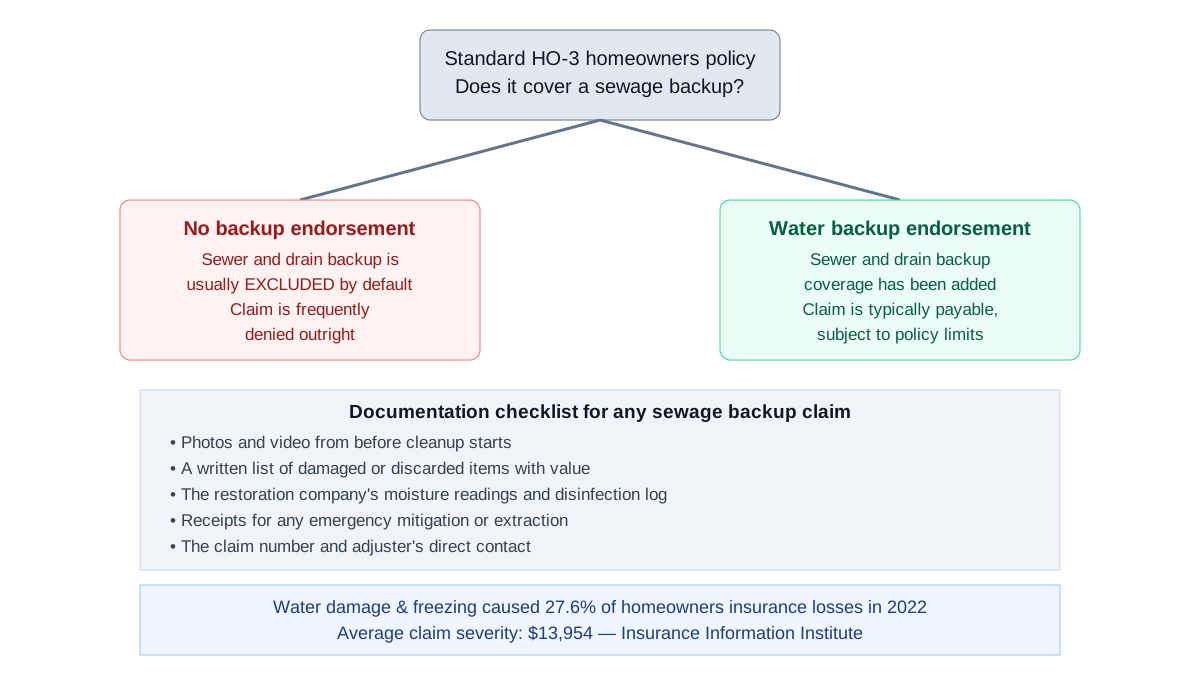
Usually not by default, which surprises a lot of people who assume their standard policy handles any water problem inside the house. A typical HO-3 homeowners policy covers sudden, accidental water damage from an internal source, a burst supply line or a failed water heater, but most policies specifically exclude sewer and drain backup unless you've added a separate sewage backup insurance endorsement, sometimes called water backup coverage. Without that endorsement, a basement sewage backup from a blocked main line is frequently a claim the insurer denies outright.
That endorsement is usually inexpensive relative to the exposure. Whether it's worth adding comes down to your own risk: older sewer infrastructure in the area, mature trees near the lateral line, a history of municipal backups on your street, or a basement finished well enough that a backup would be expensive to redo. Water damage and freezing together account for roughly 27.6 percent of homeowners insurance losses nationally, with a claim frequency of about 1.61 per 100 house-years and an average claim severity of $13,954, according to the Insurance Information Institute, and sewer backup is one of the causes that group covers, so the base rate of these claims isn't small even before you isolate backups specifically.
Documentation checklist for any sewage backup claim:
Photos and video from before cleanup starts, including the water level and everything it touched
A written list of damaged or discarded items with approximate age and value
The restoration company's moisture readings and disinfection log, if you hire one
Receipts for any emergency mitigation, extraction, or disposal you paid for yourself
The claim number and adjuster's direct contact once you file
If your policy denies the claim and you believe the endorsement applies, or you disagree with the settlement offered, you're entitled to have your own public adjuster review it, though public adjusters typically work on a percentage of the payout, worth weighing against a straightforward claim you could manage on your own. Our guide to water damage insurance claims covers documentation and negotiation in more depth.
Whether a sewage backup claim is likely to be paid comes down to one endorsement; water damage and freezing already account for 27.6% of homeowners insurance losses nationally (Insurance Information Institute).
How to Choose a Company for Sewage Backup Cleanup
Anything beyond a fixture-level spill is worth handing to a company that does this work daily, both for the equipment and for the disinfection standards involved. A few things worth checking before you sign anything:
IICRC certification for the technicians, specifically water damage restoration (WRT) and applied microbial remediation (AMRT, aligned with the IICRC's S520 mold remediation standard, Fourth Edition: 2024) where mold is a factor, confirms training against the industry's S500 standard rather than general handyman experience.
Proof of general liability insurance, since a crew working in a contaminated space that damages something else in your home should be covered for it.
A written scope of work before anyone starts, broken into extraction, disinfection, structural drying, and repairs, matching the cost categories above rather than one lump figure.
A clear answer on what gets discarded versus cleaned, and why, before demolition starts, not after.
Direct experience billing insurance for sewage backup claims specifically, since the documentation an adjuster wants for a Category 3 loss differs from a routine leak.
Red flags worth walking away from: a company that quotes a firm price over the phone without seeing the space, pressure to sign a contract before you've read it, or a crew that shows up without visible PPE for a sewage job. You can reach a restoration company that serves your area at 888-407-9931 to describe the backup and ask what a walkthrough and written estimate would involve. Our guide on how to choose a water damage company covers licensing checks and interview questions in more detail.
How to Prevent Sewage Backup in Your House
Most repeat backups are preventable, and the fixes are ordinary maintenance rather than a major project.
Watch what goes down the drain. Grease, "flushable" wipes, paper towels, and food scraps are the single biggest contributor to clogs inside your own line; grease especially hardens as it cools and narrows a pipe over months of otherwise normal use.
Have the lateral line inspected periodically if you have mature trees near its path, a camera inspection every few years catches root intrusion while it's still a cleanable problem rather than a collapsed section.
Install a backwater valve if you don't already have one and you've had even one backup, or live somewhere with older combined sewer infrastructure. It's a one-way valve on the main line that lets wastewater flow out but blocks it from being pushed back in when the municipal system is overwhelmed, and it's the single most effective fix against municipal-cause backups specifically.
Keep a record of any backup you do have, date, drains affected, weather at the time, so a pattern is visible to you and to any plumber or insurer down the line, rather than each event looking like an isolated incident.
None of this eliminates risk entirely, aging municipal infrastructure and severe storms are outside any homeowner's control, but it removes the causes you actually have influence over.
Regional Notes: Older Cities, Storm-Heavy Areas, and Everywhere Between
Sewage backup risk isn't evenly spread across the country, and the fix that matters most depends heavily on the age of the infrastructure around you and the weather it has to handle.
In older Northeast and Midwest cities, many built with combined sewer systems that carry stormwater and wastewater in the same pipe, a heavy rain event can overwhelm the main and push it back into basements across an entire block at once, regardless of whether any individual homeowner's own line is clear. A backwater valve matters more here than almost anywhere else.
Along the hurricane coast and other storm-heavy regions, the same overwhelmed-system pattern shows up with tropical storms and hurricanes instead of routine rain, often arriving alongside flooding from outside the house at the same time, which compounds cleanup and complicates which policy, homeowners or flood, actually applies.
In areas with mature tree canopy, root intrusion into aging clay or cast-iron lateral lines is the recurring cause rather than a single storm event; periodic camera inspection is worth the modest cost if your house is more than a few decades old and has large trees anywhere near the line's path.
Homes on septic systems, common in rural areas without municipal sewer, face a related but distinct version of this problem: backups usually mean the tank needs pumping or the drain field has failed, not a lateral line issue, and the fix runs through a septic service company rather than a sewer camera crew.
Frequently asked questions
What is a sewage backup?+
A sewage backup happens when wastewater that should be leaving through the sewer line comes back into the house instead, usually through the lowest fixture available, because something downstream is blocking its path. Restoration crews classify it as Category 3, the most contaminated water tier, which means it's treated as a health hazard from the first minute rather than an ordinary spill.
What causes sewage backup in a basement?+
Most often a clog inside your own line, grease, wipes, or paper buildup, followed by tree roots intruding into the lateral pipe, a municipal main overwhelmed by heavy rain, or a missing backwater valve that leaves the house unprotected when the street system backs up. Less commonly, a collapsed lateral line or a failing septic system produces the same symptoms.
How much does sewer backup cleanup cost?+
A small, single-room spill cleaned up quickly runs roughly $2,000 to $3,000. Larger or delayed backups affecting multiple rooms or requiring structural drying and repairs can run $7,000 to $50,000 or more, based on published national cost surveys. The only reliable number for your situation is a written, itemized estimate from a company that has walked the space.
How do I clean up sewage backup in a basement?+
Put on rubber gloves, boots, and eye protection before touching anything, remove standing water with a wet-dry vacuum or pump, and take out porous materials like carpet and wet drywall that can't be fully disinfected. Scrub hard surfaces with detergent, then disinfect with a product labeled effective against bacteria and viruses. Anything beyond a small, contained spill is worth handing to a professional crew.
Does homeowners insurance cover sewage backup?+
Usually not by default. A standard HO-3 policy covers sudden internal water damage but typically excludes sewer and drain backup unless you've added a specific water backup or sewage backup endorsement. Check your declarations page for that endorsement before assuming either way, and document everything with photos before cleanup starts regardless of coverage.
Is sewer backup insurance worth it?+
For most homeowners, yes, given how much a basement sewage backup can cost without it and how relatively inexpensive the endorsement usually is compared to the exposure. It's worth prioritizing if you have older sewer infrastructure nearby, mature trees near your lateral line, a history of backups on your street, or a finished basement that would be costly to redo.
How do I prevent sewage backup in my house?+
Watch what goes down the drain, grease and wipes are the leading cause of clogs inside a home's own line, have the lateral line camera-inspected periodically if mature trees are nearby, and install a backwater valve if you've had even one backup or live with older combined sewer infrastructure. None of this eliminates risk from municipal system failures, but it removes the causes within your control.
How do I clean up sewage backup in a washing machine?+
Unplug the machine before touching any standing water nearby, and treat the water and anything it touched as Category 3 contaminated. Remove and discard items that can't be disinfected, like absorbent pads or baskets of laundry that were sitting in it, clean the machine's exterior and the surrounding floor with detergent and then a disinfectant, and don't run another load until you've confirmed the drain line isn't still backing up.
What happens when sewage backs up in a basement?+
Wastewater rises through the lowest drain, typically a floor drain, laundry sink, or basement toilet, and spreads across whatever it reaches. Because it's Category 3 water, porous materials it touches, carpet, pad, drywall below the waterline, generally have to be removed rather than cleaned, while hard surfaces can usually be disinfected and kept if you get to them quickly.
Does renters insurance cover sewage backup?+
It depends on the same endorsement question as homeowners insurance: a standard renters policy typically covers your personal belongings from sudden internal water damage but usually excludes sewer backup unless you've added that specific coverage. The building itself and any structural cleanup are generally the landlord's responsibility and their insurer's problem, not yours.
What causes sewer backup in the street?+
Most often a municipal main that can't handle the volume during heavy rain, especially in older cities with combined sewer and storm systems, or a blockage somewhere in the public line itself. When the street-level system backs up, every house connected to it is at risk regardless of how clear each individual homeowner's own plumbing is, which is exactly what a backwater valve protects against.
How do I sanitize a basement after a sewage backup?+
After removing standing water and any porous materials that can't be saved, scrub hard surfaces, concrete, tile, sealed wood, with hot water and detergent to remove solids first, then apply a disinfectant labeled effective against bacteria and viruses, following the label's stated contact time. Run air movers and a dehumidifier afterward, and confirm the space is dry with a moisture meter before closing anything back up.