A water stain on ceiling drywall means water reached that spot from above: a roof leak, a bathroom fixture, HVAC condensation, or a one-time overflow. It doesn't always mean an active leak — a dry, unchanged stain is safe to clean and repaint. One that's soft, growing, or damp means water is still moving, and needs a professional look before a paintbrush.
A water stain on ceiling drywall, sometimes a faint yellow ring and sometimes a dark brown blotch the size of a dinner plate, means water reached that spot from above at some point. The color and shape matter less than one question: is the water still moving?
This guide walks through what causes a stain like this, how to tell an old, resolved leak from one that's still active, when a stain means mold risk instead of just cosmetic damage, real repair costs, and how to fix it for good instead of watching it bleed back through fresh paint. A stain over a second-floor bathroom behaves differently than one that only shows up after a hard rain, and both are covered here.
Two things decide how this plays out: whether you can confirm the source has stopped, and how long the material behind the drywall stayed wet before it dried. Everything below is built around those two questions.
What a Water Stain on the Ceiling Actually Tells You
A water stain on ceiling drywall is the paper facing doing exactly what paper does when it gets wet: absorbing whatever minerals, wood tannins, or rust were dissolved in the water, then holding that color even after everything dries out. The stain itself isn't damage in the structural sense: it's evidence. By the time you can see a ring, water has already soaked through the drywall's paper face, and in most cases it traveled through insulation and framing to get there first.
Color tells you a little. A fresh, pale yellow ring usually points to clean water: condensation, a supply line, rainwater. A darker brown stain on ceiling paint often means the water picked up tannins from wood framing or rust from old galvanized pipe on the way down, which points to a slower, longer-running source rather than a single splash. A stain with a greenish or black tint, especially one that smells musty, is a different problem covered in its own section below.
None of that tells you whether the stain is still active. That's the question the rest of this guide is built around.
What's Causing It, Ranked by How Often We See Each One
Not every cause is equally common, and the order below roughly matches what shows up most in real households, from most frequent to least:
A fixture or supply line directly above. A tub, shower pan, toilet wax ring, or a supply line under a sink on the floor above is the single most common source for a ceiling stain in a two-story house or a unit with a bathroom upstairs. The stain usually sits close to directly under the fixture.
Roof or flashing failure. Around chimneys, skylights, vent boots, and valleys, flashing wears out long before shingles do. A water stain on ceiling after heavy rain (especially wind-driven rain) points here first, particularly on a top-floor ceiling.
HVAC condensation. A clogged AC condensate drain line or a poorly insulated supply duct running through a hot attic (attic air can climb past 120°F in direct summer sun) will drip or sweat, and the stain shows up near a register or wherever the duct or air handler sits above the ceiling.
Ice dams, in cold-winter climates. Melting snow refreezes once it drops back below 32°F at a cold roof edge, backs up under the shingles, and finds its way through the roof deck. This one is seasonal and shows up on upper-floor ceilings near the eaves.
A one-time overflow. An overflowed tub, a washing machine hose that popped loose, or a sink left running upstairs causes a single soaking event rather than a repeating leak.
An old leak that's already fixed. Plenty of stains are scars from a problem a previous owner or a past repair already solved. The drywall never got repainted, so the mark just stayed.
Where the stain sits relative to plumbing, exterior walls, and HVAC runs narrows this list fast, which is the point of the next section.
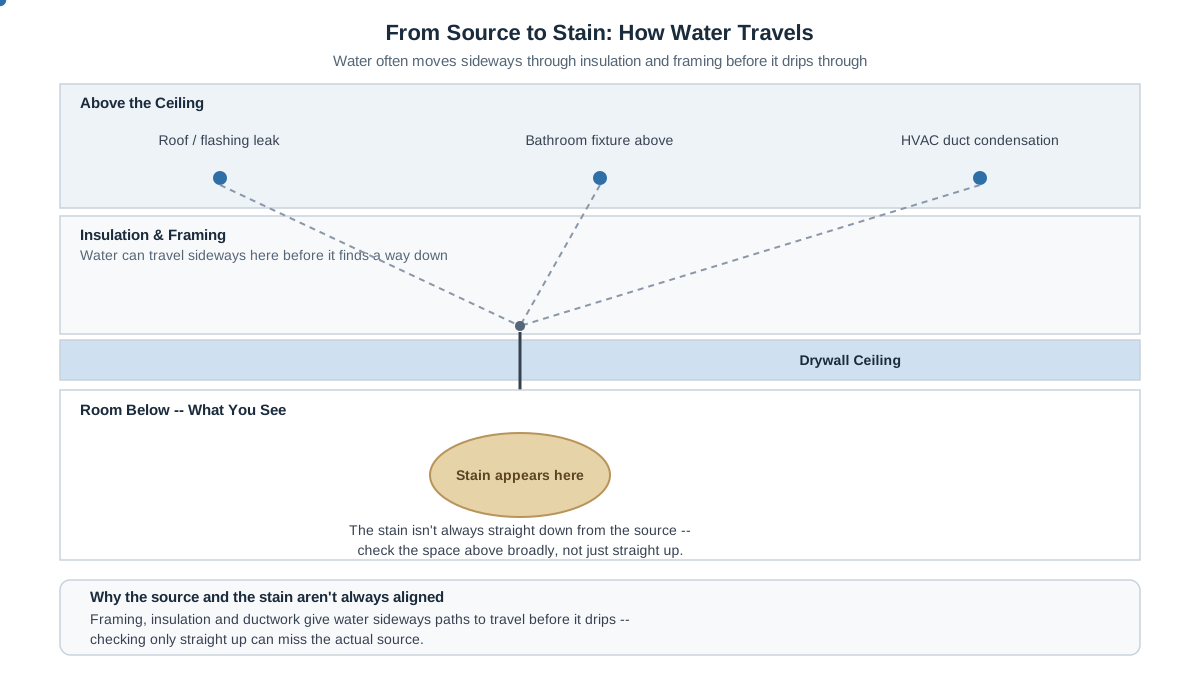
The visible stain isn't always directly below its source — water travels sideways through insulation and framing first.
Finding the Source Before You Touch Anything
You don't need to open the ceiling to narrow this down. Work through these steps in order:
Look straight up, then check what's directly above. A bathroom, a laundry closet, an attic, or a roof deck above the stain each points toward a different cause list.
Check the shape and edges. A stain with a sharp, defined ring usually means the water stopped and dried once. A stain with a fuzzy, spreading edge, or one that's grown since you first noticed it, means water is still arriving.
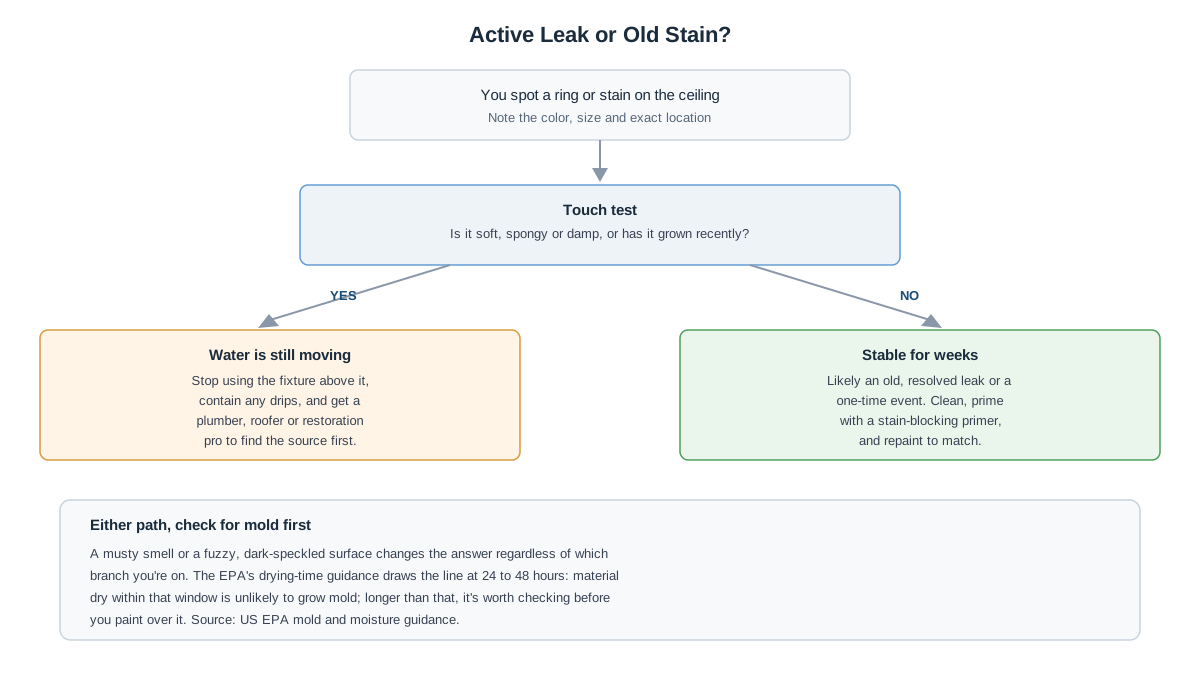
Do the touch test. Press gently with a gloved hand or the back of a screwdriver handle. Firm and dry means the moisture event is over. Soft, spongy, or damp means it isn't — stop pressing, since a soft ceiling can sag or drop material.
Look for a pattern with weather or use. A stain that darkens or reappears specifically after rain, after a shower runs upstairs, or after the AC has run for hours tells you exactly which system to check first.
Check the attic or the floor above, if you can safely access it. A flashlight and a look at the underside of the roof deck or the subfloor above the stain often shows the actual wet spot, which is frequently not directly above the ceiling stain — water travels sideways along framing and insulation before it drips down.
Smell it. A musty, damp smell near the stain, especially combined with any softness, is a mold flag covered in the next section.
If you can see daylight, standing water, or active dripping at any point in this process, stop diagnosing and go straight to what to do in the first hour instead.
The Water Stain on Ceiling But No Leak Scenario, and Other Look-Alikes
A lot of searches on this topic land on some version of water stain on ceiling but no leak or water stain on ceiling but dry — a homeowner sees the mark, presses on it, and finds nothing wet. That's genuinely good news most of the time, but "dry today" and "never coming back" aren't the same thing. A few patterns account for most of these cases.
The most common explanation is a leak that already stopped: a roof repair from a previous season, a plumbing fix from the last owner, or a single ice dam event that hasn't repeated. The second most common is a slow, intermittent source — a condensate line that only overflows during the hottest weeks of summer, or a flashing gap that only leaks during wind-driven rain from one direction — so the ceiling reads bone dry on a calm day and still isn't actually fixed.
A quick decision flow: touch-test the stain, then follow the active-leak or old-stain path.
Use this table to sort what you're actually looking at:
What you see
What it usually means
What to do next
Sharp-edged stain, dry to the touch, unchanged for weeks
Old, resolved leak
Clean, prime, and repaint
Stain grows or darkens after it rains
Active roof or flashing leak
Have the roof checked before repainting
Stain is soft, spongy, or damp right now
Water is currently present
Stop pressing, contain drips, call a pro
Stain sits under a second-floor bathroom
Plumbing or fixture leak
Check the fixture above; shut off its water if reachable
Stain appears only in humid summer weather
AC condensation or a clogged drain line
Have an HVAC tech check the condensate line
Musty smell, discoloration spreading over days
Possible mold growth
See the mold section below before painting over it
If your stain matches the top row of that table, you're probably looking at cosmetic water damaged ceiling drywall and not an ongoing problem. If it matches any of the others, keep reading before you reach for a paint roller.
Does a Water Stain Mean You Have Mold?
Not automatically. A water stain is evidence of moisture that reached the drywall at some point; mold needs moisture that stuck around. According to the US EPA, material that's dried out within 24 to 48 hours of getting wet generally won't support mold growth, while anything damp longer than that becomes a real risk. A stain from a spill that got mopped up and dried the same day is unlikely to have mold behind it. A stain from a slow condensate leak that's been damp for weeks behind the drywall is a different story.
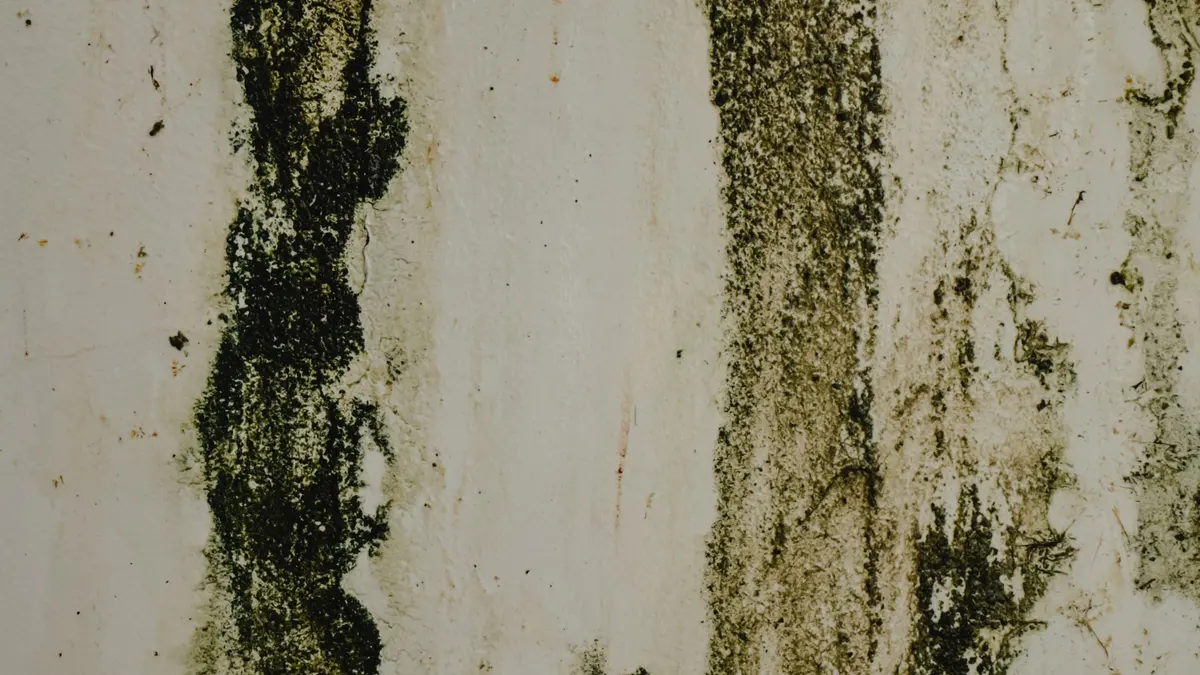
Signs that lean toward mold rather than a plain water stain: a musty odor, a stain that looks fuzzy or textured rather than flat, greenish-black or dark speckled color instead of tan or brown, and any softness in the drywall or ceiling tile. The EPA draws the do-it-yourself cleanup line at about 10 square feet — roughly a 3-foot by 3-foot patch. Below that size, with no musty smell and no ongoing moisture, cleaning and painting over is a reasonable homeowner job. Above that size, or with a moisture source that's still active, professional mold remediation is the safer call, since painting over it first can trap the problem and make a later remediation harder.
If you're not sure which side of that line you're on, a mold inspection is inexpensive relative to what a wrong guess costs later. See the cost section below for a real range.
Fixing It Yourself: Primer, Paint and Small Patches
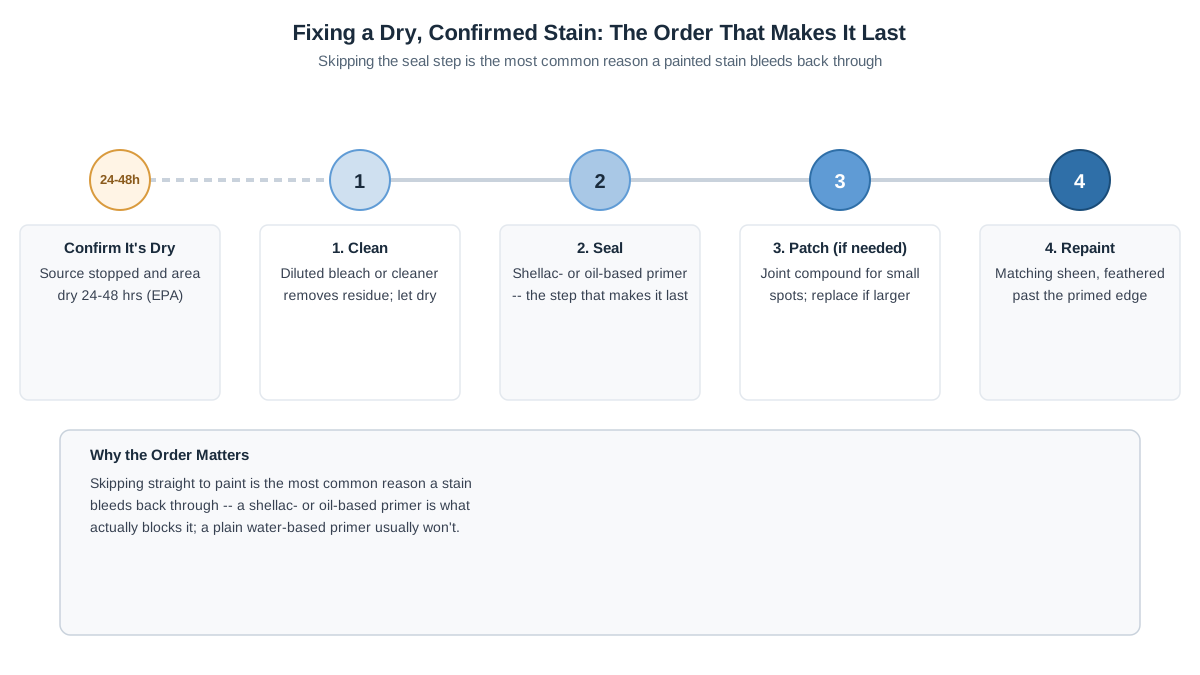
Once you've confirmed the source is stopped and the area has been dry for at least a couple of days, a cosmetic water stain is a genuinely manageable weekend project. The sequence matters more than the products: skipping straight to ceiling paint is the most common reason a stain bleeds right back through days later.
Clean the area. A diluted bleach solution or a household cleaner removes surface residue and any light mildew film; let it dry fully before the next step.
Seal the stain. This is the step people skip, and it's the one that decides whether the fix lasts. A shellac-based or oil-based stain-blocking primer locks the discoloration in so it can't wick through new paint — a plain water-based primer usually won't stop it.
Patch, if needed. Small cracks or a soft spot smaller than roughly a hand's width (four to six inches across) can often be filled with joint compound, given about 24 hours to dry, and sanded flush. Anything larger, or any spot where the drywall paper has torn or sagged, calls for cutting back to the nearest framing member — ceiling joists typically run 16 or 24 inches apart, center to center — and setting in a new piece instead.
Repaint to match. Ceiling paint in a matching sheen, feathered slightly past the primed area, finishes the ceiling water stain repair.
That covers how to paint over water stain marks that are confirmed dry and small. It does not cover a stain that's still forming, one tied to a musty smell, or one larger than the EPA threshold above — those go to a pro, covered next.
The sequence matters more than the products — skipping the stain-blocking primer is why a painted-over stain often bleeds back through.
When the Fix Needs a Professional
Some situations are past the primer-and-paint stage no matter how small the visible stain looks. Call a plumber, roofer, or water damage restoration company rather than reaching for a paintbrush when any of these apply: the spot is currently damp or growing, there's any sagging or bulging in the drywall, the stain returns after you've already painted over it once, or you can't identify a stopped source with reasonable confidence.
A sagging or bulging ceiling in particular is a structural warning, not a cosmetic one: wet drywall and wet insulation are heavy, and a section can fail and drop without much additional warning. If you're standing under an active drip or a visibly wet, sagging patch right now, get out from under it, catch what you can in a container, and call 888-407-9931 to reach a water damage restoration company that serves your area and describe exactly what you're seeing.
For a hidden leak you can't trace with the steps above, a restoration company or plumber with a moisture meter — a reading above roughly 20 percent moisture content in wood framing is generally where decay and mold risk start to matter — and often a thermal camera, can find the wet path inside the wall or ceiling cavity without guessing where to cut.
What a Water-Stained Ceiling Actually Costs to Fix
Costs here span a wide range because "water stain on ceiling" covers everything from a coffee-cup-sized mark you can prime and paint yourself to a full section of drywall and insulation that has to come out. The ranges below come from national contractor cost surveys, not quotes for your job specifically — treat them as a planning range. A written estimate from a local contractor is the only number that's actually binding, so use these figures to sanity-check a bid rather than to hold anyone to.
Job
Typical range
What moves the price
Source
Ceiling patch and repaint (drywall intact)
$450 – $1,600
Size of the stain, ceiling height and access, texture matching
HomeAdvisor, 2026
Drywall section replacement
$300 – $850
How much of the board and insulation above is saturated
HomeAdvisor, 2026
Minimal water intrusion job overall (IICRC Class 1)
$150 – $500
Whether it's contained to drywall alone or reaches framing
HomeGuide, 2026
Mold inspection, if you're not sure
$450 – $800
Home size and number of suspect areas tested
Fixr, 2025
Mold remediation, if testing finds it
$1,100 – $3,400
Square footage affected and whether HVAC is involved
HomeAdvisor, 2026
National cost ranges for the jobs tied to a ceiling water stain, from cheapest to most expensive.
How we got these numbers: the ranges above come from national contractor cost surveys (HomeAdvisor, HomeGuide, and Fixr), each updated in 2025 or 2026, rather than from a single source. The water damage restoration cost guide has the full breakdown by category and class if your situation goes beyond a ceiling patch. Two variables move the number more than anything else: whether the drywall gets cut out and replaced instead of just cleaned and repainted, and whether mold testing turns up a positive result that adds remediation on top of the repair. Actual bids also swing with your region's labor rates, how hard the ceiling is to reach (a stairwell or vaulted ceiling costs more in scaffolding and time than a flat one-story ceiling), and how much damage a contractor finds once the ceiling is actually opened up.
How to Choose Who Fixes It
For a cosmetic patch and repaint, a handy homeowner or a general painting contractor can usually handle it. For anything involving a hidden leak, structural drywall replacement, or suspected mold, look for a company carrying an IICRC credential — the water damage restoration industry's certifying body, covering the ANSI/IICRC S500 standard (fifth edition, 2021) for water damage and the S520 standard (fourth edition, 2024) for mold remediation.
A short list of questions before you hire anyone: Are you licensed and insured for this type of work in this state, and can I see proof? Do you carry IICRC certification, and in which specialty? Will you put the scope of work and total price in a written estimate before starting? What's included if you find more damage once the ceiling is open? A company that hesitates on any of those, or that wants full payment before starting, is a red flag worth walking away from.
Before anyone starts work, verify their license directly through your state's contractor licensing board — most publish license status and any disciplinary history online — and ask to see a current certificate of liability insurance rather than taking their word for it. A legitimate contractor won't hesitate to provide either.
If you'd rather start with a phone call than a search, 888-407-9931 reaches a restoration company that serves your area and can talk through whether your situation needs a plumber, a roofer, or a full restoration crew first.
Match the stain's location to the professional most likely to solve it fast.
Keeping the Stain From Coming Back
Once a ceiling has stained once, that spot is slightly more likely to show a new mark later, mostly because the underlying cause (an aging roof valley, an older bathroom fixture, a marginal condensate line) often didn't go anywhere even after the visible repair. A few habits catch a repeat before it becomes a repeat repair bill.
Roof and flashing. Have chimneys, skylights, and vent boots looked at yearly, especially before the season that caused the original stain.
Caulk and grout. Check the seal around any tub or shower directly above a ceiling you've already patched; failed caulk is a slow, easy-to-miss source.
AC condensate line. Flush or inspect it before cooling season, particularly in humid climates where it clogs with algae. Keeping indoor humidity below 60 percent, ideally between 30 and 50 percent per the EPA's guidance, also gives condensation less to work with in the first place.
Keep gutters clear so roof edges don't hold standing water or contribute to ice dams in freezing climates.
After any repaint, keep an eye on that spot for the first few rain events and the first hot, humid stretch. A return within that window usually means the original source wasn't fully fixed.
The same stain on the same style of ceiling tends to have a different usual cause depending on where the house sits. In freeze-belt states, ice dams and frozen, cracked supply lines in unheated attics or exterior walls cause a disproportionate share of winter ceiling stains, and the pattern is seasonal, showing up after a cold snap followed by a thaw. Along the Gulf Coast and hurricane-exposed Atlantic coastline, wind-driven rain finds gaps in flashing and roof underlayment that a calm-weather roof inspection can miss entirely, so stains cluster after named storms and heavy wind events rather than steady rain.
In hot, humid regions, AC condensation and duct sweating make up a bigger share of the cause list than in drier climates, simply because the systems run longer and harder. In drier, low-humidity regions, a stain is more often tied to plumbing or roofing specifically, since condensation rarely builds up enough to matter. None of this changes the diagnosis steps above; it just changes which cause to check first.
Frequently asked questions
Does a water stain on the ceiling always mean an active leak?+
No. A water stain on ceiling drywall can be a scar from a leak that was already fixed, a one-time overflow, or a seasonal event like an ice dam. Press the spot: if it's firm, dry, and hasn't grown in weeks, the source is very likely inactive. If it's soft, spreading, or reappears after rain or a shower runs upstairs, treat it as active until you confirm otherwise.
Will a water stain on the ceiling go away on its own?+
The stain itself won't fade without cleaning and repainting, even after the water source is long gone, because the discoloration is dried mineral and tannin residue in the drywall paper. Once you've confirmed the area is dry, a stain-blocking primer followed by matching ceiling paint removes it for good. Skipping the primer and painting straight over it usually lets the stain bleed back through within weeks.
What does it mean if the water stain is brown instead of yellow?+
A brown stain on ceiling paint usually means the water picked up rust from old galvanized pipe or tannins from wood framing on its way through, which points to a slower or longer-running source than a single quick splash. Color alone doesn't tell you whether the leak is still active, so use the touch test and check for growth over time as well.
Does a water stain on the ceiling mean I have mold?+
Not automatically. Mold needs moisture that stayed longer than 24 to 48 hours, so a spot that dried quickly is unlikely to have mold behind it. A musty smell, a fuzzy or textured surface, or a greenish-black tint are the signs that push it toward a mold concern instead of a plain stain, and any of those calls for a closer look before you paint over it.
Is a water stain on the ceiling dangerous?+
The stain itself isn't dangerous, but what it represents can be. A sagging, soft, or bulging ceiling can drop wet material without much warning, and a moisture source left unaddressed for weeks raises the odds of mold. Treat any softness or active dripping as a reason to stop and get a professional look rather than working around it.
Can I just paint over a water stain on the ceiling?+
Only after you've confirmed the source is stopped and the area has had time to dry out fully, generally at least 24 to 48 hours per EPA guidance. Painting over it directly, without a stain-blocking primer, almost always lets the discoloration bleed back through within days or weeks. Use a shellac- or oil-based stain-blocking primer first, then repaint.
How do I find the source of a water stain on the ceiling?+
Start by looking at what's directly above the stain: a bathroom, laundry area, roof, or HVAC run each points to a different likely cause. Check the shape of the stain, do a gentle touch test for dampness, and note whether it worsens after rain, a shower, or the AC running. If you can safely access the attic or the floor above, a flashlight check often finds the actual wet spot.
What does an old, already-dry water stain look like compared to an active one?+
An old stain has sharp, defined edges, feels firm and dry to the touch, and hasn't changed size or gotten darker in weeks. An active one has a soft or spongy feel, fuzzy or spreading edges, and grows or darkens with weather or fixture use. When you're not sure which you're looking at, watch it for a week or two before repainting.
Why does the stain only show up after rain, even though the ceiling feels dry the rest of the time?+
That pattern almost always points to a roof or flashing leak that only lets water through during wind-driven or heavy rain, rather than a constant plumbing drip. Between rain events, the small amount of water that got in dries out enough that the spot feels dry to the touch again. It still needs a roof inspection, since the underlying gap in flashing or underlayment hasn't gone anywhere.
What does a water stain over a bathroom or under a shower usually mean?+
It usually points to the fixture directly above rather than the roof: a worn toilet wax ring, a leaking shower pan or tub overflow gasket, or a supply line fitting under a sink. Because the stain sits close to directly under the source, a plumber or restoration company can often confirm it faster here than with a roof leak, where water can travel sideways before it drips through.