Most loud AC noises trace to one of five parts: a buzzing capacitor, a rattling loose panel, a squealing blower motor, a hissing refrigerant leak, or a grinding compressor. An ac making loud noise that clicks rapidly on and off usually means short cycling. Match the sound to the cause below, and shut the system off if you hear grinding, banging, or smell burning plastic.
The outdoor unit used to run quietly enough that you forgot it was back there. Now it buzzes when it kicks on, or clicks a few times and shuts back off, or lets out a screech that sends the dog under the bed. None of that is normal, and none of it means you have to guess. An ac making loud noise almost always narrows down to a short list of parts and patterns once you know what to listen for, and matching the sound to the cause is the fastest way to figure out whether you are looking at a 5-minute fix, a $150 part, or a system near the end of its life.
Below: what each sound usually points to, a ten-minute check you can run yourself, what the fix costs by part based on published national repair data, and the exact point where a noise stops being background annoyance and becomes a reason to cut power at the breaker.
What That Sound Coming From Your AC Is Actually Telling You
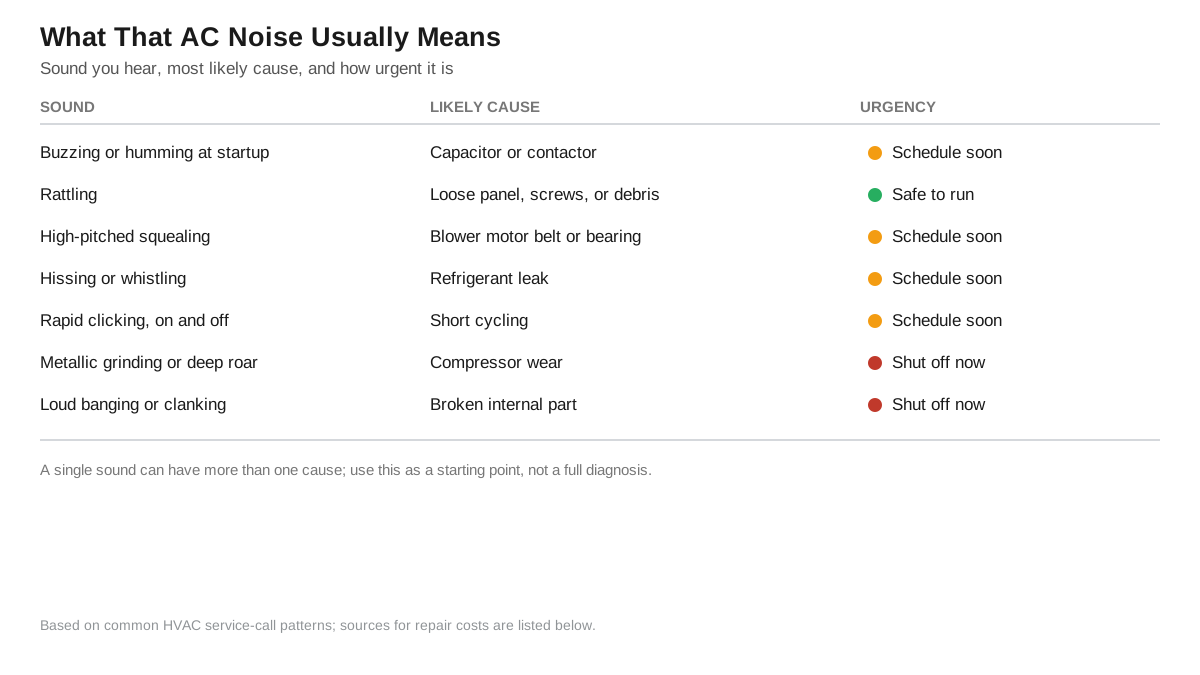
Air conditioners fail in patterns, not randomly, and the sound a system makes is one of the best free diagnostic clues you have before anyone shows up with a toolbox. A capacitor going bad sounds different from a loose panel, and a compressor grinding itself apart sounds nothing like a belt starting to squeal. The table below maps the most common complaints to their usual cause and how urgently you need to act.
What that AC noise usually means, ranked by urgency.
Sound
Likely cause
How urgent
Buzzing or humming at startup
Weak or failing capacitor, or a loose contactor
Schedule soon
Rattling
Loose access panel, screws, or debris in the cabinet
Safe to run, fix soon
High-pitched squealing
Blower motor belt or bearing
Schedule soon
Hissing or whistling
Refrigerant leak or a restricted duct
Schedule soon
Rapid clicking, on and off every few minutes
Short cycling (several possible root causes)
Schedule soon
Metallic grinding or a deep roar
Compressor wear inside the outdoor cabinet
Shut off now
Loud banging or clanking
A broken or detached internal part
Shut off now
A single sound can have more than one cause, so treat this table as a starting point rather than a full diagnosis. A squeal that shows up only at startup, for instance, usually points somewhere different than one that continues the whole time the unit runs.
Causes Ranked by How Often They're the Real Problem
Most ac making loud noise calls fall into a fairly predictable order, from parts that fail constantly to the ones that fail rarely but expensively.
Capacitor wear. The capacitor stores the electrical charge that gives the compressor and fan motors the jolt they need to start. A weak capacitor produces a buzz or hum at startup, sometimes followed by the outdoor fan struggling to spin up. Capacitors are cheap and wear out from ordinary heat cycling, which makes this the single most common noise complaint on an aging system.
Contactor or relay chatter. The contactor is the electrical switch that closes to send power to the outdoor unit each time the thermostat calls for cooling. A pitted or failing contactor can chatter or click repeatedly instead of closing cleanly, and that clicking is often mistaken for short cycling even though the compressor itself is fine.
Loose panel or debris. Rattling is frequently the least serious cause on this list: a service panel that was not fully seated after the last visit, a screw that worked loose from vibration, or a stick or acorn that fell into the cabinet. Worth checking first since it costs nothing to rule out.
Blower motor belt or bearing. An ac squealing noise almost always points here. Older blower motors use a belt that can glaze, crack, or slip, and even belt-free direct-drive motors develop bearing wear that produces a rising squeal, especially right at startup.
Refrigerant issues. A hissing or whistling sound, particularly near the indoor coil or the line set, often means refrigerant escaping through a small leak, or occasionally a restriction elsewhere in the line. This one needs a licensed technician, since handling refrigerant requires EPA Section 608 certification (40 CFR Part 82) under the Clean Air Act.
Compressor wear. What people mean by an ac compressor loud noise complaint is usually a metallic grinding, a deep mechanical roar, or a knocking sound from inside the outdoor cabinet. The compressor is the most expensive part in the system and the one that fails least often, but when internal components start wearing against each other, the noise gets worse fast and the unit is close to failing outright.
Airflow restriction feeding a cycling problem. A clogged filter, blocked return, or iced evaporator coil does not usually make noise on its own, but it is one of the most common root causes behind the rapid clicking pattern covered in detail below.
Knowing roughly where a sound sits on this list gives you a rough sense of urgency and cost before a technician ever confirms the exact part.
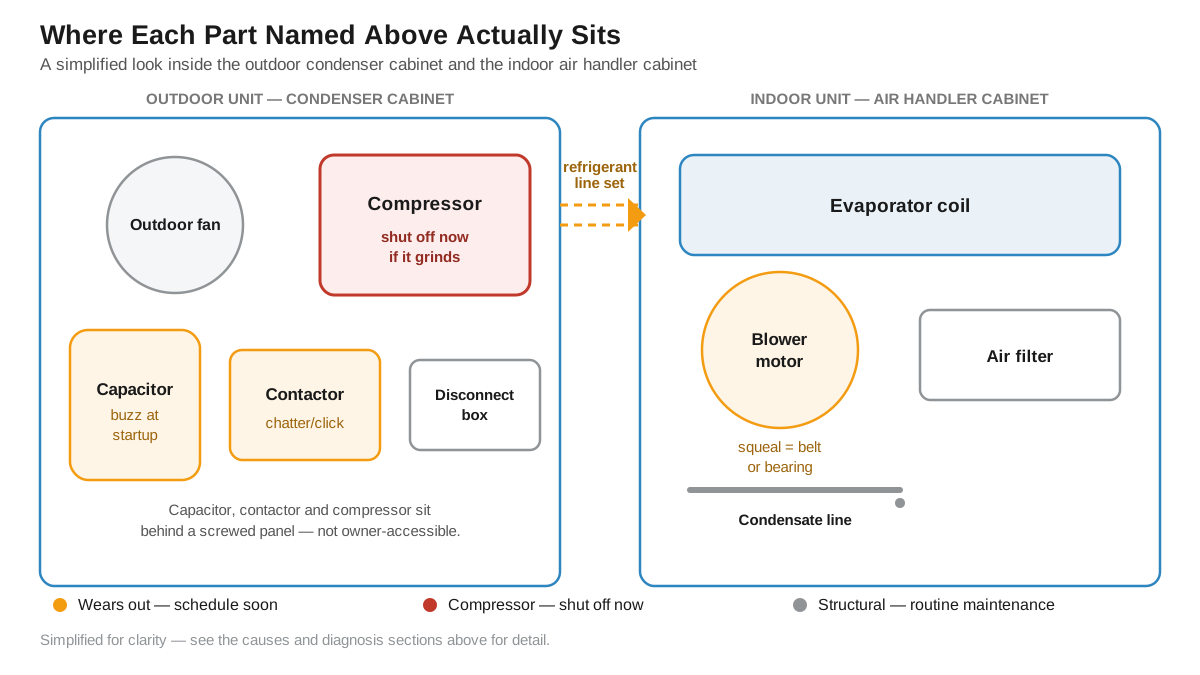
Where each part named in this guide physically sits, color-coded by how urgently it usually needs attention.
How to Diagnose It Yourself in About Ten Minutes
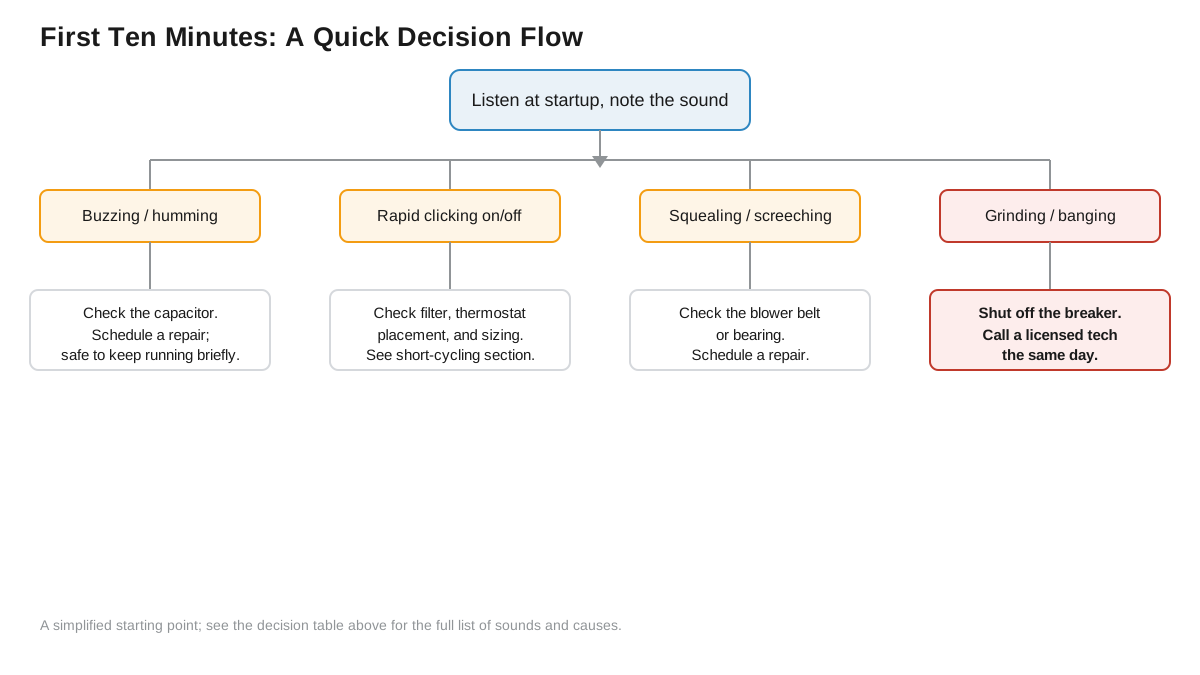
A quick decision flow for the first ten minutes.
You cannot legally open the refrigerant circuit or work past the electrical disconnect without certification, but a homeowner can safely rule out several things in the time it takes to walk around the house once.
Turn the thermostat off, wait thirty seconds, then set it back to cool and listen closely to the first ten seconds of startup, since that is when a weak capacitor or a failing contactor is most audible.
Check the breaker panel for both the indoor air handler and the outdoor condenser, which runs on its own 208-240-volt, double-pole circuit; a tripped breaker there can produce odd clicking as the system tries and fails to start.
Walk out to the outdoor unit and look at the fan. An outside ac unit not spinning while the system is calling for cooling usually points to a dead capacitor, a seized motor, or a tripped internal overload, and it is one of the fastest things to confirm with your own eyes.
Pull the indoor air filter and hold it up to a light. If you cannot see light through it, replace it before doing anything else, since restricted airflow drives several of the causes above.
Check the indoor vents while the system runs. An ac fan not working indoors, meaning weak or no airflow at the registers even though the outdoor unit is running, points toward the blower motor or a duct problem rather than the compressor.
Look for ice on the indoor coil or the refrigerant lines — the coil surface has to drop to 32°F or below for ice to form in the first place. If you see ice, shut the system off entirely and let it thaw for a few hours before running it again, since running an iced system can flood the compressor with liquid refrigerant.
Note the exact pattern: does the noise happen only at startup, only at shutdown, continuously while running, or in a repeating cycle every few minutes? That pattern matters more to a technician than a description of the sound itself.
Write down what you find. A technician who hears "the breaker was fine, the filter was clean, but the outdoor fan is not turning" can often narrow the visit to a specific part before opening a single panel. If the system runs constantly but never quite cools the house, our AC not cooling guide walks through the same troubleshooting from the temperature side instead of the noise side.
Why Your AC Keeps Turning On and Off (Short Cycling)
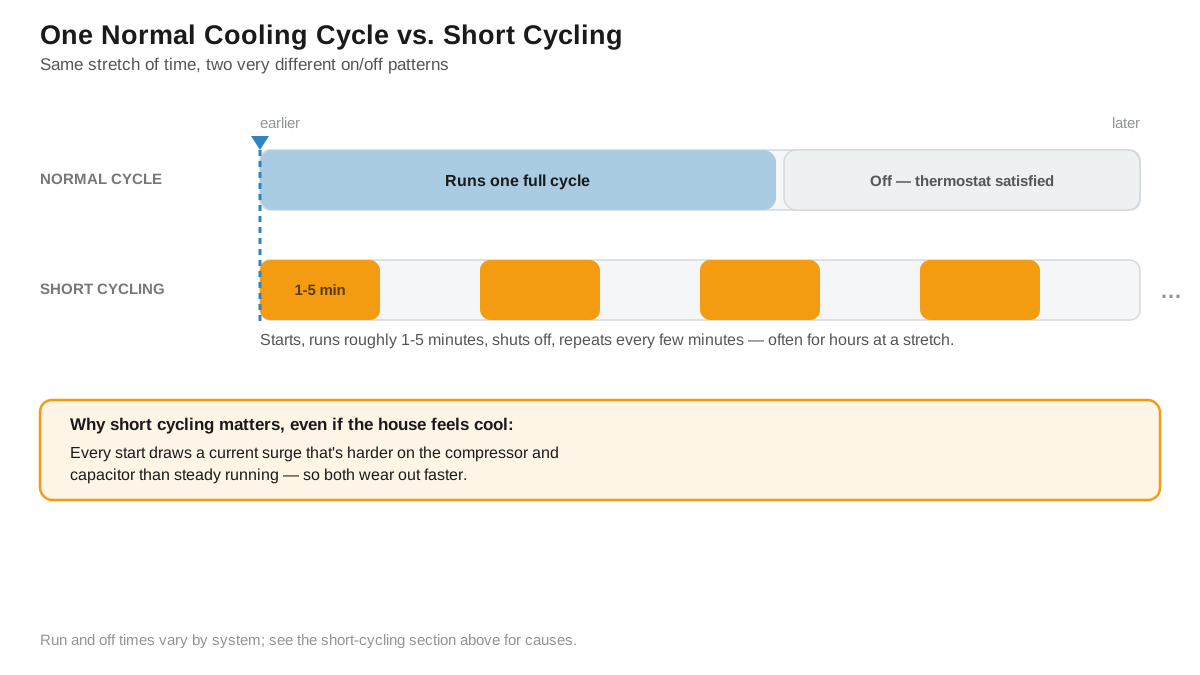
Short cycling is the pattern where the system starts, runs for roughly 1 to 5 minutes, shuts off, and starts again a few minutes later, over and over, instead of running a normal-length cycle. The clicking that comes with each start and stop is often what people are describing when they search for an ac making loud noise that "comes and goes." AC short cycling is not a diagnosis by itself; it is a symptom with several possible root causes underneath it.
An oversized system is a common culprit that has nothing to do with wear: a condenser sized larger than the house actually needs cools the air fast, satisfies the thermostat, and shuts off before it has run long enough to also pull humidity out of the air, so it starts again soon after. Correct sizing follows the ACCA's Manual J load calculation and Manual S equipment-selection process, and a system installed without either is more prone to this pattern from day one. Beyond sizing, the usual causes are a dirty filter or blocked return choking airflow, a refrigerant charge that has dropped low enough to trip a safety switch, a thermostat mounted in direct sun or near a supply vent that reads the room temperature wrong, and a weak capacitor that lets the compressor start but not stay running cleanly.
AC short cycling is bad for the system even when the house still feels comfortably cool, because the wear it causes shows up over months, not in the moment. Every start draws a surge of current that is harder on the compressor and capacitor than steady running, so a unit that short cycles wears its most expensive parts faster and tends to use more electricity for the same amount of cooling. It is rarely dangerous in the fire or shock sense on its own, though the electrical strain can accelerate a contactor or capacitor toward the kind of failure covered in the safety section further down. If the thermostat display shows an error code alongside the cycling, or the pattern started right after a power outage, our guide to an AC that won't turn on covers those specific triggers in more depth.
Short cycling means many rapid starts instead of one steady run — and every start stresses the capacitor and compressor.
Fixes: What You Can Try First, and What Needs a Licensed Tech
A few tasks are genuinely safe and reasonable for a homeowner to handle with nothing more than a screwdriver and a garden hose.
Safe to do yourself: replacing the air filter on schedule, clearing leaves and debris from around and inside the outdoor cabinet, tightening an obviously loose access panel or visible screw, gently rinsing the outdoor coil fins with a hose with the power off first, resetting a tripped breaker one time, replacing thermostat batteries, and moving a thermostat that sits in direct afternoon sun to somewhere it can read the room accurately.
Not a DIY job, regardless of what a video makes it look like: opening the refrigerant circuit, adding or recovering refrigerant, replacing a capacitor or contactor without discharging the capacitor safely first, working inside the compressor compartment, or rewiring the disconnect box. Refrigerant work specifically requires EPA Section 608 certification, and a capacitor that has not been properly discharged can hold a dangerous electrical charge even with the power off at the thermostat. If a repair involves anything past the filter, the breaker, or the outside of the cabinet, that is the point to call a licensed technician instead of reaching for a wrench, ideally one who carries NATE certification — renewed every 2 years to stay current — alongside a state license. Verify that license is active and ask to see proof of current liability insurance before any work starts; our guide to choosing an HVAC contractor covers the lookup process and the other interview questions worth asking before you approve any work.
What AC Noise Repairs Actually Cost
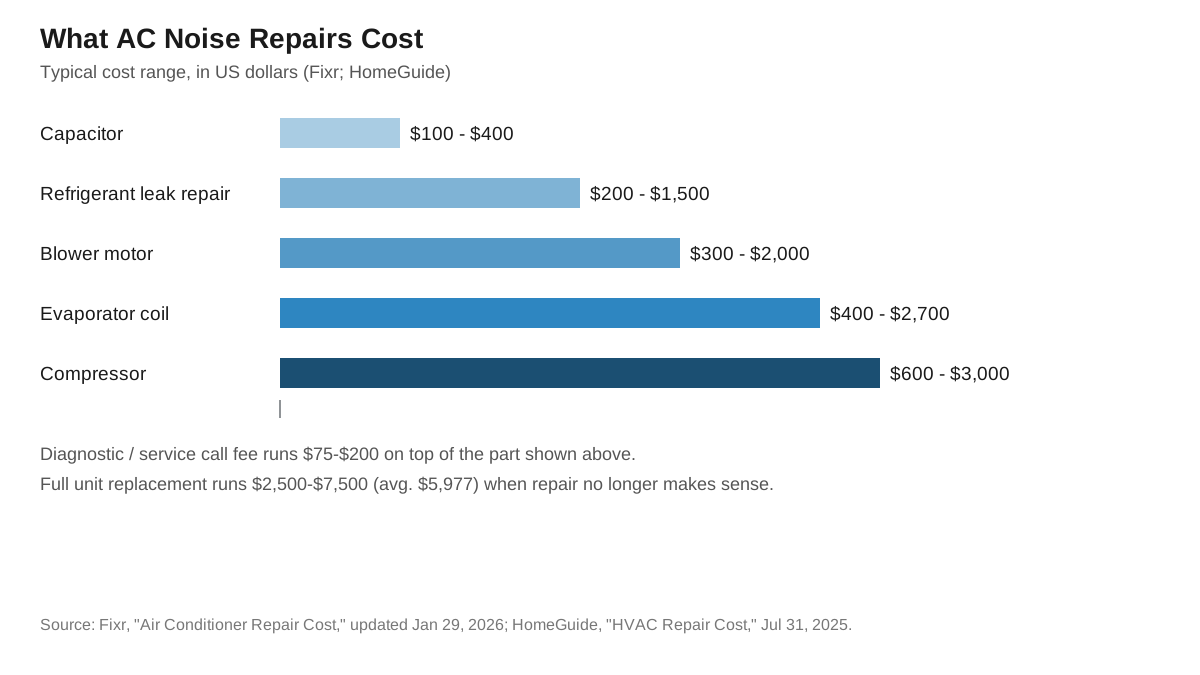
What AC noise repairs cost, based on Fixr and HomeGuide national survey data.
Here is what national cost-survey data shows for the repairs behind the noises above, plus the diagnostic fee that sits underneath every visit.
Repair
Typical cost range
Source
Diagnostic / service call fee
$75 – $200
HomeGuide; Fixr
Capacitor replacement
$100 – $400
Fixr; HomeGuide ($100–$250)
Refrigerant leak repair
$200 – $1,500
Fixr
Refrigerant recharge only
$100 – $600
HomeGuide
Blower motor replacement
$300 – $2,000
Fixr
Evaporator coil replacement
$400 – $2,700
Fixr; HomeGuide ($650–$2,400)
Compressor replacement
$600 – $3,000
Fixr; HomeGuide ($1,300–$2,500)
Full AC unit replacement
$2,500 – $7,500 (avg. $5,977)
HomeGuide; HomeAdvisor
How we got these numbers: the ranges above are researched ranges pulled from two independent national cost surveys, HomeGuide and Fixr, plus HomeAdvisor for full replacement pricing. They are not a quote for your house; the final price varies by region, how hard the part is to reach, and how much damage a technician finds once a panel actually comes off. A written estimate from a local, licensed technician — not this table — is the only number that's binding, so get one before any work starts. For a deeper breakdown of repair pricing by specific problem, see our AC repair cost guide, and for full installed replacement pricing by system size, see our AC replacement cost guide.
When to Shut the System Off and Call Someone Right Now
Most of the sounds covered above are an inconvenience, not a hazard, and can wait for a normal appointment. A smaller set of signs are different. If you hear grinding, banging, or a burning-plastic smell coming from either the indoor air handler or the outdoor unit, shut the system off at the breaker immediately and call a licensed technician, because running it further can turn a repairable part into a full system replacement, or worse, an electrical fault behind a wall.
The same urgency applies to a strong chemical or acrid smell near the indoor coil, visible smoke of any kind, or buzzing and arcing sounds coming specifically from the electrical disconnect box rather than the compressor itself. None of that is a wait-and-see situation. On the milder end, a rattle from a loose panel or a hum that has been present for months without getting louder is safe to keep running while you schedule a normal service visit; it is the sudden change, the new grinding, the new smell, that should move a repair from "get to it this week" to "turn it off now." If the noise coincides with the system not cooling the house at all, our emergency HVAC guide covers the fuller list of situations that genuinely cannot wait until morning.
Keeping the Next Noise From Turning Into a Breakdown
Most of the repairs on the cost table above have a maintenance habit that reduces how often they happen. Change or clean the filter on a regular schedule; a clogged filter is one of the biggest drivers of short cycling, frozen coils, and overworked blower motors, and it is the cheapest thing on this list to prevent. Residential filters run on a 1-16 MERV scale, and jumping to a much higher-MERV filter than the system was designed for can restrict airflow almost as much as a dirty one, so more filtration is not automatically better. Keep the outdoor cabinet clear of leaves, mulch, and overgrown shrubs so nothing can rattle around inside it or restrict the airflow the compressor depends on.
Schedule an annual professional tune-up, ideally in spring before the cooling season starts, so a technician can test capacitor health, tighten electrical connections including the contactor, and check the refrigerant charge before a weak part fails during the first heat wave. If a system was installed without a proper Manual J load calculation, ask a contractor to check the sizing the next time you replace equipment, since a correctly sized unit short cycles far less than an oversized one. Keep an eye on the condensate line each spring, and treat a system that keeps needing refrigerant topped off as a leak that needs finding, not a routine maintenance item, since a properly sealed system should not lose charge on its own.
Regional Notes: Heat, Humidity and Coastal Air
A national noise-and-cost guide blends climates that stress a system in different ways, and the sound that shows up first in one region is not always the first one in another.
In hot, dry stretches of the country, the compressor runs for long hours against high ambient temperatures, which puts extra wear on both the compressor itself and the capacitor that starts it, so grinding and buzzing complaints tend to surface earlier in a unit's life than the averages suggest. Heavy dust in these same regions also loads up filters and coils faster, feeding the short-cycling pattern described above.
Humid Gulf Coast and Southeast homes push the evaporator coil harder, since it is pulling moisture out of the air as well as cooling it, and a coil that ices over from restricted airflow often announces itself with a hissing or gurgling sound as it thaws rather than a dramatic bang. Condensate line clogs are also more common here simply because the system is removing more water.
Cold northern climates flip the pattern, since a central AC system sits idle for months every winter. Belts and bearings that have not turned since last fall are more prone to a startup squeal the first few times the system runs each spring, which is exactly when a quick listen at startup, filter check, and breaker check catches a problem before the first real heat wave.
Along the coast, salt air adds a kind of wear that inland systems rarely see: corrosion on the outdoor coil, cabinet, and electrical contacts is a real factor in how often capacitors and contactors fail, and a corroded contactor is one of the more common sources of a buzzing or chattering sound in these areas. Some manufacturers offer coated coils rated for coastal exposure that are worth asking about at your next service call.
Frequently asked questions
Why is my AC making a loud noise?+
Most loud AC noises trace to one of a handful of parts: a buzzing or humming capacitor, a rattling loose panel, a squealing blower motor belt or bearing, a hissing refrigerant leak, or a grinding compressor. Match the specific sound to the decision table above, and check the breaker, filter, and outdoor fan yourself before calling anyone.
What does it mean when your air conditioner is making a loud noise?+
It usually means a specific part is wearing out rather than the whole system failing at once. A soft hum or buzz at startup often just means a weakening capacitor, while a sudden grinding or banging sound means something has broken loose or worn through inside the compressor and needs attention right away.
Why is my AC making a loud grinding noise?+
A grinding sound almost always points to the compressor, the most expensive part in the system, wearing internally as components rub against each other. Shut the unit off at the breaker and call a licensed technician promptly; running a grinding compressor further often turns a repairable failure into a full replacement.
Why is my AC making a loud buzzing noise?+
Buzzing at startup is the classic sign of a weak or failing capacitor, which stores the electrical charge that gets the compressor and fan motors turning. A loose or corroded contactor can also buzz. Both are inexpensive parts, but neither should be handled without discharging the capacitor safely first.
Why is my AC making a loud vibrating noise?+
Vibration usually comes from something loose rather than a failing motor: an outdoor unit not sitting level on its pad, a fan blade that has come slightly out of balance, or panel screws that worked loose from normal running vibration. Check for a loose panel first, since it costs nothing to rule out.
Does the AC compressor normally make noise?+
A healthy compressor makes a low, steady hum while running, nothing you would call loud from a few feet away. A sudden increase in volume, a new grinding or knocking sound, or a deep roar that was not there before are the signs of wear, not normal operation, and are worth a same-week service call.
How do you fix an AC making a loud noise?+
Start by identifying the sound and pattern using the decision table above, then check the breaker, filter, and whether the outdoor fan is spinning yourself. Simple causes like a loose panel or a dirty filter you can fix directly; a capacitor, refrigerant leak, blower motor, or compressor issue needs a licensed technician.
Why is my central air making a loud noise?+
Central systems make noise for the same reasons window and portable units do, just amplified by the larger compressor and blower involved: a weak capacitor, a worn blower bearing, a refrigerant leak, or compressor wear. The decision table and diagnosis steps above apply to central systems the same way.
Is AC short cycling bad?+
Yes, even if the house still feels comfortably cool. Every start draws a current surge that is harder on the compressor and capacitor than steady running, so a unit that short cycles wears its most expensive parts faster, uses more electricity for the same cooling, and often signals an underlying problem like a dirty filter or low refrigerant.
Why is my AC short cycling?+
The most common causes are a dirty filter or blocked return restricting airflow, a system that was installed oversized for the house without a proper Manual J load calculation, refrigerant that has dropped low enough to trip a safety switch, a thermostat placed somewhere it reads the room temperature wrong, or a weak capacitor.
What does AC short cycling sound like?+
A repeating pattern of the outdoor unit starting, running for roughly 1 to 5 minutes, shutting off, then starting again a few minutes later, often for hours at a stretch. Each start can add a click or a brief hum, which is why people frequently describe it as an AC making a loud noise that comes and goes.