AC leaking water inside your house almost always means the condensate drain line or drip pan can no longer move water outside: a clog of algae, a cracked pan, a disconnected line, or a frozen coil that has thawed. Shut the system off, trace the water to its source, and clear whatever is blocking it before mold or ceiling damage sets in.
A wet spot under the air handler closet, a stain spreading across the ceiling below an attic unit, or water dripping steadily indoors around a window unit all point to the same underlying problem: condensate that should have gone outside is going somewhere else instead. AC leaking water inside a house is one of the most common warm-weather service calls, and most of the causes behind it are mechanical, not electrical, which means several of them are fixable in under an hour with tools you probably already own.
This guide walks through why it happens, how to trace a leak back to its source in about fifteen minutes, what you can safely try yourself, when the job needs a licensed HVAC contractor, and what the fix is likely to cost. It covers central split systems, window units, and ductless mini-splits, since the plumbing behind each one is different enough that the fix is too.
What's Actually Happening When Your AC Leaks Water Inside
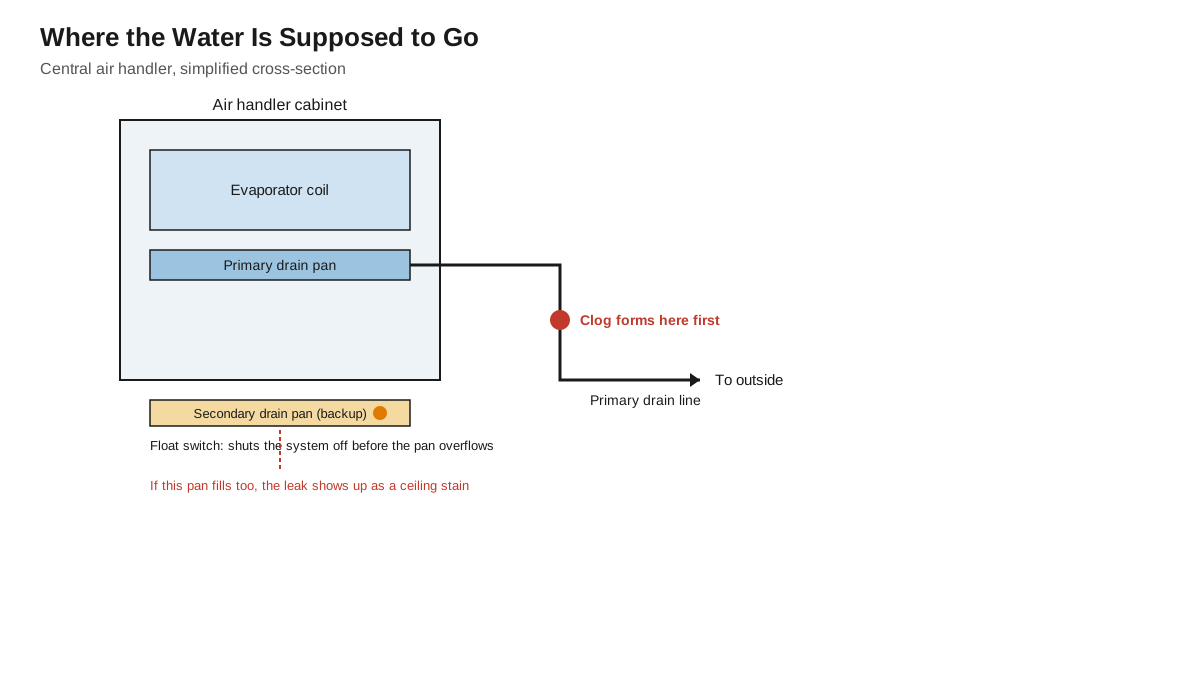
Condensate is supposed to run off the coil, into the primary pan, and out through the drain line. A clog backs it up; a full secondary pan means it has already backed up once.
Every air conditioner pulls moisture out of the air as a side effect of cooling it. Condensate is the technical name for that water, and on a humid afternoon a central system can produce several gallons of it. None of that is a problem as long as the water follows its intended path: off the evaporator coil, into the primary drain pan, and out through a sloped PVC line to a drain, a floor drain, or a spot outside the house.
An AC leaking water inside means that path is blocked, disconnected, or was never built correctly. In a central split system, the coil and drain pan sit inside the air handler cabinet, usually in a closet, basement, attic, or garage. Window units and ductless mini-splits pack a miniature version of the same setup into the indoor unit itself, so the parts are smaller but the failure works the same way: water with nowhere else to go finds the path of least resistance, which is usually straight down onto your floor or ceiling.
Most systems built or updated in the last two decades also include a secondary drain pan with a float switch, a small safety device that cuts power to the system the moment water rises to a set level. That switch is doing its job correctly when it trips, even though the timing feels inconvenient. Ignoring a tripped float switch and forcing the system back on is how a one-hour drain clog turns into a multi-day repair. If the system also has stopped cooling well on top of the leak, a separate step-by-step guide to AC not cooling covers that side of the problem.
Why It's Happening: Causes Ranked by How Often They're the Culprit
Most water leaks trace back to one of a short list of causes, and they are not equally common. Start with the ones at the top before you assume something expensive is wrong.
An AC drain line clogged with algae, mold, and household dust is the single most common cause by a wide margin. The inside of a condensate line stays dark, damp, and slightly nutrient-rich, which is exactly the environment slime favors. Over months it narrows the pipe until a normal flow of condensate can no longer get through, and the water backs up into the pan and then over the edge.
A close second is a frozen evaporator coil that has thawed. A dirty air filter, closed supply vents, a struggling blower motor, or low refrigerant can all starve the coil of airflow until ice builds up on it (see why an AC unit freezes up for the airflow and refrigerant side of that). Ice does not drip, so the system can run for hours without an obvious leak, then dump a surprising amount of water the moment you shut it off, once the coil's surface climbs back above 32°F and the ice finally melts.
Less Common, Still Worth Checking
Beyond those two: a cracked, rusted, or tipped drain pan that no longer holds water on older equipment; a disconnected or unglued drain line where a fitting worked loose, often after someone else serviced the unit; a failed or unplugged AC condensate pump on systems that cannot gravity-drain, such as many attic and basement installs; a drain line pitched wrong or sagging at a low spot from the day it was installed; and, less often, ductwork sweating in a humid attic, where an uninsulated supply duct grows its own condensation and mimics a drain leak without any pan being involved at all.
Where you see the water first
Most likely cause
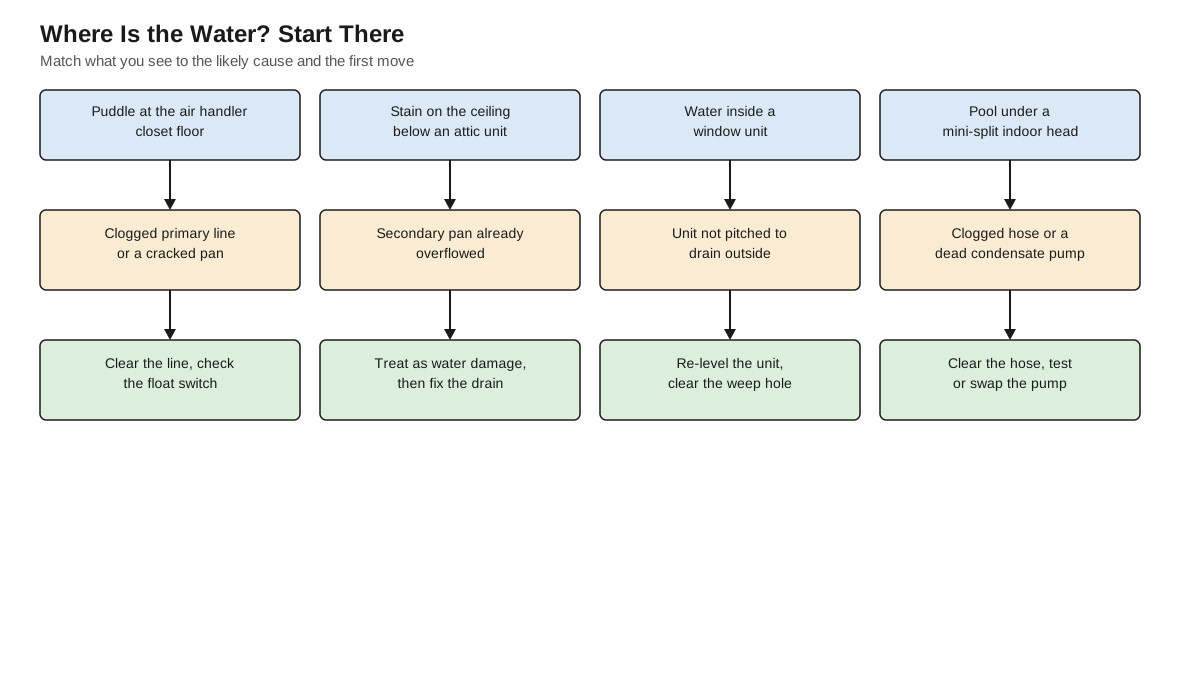
Puddle at the air handler closet or basement floor
Clogged primary drain line or a cracked pan
Stain spreading across the ceiling below an attic unit
Secondary pan has already overflowed
Water pooling inside a window unit
Unit not pitched slightly toward the outside, or the weep hole is blocked
Water under a ductless mini-split indoor head
Clogged drain hose or a dead condensate pump
Damp supply ducts only in humid weather, no pan overflow
Ductwork sweating, not a drain-pan problem
How to Diagnose It in About Fifteen Minutes
Match what you see to the likely cause and the first move, before you call anyone.
You do not need a service call to find where the water is coming from. Work through this order before you touch anything electrical:
Set the thermostat to Off, not just fan-only, so the system stops adding more condensate to whatever is already blocked.
Find the water's actual source. Trace it back to the air handler cabinet, the attic unit above a stained ceiling, the window unit itself, or the mini-split indoor head, rather than assuming.
Step outside and check where the primary drain line terminates. If it is bone dry when the system has clearly been running, the clog is upstream of that point.
Open the air handler's access panel if you can do so safely and look for standing water in the primary or secondary pan.
Check whether a float switch has tripped. Many systems shut the compressor down automatically once a pan is full, which confirms the cause instead of being a coincidence.
Pull the air filter and look at it. A filthy or visibly clogged filter points toward a frozen-coil thaw rather than a drain clog.
Follow the visible run of drain line for sagging sections, loose fittings, or a spot where it was disconnected during other work.
If the ceiling is stained, check the secondary pan and its float switch in the attic separately from the primary system below it.
Whatever you find, write it down or take a photo before you start clearing anything. If the problem turns out to need a professional, that fifteen minutes of diagnosis saves you from paying for a second visit to find something you already saw.
DIY Fixes Worth Trying First
A handful of fixes handle most cases and do not require refrigerant handling or electrical work, which makes them reasonable for most homeowners to attempt.
For Central Systems
Clear the drain line. Locate the line's outdoor termination or the indoor access tee, usually a capped PVC fitting near the air handler. A wet/dry shop vacuum, even a basic 5-gallon household model, sealed against the outdoor opening for a minute or two will often pull an entire slug of algae and sludge out in one pass. Where there is an accessible cleanout tee indoors, a cup of distilled white vinegar poured in and left to sit for thirty minutes breaks down slime without the risks bleach carries for certain fittings and finishes.
Reset the float switch once the pan is empty and the line is flowing again; most reset on their own, and a few need to be manually reseated. Do not bypass or tape one down. It is protecting your ceiling, not being difficult. Replace or clean the air filter if a frozen coil turned out to be the cause, then give the system time to fully thaw and drain before running it again, since running a partially frozen coil just refreezes it. Re-seat a disconnected line if a fitting has simply worked loose, and re-glue it with PVC cement rated for the pipe size if the joint looks dry or chalky.
For Window Units
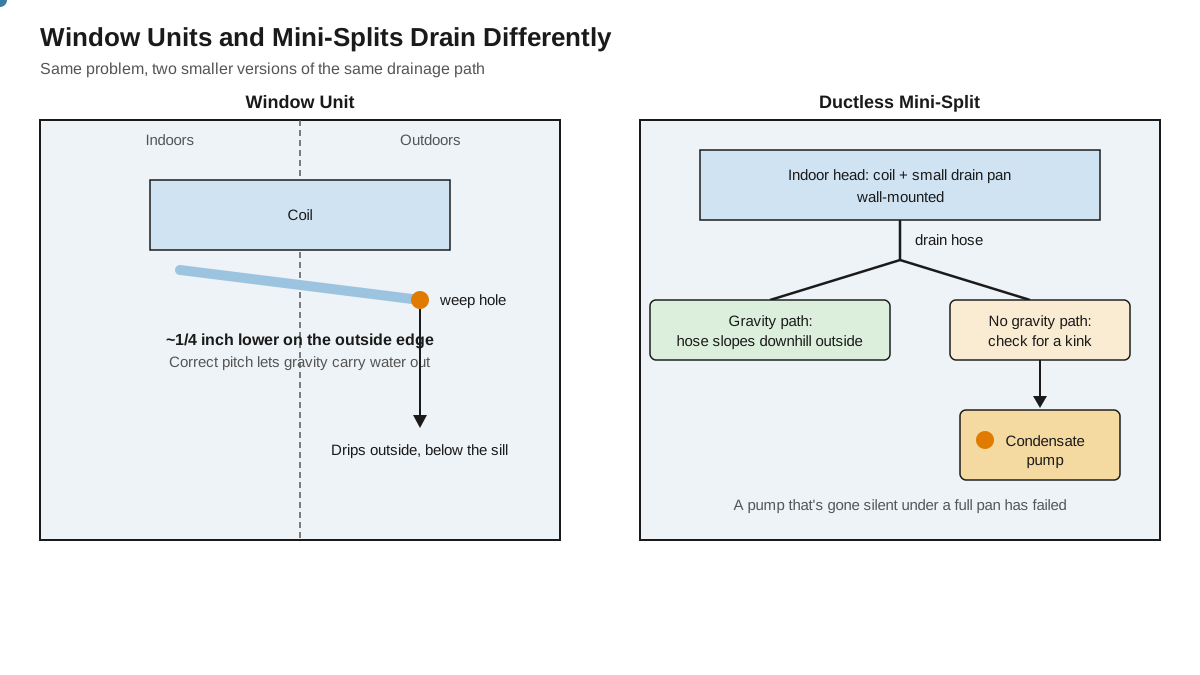
Check that the unit still sits with a slight outward pitch, roughly 1/4 inch lower on the outside edge, so gravity carries condensate out rather than back into the room, and clear the small weep hole in the base if it is plugged with debris.
For Ductless Mini-Splits
The indoor head's drain hose is usually the culprit; check it for a kink or a low spot where water can pool. If the unit relies on an AC condensate pump because there is no gravity path to the outside, listen for it cycling. A pump that has gone silent under a full pan has failed. For problems beyond a leak, our guide to ductless mini-split repair covers the rest of what commonly goes wrong.
When to Stop and Call a Pro
Signs You Need a Professional
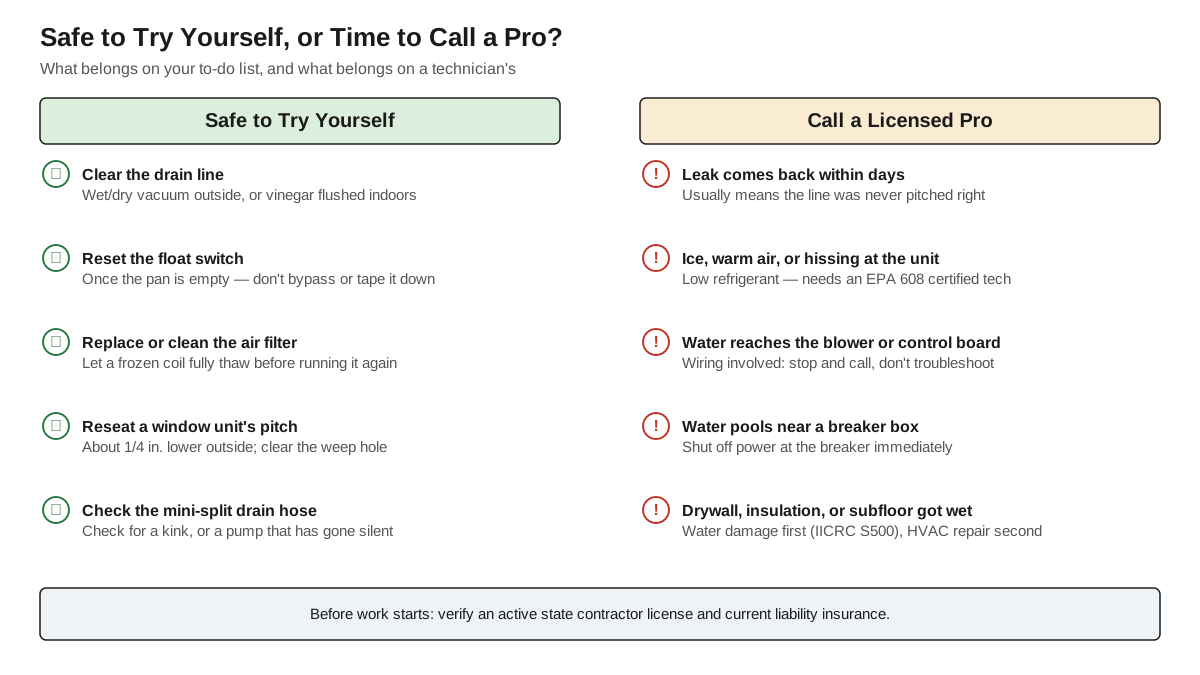
Some signs mean the fix is past the point of a wet/dry vacuum and a bottle of vinegar. Call a licensed HVAC contractor if the leak comes back within a few days of clearing it, since a recurring clog usually points to a line that was never pitched correctly or a coil problem feeding it. Ice on the refrigerant lines, warm air from the vents alongside the leak, or a faint hissing sound near the outdoor unit suggest low refrigerant, and refrigerant work legally requires a technician certified under the EPA's Section 608 program (Type I covers small appliances, Type II covers the high-pressure systems most central ACs use), not a homeowner fix. Water reaching the blower motor, control board, or any wiring inside the cabinet is also a stop-and-call situation rather than a keep-troubleshooting one. Before you let anyone start work, verify their license is active through your state's contractor licensing board and ask to see proof of current liability insurance; a legitimate HVAC contractor keeps both on hand without hesitation. A NATE certification is a further good sign, since it requires recertifying every 2 years, though it doesn't replace the state license itself.
The One Rule That Matters Most
If you see water pooling near an electrical panel, a breaker box, or the air handler's control board, shut off power to the system at the breaker before you touch anything else. That single step matters more than any drain-line fix, because wet electrical components are a shock and fire risk that a clogged pipe is not. If a leak has already been running long enough to soak drywall, insulation, or subfloor, treat that part as water damage first and the HVAC repair second. Materials that stayed wet for more than about 48 hours are candidates for mold growth, and remediation for water-damaged building materials generally follows the IICRC's S500 standard, the same one water-restoration contractors use for any indoor water event.
Match the symptom to the right column before you decide whether to grab a wet/dry vacuum or call a licensed HVAC contractor.
What These Fixes Typically Cost
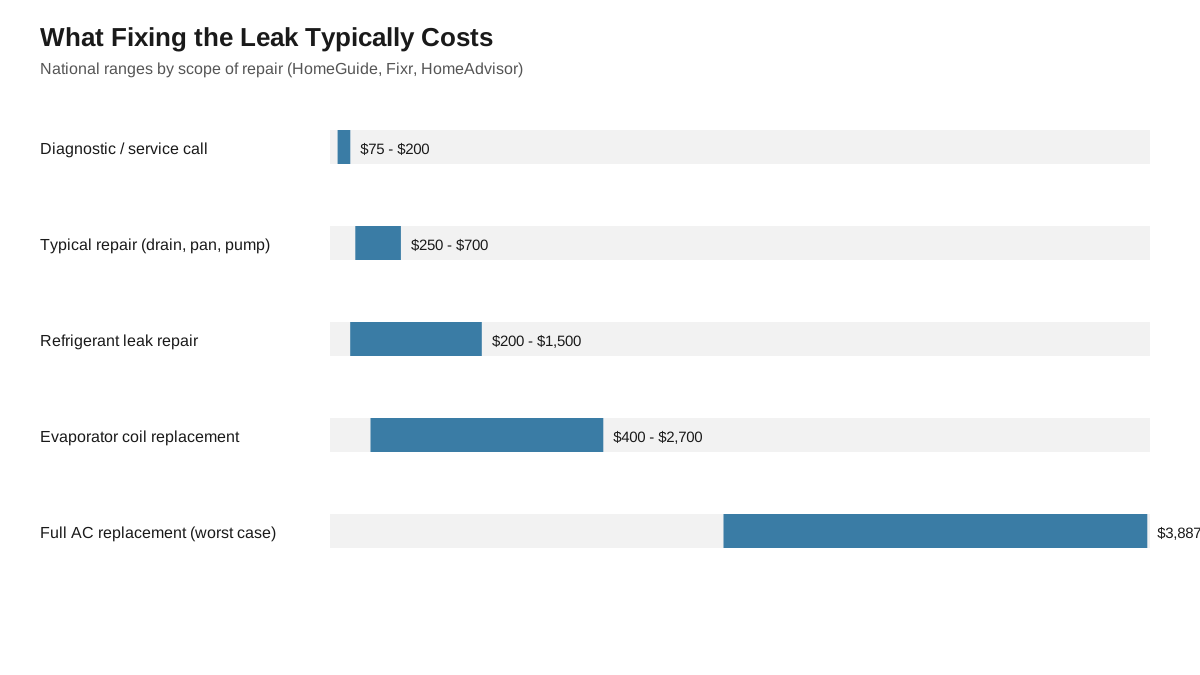
Nobody publishes a national cost survey specifically for AC condensate leaks, so the honest way to price one is to match your diagnosis to the closest general repair category. These are researched ranges pulled from two independent national surveys, HomeGuide and Fixr, plus HomeAdvisor for the rare full-replacement scenario, not a quote for your house. A written estimate from a local, licensed contractor, given before work starts, is the only number that's actually binding. For repairs beyond a leak, see the full AC repair cost guide.
Likely fix
Typical range
What moves the price
Source
Diagnostic / service call fee
$75 - $200
Time of day, region, whether it's applied to the repair
HomeGuide; Fixr
Typical repair (drain line clear, pan swap, or pump replacement)
$250 - $700
Access difficulty, whether the pan or pump needs full replacement
Fixr
Refrigerant leak repair (if a low charge caused the freeze-thaw)
$200 - $1,500
Leak location, refrigerant type, how much recharge is needed
Fixr
Evaporator coil replacement (cracked pan or corroded coil)
$400 - $2,700
Coil size, brand, whether it's still under warranty
Fixr; HomeGuide ($650-$2,400)
Full AC replacement (rare, when the coil and cabinet are both shot)
$3,887 - $8,073
Tonnage, efficiency rating, ductwork condition
HomeAdvisor
How we got these numbers: HomeGuide and Fixr each aggregate reported job costs across the country into national averages and ranges; HomeAdvisor does the same for full installations. The data pack behind this guide does not include a regional cost-of-living index, so treat every figure here as a national range rather than a local one. Areas with a higher cost of living, and any job that turns into an after-hours or emergency call at $140-$300 an hour instead of the standard $75-$175 daytime rate, will land toward the top of these ranges or above them. The final number also varies by how hard the drain line or coil is to reach and how much damage a tech finds once the wall, ceiling, or attic access panel actually comes off.
National cost ranges by scope of repair, from a service call to a full replacement (HomeGuide, Fixr, HomeAdvisor).
When the Water Is Coming Through the Ceiling
An AC water leak ceiling stain is one of the more unsettling versions of this problem, because by the time you see it, water has usually already been sitting in insulation or drywall for a while, and at roughly 8.3 pounds per gallon, it doesn't take many gallons trapped up there to sag drywall or stain the joists above it. Homes with an attic-mounted air handler, common in ranch and split-level construction across the South and Southwest, route both the primary and secondary drain pans through the attic, which means a slow leak can spread across a wide section of ceiling before it ever drips through visibly.
A ceiling stain almost always means the secondary pan has already done its job and overflowed, or its float switch failed to trip. Cut power to the unit at the breaker before you go up, since attic access near a wet ceiling and live wiring is not a combination to rush. Check both pans, confirm the float switch works, and clear whatever caused the primary line to back up in the first place.
Do not just patch the drywall and move on. If the stain is more than a few inches across or the ceiling feels soft, that section qualifies as a water-damage event, not just an HVAC repair. The EPA's guidance on mold is direct on this point: materials that stay damp for more than 1 to 2 days need to be dried, cleaned, or in some cases removed, because mold can begin growing in that window regardless of how the water got there.
Window Units and Ductless Mini-Splits Leak Differently
A window unit dripping a little water outside, onto the ground below the sill, is completely normal condensate drainage and not something to fix. AC leaking water outside only becomes a problem if it is soaking a windowsill, siding, or a neighbor's unit below. Water leaking inside the room from a window unit almost always means the unit lost its slight outward pitch, or the small weep hole molded into the base is clogged with dust and pollen. Pull the unit, clean the drain channel, and reset it so the outside edge sits a touch lower than the inside edge.
Ductless mini-splits, common brands including Daikin and Mitsubishi, use a small drain pan inside the wall-mounted head connected to a thin flexible hose. Where the hose can run downhill to the outside, gravity does the work; where it can't, such as an interior wall installation, the system relies on a small AC condensate pump to lift the water out. That pump is the single most common failure point on a mini-split leak. A kinked hose, a hose that has slipped out of its fitting, or a pump that has quietly died are the three things to check, roughly in that order of likelihood.
A window unit only needs the right pitch; a mini-split without a downhill run to the outside depends on its condensate pump instead.
How to Keep It From Happening Again
Most repeat leaks are prevented with maintenance that takes less time than the leak itself did to clean up.
Change or clean the air filter every one to three months during cooling season; a dirty filter is the easiest way to freeze a coil and start this whole cycle over, and a higher-efficiency filter (MERV 8-13 covers most residential filters) restricts airflow more than a basic fiberglass one even when it's clean, so it's worth checking more often, not less.
Flush the drain line with a cup of distilled vinegar every few months, or use algae-inhibiting tablets sold for this purpose, so slime never gets the chance to build up into a full clog.
Keep the outdoor drain termination clear of mulch, leaves, and grass so nothing blocks the exit point from outside.
Have the system professionally serviced at least once a year following ACCA standard procedures, which check the pan, line, and float switch along with refrigerant charge and airflow; see our seasonal maintenance checklist for the full list.
Add a float switch or a stand-alone water-leak alarm near the drain pan if your system is older and does not already have one; both are inexpensive insurance against a repeat of an attic or closet leak.
In humid climates, have exposed supply ductwork checked for adequate insulation so sweating duct does not get mistaken for, or add to, a drain-pan leak.
Regional Notes: Humidity, Attics, and Freeze Country
Where you live changes both how fast this problem shows up and how much damage it does before anyone notices.
Along the Gulf Coast and the Southeast, heavy humidity means more condensate volume every day the system runs, which speeds up both algae growth in the drain line and the odds of ductwork sweating in an unconditioned attic. Systems in this region benefit most from the vinegar-flush habit described above, on the shorter end of that schedule.
In the desert Southwest, attic-mounted air handlers bake through long, hot summers, and drain lines with any exposed run on a roof or in unshaded attic space can see PVC and its glued joints degrade faster under UV and heat than the same pipe would in a shaded basement. That is one more reason a slow drip in this region often traces back to a cracked fitting rather than a clog.
In colder, freeze-belt states, a drain line that runs through an unconditioned space, such as a garage or an unheated part of an attic, can freeze during a cold snap even on an otherwise mild day, particularly on heat pump systems that generate their own condensate during winter defrost cycles. A frozen line backs up exactly like a clogged one, just on a different calendar.
House style plays a role too. Homes with an attic air handler, typical of ranch and split-level construction across the South and Southwest, hide a slow leak in ceiling insulation for a while before it becomes visible. Homes with a basement furnace-and-coil combo, more common across the Midwest and Northeast, tend to show a leak on the floor almost immediately, which usually means less hidden damage by the time someone notices.
Frequently asked questions
Why is my AC leaking water inside the house?+
Water almost always means the condensate drain line or drip pan can no longer carry water outside. The most common reason is algae and dust narrowing the drain line until it clogs; the second most common is a frozen evaporator coil thawing after running with a dirty filter or low airflow. Less often it's a cracked pan, a disconnected line, or a failed condensate pump on a system that can't gravity-drain.
Is it normal for an AC to leak water inside?+
No, water inside is never normal, though a little condensate dripping outside the house is. Central systems, window units, and mini-splits are all built to route condensate outdoors or into a drain, so any water showing up on a floor, ceiling, or windowsill inside means that path is blocked, disconnected, or was installed with the wrong pitch.
How do I fix an air conditioner that's leaking water inside?+
Start by shutting the system off and finding exactly where the water starts. Most leaks clear up once you vacuum out or flush the drain line, reset a tripped float switch, and swap a dirty air filter if a frozen coil was the trigger. If the leak comes back within days, or you find refrigerant ice, warm air, or wet electrical components, call a licensed HVAC contractor instead of retrying the same fix.
How do you unclog an AC drain line?+
Locate the line's outdoor termination or an indoor cleanout tee near the air handler, then seal a wet/dry shop vacuum against the opening and run it for a minute or two to pull the clog out. Where there's an accessible indoor tee, pouring in distilled vinegar and letting it sit for about thirty minutes also breaks down algae without the risks bleach poses to some fittings.
What does a clogged AC drain line look like?+
It usually looks like standing water in the drain pan, a puddle at the base of the air handler, or a slow ceiling stain below an attic unit, not anything visible on the pipe itself from the outside. Inside the line, a clog is typically a slimy buildup of algae, mold, and household dust that narrows the pipe until water can no longer pass through it.
Is a clogged AC drain line dangerous?+
It's not an immediate safety hazard on its own, but the water it backs up can be. Left long enough, a clogged line lets water reach ceiling drywall, insulation, or electrical components like a blower motor or control board, which turns a simple drain clog into mold growth or a wiring hazard. Clearing it early keeps a plumbing-style nuisance from becoming a bigger repair.
Why does my AC keep leaking water inside after I already fixed it?+
A leak that returns within days usually means the underlying cause was never fully addressed, not that the fix failed outright. A drain line pitched wrong or with a sagging low spot will keep collecting slime faster than a properly sloped one; a coil that keeps freezing points to an airflow or refrigerant problem, not just the filter. A recurring leak is a good sign it's time to call a professional.
Why is my window AC unit leaking water inside?+
It's almost always a pitch problem. Window units are designed to sit with the outside edge slightly lower than the inside edge so condensate drains out through a small weep hole by gravity. If the unit has shifted level, or that weep hole is clogged with dust and pollen, water backs up and drips into the room instead of outside.
What should I do if I can't unclog the AC drain line myself?+
If a wet/dry vacuum and a vinegar flush don't restore flow, or the clog is deep inside a section of line you can't access, it's time to call a licensed HVAC contractor rather than keep forcing it. A technician can use a wet vacuum with stronger suction, nitrogen pressure, or in some cases replace a section of line that's collapsed or was never pitched correctly.
Why is my ductless mini-split leaking water inside?+
The most common cause is the small condensate pump built into systems that can't gravity-drain to the outside, since that pump is the single point of failure in an otherwise simple setup. A kinked or disconnected drain hose is the next most likely cause. Check whether the pump is still cycling and inspect the hose for a low spot where water can pool before calling for service.