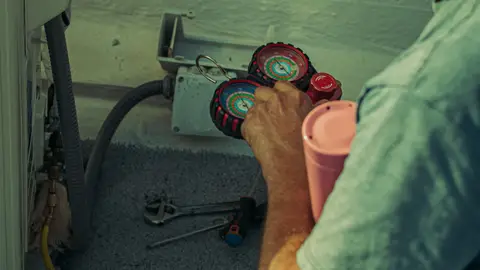
An ac frozen up is almost always restricted airflow or low refrigerant, not a broken compressor. Turn the system off, switch the thermostat fan to "on," and let the ice melt for a few hours before touching anything else. Hissing near the lines or a coil that refreezes within a day points to a refrigerant leak, which needs a certified technician, not a DIY fix.
The vents are running, the thermostat says it should be 72 in the living room, and instead warm air is trickling out while a sheet of ice creeps across the copper lines behind the indoor unit. An ac frozen up like this is one of the most common mid-summer service calls in the country, and most of the time it is not the expensive kind of failure. It is airflow, or it is refrigerant, and the difference matters, because one you can often fix yourself in an afternoon and the other needs a technician licensed to touch the refrigerant.
This guide walks through what actually causes an iced evaporator coil, how to tell an airflow problem apart from a refrigerant leak before anyone shows up with a clipboard, the safe way to thaw the system without cracking a coil, what repairs typically cost, and when the smart move is to stop troubleshooting and call an HVAC contractor. Every dollar figure below comes from a national cost survey named in the sources list at the bottom, not a guess.
What "AC Frozen Up" Actually Looks Like
Before troubleshooting anything, it helps to know what you are actually looking at. On a central system, the part that freezes is the evaporator coil, the finned coil inside the air handler or furnace cabinet (often in a closet, basement, or attic) where warm household air passes over cold refrigerant and gives up its heat and moisture. A healthy coil surface runs cold but stays above 32°F, the temperature at which water freezes; when something drives it colder than that, the moisture condensing on its fins stops draining away and turns to ice instead. It builds outward into a sheet or a solid block of ice that can eventually cover the whole coil face.
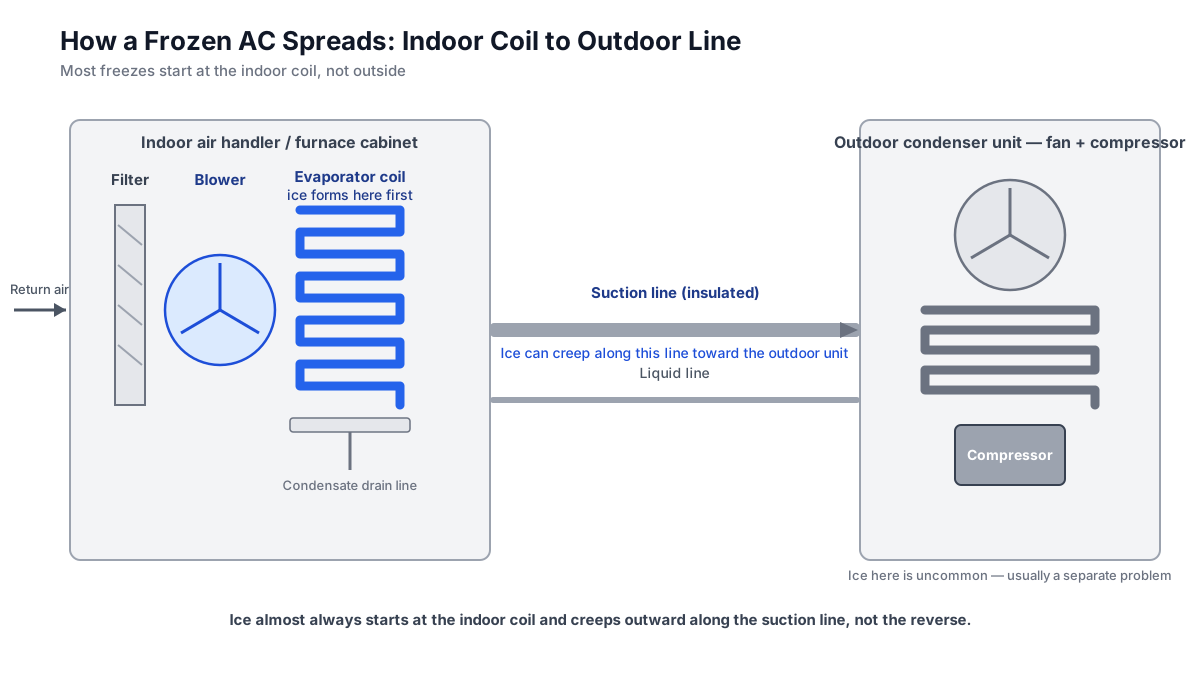
The classic pattern goes like this: airflow from the vents gets weaker over a few hours or days, then the air turns lukewarm instead of cold, and eventually the system is running constantly and barely cooling anything. Pull the access panel and you will usually find ice on the coil itself, sometimes creeping down the refrigerant lines and out toward the outdoor unit. In more advanced cases, ice forms on the copper line set outside too, which is what people mean when they search for an ac frozen up outside unit: it is rarely the outdoor unit itself malfunctioning; it is ice traveling down the suction line from a coil freeze that started indoors.
A second, less common pattern is a genuinely frozen outdoor condenser coil, usually on a heat pump running in cooling mode with a stuck reversing valve or a failed outdoor fan. That is mechanically different from the indoor-coil freeze most homeowners deal with, and it is covered separately later in this guide.
Ice almost always starts at the indoor evaporator coil and travels outward along the suction line — the outdoor unit is rarely the actual cause.
Why Does My AC Freeze Up? The Causes, Ranked by How Often They Happen
Technicians see the same handful of causes over and over. Here they are, ranked from most to least common, based on how often each one turns out to be the actual problem on a service call.
Restricted airflow. A clogged filter is the single most common trigger. Less air moving across the coil means the coil runs colder than its design temperature, and it starts icing even though nothing inside the refrigerant circuit is actually broken. Closed supply vents, furniture blocking a return grille, a collapsed flex duct, or a dirty blower wheel can all cause the same effect. A too-dense filter can trigger the same problem even brand new: residential filters are rated on the MERV scale, which runs from 1 to 16, and a high-MERV filter blocks more airflow across a blower that was never sized to pull air through it.
Low refrigerant from a leak. A sealed system does not run low on its own the way a car loses oil. If the charge is low, refrigerant is escaping somewhere, most often at a corroded evaporator coil, a leaking Schrader valve, or a loose flare fitting on the line set. Low charge drops the pressure and temperature in the coil below freezing, and ice forms even with good airflow. This is the pattern behind most evaporator coil frozen complaints that are not fixed by a new filter.
A dirty or blocked outdoor coil. The condenser outside has to reject the heat the indoor coil absorbed. If its fins are packed with cottonwood, grass clippings, or a fence line planted too close, the whole refrigerant cycle runs at the wrong pressures, and the indoor coil can ice up as a side effect.
A failing blower motor or capacitor. If the indoor fan slows down, stutters, or stops while the compressor keeps running, the coil gets refrigerant with no air moving across it and freezes within a couple of hours. A weak run capacitor is a frequent, inexpensive cause of a blower that spins slower than it should.
Running the system in cool weather. Standard central air is not designed to run efficiently once outdoor temperatures drop into the 60s or below; pressures in the system fall out of the normal range, and the coil can ice over even with everything else working correctly. This shows up most in early fall or during a cool snap, and in mini-split and window units more than large central systems.
How to Tell What's Actually Wrong Before You Call Anyone
You do not need a gauge set to narrow this down. Walk through what you are actually seeing and hearing, because the symptom pattern usually points to a specific cause rather than a mystery.
What you notice
What it usually means
What to check next
Weak airflow for a day or two before it iced over
Restricted airflow (filter, vents, ducts)
Filter condition, all supply and return vents open
Ice appeared suddenly, airflow felt fine before
Possible refrigerant leak or electrical fault
Hissing sound, oily residue on fittings, breaker status
Hissing or bubbling near the indoor unit
AC refrigerant leak at a fitting or the coil
Call a certified technician; do not add refrigerant yourself
Outdoor fan not spinning, unit humming
Failed fan motor or capacitor
Power at breaker, then a technician diagnostic
System short-cycles, ice comes back within a day of thawing
Underlying cause was never fixed
Re-check filter and vents, then book a diagnostic visit
Water pooling well past the drain pan after thawing
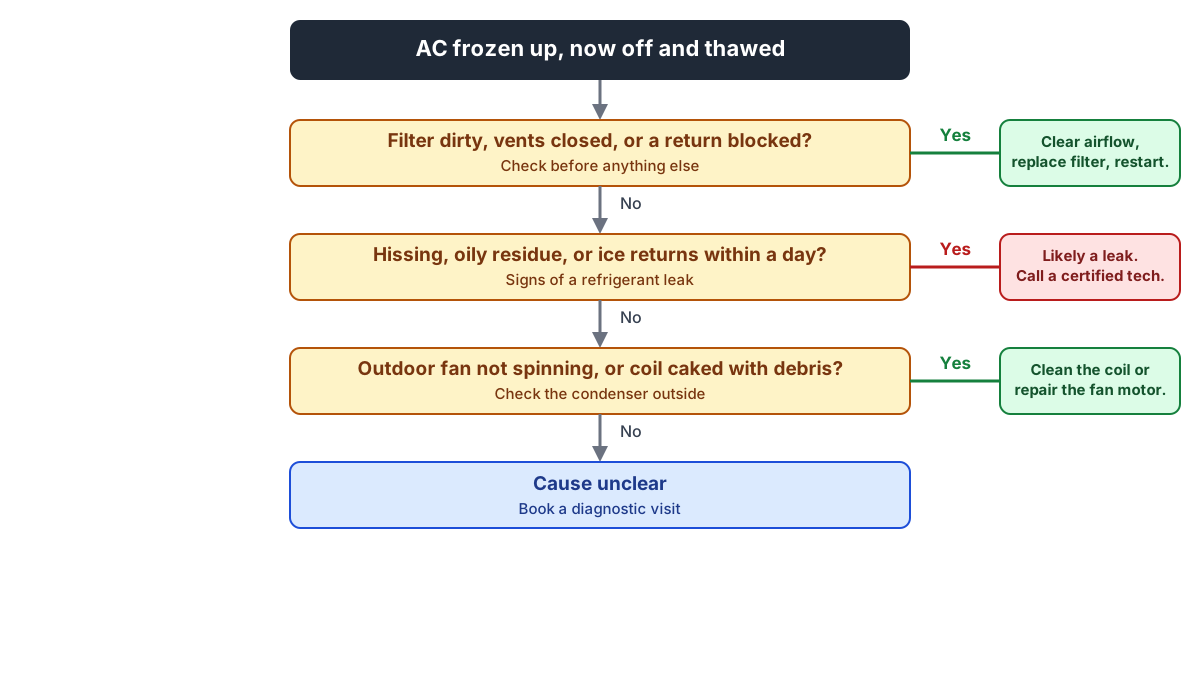
If two or three of those point the same direction, that is your starting point. If you genuinely cannot tell, that ambiguity is itself useful information for whoever you call. A technician who hears "ice built up gradually over two days and airflow felt weak before that" can often walk in already suspecting a filter or duct problem rather than starting from zero. The chart below walks through the same logic as a visual decision path.A decision path for figuring out why an AC unit froze up, before calling anyone.
The First Move: Turn It Off and Let It Thaw
Whatever caused the freeze, do not try to force it. Ice that formed over hours needs time to leave safely, and rushing that step is how a cheap problem turns into an expensive one.
Turn the thermostat to "off," not just a lower temperature. Running the compressor against a blocked, iced coil does nothing but strain the compressor.
Switch the fan setting from "auto" to "on." Blowing room-temperature air across the coil speeds up the thaw and helps you see how much ice you are actually dealing with.
Open the air handler's access panel if you can reach it safely with the power off, and set towels or a shallow pan underneath. A fully iced coil can release several quarts of water as it melts.
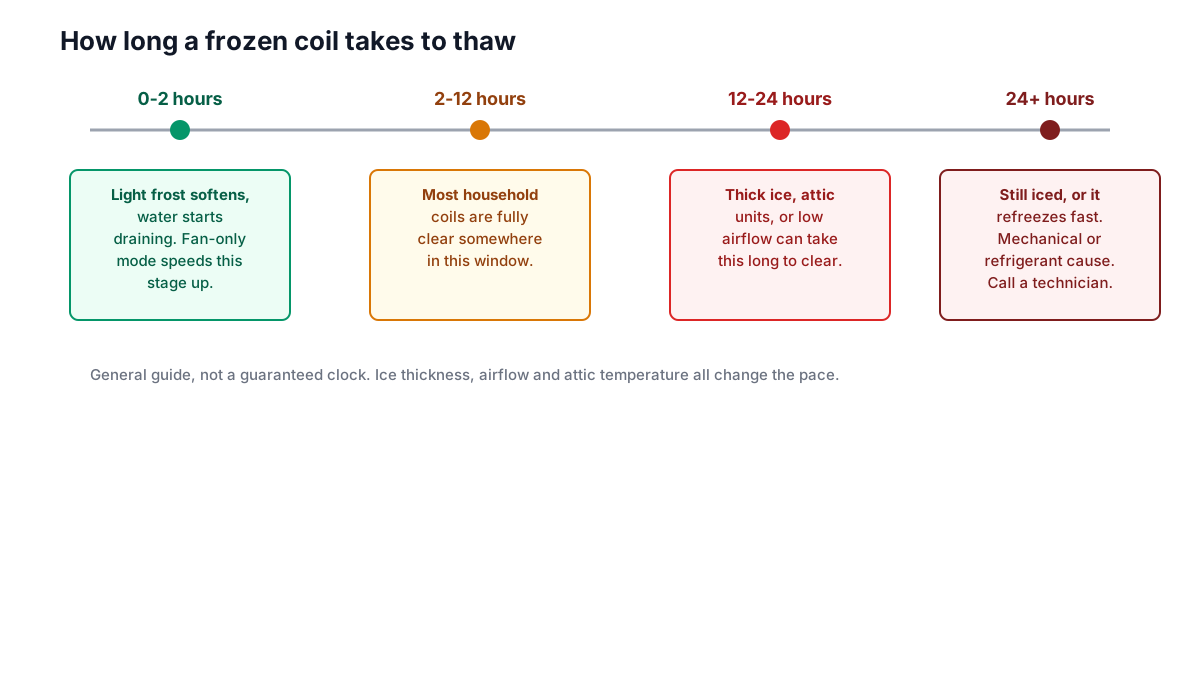
Wait. A light frost clears in an hour or two; a solid block can take twelve to twenty-four hours.How long thawing usually takes, and when a stalled thaw signals a bigger problem.
Check the condensate drain line and pan once the ice is gone. A frozen coil often overflows the pan while thawing, and a clogged drain line will make that worse.
Change the filter and open any closed vents before you turn the system back on, so you are not just re-freezing the same coil an hour later.
Never chip, pick, pry, or scrape ice off an evaporator coil or refrigerant line, because a small puncture there turns a free wait-it-out fix into a coil replacement that starts around $400. A butter knife or screwdriver against thin aluminum fins or a copper line is one of the most common ways a homeowner turns a $0 problem into a several-hundred-dollar one.
Once the system is fully thawed and running again, give it thirty to sixty minutes and check whether the air coming out of the vents is actually cold. If it is, and the ice does not come back, you likely solved an airflow problem. If it freezes again within a day, skip straight to calling a professional rather than repeating the thaw cycle, since repeated icing is hard on the compressor.
DIY Fixes That Actually Work (and Where DIY Stops)
Plenty of frozen-AC calls trace back to something a homeowner can fix without tools or a technician. A few are worth trying once the system has fully thawed.
Replace the filter. A visibly gray or clogged filter is reason enough on its own; when in doubt, replace it rather than reuse it.
Open every supply vent and clear returns. Furniture, rugs, and curtains blocking a return grille starve the whole system of airflow even with a clean filter.
Rinse the outdoor coil gently. With the power off at the breaker, a garden hose sprayed from the inside out on the condenser fins clears cottonwood, grass, and dust that restrict airflow outside.
Clear the condensate drain line. A wet/dry shop vacuum on the outdoor end of the PVC drain line pulls out algae clogs that back the system up and, on some installs, trip a safety switch that shuts the whole unit down.
Trim back landscaping. Two feet of clearance around the outdoor unit on all sides keeps the condenser coil breathing the way it was designed to.
That is roughly the ceiling of what is safe and effective without training. Anything involving the sealed refrigerant circuit is where DIY stops, and not just as a caution: under the federal Clean Air Act, only a technician certified under EPA Section 608 is legally allowed to add, recover, or handle the refrigerant in a residential system, specifically the Type II certification that covers high-pressure equipment like central air conditioners and heat pumps, on top of the Core exam every 608-certified technician has to pass regardless of specialty. A can of automotive "AC recharge" is not a legal or reliable fix for a home ac refrigerant leak, and adding refrigerant to a system that is actively leaking treats a symptom while the actual hole keeps growing.
Electrical repairs, a failed capacitor or a bad blower motor, are technically within reach of an experienced DIYer, but a mis-wired capacitor or motor can damage the compressor or start a fire, so most homeowners are better off booking a capacitor or blower motor repair rather than guessing.
When the Real Problem Is an AC Refrigerant Leak
Central air conditioners run on a sealed refrigerant circuit that is supposed to hold the same charge for the life of the system. Unlike engine oil or windshield washer fluid, refrigerant is not something a working system consumes. If a technician's gauges show the charge is low, that refrigerant went somewhere, and finding the hole is the actual repair, not just adding more.
The most common source of an evaporator coil leak is a slow, pinhole-scale corrosion process technicians call formicary corrosion, which eats tiny channels through copper tubing over years, often linked to household chemicals off-gassing nearby (cleaning products, air fresheners, certain wood glues). Beyond the coil itself, leaks also show up at Schrader valve caps, at flared or brazed line-set connections, and occasionally at the outdoor unit if it has been struck by a trimmer or shifted on its pad.
A technician confirms a leak with tools most homeowners do not own: an electronic leak detector that sniffs for refrigerant molecules, a UV dye added to the system that glows under a blacklight at the leak point, or a soap-bubble test on accessible fittings. Guessing based on smell alone is unreliable. Most residential refrigerants have little natural odor, and what people describe as a sweet or chemical smell near a leak is often the lubricating oil that escapes alongside the refrigerant, not the refrigerant itself.
On the safety question people ask most: a slow refrigerant leak in a normally ventilated house is a mechanical and financial problem well before it is a health one. It is not something to panic over, but a hissing sound, a strong chemical smell, or any breathing discomfort near the indoor unit is still a reason to shut the system off, open a window, and step out of the room until a technician has looked at it.
Once a leak is confirmed, the repair options are the same regardless of what caused it: patch or replace the leaking component, pressure-test the repair, pull a vacuum on the system to remove air and moisture, then recharge with the correct refrigerant type and amount. Most systems installed since the early 2010s run on R-410A; older systems still holding R-22 cost more to recharge, since U.S. production and import of virgin R-22 for existing equipment ended on January 1, 2020, and any remaining supply now comes from reclaimed stock. Skipping the vacuum step is a shortcut some lower-end repairs take, and it is one of the first questions worth asking a contractor before you approve the work.
What It Costs to Fix a Frozen AC (2026 Ranges)
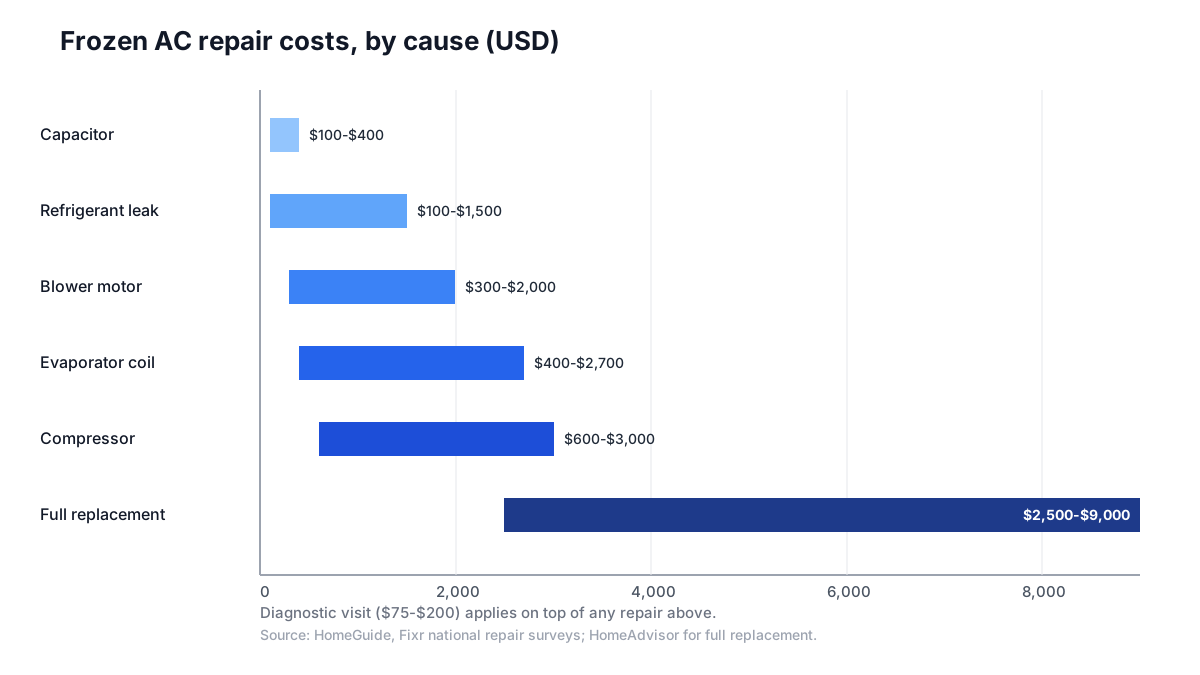
What a frozen AC ends up costing depends entirely on what caused it. A filter and an afternoon of waiting cost nothing beyond the price of a new filter. A leaking coil or a failed compressor is a different conversation. The table below lines up the most common outcomes against national repair-cost survey data.
Repair
Typical range
What moves the price
Source
Diagnostic / service call fee
$75 - $200
Time of day, whether it is credited toward the repair
HomeGuide
Capacitor replacement
$100 - $400
Part rating, access to the unit
HomeGuide / Fixr
Refrigerant leak repair and recharge
$100 - $1,500
Leak location, refrigerant type, how much charge is needed
HomeGuide / Fixr
Evaporator coil replacement
$400 - $2,700
Coil size, accessibility, matching an older system
HomeGuide / Fixr
Blower motor replacement
$300 - $2,000
Motor type (PSC vs. variable-speed ECM)
Fixr
Compressor replacement
$600 - $3,000
Unit age and whether it is still under warranty
HomeGuide / Fixr
Full AC replacement
$2,500 - $9,000
Tonnage, SEER rating, ductwork condition
HomeGuide / HomeAdvisor
Those same ranges are easier to compare side by side, which is what the chart above shows.What each likely cause of a frozen AC typically costs to fix, based on national repair-cost surveys.
How we got these numbers: every figure above is a researched range pulled from published national cost surveys (HomeGuide, Fixr, and HomeAdvisor), not a quote from any single company, and the data pack behind this guide does not include a regional cost-of-living index. Treat these as national ranges, not a bid. The final number varies by region, how hard the unit is to access, and how much damage a technician finds once the system is actually open, and the only way to know your real number is a written estimate from a local contractor, which is the figure that is actually binding, not the ranges above. For the fuller breakdown by part and problem, see the AC repair cost guide.
One rule of thumb technicians use, worth knowing before you approve anything: if a repair quote is running past half the cost of a full AC replacement on a system that is already ten or more years old, replacement is usually the better financial move, since you are not just paying for one fix but likely the next one too.
When to Call an HVAC Contractor Instead of Waiting It Out
Most frozen-AC situations resolve with a thaw, a filter change, and cleared vents. A smaller set of situations call for a technician right away, before you try anything else.
What is happening
Safe to wait and DIY
Call a contractor now
First-time freeze, filter was dirty
Yes, thaw and replace the filter
-
Coil re-freezes within 24 hours of thawing
-
Yes, underlying cause is unresolved
Hissing, bubbling, or oily residue near the lines
-
Yes, likely a refrigerant leak
Breaker trips repeatedly or you smell burning
-
Yes, electrical hazard, shut off power first
Water pooling near the furnace or dripping through a ceiling below an attic unit
-
Yes, active water damage risk
When you do call someone, ask whether the technician holds current NATE certification. The CHP-5 pathway requires passing five separate 30-question exams covering HVAC fundamentals, electrical and controls, comfort and airflow, installation, and service, then recertifying every 2 years with 16 hours of continuing education, or a 120-day grace period to retake a specialty exam instead. Anyone touching refrigerant should also be able to show EPA Section 608 certification if you ask; it is a federal requirement, not an upsell. Before work starts, it is also worth verifying the contractor's state license is active and asking to see proof of current liability insurance; a legitimate HVAC company will produce both without hesitation. For more on vetting a contractor beyond credentials, including license lookups and red flags, see how to choose an HVAC company.
If the situation involves active water intrusion into drywall, insulation, or a finished ceiling, or the system will not stay off because the breaker keeps re-tripping on its own, that crosses from annoying into needs-same-day-attention, and the emergency HVAC guide covers how to judge that call at 2 a.m. versus waiting for morning.
If a contractor recommends replacing the whole system rather than repairing it, a good one sizes the replacement using ACCA's Manual J load calculation and Manual S equipment selection, not just a swap for "the same size as what's there." Oversized or undersized equipment is a common, avoidable source of short-cycling and repeat freeze-ups down the line.
Will a Frozen AC Fix Itself, and What Happens if You Ignore It
Thawing the ice is not the same as fixing the problem, even though the air blowing out of the vents feels normal again afterward. If the underlying cause, a dirty filter, a closed vent, a slow refrigerant leak, is still there, the coil will simply ice over again on the next hot day, sometimes within hours.
Ignoring repeated freeze-thaw cycles carries real cost beyond a warm living room. Every time liquid refrigerant backs up in the coil during a freeze, some of it can return to the compressor as liquid instead of vapor when the system restarts, a condition technicians call slugging. Compressors are built to compress gas, not liquid, and repeated slugging is one of the more preventable ways a compressor fails years before it should.
There is also a moisture problem hiding behind the mechanical one. A coil that thaws and refreezes over and over sheds a lot of water, and if that water lands in an attic, a closet with drywall, or insulation that never fully dries between cycles, it creates the damp conditions mold needs to establish itself, which is why the EPA lists unresolved leaks and slow-drying materials as a common driver of indoor mold growth. "It thawed and now it's fine" is worth treating as temporary good news, not a resolution, especially if it has happened more than once in a season.
None of this means every frozen AC is heading toward disaster. A single freeze traced to a dirty filter and fixed the same day rarely causes lasting damage. The pattern that matters is repetition: two or more freeze-ups in the same cooling season is the point where waiting it out stops being the responsible choice.
Keeping It From Freezing Again
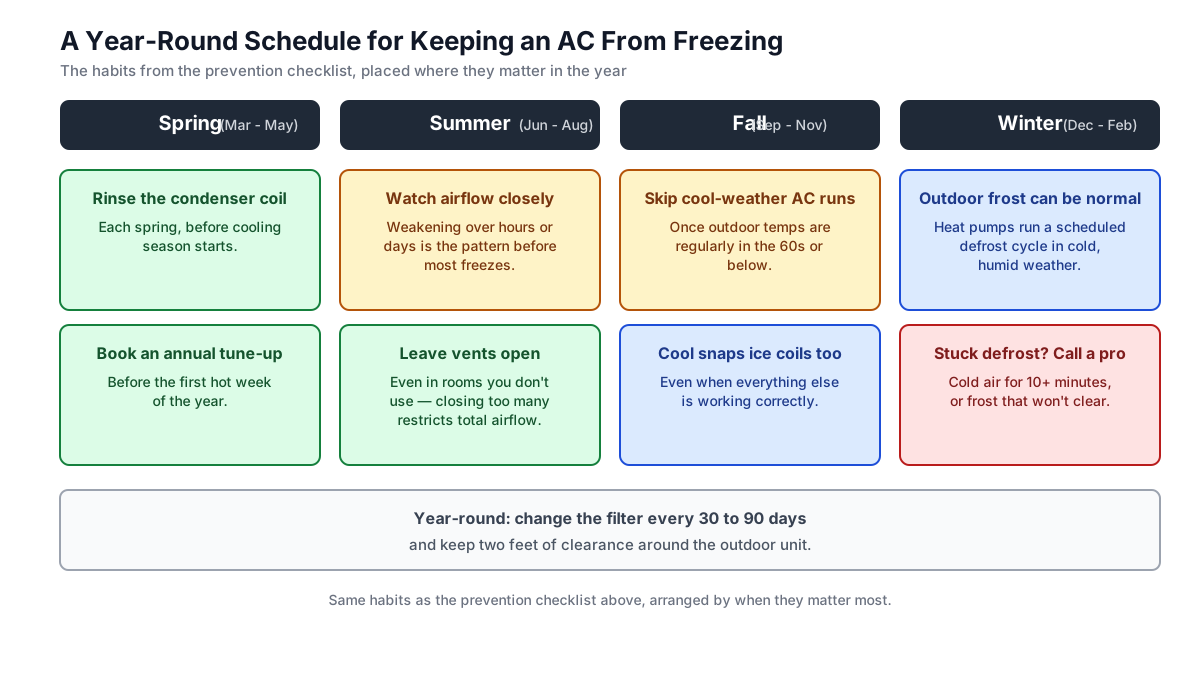
Most repeat freeze-ups are preventable with a handful of habits, most of which cost nothing but a few minutes.
Change the filter on a schedule, not just when it looks dirty. Every 30 to 90 days is standard depending on filter type, pets, and household dust; write the date on the frame so you are not guessing later.
Leave supply vents open in unused rooms rather than closing them to save energy. Closing more than a couple of vents restricts total airflow across the whole system and is a common, invisible cause of freezing.
Keep two feet of clearance around the outdoor unit, and rinse the condenser coil each spring before cooling season starts.
Book an annual tune-up before the first hot week of the year, when a technician can check refrigerant charge, clean the coil, and catch a weak capacitor before it fails on the hottest day of summer.
Do not run standard central air during a cool snap or a shoulder-season night without checking the owner's manual for the minimum outdoor operating temperature; running it too cold outside is a common, overlooked freeze trigger.
For a full seasonal checklist rather than just the freeze-specific items, the HVAC maintenance checklist covers what to do every season, not just summer.
The same prevention habits from the checklist above, laid out across the year so it's clear when each one matters most.
Regional Notes: Humid Coasts, Dry Heat and Winter Freeze-Ups
Where you live changes which cause is most likely, even though the fix once it is frozen stays the same.
In humid climates along the Gulf Coast and Southeast, the coil is working harder just to pull moisture out of the air on top of cooling it, so a slightly dirty filter or a partly blocked return has a bigger effect than it would in a drier climate. Condensate lines in these regions also clog with algae faster, which backs up water and, on some systems, trips a safety float switch that can look like a freeze problem from the vents even when the coil itself is fine.
In dry, dusty regions of the Southwest, filters load up faster with airborne grit, and outdoor condenser coils collect dust that has to be rinsed more often than the manufacturer's default schedule assumes. Airflow-related freezing is the dominant pattern there.
If you searched for outdoor ac unit frozen in winter because you noticed frost on a heat pump's outdoor coil during a cold spell, that is often normal, not a malfunction. Heat pumps run a scheduled defrost cycle in heating mode, briefly reversing to melt the frost that naturally forms on the outdoor coil in cold, humid weather, then switching back to heating. A heat pump stuck in defrost, blowing cold air indoors for more than about ten minutes at a stretch, or one that never clears the frost on its own, is the version of this that does need a technician.
Smaller systems, window units, portable ACs, mini-split systems, and RV rooftop units, freeze more easily than central systems because they hold a much smaller refrigerant charge and move air through a tighter path. The same thaw-first approach applies: shut it off, let the fan run if there is a fan-only setting, and check the filter before assuming anything more serious is wrong.
Frequently asked questions
Why is my AC frozen up?+
Most of the time it is restricted airflow: a dirty filter, closed vents, a blocked return, or a struggling blower motor. The coil runs colder than it should, and moisture on its fins freezes instead of draining. A smaller share of cases come from low refrigerant caused by a leak, which drops coil temperature below freezing even with normal airflow. Thaw it fully before diagnosing further; ice hides the real symptoms.
How do you fix a frozen air conditioner?+
Turn the system off, set the fan to "on" instead of "auto," and let the ice melt fully, which can take two to twenty-four hours depending on how thick it is. Once it is clear, change the filter and open any closed vents, then run the system and check whether cold air returns and stays. If it freezes again within a day, the cause was not airflow, and it is time to call a technician.
Will a frozen AC fix itself?+
The ice will eventually thaw on its own once the system is off, but that only clears the symptom, not the cause. If the underlying problem is a dirty filter or closed vents, it can refreeze the next time you run the AC. A refrigerant leak never fixes itself and typically gets slightly worse over time as the leak point keeps losing charge.
How can you tell if your air conditioner is frozen up?+
Weak or warm airflow from the vents is usually the first sign, often after a day or two of gradually declining performance. Open the air handler's access panel and look for visible ice or frost on the coil, or check the refrigerant lines near the indoor and outdoor units for buildup. Water pooling around the indoor unit as it thaws is another common giveaway.
Why is my AC frozen up inside but the outside unit looks normal?+
That is the typical pattern. The coil that freezes on most central systems sits indoors, inside the air handler or furnace cabinet, not outside. Ice only reaches the outdoor unit in more advanced cases, traveling down the refrigerant line from the indoor freeze. A frozen outdoor unit with a clear indoor coil is a different, less common issue, usually tied to a heat pump's defrost cycle.
What does an AC refrigerant leak smell like?+
Most residential refrigerants have very little natural odor on their own. What people describe as a sweet or chemical smell near a leak usually comes from the lubricating oil that escapes along with the refrigerant, not the refrigerant itself. A strong or unusual smell near the indoor or outdoor unit is worth investigating, but smell alone is not a reliable way to confirm a leak.
Is an AC refrigerant leak dangerous?+
A slow leak in a normally ventilated home is more of a mechanical and financial problem than a health hazard, since it is not something you would typically smell or feel from across a room. Still, a hissing sound, a strong chemical smell, or any breathing discomfort near the unit is reason enough to shut the system off, ventilate the space, and call a technician before continuing.
How do I know if my AC has a refrigerant leak?+
Hissing or bubbling near the indoor coil or the copper line set is the clearest sign, along with an oily residue at fittings, since refrigerant oil often leaves a trace where it escapes. Ice that returns quickly after thawing with a clean filter and open vents also points to low charge. A technician confirms it with an electronic leak detector or UV dye, tools most homes do not have.
Can an AC refrigerant leak be fixed?+
Yes. A technician locates the leak point, most often at the evaporator coil or a line-set fitting, repairs or replaces that component, pressure-tests the fix, pulls a vacuum on the system to remove air and moisture, then recharges it with the correct refrigerant. Simply adding refrigerant without finding and fixing the leak is a short-term patch that lets the same leak keep draining the system.
How much does it cost to fix a frozen AC unit?+
It depends entirely on the cause. A filter change costs a few dollars. A capacitor runs $100 to $400, a refrigerant leak repair with recharge runs roughly $100 to $1,500, and an evaporator coil replacement runs $400 to $2,700, based on national cost-survey data. A diagnostic visit to identify the actual cause typically runs $75 to $200.
What causes refrigerant leaks in an air conditioner?+
The most common cause is slow pinhole corrosion in the evaporator coil's copper tubing, sometimes linked to household chemicals off-gassing near the indoor unit over years. Leaks also happen at Schrader valve caps, at flared or brazed connections in the line set, and occasionally where an outdoor unit has been physically struck or shifted. Age and manufacturing defects account for a smaller share of cases.