Plumbing in Chicago runs on two seasonal triggers: about 96 freezing days a year that split unprotected pipes, and heavy-rain sewer backups tied to Cook County's Very High FEMA flood rating. A tank water heater installs for $600 to $2,500 nationally, and Chicago's own regional average runs close to $1,600. A written estimate from a licensed Illinois plumber sets your actual price.
Chicago packs 2.7 million people into bungalows, courtyards and high-rises spread across neighborhoods that range from housing built long before modern plumbing codes existed to construction finished last year. That mix means a plumbing emergency here doesn't look like just one thing, and neither does the fix.
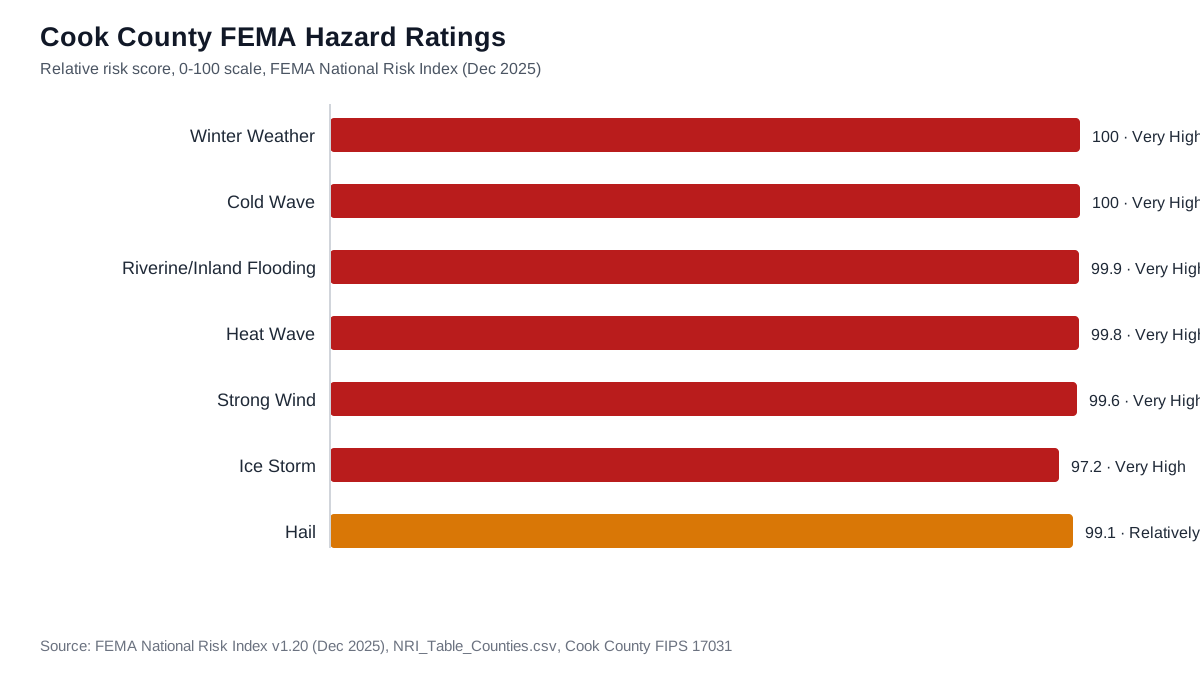
FEMA rates Cook County Very High for winter weather, cold wave, ice storm and riverine flooding, and the nearest long-term weather station logs close to 97 days a year at or below freezing. That combination produces a predictable rhythm: burst supply lines in January, sewer backups after a heavy June rain, water heaters that fail right as the first hard freeze sets in. This page covers what actually happens in each case, what the repair should cost, how Illinois licenses the person you hire, and where a standard homeowners policy stops paying.
What to Do in the First Hour
Water spreading across a kitchen floor, or a water heater that's dead at 6 a.m., doesn't wait for business hours, and neither does the damage it does. The first move is the same no matter what triggered it: find your main shutoff valve and stop new water from entering the system before you touch anything else.
Locate the main shutoff, usually where the supply line enters the basement or a utility closet, and turn it clockwise until it stops.
If the leak is limited to one fixture, a toilet or a sink, check for its own shutoff on that supply line first, so you don't kill water to the whole house over one bad flapper.
Cut power to an electric water heater at the breaker, or turn the gas control to "off" on a gas unit, before the tank runs dry; an empty tank with the heating element still energized can fail outright.
Move anything on the floor that water can ruin, and start pulling standing water with towels or a wet-dry vacuum if one's handy.
Photograph the damage before you clean it up. An insurance adjuster will ask for this later, and details fade fast once the floor is dry.
What you're seeing
Call now, or can it wait
Why
Active leak still flowing after the main shutoff is closed
Call now
The shutoff didn't isolate the source; something upstream is still pressurized
Gas smell near a water heater or gas line
Leave the house, then call
Safety issue first, plumbing repair second
Sewage backing into a tub, floor drain, or toilet
Call now
Health hazard, and often a sign of a main line blockage
One toilet or sink draining slowly
Can usually wait
Isolated clog a hand auger often clears on its own
Dripping faucet or a running toilet
Can wait, schedule it
Wastes water and money but isn't an emergency
No hot water, pilot won't relight
Same day is usually enough
Inconvenient, rarely dangerous unless gas is involved
If water is still coming in after the main shutoff is closed, or you're not confident you found the right valve, call 888-854-0126 and describe what you're seeing to reach a local plumber that serves Chicago around the clock. Some situations genuinely can't wait for a weekday appointment: an emergency plumber or 24 hour plumber earns the after-hours premium when a pipe burst under sink cabinets is flooding the room, when sewage is backing up into a tub or floor drain, or when you smell gas near an appliance. A same day plumber covers most everything short of that, including emergency drain cleaning when a backed-up line is the actual crisis, and a weekend plumber or after-hours plumber call typically costs more than the identical repair booked for a Tuesday afternoon, so it helps to know honestly which category you're actually in before you dial.
Why This Happens in Chicago, Not Just Anywhere
Cook County sits inside the Chicago-Naperville-Elgin metro area, one of the largest in the country, and FEMA's National Risk Index rates the county's overall hazard exposure among the highest of any county it tracks nationwide. That's not a marketing claim, it's the federal government's own relative ranking, and for a plumber working here it narrows down to a short list of specific, repeatable failure modes.
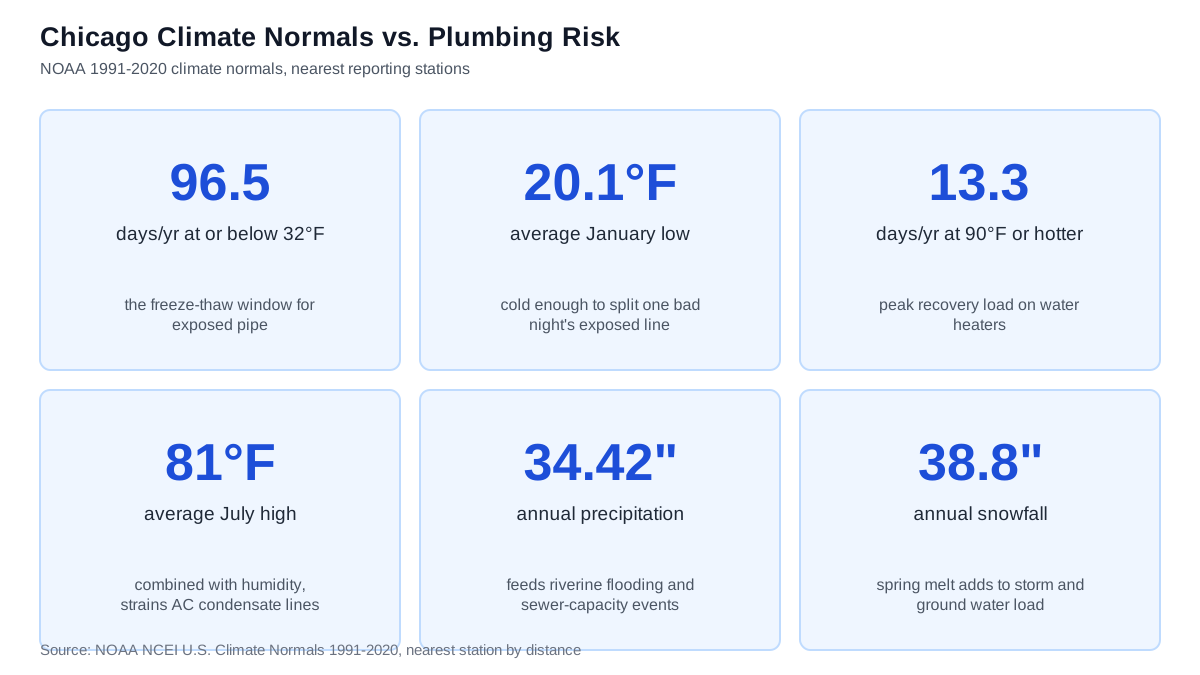
Cook County's FEMA hazard profile: six of seven tracked hazards shown here rate Very High, which is why winter freeze and rain-driven flooding dominate plumbing calls in Chicago. Winter weather, cold wave and ice storm all carry Very High ratings for Cook County, and so does riverine and inland flooding. NOAA's 1991-2020 climate normals put the nearest long-term station at 96.5 days a year at or below 32°F and 34.42 inches of precipitation annually, split between the summer thunderstorm season and enough winter melt-and-refreeze cycles to stress any pipe run through an uninsulated crawlspace or exterior wall. January's average low sits at 20.1°F, cold enough that a single bad night without heat can freeze an exposed line even in a house that's fine every other week of the year.
How Cook County's FEMA hazard mix and NOAA climate normals combine into a repeatable seasonal pattern of plumbing calls. The pattern repeats every year. Deep cold in January and February cracks unprotected supply lines and outdoor hose bibs. Snowmelt combined with spring rain pushes ground and sewer water toward capacity, and that's when a home missing a check valve on its sewer lateral finds out the hard way. Summer brings its own version: 13.3 days a year hit 90°F or hotter, water heaters work harder recovering after back-to-back showers and laundry loads, and afternoon storms tied to the county's Very High strong wind and heat wave ratings can knock out power to a sump pump at the exact moment a basement needs it most.
The Plumbing Problems Chicago Homeowners Search For Most
Search volume for plumber Chicago problems clusters tightly around the same handful of repeat offenders every year. Here's what's actually behind each one, not just the search term.
No Hot Water, a Leaking Tank, or a Water Heater by Brand
No hot water ranks among the most common searches in this niche, and the cause splits about three ways: a gas pilot that's gone out, a failed heating element on an electric unit, or a tank that's finally at the end of its service life and needs full water heater replacement. A tank that's actively wet at the base almost always means water heater leaking from a corroded tank seam, not a fixable fitting, and once the tank itself is leaking, repair isn't really on the table. Brand matters here more than people expect: rinnai tankless water heater repair and navien tankless repair usually involve error codes and a technician familiar with that specific control board, while rheem water heater repair, ao smith water heater repair and bradford white water heater repair on a conventional tank are more likely to be a thermocouple, an anode rod, or a heating element a plumber can diagnose in one visit.
Clogged and Overflowing: Toilets, Sinks and Shower Drains
Clogged toilet repair calls usually mean a wax ring gone bad, a blockage the plunger can't reach, or in older buildings a partial obstruction further down the branch line. Clogged drain repair for a kitchen or bathroom sink is usually just grease, soap and hair buildup in the trap, and it's typically the least expensive fix on this whole list. An overflowing toilet the first time is usually just too much paper; the second time in a week points to something stuck deeper, and running toilet repair or a toilet not flushing complaint is almost always the flapper or fill valve, a 15-minute fix most people can do themselves. Slow draining sink and kitchen sink clogged searches usually mean grease and food buildup in the trap, while shower drain clogged is hair and soap scum nine times out of ten. A smelly floor drain without any actual backup is often just a dry trap that needs water poured down it to reseal against sewer gas, not a plumbing failure at all. Garbage disposal not working sometimes just needs the reset button on the bottom pressed, and dripping faucet repair, whether it's a moen faucet repair, a delta faucet repair, or kohler toilet repair on the fill mechanism, is almost always a worn washer or cartridge.
Sewer Line Repair, Backups and Drain Cleaning Cost
Sewer backup repair searches spike after heavy rain, when a home's lateral line can't keep pace with what the street main is handling and water finds the lowest drain in the house, usually a basement floor drain. Sewer line repair itself ranges from clearing roots with a rooter service or hydro jetting to full replacement when a clay tile line from an older build has collapsed or shifted. Sewer line repair cost and drain cleaning cost searches usually want a single number, and the honest answer is that it depends entirely on whether a camera inspection finds a simple clog or a structural break; a main water line leak on the supply side, as opposed to the sewer side, is a separate problem that usually shows up as an unexplained spike on the water bill before it ever reaches the surface.
Frozen Pipes, Burst Pipes and Slab Leaks
Frozen pipe repair calls cluster in the same cold snaps every year, usually where a line runs through an exterior wall, an unheated garage, or a crawlspace with a gap in the insulation. A pipe that's already split needs burst pipe repair, not a space heater pointed at it; thawing a still-intact frozen line slowly, with the shutoff already closed, is the safer sequence. Slab leak repair is a different animal: a hot or cold line under the concrete foundation itself, usually found by a rising water bill, a warm spot on the floor, or the sound of running water with every fixture off, and it takes a leak detection service with acoustic or thermal equipment to pin down before anyone starts cutting concrete. Low water pressure repair searches sometimes trace back to a slab leak, but more often it's sediment in an aerator or a pressure-reducing valve that's failed. Gas line repair is its own category entirely and, in Illinois, one where cutting corners isn't a place to save money.
Commercial Plumbing for Chicago Businesses
A commercial plumber handles a different scale of problem than a house call: grease trap maintenance for a restaurant, backflow preventer testing that many Illinois municipalities require annually for commercial accounts, and commercial drain cleaning on lines sized for a whole building instead of one bathroom. Downtime costs a business owner more per hour than it costs a homeowner, which is usually the deciding factor in paying for faster service.
What "Best Plumber" Actually Means When You're Searching
Best plumber is a search people run when they don't yet know what they're looking for, and it's worth being specific about what the phrase should mean in practice: a plumbing company that's a licensed plumber under Illinois law, not just someone with a van and a magnetic sign, a local plumber who can get a truck to your neighborhood the same day, and a plumbing services provider who gives you a written scope before starting work. None of that shows up in a star average.
What the Repair Actually Involves
A straightforward fixture repair, a faucet cartridge or a wax ring, takes under an hour and needs no permit. Anything that involves running new supply line, replacing a water heater, or opening a wall or slab is a different scope entirely, and in Illinois it falls under the licensing statute the Illinois Department of Public Health administers: work has to be performed or directly supervised by someone IDPH has licensed, and a permitted job gets inspected against code before the municipality signs off. Illinois only adopted a statewide default building code, the current or most recently preceding edition of the International Residential Code for places with no local code of their own, on January 1, 2025; before that, whichever code applied was purely a matter of which municipality or county you were in.
Running a camera inspection before quoting sewer line work is the clearest signal you're dealing with a competent crew instead of a guess. A good plumber runs a scope down the line, shows you or describes exactly where the break or the root intrusion sits, and prices the fix to that specific location, whether that's a spot repair, trenchless lining, or full excavation. A crew that quotes a sewer replacement without ever running a camera is pricing blind, and blind pricing tends to run high to cover their own risk. For a tank water heater swap, the honest version of the job includes checking the expansion tank, verifying the venting still meets code on a gas unit, and setting the new thermostat to a safe, scald-preventing temperature, not just bolting on a new tank and leaving.
Timelines vary by scope. A same-day fixture repair is exactly that. A tank water heater replacement usually runs a half-day including haul-away of the old unit. Sewer line work ranges from a few hours for a snake-and-clear job to several days for open trenching, and trenchless methods like CIPP lining or pipe bursting typically fall in between, closer to a day.
What Plumbing Repairs Cost in Chicago
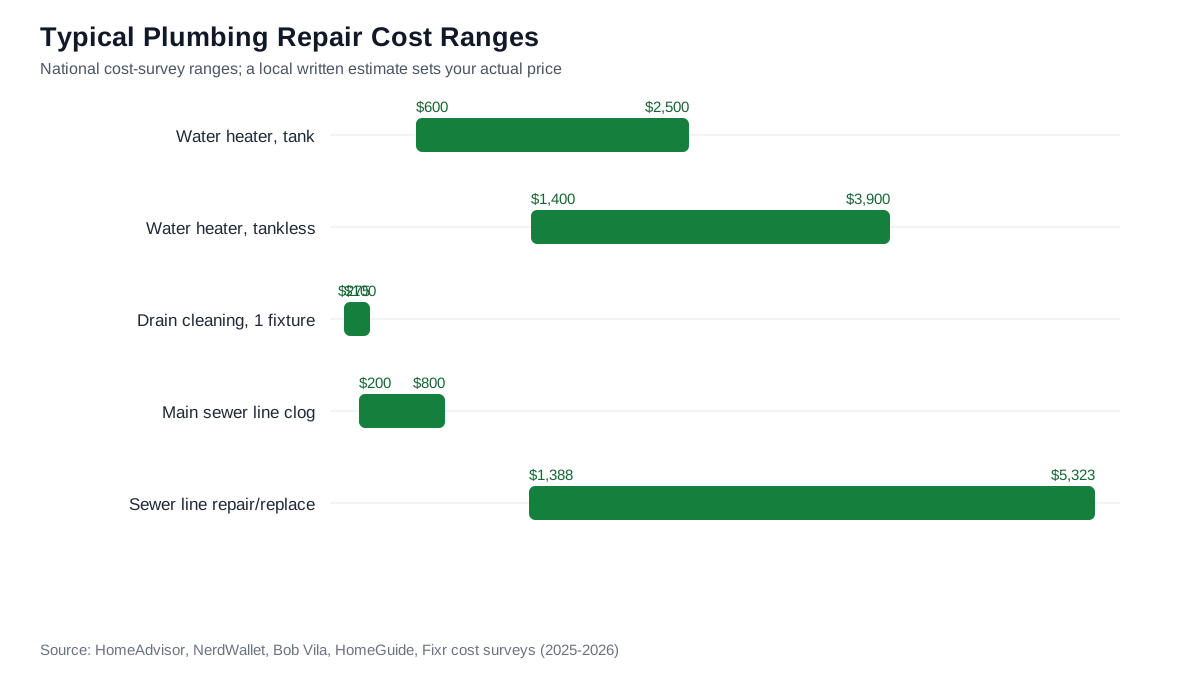
National cost-survey ranges for the plumbing repairs Chicago homeowners search for most, drawn from the cost table on this page. National cost surveys give a range, not a quote, and the range itself is worth understanding before anyone shows up at your door. Water heater replacement cost searches usually want one number, but the honest answer splits by type: a tank unit installs for $600 to $2,500 nationally, and Bob Vila's tracked regional average specifically for Chicago runs about $1,600, which sits toward the upper-middle of that national band. A tankless unit runs higher, $1,400 to $3,900 installed, largely because of venting and gas-line work a tank swap doesn't need.
Job type
Typical range
What moves the price
Source
Water heater, tank
$600 - $2,500 (Chicago regional avg. ~$1,600)
Tank size, gas vs. electric, code-required expansion tank, permit fee
HomeAdvisor, Bob Vila
Water heater, tankless
$1,400 - $3,900
Venting retrofit, gas line upsizing, labor runs $600-$1,900 alone
HomeAdvisor, NerdWallet
Drain cleaning, single fixture
$100 - $275
Snake vs. hydro jetting, ease of access
HomeAdvisor, HomeGuide
Main sewer line clog
$200 - $800 (low-high spread $75-$2,750)
Snaking vs. hydro jetting vs. camera-guided work, root intrusion
Fixr, HomeGuide, HomeAdvisor
Sewer line repair/replacement
$1,388 - $5,323 (avg. $3,319)
Trenchless (CIPP/bursting) vs. open trench, linear footage, depth
HomeAdvisor
Plumber hourly rate
$75 - $150/hr
Emergency or after-hours premium, travel, licensing
Fixr
How we got these numbers: they're pulled from national cost-survey publishers (HomeAdvisor, NerdWallet, Bob Vila, HomeGuide and Fixr), cross-checked against each other for the same job type, and where a publisher tracks a Chicago-specific figure, as Bob Vila does for water heater replacement, that's noted separately from the national range. The U.S. Bureau of Economic Analysis puts the Chicago-Naperville-Elgin metro's overall regional price parity at 103.6, meaning the metro runs about 3.6% above the national average price level across goods and services broadly; that's a general cost-of-living signal, not a plumbing-specific one, so treat it as context rather than a multiplier you apply to the table above. No publisher in this range tracks sewer line repair cost or drain cleaning cost specifically for Chicago, which is exactly why a written local estimate, not a national average, is what should end up in your hand before work starts.
Insurance and Claims in Illinois
A standard HO-3 homeowners policy typically covers sudden and accidental water damage, a supply line that bursts without warning, a water heater that fails and dumps its tank, but it typically excludes damage from gradual leaks the homeowner should have caught, from flood water rising from outside the home, and often from sewer backup unless you've added a separate endorsement for it. That last exclusion matters here specifically, given how often Cook County's riverine flooding rating translates into exactly that kind of claim.
Illinois doesn't set a fixed number of days by which an insurer must respond to a plumbing-related claim the way some coastal states do for hurricane claims. What it does provide is oversight: the Illinois Department of Insurance licenses the adjuster your carrier sends and gives you a place to file a complaint if the process stalls or the settlement feels wrong. If a claim gets contentious or the damage is extensive, hiring a public adjuster, who works for you rather than for the insurance company, is worth pricing against what they'd add to your settlement.
Whatever the outcome, document the claim the same way regardless of which company you're dealing with:
Photograph and video the damage before any cleanup or repair starts.
Keep the failed part, the burst fitting or the corroded tank, until the adjuster has seen it or explicitly releases it.
Save every receipt: emergency mitigation, the plumber's invoice, any temporary lodging if the home isn't livable.
Get the plumber's diagnosis in writing, including their read on what caused the failure, since that's often what determines whether the claim is covered at all.
Request the adjuster's report and compare it line by line against your own documentation before signing anything.
How to Choose a Plumber in Chicago
Illinois requires anyone who plans, installs, alters, extends, repairs or maintains a plumbing system to hold a license from the Illinois Department of Public Health, earned through a four-year apprenticeship and an exam, with no exemptions listed for smaller jobs. That's a higher bar than some states set, and it means asking for a license number isn't optional friction, it's the entire point. You can check plumbing licensing in Illinois or IDPH's own plumbing program page to confirm a license is current before anyone touches your pipes.
Beyond the license, ask for proof of liability insurance, not just the license number. A plumbing contractor operating under an annual IDPH registration should be able to produce a certificate without hesitation, and hesitation itself is a useful signal. Red flags worth walking away from: a quote that only exists verbally, a demand for full payment before work starts, a business card with no license number printed on it, and pressure to sign the same day. A written estimate should specify the exact work, the parts by brand and model where it matters, whether a permit is included, the timeline, and what happens if the job scope changes once the wall is open.
If you'd rather start with a phone call than a search, reach a 888-854-0126 plumber that serves Chicago and ask the same questions you'd ask in person: license number, insurance, and a written scope before anything starts.
Where DIY Ends
Plunging a toilet, replacing a flapper, clearing a sink trap of hair and soap scum, tightening a loose faucet handle: all of that is within reach for most homeowners with basic tools and twenty minutes. A chemical drain cleaner is worth skipping even for those jobs; it rarely clears a real blockage, and it turns a simple mechanical repair into a chemical hazard for whoever works on the pipe next.
The line moves fast once gas, structural work, or anything requiring a permit enters the picture. Illinois licenses plumbing specifically because a bad gas connection or an improperly vented water heater doesn't just fail slowly, it can kill someone. If you smell gas anywhere near a water heater, stove, or gas line, leave the house immediately, call your gas utility or 911 from outside, and don't touch a light switch or any plumbing until they clear it. Everything else on this page can wait for a phone call. That one can't wait for anything.
Prevention for Chicago's Climate
NOAA's 1991-2020 climate normals for Chicago, translated into the specific plumbing risk each number drives. Prevention here means working backward from the two dominant hazards: cold and water. With 96.5 days a year at or below freezing, insulating exposed pipe in a crawlspace, an unheated garage, or along an exterior wall before the first hard freeze does more good than any single repair after the fact. Disconnecting and draining outdoor hoses before that first freeze, and letting a faucet drip on the coldest nights on any line that runs through an exterior wall, costs nothing and prevents the exact kind of split pipe that turns into an emergency call in January.
On the flood side, a sump pump installation with battery backup addresses the specific risk that Cook County's Very High riverine flooding and heavy-rain pattern creates: a power outage during the same storm that's overwhelming the ground around your foundation is common enough that a battery or water-powered backup isn't overkill here, it's matched to the actual local risk. A backwater valve on the sewer lateral stops water from reversing into the house when the municipal system is running at capacity, which is worth asking a plumber about directly if your home doesn't already have one.
None of this is guesswork specific to your house. A local plumber who's worked winters here has already seen which blocks, which building types and which decades of construction fail first, and that experience is worth more than a national checklist when you're deciding where to spend prevention money first.
Frequently asked questions
What's the first thing I should do if a pipe bursts in my house?+
Shut off your main water valve immediately, then cut power to an electric water heater or turn off the gas control on a gas unit before the tank runs dry. After that, move anything water can ruin, start soaking up standing water, and photograph the damage for insurance before you clean it up. If water keeps coming after the main shutoff is closed, call a plumber who handles emergency calls rather than waiting for a normal appointment.
How much does water heater replacement cost in Chicago?+
Nationally, a tank water heater installs for $600 to $2,500, and Bob Vila's tracked regional average specifically for Chicago runs about $1,600. A tankless unit runs $1,400 to $3,900 installed because of the added venting and gas-line work. These are researched ranges from national cost surveys, not quotes, so the only way to know your real number is a written estimate from a licensed Illinois plumber who's seen the job.
How much does drain cleaning cost?+
A single clogged fixture, a sink or toilet, typically runs $100 to $275 to clear. A main sewer line clog costs more, $200 to $800 depending on whether it's a simple snaking job or requires hydro jetting and a camera inspection, with a low-high spread up to $2,750 for the worst cases. Get a firm number after the plumber sees the clog, not before.
Does homeowners insurance cover a burst pipe in Illinois?+
Usually yes, if the pipe burst suddenly and accidentally rather than leaking slowly over time, a standard HO-3 policy typically covers the resulting water damage. It typically won't cover sewer backup unless you've added that endorsement separately, and it won't cover damage the insurer decides you should have prevented through maintenance. The Illinois Department of Insurance regulates the adjuster process if a claim gets disputed.
Do I need a licensed plumber for a water heater installation in Illinois?+
Yes. Illinois requires anyone who installs, alters, or repairs a plumbing system, including a water heater, to hold a license from the Illinois Department of Public Health, earned through a four-year apprenticeship and an exam. No exemption exists for smaller jobs on the state's own program page, so a homeowner hiring an unlicensed person to do this work is outside what the state permits.
How can I verify a plumber's license in Illinois?+
Check directly with the Illinois Department of Public Health's plumbing program, which licenses individual plumbers and registers plumbing contractors annually with proof of insurance. Ask for the license number before work starts and confirm it's current rather than taking a business card at face value. A plumber with nothing to hide will give you the number without hesitation.
How much does a plumber charge per hour?+
National cost data puts a plumber's hourly rate around $75 to $150, with emergency and after-hours calls priced at a premium above that. Actual rates vary by market and by whether the job is a simple hourly repair or a flat-rate job like drain cleaning or a fixture swap. Ask upfront which one you're being quoted, hourly or flat rate, before the work begins.
Why do pipes freeze and burst so often in Chicago winters?+
Cook County averages close to 97 days a year at or below freezing, and any supply line running through an uninsulated crawlspace, exterior wall, or unheated garage sits exposed to that cold for months at a time, not just during one cold snap. Water expands as it freezes, and a pipe with nowhere for that expansion to go eventually splits, usually revealing itself only once the ice thaws and water starts flowing through the crack.
What causes sewer backups in Chicago after heavy rain?+
Cook County rates Very High for riverine and inland flooding on FEMA's National Risk Index, and during heavy rain the municipal sewer system and a home's own lateral line can both run at or near capacity at the same time. Without a backwater valve, water can reverse direction and back up into the lowest drain in the house, usually a basement floor drain, instead of continuing toward the street.
Can I use a chemical drain cleaner instead of calling a plumber?+
You can, but it's usually a bad trade. Chemical drain cleaners rarely clear a real blockage, they can damage older pipe material, and they turn a simple mechanical clog into a chemical hazard for the next person who has to work on that line, including a plumber if you end up calling one anyway. A hand auger or a call for drain cleaning handles most clogs safely.