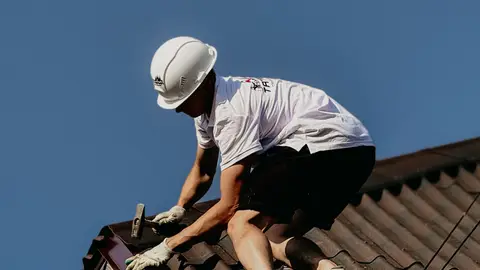
A roof repair in Chicago typically runs $150 to $6,000 depending on severity, while full replacement runs roughly $6,000 to $38,000 depending on material. Cook County's FEMA rating is Very High for tornado, strong wind and winter weather, with hail one notch lower at Relatively High, so verify a contractor's Illinois roofing license through IDFPR and get a written local estimate before work starts.
Chicago doesn't do mild roof weather. One week it's a stretch in the 90s baking asphalt shingles soft enough to scuff with a boot; a few months later it's a January wind chill working ice into every seam a roofer left loose. That swing is exactly what Cook County's FEMA National Risk Index is measuring when it rates this county Very High for winter weather, cold wave, tornado, strong wind and heat wave — and it's a big part of why a roof that would coast for thirty years in a milder climate needs real attention here closer to twenty.
Here's what actually happens on a Chicago roof call: what to do in the first hour if water is already inside, what a roof repair or full roof replacement costs based on national cost surveys weighted for how this metro runs on labor and materials, how Illinois handles licensing and storm claims, and how to tell a legitimate roofing contractor from someone with a truck and a stack of business cards. Search "roofing Chicago" or "roofing contractor Chicago" and you'll find plenty of ads before you find a straight answer on any of that. This page skips the ads.
What to Do in the First Hour With a Chicago Roof Leak or Storm Hit
If water is coming through the ceiling right now, the roof is the least of your problems for the next ten minutes. A saturated section of drywall can hold more weight than you'd think, right up until it can't. Get everyone out from under any bulge or brown stain that's actively growing, and if you can safely reach it, punch a small hole at the low point of the bulge with a screwdriver so the water drains into a bucket instead of collapsing the whole section onto your floor. That's a real technique restoration crews use, not a guess.
From there, work through it in order:
Contain the water indoors: buckets under the drip, a tarp over furniture and flooring nearby.
Photograph the interior damage before you move anything, for the insurance file.
If it's safe from the ground (no ladder in wind, rain, or after dark), photograph the exterior too: missing shingles, a torn section of flashing, or a branch that came down.
Call for an emergency roof repair or 24 hour roof repair booking and describe exactly what you're seeing, so the crew brings the right tarp size and fasteners.
Stay off the roof yourself. Falls from height are the most common serious injury in this trade, and a wet, icy, or steep Chicago roof pitch makes footing worse right after rain or frost.
An emergency roof tarp is a temporary membrane, not a fix. It buys days, not weeks, especially once Cook County's winter weather turns a loose tarp edge into an ice problem of its own. If you're searching roof leak emergency at 9 p.m., tarping is what should happen first and a full repair second; expect an after hours roof repair call to carry a dispatch fee on top of the daytime rate, which is normal, not a red flag by itself. If the water is still coming in, call 888-679-3798 and describe what you're seeing — the line reaches a roofing contractor that serves Chicago, not one specific company, and it doesn't promise a price or an arrival time.
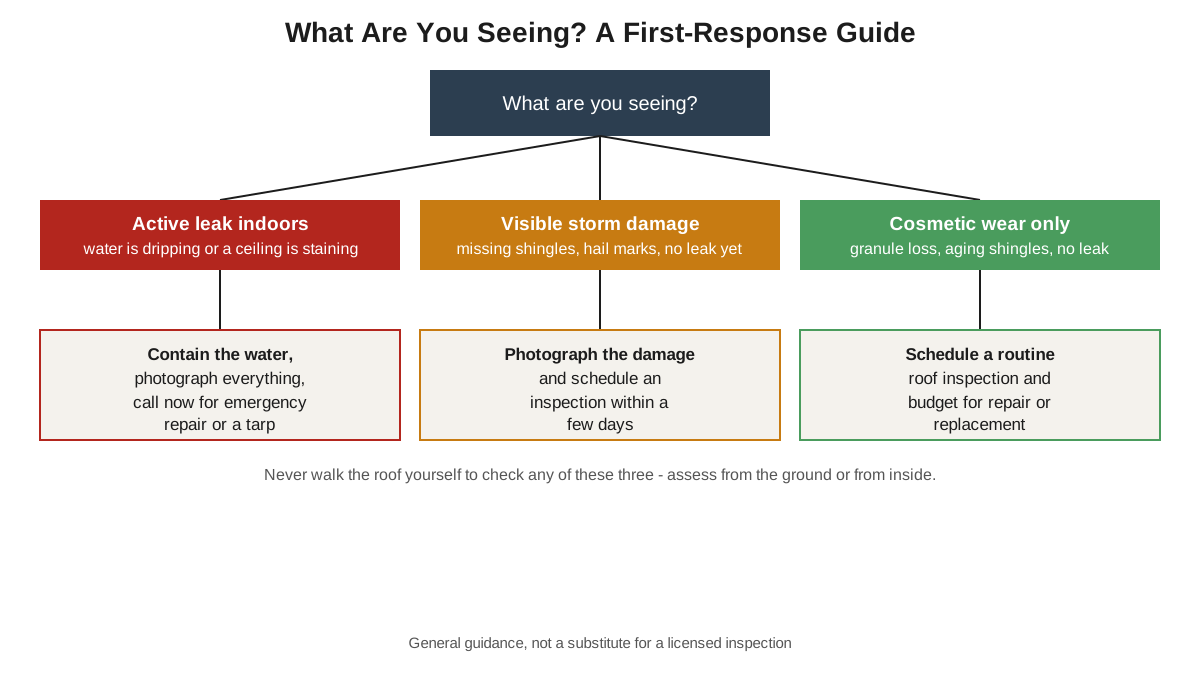
A first-response guide for sorting an active leak from storm damage from ordinary wear, before you decide who to call and how fast.
Why Chicago Roofs Take This Kind of Beating
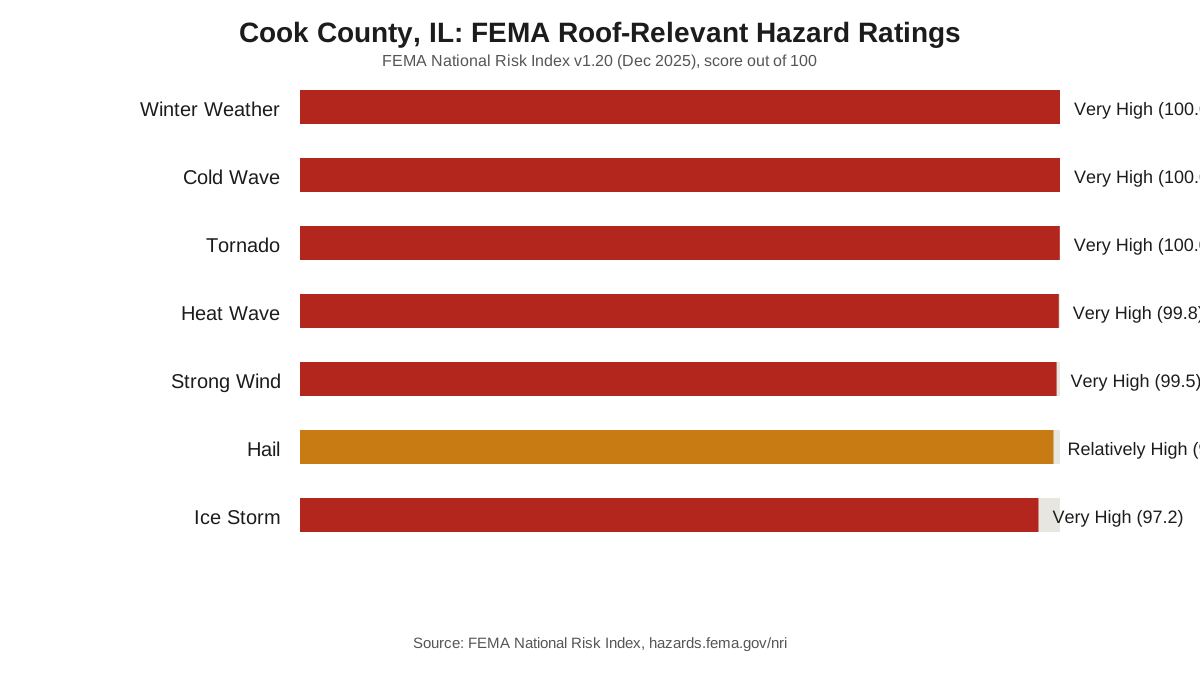
Cook County's FEMA National Risk Index profile (v1.20, December 2025) rates the county Very High for six separate roof-relevant hazards — strong wind, tornado, winter weather, ice storm, cold wave and heat wave — with hail sitting one notch lower at Relatively High. Winter weather alone is modeled at roughly 14.6 events a year here, more than one a month; strong wind adds another 5.7. Most counties get hit hard by one or two hazard types. Cook County gets the full stack.
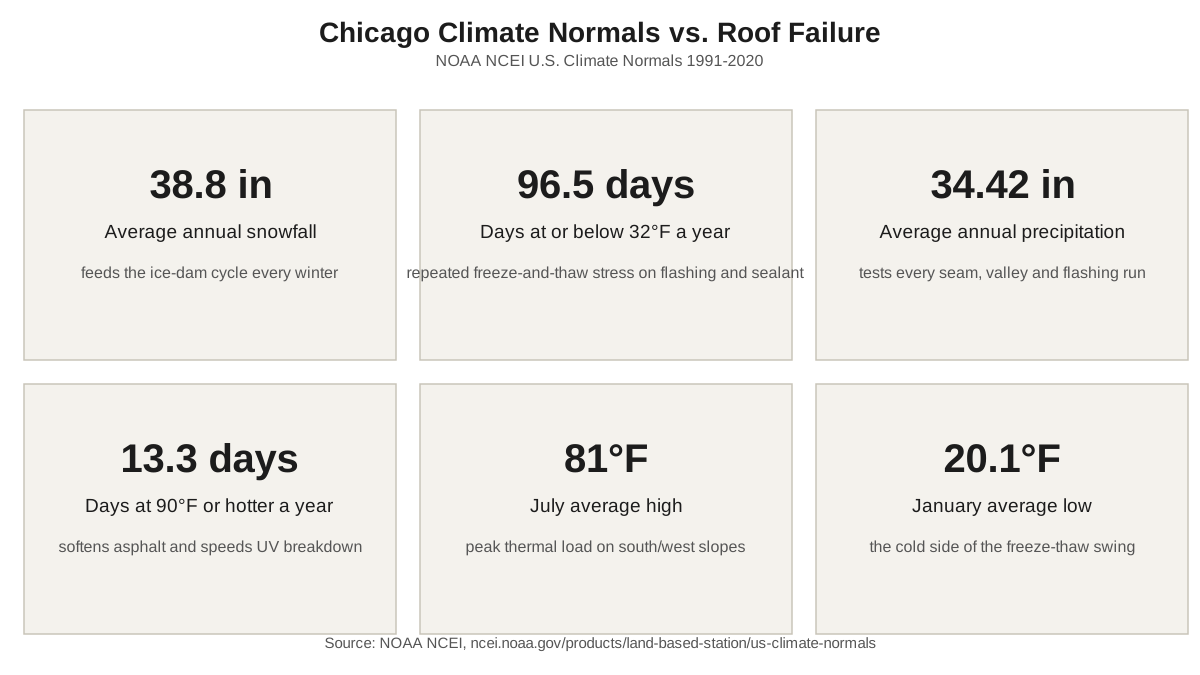
NOAA's climate normals explain why that matters for a roof specifically. Chicago's official 1991-2020 normals run 34.42 inches of precipitation and 38.8 inches of snow a year, a January mean low of 20.1°F, and 96.5 days a year that dip to freezing or below. Chicago's freeze-heavy winters and hot, sunny summers each push a different roof failure mechanism, from ice dams to UV-accelerated shingle wear. Days like that don't need to swing far above freezing to cause damage: afternoon sun on a dark shingle is enough to melt surface ice that refreezes overnight, and it's that freeze-and-thaw action, repeated for months, that cracks flashing sealant and pops nails over a roof's working life — not one big storm.
Summer runs the opposite direction: a July mean high of 81°F with 13.3 days a year at 90°F or hotter, enough heat-cycling on asphalt shingles to soften the material and speed up UV breakdown, especially on south- and west-facing slopes that catch the afternoon sun. A roof here isn't usually failing because someone installed it wrong. It's failing because it's doing two full seasons of hard duty every single year. Cook County's FEMA hazard profile rates six roofing-relevant hazards Very High and hail Relatively High, a wider spread than most U.S. counties see.
None of this is unique to one neighborhood — it's countywide. Cook County sits inside the Chicago-Naperville-Elgin, IL-IN metro area, and FEMA scores the whole county the same way it scores the city: an overall risk rating of Very High. If you're two towns over in Cicero or Oak Park, the same numbers apply to your roof.
The Roofing Problems Chicago Homeowners Search For Most
Emergency and after-hours calls
The message we see most after a bad storm is simple: water is coming in, it's dark or raining, and nobody wants to get on a ladder. Legitimate 24 hour roof repair outfits exist here specifically because Chicago's storm pattern doesn't wait for business hours. Hail lines and straight-line wind gusts common to this part of the Midwest tend to move through in the evening. An emergency roof tarp, a heavy poly sheet screwed down through furring strips rather than straight into the shingles, is the standard first move and buys time until a full roof leak repair can be scheduled.
Wind, hail and missing shingles
Cook County's Very High strong-wind rating means shingles blowing off after a spring or fall front is routine, not automatically a sign of a bad roof — standard three-tab shingles rated for 60-70 mph gusts get tested more than once a year here. A handful of damaged roof shingles after a storm is usually a same-week fix; once you count more than a dozen missing, or see bare decking, a missing shingles repair stops being cosmetic, because every open tab is a seam for the next rain to exploit. Hail damage roof repair is a different animal: the Insurance Information Institute logged 5,432 major U.S. hail events in 2025, and unlike wind damage, hail bruising can be invisible from the ground, which is why insurers usually want a physical inspection before approving a claim. A wind damage roof repair and a hail claim often get filed together as one storm damage roof repair job, since both come off the same storm system — see our hail damage guide for how insurers tell the two apart.
Leaks: after rain, around chimneys and skylights, and in the valleys
A roof leaking after rain but dry between storms usually points to one failed seam, not the whole field of shingles. Reports of water stains on ceiling roof leak damage almost always trace back to one of four spots: a chimney flashing leak where the step flashing has pulled away from the masonry, a skylight leaking repair where the factory seal around the frame has failed, a roof valley leak where two planes meet and shed more water per square foot than anywhere else on the roof, or general wear needing a roof leak repair on an aging shingle field. A ceiling leak from roof damage doesn't always show up directly under the hole, either. Water travels along rafters and decking before it drops, so the stain and the source can be several feet apart, which is part of why a real roof leak around chimney diagnosis takes a trained eye and not just a flashlight from the attic hatch.
Ice dams, sagging and storm strikes
Winter brings its own leak. An ice dam roof leak forms when heat escaping the attic melts snow on the upper roof, that meltwater runs down to the unheated eave, and refreezes into a dam that backs water up under the shingles — it's the single most Chicago-specific failure mode on this list, and it's covered in more detail below. A sagging roof repair call is more serious: sagging almost always means a structural issue in the decking or rafters from long-term moisture damage, occasionally snow load, and it needs a contractor willing to get into the attic before quoting anything. If a tree fell on roof structure during a storm, don't move it yourself — insurers generally want storm damage documented in its original position, and a fallen limb can be hiding a punctured deck that isn't obvious from below.
Commercial and flat roofs
Plenty of Chicago's older two- and three-flats, along with most retail strips and light-industrial buildings, carry a flat or low-slope roof rather than a pitched one, so flat roof repair and commercial flat roof repair are as routine a call here as shingle work. A commercial roofing company handling warehouse roof repair is usually dealing with a membrane system (TPO, EPDM or modified bitumen) rather than shingles, and a roof coating service, a reflective elastomeric or silicone coating applied over an existing membrane, can add years to a flat roof's life for a fraction of full replacement, provided the membrane underneath isn't already saturated. Less common here but still worth a mention: tile roof repair shows up occasionally on older masonry-heavy homes, though clay tile is harder to source and match in a market where it was never the dominant material, unlike the Sun Belt. For everything else — metal roof installation, gutter installation, a straight roof inspection, or general roofing services and shingle replacement — the same licensing and estimate rules below apply no matter the job size.
What a Real Roof Repair or Replacement Actually Involves
A legitimate call starts with a walk of the whole roof, not just the spot where the stain showed up inside. A good crew checks flashing, valleys, penetrations and the ridge before writing anything down. Repairing a soft or bouncy spot means pulling shingles back to expose the decking (the plywood or OSB sheathing underneath) and checking it for rot before patching over it. A crew that skips this step and reroofs over compromised wood is setting up a second failure within a year or two.
NRCA, the National Roofing Contractors Association, publishes the industry's standard reference manual and runs safety and technical training, including CERTA torch-safety certification for modified-bitumen work, and its member standards are the baseline most roofers who take the trade seriously are trained against. Manufacturer programs matter too: GAF's Master Elite tier and Owens Corning's Preferred and Platinum Preferred networks both require installer training and let the manufacturer back a longer workmanship warranty than a material-only warranty covers.
Timeline-wise, a simple repair — a run of flashing, a patch of missing shingles — is usually a one-day job. A full tear-off (stripping the old roofing down to bare decking) and reroof on an average single-family lot runs one to three days depending on roof complexity, layer count (older homes sometimes carry two layers of shingles that both have to come off) and weather windows, since asphalt shingles generally shouldn't go down below about 40°F without low-temperature adhesive sealant, which narrows the practical install season here to roughly April through October for most crews.
Repair or replace?
What you're seeing
What it usually means
Likely path
Isolated leak, roof under about 15 years old
A localized failure, not a system-wide problem
Repair
Leaks on multiple roof planes, roof 20+ years old
Shingles are past their service life across the board
Replace
Granule loss in the gutters, bald patches on shingles
UV and freeze-thaw wear finally reaching the mat
Repair now, budget for replacement soon
Soft or bouncy decking underfoot
Water has reached the wood, not just the shingles
Replace the affected section, or the whole roof if widespread
Storm damage on a roof still under warranty age
Often an insurance decision, not a cash decision
Insurance-funded repair or replace (see below)
A crew doing this right checks decking moisture with a meter rather than guessing, and pulls a permit for a full reroof rather than skipping that step. Illinois only set a statewide baseline building code as of January 1, 2025, but permit and inspection requirements are still enforced locally, so ask your contractor who is pulling the permit and confirm it's filed before work starts, not after.
What Roofing Actually Costs in Chicago
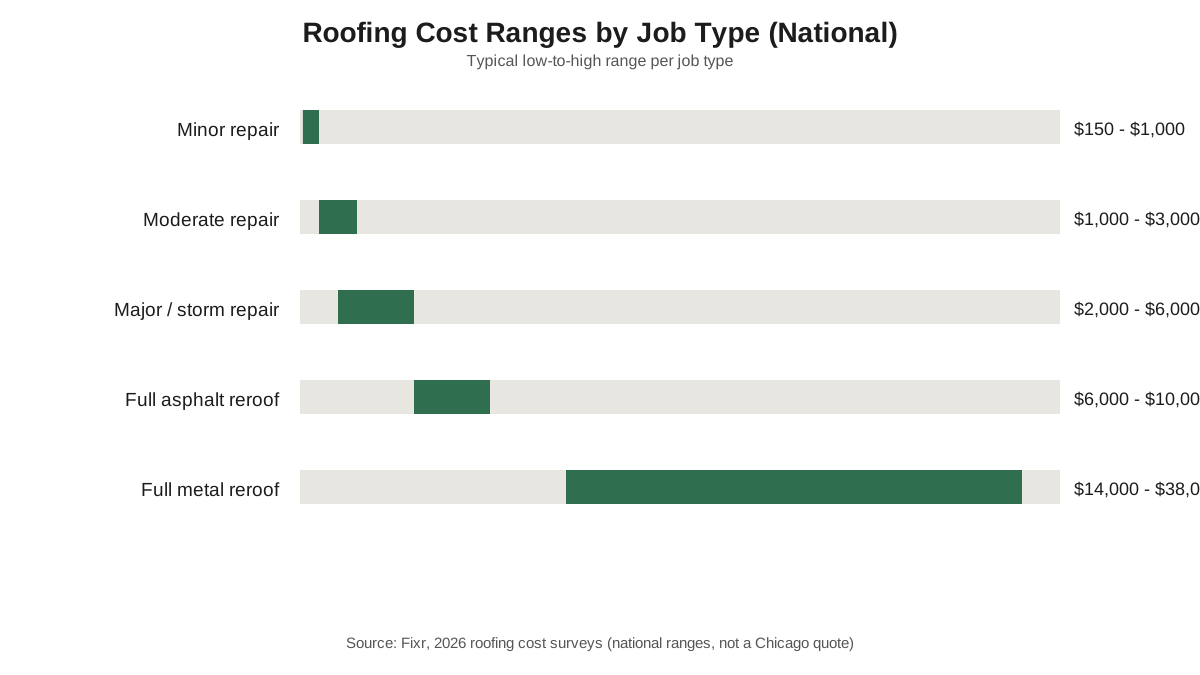
How we got these numbers: the ranges below come from national cost-survey publishers (Fixr, HomeAdvisor and This Old House all track roofing costs from contractor-submitted and homeowner-reported data), cross-checked against each other so no single source skews the range. None of them publish a Chicago-specific figure, so treat every number here as a national range, not a quote. What we can say about this metro specifically: the U.S. Bureau of Economic Analysis puts the Chicago-Naperville-Elgin metro's overall price level at 103.6 on its 2024 Regional Price Parity index (U.S. average = 100), and its services/rent component at 112.0, about 12% above the national average. Labor is most of any roofing invoice, so a roof replacement cost or new roof cost here tends to land in the upper half of the ranges below rather than the lower half, even before you factor in a shorter installation season.
National cost ranges by job type, from a small flashing patch to a full metal reroof; Chicago labor costs typically push jobs toward the upper half.
Job type
Typical range
What moves the price
Source
Minor repair (a few shingles, small flashing patch)
$150 - $1,000
Roof pitch, story height, whether it's an emergency callout
Fixr, 2026
Moderate repair (active leak, valley, larger flashing run)
$1,000 - $3,000
Decking rot found once shingles come up, winter labor premiums
Fixr, 2026
Major repair / storm damage
$2,000 - $6,000+
Size of the hail or wind claim, number of layers removed
Fixr, 2026
Emergency tarp add-on
+$100 - $300
After-hours dispatch, roof height and pitch
Fixr / Bob Vila, 2026
Roof inspection
$100 - $600
Attic access, whether a written report with photos is included
Panel profile (standing seam vs. exposed fastener), snow-retention detailing
Fixr, 2026
Full project, larger-sample benchmark (asphalt)
$31,871 average job cost, ~68% recouped at resale
Broader sample of complete projects rather than per-square pricing
JLC / Zonda Cost vs. Value 2025
If a full roof replacement lands above what you can pay out of pocket, roof financing options generally split into three lanes: a contractor-arranged payment plan (read the interest terms closely before signing), a home-equity line of credit, or, if the damage is storm-related, an insurance claim that covers some or all of it — which is the next section.
Insurance and Storm Claims in Illinois
A standard HO-3 homeowners policy typically covers roof damage from a sudden, named peril (wind, hail, a fallen tree limb, fire) but not damage from gradual wear, poor maintenance, or a roof that was already past its expected service life when the storm hit. That distinction is where most claim disputes start. Illinois sees the same national pattern most states do: wind and hail together made up 40.7% of homeowners insurance losses nationally in 2022, with an average claim severity of $13,511, and Illinois was named among State Farm's top five states for hail claims paid in 2022, alongside Minnesota, Texas, Arkansas and Nebraska.
To file a claim: document everything before repairs start (interior and exterior photos, the date of the storm), get a written estimate from your roofer that itemizes materials, labor and disposal separately, and request the adjuster's full report, not just the settlement number. If your insurer's number and your contractor's estimate are far apart, you can hire a licensed public adjuster to represent your side of the claim; they typically work on a percentage of the settlement, so weigh that cost against how big the gap actually is. Illinois regulates all of this through the Illinois Department of Insurance (IDOI) — if an insurer is slow-walking or denying a claim you believe is valid, IDOI is where a complaint goes.
Two things a policy rarely covers no matter how the roof failed: cosmetic hail damage that dents metal without compromising the seal (some policies exclude this by name), and the gap between actual cash value and replacement cost if your policy isn't written on a replacement-cost basis. Read your declarations page for which one you have before you assume the full roof repair cost is coming back to you.
How to Choose a Roofing Contractor in Chicago
Illinois requires a roofing contractor license through the Illinois Department of Financial and Professional Regulation (IDFPR) under the Roofing Industry Licensing Act. This isn't optional paperwork — IDFPR's own roofing program lists both a standard Roofing Contractor license and a Qualifying Party designation for larger firms. Ask for the license number and check it yourself on IDFPR's site before you sign anything; a legitimate roofing company will hand over that number without hesitation. That's also the real answer to how to check if a roofing company is legit: a license number that comes back active is worth more than any number of unverifiable claims. There's no independently tracked, ongoing ranking of the "best roofing company" in Chicago, and any list claiming to name one isn't something we'd trust either — the license number and the written estimate matter more.
Beyond the state license, ask for proof of general liability insurance and workers' compensation coverage. If a worker gets hurt on your roof and the contractor is uninsured, the homeowner can end up exposed. Certifications above the state minimum are a good tiebreaker, not a requirement: NRCA membership, GAF Master Elite or Certified status, or Owens Corning's Preferred/Platinum Preferred network all mean a crew has been through manufacturer or industry training beyond the license exam.
Red flags worth walking away from: someone who showed up unsolicited after a storm wanting a signature before an adjuster has even seen the roof, a bid dramatically below every other quote you've gotten, a request for full payment up front, or reluctance to put the scope of work in writing. A real written estimate lists the material brand and product line, the square footage, tear-off and disposal, underlayment type, flashing work, warranty terms (both manufacturer and workmanship), and a start date. If a quote is missing more than one of those, ask for a revised version before you compare it against anyone else's number.
If you're ready to talk to someone, 888-679-3798 reaches a roofing contractor that serves Chicago — a dispatch line, not a specific company, a guaranteed price, or a promised arrival time. For licensing context across the rest of the state, see roofing in Illinois, and for a longer walkthrough of certifications and contract red flags, how to choose a roofing contractor goes deeper than this page has room for.
What You Can Safely Do Yourself, and Where That Ends
There's a real DIY range here, and knowing where it ends matters more than the tasks themselves. Clearing debris from a roof valley or a flat-roof drain with a soft broom from a stable ladder, cleaning gutters before winter, and swapping a single, obviously cracked pipe boot (the rubber collar sealing a vent pipe) are reasonable weekend jobs for someone comfortable on a ladder. Sealing a small nail pop or a hairline crack in flashing sealant with roofing cement is a defensible stop-gap, not a permanent fix.
Where it ends: never walk a wet, icy, steep, or two-story roof yourself — a fall from height is the most dangerous part of this job for a homeowner or a professional alike, and no repair is worth that risk. Anything involving structural decking, a full tear-off, or work near a power-line drop belongs to a licensed crew, not a Saturday project. If you're not sure which category a job falls into, that uncertainty is itself the answer: call someone.
Preventing Roof Damage in a Freeze-Thaw, Storm-Prone Climate
Prevention here is mostly about managing water and heat loss, not fighting the wind directly. You can't stop a Very-High-rated wind hazard, but you can stop it from finding an existing weak point. Keep gutters clear before the first freeze; a clogged gutter is one of the most common contributors to an ice dam roof leak, because water that can't drain off the eave has nowhere to go but back up under the shingles once it refreezes. Attic insulation and ventilation matter just as much as the gutters themselves: an attic leaking heat melts snow unevenly on the upper roof, which is the first half of the ice-dam cycle, so the fix often starts inside the house, not on the roof.
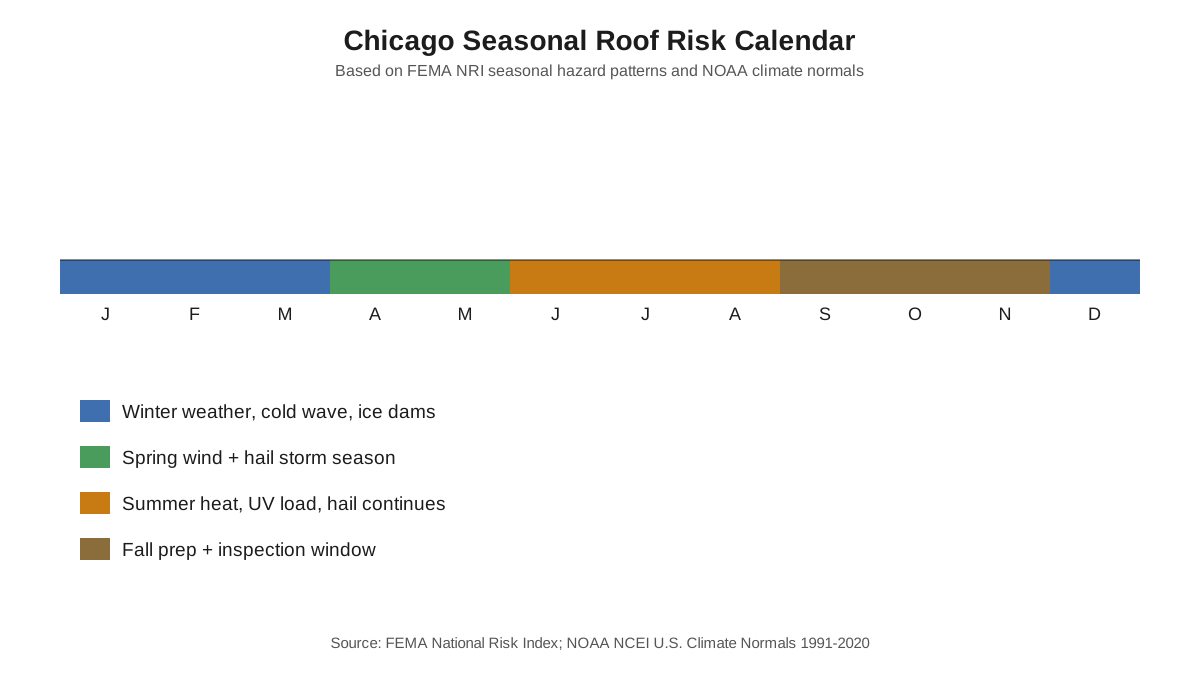
A year-round view of when each hazard type peaks in Cook County, useful for timing inspections and gutter cleaning ahead of the risk.
Get a roof inspection twice a year if the roof is older than 10 years, once in fall before the snow-load and freeze-thaw season starts and once in spring after it ends, and again after any storm that produced hail over an inch (the National Weather Service's own threshold for "severe" hail) or sustained winds above roughly 50-60 mph. Trim back branches that overhang the roofline before they turn into a tree fell on roof call during the next line of storms, and if you're re-covering a flat roof, ask about a reflective roof coating service up front — it cuts summer heat absorption on top of extending the membrane's life.
Frequently asked questions
How much does roof repair cost in Chicago?+
Nationally, minor repairs (a few shingles, a small flashing patch) run about $150 to $1,000, moderate repairs with an active leak run $1,000 to $3,000, and major storm-related repairs run $2,000 to $6,000 or more, per Fixr's 2026 cost data. Chicago doesn't have its own published index, but the metro's above-average labor costs mean most jobs land in the upper half of those ranges rather than the lower half. A written local estimate is the only way to get an exact number.
Is roof repair covered by homeowners insurance in Illinois?+
It depends on the cause. A standard HO-3 policy typically covers sudden damage from a named peril like wind, hail, or a fallen tree limb, but it excludes gradual wear, poor maintenance, and a roof that was already past its service life. Illinois' Department of Insurance regulates how insurers handle these claims, and wind and hail together account for about 40.7% of homeowners losses nationally, so it's a common claim type here, not an unusual one.
How do you know a roof needs to be replaced instead of repaired?+
Age and the pattern of damage are the two biggest signals. A roof with isolated leaks or storm damage under about 15 years old is usually a repair; one with problems on multiple roof planes, widespread granule loss, or soft decking in more than one spot is usually past the point where patching makes financial sense. A written inspection that checks the decking, not just the shingle surface, is the most reliable way to tell which category a specific roof falls into.
Why is roof repair so expensive some years?+
Cost tracks storm activity and material prices more than anything else. In a heavy hail or wind year, demand for repair crews spikes right when material and labor costs are also climbing, and emergency or after-hours work carries its own markup. Insurance data backs this up: wind and hail claims averaged $13,511 in severity from 2018-2022, and 2025 alone logged 5,432 major U.S. hail events, so a bad storm season for a whole region shows up in everyone's repair bill, not just the roofs that got hit.
What should I do if a brand-new roof still leaks?+
Call the installing contractor first. Most reputable roofers carry a workmanship warranty separate from the manufacturer's material warranty, and a leak within the first few years is often a workmanship issue that should be fixed at no charge. Document the leak with photos and the date before anyone climbs up, and if the original contractor won't respond, check whether the manufacturer's warranty program (GAF, Owens Corning and similar each have their own terms) covers an independent inspection instead.
How do I file an insurance claim for roof damage in Illinois?+
Photograph the damage inside and out before repairs start, note the date of the storm, and get a written, itemized estimate from a licensed roofer that separates materials, labor and disposal. Request the adjuster's full report, not just their settlement figure, and if it doesn't match your contractor's estimate, you can hire a licensed public adjuster to represent you, usually for a percentage of the settlement. The Illinois Department of Insurance handles complaints if an insurer denies or delays a claim you believe is valid.
How can I check if a roofing company is legit before I hire them?+
Ask for their Illinois roofing license number and verify it directly on IDFPR's website; Illinois requires roofing contractors to be licensed under the Roofing Industry Licensing Act, and a legitimate company hands over that number without hesitation. Also ask for proof of general liability insurance and workers' compensation coverage, and be wary of anyone who showed up uninvited after a storm wanting a signature before an adjuster has even seen the roof.
How is a chimney flashing leak repaired?+
A roofer removes the failed step flashing and counter-flashing around the chimney, checks the decking underneath for rot, and installs new flashing sealed with roofing cement or, on a full reroof, integrated properly under the surrounding shingles rather than caulked on top of them. Caulk-only fixes are a common shortcut that fail again within a season or two, so ask specifically whether the repair includes replacing the flashing metal itself, not just resealing the old piece.
How is a roof valley leak repaired?+
A valley, where two roof planes meet, carries more water per square foot than anywhere else on the roof, so the fix usually means replacing the valley's metal or woven-shingle lining, not just patching the surface shingles around it. A roofer checks the decking underneath for water damage first, since valleys are also where rot shows up earliest. If the surrounding shingles are old enough that a color match isn't possible, expect the repair to cover a slightly larger section than just the valley itself.
Should I repair or replace an older roof?+
If the roof is approaching or past its material's typical lifespan and problems are showing up in more than one spot, replacement is usually the better financial call, even if a single repair is technically possible. Repeated repairs on an aging roof add up, and each one is a smaller, temporary fix on a system that's failing as a whole. A roofer who inspects the decking, not just the leak, can tell you honestly which side of that line your roof is on.
How much does a full roof replacement cost?+
National averages run from about $9,600 to $11,500 depending on the source, with typical ranges of roughly $6,000 to $16,000 for a standard asphalt shingle roof, per Fixr, HomeAdvisor and HomeGuide's 2026 data. Metal, tile and slate cost more: a 1,700-square-foot metal roof runs $14,000 to $38,000, and slate can reach $60,000, per Fixr. Chicago doesn't have its own published figure, and a local, written estimate is the only way to know the real number for a specific roof.