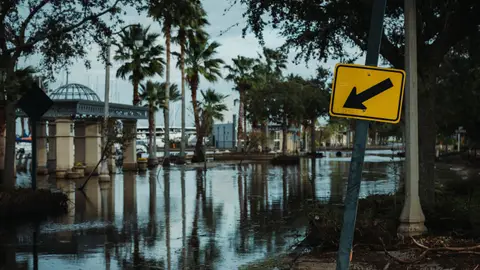
Flood damage restoration means pumping out standing water, drying the structure below 60 percent humidity within 24 to 48 hours, disinfecting anything the flood touched, and rebuilding what can't be saved. Most homeowners spend $1,383 to $6,369, more for a flooded basement or sewage contamination. Shut off power at the main breaker first, then call a restoration crew if the water is still rising.
Water finds every gap in a house within minutes of a flood, running under baseboards, up drywall, and into duct work nobody can see from the living room. A family in a ranch-style home outside Baton Rouge might watch six inches of brown water creep across the kitchen floor during a summer downpour, while a homeowner in Fargo deals with something similar each spring when snowmelt backs up a storm drain. The water looks about the same going in; what happens next, during flood damage restoration, is where the real differences show up.
This guide walks through what actually happens during flood cleanup, roughly in the order a restoration crew tackles it: extraction, drying, disinfecting, and rebuilding. It covers what a flooded house cleanup should cost by water category and damage class, the difference between a standard homeowners policy and an NFIP flood policy, and where a flood insurance claim tends to fall apart. Use it to know what a flood cleanup service should be doing in your house, and where the work is safe to handle yourself.
What Floodwater Actually Does to a House
Floodwater is never just water. It picks up soil, fuel residue from driveways, sewage from an overwhelmed treatment plant, and whatever chemicals were sitting in a flooded garage, then carries all of it into carpet, drywall, and framing lumber. Restoration crews sort incoming water into three categories, and the category drives almost every decision that follows.
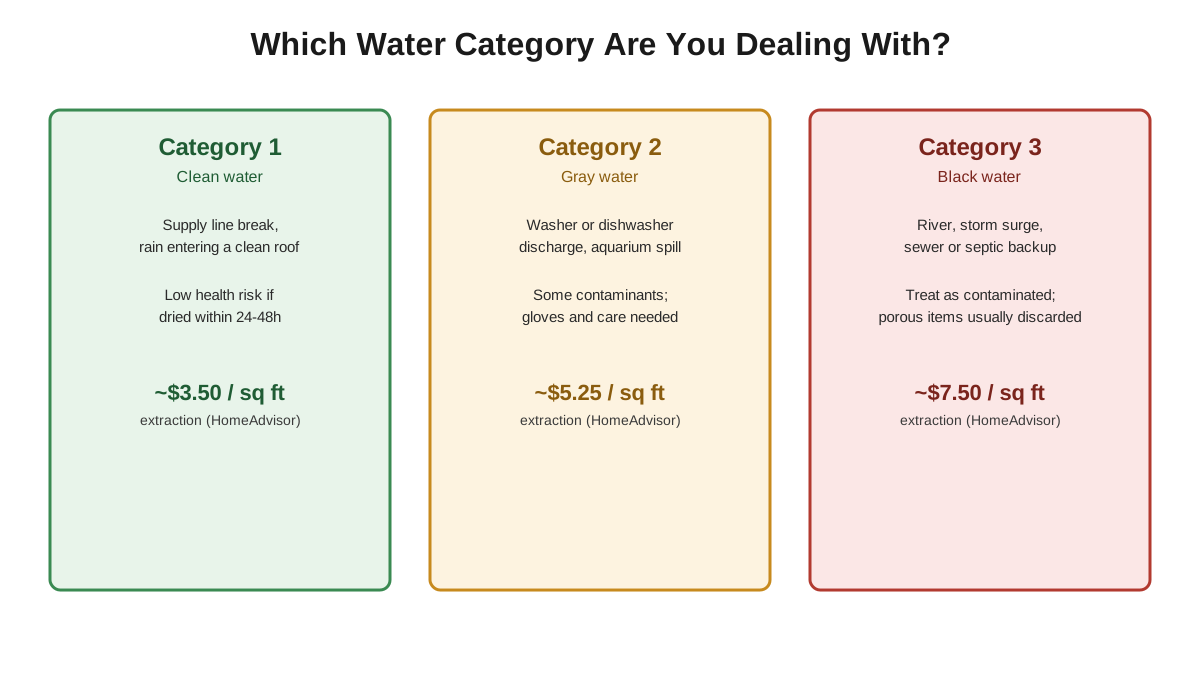
Category 1 water starts clean (a supply line break, for instance) but it doesn't stay that way once it sits on a floor for long. Category 2 water, sometimes called gray water, carries contaminants from a washing machine discharge or a dishwasher overflow. Category 3 water is the one that matters most in an actual flood: river overflow, storm surge, and sewer backup all fall here, and it's treated as contaminated the moment it enters the house. Extraction alone runs about $3.50 per square foot for clean water, $5.25 for gray water, and $7.50 for black water, according to HomeAdvisor's national pricing data.
The category of the water -- clean, gray, or black -- drives both the cleanup method and the cost.
The reason category matters so much comes down to wicking, the way water climbs porous material through capillary action. A few inches of standing black water in a living room can wick two feet up a drywall panel overnight, which is why a flooded room often needs several feet of wall removed even when the visible water line looks shallow. Anything porous that touched Category 3 water (carpet, pad, insulation, most upholstered furniture) normally gets discarded rather than dried, because disinfecting it completely isn't realistic.
Why Homes Flood: The Causes, Ranked by How Often They Happen
Not every flood comes from a hurricane. Most calls a restoration company gets after a flood trace back to a shorter list of causes, and knowing which one applies changes how the claim and the cleanup both proceed.
Heavy rain overwhelming drainage
This is the most common trigger nationwide. A storm drops more rain than the street, gutters, and municipal storm sewers can move, and water backs up into low points: basements, garages, and ground-floor rooms below street grade. It doesn't take a named storm to do this; a slow-moving thunderstorm that stalls over one neighborhood for two hours can flood a block that a river ten miles away never touches.
River, lake, or coastal overflow
Snowmelt, sustained heavy rain upstream, or storm surge pushes a waterway past its banks. This is the flooding most people picture, and it's the type that federal flood insurance was originally built around. FEMA notes that just one inch of floodwater can cause roughly $25,000 of damage to a home, which helps explain why river and coastal flooding produces some of the largest individual claims on record.
Groundwater and a rising water table
In areas with a high water table (the underground level where soil turns fully saturated), saturated ground has nowhere to send additional rain, so it pushes up through basement floor cracks and floor drains instead of running off the surface. This kind of flooding can happen without a drop of rain falling on the property that day, if a nearby area got hit hard enough to raise the water table. When it shows up in a finished lower level, flooded basement cleanup follows a slightly different playbook than drying out a ground-floor room.
Sewer and storm-drain backup
When a municipal system floods, water can travel backward through the sewer line and into a house through its lowest drain, usually a basement floor drain or a laundry standpipe. This is automatically Category 3 water, and it's one of the more common reasons a flooded house cleanup involves sewage decontamination rather than plain water extraction.
How to Assess Flood Damage Room by Room
A methodical walk-through in the first few hours tells you what you're actually dealing with, and it gives an adjuster or a restoration crew a clear starting point instead of a vague description over the phone. Think of the steps below as your after a flood checklist for that window: work room by room, and don't skip a space just because the water looks shallow.
Cut power to any circuit that reaches standing water at the main panel, not at individual outlets. Don't enter the water if the panel itself is wet or you're unsure.
Photograph every room before you move anything: water lines on walls, furniture, floor coverings, and any visible contamination.
Identify the likely water category from its source: a supply line is Category 1, an appliance discharge is Category 2, and anything connected to storm or sewer overflow is Category 3.
Measure how high the water line reached on walls, and note which materials it touched: drywall, baseboards, insulation, subfloor.
Test absorption with a moisture meter where you have one, focusing on framing behind wet drywall rather than just the surface.
Separate what's salvageable from what isn't. Solid wood furniture and hard flooring often survive; particleboard, most carpet pad, and anything Category 3 touched usually doesn't.
List every appliance, electronic, and HVAC component that got wet, since several of these need a professional check before it's safe to run them again.
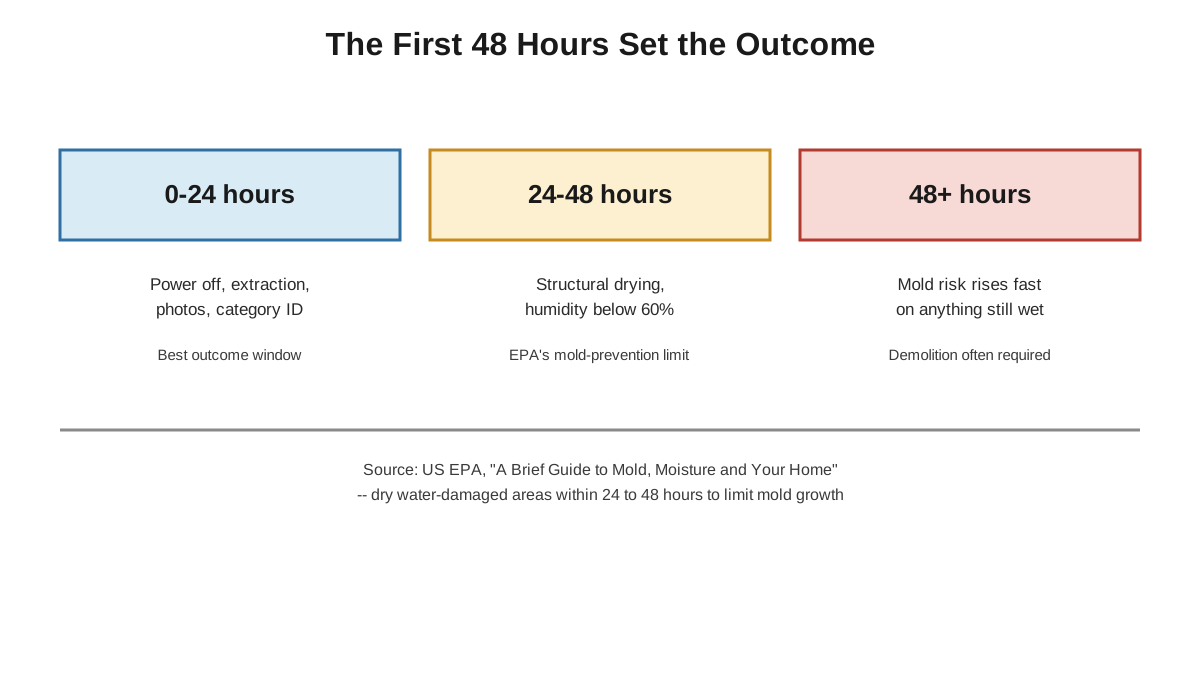
The timeline matters as much as the checklist. The first 48 hours after a flood are the window that keeps mold from taking hold. Damage addressed in the first 24 hours behaves very differently than the same water left sitting for 48 hours or more, which is exactly what to plan around next.
Cleanup and Drying: What You Can Handle and What Needs a Pro
Once the water's out, the real risk shifts from flooding to mold, and the window to prevent it is short. The EPA recommends drying water-damaged areas within 24 to 48 hours, and bringing indoor humidity back down below 60 percent, with 30 to 50 percent as the ideal target.
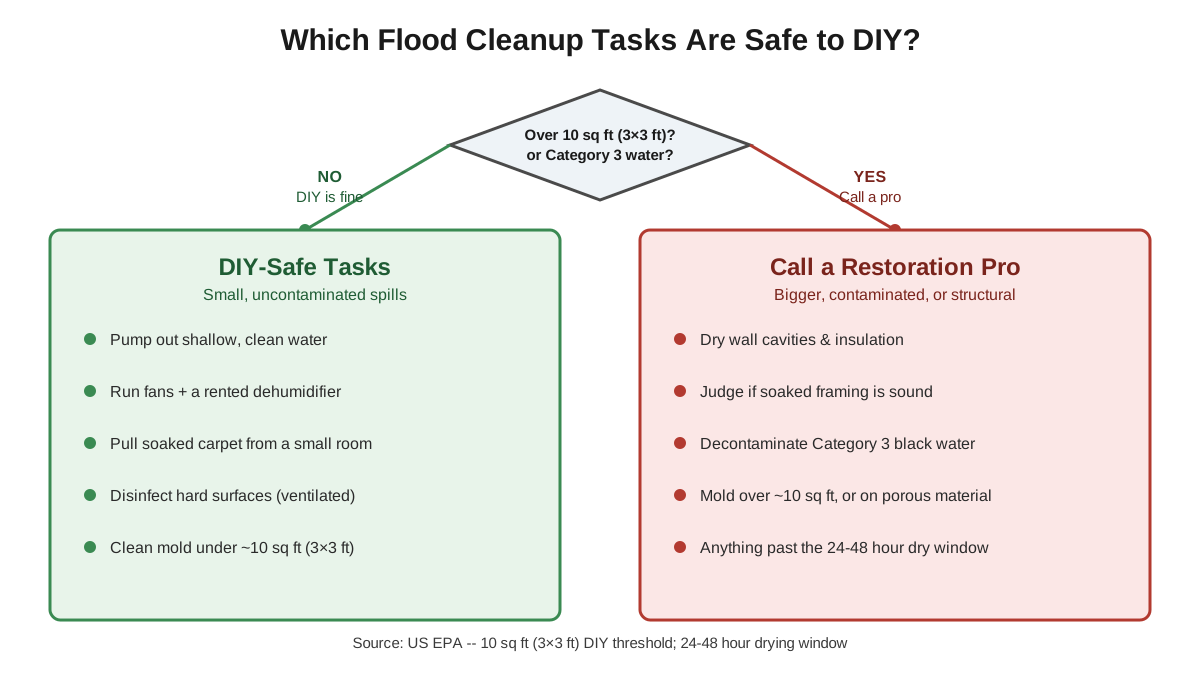
A homeowner can reasonably handle: pumping out shallow clean water, running box fans and a rented dehumidifier, pulling up soaked carpet in a small room, and disinfecting hard, non-porous surfaces with a bleach solution once the space is ventilated. What a homeowner generally can't do alone: dry out wall cavities and insulation without specialized air movers, safely judge whether framing lumber stayed structurally sound after prolonged soaking, or fully decontaminate a space that took in Category 3 water.
The EPA's mold guidance draws a rough line at about 10 square feet, roughly a 3-by-3-foot patch. Smaller than that, a determined homeowner with gloves, eye protection, and good ventilation can usually clean it up. Larger than that, or if the water was contaminated, it's a job for a flood cleanup service with real containment and air-scrubbing equipment, not a spray bottle and a weekend.
Hiring out the drying and rebuild stage is also where a written estimate matters most. A legitimate estimate itemizes extraction, drying equipment and days on site, disinfection, demolition, and rebuild separately, rather than quoting one lump number for the whole job, and it should note the water category and class the crew documented, since that's what an insurance adjuster will ask for later. Even a careful estimate can move once the walls open up and the crew finds soaked insulation or framing nobody could see beforehand, and a hard-to-reach space, like a finished basement or a tight crawl space, often costs more per square foot than a straightforward first-floor room -- ask the crew to document any change before they act on it, rather than after. When you're ready to bring in outside help, a restoration company that serves your area, such as the one at 888-407-9931, should walk through category, class, and equipment plan before anyone swings a hammer. For a full walk-through of each stage, see what water damage restoration actually involves, step by step.
Two signals decide it: spill size (over about 10 square feet) and water category -- Category 3 always needs a pro, per EPA mold guidance.
What Flood Damage Restoration Costs
Cost depends far more on water category and how long it sat than on square footage alone. A large room of clean water extracted the same day can cost less than a small bathroom that sat with sewage backup for three days. Several national cost surveys land in a similar range for the overall job, even though their methods differ. Every figure on this page is a researched range from those surveys, not a quote written for your house, and the actual number moves with your region, how easy the damaged area is to reach, and how much the crew finds once the walls open up.
HomeAdvisor puts the national average at $3,868, with most homeowners spending between $1,383 and $6,369. Fixr's average runs lower, around $3,000, typically $1,200 to $5,000, and Bob Vila reports a similar $1,305 to $5,707 range. The spread mostly comes down to category and class, the two variables in the table below.
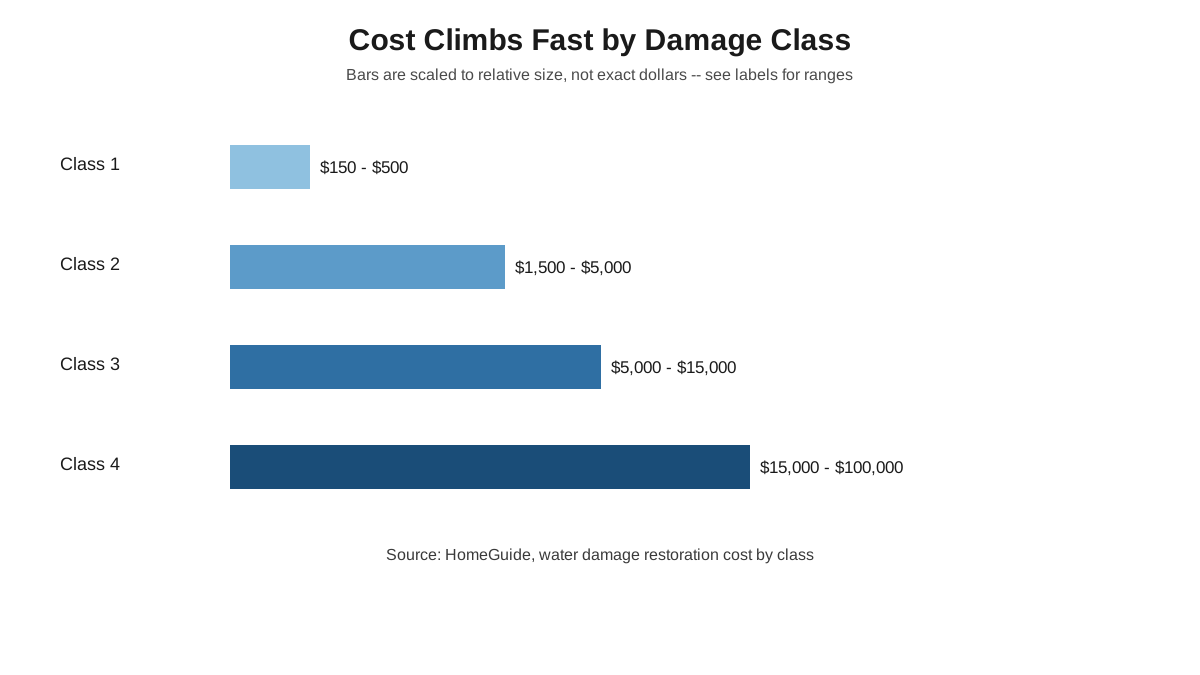
Cost climbs sharply from Class 1 to Class 4 as more structure needs specialty drying.
Job or Scope
Typical Range
What Moves the Price
Source
Class 1 (minimal, low absorption)
$150 - $500
How much material actually got wet
HomeGuide
Class 2 (significant, carpet and pad)
$1,500 - $5,000
Wicking height on walls, carpet replacement
HomeGuide
Class 3 (extensive, ceiling and walls soaked)
$5,000 - $15,000
Insulation and drywall removal, air mover count
HomeGuide
Class 4 (specialty drying: hardwood, plaster, concrete)
$15,000 - $100,000
Slow-drying materials, structural repairs
HomeGuide
Basement flood cleanup and repair
$2,000 - $85,000
Water depth, finished vs. unfinished space
Fixr
Mold remediation after drying
$1,500 - $9,000
Square footage affected, HVAC involvement
Fixr
Sewage-contaminated cleanup
$2,000 - $15,000+
Contamination spread, how long it sat
HomeGuide
Two add-ons show up often enough to budget for separately. Mold remediation after a flood that wasn't dried fast enough averages $3,500 nationally, typically $1,500 to $9,000, according to Fixr. Sewage-contaminated cleanup, common after sewer backup during a flood, runs $7 to $15 or more per square foot, per HomeGuide, with a small single-room job around $2,000 to $3,000 and a larger contaminated area reaching $7,000 to $15,000.
None of these figures replace a local written estimate, and only a written estimate from a contractor who has actually looked at the damage is binding. Every restoration company prices differently based on regional labor rates, equipment availability, and how backed up they are after a widespread storm, so get at least two written estimates before you sign anything. For pricing on non-flood causes too, see the full water damage restoration cost guide.
Flood Insurance and the NFIP Claims Process
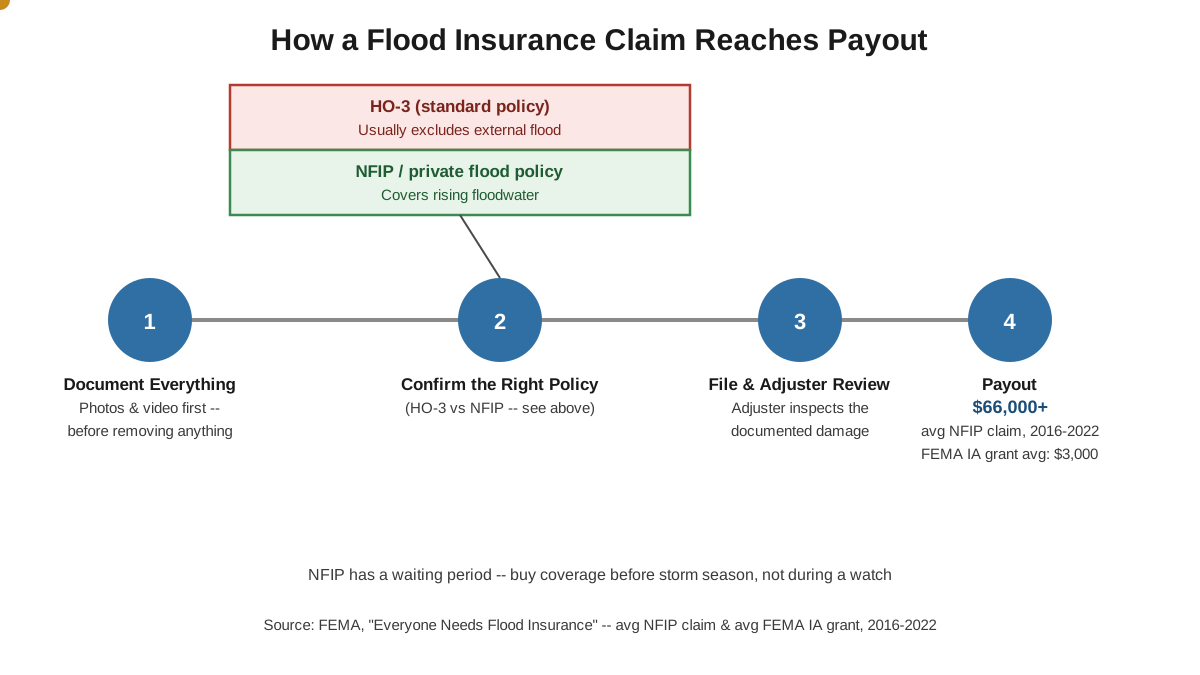
Here's the detail that surprises the most homeowners after a flood: a standard homeowners policy, the HO-3 most people carry, typically does not cover flood damage from rising water outside the home. Flood damage from an external source, such as a river, storm surge, or overland runoff, is normally covered only by a separate National Flood Insurance Program policy or a private flood policy, not by a standard homeowners policy, so confirm what you actually hold before you assume you're covered.
The National Flood Insurance Program, run through FEMA, covers 4.7 million policyholders nationwide with nearly $1.3 trillion of coverage in force, across 22,600 participating communities. Despite the name, flood risk isn't limited to mapped high-risk zones: FEMA reports that more than 40 percent of flood claims come from outside high-risk areas, which is part of why relying on a flood map alone is risky.
Statistic
Figure
Source
Damage from one inch of floodwater
roughly $25,000
FEMA
Average NFIP claim, 2016-2022
more than $66,000
FEMA
Average FEMA Individual Assistance grant, 2016-2022
$3,000
FEMA
Flood claims filed outside FEMA high-risk zones
over 40%
FEMA
Water damage and freezing share of 2022 homeowner claims
27.6%
Insurance Information Institute
Average water-damage claim severity
$13,954
Insurance Information Institute
Filing a flood insurance claim starts before cleanup, not after. Photograph and video every room, every water line, and every damaged item before you remove anything, and hold onto the damaged materials until an adjuster has seen them or told you it's fine to discard them. The average NFIP claim between 2016 and 2022 topped $66,000, so documentation quality genuinely affects the outcome. If your county gets a federal disaster declaration, FEMA flood cleanup assistance through Individual Assistance grants can help cover costs insurance doesn't, though FEMA's own data shows the average grant, around $3,000, rarely covers a full rebuild on its own.
NFIP policies also carry a waiting period before new coverage takes effect, so buying one after water is already in the house is too late for that event. Check FEMA.gov or your agent for the current waiting period well before storm season, not during a watch. Homeowners insurance, separately, generally does cover flood damage repair when the water source is internal and sudden, like a burst supply line, which is a different category from the flooding this guide covers. For a longer walk-through of what's covered and what isn't, see water damage insurance claims: what's covered, what's not, and how to win.
A standard HO-3 policy usually excludes flood damage; NFIP or private flood coverage is what actually pays the claim, per FEMA's flood insurance data.
Safety Risks and When to Call a Restoration Pro Right Away
Floodwater safety issues fall into three groups: electrical, structural, and biological, and any one of them is a reason to stop and call in help rather than push through alone.
Electrical risk comes first. Never enter standing water if there's any chance a submerged outlet, appliance, or panel is still live: cut power at the main breaker before anyone wades in, and if the breaker panel itself is wet, don't touch it; call an electrician instead. Structural risk shows up as sagging ceilings, buckling floors, or foundation cracks that widened during the flood; any of these mean the room isn't safe to work in until someone qualified checks it. Biological risk comes from Category 3 water itself, which can carry bacteria and sewage regardless of how clear it looks once it settles.
If the water is still coming in, call 888-407-9931 and describe what you see: how deep it is, whether it's rising, and whether you can spot a source. A restoration company that serves your area can walk you through safe next steps on the phone before a crew even arrives, and can tell you whether the situation needs emergency extraction tonight or can reasonably wait until morning.
None of this is about drama; it's about the order of operations: power off, hazards assessed, category identified, then extraction and drying. Skipping it is how a minor flood turns into a bigger repair bill, or worse, an injury. Before a crew starts work, verify their state contractor license and confirm they're currently carrying liability insurance -- a legitimate company will produce both without hesitation, and an adjuster may ask for that same information later. See how to choose a water damage company for the full license and certification checks worth making before a crew starts work.
How to Cut Flood Damage Risk Next Time
Most flood prevention is unglamorous and inexpensive compared to the cleanup it prevents. A few measures make an outsized difference for a typical single-family home.
Sump pump and battery backup
A working sump pump is the single most effective defense for a basement in a heavy-rain or high-water-table area, and installing one runs about $640 to $2,000, averaging around $1,200, according to HomeAdvisor. A battery or water-powered backup matters just as much as the pump itself: most flood-related sump pump failures happen during a power outage, exactly when the pump is needed most.
Grading and drainage
Ground that slopes toward the foundation instead of away from it sends every storm's runoff straight at the house. Regrading soil and extending downspouts several feet from the foundation is inexpensive compared to almost any flood repair, and it prevents a meaningful share of basement flooding before it starts.
Flood vents and elevated utilities
In flood-prone areas, flood vents let water pass through a crawl space or garage instead of building pressure against the walls, and raising the water heater, furnace, and electrical panel above expected flood levels keeps the most expensive equipment out of harm's way the next time water gets in.
Know your flood zone before the next storm
FEMA's online flood maps show which hazards are most likely for a given address, and that risk profile should drive which of these prevention steps matter most for a specific property.
Regional Flood Patterns: Coast, River Valley and Flash-Flood Country
Flood risk across the US isn't one thing; it's several different hazards that happen to share a name. Knowing which pattern applies to your area changes both prevention priorities and what a restoration crew expects to find on arrival.
Hurricane and coastal storm surge
Along the Gulf and Atlantic coasts, storm surge pushes seawater inland ahead of and during a hurricane, often combined with heavy rainfall. This flooding tends to be Category 3 from the start, given the salt content and debris, and it frequently affects a wide area at once, which stretches restoration company availability thin right when demand peaks.
River valley and spring snowmelt flooding
The Midwest and parts of the Northeast usually see river flooding follow a predictable seasonal pattern tied to snowmelt and spring rain, giving some households days of warning rather than hours. That warning window is valuable: moving belongings out of a basement before the water arrives beats drying them out afterward.
Flash flooding in arid and hilly terrain
Dry, hard-packed soil across the Southwest and hill-country regions sheds rain instead of absorbing it, so a heavy storm can flood a low-lying property in under an hour with almost no warning. This pattern is especially dangerous because it's easy to underestimate how fast a normally dry wash, a streambed that's bone-dry most of the year, can fill.
Freeze-thaw and ice jam flooding
In colder climates, river ice can jam during a thaw and back water up over the banks well before the general spring melt, catching homeowners off guard because the weather that day might look unremarkable even as an ice jam floods a neighborhood upstream.
Frequently asked questions
What should I do first after flood damage?+
Cut power at the main breaker before you step into any standing water, then get people and pets out of the affected rooms. Once it's safe, photograph everything before you move it, identify the water's likely source and category, and start extraction and ventilation as soon as you can. If water is still rising or a breaker panel is wet, call a restoration company that serves your area before you do anything else.
How much does flood damage restoration cost?+
Most homeowners spend $1,383 to $6,369 on flood damage restoration, per HomeAdvisor's national survey, with other cost guides landing close by (Fixr around $1,200 to $5,000; Bob Vila $1,305 to $5,707). A small, clean-water job can run under $500, while extensive Category 3 contamination with structural drying can reach $15,000 to $100,000. Basement flooding, mold remediation, and sewage cleanup are usually priced separately from the base extraction and drying job.
How long does flood damage restoration take?+
Extraction and initial drying typically take 24 to 48 hours once equipment is running, which is also the EPA's recommended window for preventing mold growth. A straightforward Category 1 job might be fully dry within three to five days. Extensive Category 3 damage with demolition, disinfection, and rebuild can stretch to several weeks, especially if insurance approval or contractor scheduling adds delays.
Does homeowners insurance cover flood damage?+
Generally, no -- a standard HO-3 homeowners policy typically excludes flood damage from an external source like a river, storm surge, or overland runoff. That kind of damage is normally covered only through a separate National Flood Insurance Program policy or a private flood insurance policy. Homeowners insurance usually does cover sudden internal water damage, like a burst pipe, which is a different category from flooding.
What does a flood insurance policy cover?+
An NFIP flood policy generally covers the structure and, with separate contents coverage, personal belongings damaged by rising floodwater, up to the policy's limits. It typically does not cover temporary housing, landscaping, or currency, and details vary by policy type. With 4.7 million policyholders and nearly $1.3 trillion in coverage nationwide, NFIP is the primary source of flood coverage for most homeowners.
Does flood insurance cover the contents of my home?+
Only if you purchased contents coverage separately from building coverage: NFIP sells these as two distinct coverages, and building coverage alone won't pay for furniture, electronics, or belongings. Renters can also buy contents-only NFIP coverage even without owning the building. Check your declarations page for both coverage amounts, since it's common to carry building coverage without realizing contents were never added.
Does flood insurance cover foundation damage?+
It depends on the cause and the specific policy, so confirm this directly with your insurer or agent rather than assume either way. NFIP building coverage generally addresses structural damage caused by flooding, including foundation damage from floodwater, but earth movement or pre-existing settling issues are typically treated differently. Document foundation cracks with photos and dates as soon as you notice them.
What kind of damage can a flood create?+
Floodwater damages flooring, drywall, insulation, electrical systems, and HVAC equipment on contact, and the damage compounds the longer the structure stays wet. Beyond the visible mess, flooding creates a mold risk within days if drying doesn't happen fast, and Category 3 water adds a contamination risk that clean water doesn't. Structural damage to framing and foundations is possible with prolonged or repeated flooding.
Who sells flood insurance, and do I need it?+
The National Flood Insurance Program, backed by FEMA, is the primary source, though a growing number of private insurers also sell flood policies in many states. You need it if your mortgage lender requires it for a property in a mapped high-risk zone, but it's worth considering anywhere: FEMA reports that more than 40 percent of flood claims come from outside high-risk areas.
How much does mold remediation after a flood cost?+
Mold remediation after flood-related water damage averages around $3,500 nationally, typically running $1,500 to $9,000 depending on square footage and whether HVAC ductwork is involved, according to Fixr. Costs stay near the low end when drying happens within the EPA's recommended 24 to 48 hour window. Waiting longer, or skipping remediation on porous materials that stayed wet, tends to push the job toward the higher end.