When a burst pipe flooded house floors and walls, the first move is the shutoff valve, not the mop. Cut water at the main, kill power to any wet outlets you can reach, and start pulling water within hours, since framing left wet past two days risks mold. National cleanup runs $1,383 to $6,369 for most jobs; call a pro if the flow won't stop.
A supply line lets go behind a washing machine, or a copper run in an unheated attic finally splits after a cold snap, and within minutes a quiet house has water moving across the floor faster than anyone expected. The damage from a burst pipe is driven almost entirely by two things: how fast the water gets shut off, and how fast it gets pulled back out. Everything else, the drywall, the flooring, the insurance claim, follows from those two decisions.
This guide walks through frozen pipe burst cleanup and warm-weather pipe failures the same way a restoration crew would triage them: shut off, assess, extract, dry, document, repair. You'll find the ranked causes behind why pipes actually split, a step-by-step way to find where the break is, a cost table pulled from several published national surveys, the IICRC water categories that determine how a job gets handled, and what a standard homeowners policy typically pays for. Nothing here is a local quote. Every number traces to a named source, and where the pack has no hard figure, the guide says so instead of guessing.
What It Means When a Burst Pipe Floods the House
A pipe doesn't usually fail as a slow drip that escalates. It splits, a fitting blows off, or a joint separates, and full line pressure pushes water out continuously until someone closes a valve or the tank runs dry. Even a half-inch supply line under normal household pressure moves more water than most people expect, which is why a burst pipe flooded house call from a homeowner who stepped out for twenty minutes and came home to standing water in the hallway is one of the most common emergencies a restoration dispatcher hears.
The location of the break matters as much as the volume. A burst under a kitchen sink is contained by cabinetry and a floor. A burst inside a second-floor wall runs down through insulation, drywall, and often a ceiling below before anyone notices the stain. A burst under a slab shows up as a warm or damp patch on the floor long before it shows up as visible water, because the concrete is soaking it up first. Category and class, two terms covered later in this guide, describe how contaminated the water is and how much of the structure absorbed it, and both determine what the cleanup actually costs.
Why Pipes Burst in the First Place
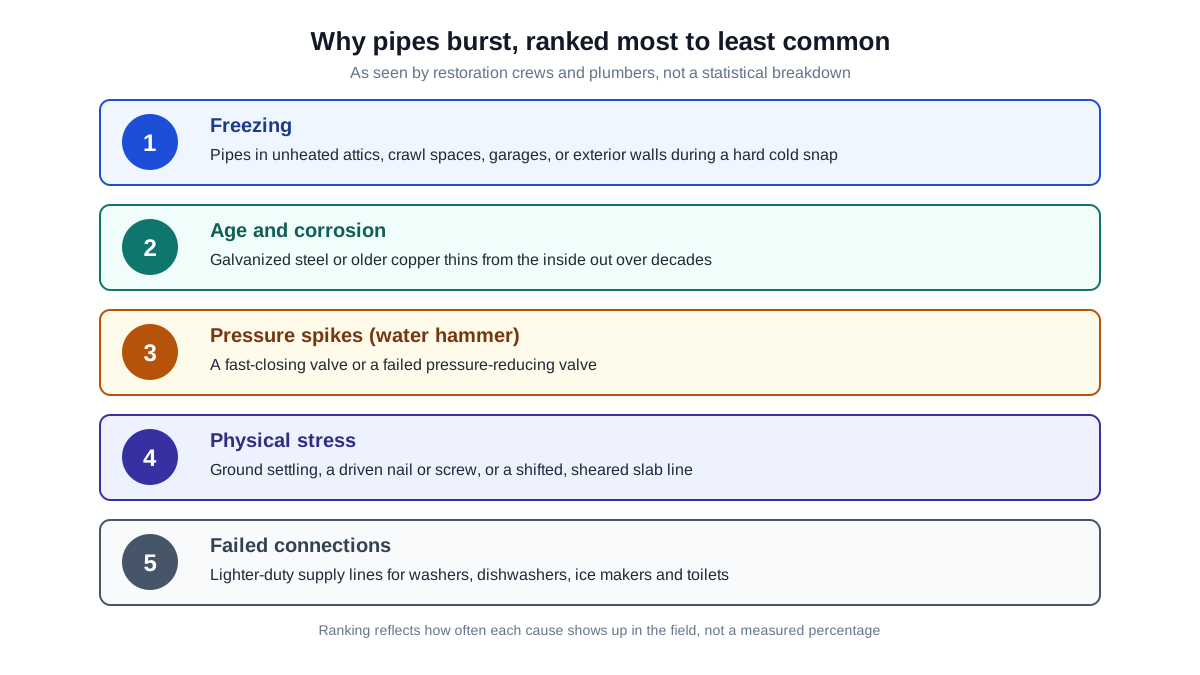
Homeowners searching frozen pipes burst often assume ice itself splits the pipe. It doesn't, not directly. Ice blocks the line, water keeps trying to move, pressure builds between the ice plug and a closed fixture, and the pipe fails at its weakest point, sometimes feet away from where the ice actually formed. Ranked by how often restoration crews and plumbers see each cause:
Freezing. Pipes running through unheated attics, crawl spaces, garages, or exterior walls are the most common failure point during a hard cold snap, especially in homes not built with deep freeze protection in mind.
Age and corrosion. Galvanized steel and some older copper runs thin from the inside out over decades; a pipe that's been fine for forty years can fail with no warning the forty-first.
Sudden pressure spikes, sometimes called water hammer, from a fast-closing valve, a failing pressure-reducing valve, or a water heater without a functioning expansion tank.
Physical stress from ground settling, a nail or screw driven through a wall, or a slab that's shifted enough to shear a buried line.
Failed connections at supply lines for washing machines, dishwashers, ice makers and toilets, which use lighter-duty fittings than the main plumbing and are a frequent source of appliance-driven floods.
Knowing which of these applies to your house changes the fix. A frozen-and-burst copper line in an attic needs insulation and heat tape after the repair, not just a coupling. A corroded galvanized system needs a conversation about repiping, because one failure is rarely the last.
Freezing tops the list, but a forty-year-old galvanized line can fail with no warning too.
The First 30 Minutes: Shutoffs and Safety
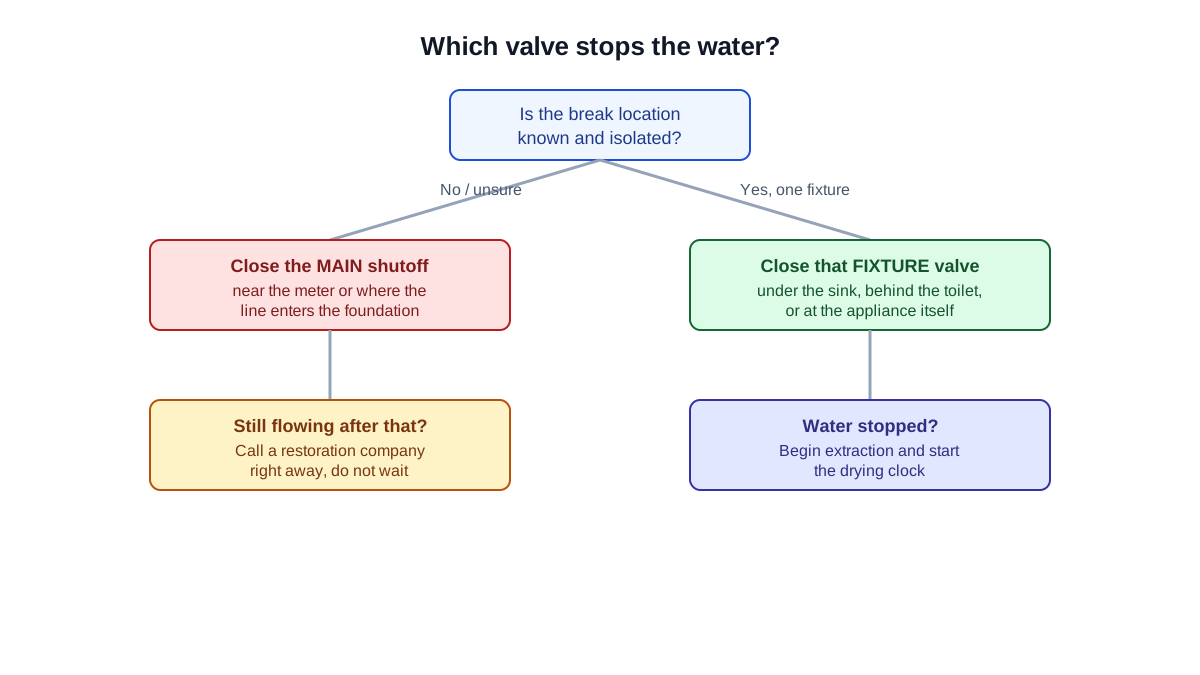
If you don't already know where your main shutoff valve is, find it today, before an emergency, because every minute water keeps running after a pipe lets go adds to both the damage and the bill. Most homes have it near the water meter, in a basement or utility room, or where the supply line enters the foundation. Knowing how to shut off water main service before you need to is the single cheapest thing you can do to limit a flood.
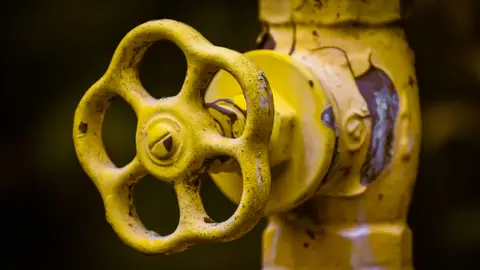
The main shutoff stops everything; a fixture valve only stops that one line.
Shut off the water at the main, or at the closest fixture valve if the break is isolated to one line.
Cut power at the breaker to any room where water is near outlets, light fixtures, or a panel, but only if you can reach the panel without stepping through standing water.
Get people and pets out of the affected rooms, especially if the water is rising or the ceiling is sagging.
If the water is still coming in and you can't stop it, call a restoration company and describe what you see; a line like 888-407-9931 connects you with a restoration company that serves homes dealing with exactly this.
Once the source is controlled, start moving furniture, electronics, and anything irreplaceable to dry ground, and take photos before you touch anything else.
Skip the shop vacuum and towels until the source is confirmed off. Extracting water while more is still flowing just wastes the hour that matters most.
Finding Where the Pipe Actually Broke
Once the water is off, the next job is locating the break, because that decides whether the fix is a five-minute coupling repair or a wall that has to come out. Start with the obvious: listen and look along exposed runs in the basement, crawl space, or utility areas first, since exposed pipe is easier to find than pipe buried in a wall or slab.
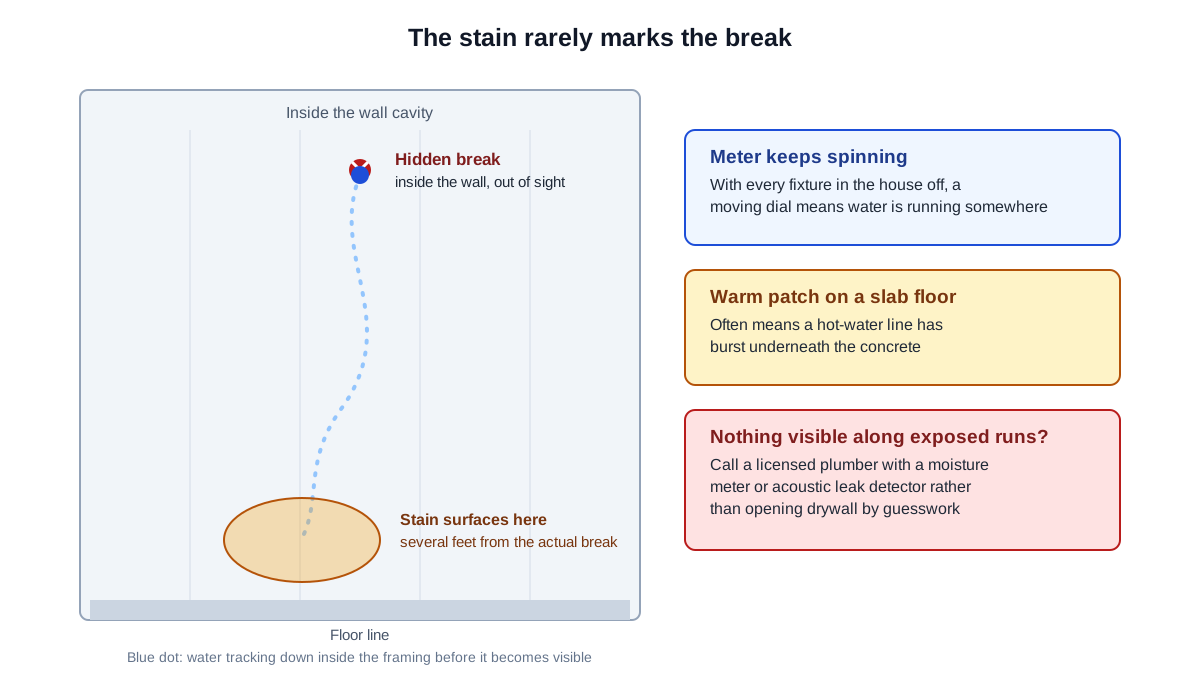
If nothing is visible, work through it methodically. Check the water meter with everything in the house off; if the dial is still spinning, water is moving somewhere. Follow damp drywall, warped flooring, or a musty smell toward its source rather than assuming the stain marks the break itself, since water travels along framing and can show up several feet from where the pipe actually failed. A warm spot on a slab floor, even without visible water, often points to a hot-water line burst under the concrete. For anything inside a wall or under a slab, this is where a licensed plumber with a moisture meter or acoustic leak detector earns the call; guessing and opening drywall in the wrong spot adds cost without finding the problem.
The stain rarely marks the break; water travels along framing before it shows itself.
Stopping the Damage: Temporary Fixes vs Calling a Plumber
With the water off, you have some breathing room, but not much. A repair clamp or self-fusing silicone tape on an accessible, low-pressure line can buy hours until a plumber arrives, and for a homeowner comfortable with basic tools, replacing a burst supply line under a sink is genuinely a DIY-scale job. Beyond that, the math changes fast: a wall, ceiling, or slab repair means cutting into a finished surface, and a repair done wrong under drywall can turn into a second flood a week later.
Situation
Reasonable to DIY
Call a plumber or restoration company
Supply line under a sink or toilet
Yes, with the water off and basic tools
Only if it recurs or the shutoff valve itself is seized
Exposed copper or PEX in a basement or crawl space
Small repair kits exist for temporary patches
Yes, for a permanent soldered or crimped repair
Pipe inside a finished wall
No
Yes, plumber locates and opens the wall
Pipe burst under a slab
No
Yes, often needs leak detection equipment first
Standing water covering more than a few square feet
Wet-vac only after the source is off
Yes, restoration crews extract and dry faster and more thoroughly
The general rule: if the fix requires opening a wall, working under a slab, or the water sat long enough to reach insulation and subfloor, hand it to a licensed pro rather than improvising a second time.
Drying Out the House Before Mold Sets In
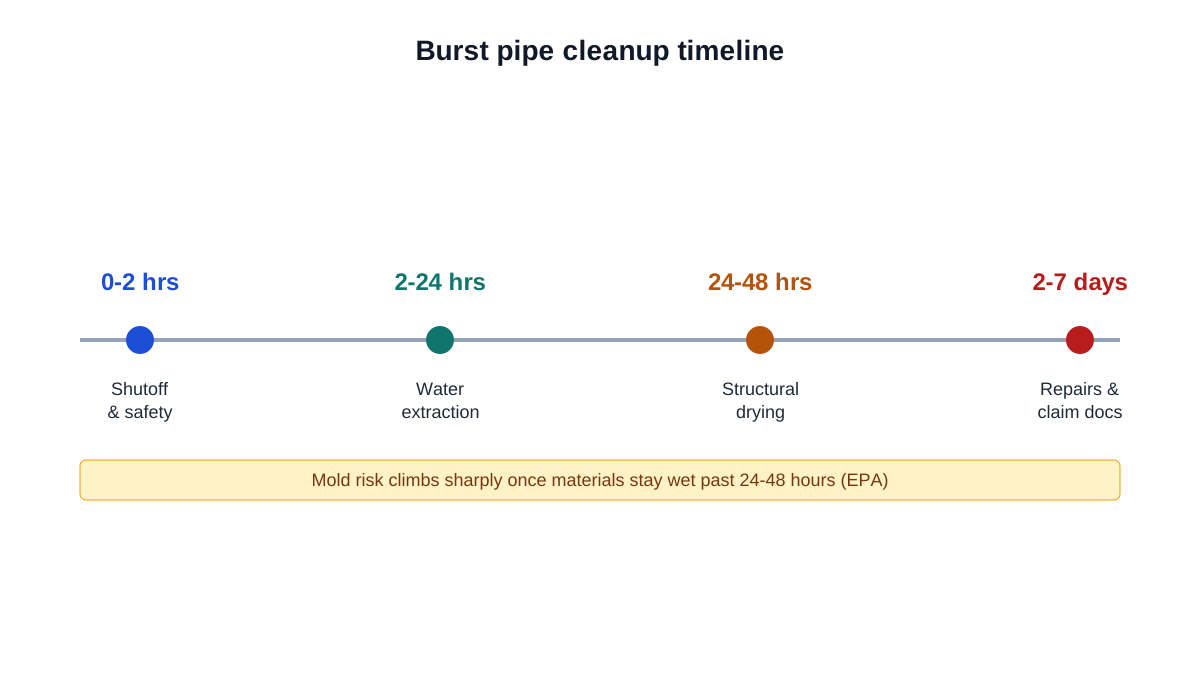
The US EPA puts the practical window at 24 to 48 hours: water-damaged materials dried within that span are far less likely to grow mold than anything left wet longer. That's the number that should set your pace, not how busy your week is. Restoration crews follow the ANSI/IICRC S500 Standard for Professional Water Damage Restoration for exactly this reason, using extraction equipment, air movers, and dehumidifiers sized to the room rather than guessing with a box fan.
For a homeowner handling it solo, the EPA's own DIY threshold is useful: mold growth covering less than about 10 square feet, roughly a 3-foot by 3-foot patch, can typically be cleaned by a homeowner with soap, water, and personal protective equipment. Anything larger, or any water that touched a ceiling cavity, HVAC ductwork, or came from a sewage source, is past the point where a fan and a dehumidifier from the hardware store are enough. The humidity target during drying is below 60 percent, ideally between 30 and 50 percent, which is difficult to hold in a humid climate without commercial-grade equipment running for several days. Our step-by-step restoration process guide covers what a crew actually does during that window, room by room.
What Burst Pipe Cleanup Actually Costs
There's no single national price for burst pipe cleanup cost, because the number depends on how much water moved, how contaminated it was, and how long it sat before extraction started. What follows combines figures from several published national cost surveys rather than one source alone, since the individual estimates vary by several hundred dollars. Treat every figure here as a national range; a written local estimate is the only way to know your actual number.
Job or task
Typical range (national)
What moves the price
Source
Pipe repair, per linear foot
$150 - $250
Pipe material, wall or slab access, number of fittings
HomeGuide
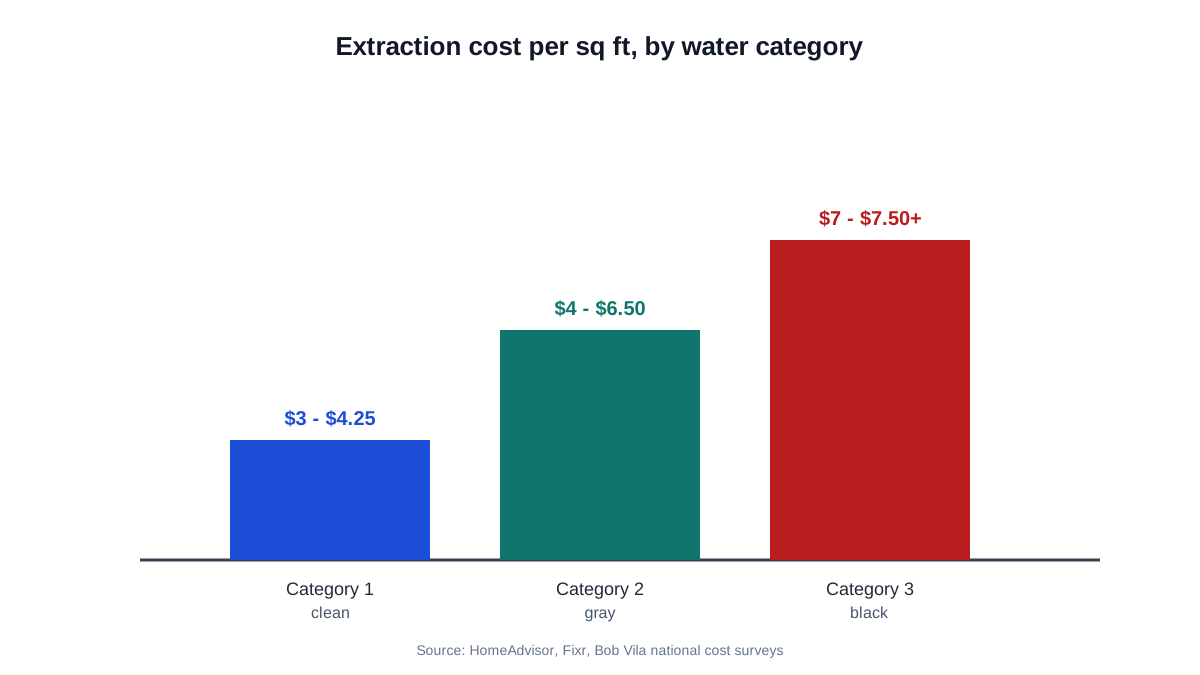
Water extraction, Category 1 (clean)
roughly $3 - $4.25 per sq ft
Square footage, response speed
HomeAdvisor, Fixr, Bob Vila
Water extraction, Category 2 (gray)
roughly $4 - $6.50 per sq ft
Contamination level, equipment needed
HomeAdvisor, Fixr, Bob Vila
Water extraction, Category 3 (black)
roughly $7 - $7.50+ per sq ft
Contamination, PPE, disposal
HomeAdvisor, Fixr, Bob Vila
Whole-job restoration, typical spend
$1,383 - $6,369
Class of damage, number of rooms, days before drying started
HomeAdvisor
Mold remediation, if needed
$1,100 - $9,000
Square footage, whether HVAC is affected
Fixr, Bob Vila, HomeAdvisor
Sump pump install (prevention)
$640 - $2,000, avg near $1,200
Pump type, pit work, battery backup
HomeAdvisor
How we got these numbers: HomeAdvisor puts the national average whole-job cost at $3,868 with a typical range of $1,383 to $6,369; Fixr lists a $3,000 average across $1,200 to $5,000; Bob Vila reports a $3,455 average across $1,305 to $5,707; HomeGuide and Today's Homeowner both put the typical range closer to $1,300 to $6,000. On the extremes, HomeGuide cites jobs as low as $150 for minor clean-water cleanup and as high as $100,000 for extensive Category 3 disasters. The pack behind this guide has no regional price index, so treat the ranges above as national, and get at least two written local estimates before you sign anything.
Category 1, 2 or 3: Why the Type of Water Changes Everything
Under the ANSI/IICRC S500 standard, restoration companies classify water damage by source and contamination, not by how much water there is. A burst supply line is usually Category 1, clean water straight from the plumbing. A washing machine discharge line or an overflowing aquarium is typically Category 2, gray water with some contaminants. Sewage backups, floodwater from outside, or Category 1 water that's sat long enough to start growing bacteria all become Category 3, black water, and get handled with full PPE and different disposal rules.
Contamination level, not just square footage, drives the per-square-foot price.
Sewage backup, floodwater, standing Category 1 water past 48-72 hours
Separately, restoration crews also grade the class of damage by how much the structure absorbed. Class 1 is minimal, part of one room with little absorption. Class 2 covers a whole room including some carpet and wall absorption, running roughly $500 to $1,000 by published national figures. Class 3 means water came from overhead and soaked walls, insulation, and subfloor throughout a room, roughly $1,000 to $3,000. Class 4 covers specialty materials like plaster, brick, or concrete that hold moisture and need extended drying, and can run from $20,000 to $100,000 on the disaster end, per HomeAdvisor, Fixr, and Bob Vila's published cost data.
One quick way to keep the two terms straight when you're describing your situation to a contractor: category is about how dirty the water is, class is about how much it soaked in. Our guide to water damage categories and classes covers this in more depth.
Filing a Pipe Burst Insurance Claim
A pipe burst insurance claim is one of the more common homeowners claims in the country. Water damage and freezing accounted for 27.6 percent of homeowners insurance losses by cause in 2022, second only to wind and hail, with an average claim severity of $13,954 and a claim frequency of 1.61 per 100 house-years, according to the Insurance Information Institute citing ISO, a Verisk Analytics business. A separate analysis citing the same institute put water damage and freezing at 22.6 percent of all claims in 2023, striking roughly one in every 67 insured homeowners each year, with an average claim of $15,400.
Scenario
Typically covered under a standard HO-3
Why
Pipe bursts suddenly and floods a room
Usually yes
Sudden and accidental discharge is the classic covered peril
Pipe was leaking slowly for months before it failed
Often denied
Insurers treat gradual leaks as a maintenance issue, not a sudden event
Water enters from outside (storm surge, rising creek)
Not on a standard homeowners policy
That's flood, covered only by a separate NFIP or private flood policy
Mold that grows after a delayed cleanup
Often limited or excluded
Many policies cap or exclude mold coverage tied to delayed remediation
Note the distinction in that third row: FEMA's National Flood Insurance Program is a separate policy from your homeowners coverage, built for water that comes from outside the house, and FEMA notes that just one inch of floodwater can cause roughly $25,000 in damage, with over 40 percent of NFIP claims coming from properties outside mapped high-risk zones. A burst pipe is an entirely different peril and claim path. To document a pipe burst claim, photograph everything before cleanup starts, keep receipts for any emergency mitigation, save damaged materials until your adjuster says you can discard them, and get the restoration company's estimate in writing. Our insurance claims guide walks through the adjuster process end to end.
How to Choose a Restoration Company (and Who Not to Hire)
Once the emergency is under control, you have time to choose carefully instead of grabbing the first name that shows up. Look for a company whose technicians carry IICRC certification under the S500 water damage standard, since that's the industry benchmark this whole process is built around. Ask for proof of general liability insurance, confirm they're licensed to do the work in your state if licensing applies, and get a written estimate that breaks out extraction, drying equipment, and any demolition separately rather than one lump number.
Red flags worth walking away from: a company that pressures you to sign before explaining scope, one that won't put pricing in writing, or one that shows up without moisture meters to verify drying progress before packing up equipment. A restoration company that serves your area, reachable at 888-407-9931, can walk you through what a proper estimate should include before a crew ever steps inside. Ask specifically how they'll document moisture readings for your insurance file; a company that can't answer that clearly is one to skip.
Preventing the Next Burst Pipe, Wherever You Live
Prevention looks different depending on climate. In freeze-belt states, the standard advice holds because it works: insulate pipes running through attics, crawl spaces, and exterior walls, disconnect and drain outdoor hoses before the first hard freeze, and let faucets served by exposed pipes drip during extreme cold so moving water resists freezing. Heat tape on known problem runs and keeping cabinet doors open under sinks on exterior walls during a cold snap both reduce the odds of a repeat.
The first 48 hours decide the mold risk; the days after decide the repair bill.
In warmer climates, freezing is rarely the driver, so the risk shifts toward aging galvanized plumbing, high static water pressure, and appliance supply lines that were never upgraded from the original rubber hoses. A pressure-reducing valve keeps municipal supply spikes from stressing old joints, and swapping rubber supply lines for braided stainless ones is a low-cost way to remove one of the more common appliance-driven failure points. Wherever you live, an annual walk-through of visible plumbing, plus knowing exactly where your main shutoff is, does more to limit damage than any single product. A room-by-room prevention checklist is worth working through once a year, ideally before the season that historically causes trouble in your area.
Frequently asked questions
What should I do the moment I find a burst pipe flooding my house?+
Shut off the water at the main or the nearest isolation valve first, before you touch anything else. Cut power at the breaker to any wet area you can safely reach, get people and pets clear, and only start removing water once the source is confirmed off. If the flow won't stop, call a restoration company right away instead of trying to wait it out.
Is a burst pipe really an emergency, or can it wait until morning?+
It's an emergency. Water keeps spreading and soaking into framing and flooring for as long as it runs, and materials left wet past roughly 24 to 48 hours carry a real risk of mold growth per the EPA. Shutting off the water is not optional; getting professional help overnight is reasonable when the volume is large or a plumber isn't available until daylight.
Does homeowners insurance cover a burst pipe?+
Usually yes, when the burst is sudden and accidental rather than the result of a leak you knew about and ignored. Standard HO-3 policies typically cover sudden discharge of water from plumbing. Coverage gets denied more often when insurers find evidence of a slow, pre-existing leak, so document the damage and timeline clearly when you file.
Does flood insurance cover a burst pipe?+
No. Flood insurance through the National Flood Insurance Program covers water entering from outside the home, like storm surge or an overflowing creek. A burst pipe is an internal plumbing failure and falls under your homeowners policy instead, not a separate flood policy, so filing with the wrong coverage just delays the claim.
How do I dry out a house after a pipe bursts?+
Start extraction as soon as the water source is off, using a wet-vac for small areas or a restoration company's pump and extraction equipment for larger volumes. Run air movers and a dehumidifier to hold humidity below 60 percent, ideally 30 to 50 percent, and aim to have materials dry within 24 to 48 hours per EPA guidance to limit mold risk.
Why do pipes burst when they freeze?+
Ice blocks the pipe, and water still trying to flow builds pressure between the ice plug and a closed fixture until the pipe fails at its weakest point, which is sometimes feet away from the actual ice. It's the trapped pressure that splits the pipe, not the ice expanding at that exact spot.
How often do pipes actually burst?+
Water damage and freezing together account for roughly a quarter of all homeowners insurance losses nationally, with a claim frequency around 1.61 per 100 house-years according to the Insurance Information Institute citing ISO data. Put another way, a separate analysis found roughly one in every 67 insured homeowners files a water-related claim each year.
How can I keep pipes from freezing and bursting in the first place?+
Insulate any pipe running through an unheated attic, crawl space, garage, or exterior wall, disconnect outdoor hoses before winter, and let faucets on exposed lines drip during extreme cold since moving water resists freezing. Keeping cabinet doors open under sinks on exterior walls during a cold snap helps warm air reach the pipe.
Can a burst pipe really flood an entire house?+
Yes, especially if it happens while nobody's home or the break is inside a wall where it isn't noticed right away. Water under full household pressure doesn't stop until someone closes a valve, and it finds its way through flooring seams and stairwells to lower levels, which is how a single burst can affect multiple rooms or floors.
How do I fix a broken pipe under the house or inside a wall?+
This isn't a DIY repair for most homeowners. A plumber needs to locate the exact break, often with a moisture meter or acoustic leak detector, then open the wall, crawl space access, or slab to reach it. Cutting into the wrong spot on a guess just adds repair cost without finding the actual leak.
What causes pipes to burst besides freezing?+
Age and corrosion in older galvanized or copper lines, sudden pressure spikes from a failing pressure-reducing valve or fast-closing fixture, physical stress from ground settling or a nail through a wall, and failed appliance supply-line connections are the other common causes, roughly in that order of frequency.
Is it safe to shut off the water myself before a plumber arrives?+
Yes, and you should. Shutting off the main or an isolation valve is safe for any homeowner and is the single most effective thing you can do before help arrives. The only caution is electrical: don't wade through standing water to reach a breaker panel if it isn't safely accessible.