In the first hour of an emergency water damage restoration, three moves decide the outcome: cut power to any flooded room, stop the water at its source or the main shutoff valve, and start pulling standing water out immediately. Wait past the 24-48 hour drying window the EPA sets for wet materials, and a same day water extraction turns into a costly mold remediation job.
The supply line behind a dishwasher lets go around midnight in a split-level outside Columbus, and by the time anyone notices, an inch of water has spread from the kitchen into the hallway carpet. A washing machine hose blows in a laundry room in Tucson while the family is at work. A gutter downspout backs up during an afternoon storm in Charlotte and sends water tracking along a foundation wall into a finished basement. Different houses, different triggers, same clock: what you do in the next sixty minutes decides whether this is a weekend project or a five-figure claim.
Water does not wait for business hours, and neither does the damage it causes. Category and class, the two numbers a restoration tech will use within minutes of walking in, describe how contaminated the water is and how much of the structure it has reached, and both get worse the longer water sits. This guide is your answer to what to do when your house floods, minute by minute: what to shut off, what to touch and what to leave alone, how to start emergency flood cleanup safely, what a fair estimate looks like, and where insurance is likely to help or push back.
What's Actually Happening When Water Hits Your Floor
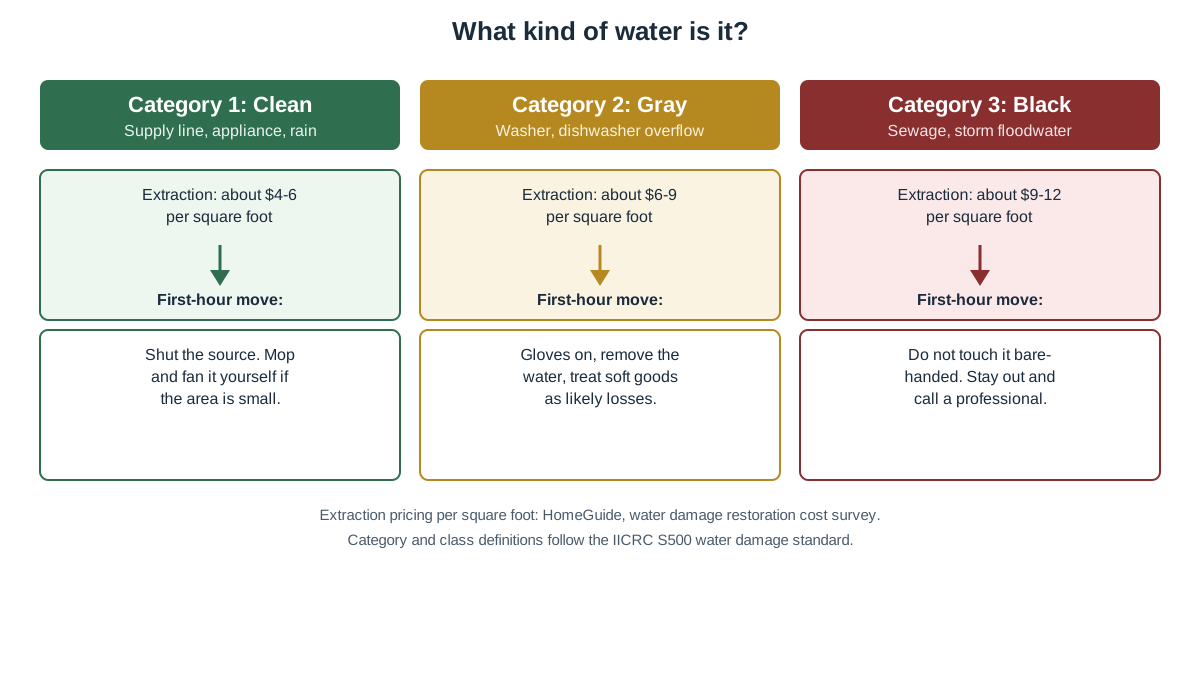
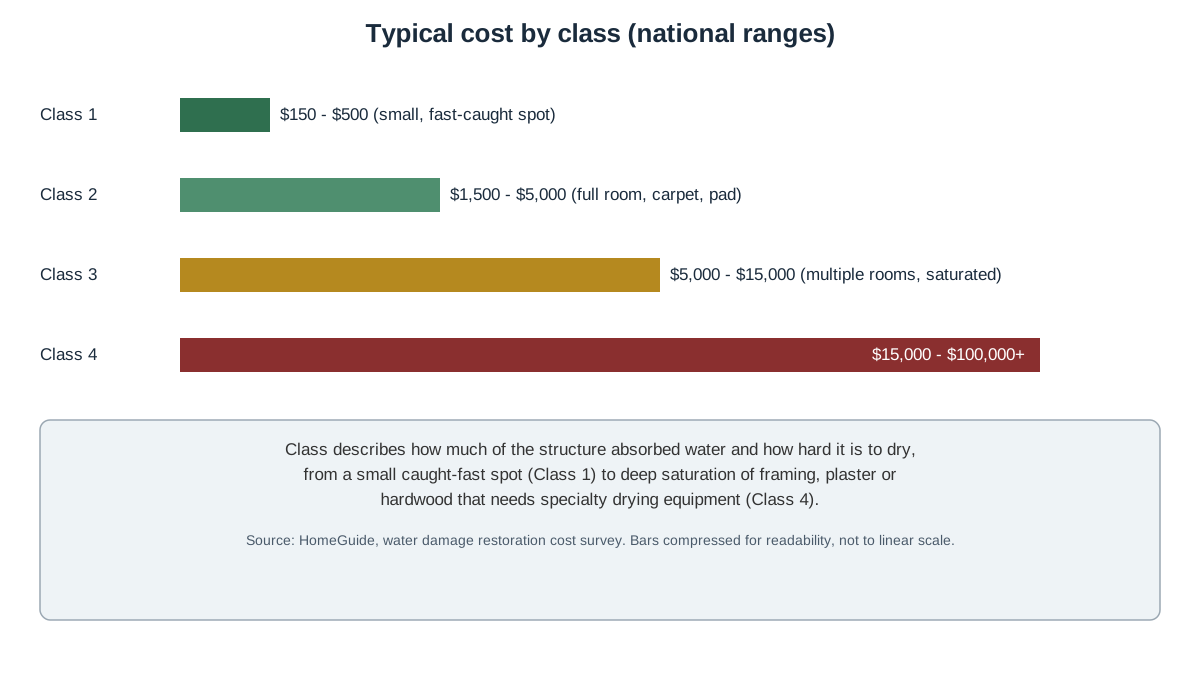
Every water damage job gets sized up two ways before a plan gets made. Category describes what is in the water: Category 1 is clean, from a supply line or an appliance fill hose; Category 2 is gray water carrying some contaminants, like an overflowing washing machine or dishwasher; Category 3 is black water, meaning sewage, floodwater, or anything that has sat long enough to grow bacteria. Class, by contrast, describes how much of the structure absorbed water and how hard it will be to dry, from Class 1 (a small, fast-caught wet spot) to Class 4 (materials like plaster, brick or hardwood that soaked long enough to need specialty drying methods). The distinction comes from the IICRC's S500 standard, and it is the first thing a restoration tech checks, not because it is bureaucratic, but because it decides whether you can mop it up yourself or need a crew in respirators.
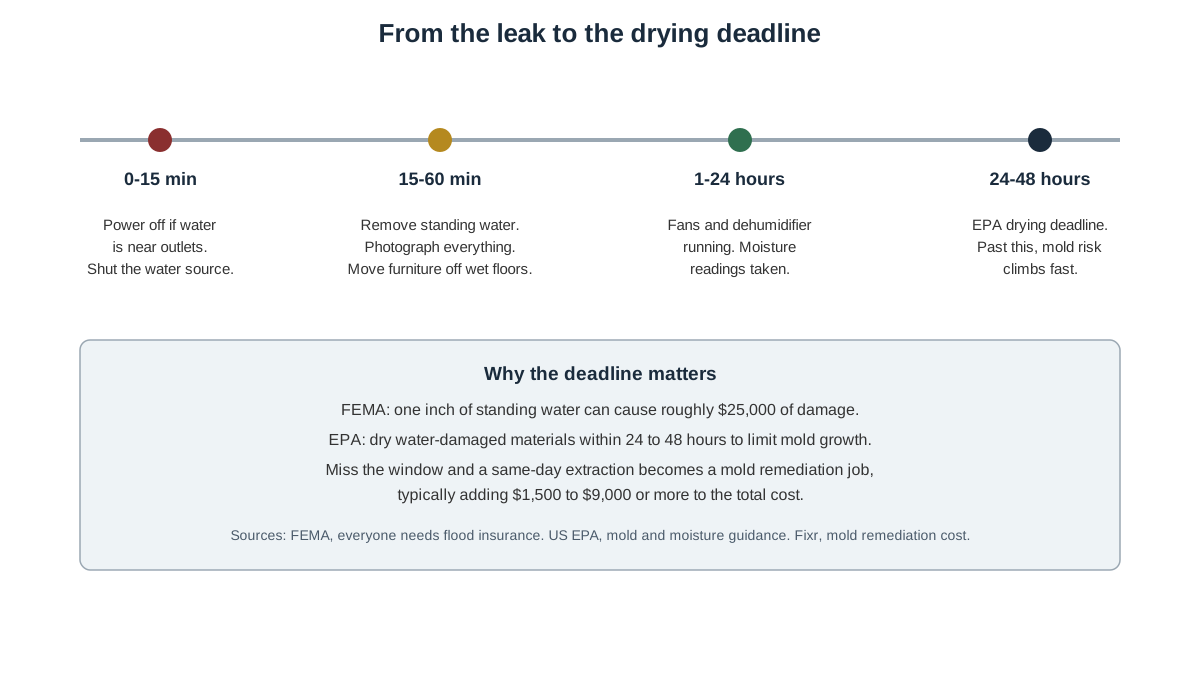
The other number that matters is time. The EPA's guidance on mold and moisture is blunt: materials need to be dried within 24 to 48 hours or mold colonies can start to establish themselves, and once that happens, what should have been a same day water extraction turns into a much longer mold remediation project. FEMA puts a dollar figure on delay, too: just one inch of standing water can cause roughly $25,000 of damage to a home, because it is never just the floor. Water wicks up drywall, swells baseboards, and gets under cabinetry within hours. None of that math changes what to do first: get the source stopped and start emergency flood cleanup before that window closes. What category is your water, and what should you do about it in the first hour?
Water Category
What It Usually Is
Extraction Cost per Sq Ft
Your First-Hour Move
Category 1 (clean)
Supply line, water heater, rainwater, an appliance fill hose
$4 - $6
Shut the source, mop and fan it yourself if it is a small area
Category 2 (gray)
Washing machine overflow, dishwasher discharge, a toilet with urine only
$6 - $9
Gloves on, remove standing water, treat soft materials as likely losses
Category 3 (black)
Sewage backup, storm floodwater, a toilet overflow with solids
$9 - $12
Do not touch it bare-handed. Stay out and call for professional extraction
Source for extraction pricing by category: HomeGuide's water damage restoration cost survey.
Why This Happens: The Most Likely Causes, Ranked
What starts the flood is not always obvious in the first five minutes, but the calls restoration crews get most often follow a familiar order:
Supply lines and appliance hoses. The braided line under a sink, the rubber hose behind a washing machine, and a water heater's cold inlet are old rubber and plastic wearing out on a schedule nobody tracks. They are also the easiest source to find and shut off fast.
Washing machine, dishwasher and water heater failures. These appliances hold or move gallons at a time, and a failed pump, a cracked tub, or a ruptured tank can put water everywhere within minutes, often while nobody is home.
Roof and storm-driven leaks. Wind-driven rain, ice damming, or a shingle that let go during the last storm can turn a slow ceiling drip into an emergency flood cleanup after the next heavy rain.
Sump pump and foundation drainage failure. A pump that cannot keep up with a downpour, or that loses power exactly when the storm knocks the grid out, lets groundwater into a basement or crawl space fast.
Sewage backups. A blocked or collapsed lateral line pushes wastewater back through the lowest drains in the house. It is the least common cause on this list, and the one that turns a straightforward job into a Category 3 cleanup.
What starts a leak is not the same as what makes it worse. A slow leak behind a wall in a 1990s tract house can sit for weeks before anyone notices the smell; a burst supply line in an older home with cast iron pipe can dump gallons in minutes. Freeze-related pipe bursts and storm-driven flooding both spike seasonally, which the regional notes further down cover in more detail. Flooding itself does more than ruin flooring: it can cause structural settling, ruined electrical systems, and the mold growth covered later in this guide. What matters here is that most of these causes give you a single point to shut off, a valve, a breaker, or a main, and finding it before the emergency, not during it, is the best five minutes you will spend on this house.
The First Hour, Step by Step
Forget the paint colors and the insurance paperwork for now. In an emergency, the first hour has one job: stop the water and protect the people in the house. Move through these in order.
Check for standing water near anything electrical.If water has reached an outlet, a power strip, or the base of a breaker panel, stay out of that room and shut off power at the main breaker before you do anything else. The same goes for gas: if you smell it anywhere in the house, leave immediately and call your gas utility or 911 from outside. Neither of those calls waits for the rest of this list.
Stop the source. Close the fixture's local shutoff if you can reach it safely, or find the water shut off valve for the whole house, usually near the water meter or where the main line enters the foundation, and turn it clockwise until it stops.
Get people and pets clear of Category 2 or 3 water. Gray or black water is not a place for bare feet, and it is not worth a closer look.
Start moving water out. A wet-dry shop vac, towels, and a mop handle a small Category 1 spill; for anything past a few inches on the floor, this is where same day water extraction with a truck-mounted pump earns its cost.
Photograph everything before you move it. Wide shots of each room, close-ups of the source, and the water line on the wall. Insurers weigh documentation heavily, and phone photos with a timestamp cost nothing.
Pull rugs and move furniture off wet flooring. Aluminum foil or wood blocks under furniture legs keep stain and rust off carpet while it dries.
Open windows if the weather allows, and start air moving. Fans and a dehumidifier, box fans work if that is what you have, start the clock on the EPA's 24-48 hour drying window instead of losing it.
Call for help if the water keeps coming or you are not sure what you are dealing with. If the water is still rising, the source is not obvious, or you smell sewage, call 888-407-9931 and describe what you see. A restoration company that serves your area can talk you through the next steps and get a truck moving.
None of this replaces a full assessment. It buys you the first hour, which is exactly why 24 hour water damage crews take calls at 2 a.m. as readily as 2 p.m. The first-hour timeline: from shutoff to the 24-48 hour drying deadline.
What You Can Safely Handle Yourself, and Where That Ends
A small, clean-water spill is genuinely a do-it-yourself job for most homeowners: shut the source, extract with a wet-dry vac or towels, run fans, and check back over the next two days for smell or discoloration. The line moves once contamination or scale gets involved.
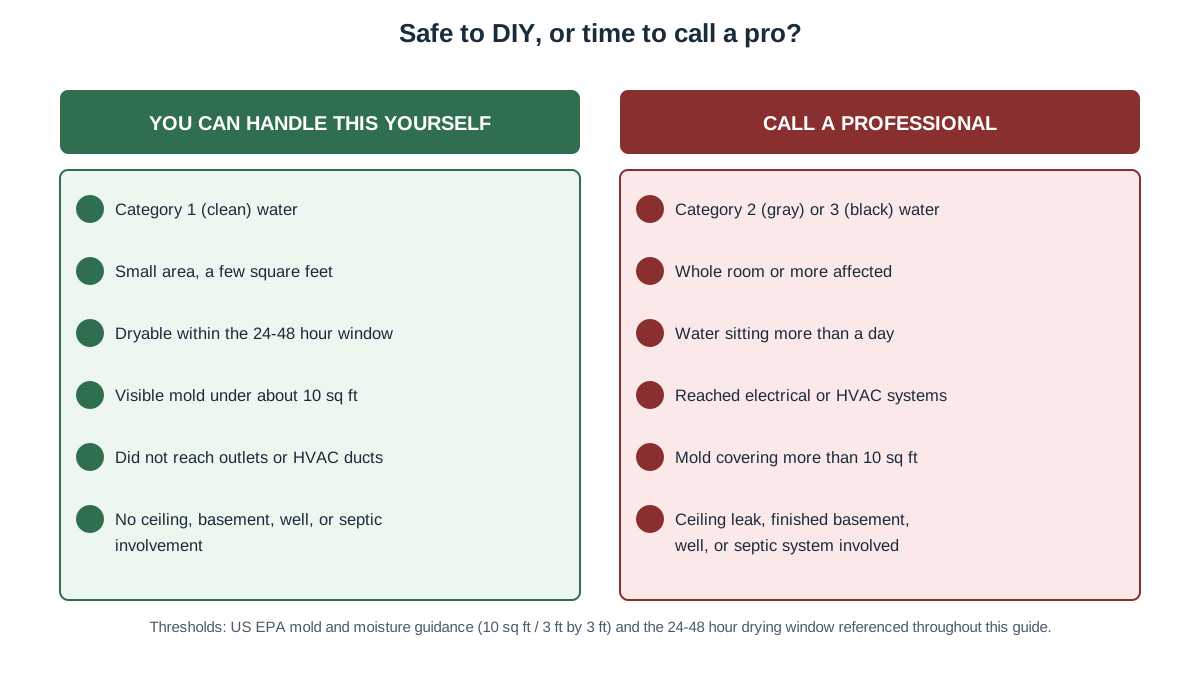
Handle it yourself when: the water is Category 1 (clean), the affected area is small, and you can dry it within the EPA's 24-48 hour window using fans, a dehumidifier, and open windows. The EPA's own mold guidance draws a similar line for mold that is already visible: a patch under about 10 square feet, roughly a 3-foot by 3-foot section, is generally within a homeowner's ability to clean up with gloves, eye protection, and plain detergent.
Call a professional when: the water is Category 2 or 3, it has been sitting more than a day, it reached electrical systems or HVAC ductwork, the affected area is a whole room or more, or you find mold covering more than that 10-square-foot guideline. Add to that list any water that came through a ceiling, since it may have touched wiring or insulation you cannot see, any water in a finished basement with drywall on metal or wood studs, and anything involving a well or septic system. A restoration company brings moisture meters, thermal cameras to find water behind walls, and industrial dehumidifiers that pull moisture out of framing lumber in days instead of weeks.
A quick checklist for deciding whether a spill is a DIY job or time to call a restoration company.
What Emergency Water Damage Cleanup Costs
National ranges give you a sense of scale, not a quote. The number that matters is the one on a written estimate from someone who has walked your specific rooms, and any reputable crew will give you that before work starts. Here is what the major cost surveys report nationally for emergency water damage restoration, so you know if a number you are hearing is in the right neighborhood.
Job or Scenario
Typical Range
What Moves the Price
Source
Overall extraction and drying job
$1,383 - $6,369 (national average $3,868)
Rooms affected, how long water sat, category
HomeAdvisor
Class 1 (minimal, small area)
$150 - $500
One small spot, caught fast
HomeGuide
Class 2 (significant, full room)
$1,500 - $5,000
Carpet, pad, some drywall
HomeGuide
Class 3 (extensive, saturated structure)
$5,000 - $15,000
Multiple rooms, wicking up walls
HomeGuide
Class 4 (specialty, disaster-level)
$15,000 - $100,000+
Hardwood, plaster, deep saturation
HomeGuide / Fixr
Emergency callout fee
$50 - $200 flat, or $120 - $600 per hour
Time of day, distance, crew availability
Bob Vila / Today's Homeowner
Sewage backup cleanup (Category 3)
$2,000 - $15,000+
Contamination level, dwell time, square footage
HomeGuide
Mold remediation (missed drying window)
$1,500 - $9,000 (average $3,500)
Square footage, HVAC involvement, hidden growth
Fixr
A few patterns hold across almost every survey: square footage and category drive the extraction price more than anything else, a same-day or after hours water damage call typically adds what the surveys call an emergency callout fee, a flat charge or a higher hourly rate, rather than doubling the whole job, and mold remediation, the cost of missing that 24-48 hour drying window, regularly runs higher than the extraction itself would have. If a contractor's number sits far outside these ranges in either direction, ask what is driving it before you sign anything. Typical cost ranges by class, from a small caught-fast spot to a disaster-level loss.
Insurance and Documentation: What to Capture While It's Still Wet
Water and freezing claims are common enough that insurers watch them closely. They accounted for 27.6% of homeowners insurance losses in 2022, second only to wind and hail, according to the Insurance Information Institute's analysis of ISO claims data, with an average claim severity of $13,954. A more recent estimate puts water and freezing claims at 22.6% of all homeowners claims, striking roughly one in every 67 insured homes each year with an average payout near $15,400. Sudden and accidental water damage, a burst pipe or a failed water heater, is generally covered under a standard homeowners policy; gradual leaks, flooding from outside the home, and sewer backup usually are not, unless you added specific endorsements.
Flooding from rising water is its own category and its own policy, one that roughly 4.7 million policyholders nationwide already carry, with close to $1.3 trillion in coverage in force. FEMA's National Flood Insurance Program has paid an average of more than $66,000 per claim between 2016 and 2022, against an average federal disaster grant of only about $3,000, a gap that explains why FEMA calls flood insurance worth carrying even outside a mapped high-risk zone, since over 40% of flood claims come from areas not considered high risk.
Whatever policy applies, the claim moves faster with a paper trail started in the first hour:
Date- and time-stamped photos and video of standing water, the source, and the water line on walls, before anything is moved or dried
The name and account number of whoever you called first, whether a plumber, a restoration crew, or the line above
A list of damaged belongings with rough purchase dates, not just a pile on the curb
Receipts for anything you buy to limit further damage, such as a shop vac rental, a dehumidifier, or plastic sheeting; most policies reimburse reasonable mitigation costs
The moisture reading a technician takes on day one, so you have a baseline for when drying is actually complete
Ask directly whether you are dealing with a company adjuster (works for the insurer) or whether hiring a public adjuster (works for you, usually for a percentage of the payout) makes sense for a larger claim. For a small Category 1 spill it rarely pays for itself; for a Class 3 or 4 loss, it can change the outcome. For a scenario-by-scenario breakdown of what is and is not covered, see does homeowners insurance cover water damage.
When to Call a Pro Immediately, and the Line You Shouldn't Cross
Some situations do not leave room for a wait-and-see hour, and this is where 24/7 water removal earns its cost rather than being an upsell. Call for professional help right away if you have any sewage backup, standing water that reached outlets or a breaker panel before you could kill the power, water in a room with old wiring, a ceiling that is sagging or dripping steadily, or a basement filling faster than a sump pump and a shop vac combined can keep up with. In any of those situations, reaching a restoration company that serves your area matters more than saving the callout fee. You can call 888-407-9931 and describe exactly what you are seeing so the dispatcher can send the right equipment the first time.
When you are choosing who shows up, a few checks take five minutes and save headaches later. Ask for proof of general liability insurance and, if the crew will be doing more than extraction, ask whether their technicians hold IICRC certification. The same standards body that defines the category and class system above trains and certifies water damage technicians specifically. Ask for a written estimate that breaks out equipment days, labor, and any demolition separately, not one lump number. Red flags worth walking away from: a crew that wants full payment before starting, pressure to sign an insurance assignment you have not read, or a quote that arrived without anyone measuring the affected rooms.
How to Keep the Next Storm or Burst Pipe from Becoming an Emergency
Most of the emergencies above have a five-minute fix that happens months before the water shows up. Replace rubber supply hoses on washing machines and dishwashers with braided stainless steel lines, since the rubber ones are the ones that split. Know exactly where your main water shut off valve is before you need it in the dark, and make sure everyone in the house does too. If the house has a sump pump, add a battery or water-powered backup, since pumps tend to fail exactly when the power goes out during the storm that is testing them hardest.
A cheap water sensor near the water heater, under the kitchen sink, and behind the washing machine will text or call you the moment it gets wet, which turns a weekend-long flood into a same day water extraction instead. Have gutters cleaned and downspouts extended away from the foundation before the season that brings your region the most rain. If a water heater is past ten years old, replacing it on your own schedule, not its, avoids the 2 a.m. tank failure that soaks a garage or a finished basement.
Regional Notes: Freeze Belt, Hurricane Coast and Everywhere Between
Water damage does not look the same everywhere, and the cause that tops the list changes with the map. In the freeze belt, the Northeast, Upper Midwest, and mountain West, the emergency call spikes with the first hard cold snap of the season, when an uninsulated pipe in an exterior wall, attic, or crawl space freezes, expands, and splits. The leak often shows up only after a thaw, which is why so many freeze-related losses get discovered days after the actual break.
Along the hurricane and tropical storm coast, the Gulf and the Atlantic seaboard, the bigger risk is wind-driven rain finding a weak point in roofing or flashing during a named storm, plus storm surge and heavy rainfall runoff that overwhelms drainage before it ever reaches a house. In the arid Southwest, roofs and flashing built for years without much rain can fail during a single monsoon downpour, and flash flooding can move fast through washes and low-lying streets that stay bone dry the rest of the year. Across the humid Southeast and Gulf Coast, high ambient humidity slows the natural drying of anything that gets wet, part of why the EPA's 24-48 hour window matters even more there than in a dry climate. Fans alone often are not enough, and a dehumidifier becomes standard equipment rather than an extra.
None of this changes the first-hour steps above. It changes what to watch for before the emergency: freeze-belt homeowners gain the most from insulating exposed pipes and knowing the shutoff cold, while coastal and inland homeowners alike gain from flood insurance regardless of mapped flood zone, given how many claims FEMA reports coming from areas not considered high risk.
Freeze-belt pipes crack under repeated freeze cycles, but the leak often does not surface until the ice thaws.
Frequently asked questions
How long does water damage restoration take?+
Most Category 1 or 2 jobs need 3 to 5 days once equipment is running: a day for extraction and setup, then 2 to 4 more days of drying and dehumidifying until moisture meters confirm the structure is dry. Category 3 or Class 4 losses, or anything that turns into mold remediation, commonly stretch to 1 to 2 weeks or longer. The clock does not really start until the source is stopped and drying equipment is in place, which is why the first hour matters so much.
What is water damage restoration?+
Water damage restoration is the process of removing standing water, drying out the structure and contents, and repairing or replacing whatever could not be saved, following the IICRC's S500 standard. It typically runs through four phases: inspection with a category and class assessment, water extraction, structural drying with fans and dehumidifiers, and finally reconstruction of anything, such as drywall, flooring, or cabinetry, that had to be removed.
How do I dry out water damage myself?+
For a small Category 1 spill, pull up any rugs, extract standing water with a wet-dry shop vac or towels, then run box fans and a dehumidifier while keeping the room closed off from the rest of the house to concentrate the drying. Check moisture with a simple meter or by feel daily, and expect 2 to 4 days before flooring and baseboards are truly dry, not just surface-dry. Anything beyond a small, clean-water area is safer left to a professional with commercial equipment.
Does water damage happen immediately, or do I have time?+
Some damage is immediate: carpet, pad, and drywall start absorbing water within minutes. But the worst consequences build over the following hours and days. The EPA's guidance is that materials need to be dried within 24 to 48 hours to avoid mold growth, so you generally have that window to act before a water problem becomes a mold problem, but not much longer than that.
Does homeowners insurance cover water damage?+
A standard HO-3 policy typically covers sudden, accidental water damage, such as a burst pipe or a failed water heater, but usually excludes gradual leaks you should have caught, and separately excludes flooding from outside the home, which requires flood insurance through the NFIP or a private carrier. Sewer and drain backup often needs its own endorsement too. Check your declarations page or ask your agent which of these apply before you assume coverage.
How much does water damage repair cost?+
National surveys put the typical range at roughly $1,300 to $6,000 for an average job, with a lot depending on how many square feet were affected and how contaminated the water was. Small Class 1 spills can run $150 to $500, while Class 4 losses with deep material saturation can reach $20,000 to $100,000 or more. A local written estimate, not a national average, is what you should budget against.
What is a water damage limitation on my insurance policy?+
It refers to policy language, sometimes called a mold or fungi limitation, that caps how much an insurer will pay for mold or secondary damage resulting from a water loss, even when the original water event is covered. Limits commonly run a few thousand dollars regardless of the size of the underlying claim, one more reason to dry a loss out inside the 24-48 hour window rather than let it become a mold claim.
How do you clean up after a flood?+
Start the same way as any water emergency: cut power to affected areas, stop the source if there is one to stop, and begin removing standing water. Floodwater is treated as Category 3 by default, since it can carry contaminants from outside the home, so wear gloves and boots, avoid bare-hand contact, and plan on discarding porous materials, such as carpet pad, insulation, and some drywall, that soaked in it rather than trying to dry and save them.
What are the main causes of flooding and sudden water damage?+
Inside the house, appliance and supply line failures cause the most calls, followed by roof and storm-driven leaks, sump pump failure, and sewage backups. From outside, heavy rainfall runoff, storm surge in coastal areas, and rivers or streams exceeding their banks account for most flooding, and FEMA notes that over 40% of flood insurance claims come from areas not mapped as high risk in the first place.
What happens if water sits for more than 24 hours?+
Past the EPA's 24-48 hour drying window, mold spores that are present almost everywhere start to establish colonies on wet organic material, including drywall paper, wood framing, and carpet backing. What would have been a straightforward extraction and drying job turns into mold remediation, typically adding $1,500 to $9,000 or more to the bill, and odors often set in within two or three days.