Wet carpet water damage is often salvageable if you act within the first 24 to 48 hours: extract standing water, pull back the carpet to check the padding, and run fans and a dehumidifier until the subfloor reads dry. Category 3 water, sewage, or carpet that has stayed wet for days usually means replacement, not drying, is the safer call.
You come home, step onto the living room carpet, and your socks go dark. Somewhere between the water heater upstairs and the joists below, something let go, and now you're standing in it. The first question isn't insurance or carpet dye lots. It's whether the carpet under your feet, and the padding under that, is still worth saving.
That answer depends on three things: how contaminated the water was, how long the carpet sat wet, and how fast you get air moving through it. A glass of spilled water on a Tuesday afternoon and a sewage backup from a clogged main line are both technically "wet carpet," but they end in completely different places, one with a rented fan and a weekend, the other with a dumpster in the driveway.
This guide walks through how restoration crews actually classify wet carpet, what you can reasonably do yourself in the first day, what a typical repair or replacement runs, and where insurance tends to help or leave you covering the bill.
What “Wet Carpet Water Damage” Actually Means
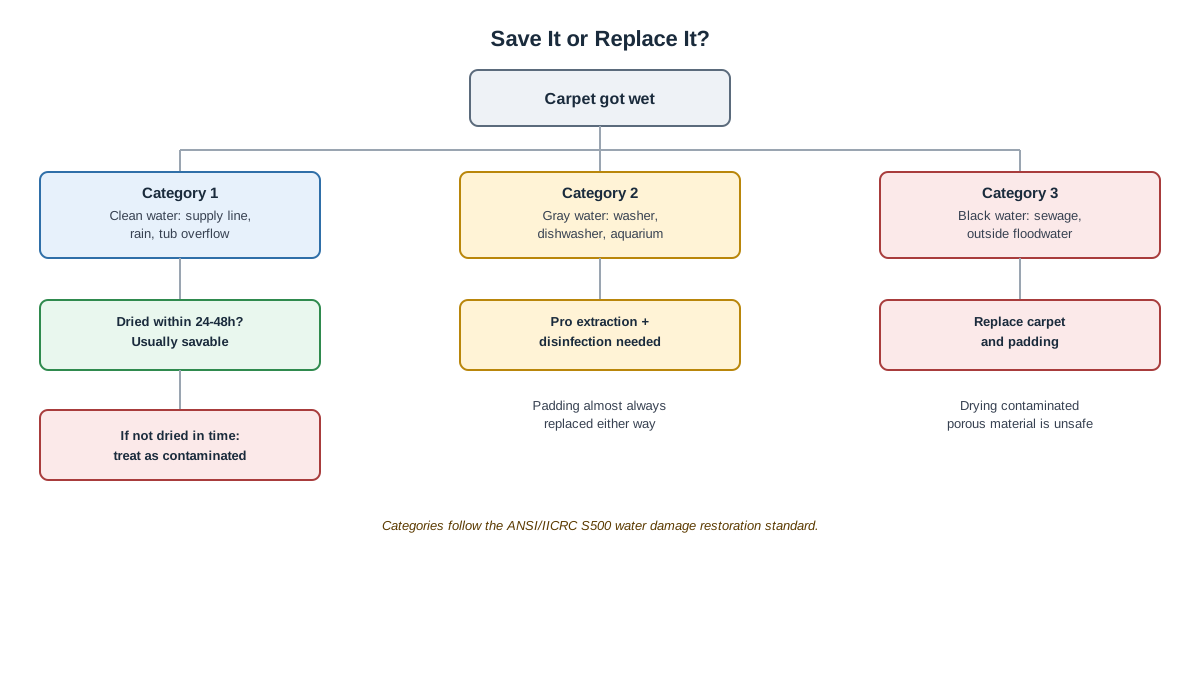
Restoration crews don't grade a wet carpet on how bad it looks. They grade the water. The industry standard, the ANSI/IICRC S500, sorts every water intrusion into three categories, and the category, more than the carpet's price tag, decides whether it gets dried or thrown out.
Category 1 is clean water: a supply line, a rain leak before it touches soil, an overflowing tub. Category 2, sometimes called gray water, carries some contamination, think washing machine discharge, dishwasher overflow, or an aquarium. Category 3 is black water: sewage backups, floodwater from outside the home, or any water that has been sitting long enough to grow bacteria. The S500 also grades the class of the loss, class 1 through 4, based on how much material got wet and how fast it can reasonably dry, separate from the category.
Here's the part most homeowners miss: category can escalate on its own. Clean water left sitting on carpet and padding for more than a day or two gets treated as contaminated, because the wet cellulose in the pad and backing starts breeding bacteria whether or not anything dirty ever touched it. That's why wet carpet water damage is a race against a clock more than a cleanup job.
What Causes Wet Carpet, Ranked by How Often It Happens
Not every wet carpet has the same backstory. In roughly the order restoration crews actually see it:
Appliance and plumbing leaks. A supply line behind the washing machine, a slow drain under the kitchen sink, or a water heater that finally rusts through. These start small and often go unnoticed until the water damage edge of carpet, where it meets the baseboard, feels spongy days after the leak began.
Burst or frozen pipes. Sudden and high-volume, usually clean water at first, unless it's been running for hours, at which point standing water starts to sour.
Roof and window leaks. Water travels along framing before it shows up on the carpet, so the wet spot on the floor is rarely directly under the source.
Groundwater and rain intrusion. Water coming up through carpet after rain, especially in basements and slab-on-grade homes, usually points to a grading problem outside or a foundation crack, and it typically carries some contamination picked up from soil.
Sewage backups and toilet overflows. Least common, most serious. This is automatically Category 3 water.
Spills and accidents. A knocked-over glass, a leaking planter, a pet accident. Almost always clean water, and almost always fixable with prompt drying.
If your carpet is wet for no reason you can find, the leak is usually below or behind it, not on top of it. Pull back a corner near the dampest spot and check the pad before you assume the worst about the carpet itself.
Six of the most common reasons carpet turns up wet, in the order restoration crews typically encounter them.
Can the Carpet Be Saved? How to Tell
Whether carpet water damage ends in a rented fan or a dumpster comes down to three questions, and you can answer all three yourself before anyone else gets involved.
Save or replace: the decision comes down to water category and how long the carpet stayed wet.
How contaminated is the water? Clean water from a supply line or a spill gives you the most room to dry and save the carpet. Anything that touched soil, a drain, or sewage moves the odds toward replacement fast.
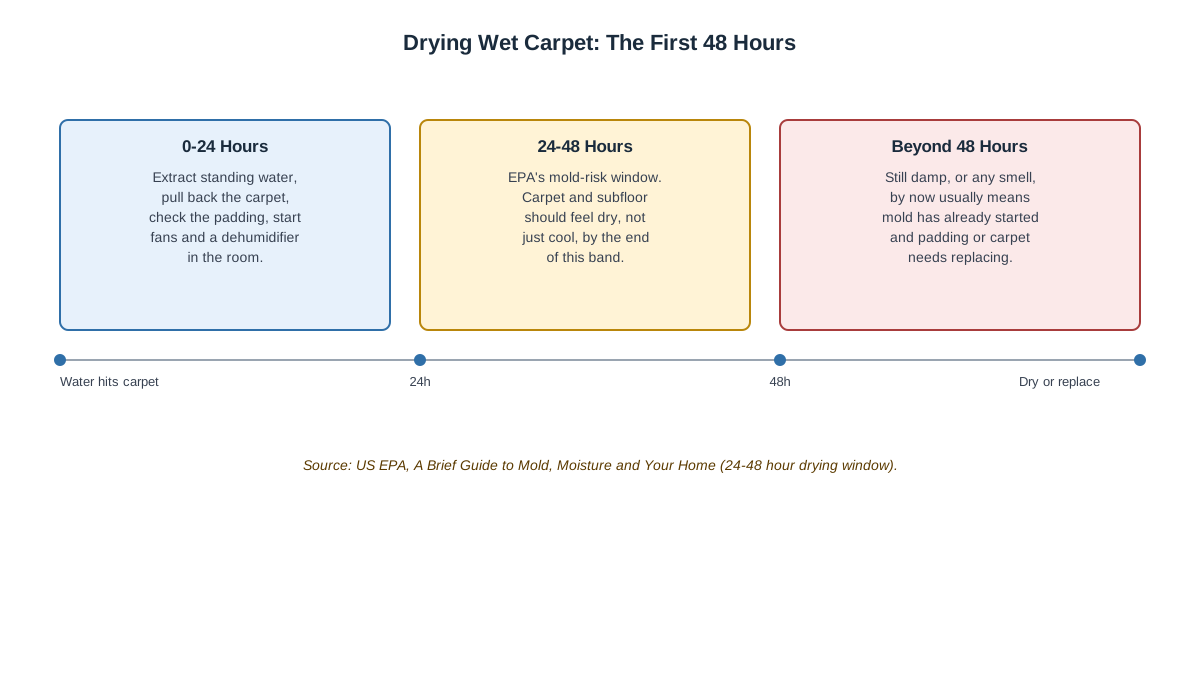
How long has it been wet? The US Environmental Protection Agency's guidance is blunt: materials should be dried out within 24 to 48 hours, or mold growth becomes likely. Carpet and padding that have been wet for three days or more, a common search is "carpet wet for 3 days", have usually already crossed that line.
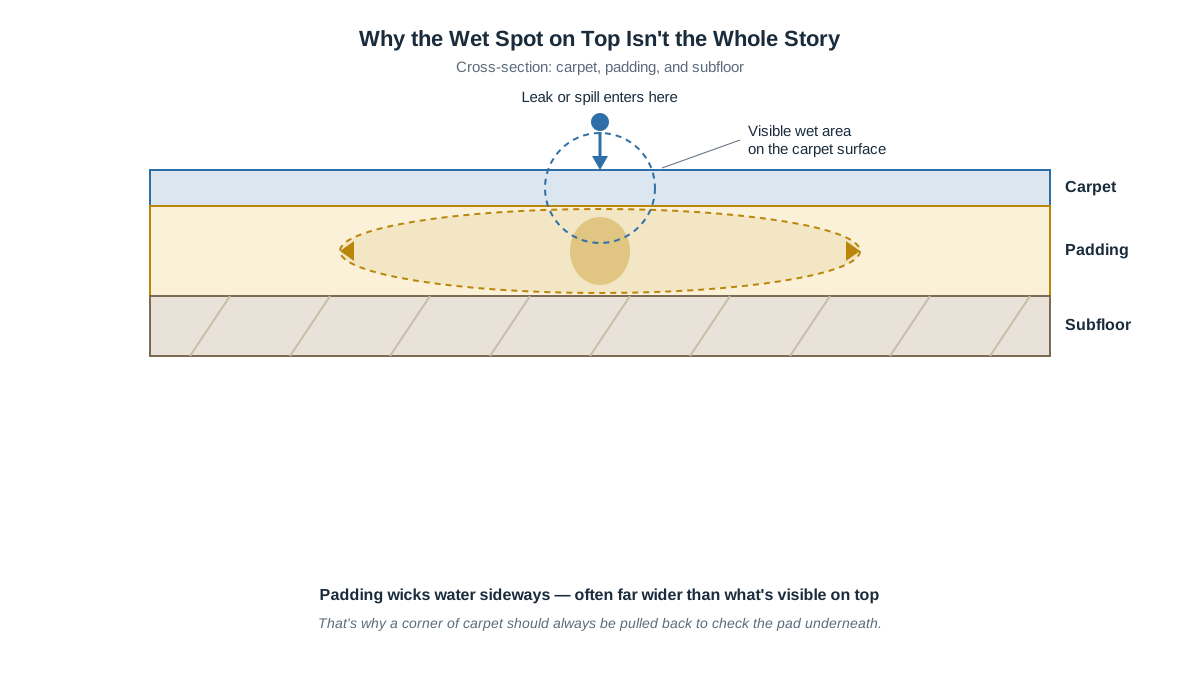
Is the padding still intact? Carpet padding water damage is where most save-it attempts fail. Padding is a spongy, low-density material that wicks water sideways well beyond the visibly wet area, and it almost never dries evenly in place. Pull a corner back. If the pad feels mushy, has started to break apart, or smells sour, plan on replacing the pad even if the carpet on top survives.
Water category (IICRC S500)
What it typically is
Carpet and padding outlook
Category 1, clean water
Supply line break, rain before ground contact, tub overflow
Carpet: usually savable if dried within 24-48 hours. Padding: often savable if extraction is fast.
Carpet: sometimes savable with professional extraction and disinfection. Padding: usually replaced.
Category 3, black water
Sewage backup, floodwater from outside, water that has sat for days
Carpet and padding: replace. Drying contaminated porous material is not considered safe.
How to Dry Wet Carpet Yourself
If the water is Category 1 and you're inside that first 24-to-48-hour window, drying wet carpet yourself is realistic. Here's the order restoration techs actually use, scaled down for a homeowner with a wet vac and a couple of fans:
Stop the source first. Shut off the supply valve, the main, or the appliance before you touch the carpet.
Extract standing water. A wet/dry shop vacuum pulls far more water out of carpet fiber than towels ever will. Go over the same area two or three times.
Pull back the carpet at the wettest edge. Check the padding underneath. If it's soaked, plan on replacing it; it dries too slowly in place to be worth the wait.
Run fans low, blowing across the surface, not straight down. Aim airflow along the carpet so moisture moves into the room air instead of staying trapped against the backing.
Add a dehumidifier in the same room. Fans move air; a dehumidifier is what actually pulls moisture out of that air, otherwise you're just redistributing humidity around the room.
Keep the space closed off and running for 24 to 48 hours. Check the carpet and subfloor with your hand periodically; cool and damp still means keep going.
Watch for smell. A wet carpet smell that shows up after a day or two, musty, sour, mildewy, means something is drying too slowly or wasn't dried at all, and it's a signal to call a professional rather than run the fans another night.
Carpet cleaning after flood water, even Category 1, is not the same as a routine shampoo. A standard carpet cleaning machine adds water; it doesn't remove it, and it can push contamination deeper into the pad. Extraction equipment that pulls water out under vacuum pressure is a different tool built for a different job.
The pad spreads water sideways well past what's visible on the surface — that's why restoration techs always pull back a corner to check it.
When to Call a Professional Instead
The EPA's 24-to-48-hour drying window is the deadline that decides whether a wet carpet dries clean or grows mold.
Some situations aren't do-it-yourself situations, no matter how good your shop vac is:
The water is Category 2 or 3, gray or black water, sewage, or floodwater from outside.
The carpet has been wet for more than 48 hours, or you honestly don't know how long it's been wet.
Water reached electrical outlets, the HVAC return, or a finished basement with drywall.
You can smell mildew or see discoloration on the pad or subfloor.
More than one room, or a ceiling above it, is involved, which usually means the water traveled further than it looks.
A professional crew brings truck-mounted extraction, high-velocity air movers, and commercial dehumidifiers sized to the room, plus moisture meters that read the subfloor, not just the surface. That equipment is the real difference between carpet that dries evenly and carpet that looks dry on top while the pad underneath stays wet for a week. If water is actively still coming in and you're not sure it's safe to keep working in the room, call 888-407-9931 and describe what you're seeing; a restoration company that serves your area can walk you through next steps on the phone.
What Wet Carpet Water Damage Costs to Fix
These are national ranges pulled from cost-survey publishers, not a quote for your specific job. Square footage, how many rooms are affected, and how fast a crew reaches you all move the number, so treat this table as a starting point for reading a written estimate, not a substitute for one.
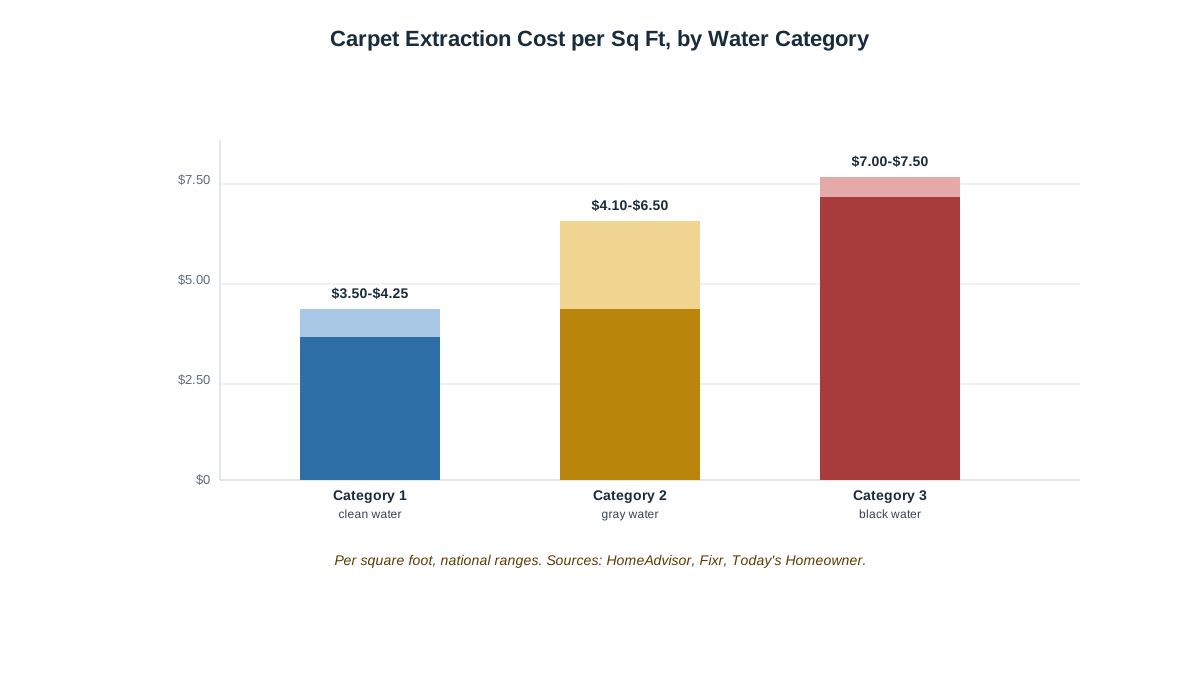
Extraction cost roughly doubles from clean water to black water, mostly due to disinfection and disposal.
Job
Typical range
What moves the price
Source
Extraction and drying, clean water, per sq ft
$3.50-$4.25
Square footage, equipment time
HomeAdvisor, Fixr
Extraction and drying, gray water, per sq ft
$4.10-$6.50
Contamination level, disposal needs
Fixr, Today's Homeowner
Extraction and drying, black water, per sq ft
$7.00-$7.50
Full tear-out, PPE, disinfection
Fixr, Today's Homeowner
Minor job, one room, Class 1-2
$150-$1,000
How much material got wet
HomeAdvisor, Fixr
Larger job, Class 3, multiple materials
$1,000-$3,000
How long water sat, whether drywall or subfloor is involved
HomeAdvisor, Fixr
Disaster-level job, Class 4 (major structural drying)
$20,000-$100,000
Whole-floor or whole-house flooding, extensive structural drying
HomeAdvisor, Fixr
Typical overall restoration job, national average
$1,305-$6,369 (avg $3,455-$3,868)
Category, class, square footage, region
HomeAdvisor, Bob Vila
Mold remediation if drying was too slow
$1,125-$9,000 (avg $2,254-$3,500)
Square footage, whether mold reached drywall
Fixr, Bob Vila
Carpet padding water damage adds its own line item: pad is cheap next to the carpet itself, and most companies replace it rather than dry it in place once it's been wet more than a day. That labor is usually folded into the per-square-foot extraction price above rather than billed separately. For a full breakdown by restoration category and class across every room type, see our guide to water damage restoration cost.
Does Insurance Cover Wet Carpet Water Damage?
Usually, with conditions. A standard HO-3 homeowners policy typically covers water damage that is sudden and accidental, a burst pipe, a failed water heater, an overflowing appliance, including the carpet and padding ruined in the process. It typically excludes gradual leaks a homeowner should have caught, and it excludes flooding that comes from outside the home; that's a separate National Flood Insurance Program policy, not your homeowners coverage.
Water damage and freezing losses aren't rare. They accounted for roughly 27.6% of homeowners insurance losses in 2022, behind only wind and hail, according to the Insurance Information Institute, citing ISO/Verisk data. On the flood side specifically, FEMA notes that one inch of standing water can cause roughly $25,000 in damage, and that over 40% of flood claims come from outside the officially mapped high-risk zones, part of why "it won't happen here" is a shaky assumption for carpet near a slab or basement.
If you're filing a claim, document before you touch anything: photos of the standing water, the wet carpet, and the source if you can see it, then a written list of what got wet. Keep receipts from the wet vac rental, the fans, and any contractor visit. For the full breakdown of what a typical policy covers and excludes, see does homeowners insurance cover water damage.
Mold Risk and the Smell Test
Wet carpet smell is usually your earliest, most reliable warning sign, before you can see anything at all. A musty or sour smell that develops a day or two after the carpet got wet means moisture is still trapped somewhere, most often the padding or the subfloor underneath, and mold has likely already started.
The EPA's guidance sets the bar homeowners actually need to know: dry everything within 24 to 48 hours, and keep indoor humidity below 60%, ideally between 30 and 50%. The EPA also draws a size line for do-it-yourself mold cleanup: if visible mold covers less than about 10 square feet, roughly a 3-foot by 3-foot patch, a homeowner can typically handle it with basic precautions. Anything larger, or mold tied to an HVAC system, is a job for a remediation professional working to the ANSI/IICRC S520 mold remediation standard.
Mold from water damage doesn't wait for you to decide the carpet is a lost cause. It's one more reason the 24-to-48-hour window matters more than how the carpet looks on day one. Our guide on mold after water damage covers how fast it actually spreads from room to room.
How to Choose a Water Damage Company, If You Need One
Most homeowners only hire a restoration company once or twice in their lives, which makes red flags easy to miss. A few things worth checking before anyone starts tearing out carpet:
IICRC certification. Look for a Water Damage Restoration Technician or Applied Structural Drying credential, the training tied to the S500 standard this guide has been referencing throughout.
Proof of insurance, specifically general liability, not just a business license. Ask to see it, not just hear about it.
A written estimate that breaks out extraction, drying equipment days, disposal of padding or carpet, and any mold treatment as separate line items rather than one lump number.
Moisture readings, not guesses. A legitimate crew documents subfloor moisture with a meter on day one and again before calling the job dry, and can show you those readings on request.
Red flags: a company that wants full payment before starting, one that can't name its certifying body, or one that pressures you to sign an insurance assignment of benefits on the spot without reading it. If you're trying to reach a restoration company that serves your area to get a written estimate started, 888-407-9931 is a reasonable place to begin that conversation. For a longer checklist, see our guide on how to choose a water damage company.
Preventing Wet Carpet Water Damage Next Time
Where you live changes which risk is worth watching for. None of these are guarantees, they're patterns restoration companies see repeated by region:
Region type
What tends to cause wet carpet there
Freeze belt (Upper Midwest, Northeast, Rockies)
Frozen supply lines that split during a cold snap and flood a room the moment they thaw; unheated crawl spaces and slabs are the usual starting point.
Hurricane and humid coastal areas
Wind-driven rain intrusion, storm surge, and high ambient humidity that slows drying even after extraction; carpet that would dry in a day in a dry climate can take two or three there.
Arid and inland regions
Appliance and plumbing failures dominate over weather; low ambient humidity actually works in your favor once fans are running.
FEMA's flood data backs up why "my area doesn't flood" isn't much of a plan: 99% of US counties have had a flood event since 1998, and, as noted above, over 40% of claims come from outside the mapped high-risk zones. A few habits cut the odds of ever needing this guide again: replace supply lines, especially washing machine hoses, on a schedule instead of waiting for them to fail, keep gutters and grading moving water away from the foundation, and know where your main shutoff is before you need it in the dark. For the broader category and class system this guide has referenced throughout, see water damage categories and classes explained.
Frequently asked questions
How do I dry wet carpet quickly?+
Extract as much standing water as you can with a wet/dry shop vacuum, going over the same area two or three times, then pull the carpet back at the wettest edge to check the padding. Run fans blowing across the surface and add a dehumidifier in the same room, keeping both running for 24 to 48 hours. Speed matters more than any single tool you use.
Can carpet be saved after water damage?+
Often, yes, if the water was clean, Category 1, and you start drying within 24 to 48 hours. Carpet that sat in gray or black water, or stayed wet for several days, usually can't be safely dried and disinfected, and replacement becomes the more practical call. The padding underneath fails faster than the carpet on top, so check it separately before deciding.
Will wet carpet dry on its own?+
Not reliably, and waiting is the most common mistake homeowners make. Carpet fiber holds moisture against the backing and padding longer than it looks from the surface, and without airflow or a dehumidifier, that trapped moisture can take a week or more to leave, well past the 24-to-48-hour window where mold becomes likely.
How do I remove water from carpet?+
A wet/dry shop vacuum is the most effective tool most homeowners already have on hand; run it slowly over the wet area for two or three passes rather than one fast one. Towels and a mop help with surface puddles but do very little for water that has already soaked into the fibers and padding below.
How do I dry wet carpet and padding together?+
You generally don't dry them as one unit. Pull the carpet back from the padding so air can reach both surfaces directly, since a sealed layer of carpet sitting on wet padding traps moisture instead of releasing it. If the padding is soaked and more than a day old, most restoration techs replace it rather than dry it in place.
Is water damage to carpet covered by homeowners insurance?+
Usually, if the cause was sudden and accidental: a burst pipe, a failed appliance, or an overflowing tub. A standard HO-3 policy typically excludes gradual leaks a homeowner should have caught and flooding that comes from outside the home, which falls under a separate flood insurance policy through the NFIP rather than your homeowners coverage.
How long does wet carpet take to dry?+
With a wet vac, fans, and a dehumidifier running continuously, clean-water carpet often reaches dry-to-the-touch within 24 to 48 hours, matching the EPA's guidance for preventing mold. Padding and subfloor can take longer to read dry on a moisture meter even after the surface feels fine, which is why professional crews check both layers, not just the top one.
Why does my carpet smell after it got wet?+
A musty or sour wet carpet smell usually means moisture is still trapped somewhere you can't see, most often the padding or the subfloor underneath. It's one of the more reliable early signs that mold growth has started, even before any staining is visible, and it's a cue to check under the carpet rather than just running another fan.
What should I do with wet carpet padding?+
Check it before deciding anything about the carpet itself. If the pad feels mushy, is coming apart, or smells sour, plan on replacing it. Padding is far cheaper than carpet, dries unevenly once soaked, and most restoration companies treat pad replacement as routine any time it's been wet more than a day.
How much does it cost to fix wet carpet water damage?+
Extraction and drying for clean water typically runs about $3.50 to $4.25 per square foot, rising toward $7 or more per square foot if the water was contaminated. A full restoration job, on average nationally, runs from roughly $1,383 to $6,369, though small spill cleanups cost far less and jobs that reach mold remediation cost more.