Commercial water damage restoration means stopping the source, extracting standing water, and structurally drying a business property to the ANSI/IICRC S500 standard while documenting the loss for the claim. Pricing runs by square footage and water category, not a flat fee; business interruption coverage is usually a separate endorsement; and a restoration company should arrive within hours with a clear drying goal, not a guess.
A sprinkler head fractures over a stockroom on a Friday night, or a roof drain clogs during a Tuesday afternoon storm, and by the time anyone finds it, water has already reached the ceiling grid in the office next door. That's the moment this guide is for: a business owner, property manager, or facilities lead standing in a wet space, trying to figure out what happens next, what it's going to cost, and whether the insurance policy on file actually covers any of it. Some of what follows applies just as much to a storm-driven commercial flood cleanup as it does to a burst pipe, since the drying science and the documentation rules don't change with the source of the water.
This guide walks through commercial water damage restoration the way it actually runs on a business property: the first-hour decisions, how a restoration company classifies and prices the loss, what a written estimate should include, what standard commercial insurance does and doesn't cover, and how to file a claim without losing the documentation that makes or breaks it. Every figure here comes from national cost surveys, IICRC standards, EPA guidance, and FEMA and Insurance Information Institute data; where those sources don't have a commercial-specific number, that gap is called out directly instead of guessed at.
What Commercial Water Damage Restoration Actually Covers
Walk into a flooded office suite at 6 a.m. and the technical problem looks the same as a flooded kitchen: water sitting somewhere it shouldn't be, materials already wicking moisture upward, and a clock that started running the moment the water hit the floor. Commercial water damage restoration is the set of procedures a licensed contractor uses to stop that clock: extracting water, drying the structure, and documenting the loss so a business can reopen and get paid on the claim. The technical standard is the same one used on a house, the ANSI/IICRC S500, but almost everything else about the job changes at commercial scale, including bigger footprints, life-safety and code requirements a single-family home doesn't carry, and a tenant or owner losing revenue for every day the space stays closed.
The term covers a wide range of property types, including offices (office water damage there usually means a soaked ceiling grid and carpet tile rather than a flooded basement), retail floors, restaurant kitchens, medical suites, warehouses, and the common areas of multi-family buildings. What ties them together is scale and stakes. A restoration crew working a large warehouse floor runs the same drying science as a residential crew, just with enough air movers and dehumidifiers to fill a loading dock, and enough documentation to satisfy a commercial property insurer that wants proof before it releases a large payment. A job this size is usually what the industry calls large loss restoration: a loss big enough to involve a dedicated project manager, daily reporting, and often a public adjuster on the ownership side.
What Causes Water Damage in a Commercial Building
Ranked by how often restoration crews get called out for them, the most common sources of commercial water damage are plumbing and appliance failures, roof and drain failures, fire sprinkler problems, HVAC condensate issues, sewer backups, and exterior flooding. There's no commercial-only version of the Insurance Information Institute's homeowners numbers (water damage and freezing accounted for 27.6% of homeowners insurance losses in 2022, second only to wind and hail at 40.7%), but the underlying physics carries over: more plumbing runs, more roof penetrations, and more mechanical equipment per square foot generally add up to more chances for something to fail.
Plumbing and appliance failures
Supply lines, water heaters, and aging pipe fail in commercial buildings the same way they do in houses, just with more fixtures per floor. A single burst supply line above a suspended ceiling can run for hours before anyone notices, especially overnight or over a weekend when a building sits empty.
Roof and drain failures
Flat commercial roofs pond water by design, so a clogged scupper, a split membrane seam, or an internal roof drain that backs up sends water straight into the ceiling grid below. This is one of the most under-reported causes, since the damage often starts as a small stain and gets ignored until a ceiling tile fails.
Sprinkler systems: the cause unique to commercial buildings
Fire sprinkler piping in an unheated warehouse or a mechanical penthouse can freeze and split in cold weather, and a single discharged head can put hundreds of gallons on a floor in minutes. Older wet-pipe systems in buildings that don't hold minimum interior temperatures are the pattern commercial restoration company crews see repeat every winter.
Rounding out the list: HVAC condensate lines that clog and overflow onto a ceiling grid, sewer and drain backups (more common in older buildings with combined sewer lines or restaurants running heavy grease loads, covered in our sewage backup cleanup guide), and exterior flooding from storm surge or overwhelmed municipal drainage, which behaves differently by region and gets its own section further down.
The First Hour: Shutoffs, Life Safety and Getting the Right Call Made
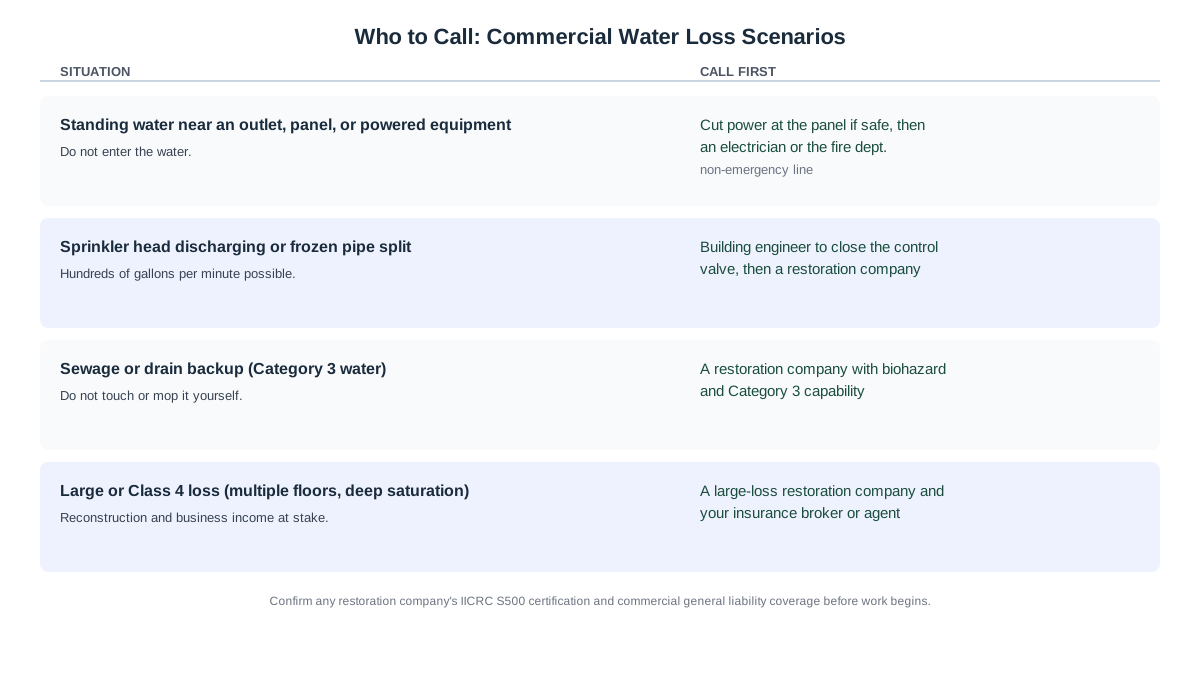
The first hour decides how much of the rest of this guide you need. Life safety comes first: if there's standing water anywhere near an electrical panel, an outlet, or powered equipment, don't wade in. Cut power to the affected area at the panel if you can reach it safely, or call an electrician or the fire department's non-emergency line if you can't. Never enter standing water in a commercial space until someone has confirmed the power to that area is off. That's the one rule in this guide worth underlining, and it's the easiest one for well-meaning staff to skip while they're trying to save equipment instead of themselves.
Once the area is safe, find the source and shut it off if you can: a main water shutoff, a valve on the fixture, or the building's FDC (fire department connection) if a sprinkler head is discharging, since some systems need the building engineer or fire department to close the control valve. If water is still coming in and you can't isolate it, call 888-407-9931 and describe what you're seeing: the type of water, how fast it's moving, and which areas it's reached, so the restoration company dispatching a crew can bring the right equipment on the first trip.
Who to call first, by scenario, in a commercial water loss.
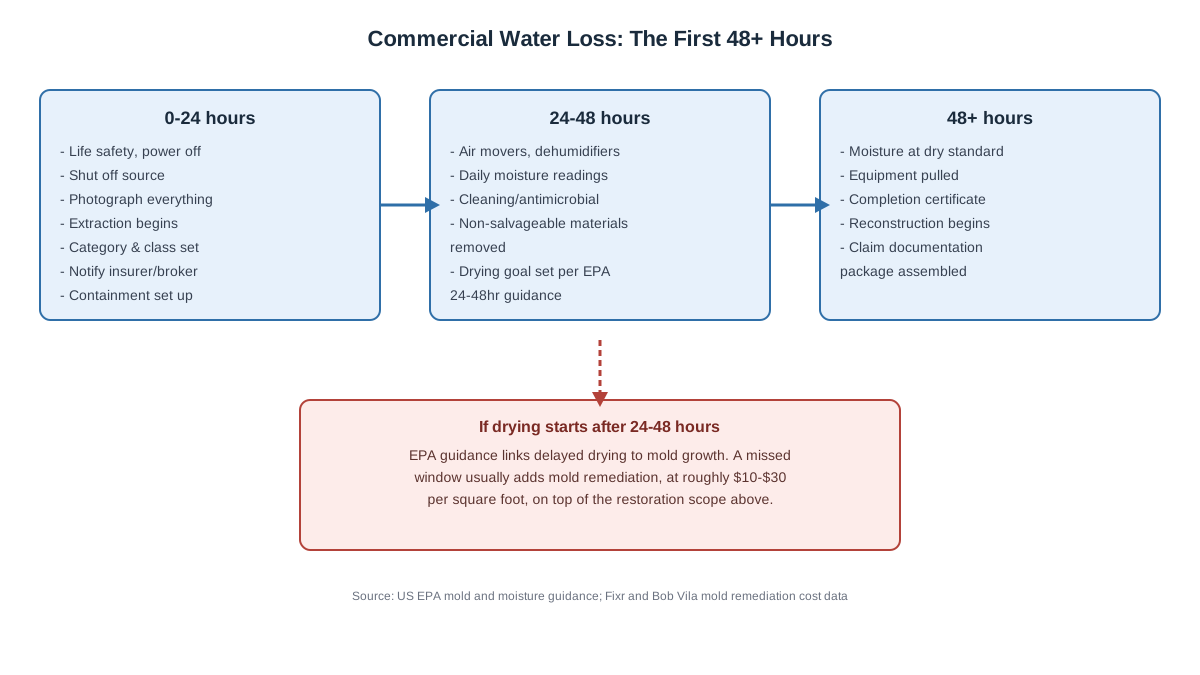
While you wait for a crew, do what's safe and useful: move electronics, inventory, and paper records off the floor, photograph everything before anything gets moved, and note the time water was first noticed. That timestamp matters more than people expect. The EPA's guidance on mold and moisture calls for drying water-damaged materials within 24 to 48 hours, and both your restoration company and your insurer will want to know how close the building came to that window.
How a Restoration Company Classifies the Loss Before Touching Anything
Before a crew runs a single air mover, a certified technician classifies the loss two ways: by category (how contaminated the water is) and by class (how much of the structure absorbed water and how hard it will be to dry). Both come straight out of the ANSI/IICRC S500, the same standard behind our full categories and classes explainer, and both numbers end up on the estimate and on the insurance paperwork.
Category 1 is clean water from a supply line or a clean rain source. Category 2, often called gray water, carries some contamination, think dishwasher or washing machine discharge, or clean water that's sat long enough to start growing bacteria. Category 3, or black water, means sewage, floodwater from outside the building, or standing water past about 48 hours. Category 3 work requires different PPE, different disposal rules, and usually a different price tier than a clean-water call.
Term
What it means
What changes for you
Category 1 (clean)
Supply line, appliance line, or rainwater with no contamination
Fastest turnaround, lowest per-square-foot rate
Category 2 (gray)
Some contamination; water that's begun to degrade
Antimicrobial treatment usually added
Category 3 (black)
Sewage, floodwater, or standing water past about 48 hours
PPE, containment and disposal rules apply; highest per-square-foot rate
Class 1
Minimal absorption, small affected area
Least equipment, shortest dry time
Class 2
Water wicked into walls, carpet, or cushion below floor level
More extraction and drying equipment
Class 3
Water came from overhead; ceilings, walls, insulation and floor all affected
Full-room or full-floor drying setup
Class 4
Deep saturation into materials like hardwood, plaster or concrete
Specialty drying equipment and an extended timeline
Source: ANSI/IICRC S500, Fifth Edition (2021).
The Restoration Process for a Business, Step by Step
Here's the sequence a licensed crew follows on a commercial job, in order. For the fuller residential-scale walkthrough of each step, see our guide to how water damage restoration actually works.
Assessment and classification: a technician measures moisture with meters and thermal imaging and assigns category and class.
Water extraction: truck-mount or portable extraction pulls standing and absorbed water; a large commercial floor often needs several extraction units running at once.
Containment: in an occupied building, crews often wall off the work zone with plastic sheeting and negative-air machines so drying doesn't spread dust, odor or moisture into spaces still in use.
Structural drying: air movers and dehumidifiers run continuously, with daily moisture readings logged against a drying goal.
Cleaning and antimicrobial treatment: for Category 2 and 3 losses, surfaces get treated and, if materials can't be dried in place, removed.
Monitoring: a technician returns daily, sometimes twice a day on a large loss, to confirm moisture content is dropping on schedule.
Reconstruction: drywall, flooring, ceiling tile and finishes go back once moisture readings hit the dry standard.
A commercial water loss response timeline, from shutoff to reconstruction.
Two things make a commercial job different from a house: staging and scheduling. A crew working a retail floor during business hours will phase the work, drying one section while the rest stays open, and the noisiest equipment often gets scheduled overnight or after close. On a large loss, expect a project manager assigned specifically to your job, daily photo and moisture logs, and a completion certificate at the end that both your insurer and your landlord, if you lease, will want to see.
What Commercial Water Damage Restoration Costs
There's no flat price for a commercial job because the total depends entirely on square footage, not on the building type. What's consistent across the national cost surveys behind this guide is the per-square-foot rate by water category, so that's the number worth knowing before a written estimate arrives. These figures come from residential-focused surveys (HomeAdvisor, HomeGuide, Fixr, Bob Vila, Today's Homeowner), since no separate commercial index exists in our data, but restoration companies apply the same per-square-foot pricing logic to commercial floors. Treat every range here as a researched range from those surveys, not a quote for your building: your actual price varies by region, how easy the affected area is to access, and how much additional damage the crew finds once walls, flooring or ceiling tile actually come up. The only number that's binding is a written estimate from a local contractor who has inspected your property.
Job type
Typical range
What moves the price
Source
Category 1 (clean water) extraction & drying
$3.00-$4.25 / sq ft
Response speed, square footage, number of drying zones
Fixr; Bob Vila; Today's Homeowner
Category 2 (gray water) extraction & drying
$4.00-$9.00 / sq ft
Contamination level, need for antimicrobial treatment
After-hours dispatch, number of air movers and dehumidifiers
Today's Homeowner; Bob Vila; HomeGuide
Mold remediation, if the 24-48 hour drying window is missed
$10-$30 / sq ft
Extent of colonization, HVAC involvement, containment needs
Fixr; Bob Vila; HomeGuide
Disaster-level reference point (residential Class 4 loss)
$20,000-$100,000 per job
Residential reference only; a commercial building scales with total affected square footage, not this figure directly
HomeAdvisor; Fixr; Bob Vila
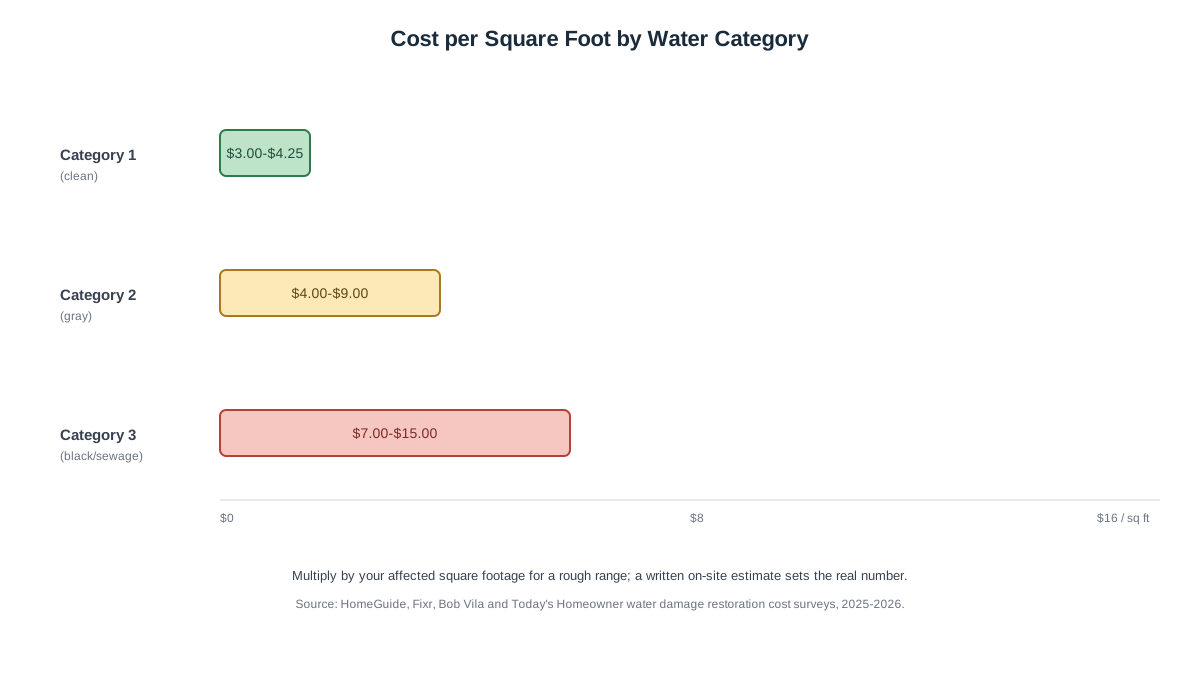
Typical extraction and drying cost per square foot by water category.
Two numbers help put a large commercial loss in context. FEMA estimates that one inch of standing water can cause roughly $25,000 of damage to a structure, and the average NFIP flood claim between 2016 and 2022 topped $66,000. Neither figure is a commercial quote, but both explain why insurers and restoration companies alike treat any flooded commercial floor as a large-loss scenario worth documenting carefully from hour one. For a deeper breakdown of how these per-job ranges are built, see our water damage restoration cost guide.
Business Interruption: What Downtime Actually Costs and What's Insured
Every day a commercial space stays closed for drying is a day of lost revenue, on top of whatever the restoration itself costs. Business interruption insurance, sometimes bundled with extra expense coverage, is built specifically for that gap: it can help replace lost income and cover reasonable extra costs of operating from a temporary location while your primary space dries out. It's typically a separate endorsement on a commercial property policy, not something bundled in automatically, so the first move after any loss is confirming whether that endorsement is actually on your policy.
There's no commercial-specific severity figure in our data, but two residential numbers frame the scale of what's at stake. Insurance Information Institute data puts the average severity of a homeowners water-damage-and-freezing claim at $13,954, and FEMA reports the average NFIP claim from 2016 through 2022 at more than $66,000. A commercial loss involving inventory, fixtures and lost income routinely runs past both of those, which is exactly the gap business interruption coverage is meant to close.
Loss type
Typically covered under standard commercial property
Typically requires separate coverage
Burst pipe or plumbing failure (sudden, accidental)
Usually yes
-
Sprinkler system discharge
Usually yes
-
Roof leak tied to storm damage
Often yes for the wind/hail portion
Gradual leaks from deferred maintenance are commonly excluded
Storm surge or rising floodwater
No, standard policies exclude flood
NFIP or private flood policy
Sewer or drain backup
Often excluded unless endorsed
Backup/sump endorsement
Lost income from a covered peril
Only with a business interruption / extra expense endorsement attached
Business interruption insurance
Treat this as a starting checklist to review with your broker, not a guarantee, since commercial forms vary far more between insurers than residential HO-3 policies do.
Filing a Commercial Water Damage Claim in Your State
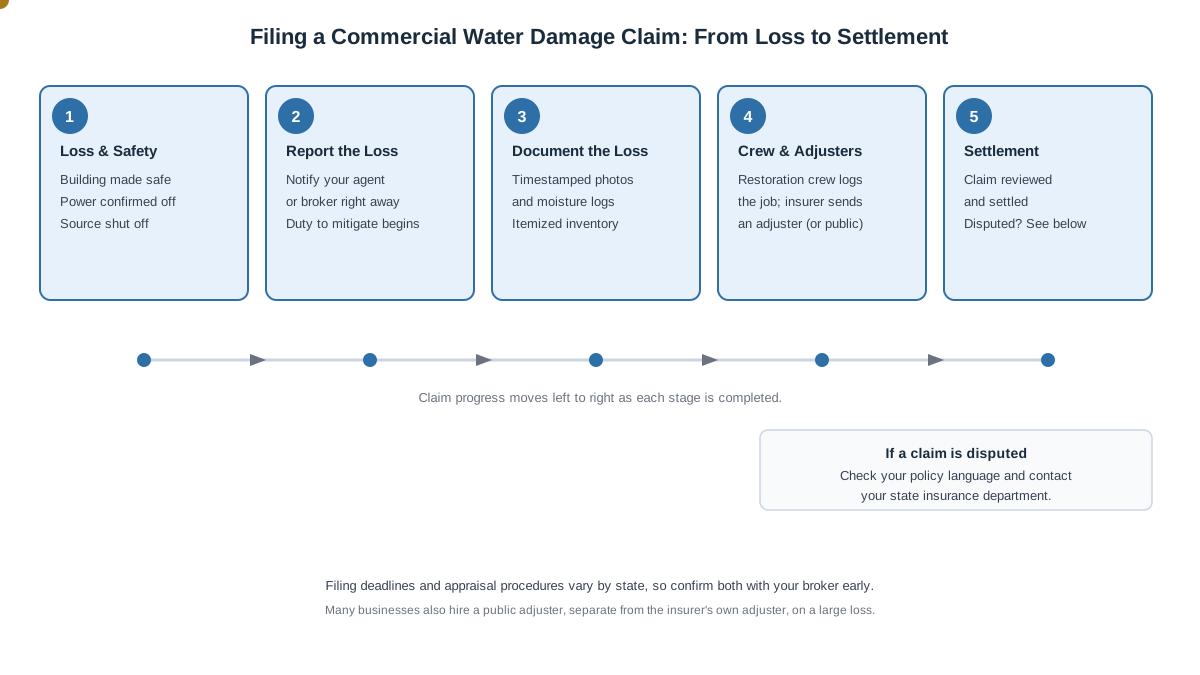
Report the loss to your agent or broker as soon as the building is safe, and keep records from the first minute. Most commercial policies, like residential ones, put a duty on the policyholder to mitigate further damage; that's exactly what an emergency restoration call accomplishes and documents at the same time. Filing deadlines and appraisal procedures vary by state, so check your policy language and your state insurance department if a dispute drags on. Our water damage insurance claims guide covers the broader claims process in more depth.
Document
Why it matters
Timestamped photos and video, before any cleanup
Establishes the extent and timing of the loss
Restoration company's daily drying and moisture logs
Proves mitigation efforts and supports the timeline
Itemized list of damaged inventory and equipment, with replacement cost
Backs the contents and personal property portion of the claim
Invoices and receipts for emergency mitigation work
Insurers typically reimburse reasonable mitigation costs
Correspondence log with your agent or broker (dates, names, summaries)
Creates a paper trail if the claim is disputed
On a large loss, many businesses hire a public adjuster to work the claim on their behalf, separate from the adjuster the insurance company sends. A public adjuster works for a percentage of the settlement and specializes in documenting commercial losses; the carrier's own adjuster works for the insurer. Neither replaces the other, and using one doesn't prevent you from also working directly with your broker.
The path a commercial water damage claim typically follows, from the first call to your broker through settlement.
How to Choose a Commercial Restoration Company for a Large Loss
A commercial restoration company handling a business loss should look different from a crew set up for a single flooded bathroom. Ask directly whether the company is certified to the ANSI/IICRC S500 standard, whether its technicians hold IICRC credentials like Water Restoration Technician (WRT) or Applied Structural Drying (ASD), and whether it carries commercial general liability coverage sized for a business loss rather than a homeowner's policy limit. Verify the license number yourself through your state's contractor licensing board rather than taking it at face value, and ask for a current certificate of liability insurance before any crew starts work, not after. If you're vetting companies for an active loss right now, a line like 888-407-9931 connects you with a restoration company that serves commercial properties in your area; ask the same certification and insurance questions before a crew ever shows up.
Get a written scope of work before anything beyond emergency mitigation begins: line items for extraction, drying equipment count, projected drying days, and cleaning or removal of non-salvageable materials. Ask for daily moisture logs and photo documentation as the job runs, not just a final invoice. Red flags include a verbal-only estimate with no line items, pressure to sign a broad assignment of benefits without explanation, no local commercial references, and no willingness to name specific IICRC certifications on request.
Questions worth asking before you sign anything
Can you show proof of IICRC S500 certification and commercial general liability insurance?
Who is the project manager assigned to this job, and how often will they update us?
What's the drying goal, in numbers, and how will you confirm we've hit it?
Do you provide daily moisture and photo logs we can hand to our insurer?
Have you handled a loss this size before, and can we speak with a recent commercial reference?
What Staff Can Safely Do Before the Crew Arrives
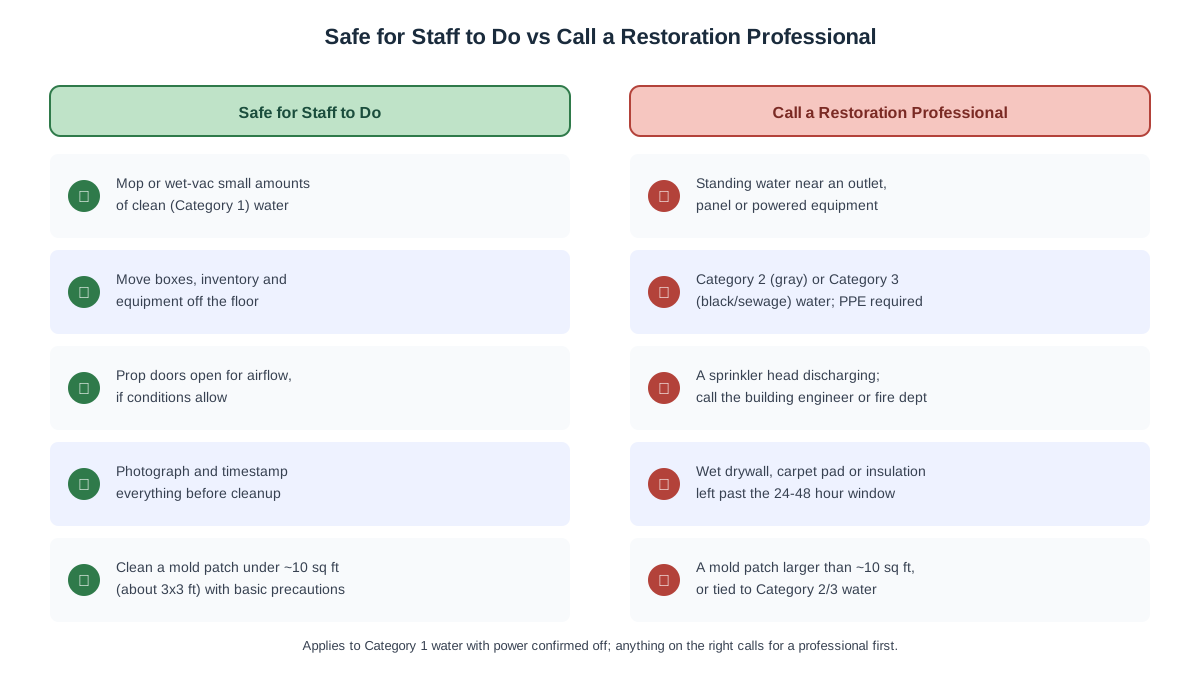
Staff can safely do a fair amount before a restoration crew arrives, as long as the water is Category 1 and the power is confirmed off. Mop or wet-vac small amounts of clean water, move boxes and equipment off the floor, prop doors open for airflow if outside conditions allow it, and start the photo documentation described earlier. None of that requires special training, and all of it helps the eventual claim.
What staff shouldn't do is treat any of this as a substitute for a professional response. Household vacuums aren't rated for standing water and can short out or shock the user. Category 2 or 3 water, meaning anything with contamination or sewage involved, shouldn't be handled without PPE, full stop. And wet drywall, carpet pad, or insulation left in place past the 24 to 48 hour window the EPA cites isn't saving money; it's usually creating a second, more expensive job.
On the mold side specifically, EPA guidance says a small patch, under about 10 square feet, or roughly a 3-by-3-foot area, can sometimes be cleaned by a determined occupant using basic precautions. Anything larger than that, or anything tied to a Category 2 or 3 water event, calls for a professional following the ANSI/IICRC S520 mold remediation standard, and in a commercial building, EPA's own guide for schools and commercial buildings is the reference most remediators work from.
Where the line sits between what staff can safely handle and when to call a restoration professional.
Preventing the Next Loss: Building Systems, Climate and Building Type
Most commercial water losses trace back to a small set of preventable failure points: aging plumbing nobody's inspected recently, roof drains that never get cleared, sprinkler piping in an unheated space, and HVAC condensate lines that clog quietly for months. A basic prevention checklist covers most of it: schedule annual roof drain and scupper inspections, keep unheated mechanical spaces above the temperature your sprinkler contractor recommends, add leak-detection sensors near water heaters and major supply lines, install backwater valves where sewer backup risk is real, and put plumbing and HVAC condensate lines on a documented inspection schedule rather than a reactive one.
Climate and geography change which of those risks matters most. In colder, northern regions, freeze-related sprinkler and pipe failures spike every winter in buildings that don't hold minimum interior temperatures overnight or over long weekends; that's the single most preventable large loss in that climate. Along the hurricane coast and in flood-prone metro areas, exterior flooding and wind-driven rain dominate instead, and standard commercial property coverage typically won't respond to flood at all. FEMA's flood data is a useful nudge here: over 40% of NFIP claims come from properties outside mapped high-risk flood zones, and the program covers 4.7 million policyholders with nearly $1.3 trillion of coverage in force, which is a reasonable case for carrying flood coverage even outside a mapped zone if your building sits in a flood-exposed metro area.
Building type matters too. A single-story warehouse with a flat roof and sprinkler piping in unconditioned space carries different risk than a mid-rise office with fewer roof penetrations but far more interior plumbing runs per floor. Match the prevention checklist to your actual building rather than a generic list, and revisit it every time you renovate, add tenants, or change how a space is conditioned.
Frequently asked questions
What is commercial water damage restoration?+
Commercial water damage restoration is the process of stopping the water source, extracting standing water, and structurally drying a business property, then documenting the loss for insurance and reconstruction, all following the ANSI/IICRC S500 standard. It covers offices, retail, restaurants, warehouses and multi-family common areas, and it differs from residential work mainly in scale: more square footage, more equipment, and coordination around keeping a business running.
How long does commercial water damage restoration take?+
Extraction and equipment setup usually start the same day, and structural drying continues until daily moisture readings hit the dry standard rather than stopping on a fixed date. A Class 1 or Category 1 loss confined to a small area dries fastest; a Category 3 loss, a Class 4 loss, or one that involves reconstruction can extend to several weeks. A restoration company should set a drying goal upfront and remeasure daily instead of quoting a finish date on day one.
How do you clean up after a flood in a commercial building?+
Start with life safety: confirm power is off to any flooded area before anyone enters. Then extract standing water, remove materials that can't be dried, such as soaked insulation or some carpet and pad, and run drying equipment continuously with daily moisture checks until readings hit the dry standard. Floodwater from outside the building is treated as Category 3, so PPE and disposal rules apply throughout.
What typically causes flooding in a commercial building?+
The most common sources are plumbing and appliance failures, roof and drain failures on flat commercial roofs, fire sprinkler discharges or freeze breaks, clogged HVAC condensate lines, sewer backups, and, depending on location, storm surge or heavy rain overwhelming site drainage. Plumbing and roof-related failures tend to be the most frequent calls; sprinkler and storm events tend to cause the most damage per incident.
Does a commercial property policy cover flooding?+
Usually not. Standard commercial property policies typically exclude flood, the same way a residential HO-3 policy does, and cover flooding only through a separate NFIP or private flood policy. What a standard policy typically does cover is sudden, accidental water damage from a burst pipe or sprinkler discharge. Check the policy's definitions and endorsements with your broker, since commercial forms vary more than residential ones.
Does flood insurance cover the contents of a business, or just the building?+
It depends on what's purchased. NFIP and most private flood policies sell building coverage and contents coverage separately, so a business needs both to cover the structure and its inventory, equipment and fixtures. Confirm both limits are in place before a loss happens, since a contents-only or building-only gap is common and expensive to discover after the fact.
Which insurance companies offer commercial flood insurance?+
Flood coverage is available two ways: through the federal NFIP, which had about 4.7 million policyholders and nearly $1.3 trillion of coverage in force as of FEMA's most recent published figures, or through a private flood insurance carrier. Ask a commercial property agent to quote both, since private flood markets sometimes offer higher limits than the NFIP allows.
Who actually pays a flood claim on a commercial building?+
Whoever holds the flood policy pays: the NFIP if the building is insured through the federal program, or the private carrier if flood coverage was bought there instead. A standard commercial property insurer generally won't pay for flood damage unless a specific flood endorsement was added, which is uncommon. Confirming which policy actually applies, before a storm hits, matters more than almost any other step in this guide.
How long does a flood typically last, and when does the water recede enough to start drying?+
There's no single number, since it depends on the storm, the drainage, and the building's elevation. What matters more than duration is documented moisture: EPA guidance calls for drying to start within 24 to 48 hours of water contact to limit mold growth, so restoration crews begin extraction and drying as soon as it's safe to enter, even while some exterior water is still receding.
Is flood insurance required for a commercial building?+
It's required only if the building sits in a federally mapped high-risk flood zone and carries a federally backed mortgage; lenders enforce that requirement, not a general law. Outside a mapped zone it's optional, but FEMA data shows more than 40% of NFIP claims come from properties outside high-risk zones, which is why many commercial owners buy coverage anyway.