Hardwood floor water damage is often recoverable if you act within the first day or two: stop the water source, pull up rugs and pad, and run fans and a dehumidifier while the floor dries evenly. Cupped boards that dry flat usually can be sanded and refinished. Boards that have buckled, crowned permanently, or delaminated usually need to be replaced.
Water gets to hardwood floors two ways: fast, from a burst supply line or an overflowing tub, or slow, from a dishwasher gasket that has been weeping behind the toe-kick for months before anyone notices the finish clouding over near the cabinet. Both end in the same place. The wood swells, the surface tells on it, and you are left deciding whether to dry it out, sand it, or tear it up and start over.
This guide walks through what cupping and buckling actually mean, how fast the clock is really running before mold becomes the bigger problem, what a fix or replacement tends to cost based on national restoration data, and where homeowners insurance does and does not step in.
What Water Damage Actually Looks Like on a Hardwood Floor
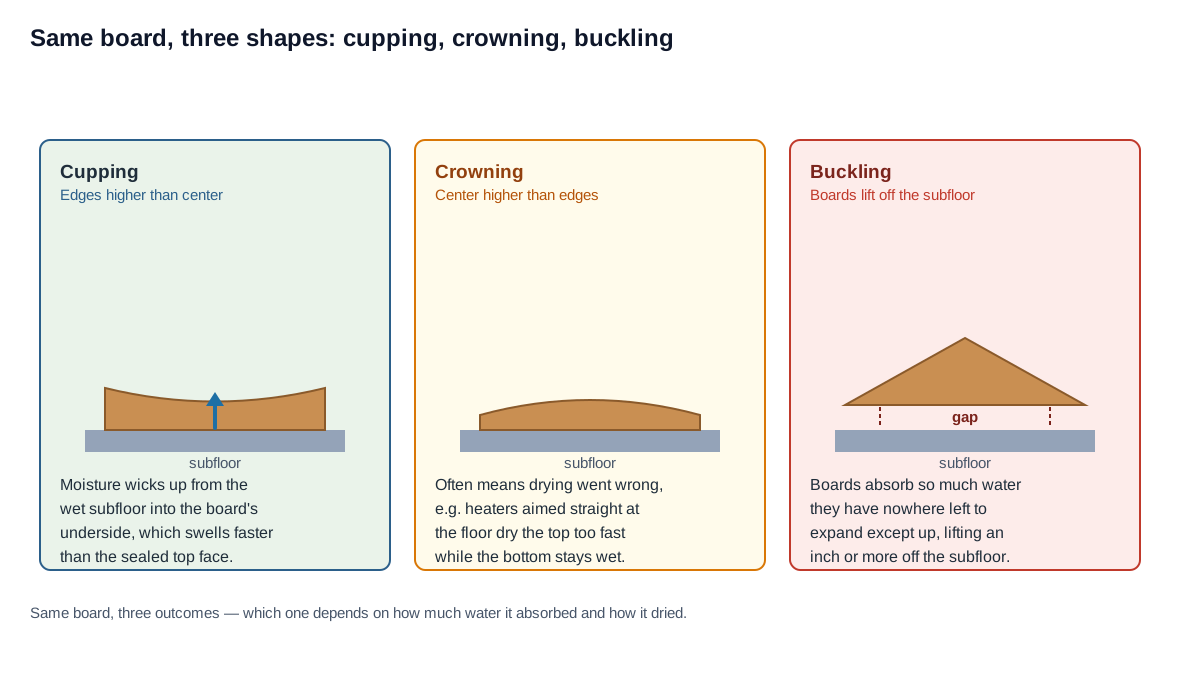
The first sign is almost always cupping: the edges of each board sit higher than the center, so the floor feels like a very shallow washboard under your socks. Cupping happens because the underside of the board, the side facing the wet subfloor, absorbs moisture and swells faster than the top face, which is sealed by finish. It is usually the earliest, most fixable stage.
Left alone, or dried too aggressively with heaters aimed straight at the floor, cupping can flip into crowning, where the center of the board sits higher than the edges. Crowning is often a sign that the drying process itself went wrong, not just the original water event. The worst stage is buckling, where whole sections of flooring lift away from the subfloor, sometimes 1 inch or more, because the boards have absorbed so much water that they have nowhere left to expand except up.
Other signs worth checking for: dark staining along seams, a finish that has gone white or hazy in patches where moisture is trapped underneath the coating, gaps that widen dramatically once the floor finally dries, and a soft or spongy feel when you walk across a section, which usually means the subfloor underneath is wet too, not just the surface boards. Cupped hardwood floors that are caught within the first day or two, before the wood fibers themselves start to break down, have by far the best odds of drying flat again.
Same board, three outcomes — which one it ends up as depends on how much water it absorbed and how it was dried.
What Causes Hardwood Floor Water Damage, Ranked by How Often It Happens
Most of the calls we hear about do not start with a dramatic flood. They start small.
Appliance leaks are the most common cause by a wide margin: a supply line to a dishwasher or refrigerator ice maker that slowly weeps, or a washing machine hose that finally gives out mid-cycle and dumps a full tub's worth of water across a laundry room floor in minutes.
Plumbing failures come next: a supply line under a kitchen or bathroom cabinet that lets go overnight, or a pipe that freezes and splits in an unheated crawl space or exterior wall during a cold snap. Roof and window leaks track water down through framing and can show up as a stained, cupped patch of flooring feet away from where the water actually entered the house. HVAC condensate lines that clog are a quieter cause: a slow, steady drip near a floor register that goes unnoticed until the finish starts to haze over.
Then there is water that comes from below rather than above: a humid or flooding crawl space, a slab that sweats in summer humidity, or ground water pushing up after heavy rain. Water damage under hardwood floor sections is easy to miss because nothing on the surface looks wet until the boards have already started cupping. Least common but most damaging is storm or flood water entering the house directly, which almost always means Category 3, contaminated water under the IICRC's classification system, and a much more involved cleanup.
How to Tell How Bad the Damage Really Is
Before deciding whether to dry, sand, or replace anything, work through a quick diagnosis. This matters because the right answer depends less on how the floor looks today and more on how long it has been wet and what kind of water caused it.
Stop the water source first. Drying a floor while it is still being fed water is wasted effort.
Note how long the area has actually been wet. A cupped section discovered the same day behaves very differently from one that has been damp for a week behind furniture.
Check the water's category. Clean water from a supply line is far less risky to handle than water that touched a sewer backup, a dishwasher's drain cycle, or floodwater; the IICRC's water damage categories and classes explain how professionals sort this.
Press a section of exposed subfloor or baseboard with the back of your hand, or use a moisture meter, a handheld probe that reads the wood's moisture percentage, if you own one. Wood that still feels cool and damp to the touch, days after the event, has not finished releasing water.
Look and smell for what is happening underneath, where you can, through a floor vent, a removed baseboard, or a nearby closet. A musty smell is often the first sign of trouble before mold is visible.
If the water was clean, it dried within a day, and there is no lingering smell, you are likely looking at a floor that will recover with basic drying. If any of those checks raise a flag, treat the situation as more serious than it looks from the top.
Can a Water-Damaged Hardwood Floor Be Saved?
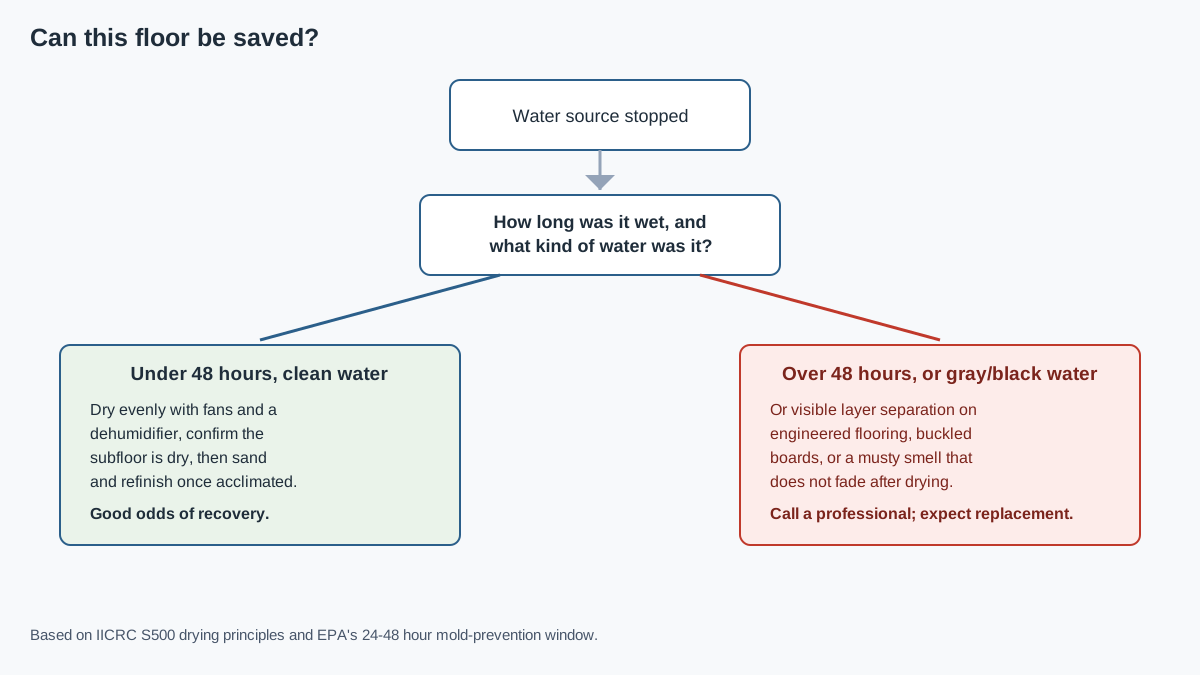
In most cases involving cupped hardwood floors caught within the first day or two, yes. Once the water source is stopped, the standard approach is controlled drying: fans to move air across the surface, a dehumidifier to pull moisture out of the room, and time. Professional restoration crews follow the IICRC's S500 standard (fifth edition, 2021) for structural drying, which is built around the same principle behind EPA's guidance: get materials drying within roughly a day or two of the water event to limit secondary damage like mold. A fan-and-dehumidifier setup can work for small, clean-water spots, but professional structural drying uses moisture meters to confirm the subfloor, not just the surface, has actually returned to a normal moisture range before anyone touches a sander.
Once a cupped floor is fully and evenly dry, which often takes longer than most people expect, and has had time to acclimate, settle back to the room's normal humidity, it can usually be sanded flat and refinished rather than replaced. A buckled hardwood floor is a different story: boards that have physically lifted away from the subfloor have usually broken their bond with the glue or nails holding them down, and pushing them back into place rarely holds. Those sections typically need to come up and be replaced with matched material.
The two things that decide the outcome: how long the floor stayed wet, and what kind of water caused it.
Solid Hardwood Versus Engineered Hardwood After Water Exposure
Construction makes a real difference in outcome. Solid hardwood has enough wood above the tongue and groove to be sanded down more than once over the life of the floor, so a cupped or lightly stained solid floor has real room for recovery. Engineered hardwood is a thin wear layer of real wood glued to a plywood or fiberboard core; that veneer often cannot take more than a very light sanding, if any, before you hit the core material underneath, and if the layers themselves separate, sanding cannot fix that at all.
Factor
Solid hardwood
Engineered hardwood
How it reacts to standing water
Swells and cups as the underside absorbs moisture faster than the sealed top face
Can cup like solid wood, or the layers can separate from the core
Room to recover
Enough solid wood to be sanded flat and refinished, often more than once over its life
A thin veneer with little or no sanding margin once it has already been finished before
When replacement is the likely answer
Boards that have buckled and pulled away from the subfloor, or crowned permanently after drying
Any visible layer separation, soft or spongy spots, or a musty smell that persists after the floor tests dry
What It Costs to Fix or Replace a Water-Damaged Hardwood Floor
There is no single national survey that prices hardwood floor water damage repair cost as its own line item, because the real cost depends on wood species, finish, how many boards must come up, and whether a professional needs to source matched replacement flooring. What the underlying cost data does give us is the price of water damage restoration itself, the work that happens before any refinishing begins, plus mold remediation pricing if the water sat long enough to need it.
Job
Typical range
What moves the price
Source
Water extraction, clean water (Category 1)
$3.50 - $4.25 per sq ft
Square footage, equipment access
HomeAdvisor 2026; Fixr 2025
Water extraction, gray water (Category 2)
$4.10 - $6.50 per sq ft
Contamination level, extra cleaning steps
Fixr 2025
Water extraction, black water (Category 3)
$7.00 - $7.50 per sq ft
Sanitizing and disposal requirements
HomeAdvisor 2026; Fixr 2025
Restoration job, Class 1 (minimal)
$150 - $400
Small area, low humidity, fast response
HomeAdvisor 2026; Fixr 2025
Restoration job, Class 3 (extensive)
$1,000 - $3,000
Multiple rooms, higher humidity, longer drying time
HomeAdvisor 2026; Fixr 2025
Mold remediation, if it has already set in
$10 - $30 per sq ft
Extent of growth, whether it reaches the subfloor
Fixr 2025; Bob Vila 2024
Typical full restoration job, all categories
$1,383 - $6,369 (avg $3,868)
Category of water, class of damage, square footage
HomeAdvisor 2026
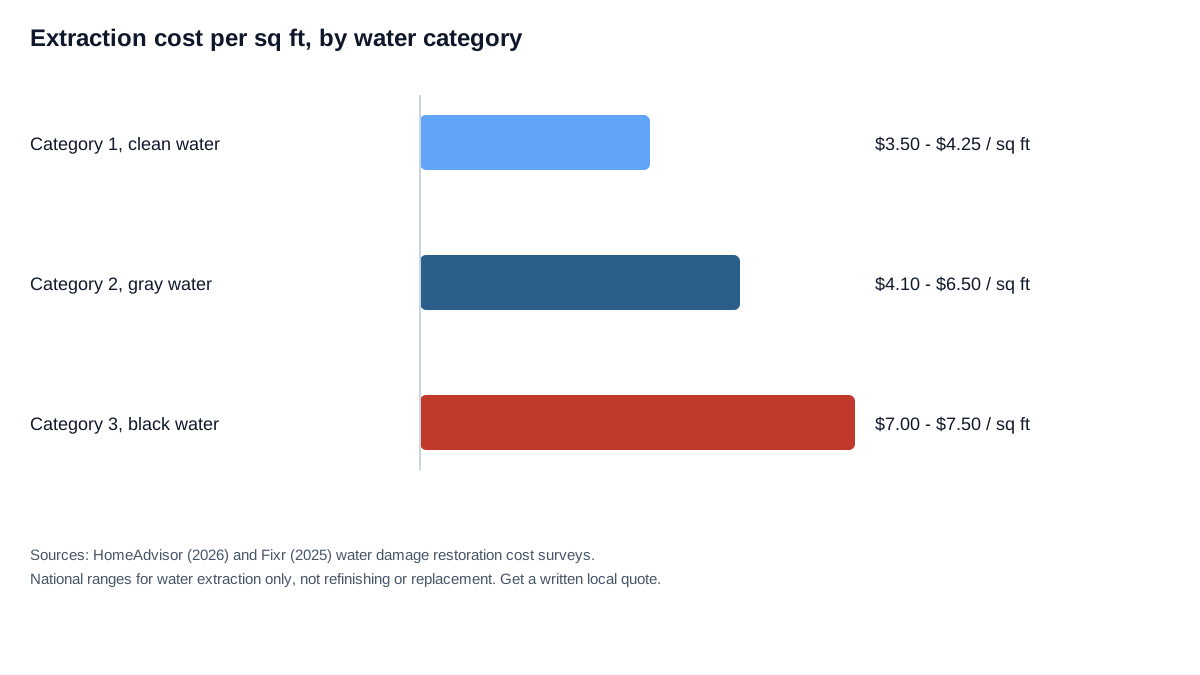
Extraction cost climbs fast once the water is contaminated, before refinishing is even on the table.
Refinishing or replacing the actual flooring is priced separately by the flooring contractor once the structural drying is done and the subfloor is confirmed dry, and it is not something we can responsibly put a number on without local product and labor rates. Get a written estimate that breaks out drying, any board replacement, sanding, and finish coats as separate line items, so you can see exactly what you are paying for. See our full breakdown of water damage restoration cost by job and category for the complete national picture.
This table reflects national survey data from HomeAdvisor and Fixr, current as of their 2025 and 2026 publication dates. These are researched ranges from published surveys, not a quote for your project, and the final price varies by region, access to the work area, and the extent of damage a crew finds once the flooring actually comes up. None of it is specific to your ZIP code; a local written estimate is the only way to know what your particular floor, water category, and square footage will actually cost.
Will Homeowners Insurance Pay to Fix the Floor?
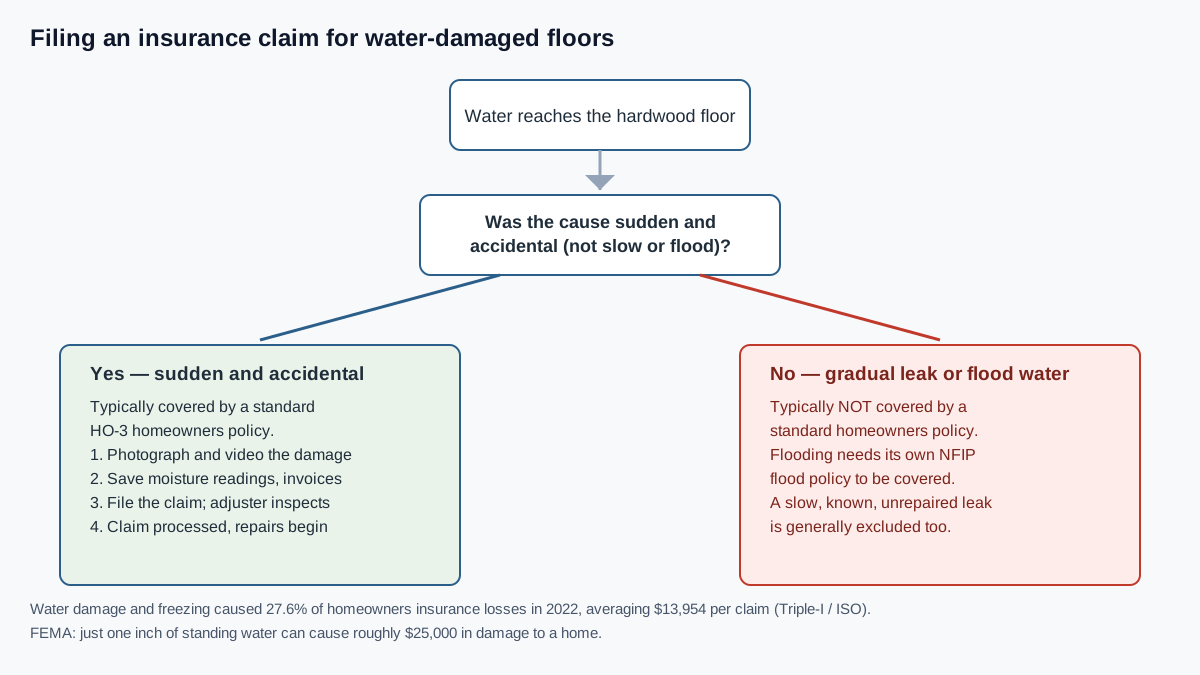
It depends entirely on what caused the water, not on what it damaged. A standard HO-3 homeowners policy, the form most single-family homes carry, generally covers water damage that is sudden and accidental, a burst supply line, a washing machine hose that fails, a pipe that freezes and splits, but it typically excludes damage from flooding, which needs a separate NFIP flood policy, and damage from a leak that was slow, known about, and left unrepaired.
The numbers explain why insurers pay close attention to this category. Water damage and freezing accounted for 27.6% of homeowners insurance losses in 2022, second only to wind and hail, with an average claim severity of $13,954 and a claim frequency of about 1.61 per 100 house-years, according to Insurance Information Institute data sourced from ISO. FEMA puts the exposure in even starker terms for flood-specific events: just one inch of standing water can cause roughly $25,000 in damage to a home, which is part of why flood losses need their own policy rather than relying on a standard homeowners form.
If you are filing a claim over water damaged hardwood floors, document everything before any cleanup starts: photos and video of the standing water and the affected boards, the moisture meter readings if a restoration company takes them, receipts for any emergency mitigation, and a copy of the plumber's or roofer's invoice showing what failed and when. Ask whether your adjuster is a staff adjuster working for the insurer or an independent one, and know that you always have the right to hire your own public adjuster if a claim gets contentious. For the specifics of what is and is not covered, see our guide to what homeowners insurance actually covers for water damage.
Water damage and freezing caused 27.6% of homeowners insurance losses in 2022, averaging $13,954 per claim (Insurance Information Institute / ISO).
When to Stop and Call a Professional
Some situations call for a professional immediately, not after a few days of trying it yourself. If water is still spreading right now, stop reading and act: shut off the source if you can safely reach it, and call 888-407-9931 to reach a water damage restoration company that serves your area and describe exactly what you are seeing.
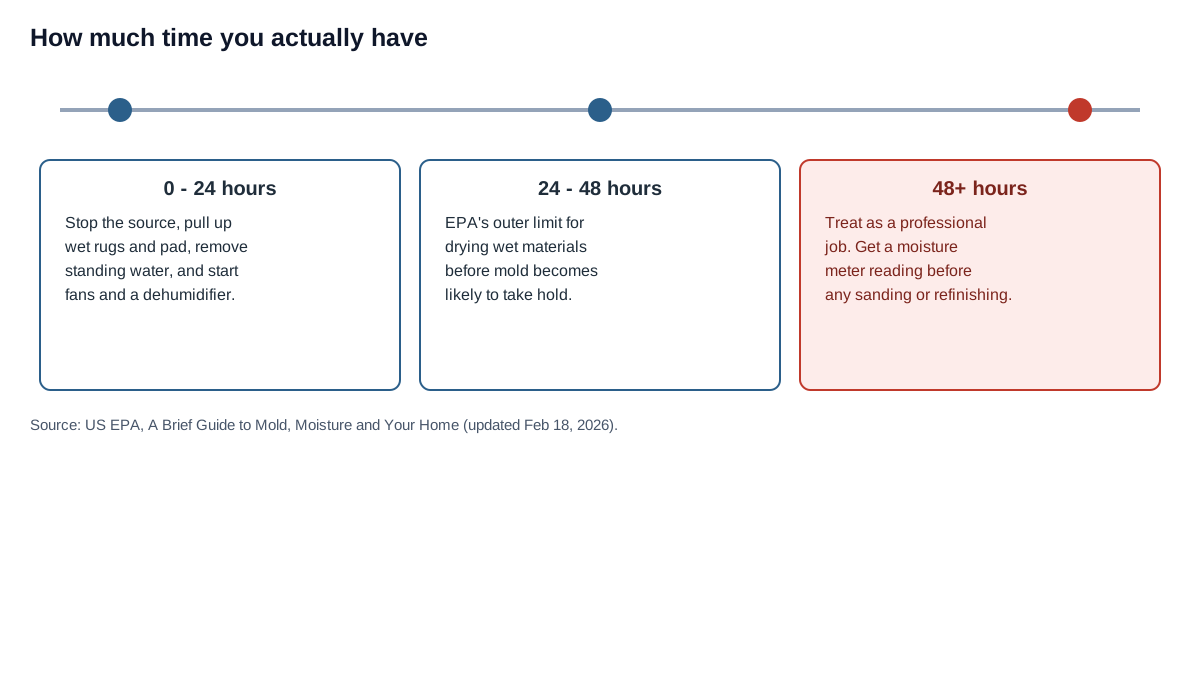
The EPA's guidance on mold and moisture is blunt about timing: materials need to start drying within 24 to 48 hours to head off mold growth, and its do-it-yourself threshold for mold cleanup tops out at less than about 10 square feet, roughly a 3-by-3-foot patch. Anything larger, or anything that has been wet longer than that window, is past the point where fans and a box store dehumidifier are a reasonable plan on their own.
The EPA's drying window: get materials dry within 24-48 hours or plan on a mold problem.
If the water came from a gray or black source, a backed-up drain, an overflowing toilet, sewage, or floodwater, or the floor has been wet for more than 48 hours, do not sand, refinish, or cover the area yourself; get a professional moisture reading first, because trapping moisture under new finish or fresh material only guarantees a bigger problem later.
Water pooling anywhere near an outlet, baseboard heater, or electrical panel is its own category of emergency: shut off power to that circuit, or the whole panel if you cannot isolate it safely, before anyone steps into standing water, and have an electrician confirm the wiring is dry and safe before you flip anything back on. Other flags worth taking seriously: a musty smell that does not fade as the surface dries, discoloration spreading along baseboards, and any sagging or give when you walk across the floor, a sign the subfloor itself may be compromised. Mold that has already taken hold after water damage needs to be assessed and removed correctly, not painted over.
When you are ready to hire, look for IICRC certification, since the S500 standard covers exactly this kind of work, proof of insurance, and a written scope of work before anyone starts cutting into your floor. Verify the license with your state's contractor licensing board and confirm the insurance is current — a legitimate crew has both ready without hesitation. Our guide to choosing a water damage company walks through the specific questions to ask; reaching one that serves your area starts with 888-407-9931.
How to Keep It From Happening Again
Most of the causes above are preventable with a few habits. Replace worn rubber supply hoses on washing machines with braided stainless steel lines, which hold up far longer under constant pressure. Check under the kitchen sink and behind the dishwasher every few months for the slow drip that eventually stains a floor instead of tripping an alarm. If your HVAC system has a condensate line, the small drain that carries off the water an air conditioner pulls from the air, have it cleared as part of routine seasonal service so it cannot back up onto a nearby floor.
In a crawl space or on a slab, humidity is the quiet threat. A vapor barrier and adequate ventilation, or a dehumidifier in a closed crawl space, keep ambient moisture from slowly working its way up into the subfloor and hardwood from below, long before anyone notices a puddle. Keep gutters and downspouts directing water away from the foundation; ground water pushed up against a foundation wall is a common, avoidable contributor to water damage under hardwood floor installations near exterior walls.
Regional Notes: Freeze-Belt Homes vs. Humid and Storm-Prone Climates
Where you live changes both the likely cause and the drying math. In freeze-belt states, the northern half of the country where pipes routinely sit below freezing for weeks at a stretch, the biggest hardwood floor risk is a burst pipe: water lines in an unheated crawl space, attic, or exterior wall that split during a hard freeze and thaw fast once temperatures rise, releasing a full line's worth of water onto whatever floor is below. Water expands by roughly 9% in volume as it freezes at 32°F, which is why a pipe with nowhere for that expansion to go splits instead of just holding a block of ice. Heated indoor air during winter also runs drier, which can shrink board gaps open; the next humid stretch then swells them shut again, a seasonal cycle that is normal and different from actual water damage.
In humid, hurricane, and flood-prone regions, the math changes. Ambient humidity that regularly sits above the EPA's recommended 30 to 50 percent indoor range, let alone its 60 percent outer limit, slows structural drying well past the 24-to-48-hour target, which is part of why mold shows up faster in Gulf Coast and coastal homes than in a dry inland climate. Storm surge or flood intrusion is also far more likely to bring Category 3 water, meaning contamination, not just moisture, drives the response.
If you are weighing whether to reinstall hardwood at all after a second or third flood event, FEMA's National Risk Index and NOAA's regional climate normals are worth checking before you decide, since they describe how often your specific county floods and how humid a typical year actually runs, information a national guide like this one cannot give you for your address.
Frequently asked questions
Can water damaged hardwood floors be repaired?+
Yes, in many cases. A cupped hardwood floor that is dried quickly and evenly, usually starting within a day or two of the water event, often flattens back out and can be sanded and refinished rather than replaced. Boards that have buckled, crowned permanently, or delaminated on engineered floors are less likely to recover and more often need replacement.
What does water damage look like on hardwood floors?+
Early on, it usually looks like cupping: boards with edges sitting higher than their centers, along with dark staining near seams, a cloudy or hazy finish where moisture is trapped underneath, and gaps that widen once the floor dries. A soft or spongy feel underfoot usually means the subfloor is wet too, not just the surface boards.
How can you tell if a hardwood floor has water damage?+
Walk the floor and look for edges sitting higher than centers, cloudy patches in the finish, and any give or sponginess underfoot. Check near known risk spots first, under the dishwasher, around toilets, along exterior walls, and press the back of your hand against exposed subfloor or baseboard to feel for lingering dampness.
How do you dry a hardwood floor after water damage?+
Drying hardwood floors after water damage starts with stopping the source and removing any standing water, then running fans across the surface along with a dehumidifier in the room to pull moisture out of the air. For anything beyond a small, clean-water spot, professional structural drying with moisture meters confirms the subfloor underneath, not just the surface, has actually dried before any sanding starts.
How do you fix engineered hardwood floor water damage?+
Engineered hardwood has a thin real-wood veneer over a plywood or fiberboard core, so it usually tolerates only light sanding, if any, once it has already been refinished before. If the layers have separated rather than just cupped, sanding will not fix it, and the affected planks typically need to be replaced instead.
Will insurance pay for water damage to a wood floor?+
It depends on the cause. A standard homeowners policy generally covers water damage that is sudden and accidental, a burst pipe or a failed appliance hose, but typically excludes flood water, which needs a separate flood policy, and damage from a slow leak that went unrepaired. Document everything before cleanup starts to support a claim either way.
How do you protect hardwood floors from water damage?+
Replace worn rubber appliance hoses with braided stainless steel lines, check under sinks and behind the dishwasher periodically for slow drips, keep HVAC condensate lines clear, and control humidity in a crawl space or on a slab with a vapor barrier and ventilation. Gutters that direct water away from the foundation also cut down on ground moisture reaching the floor from below.
What happens when water gets under hardwood floors?+
Water that gets under hardwood from below, through a wet crawl space, a sweating slab, or a slow subfloor leak, absorbs into the underside of the boards, which usually swells and cups before anything looks wet on the surface. By the time staining or cupping is visible from above, the subfloor has often been wet for a while already.
Can you reverse hardwood flooring water damage once it has cupped?+
Often, yes, if the wood has not been wet long enough for the fibers themselves to break down. A cupped floor that is dried evenly and given time to acclimate before refinishing frequently returns close to flat and can be sanded smooth. Boards that have buckled or crowned permanently after drying are much less likely to reverse.
How long does it take to dry out hardwood floors after a flood?+
It depends heavily on humidity, airflow, and how saturated the subfloor is, but the EPA's guidance is to get materials drying within 24 to 48 hours to limit mold risk. Full structural drying, confirmed with moisture meters rather than a guess, commonly takes several days to a couple of weeks before anyone should sand or refinish.