Crawl space flooding usually comes from grading and gutter runoff, a high water table, a cracked foundation wall, or a frozen pipe under the house. Extract the water within 24-48 hours, and run air movers and a dehumidifier until humidity drops under 60%. Mold remediation runs $500-$2,000, and a sump pump install averages $1,200. Water standing more than two days usually means calling a restoration company.
Nobody checks the crawl space until something smells wrong or the plumber sends you under there with a flashlight. Then you find two inches of standing water across the vapor barrier, a sump pump that quit sometime last winter, and floor joists you can't quite tell are wet or just cold. Crawl space flooding is one of those problems that's invisible from inside the house right up until it isn't: a musty smell in the living room, a soft spot in the hallway floor, or a spike in the heating bill because damp insulation stopped doing its job.
This guide walks through why crawl spaces flood, how to figure out where your water is actually coming from, what drying it out the right way looks like, what the fix costs at each stage, and where homeowners insurance does and does not help. None of the numbers below are invented; they come from national contractor cost surveys, the IICRC's restoration standards, and FEMA and insurance industry claims data, cited as we go.
What Counts as a Flooded Crawl Space
Not every damp crawl space is a flood. A little condensation on a cool duct in August is normal. Crawl space flooding means visible standing water, saturated soil that stays wet for days after it stops raining, or water actively entering through a wall, vent or floor penetration. If you can see it pool, or your boots come out wet after walking the perimeter, treat it as a flood rather than routine humidity.
The distinction matters because the fix is different. Chronic dampness without standing water is usually a vapor-barrier and ventilation problem you can often improve yourself. Actual water in crawl space areas, the kind you'd need boots or a wet-vac for, points to a drainage or plumbing failure that needs a real repair, not just a dehumidifier.
Water under a house is also graded by what's in it. The restoration industry, under the ANSI/IICRC S500 standard, splits water into three categories: Category 1 is clean water from a supply line; Category 2 is "gray" water carrying some contamination, such as a sump pump discharge backing up; Category 3 is "black" water: sewage, floodwater, or anything that's been sitting and growing bacteria. The category you're dealing with changes both the safety precautions and what has to be removed versus cleaned; see our full breakdown of water damage categories and classes for how each one is defined.
Why Your Crawl Space Keeps Flooding
Ranked roughly by how often each cause shows up, here's what actually puts water under a house, from most to least common:
Grading and gutters. The single most common cause. If the ground slopes toward the foundation instead of away from it, or a downspout dumps six inches from the wall instead of six feet, every heavy rain sends water straight to the weakest point in the foundation, usually a crawl space vent or an unsealed sill.
A high water table. In low-lying lots, near a creek, or in soil that holds water (heavy clay is the classic case), groundwater can rise into the crawl space from underneath with no rain at all. This is crawl space ground water, not surface runoff, and it's why some homes flood on a dry week if the water table is high enough.
Foundation cracks and gaps. Settling, hydrostatic pressure, or simple age opens hairline cracks in block or poured walls. Small cracks weep. Larger ones and gaps around utility penetrations let water in fast during a storm.
Burst or freezing pipes. A water supply line or a section of copper running under the house is exposed to outside temperatures if the crawl space isn't conditioned, and standing water inside a pipe freezes solid once it hits 32°F, expanding as it does and splitting the pipe from the inside. Crawl space water pipes freezing and splitting is a common cold-snap failure: the pipe doesn't leak until it thaws, so you often don't know until the water's already been running for hours.
Sump pump failure. If the crawl space already has a crawl space sump pump and it stops working, whether from a power outage, a stuck float switch, a clogged check valve, or the pump simply wearing out, the water the system was built to handle backs up instead.
Appliance and HVAC leaks. A condensate line from an under-house air handler, a water heater installed in the crawl space, or a slow drain leak overhead can add water gradually rather than all at once.
How to Diagnose Where the Water Is Coming From
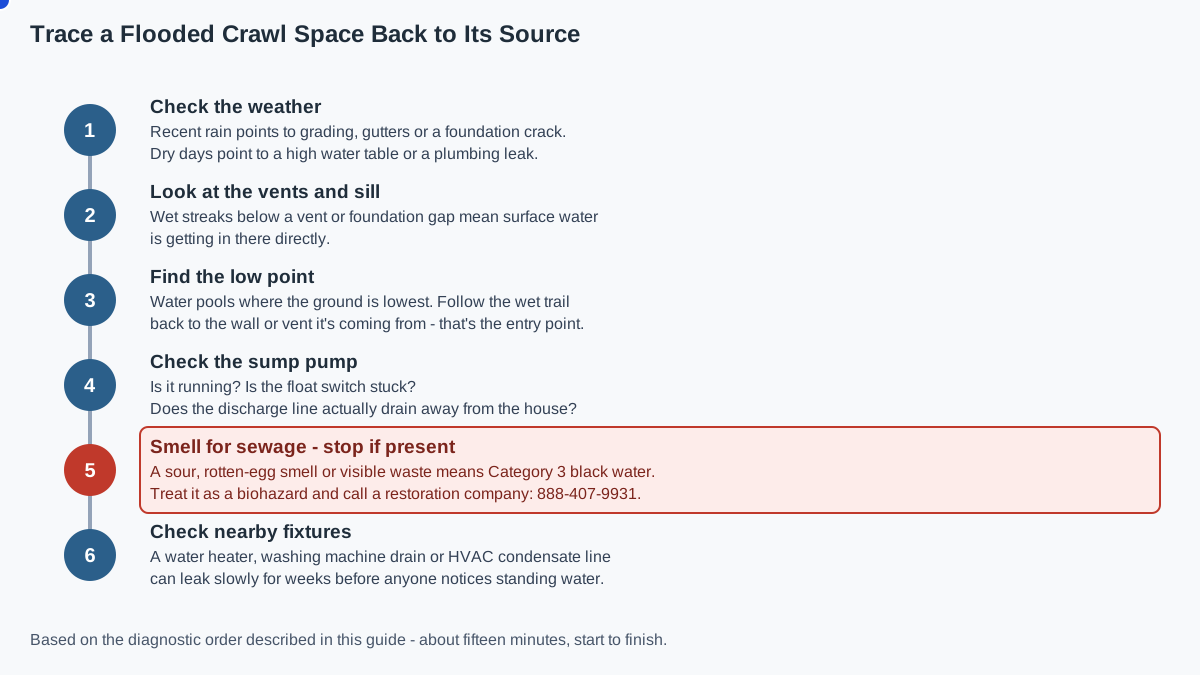
Before anyone calls a contractor, walk the problem in order. This takes fifteen minutes and tells the next person exactly what they're dealing with:
Check the weather. Did it rain hard recently, or has it been dry? Water appearing only after storms points to grading, gutters or a foundation crack. Water present on dry days points to a high water table or a plumbing leak.
Look at the vents and sill. Wet streaks below a crawl space vent or foundation gap usually mean surface water is getting in there directly.
Find the low point. Water pools where the ground is lowest. Follow the wet trail back from the pool toward the wall or vent it's coming from: that's your entry point, or close to it.
Check the sump pump, if there is one. Is it running? Is the float switch stuck? Is the discharge line outside actually draining away from the house, or has it frozen or been crushed?
Smell and look for sewage. A sour, rotten-egg or "backed up toilet" smell, or water with visible waste, means this is Category 3 black water. Stop and treat it as a biohazard rather than a DIY cleanup.
Check nearby fixtures and lines. A water heater, washing machine drain, or HVAC condensate line routed through or near the crawl space can leak slowly for weeks before anyone notices standing water below.
If none of that points to an obvious cause, or the water keeps coming back after you've addressed the obvious one, that's the point to bring in someone who does crawl space water leak detection for a living rather than keep guessing.
Walk these six checks in order - it takes about fifteen minutes and tells you what you're dealing with.
What to Do Safely Before Anyone Steps Inside
A flooded crawl space is a bad place to improvise. Never enter standing water in a crawl space until the power to any outlets, the sump pump circuit and anything wired down there has been shut off at the breaker. Electrical current and standing water together are the single most dangerous combination in a residential flood, and a crawl space usually has a submersible pump, wiring, or both.
Beyond the electrical shutoff, a few first-hour basics:
Ventilate before you enter. Crawl spaces can trap gas from a water heater, sewage off-gassing, or simple oxygen depletion. Open the access door or hatch and let it air out for several minutes first.
Wear real protection for anything but clean water. Rubber boots and gloves at minimum; for Category 2 or 3 water, add eye protection and a properly rated respirator, not a dust mask.
Stop the source if it's safe to reach. A water shutoff valve is usually safe to close by hand. A sewage backup or an electrical hazard is not something to push past; back out and call for help instead.
If the water is still actively coming in, or you're dealing with sewage, standing water near wiring, or more than a few inches of depth, this is the point to call a restoration company: reach one that serves your area at 888-407-9931 and describe what you're seeing, how much water, how it smells, and whether the power is still on down there.
The ANSI/IICRC S500 standard, the industry's own benchmark for water damage restoration, exists largely because these first decisions (power, ventilation, water category) determine everything that follows.
Drying It Out the Right Way
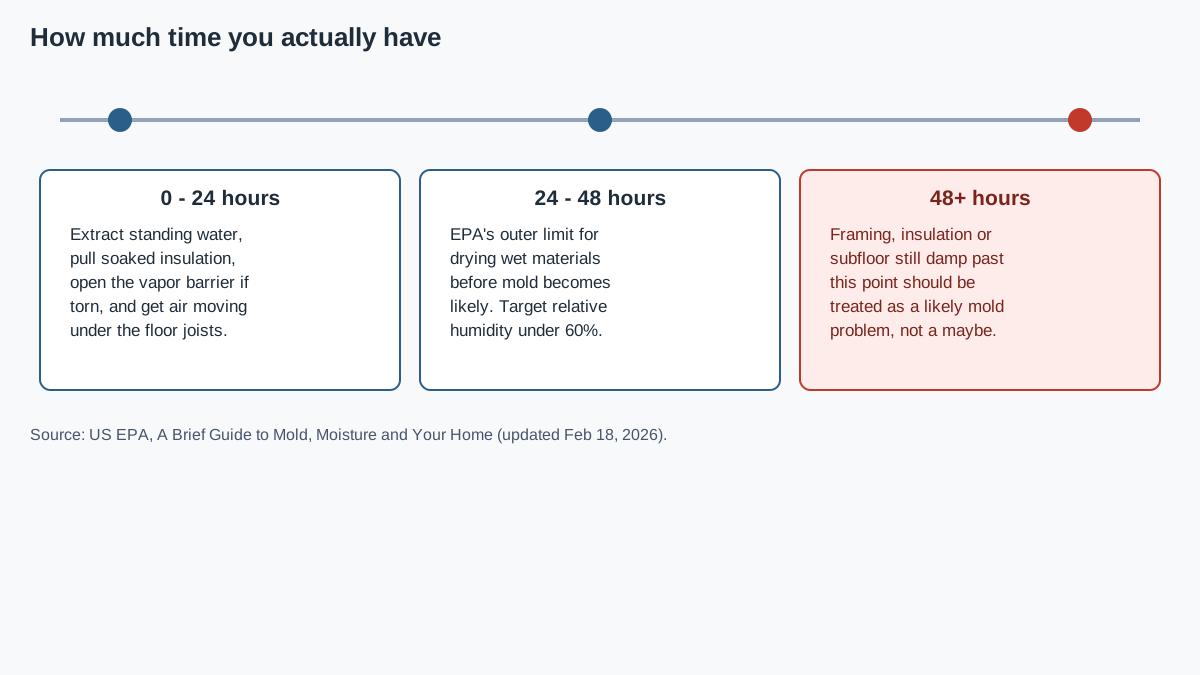
Once the standing water is out (by pump, wet-vac, or a restoration crew's extraction equipment), the real clock starts. The US EPA puts the practical limit at 24-48 hours to dry water-damaged materials before mold becomes likely, and that window is shorter, not longer, in the cramped, poorly ventilated space under a house. The EPA's drying window: get materials dry within 24-48 hours or plan on a mold problem. lays out what should happen in each stage.
A correct crawl space dry-out generally involves:
Extraction first. All standing water removed, not just the puddle you can see: water tracks under vapor barrier seams and into low framing pockets.
Removing what can't be dried. Wet fiberglass insulation almost never dries back to useful condition and is typically pulled and replaced rather than dried in place. A torn or saturated vapor barrier gets cut out.
Air movers and a dehumidifier, run continuously. The goal is relative humidity below 60 percent, with 30 to 50 percent as the ideal target per EPA guidance, not just "it looks dry."
Moisture readings, not guesswork. A restoration crew checks framing moisture content with a meter before calling a space dry; a homeowner without a meter should assume anything that was submerged needs several more days than it looks like it does.
Here's how the industry categorizes the water itself, since that decides how aggressive the cleanup has to be:
Category
What it is
How it's handled
Category 1 - clean
Supply line break, rainwater with no contact with soil or waste
Extract, dry, sanitize is optional
Category 2 - gray
Sump discharge, washing machine overflow, water with some contamination
Extract, dry, disinfect contact surfaces
Category 3 - black
Sewage, groundwater, floodwater, or Category 1/2 water left standing more than 48 hours
PPE required; porous materials (insulation, some wood) often removed rather than dried
That last row matters for a crawl space specifically: clean water you don't get to in time can reclassify itself into Category 3 just by sitting. For the general mechanics of extraction and drying beyond the crawl space itself, see how to dry out water damage.
DIY Fixes vs When You Need a Restoration Company
Some of this is genuinely homeowner work. Some of it isn't, and treating it like a weekend project is how a $500 mold job turns into a $2,000 one.
Situation
Reasonable to DIY
Call a pro
A few inches of clean water, caught same-day
Wet-vac extraction, fan drying, watch for return
-
Mold patch under about 10 sq ft (roughly 3x3 ft)
EPA's own DIY threshold - scrub with detergent and water, dry fully
Optional inspection to confirm the source is fixed
Sewage or floodwater (Category 3) present
-
Always - biohazard, not a cleaning job
Standing water more than 2 days, or unknown source
-
Yes - materials may already need testing, not just drying
Mold beyond 10 sq ft, or in insulation/ductwork
-
Yes - matches the EPA's own line for professional remediation
Recommended for drainage design and full encapsulation
When you're past the DIY line, look for a company that carries IICRC certification (the S500 water damage and S520 mold remediation standards are the ones to ask about), can show proof of insurance, and will put a scope of work and price in writing before starting. Ask to see their contractor's license, too, and verify it's current with your state's licensing board - that, plus active liability insurance, are the two things worth confirming before a crew sets foot under your house. Our guide on how to choose a water damage company covers the questions worth asking before you sign anything. A written estimate that lists specific line items (extraction, equipment days, disposal, any demolition) is worth more than a verbal "couple thousand, give or take." You can reach a restoration company that serves your area at 888-407-9931 to start that conversation.
What Crawl Space Flooding Actually Costs
Costs below are national ranges pulled from contractor cost-survey publishers, not local quotes. Your price depends on square footage, access, how long the water sat, and local labor rates. Treat these as a range to sanity-check a quote against, not a number to expect exactly - and expect it to move once a crew opens things up and finds out how much of the framing is actually wet.
Job
Typical range
What moves the price
Source
Clean water extraction
$3.00 - $4.25 per sq ft
Square footage, access, equipment days
HomeAdvisor, Fixr, Bob Vila
Gray water extraction
$4.10 - $6.50 per sq ft
Contamination level, disposal
Fixr
Black water (sewage) extraction
$7.00 - $7.50+ per sq ft
PPE, containment, disposal, demolition
Fixr, HomeAdvisor
Full sewage backup cleanup
$2,000 - $15,000+
Single room vs. multi-room, how long it sat
HomeGuide
Crawl space mold remediation
$500 - $2,000
Square footage affected, containment needs
Fixr, Bob Vila
Mold inspection
$300 - $800
Testing vs. visual-only, lab fees
HomeGuide, Fixr
Sump pump installation
$640 - $2,000 (avg. ~$1,200)
Pit digging, discharge line routing, pump quality
HomeAdvisor
Class 4 (specialty drying, deep saturation)
$20,000 - $100,000
Structural drying, extended equipment runtime
HomeAdvisor, Fixr, Bob Vila
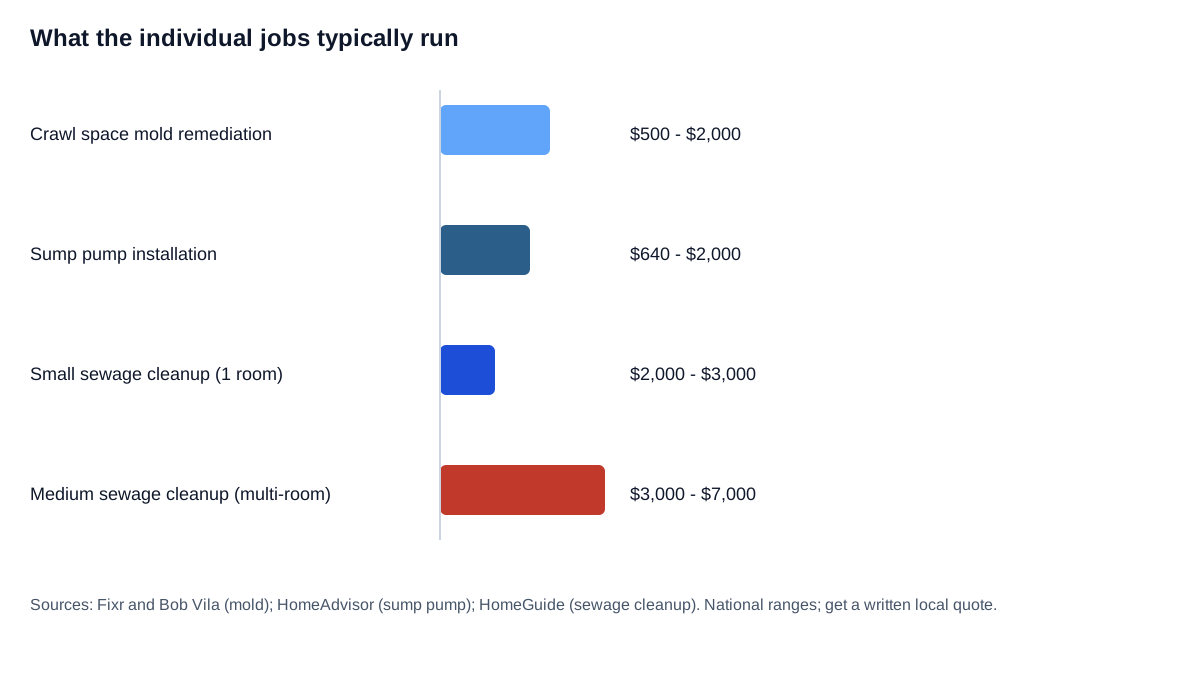
That last row looks alarming next to the others, and it should. It's the outcome that shows up when water is left standing for days against structural wood, not the outcome of catching a leak the same afternoon. What the individual pieces of a crawl space flood typically cost, before any structural repair. shows how the more common jobs stack up against each other.
A note on how we got these numbers: every figure above is a researched range pulled from a published national contractor cost survey (HomeAdvisor, Fixr, Bob Vila or HomeGuide), cited in the table and again in sources below - not a quote for your address. Actual cost varies by region, how hard the crawl space is to access, and how much damage turns up once a crew is actually in there pulling insulation and testing framing. Only a written estimate from someone who has actually seen your crawl space is reliable.
Does Insurance Cover a Flooded Crawl Space?
This is the single most common question people ask about crawl space flooding, and the honest answer is it depends entirely on what caused the water.
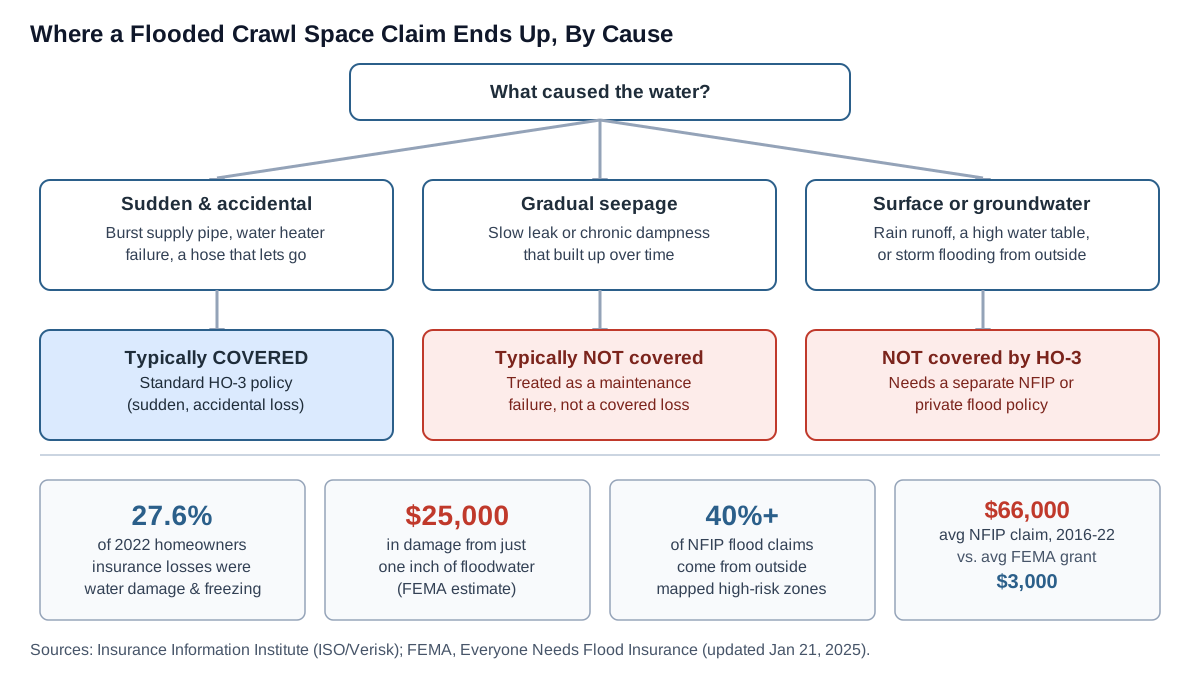
A standard homeowners policy (the common HO-3 form) generally covers water damage that's sudden and accidental: a burst supply pipe, a water heater that fails catastrophically, a washing machine hose that lets go. It generally excludes two things that are extremely common in crawl spaces: gradual seepage or leakage that built up over time (treated as a maintenance failure, not a covered loss), and surface water or groundwater flooding, meaning rain or rising water that enters from outside. That second exclusion is why "does homeowners insurance cover crawl space flooding" and "does flood insurance cover crawl space" are two different questions with two different answers: standard homeowners insurance almost never covers flood, and flood coverage requires a separate policy, typically through the National Flood Insurance Program (NFIP).
That distinction has real money behind it. Nationally, water damage and freezing accounted for about 27.6% of homeowners insurance losses in 2022, the second-largest cause after wind and hail, with an average claim severity of $13,954 and a claim frequency of roughly 1.61 per 100 house-years, according to the Insurance Information Institute citing ISO data.
Flood damage specifically is its own category, and FEMA's numbers explain why it's worth checking whether you need that separate policy: just one inch of floodwater can cause roughly $25,000 in damage, and more than 40% of NFIP flood claims come from outside the officially mapped high-risk zones, which means "I'm not in a flood zone" is not the same as "I can't flood." The average NFIP claim between 2016 and 2022 topped $66,000, against an average FEMA individual assistance grant of only about $3,000 for homeowners without flood insurance, a gap that often separates a fully paid repair from a homeowner covering most of it out of pocket.
If you're filing a claim of any kind, document before you touch anything: photos and video of standing water and its extent, moisture readings if you have them, receipts for any emergency mitigation, and a copy of whatever a restoration crew's scope of work says. Ask specifically whether your policy has a water backup endorsement, which is a common add-on that covers sump pump failure and sewer backup: two of the more frequent crawl space causes that a base HO-3 policy typically excludes. Our water damage insurance claim guide walks through the documentation and adjuster process in more detail.
Whether a flooded crawl space is covered depends on the cause, not just the water. Source: Insurance Information Institute (ISO/Verisk) and FEMA.
Long-Term Fixes: Drainage, Sump Pumps and Encapsulation
Drying out one flood fixes one flood. If the same crawl space keeps flooding, the fix is upstream of the water, not inside it.
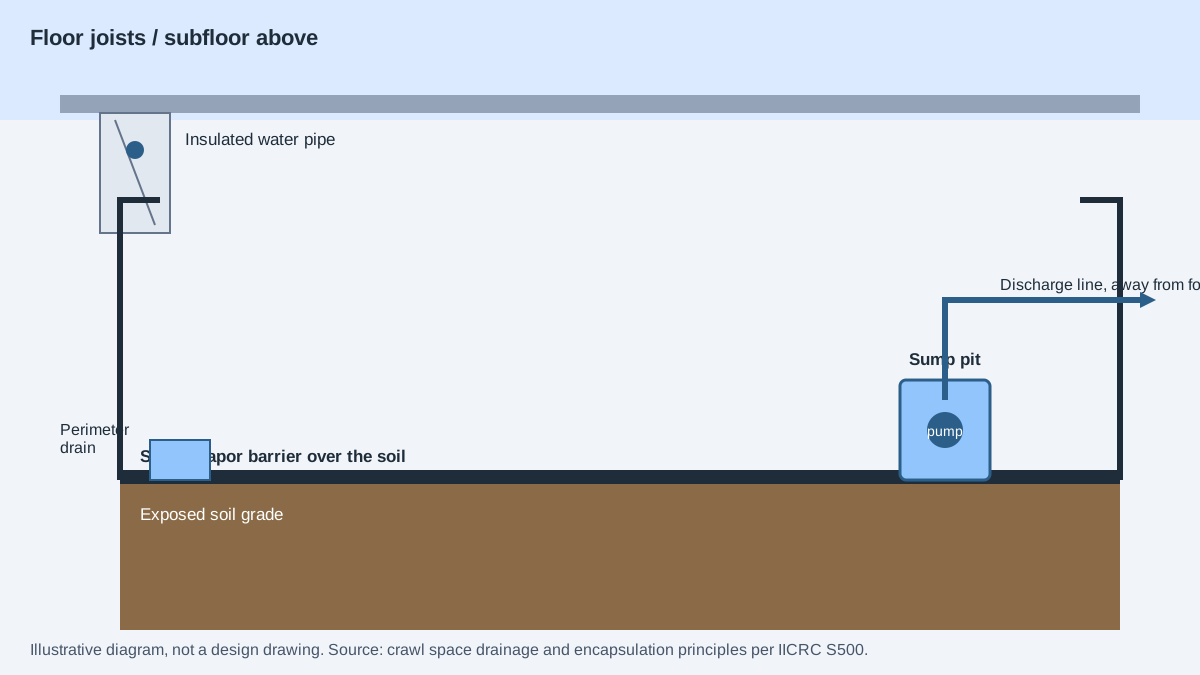
Start with drainage. An interior perimeter drain (what most people mean by crawl space drainage) collects water at the footing before it can spread across the floor, and routes it to a low point, usually a sump pit. Exterior grading and downspout extensions that move water away from the foundation solve the problem before it ever reaches the wall, and they're the cheapest fix on this list.
Add or upgrade the pump. A properly sized crawl space sump pump with a battery backup handles the water the drainage system collects, and keeps working through a power outage, which is exactly when storm-driven flooding is most likely. A stuck float switch or a dead battery backup is the most common reason a "working" pump fails at the worst time; test it a couple of times a year. See our sump pump overflow guide for the specific failure points to check.
Encapsulation comes last.Crawl space encapsulation means sealing the space with a heavy vapor barrier across the floor and up the walls, sealing vents, and often adding conditioned air. Done correctly with working drainage and a sump pump already in place, encapsulation stops the ambient humidity and condensation problems that vented crawl spaces are prone to. Done without fixing drainage first, an encapsulated space can trap water against the barrier with nowhere to go. That's the direct answer to "can you encapsulate a crawl space in a flood zone": yes, but only after the water management is handled, not instead of it. The same sequencing applies above grade; see basement waterproofing for the aboveground version of the same drainage-first logic.
Other pieces worth knowing about: crawl space flood vents (code-required in many flood zones to let floodwater pass through rather than pressurize the foundation walls), a water alarm or leak sensor placed near the sump pit and any water heater as an early-warning system, and insulating exposed supply pipes before the first hard freeze rather than after a split pipe floods the space.
Preventing the Next Flood, Wherever You Live
What you prioritize depends on your climate as much as your house.
Freeze-belt homes (much of the Midwest, Northeast and interior Mountain states) should treat pipe insulation and heat tape on any exposed crawl space plumbing as a fall chore, not an afterthought. A split pipe from a hard freeze is one of the more preventable causes on this list. Keep foundation vents from icing shut if your local code still uses vented crawl spaces.
Gulf Coast and hurricane-belt homes deal more with surface and storm-surge water than frozen pipes. Flood vents that let water pass through rather than pool against the foundation, a sump pump sized for sustained heavy rainfall rather than an occasional storm, and knowing your NFIP flood zone designation matter more here than pipe insulation does.
High water table areas (low-lying lots, heavy clay soil, anywhere near a creek or wetland) are the group most likely to see crawl space ground water with no rain at all. A perimeter drain and sump system sized for continuous, not just storm-driven, water is worth the extra cost here.
Across all three, the maintenance list is the same: clean gutters twice a year, extend downspouts at least four to six feet from the foundation, check that the ground still slopes away from the house (soil settles over years), and walk the crawl space itself every season with a flashlight rather than waiting for a smell to send you down there. The three pieces of a long-term fix: drainage, a sump pump, and a sealed vapor barrier. shows how the pieces (drainage, pump, and vapor barrier) work together.
Frequently asked questions
What should I do if my crawl space flooded?+
Shut off power to the crawl space at the breaker before anyone goes in, then identify and stop the source if it's safe to reach, closing a supply valve, for example. Extract standing water and get air movers running within the first day; the EPA's 24-48 hour drying window is the practical deadline before mold becomes likely. If it's sewage, deep water, or the source isn't obvious, call a restoration company rather than guess.
Why does my crawl space keep flooding?+
Recurring flooding almost always means the underlying cause was never fixed: poor grading, a downspout dumping near the foundation, a high water table, or a sump pump that isn't sized for the volume it gets. Drying out the water each time treats the symptom; fixing the drainage, the pump, or the grading treats the cause.
How do I fix crawl space flooding for good?+
Address the entry point first (grading, gutters, a foundation crack, or a failed pipe), add or upgrade a properly sized sump pump with battery backup, install a perimeter drain if water is entering broadly rather than at one spot, and only then consider full encapsulation. Encapsulating before drainage is fixed can trap water instead of solving it.
Does homeowners insurance cover crawl space flooding?+
It depends on the cause. A standard HO-3 policy typically covers sudden, accidental water damage like a burst pipe, but excludes gradual seepage and excludes flood: surface or groundwater entering from outside. Flood damage requires a separate NFIP or private flood policy; a water backup endorsement separately covers sump pump and sewer backup, which many base policies exclude.
Does flood insurance cover crawl space damage?+
Yes, if the water entering the crawl space meets the NFIP's definition of a flood: general and temporary inundation from surface water affecting two or more properties or two or more acres. A standard homeowners policy won't cover that scenario; a separate NFIP or private flood policy is what pays, and per FEMA, over 40% of flood claims come from outside officially mapped high-risk zones.
What causes moisture in a crawl space without an obvious flood?+
Warm, humid outside air meeting cooler crawl space surfaces causes condensation, especially in vented crawl spaces during summer. A missing or torn vapor barrier lets soil moisture evaporate straight into the space. Neither one is a flood, but both push relative humidity above the EPA's recommended 30-50% range and can support mold without any standing water at all.
Can you encapsulate a crawl space in a flood zone?+
Yes, but drainage has to come first. Encapsulation seals the space with a vapor barrier and often conditions the air, which is excellent for humidity control, but if water is still entering from grading, a high water table, or storm surge, a sealed space with nowhere for that water to go can trap it against the barrier. A sump pump and drainage system installed before encapsulation solves that.
How much does crawl space water damage repair cost?+
It depends heavily on what's involved. Extraction alone runs roughly $3 to $7.50+ per square foot depending on water category. Crawl space mold remediation specifically typically runs $500-$2,000. A sump pump installation averages around $1,200. Add structural drying or insulation replacement and costs climb from there. A written local estimate is the only reliable number for your situation.
How do I keep my crawl space from flooding after rain?+
Start outside: extend downspouts at least four to six feet from the foundation, regrade any low spots that slope toward the house, and clear gutters so they aren't overflowing at the roofline. If surface water still reaches the foundation after that, a perimeter drain feeding a sump pump is the next layer of defense.
How do I insulate crawl space water pipes to stop them freezing?+
Wrap exposed supply lines with foam pipe insulation sleeves or heat tape rated for the pipe size, focusing on any run near a vent, exterior wall, or unconditioned section of the crawl space. Do this before the first hard freeze of the season. A split pipe from freezing typically doesn't leak until it thaws, so the damage is often already done by the time it's discovered.