Basement waterproofing means stopping water from entering below grade, either from the inside, with drain tile and a sump pump that catch water after it passes the wall, or from the outside, where a contractor excavates to the footing and seals the wall itself. Interior systems cost less and disrupt less; exterior systems cost more but stop water before it reaches the concrete.
Water and freezing damage accounted for 27.6% of all homeowners insurance losses in 2022, according to the Insurance Information Institute, second only to wind and hail, and the average claim ran $13,954. A lot of that starts in the same place: a basement that stayed damp for years before anyone treated it as a problem. Basement waterproofing is the work that's supposed to prevent that call to the insurance company in the first place.
This guide walks through why basements take on water, how to figure out where yours is actually coming from, the difference between interior and exterior waterproofing systems, what the work realistically costs based on the pieces that do have published national data, and where you still need a local written estimate because no publisher tracks a reliable number for it. If water is actively coming in right now and you're not sure it's safe to be down there, skip ahead to the safety section below before doing anything else.
None of what follows is a pitch for one method over another. A basement that takes on an inch of water along one wall after a hard rain needs a different fix than one where the whole slab floods every spring, and the two jobs can differ by a factor of ten in price.
What a Wet Basement Is Actually Telling You
A basement sits below the surrounding grade, which means the soil around it is holding water against the walls and floor for at least part of most years. That pressure, called hydrostatic pressure, is what basement waterproofing is built to resist. Not every kind of dampness means the same thing, and treating condensation like a leak, or the other way around, wastes money on the wrong fix.
Condensation shows up as a film of moisture on cold concrete or metal ductwork, usually in summer, when warm humid air meets a cool surface. It's a humidity problem rather than a water-intrusion problem, and a dehumidifier set to hold the room below 60 percent relative humidity (30 to 50 percent is the ideal range, per the U.S. Environmental Protection Agency) usually clears it up on its own within a week or two.
Intrusion is a different animal: water that's genuinely getting in from outside, whether that shows up as a damp patch that only appears after rain, a visible trickle running down a wall, or standing water on the floor. The EPA also sets the clock you're working against once water does get in: dry out any wet material within 24 to 48 hours, because that's roughly the window before mold starts colonizing it.
The agency also draws a rough line for how much mold a homeowner should tackle without calling anyone: patches smaller than about 10 square feet (roughly a 3-by-3-foot area) are generally within reach of a do-it-yourself cleanup using soap, water and good ventilation. Mold covering more area than that, or mold you can smell but can't locate, is a job for a remediation professional. If your basement is actively flooding right now rather than just staying damp, our flooded basement guide covers the immediate steps to take first.
Why Basements Take On Water, Ranked by How Often It's the Cause
Before you spend a dollar on basement waterproofing, it helps to know what's actually causing yours to leak, because the fixes are not interchangeable. Roughly in order of how often each one turns out to be the culprit:
Grading and downspouts that point water at the foundation instead of away from it. This is the single most common cause, and it's often free or nearly free to correct.
Gutters that are clogged, undersized, or missing, so roof runoff concentrates in one spot right along the foundation wall instead of spreading out across the yard.
Hydrostatic pressure from a high water table or dense clay soil, holding groundwater against the wall long after the storm that caused it has passed.
A missing or collapsed footing drain, common in homes built before perimeter drainage became standard practice in a lot of the country.
Cracks in the wall or floor from ordinary concrete shrinkage or settling, which let water in directly rather than seeping through the porous concrete itself. This is the category foundation crack repair is built for.
Window wells with no drainage of their own, which can effectively become a bathtub during a hard rain.
Sewer or sump-system backups, which are a plumbing problem rather than a waterproofing one; the fix is a backwater valve or pump service, not a membrane.
That last item matters because it's easy to lump every wet basement into one bucket. A backup that pushes water up through a floor drain needs a plumber's fix. Groundwater working its way through a cove joint after a week of rain needs a waterproofing fix. They can look similar on the floor and require completely different contractors. A crawl space under the same house often shows the same grading and drainage problems, just with a different repair path once you're underneath it.
How to Find Out Where the Water Is Actually Coming From
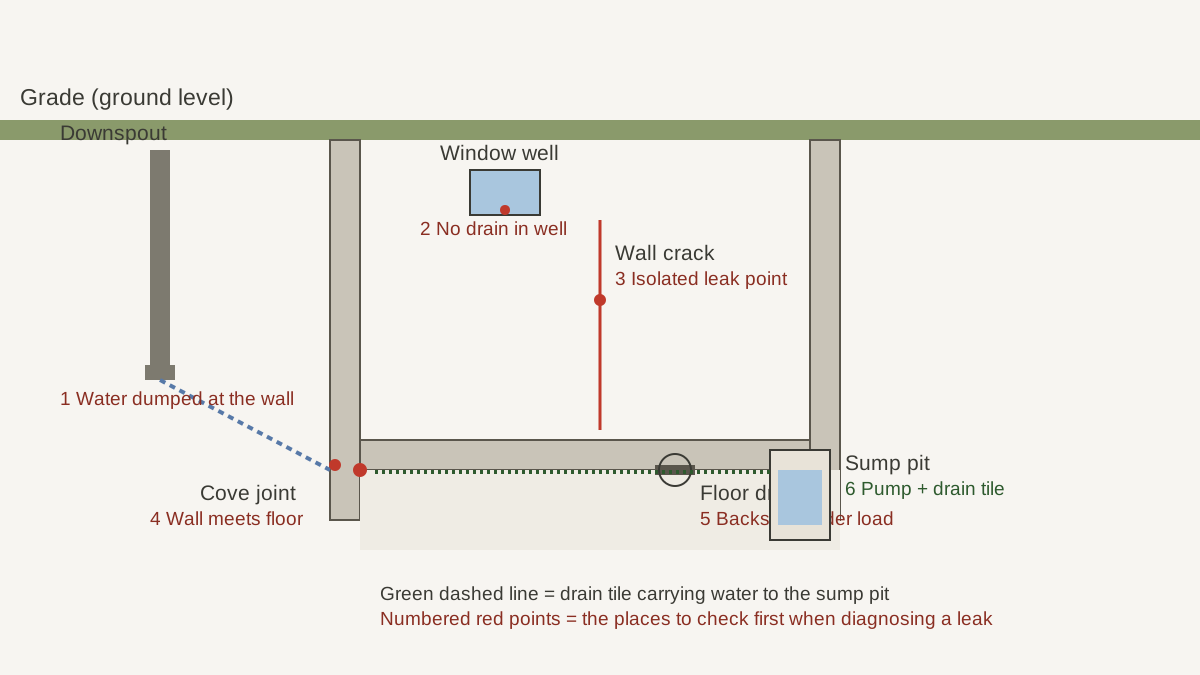
Where basement water actually gets in — check these six spots first.
Guessing at the cause before you diagnose it is how homeowners end up paying for a sump pump when the real problem was a downspout dumping water two feet from the wall. Work through the following steps in order:
Dry everything out, then wait for the next real rain, or run a garden hose along one section of foundation wall at a time for 20 to 30 minutes while someone watches from inside.
Note exactly where water shows up first: the cove joint where wall meets floor, a specific wall crack, a window well, or a floor drain that backs up instead of draining.
Check the same spots from outside. Are downspouts dumping right at the foundation? Does the ground slope toward the house instead of away from it? Is a window well full of debris and holding water?
Rule out condensation with a simple test: tape a square of plastic sheeting to the wall and check it after 24 hours. Moisture on the room side of the plastic is condensation; moisture trapped underneath, against the concrete, is intrusion.
If there's already a sump pit, test the pump directly: pour a bucket of water in and confirm it kicks on, discharges outside, and that the check valve isn't stuck.
Get a second read in writing. Ask a waterproofing contractor where they think water is entering and why, and if you notice stair-step cracking or a wall that looks like it's bowing inward, bring in a structural or foundation engineer before anyone starts waterproofing work.
That last step is not optional if you see structural signs. A waterproofing contractor's job is to keep water out; it isn't to evaluate whether your wall is failing. Those are two different licenses and two different skill sets, and skipping the engineer when a wall is actually moving means paying for waterproofing on top of a foundation repair you still need.
What You Can Reasonably Fix Yourself
A fair amount of basic basement waterproofing maintenance is well within reach for a homeowner with a weekend and a shovel. Extending downspouts so they discharge several feet from the foundation instead of right at it is usually the highest-value, lowest-cost move available, and it addresses the most common cause on the list above. Regrading the soil near the house so it slopes away from the foundation rather than toward it is the next step, and it's straightforward with a rake and some topsoil if the slope isn't extreme.
Small, cosmetic fixes
Hydraulic cement can plug a small, non-moving crack or a spot where a pipe penetrates the wall; it expands as it cures, which is what makes it useful for that specific job. Waterproof masonry paint and penetrating sealers can cut down on dampness coming through porous concrete, but they only work on walls that are damp, not walls with an active leak; applied over real water intrusion, sealer just traps moisture behind it and peels. Efflorescence, the white, chalky mineral deposit that shows up on damp concrete, isn't itself a leak, but it's a reliable sign that water has moved through the wall at some point.
Where DIY stops
A dehumidifier handles the humidity side of things, holding the basement in that 30-to-50-percent range mentioned earlier. What none of this touches is hydrostatic pressure, a genuinely failed footing drain, or a structural crack; those need drain tile, excavation, or engineering, and that's where "how to do basement waterproofing yourself" runs into its ceiling. Renting equipment and attempting a full interior drain-tile installation is technically possible, but between the concrete cutting, the slope tolerances on the drain line, and the electrical work for the sump pump, most homeowners come out ahead hiring it out.
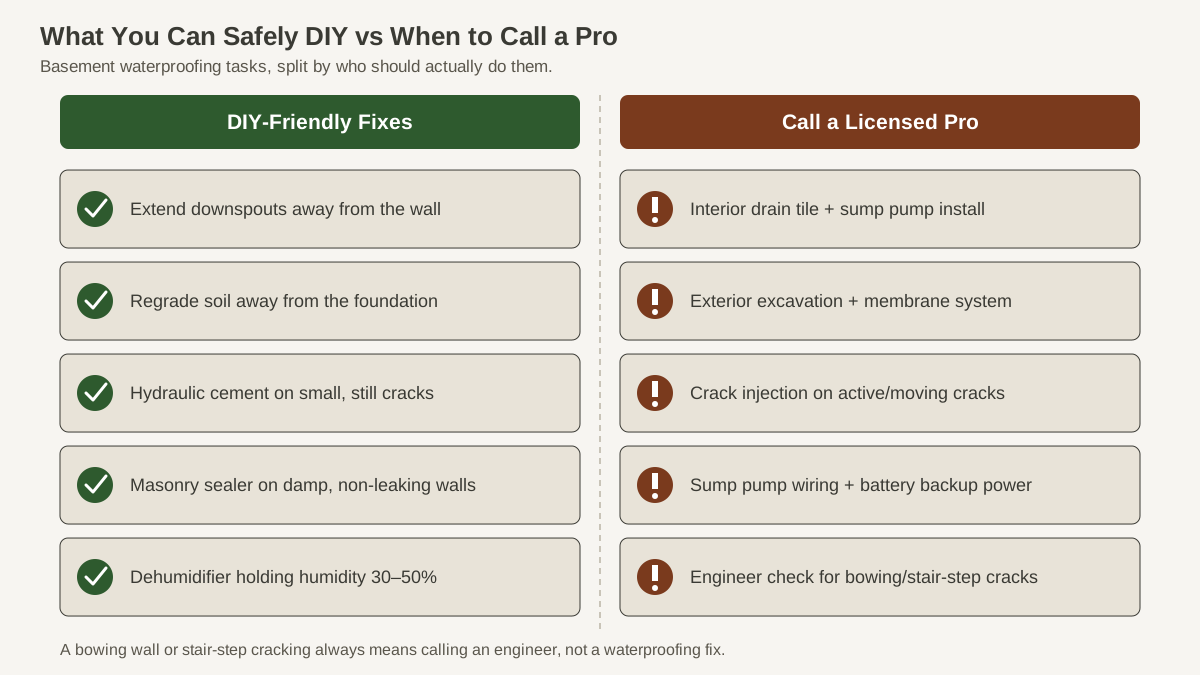
Which basement fixes you can reasonably do yourself, and which ones call for a licensed contractor or a structural engineer.
Interior Systems: Drain Tile and a Sump Pump
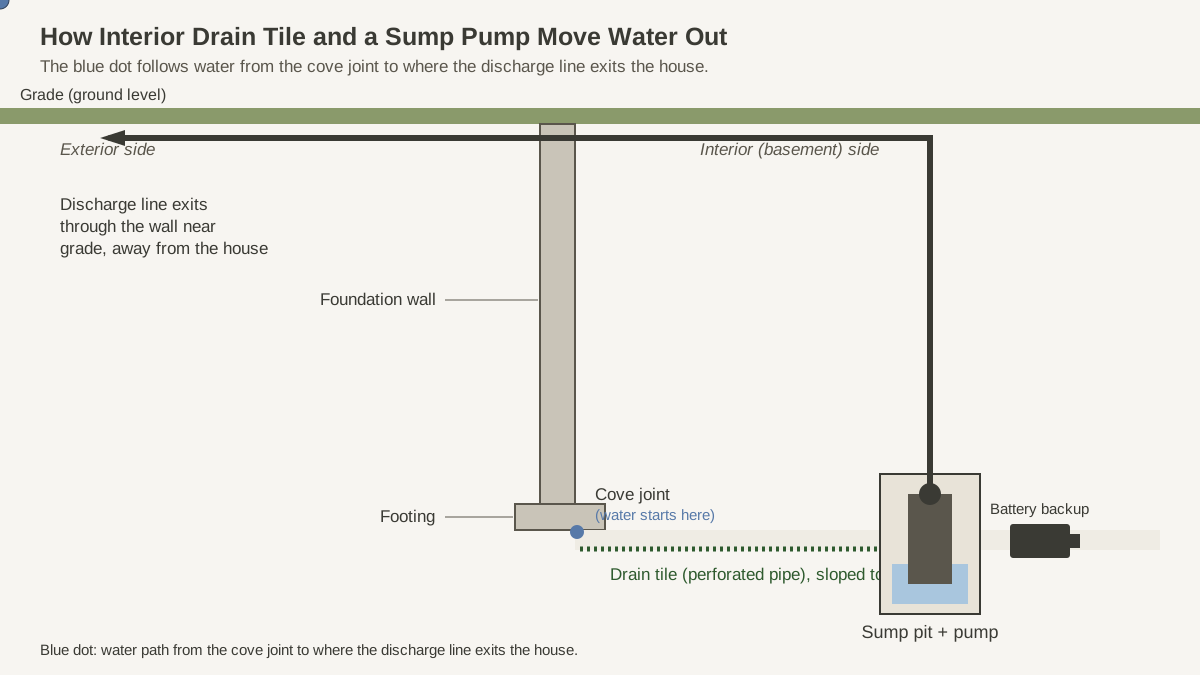
An interior system is the more common of the two main approaches, mostly because it's less disruptive. A contractor cuts a channel along the inside edge of the footing, sets perforated drain tile in it, and slopes that tile toward a sump pit cut into the floor. A sump pump sitting in that pit turns on when the water level rises and pushes it out through a discharge line that exits the house well away from the foundation.
The term french drain gets used loosely in this business: technically a French drain is a gravel-filled trench with a perforated pipe, most often installed outside along the perimeter, but plenty of contractors also use the term for the interior drain-tile channel described above. If a contractor proposes a "French drain," ask directly whether they mean interior or exterior, because the price and the amount of digging involved are very different.
The trade-off worth understanding
An interior system manages water after it has already worked its way through the wall or floor; it doesn't stop that water from reaching the concrete in the first place. It also depends on electricity, which is exactly what tends to go out during the storms most likely to flood a basement. Any interior system is only as good as its backup: a battery backup pump, or in some setups a water-powered backup, keeps the system running through a power outage instead of failing at the worst possible moment.
How drain tile and a sump pump route water out of the basement, with a battery backup that keeps the pump running through a power outage.
Exterior Work: Excavation, Membranes, and Foundation Crack Repair
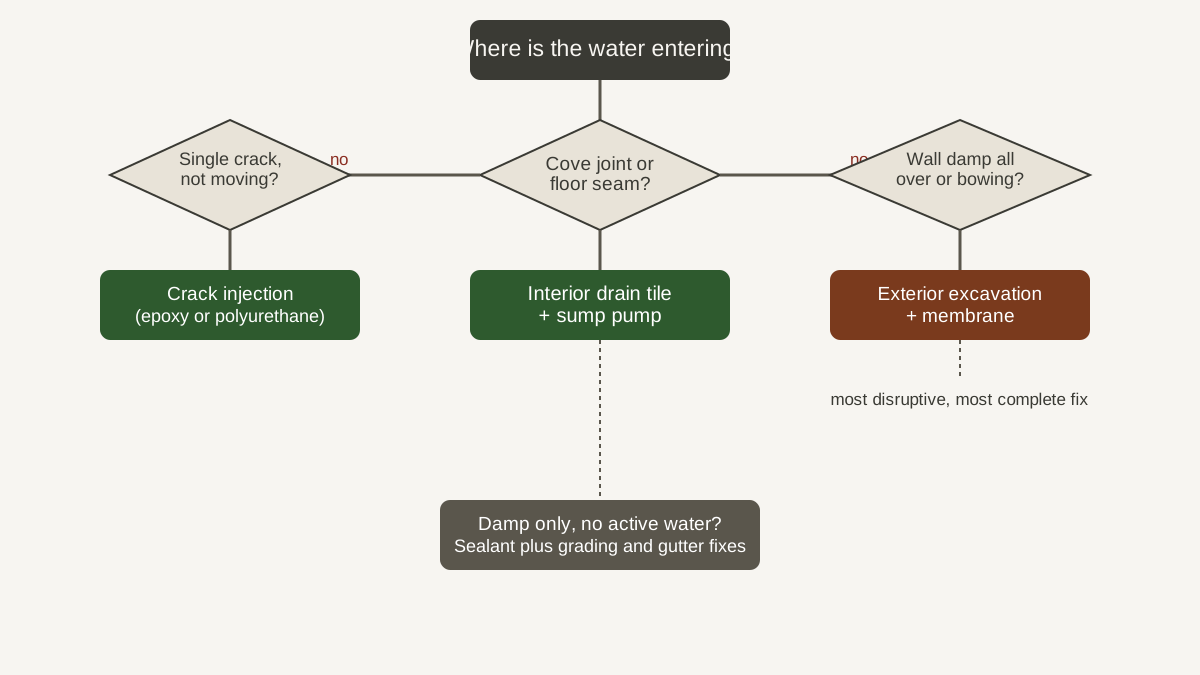
A simple way to decide between interior and exterior waterproofing.
Exterior waterproofing is the more thorough of the two main approaches because it stops water before it ever reaches the concrete. The process typically means excavating down to the footing along the affected wall, applying a rubberized or asphalt-modified membrane directly to the concrete, adding a dimpled drainage board over that membrane, and installing (or replacing) a footing drain that carries water away by gravity to daylight or into a sump. The trench is then backfilled with gravel to keep water moving down and away instead of pooling against the wall again.
Foundation crack repair, specifically
Foundation crack repair is a narrower job than full exterior excavation. For a single, isolated crack that isn't actively moving, a contractor injects epoxy or polyurethane resin under pressure directly into the crack from inside, sealing it without digging up the yard. It's a good fit when the diagnosis in the previous section points to one specific crack rather than a wall that's uniformly damp or visibly bowing; bowing is a structural symptom, and no amount of crack injection fixes a wall that's failing.
Deciding between interior and exterior systems, or a narrower crack repair, comes down to where the water is entering and how much disruption and budget you're working with:
Approach
What it actually does
Best fit
Trade-off
Interior drain tile + sump pump
Catches water after it passes the wall or floor and pumps it out
Water entering at the cove joint or through hairline floor cracks
Doesn't stop water from reaching the concrete; needs a backup power source
Exterior excavation + membrane
Stops water at the source, before it touches the wall
A wall that's damp across its whole surface, or visibly bowing
More disruptive and more expensive; needs perimeter access
Crack injection (epoxy or polyurethane)
Seals one specific, non-moving crack under pressure
An isolated wall crack that's actively leaking
Doesn't address the rest of the wall; can reopen if the crack was a symptom of movement
Waterproof paint or masonry sealer
Blocks minor dampness and vapor through porous concrete
Basements that are damp but never see standing water
Not a fix for an actual leak; can peel and trap moisture if applied over one
This is the heart of the interior vs exterior waterproofing decision, and it's worth saying plainly: neither option is universally "better." A contractor recommending exterior excavation for a basement that only ever gets damp at the cove joint after a hard rain is over-selling the job, just as one recommending interior drain tile for a wall that's visibly bowing is missing a structural problem.
What Basement Waterproofing Costs
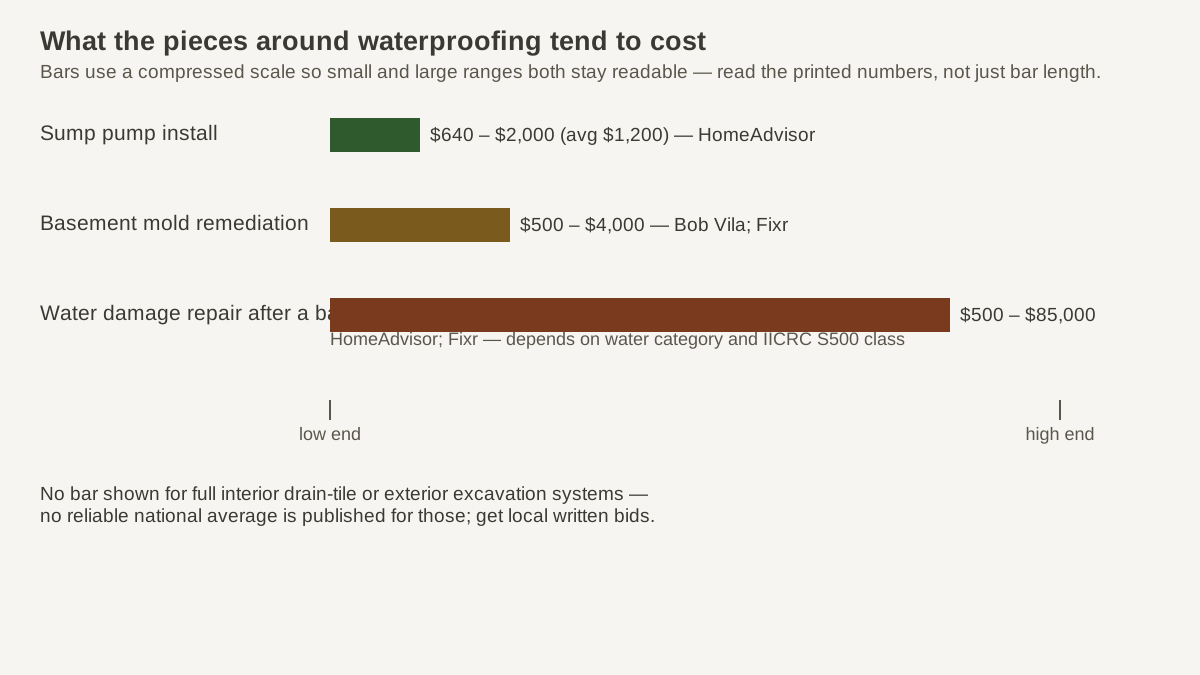
Published cost ranges for the pieces around waterproofing — full system installs need a local bid.
There's no honest way to hand you a single national number for a full basement waterproofing cost, because interior drain-tile and exterior excavation jobs are priced by linear foot of affected wall, not as a flat fee, and none of the major cost-survey publishers report a reliable national average for either one. What does have published data are the pieces around the job, plus what waterproofing failures cost you if you skip it. For the wider picture on water damage costs beyond the basement itself, see our water damage restoration cost guide.
Treat every figure in the table below as a researched range pulled from the cost surveys cited at the bottom of this page, not a quote for your basement. The number that actually lands on a written estimate varies by region, how easy the crew can get at the wall, and how much damage they find once digging or cutting starts — and that written estimate, from a contractor who has looked at your walls in person, is the only number that's binding.
No published national figure — get 2–3 written local bids
Linear feet of wall, excavation depth, soil type, whether landscaping or a driveway is in the way
n/a — local estimate required
Why this isn't something to put off
FEMA puts the stakes in blunt terms: a single inch of standing water can cause roughly $25,000 in damage to a home. Water-related claims aren't rare, either. About 1 in every 67 insured homeowners files a water-damage claim in a given year, according to Triple-I data cited by This Old House, at an average payout of $15,400. Weighed against that, a sump pump at $640 to $2,000, or even a full exterior excavation running well into five figures, tends to look like the cheaper option in hindsight. None of these figures include what you'd spend replacing flooring, cabinetry or finished walls if the basement floods again before the real fix goes in. If you do end up filing a claim, check first whether your policy even covers the situation; our guide on what homeowners insurance covers for water damage and our water damage insurance claim guide cover the documentation you'll need.
How to Vet a Basement Waterproofing Contractor
Because interior and exterior systems both involve real construction, including cutting concrete, excavating a foundation and running drainage, the contractor matters as much as the method. Ask for proof of a state contractor's license and current liability insurance before anyone sets foot in your basement, and don't just take their word for it: verify the license directly with your state's contractor licensing board (most run a searchable database online) and ask to see the certificate of insurance itself, not just hear that a policy exists. Get everything past a verbal quote in writing. Our broader guide on choosing a water damage company covers the same vetting steps in more depth.
What a written estimate should include
A proper estimate spells out the exact scope of work (which walls, how many linear feet, interior or exterior), the materials being used, the warranty terms and whether that warranty transfers to a future buyer of the house, an estimated timeline, and what cleanup and site restoration is included once the crew leaves. If a company can't put that on paper, that's a reason to keep looking rather than a detail to overlook.
Red flags
Watch for high-pressure, same-day-discount sales tactics, a company with no verifiable local address, or an estimator who can't explain in plain terms why they're recommending interior versus exterior work for your specific situation. If mold remediation is bundled into the job, ask whether the crew doing that part has any relevant training: the Institute of Inspection, Cleaning and Restoration Certification (IICRC) is the standards body most restoration companies reference for that side of the work.
If you're trying to reach a restoration company that serves your area to get a second opinion or a written estimate started, 888-407-9931 is one way to get connected and describe what you're seeing.
When to Stop and Call Someone
Most of what's described above is either DIY-friendly or a straightforward hire. A few situations deserve more caution than a typical wet-basement conversation.
Electrical safety first
If standing water is anywhere near an outlet, an extension cord, or the electrical panel, don't step into it: shut off power at the main breaker only if you can reach it without touching the water, and if you can't, stay out and call an electrician or a restoration company before you do anything else. Water and electricity in the same room is not a situation to troubleshoot on your own.
Contaminated water
Clean groundwater seeping through a cove joint is unpleasant but low-risk to handle with gloves and boots. Water that smells like sewage, or water backing up through a floor drain rather than coming in through a wall, is a different category entirely: treat it as contaminated, stay out of it, and call a restoration company rather than cleaning it up yourself. Don't run a wet-vac through raw sewage without professional-grade protective equipment; the health risk isn't worth saving a service call.
Structural signs
Stair-step cracking in a block wall, a wall that's visibly bowed, or a door and window that have started sticking near a foundation wall are signs of movement, not just water. Get a structural or foundation engineer's opinion before spending money on waterproofing alone; sealing a wall that's actively failing treats the wrong problem. Wet material sitting for more than a day or two also turns into a mold problem fast; see our mold after water damage guide for how quickly that clock actually runs. And if water is actively pouring in right now and you're overwhelmed, calling 888-407-9931 to reach a restoration company and describe what you're seeing is a reasonable first move while you sort out the longer-term fix.
Regional Notes: Freeze-Thaw Country, Clay Soil, and Storm Coasts
Basement waterproofing isn't one-size-fits-all across the country, and the regional climate a house sits in changes both what fails first and what's worth prioritizing.
Freeze-thaw regions
In the Midwest and Northeast, winter freeze-thaw cycles push and pull on foundation walls as moisture in the soil freezes and expands, then thaws. That cycle is a common source of new hairline cracks each spring, which is why homes in these regions often need periodic crack repair even on a foundation that was fine the year before.
Clay soil regions
Parts of Texas and the broader Southeast sit on expansive clay soil that swells when wet and shrinks when dry, putting cyclical pressure on foundation walls independent of how well they're waterproofed. In these areas, managing drainage and grading around the house matters as much as the waterproofing system itself, because soil movement can undo good work if runoff keeps saturating the clay right against the foundation.
Coastal and storm-prone areas
Along hurricane-exposed coasts and anywhere with a naturally high water table, power outages tend to hit exactly when a sump pump is needed most. A battery backup, or a water-powered backup pump that doesn't depend on electricity at all, is less of a luxury and more of a baseline requirement in these regions.
Heavy snowmelt regions
The Upper Midwest and Great Lakes states see a different seasonal spike: spring snowmelt can saturate the ground faster than it drains, overwhelming a system that was only ever sized for ordinary rainfall. A sump pump and drain tile sized with that spring surge in mind, rather than an average storm, holds up better over the life of the system.
Frequently asked questions
Can You Waterproof a Basement?+
Yes. Basement waterproofing is a well-established repair category with two main approaches: interior systems (drain tile and a sump pump) and exterior systems (excavation and a membrane against the foundation wall). Which one applies depends on where and how water is entering, not on whether waterproofing is possible in general; nearly every basement can be dried out with the right combination of grading, drainage and, if needed, excavation.
How Much Does Basement Waterproofing Cost?+
It depends heavily on the method. A stand-alone sump pump installation runs $640 to $2,000, averaging about $1,200, according to HomeAdvisor. Interior drain tile and exterior excavation systems don't have a reliable published national average because price swings so much with linear footage of wall, excavation depth and soil type. Get two or three written local bids before committing to either approach.
Is Basement Waterproofing Worth It?+
For a home with a real water-intrusion problem, generally yes. Water and freezing damage made up 27.6% of homeowners insurance losses in 2022, with an average claim of $13,954, according to the Insurance Information Institute, and a lot of those claims trace back to a basement nobody waterproofed. Weigh the repair cost against what a wet basement is already costing in flooring, drywall, mold remediation and lost usable space.
Is Basement Waterproofing Covered by Insurance?+
Usually not the waterproofing itself. A standard homeowners policy typically treats gradual seepage and groundwater intrusion as a maintenance issue rather than a covered peril, so the fix (drain tile, a sump pump, exterior excavation) comes out of pocket. Sudden, accidental water damage, like a burst pipe that also soaks the basement, is a different situation and may be covered; check your specific policy language.
How Do You Waterproof a Basement From the Inside?+
Interior waterproofing usually means cutting a channel along the inside of the footing, installing drain tile in it, and routing that water to a sump pit where a pump moves it outside through a discharge line. It's less disruptive than exterior work since there's no excavation, but it manages water after it's already past the wall rather than stopping it from getting in.
How Do You Waterproof a Basement From the Outside?+
Exterior waterproofing means excavating down to the footing along the affected wall, applying a rubberized or asphalt-modified membrane directly to the concrete, adding a drainage board, and often replacing the footing drain before backfilling. It stops water before it reaches the wall at all, which is why it's the more thorough, and more expensive and disruptive, of the two main approaches.
Can You Waterproof a Basement Yourself?+
Partly. Downspout extensions, regrading soil away from the foundation, hydraulic cement on small non-moving cracks, waterproof paint on damp-but-not-leaking walls, and a dehumidifier are all reasonable do-it-yourself projects. Installing drain tile, excavating a foundation wall, or diagnosing hydrostatic pressure is different work entirely; those jobs call for a contractor with the right equipment and experience.
Should You Waterproof a Basement Before Finishing It?+
Yes, always. Framing, drywall and flooring go over a waterproofing problem rather than around it, so diagnose and fix any moisture issue before a single stud goes up. Finishing a damp basement first just means tearing out new materials later, on top of still paying for the waterproofing you needed from the start.
How Much Does Basement Waterproofing Cost Per Square Foot?+
There's no reliable published per-square-foot figure for basement waterproofing specifically, because interior and exterior systems are typically priced by linear foot of wall rather than square footage of floor. For comparison, water damage restoration after the fact runs $3 to $7.50 per square foot depending on how contaminated the water was, but that's cleanup cost, not prevention cost. Ask any contractor for a linear-foot quote instead.
How Do You Waterproof a Basement Floor?+
A floor usually takes on water either through the cove joint, where the floor meets the wall, or straight up through the slab from hydrostatic pressure underneath it. The typical fix pairs interior drain tile at the cove joint with a sump pump, since sealing the slab surface alone doesn't address water pushing up from below.
Does Waterproofing a Basement Actually Work?+
Yes, when the method matches the actual problem. A sump system fails if water is coming through a wall crack it wasn't designed to address, and a wall sealant fails if the real issue is hydrostatic pressure pushing water through the concrete itself. Correctly diagnosed and installed, both interior and exterior systems have a long track record of keeping basements dry.
How Do You Waterproof an Unfinished Basement?+
The process is the same as for any basement: find where water is actually entering, then choose interior drain tile and a sump pump, exterior excavation and a membrane, or a combination, based on that diagnosis. An unfinished basement is actually the easier case, since there's no drywall or flooring to remove first to see what's really going on behind the walls.