Water damage restoration Brooklyn homeowners search for after a burst pipe or flooded basement typically runs $1,383 to $6,369 nationally, more for sewage or Category 3 jobs, priced by category and class under ANSI/IICRC S500. Kings County's FEMA winter-weather and flooding risk both rate Very High, so acting inside the 24-to-48-hour EPA drying window matters more here than in most of the state.
Type restoration company Brooklyn into a search bar at midnight and you're usually not browsing. You're standing in it, phone in one hand, a flashlight in the other. This page is built to answer that search directly: what to do in the first hour, what a crew actually does and why, what it costs based on national research (there's no Brooklyn-specific price survey, and we'll say so plainly rather than invent one), how a New York insurance claim typically works, and how to vet a company using the state's actual licensing rules rather than guesswork.
Everything below traces back to a named source: FEMA's National Risk Index for Kings County, NOAA's 1991-2020 climate normals, the New York State Department of Labor's mold licensing program, and a handful of national cost surveys. Where the data doesn't give us a number, we say so and point you toward getting a written local estimate instead of a guess.
The First Hour After Water Starts Moving Through a Kings County Home
Find the source first. A supply line, a water heater, a roof, and a sewer backup all get shut off differently, and guessing wastes minutes you don't have. If it's a fixture or an appliance, close the local shutoff valve under the sink or behind the machine. If you can't find one, or the water is coming from somewhere structural like a ceiling, a wall, or a foundation crack, go to the main shutoff, usually near where the line enters the building, and close it fully.
Never step into standing water anywhere near an outlet, a plugged-in appliance, or the electrical panel until you've confirmed the power to that area is off. If the panel itself sits in water or you're not sure, that call goes to a licensed electrician or your utility, not to you.
Shut off the water at the closest valve, or the main if the source isn't obvious.
Cut power to the affected circuits at the breaker panel if it's dry and reachable.
Move what you can lift: rugs, boxes, electronics, furniture legs onto foil or blocks.
Photograph the water line on walls and the standing depth on floors before you touch anything.
Open windows if the air outside is dry enough to help, and start a fan if the power is safely on.
If the water is still coming in and you can't get it stopped, call 888-407-9931 and describe what you're seeing: the room, the source if you know it, and whether the water looks clean, gray, or like it's carrying sewage. That call connects you with a restoration company that serves Brooklyn, and the category of water you describe changes what a crew brings on the truck. A Category 3 loss (sewage, floodwater, or anything that's been sitting more than 48 hours) means respirators and disposal protocols, not just fans.
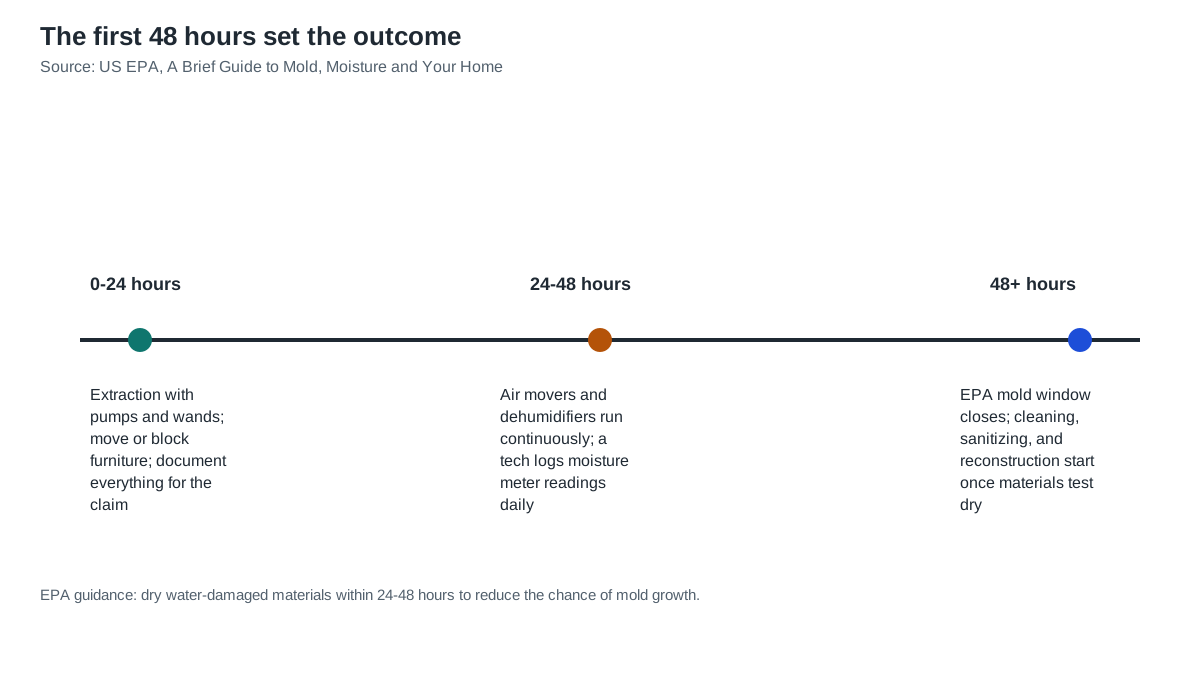
Kings County's own numbers explain why the clock matters here specifically. FEMA rates the county's riverine and inland flooding risk as Very High, with an annualized frequency near two events a year, not a once-a-decade thing. The EPA's 24-to-48-hour drying window is the clock a restoration crew is actually racing. The EPA's guidance is blunt about the window: dry materials within 24 to 48 hours or plan on a mold problem layered on top of the water problem. That's not a scare number from a contractor's sales sheet. It's the federal agency that studies indoor air quality. For a fuller walkthrough of these first sixty minutes, see our emergency first-hour guide.
Why This Happens So Often in Kings County
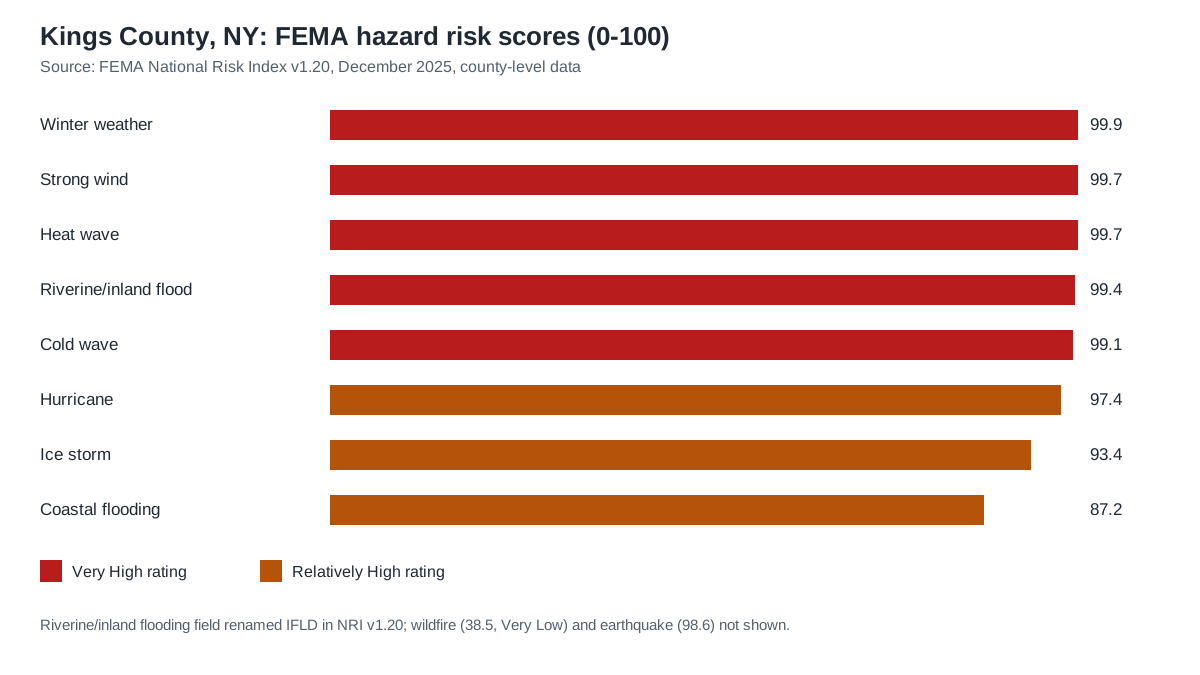
Brooklyn sits inside Kings County, part of the New York-Newark-Jersey City metro area, and FEMA's National Risk Index gives the county an overall risk score of 99.27, in the Relatively High tier, essentially at the top of the national curve once you weight for how many hazards stack here at once, not just one dominant threat. Kings County's FEMA hazard ratings run Very High or Relatively High across nearly every water- and weather-driven category on the National Risk Index. Winter weather scores 99.87 (Very High), with an annualized frequency above eight events a year. Lightning is modeled even more often, at roughly 33 events a year, but winter weather is the hazard that turns a cold snap into a burst pipe. Strong wind isn't far behind at 99.75, and cold wave sits at 99.11, both rated Very High.
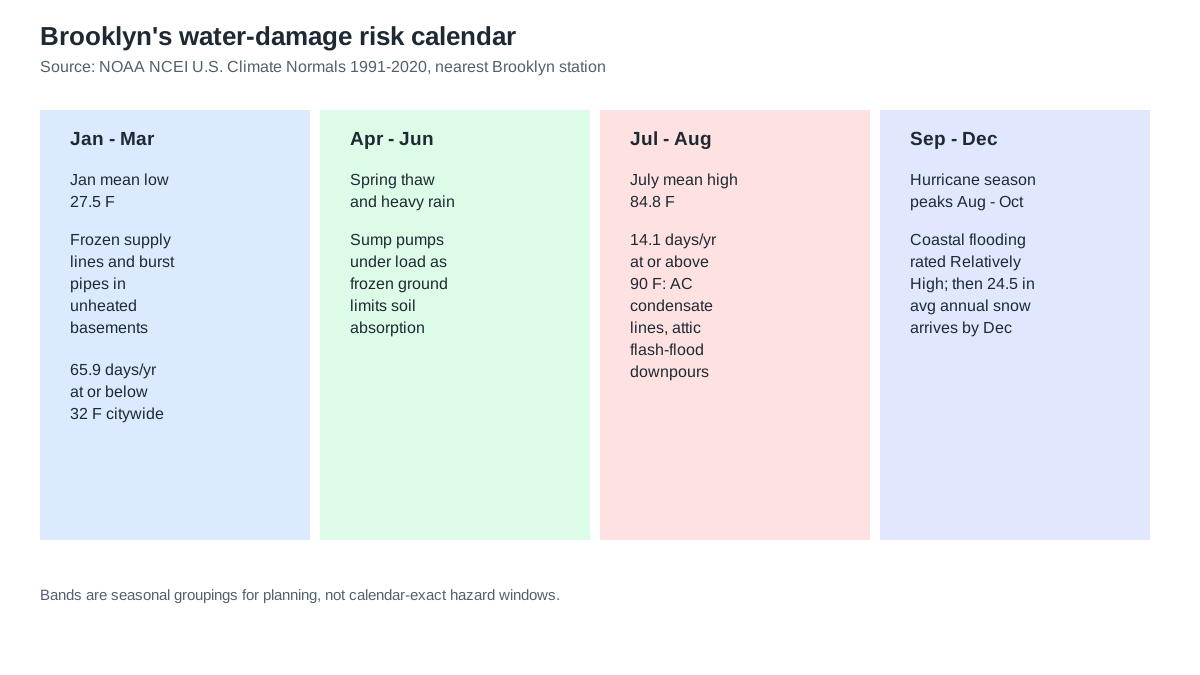
NOAA's 1991-2020 climate normals for the nearest Brooklyn station put the picture in plain numbers: a January mean low of 27.5°F, 65.9 days a year at or below freezing, and 24.5 inches of average annual snowfall. NOAA's 1991-2020 normals for Brooklyn line up with a distinct seasonal pattern in what actually floods a house here. That's a lot of nights where an exposed supply line in an unheated basement or a vacant unit can freeze, split, and thaw out onto the floor before anyone notices. On the other end of the calendar, July averages a mean maximum of 84.8°F, with 14.1 days a year hitting 90°F or hotter. That's enough heat load to keep AC condensate lines running long stretches, a quieter but steady source of ceiling and closet leaks in older apartment buildings.
Coastal flooding rates Relatively High here too, at a score of 87.2, and hurricane risk scores 97.41 with an annualized frequency of roughly one system worth watching every six to seven years, not every year, but often enough that a low-lying block near the waterfront should have a plan. FEMA's separate flood fact sheet is worth knowing on its own: just one inch of water across a floor can cause roughly $25,000 in damage, and more than 40% of NFIP claims nationally come from outside the officially mapped high-risk zones, meaning a property that's never flooded before isn't the same as a property that never will.
Two more county-level numbers matter for how a claim actually plays out here. FEMA rates Kings County's social vulnerability as Very High and its community resilience as Very Low relative to other US counties, a shorthand for how much slack a household and a neighborhood have to absorb a bad loss and bounce back quickly. That's not a reason to panic. It is a reason to document early and lean on your insurer's timeline rather than assume things sort themselves out.
What Brooklyn Homeowners Are Actually Dealing With
Search traffic here breaks into a handful of real situations, and each one calls for slightly different guidance rather than one generic answer.
Emergency, after-hours, and same-day calls
Most people searching emergency water damage restoration, 24 hour water damage, or after hours water damage are standing in it right now. A restoration company built for this works around the clock: 24/7 water removal and same day water extraction aren't marketing phrases so much as the baseline for the job, since water doesn't wait for business hours and neither should the response. Emergency flood cleanup after a storm surge or a burst main follows the same first-hour steps above, just at a larger scale.
The symptom you actually see
A lot of searches start with what's visible, not a diagnosis. A water stain on ceiling or ceiling leaking water usually traces back to a roof flashing failure, an upstairs neighbor's plumbing, or an AC line, and in a rowhouse or a walk-up, that source can be two floors away from where the stain shows up. A flooded basement or standing water in basement points toward grade, a failed sump, or a sewer backup depending on whether the water is clear or foul-smelling. Wet carpet water damage and crawl space flooding both hinge on how fast the material dries: carpet padding almost never survives a Category 2 or 3 loss and gets discarded rather than dried.
What an appliance did to the room around it
Appliance failures are their own category, and Brooklyn's older buildings see plenty of them: washing machine flood cleanup after a supply hose lets go, dishwasher leak water damage pooling under cabinets, water heater burst flooding from a tank that finally gave out, and toilet overflow cleanup where the water's cleanliness depends entirely on whether it backed up from the bowl or the line behind it. A burst pipe flooded house search usually means a supply line, not a drain, which changes the category of water and the pressure behind it. Sump systems fail too: sump pump overflow during a hard rain is one of the most common calls after a storm rolls through, and a frozen discharge line during a cold snap causes the same overflow from the opposite direction.
Sewage, structural, and long-term damage
Sewage backup cleanup and basement sewage backup are Category 3 by definition: they call for PPE, disposal of porous materials that contacted the water, and disinfection, not just drying fans. Once water has been sitting, the questions shift to what's salvageable: drywall water damage repair (cut and replace below the water line, dry and repaint above it), hardwood floor water damage (cupping and buckling are often reversible if caught inside that 24-to-48-hour window; if not, boards get pulled), and roof leak water damage tracing a path from shingles or flashing down through the attic to a stained ceiling below. Left long enough, any of these becomes mold from water damage, and New York treats that as its own licensed trade, covered further down.
Commercial buildings and what it costs
Commercial water damage restoration and commercial flood cleanup in Brooklyn carry the added pressure of a business that can't stay closed. A restoration company working a storefront or a multi-unit building typically phases the work to get part of the space usable while drying continues elsewhere. A good share of everyone above eventually lands on the same two questions: what a water damage restoration cost figure actually looks like here, and how to get water damage insurance claim help without losing weeks to paperwork. Both get a full section below, with real ranges and sources rather than a guess.
What a Water Damage Crew Actually Does, Step by Step
Professional water damage restoration in the US follows ANSI/IICRC S500, the industry standard published by the Institute of Inspection, Cleaning and Restoration Certification. It splits every job along two axes: category (how contaminated the water is: 1 clean, 2 gray, 3 black) and class (how much of the structure and its contents absorbed water, 1 through 4). That distinction is why two jobs that look similar on the surface can price wildly differently.
Assessment and moisture mapping. A tech uses a moisture meter and often a thermal camera to find water that migrated behind walls or under flooring, since the damage you can't see is usually worse than what you can.
Extraction. Pumps and truck-mounted or portable extraction wands pull standing and absorbed water out before drying equipment goes in; the faster this happens, the less gets thrown into the demolition pile.
Controlled demolition. Saturated drywall, insulation, and flooring that can't be salvaged come out, typically cut in a straight line above the visible water mark, not the whole wall.
Structural drying. Air movers and industrial dehumidifiers run continuously, with a tech logging moisture meter readings daily against a documented dry standard (usually the moisture content of an unaffected reference area in the same building).
Cleaning and antimicrobial treatment. Surfaces that stayed and contents that were salvaged get cleaned and, for Category 2 or 3 water, treated to control microbial growth.
Reconstruction. Once everything tests dry, drywall, flooring, trim, and paint go back. This is where a general contractor or the restoration company's own build team takes over.
A good crew documents every step with photos and moisture readings your insurer can review later; a crew cutting corners skips the daily monitoring and calls a space "dry" on a schedule instead of a meter reading. That gap is usually invisible until the drywall gets closed up over material that wasn't actually dry, and the mold shows up weeks later. Our full restoration process guide walks through each of these stages in more depth.
What It Costs in Brooklyn
There's no Brooklyn-specific price survey to cite, and anyone who tells you an exact local number without seeing your job is guessing. What we can do honestly is give you the national research ranges below, plus one real local adjustment: the federal Bureau of Economic Analysis puts the Regional Price Parity for the New York-Newark-Jersey City metro at 112.6 (US average = 100) for all goods and services, and 148.6 for services tied to housing and rent, meaning labor-heavy work like extraction and drying tends to run above the national midpoint here, not below it.
Job or category
National typical range
What moves the price
Source
Overall project (national average $3,868)
$1,383 – $6,369
square footage affected, category of water, response speed
HomeAdvisor, 2026
Category 1 clean water, per sq ft
$3 – $4.25
source of the leak
Bob Vila / Fixr
Category 3 black water, per sq ft
$7.00 – $7.50
PPE, disposal, disinfection
Fixr
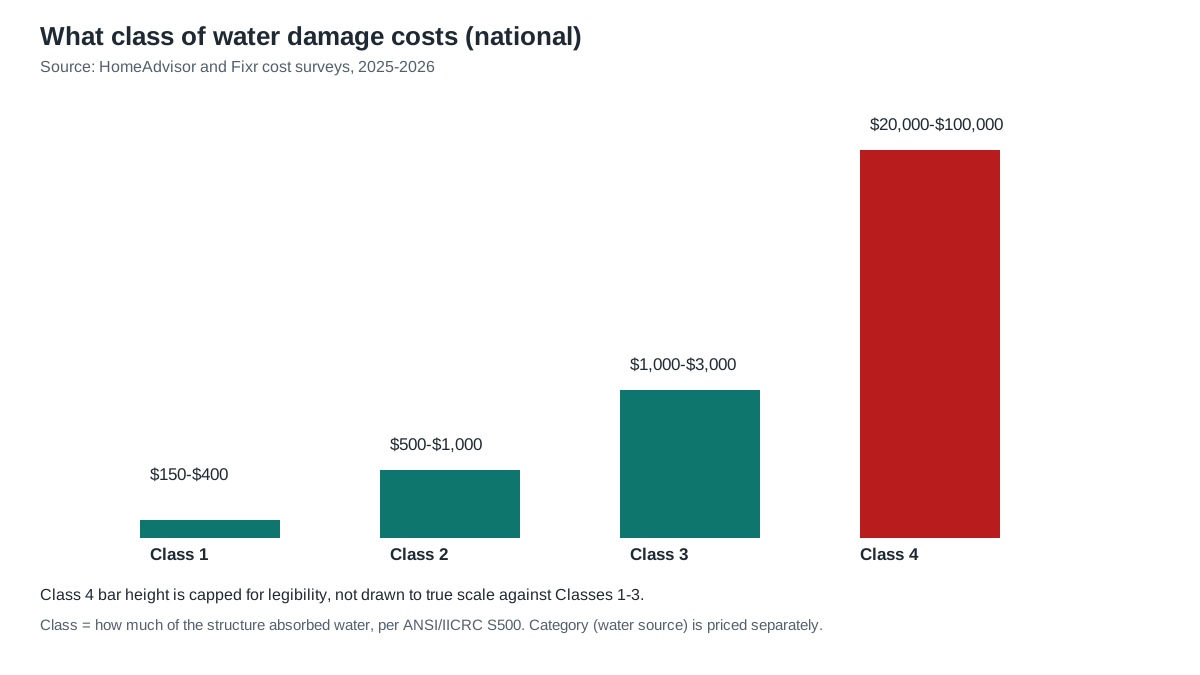
Class 1 (minor)
$150 – $400
how little material absorbed water
HomeAdvisor
Class 4 (specialty drying / disaster)
$20,000 – $100,000
structural elements, hardwood, plaster
HomeAdvisor
Basement water damage
$500 – $85,000
finished vs. unfinished, foundation repair
HomeAdvisor / Fixr
Drywall replacement
$300 – $850
square footage, ceiling vs. wall
HomeAdvisor
Mold remediation
$1,100 – $9,000
square footage, whether HVAC is involved
HomeAdvisor / Fixr
Sewage backup cleanup
$2,000 – $15,000+
contamination class, how long it sat
HomeGuide
Sump pump install
$640 – $2,000
pump type, battery backup
HomeAdvisor
Cost scales with how much of the structure absorbed water, not just square footage. Class 4 jobs run tens of thousands more than Class 1. Notice the spread inside a single line item, like basement work running from $500 to $85,000: that's not sloppy research, it's the honest range between a wet-vac-and-fans afternoon and a foundation-crack disaster. Water damage restoration cost conversations should start with your square footage and category of water, not a single headline number. Get a written local estimate before you agree to anything. A phone quote isn't a contract, and it isn't binding on either side. Our full cost breakdown guide goes deeper into each of these ranges.
Insurance and Claims Under a New York Policy
A standard HO-3 homeowners policy in New York typically covers water damage that's sudden and accidental: a pipe that bursts, an appliance that fails, a roof that's suddenly breached in a storm. It typically excludes gradual damage (a slow leak you should have caught), sewer or drain backup unless you bought a specific endorsement for it, and flooding from rising groundwater or overflowing bodies of water, which falls under a separate NFIP flood policy rather than your homeowners policy. Given that Kings County's coastal and riverine flood ratings both sit in the Relatively High to Very High range, that gap is worth checking on your own policy declarations page before you need it, not after. Our insurance claim guide walks through documentation and the appeal process in more detail, and the New York water damage hub covers coverage questions statewide.
Nationally, water damage and freezing account for about 27.6% of homeowners insurance losses, second only to wind and hail, with an average claim severity near $13,954, according to the Insurance Information Institute's most recent published figures. That tells you this isn't a rare claim type your insurer hasn't seen before; adjusters process these constantly, which usually works in your favor if your documentation is solid.
Two things worth knowing that are specific to New York. First, repair, maintenance, and installation labor is generally taxable under state tax law, while capital-improvement work (a true replacement or upgrade, documented on the right form) is not. Ask your contractor which category your invoice falls under, since it affects the final bill. Second, insurance complaints or questions about how an insurer is handling your claim go to the New York State Department of Financial Services, the state's insurance regulator, not to a federal agency.
Documentation checklist before the adjuster arrives
Photos and video of standing water depth and the water line on walls, timestamped if your phone does that automatically
A list of damaged contents with approximate purchase dates, not estimated replacement cost
Receipts for any emergency mitigation you paid for yourself
The restoration company's written scope and moisture logs once work begins
Your policy's declarations page, so you know your deductible and any water-damage sub-limits before you're negotiating under pressure
A public adjuster works for you and is paid a percentage of the settlement; a company adjuster works for the insurer. Neither is inherently wrong to use, but know which one you're talking to, and don't sign away your right to a second opinion in the first conversation.
How to Choose a Restoration Company in Brooklyn
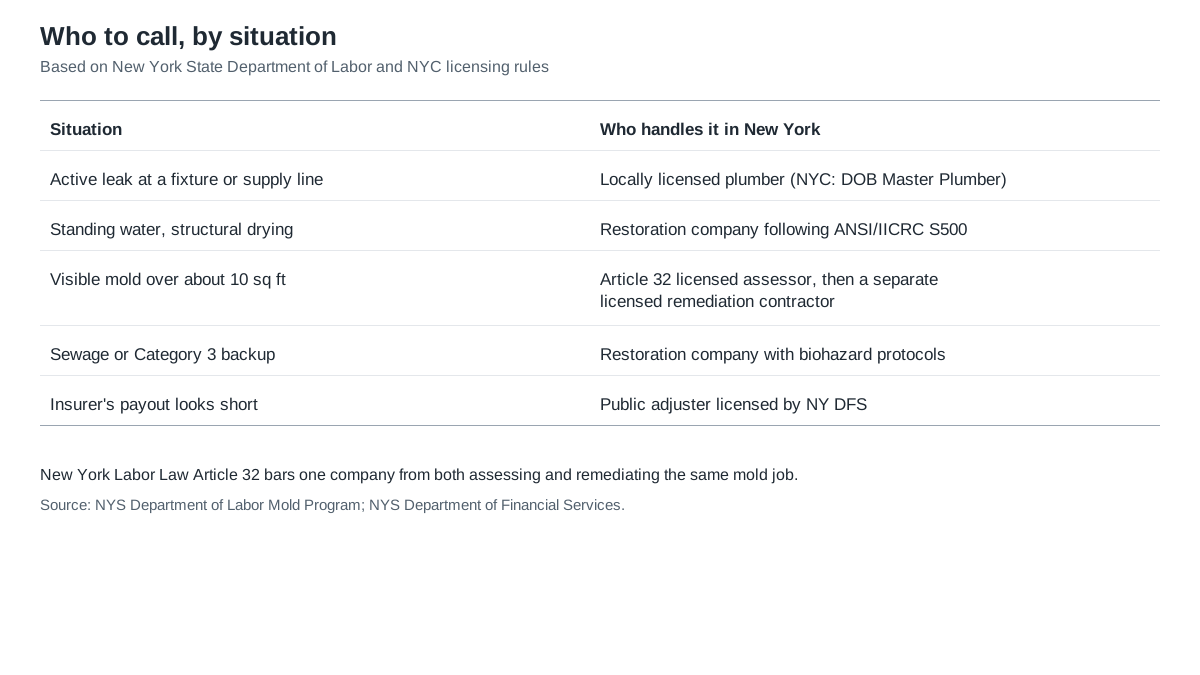
New York doesn't issue one statewide contractor license the way some states do. Plumbing is licensed locally: in New York City, that means the Department of Buildings' Master Plumber license after exam and background check, under NYS General City Law Article 4, not a state board. General home-improvement contracting is licensed in New York City and in Suffolk, Nassau, Westchester, Putnam, and Rockland counties specifically; elsewhere in the state, no license is required for that work at all. Mold work is the exception that actually is state-licensed: New York State Department of Labor's Article 32 program requires separate licenses for mold assessors, mold remediation contractors, mold abatement workers, and mold supervisors, and the same company legally cannot both assess and remediate mold on one project, a built-in conflict-of-interest rule most homeowners have never heard of. New York splits several of these jobs by license in ways a national guide won't tell you.
Practically, that means a written estimate from a Brooklyn restoration company should tell you plainly which parts of the job (plumbing, drying, mold, general contracting) are being handled under which license, and by whom. Ask for:
What to verify before you sign anything
Proof of general liability insurance and workers' compensation coverage
IICRC certification for the technicians actually on site, not just the company's marketing page
The applicable local license number (NYC DOB for plumbing; NYC DCWP or your county's consumer affairs office for home improvement contracting; NYS DOL for mold)
A written scope of work listing category and class of water, equipment to be used, and an estimated drying timeline
Clear language on what's included versus billed separately (reconstruction, contents cleaning, mold testing)
Red flags: a company that pressures you to sign a blank or vague authorization form on the spot, one that can't produce a license number when asked, or one that quotes a firm total price before ever measuring moisture levels in your walls. A legitimate restoration company that serves Brooklyn will walk the space, take readings, and put the scope in writing. If you want to talk through your situation first, call 888-407-9931 and describe what's going on. Our full hiring guide covers more red flags and the exact questions to ask before you sign.
What You Can Safely Handle Yourself, and Where That Ends
A homeowner can reasonably handle a small, clean-water spill: mopping up a dishwasher overflow caught within the hour, running a box fan and a dehumidifier on a damp spot, or pulling up a small wet rug to dry outside. The EPA's own guidance draws a rough DIY line at about 10 square feet of visible mold (roughly a 3-foot by 3-foot patch), below which a homeowner working on their own property is exempt from New York's mold licensing rules entirely and can clean it with soap, water, and proper ventilation.
Past that, the math stops favoring you. Any water that's gray or black (a backed-up drain, floodwater, anything sitting more than a day or two), any area larger than that mold threshold, any water anywhere near electrical, and any job that involves cutting into a wall or ceiling to check for hidden moisture: those all move into professional territory, both for safety reasons and because doing it wrong can void part of an insurance claim later. Renting a dehumidifier and a couple of fans from a hardware store doesn't hit the CFM (air movement) that a truck-mounted extraction and drying setup delivers in the same 24 hours. You can slow the damage, but you generally can't out-dry a real loss on consumer equipment alone.
Situation
Handle it yourself
Call a licensed pro
Clean water, caught within the hour, under about 10 sq ft
Yes: fans, a wet vac, a dehumidifier
Optional second opinion
Gray or black water (drain backup, floodwater, sitting 48+ hrs)
No
Restoration company, Category 2 or 3 protocol
Visible mold over about 10 sq ft
No
NYS Article 32 licensed assessor, then remediator
Water near an outlet, appliance, or the panel
No, power off first
Electrician, then restoration company
Suspected hidden moisture behind a wall or under flooring
No
Restoration company with a moisture meter
One more limit worth naming plainly: don't assume a musty smell that fades after a week means the problem is solved. Mold can establish behind a wall or under flooring where you can't see or smell it from the room, which is exactly why the moisture-meter step in a professional job exists. It checks what your nose can't.
Preventing the Next Flood in a Flood- and Ice-Storm-Prone County
Prevention here has two distinct seasons to plan around, not one. Going into winter, insulate exposed supply lines in unheated basements, garages, and vacant units, and know where your main shutoff is before a pipe splits at 2 a.m. With 65.9 days a year at or below freezing, that's not a rare event to prepare for once and forget. A sump pump with a battery backup matters more here than in a lot of the country: Kings County's winter weather and cold wave hazards both rate Very High, and a power outage during a storm is exactly when a sump pump is needed most and least likely to have grid power.
Going into the warmer months, check roof flashing and gutters before the summer's heavier downpours, and have AC condensate lines cleared. A clogged line during a stretch of the 14.1 average days a year at 90°F or hotter is a slow, quiet way to ruin a ceiling from the inside. Given that coastal and hurricane risk both rate Relatively High for the county, anyone on a low-lying block near the water should also know their flood zone and whether a separate NFIP policy makes sense, since standard homeowners coverage generally won't pay for that kind of loss.
None of this eliminates risk in a county FEMA already rates this high across so many categories at once. It does shrink the gap between a $400 Class 1 job and a $20,000 Class 4 one, and that gap is almost always decided by how fast someone notices and acts, not by luck.
Frequently asked questions
How long does water damage restoration take?+
A typical Class 1 or 2 job runs 3 to 5 days: extraction on day one, then 2 to 4 days of monitored structural drying before reconstruction starts. Larger Class 3 or 4 losses, or anything involving hardwood floors and structural drying, can stretch to two weeks or more before a moisture meter confirms everything is dry enough to close walls back up.
What does a water damage restoration company actually do?+
It extracts standing water, removes materials that can't be saved, and runs air movers and dehumidifiers under ANSI/IICRC S500 standards until moisture readings confirm the space is dry. Many companies also handle reconstruction, or coordinate with a general contractor, and document the whole process for your insurance claim.
How much does water damage restoration cost in Brooklyn?+
There's no Brooklyn-specific published survey, but national research puts the typical range at $1,383 to $6,369, averaging about $3,868, with sewage or Category 3 jobs running $7 to $15 or more per square foot. The federal Regional Price Parity for this metro runs above the national average, so a written local estimate is the only reliable number.
Does homeowners insurance cover water damage in New York?+
Usually, if it's sudden and accidental, like a burst pipe or a failed appliance. Standard HO-3 policies typically exclude gradual leaks, sewer backup without a specific endorsement, and flooding from outside water sources, which falls under a separate NFIP flood policy instead of your homeowners coverage.
Should I file an insurance claim for water damage?+
It depends on the cost relative to your deductible and how a claim might affect future premiums; there's no single right answer. Document everything with photos and a contents list either way, since that record is what protects you whether you file now, later, or not at all.
Who fixes water damage, a plumber or a restoration company?+
A licensed plumber stops the leak at its source and repairs the pipe or fixture. A restoration company handles everything after that: extraction, structural drying, and often reconstruction. Larger jobs typically need both, working in sequence rather than one company doing everything.
Can water damage be fixed, or does it always mean replacement?+
Most water damage can be fixed if it's caught inside the EPA's 24-to-48-hour drying window; drywall, subfloor, and even some hardwood can be dried and saved. Past that window, or with sewage-contaminated (Category 3) water, porous materials usually have to be removed and replaced rather than dried.
How do I repair a water-stained ceiling?+
First find and fix the source above it, whether that's a roof leak, an upstairs unit's plumbing, or an AC line, since repainting over an active leak just hides the next stain. Once the area tests dry, cut out and replace any sagging or crumbling drywall, then prime with a stain-blocking primer before repainting.
How do I repair water damage under a kitchen sink?+
Shut off the supply valves under the sink first, then dry the cabinet floor and check whether the particleboard base has swollen or delaminated, since that material rarely recovers once soaked. A small, caught-early leak often just needs drying and a new fitting; standing water that sat for days usually means replacing the cabinet floor.
Is water damage repair tax deductible in New York?+
Repair, maintenance, and installation labor is generally taxable to you as the customer under New York sales tax law, while true capital-improvement work is not taxed the same way. Deductibility on your income taxes is a different question entirely and depends on your specific situation, so that call goes to a tax professional, not a restoration company.
What water damage is covered by insurance versus what isn't?+
Sudden events like a burst pipe, a failed water heater, or storm-driven roof damage are typically covered under a standard HO-3 policy. Gradual leaks, flooding from outside water sources, and sewer backup without an added endorsement are the most common exclusions, so check your declarations page rather than assume.