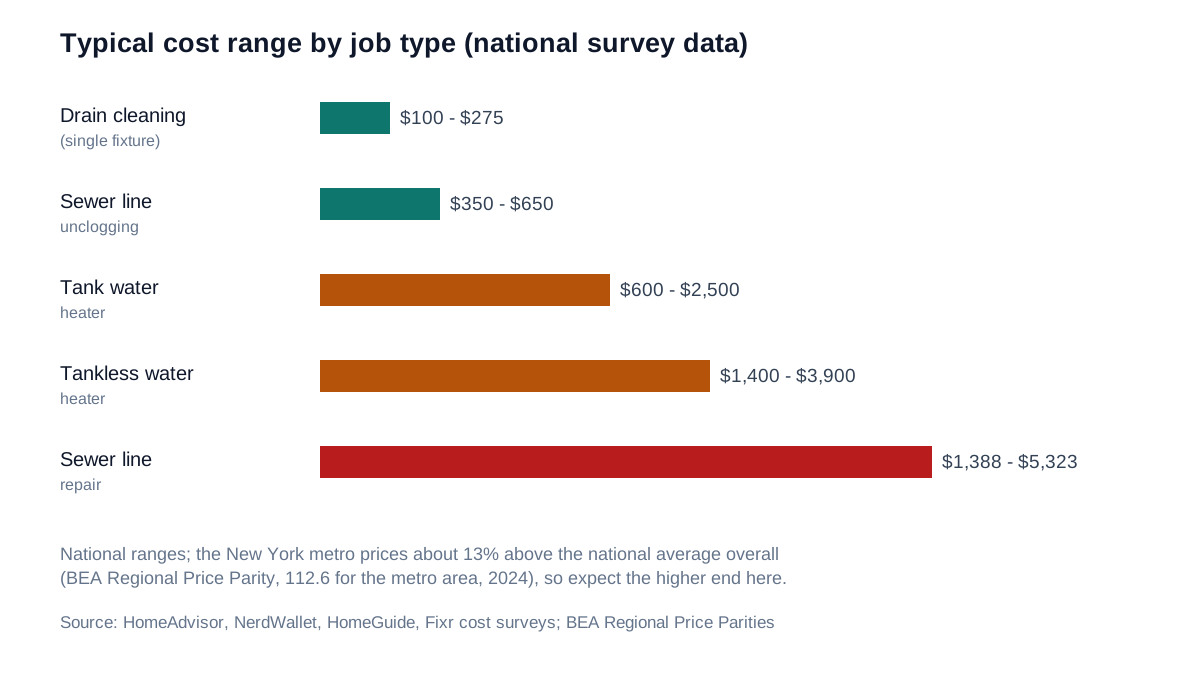
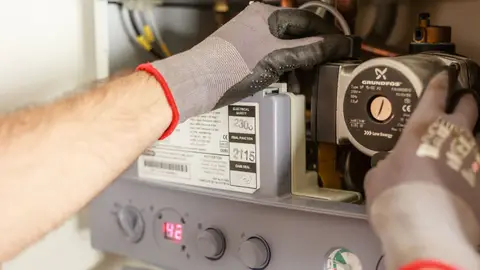
In Brooklyn, national cost surveys put drain cleaning at $100 to $500, a tank water heater replacement at $600 to $2,500, and sewer line repair at $1,388 to $5,323 — the New York metro runs about 13% above average, so expect the higher end. Shut off water at the main, cut power to anything wet, and call a licensed plumber before anyone touches a wrench.
Type "plumber Brooklyn" into Google on a Tuesday night with water spreading across your kitchen floor and you'll get six ad slots before you get a straight answer. Search "plumbing Brooklyn" during a July heat wave and it's worse: every garbage disposal in Kings County seems to jam on the same 95-degree afternoon. This page skips the ad slots. It's a working reference for what actually goes wrong with pipes, water heaters, and drains in this borough, what a licensed plumber will actually charge here, and how Brooklyn's building stock, weather, and New York's patchwork of local licensing rules change the answer from what you'd read on a national site.
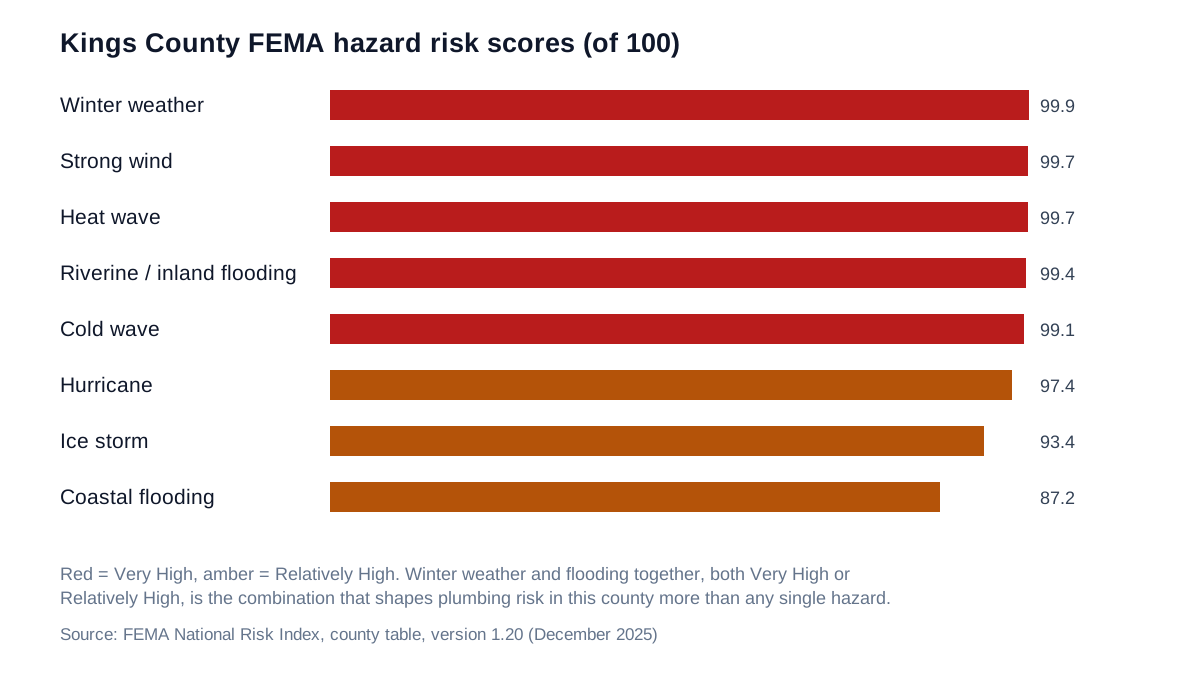
Kings County (Brooklyn's official name on every FEMA and Census table) carries a Relatively High overall FEMA National Risk Index rating, and two hazards drive most of the plumbing calls that follow from it: riverine and inland flooding rates Very High, and winter weather rates Very High right alongside it. That combination is unusual. Most cities lean hard toward one or the other. Brooklyn gets a flood season and a freeze season, sometimes inside the same month.
What to Do in the First Hour of a Plumbing Emergency in Brooklyn
Water spreading fast changes the order of operations. Here's the sequence that matters most, in a Bed-Stuy brownstone, a high-rise near Downtown Brooklyn, or anywhere between:
Find the main shutoff. In an older rowhouse it's usually a gate valve near where the service line enters the basement, close to the water meter. In many Brooklyn multi-family buildings there's a shutoff for your unit and a separate one for the whole building; if you can't find yours fast, that second one is the fallback, but you'll need the super or building management to close it.
Cut power to any outlet or circuit that's wet or near standing water. Don't stand in water to reach a breaker panel.
Check for a gas smell before you touch anything electrical. If you smell gas anywhere in the building, get everyone out immediately, call the gas utility's emergency line from outside, and don't flip a switch, light a match, or use your phone until you're clear.
Once the water's off, start pulling up standing water and moving anything porous (rugs, boxes, furniture) off a wet floor. Every extra hour that carpet padding stays soaked adds to what has to be replaced later.
If the leak is ongoing and you can't isolate it yourself, call a plumber Brooklyn crews can reach same day at 888-854-0126 and describe exactly what you're seeing: where the water's coming from, whether it looks clean or gray, and what you've already been able to shut off.
An emergency plumber and a 24 hour plumber aren't always the same thing. Some outfits run a 24-hour answering service that dispatches the next morning; others genuinely send someone at 2 a.m. Ask directly which one you're getting before you agree to a same day plumber or after hours plumber call, especially on a weekend. A weekend plumber visit usually carries a separate dispatch fee on top of the hourly rate.
Why This Happens in Brooklyn and Kings County Specifically
Brooklyn is Kings County on the federal books, and every hazard rating and cost figure in this section is filed under that name. It's the most populous of New York City's boroughs, with roughly 2.65 million residents in the most recent five-year Census estimate, sitting inside the sprawling New York-Newark-Jersey City metro area. Density matters here in a boring but important way: shared building systems. A slow leak on the fourth floor of a prewar walk-up can travel through three ceilings before anyone downstairs notices, and shutting off water for a repair sometimes means shutting it off for the whole building, not just one unit.
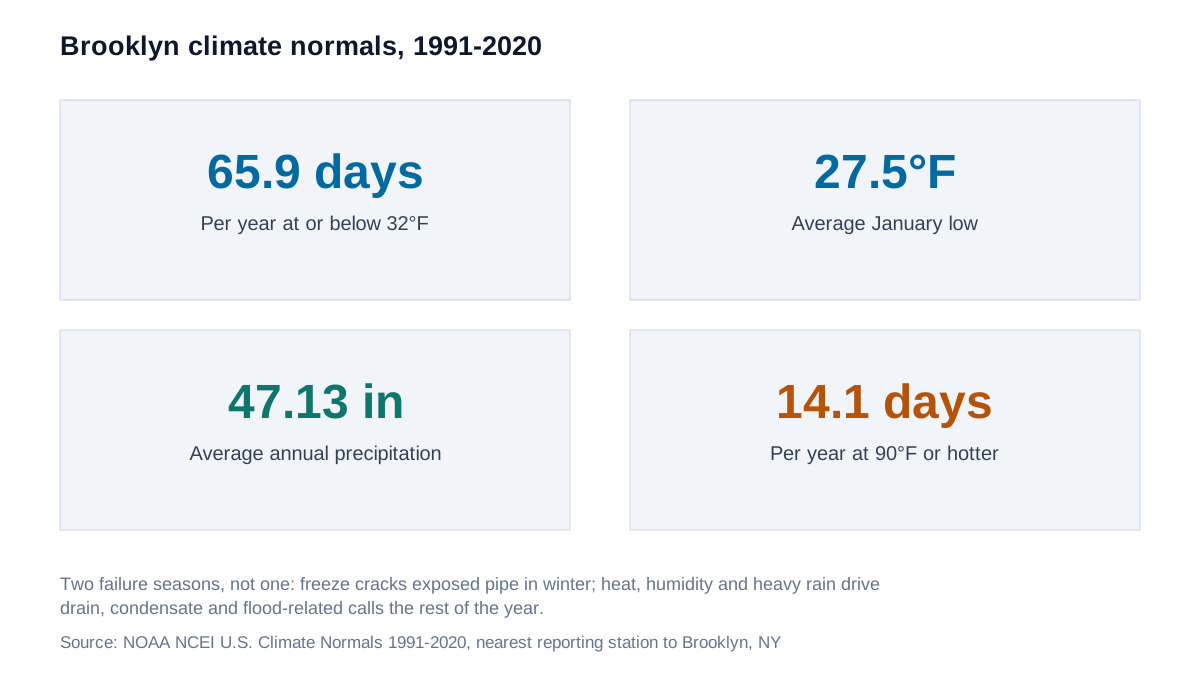
NOAA's 30-year climate normals for the station nearest Brooklyn put January's average low at 27.5°F and count 65.9 days a year (nearly ten weeks) at or below freezing. That's the window that cracks exposed pipe in an uninsulated basement ceiling or a hose bib nobody remembered to drain. Summer runs the other direction: 14.1 days a year hit 90°F or hotter, and July's average high sits at 84.8°F with enough humidity to keep window air conditioners and their condensate lines running nonstop, which is exactly when garbage disposals and older drain lines see their heaviest use.
Eight of Kings County's FEMA hazard ratings, all Relatively High or Very High (source: FEMA NRI, Dec. 2025).
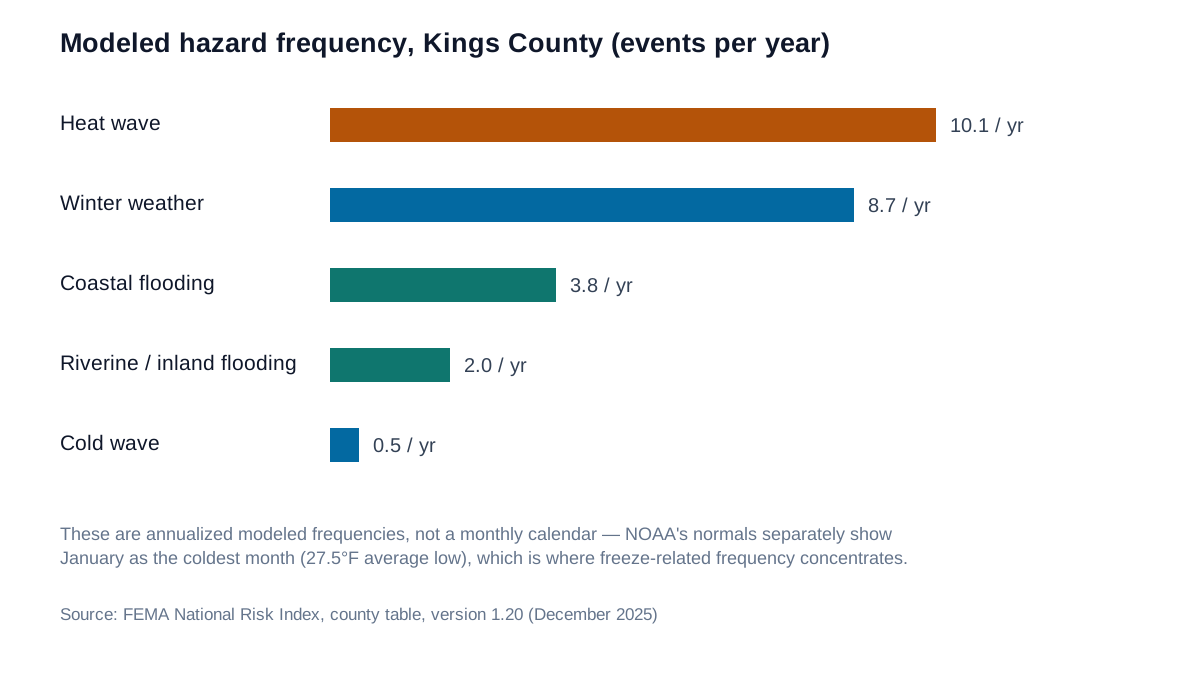
Then there's water. Brooklyn's normal annual precipitation is 47.13 inches, spread across the year rather than concentrated in a dry-then-wet pattern, plus another 24.5 inches of snowfall in a typical winter. FEMA's National Risk Index (the federal government's county-by-county hazard scoring system, current as of December 2025) rates Kings County's riverine and inland flooding as Very High, with a modeled annualized frequency of roughly two events a year, and coastal flooding as Relatively High. Winter weather rates Very High too, with FEMA modeling more than eight winter-weather events a year hitting the county; cold wave, strong wind, and heat wave all rate Very High as well, and hurricane risk rates Relatively High. Put plainly, this is a county built to flood from below, above, and the coastline in the same calendar year, and a plumbing system here has to handle all three.
NOAA's 1991-2020 climate normals for Brooklyn, the numbers behind the freeze and flood seasons.
None of this comes cheap to fix, either. The Bureau of Economic Analysis prices the New York-Newark-Jersey City metro area at 112.6 on its Regional Price Parity index, where 100 is the national average: labor and materials here run roughly 13% above what a national cost survey assumes, before factoring in the logistics of working in a rowhouse basement or a building with one working elevator.
The Plumbing Problems Brooklyn Searches For Most
How people actually type it into a search bar says a lot about what breaks and when. Here's what's usually behind the most common searches, and what to do about each one.
Emergency and after-hours calls
When something fails outside business hours, the terms multiply: emergency plumber, 24 hour plumber, same day plumber, after hours plumber, weekend plumber, emergency drain cleaning. In Brooklyn, all six usually point to the same underlying question: can someone come now, and what will it cost to have them come now. Ask for the after-hours dispatch fee on the phone, before a truck rolls, not after.
Clogs and drainage symptoms
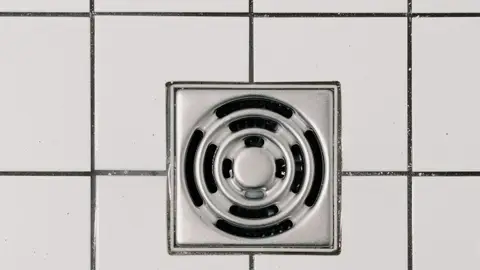
A slow draining sink is usually hair, grease, or soap scum narrowing the trap, and a plunger or hand snake often clears it without a call. Clogged toilet repair and overflowing toilet searches spike together: check the tank first (flapper, fill valve, chain) before assuming the worst, since running toilet repair and a toilet not flushing are frequently the same simple fix. Clogged drain repair that keeps coming back in the same fixture points to something further down the line, not the fixture itself; a shower drain clogged with hair and soap film is about as common a call as this trade gets and rarely needs more than cabling. Kitchen sink clogged searches usually mean grease solidified in the trap or the line just past it. A smelly floor drain, especially in an older basement, is often just a dry trap: pour a gallon of water down it and see if the smell disappears before paying anyone to look at it.
No hot water and water heater trouble
No hot water at all, on a cold morning, is the single most panic-inducing search on this list, and it's often the cheapest fix — a tripped reset button or a pilot light, not a full water heater replacement. For a tank water heater repair versus a swap, the tank's age usually decides it. Water heater leaking from the bottom of the tank generally means the tank itself has failed and repair isn't really on the table; a leak from a fitting near the top can often just be tightened or a valve replaced. If you're searching by brand (rinnai tankless water heater repair, rheem water heater repair, ao smith water heater repair, navien tankless repair, bradford white water heater repair), the fix usually comes down to whether the part is still under manufacturer warranty and whether a local plumber stocks that brand's parts or has to order them, which changes your timeline more than your final water heater replacement cost.
Leaks, burst pipes and structural damage
Pipe burst under sink almost always means the supply line or the P-trap, and it's within reach of a confident do-it-yourselfer to shut off and even replace. A main water line leak or a slab leak repair is a different scale of problem: there's no visible pipe to look at, just a wet spot on a slab or a jump in the water bill, and a leak detection service using acoustic or thermal equipment is what actually finds it before anyone starts cutting concrete. Frozen pipe repair searches spike hard in the days right after Kings County's coldest stretch, not during it; a burst pipe repair after a freeze almost always traces back to a section of pipe that sat exposed to unheated air (a basement ceiling, an exterior wall, a crawlspace) longer than it could take. Low water pressure repair searches split two ways: a single fixture, usually a clogged aerator or worn cartridge, or the whole house, more likely a pressure regulator or corroded galvanized pipe common in older housing stock here, worth ruling out before anyone opens a wall.
Sewer backups and main lines
Sewer backup repair searches usually follow the same pattern: multiple drains backing up at once, often the lowest fixture first: a basement floor drain or a ground-floor toilet. That's a main-line symptom, not a single-fixture one, and a store-bought snake won't touch it. Backed-up sewer water carries bacteria and raw waste, so keep kids and pets away from it, don't touch it bare-handed, and toss anything porous it soaked instead of trying to clean it. A rooter service or hydro jetting call clears roots and grease from the main line; jetting uses pressurized water instead of a cutting head and does a more complete job on a line that clogs the same way every year. If the pipe itself is cracked, offset, or collapsed rather than just blocked, that's sewer line repair territory, and sewer line repair cost is the number people search for right before deciding whether to fix it or sell the house and move.
Fixtures, appliances and gas
Garbage disposal not working is almost always a jam or a tripped reset button underneath, not a dead motor. Check both first. Dripping faucet repair searches, including brand-specific ones like moen faucet repair, kohler toilet repair, and delta faucet repair, usually come down to a worn cartridge or washer; most major brands sell the part directly, which keeps a DIY fix cheap if you shut off the fixture's stops first. Gas line repair is not a do-it-yourself category under any circumstance: in New York, gas piping work falls under the same local licensing as plumbing, and a bad connection is a life-safety issue, not a maintenance one. Sump pump installation searches climb with every heavy-rain event, for exactly the reason Kings County's flood ratings suggest: a basement below street level with nowhere for water to drain on its own needs a mechanical way to move it back out.
Commercial properties
A commercial plumber and commercial drain cleaning are their own category: grease trap maintenance for a restaurant, backflow preventer testing for a multi-unit building, or a floor drain serving a laundromat all run on inspection schedules a residential plumber may not handle daily. If you manage a commercial property in Brooklyn, ask specifically about backflow testing certification and grease trap experience, not just a general license.
Cost questions and picking someone
The remaining cluster of searches is really one question asked five ways: drain cleaning cost, water heater replacement cost, sewer line repair cost, best plumber, and licensed plumber all lead back to how not to overpay and not get burned. A licensed plumber, a local plumber, and a plumbing company aren't guaranteed to be the same size operation: some of the best-reviewed plumbing services in Brooklyn are a two- or three-person outfit, not a franchise. The cost table below and the hiring section after it answer both halves of that question directly.
What the Work Actually Involves
What actually happens once a plumbing company shows up depends on the job, but a few things stay consistent. For a tank water heater repair or replacement, a competent crew shuts off both the water and the fuel supply, drains the old tank, checks whether the venting and gas or electrical connections meet current code before reconnecting a new unit, and (this step gets skipped by rushed crews) installs or verifies an expansion tank and a drain pan with a proper overflow route, which New York's 2025 Uniform Code expects on a closed system. Skipping that check is the difference between a $150 line item now and a slow leak nobody notices for a year.
Drain and sewer work splits into a few tiers of intensity, and matching the method to the actual clog matters more than most homeowners realize:
Method
What it actually clears
Typical cost range
Cabling / snaking
Hair, grease, and soft blockages in a single fixture or a main line
$100 – $500
Hydro jetting
Grease buildup, root intrusion, and recurring clogs a cable head slides past
$300 – $1,400
Video camera inspection
Diagnosing what's actually wrong before choosing repair vs. replacement
$100 – $800
A crew that jumps straight to hydro jetting, or quotes a full sewer line replacement without running a camera first, is skipping the step that actually tells anyone what's wrong. Ask to see the footage; a good plumber will show you without being asked twice.
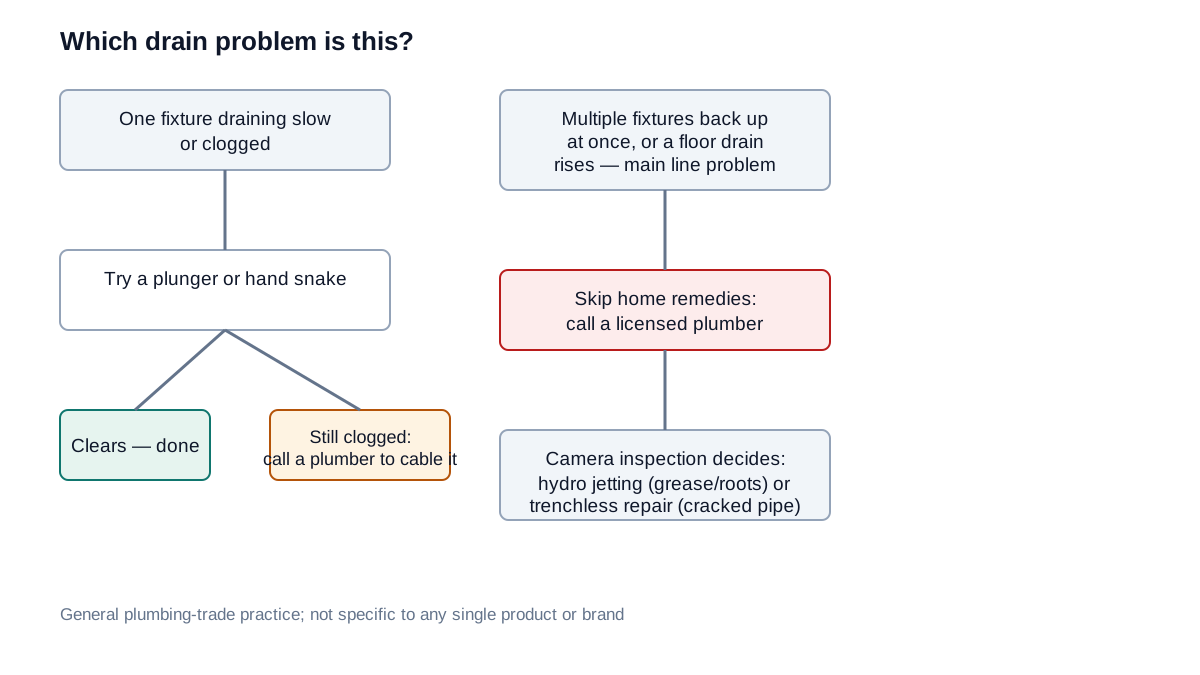
One fixture versus multiple fixtures is the fork in the road for DIY versus calling a plumber.
Sewer line repair itself now usually means one of three approaches: full open-cut replacement, cured-in-place pipe (CIPP) lining that cures a new pipe inside the old one without digging up the yard, or pipe bursting, which pulls a new pipe through the old one's path. All three price by the linear foot and depend on how deep the line runs and what sits above it: a sidewalk, a stoop, a mature street tree.
What Plumbing Repairs Cost in Brooklyn
No cost-survey company breaks its numbers out at the neighborhood level, so what follows are national ranges from the surveys plumbing companies themselves reference, adjusted by the one hard local number available: the Bureau of Economic Analysis prices the New York-Newark-Jersey City metro at 112.6 on its Regional Price Parity index (2024, US = 100), meaning overall costs here run about 13% above the national average, with services pricing higher still. Treat every figure below as the start of a phone conversation, not a quote: a written, itemized estimate from a plumber who has actually looked at the job is the only number that counts.
Job type
Typical national range
What moves the price
Source
Drain cleaning, single fixture
$100 – $275
Access, clog location, whether a camera inspection is needed first
HomeGuide
Main line snaking
$200 – $500
Line length, number of access points, root intrusion
Tank size, fuel type, whether venting or an expansion tank needs updating
HomeAdvisor, NerdWallet
Water heater replacement, tankless
$1,400 – $3,900
Gas line upsizing, venting changes, unit capacity for the building
NerdWallet
Sewer line repair or replacement
$1,388 – $5,323 (avg. $3,319)
Linear footage, depth, trenchless vs. open-cut, what's above the line
HomeAdvisor
Sewer line unclogging
$350 – $650 (avg. $475)
Access point availability, severity, whether a camera pass is billed separately
Fixr
National cost ranges used as the Brooklyn benchmark, with the metro's above-average price index noted.
A couple of these numbers deserve context. That $3,319 average for sewer work covers everything from a $600 broken-pipe patch to a full replacement running well past $5,300: trenchless methods like CIPP lining or pipe bursting often cost more per linear foot than digging a trench, but they can save a sidewalk, a driveway, or a mature tree, which matters on a Brooklyn lot where there often isn't room for equipment to work any other way. The price gap between tank and tankless water heater replacement isn't really about the unit itself; it's mostly the tankless model's higher demand on gas line sizing and venting, which is labor, not hardware.
Insurance and Claims in New York
A standard HO-3 homeowners policy typically covers water damage that's sudden and accidental (a supply line that lets go without warning, a water heater tank that fails outright) and typically excludes damage from a leak that was ongoing, unmaintained, or something you knew about and didn't fix. That distinction is where most disputes start, which is why the first-hour photos matter almost as much as the repair itself: timestamped pictures of standing water, the failed part, and the shutoff valve you closed are what separates "sudden" from "you should have caught this sooner" in an adjuster's read of the claim.
New York's insurance regulator is the New York State Department of Financial Services (DFS), and it's the agency to contact if an insurer is slow-walking or denying a claim you believe is valid. Before filing anything, put together: dated photos of the damage and the failed part, the plumber's written estimate or invoice, any prior maintenance records for the fixture in question, and a room-by-room list of what got wet. A public adjuster works for you and takes a percentage of the settlement; the insurer's own adjuster works for the insurance company. For a claim in the low thousands, most homeowners deal directly with their carrier; for a larger loss, especially anything touching a shared building system, a public adjuster can be worth the fee.
One more New York-specific wrinkle worth knowing before the bill arrives: state tax law treats repair, maintenance, and installation labor and materials as taxable: a true capital improvement, permanently attached and adding value, is not, but a straight repair generally is. Ask which category your invoice falls under; it changes the final number more than most people expect.
How to Choose a Plumbing Company in Brooklyn
Start here: in New York, there is no statewide plumbing license. Plumbing is regulated locally, under Article 4 of the state's General City Law, and in New York City that means a Licensed Master Plumber issued by the Department of Buildings after an exam and background check. A licensed plumber working in Brooklyn should hand over that license number without hesitation: write it down, and don't treat a truck logo or a business card as proof of anything.
Beyond the license, ask for proof of general liability insurance and get a written estimate before work starts, not a verbal number, not a range texted to you afterward: an itemized document. A serious estimate lists the scope of work, the materials being used, whether a permit is required and who's filing it, the timeline, and what happens if the job turns out bigger than expected once someone opens a wall or a floor.
Red flags worth walking away from: a quote dramatically lower than every other bid, pressure to pay in full before work starts, no fixed address, and reluctance to put anything in writing. On the other side, a plumbing company that shows up on time, explains the diagnosis before pitching a fix, and hands over the license number without flinching is doing the basics right, which in this trade is most of the battle. For how New York's local-licensing patchwork plays out beyond Brooklyn, our plumbing in New York overview covers other cities in the state.
If you'd rather start with a call than a search, 888-854-0126 connects you with a plumber that serves Brooklyn; describe the problem and ask directly whether the person coming out is licensed for that specific work. General plumbing licensing doesn't automatically cover gas line work in every jurisdiction, so confirm it for anything involving a gas appliance.
Where DIY Ends and a Licensed Plumber Begins
A homeowner can reasonably handle: plunging a clogged toilet or sink, running a hand-crank drain snake on a single fixture, replacing a worn washer or cartridge in a dripping faucet, fixing a running toilet by swapping the flapper or fill valve, and tightening (not forcing) a loose supply-line fitting under a sink. All of that is standard maintenance, and doing it yourself is genuinely fine.
It ends at anything involving gas piping, anything requiring a permit under New York's Uniform Code, any repair on a shared building supply line, and any job that means cutting into a wall, ceiling, or slab to reach the pipe. A slab leak or a main line problem isn't a weekend project regardless of skill level; it needs leak-detection equipment most homeowners don't own and, often, a permit filed with the local building department before work starts. If a job touches a water heater's gas or electrical connection rather than just the tank itself, that's also past the DIY line: a mistake there isn't a slow leak, it's a fire or carbon monoxide risk.
One practical test: if the fix requires knowing whether a pipe is under pressure before you open it, or whether a line is gas or water before you cut it, that's the signal to stop and call someone.
Preventing Plumbing Problems in Brooklyn's Climate
Given Kings County's climate normals, prevention here is genuinely a two-season problem, not one. Before the cold sets in (historically the coldest stretch centers on January, when the average low sits at 27.5°F and the county racks up nearly 66 days a year at or below freezing), insulate any exposed pipe running through an unheated basement ceiling, garage, or exterior wall, disconnect and drain outdoor hose bibs, and know exactly where your main shutoff is before you need it in a panic. Frozen pipe repair calls cluster hard in the days right after a real cold snap, not during it; pipes usually crack while frozen and only start leaking once they thaw.
Kings County's modeled hazard frequency, not just severity (source: FEMA NRI, Dec. 2025).
On the flood side, FEMA models winter weather hitting the county more than eight times a year on average and heat wave conditions over ten times a year: frequency, not just severity, is why prevention here isn't a once-a-year checklist. Kings County also rates Very High for riverine and inland flooding and Relatively High for coastal flooding, and the county averages 47.13 inches of precipitation a year with no real dry season. A sump pump with a battery backup (worth the extra cost, since a power outage during a storm is exactly when the pump is needed most) and a backflow preventer on the sewer line are the two upgrades that do the most to keep a heavy-rain event from becoming a basement flood or a backup into your lowest fixtures.
Summer brings its own list: with 14.1 days a year at 90°F or hotter and July's average high near 85°F, window and portable AC condensate lines run heavily and can clog with algae if nobody's cleaned them since spring; check that line before it starts dripping through a ceiling. It's also, unsurprisingly, when garbage disposals see the heaviest cooking-related use and jam most often. Running cold water for a few extra seconds before and after each use costs nothing and prevents a real share of these calls.
Frequently asked questions
How much does it cost to hire a plumber in Brooklyn?+
It depends on the job, but national cost surveys are the closest benchmark available: drain cleaning runs $100 to $500, a tank water heater replacement runs $600 to $2,500, and sewer line repair runs $1,388 to $5,323 on average. The Bureau of Economic Analysis prices the New York metro area about 13% above the national average on its cost index, so expect the higher end of every range here, and always get a written estimate before work starts.
Do I need a permit for plumbing work in Brooklyn?+
Many jobs do, particularly water heater replacements, new gas lines, and anything touching the main water or sewer line, under New York's 2025 Uniform Code. A licensed plumber pulling the permit as part of the job is standard practice, not an extra favor. If a contractor suggests skipping a required permit to save time, treat that as a warning sign rather than a shortcut.
How do I verify a plumber's license in Brooklyn?+
New York has no statewide plumbing license: Brooklyn plumbers are licensed locally, through the New York City Department of Buildings, as a Licensed Master Plumber under Article 4 of the state's General City Law. Ask for the license number directly and confirm it before signing anything or paying a deposit. A legitimate plumber will not hesitate to provide it.
Does homeowners insurance cover a burst pipe in Brooklyn?+
Usually, if the failure was sudden and accidental: a standard HO-3 policy typically covers a pipe that lets go without warning. It typically excludes a slow leak that ran for weeks before anyone noticed, since insurers treat that as preventable gradual damage rather than a covered loss. Sewer backup often needs its own policy endorsement, so check your specific coverage rather than assuming it's included.
Why does Brooklyn get both frozen pipes and flooding?+
Kings County's FEMA hazard ratings show Very High risk for both winter weather and riverine/inland flooding, an unusual pairing most cities don't share. NOAA's climate normals explain why: nearly 66 freeze days a year drive winter pipe failures, while 47.13 inches of annual precipitation and Relatively High coastal flood exposure drive the other half. A plumbing system here effectively has to survive two separate hazard seasons instead of one.
Can I unclog a drain myself, or should I call a plumber?+
A single slow fixture is often fine to try yourself with a plunger or a hand snake first. If multiple drains back up at once, water rises through a floor drain, or the same fixture clogs again every few months, that points to a main-line problem needing a camera inspection and possibly hydro jetting, equipment most homeowners don't own and generally shouldn't need to.
What should I do if I smell gas near a plumbing fixture?+
Leave the building immediately, don't flip a light switch or use your phone inside, and call the gas utility's emergency line once you're outside. Never try to find or fix a suspected gas leak yourself. In New York, gas piping work falls under the same local licensing as plumbing specifically because a mistake here is a safety emergency, not a maintenance issue.
How is hydro jetting different from snaking a drain?+
Snaking pushes a rotating cable through a clog to restore flow, quickly and at lower cost. Hydro jetting uses high-pressure water to scour grease, roots, and buildup off the entire inside wall of the pipe, which costs more but lasts longer on a line that clogs repeatedly. If a plumber recommends jetting for a single simple clog, it's fair to ask why before agreeing to the higher price.
Is a tankless water heater worth it in a Brooklyn rowhouse or apartment?+
Tankless units typically run $1,400 to $3,900 installed versus $600 to $2,500 for a tank, mostly because of the gas line and venting upgrades a tankless system often needs. They save space, which matters in a smaller Brooklyn kitchen or utility closet, and never run out of hot water mid-shower. Whether the extra upfront cost is worth it depends on household hot water demand and how long you plan to stay in the unit.
Why is a plumber in Brooklyn more expensive than the national average?+
Labor and material costs in the New York-Newark-Jersey City metro area price at roughly 13% above the national average, according to the Bureau of Economic Analysis's Regional Price Parity index. Add the logistics of working in a dense city (parking, building access, older infrastructure) and jobs simply take longer here than the same job would in a lower-cost market. That shows up in the estimate; it isn't padding.