Water damage restoration in Houston means stopping the source, extracting standing water, and drying the structure to IICRC S500 targets before rebuild starts. Harris County's FEMA hazard profile rates riverine flooding and hurricane risk "Very High," so many local jobs begin with real standing water, not a damp patch. National single-room jobs run $1,383 to $6,369 — get a written local estimate before signing anything.
Houston gets 55.43 inches of rain in an average year, according to the nearest NOAA climate-normals station, and almost none of it as snow — the same station network shows essentially zero snowfall on record here. Spread that rain across the flat coastal prairie of Harris County, home to Houston's roughly 2.39 million residents by the latest Census count, and a lot of it simply cannot drain fast enough before it reaches somebody's slab.
If you typed water damage restoration Houston or restoration company Houston into a search bar in the last hour, you're probably not here for background reading. This page still gives you the short version first, then the detail: what to do right now, what a Houston restoration job actually involves, what it tends to cost, and how Texas insurance and licensing rules apply to your situation. Every number below traces back to a named source — FEMA's National Risk Index for Harris County, NOAA's climate normals, Texas licensing boards, and the national cost surveys restoration estimators use every day — not a guess dressed up as a fact.
The First Hour After Water Shows Up in a Houston Home
The first ten minutes decide how much this costs. Stop the water at the source if you can reach a shutoff safely — the main valve for a burst pipe, the supply line behind a toilet or washing machine, or the breaker for an electric water heater. If the water is anywhere near an outlet, a light fixture, or the breaker panel itself, do not wade through it; call an electrician or your utility before you touch anything. Then work through these steps in order:
Cut power to the affected area at the breaker if water is near wiring or outlets — not by unplugging cords standing in water.
Shut off the water supply at the fixture or the main, whichever stops the flow fastest.
Photograph everything before you move it: soaked baseboards, the water line on the wall, furniture legs sitting in standing water. Insurance adjusters work from timestamps.
Move what you can lift out of standing water — rugs, electronics, boxes on the floor of a closet.
Note what the water looks like and where it came from. Clear water from a supply line is one category; water backed up from a toilet or a sewer line is another, and it changes who should touch it.
If the water is still coming in and you cannot find or reach the source, call 888-407-9931 and describe what you're seeing. A restoration company that serves Houston can talk you through the next steps by phone while a crew is dispatched.
Run window units or the AC on its driest setting if the power is safe to use. Houston's humidity works against you the moment the water stops moving.
Skip the space heater in a closed room with wet drywall. It raises the temperature enough to speed up mold growth without moving enough air to actually dry anything, a mistake that shows up constantly in July and August calls, when everyone assumes hotter means drier. For a longer walkthrough built for exactly this window, see our first-hour emergency guide.
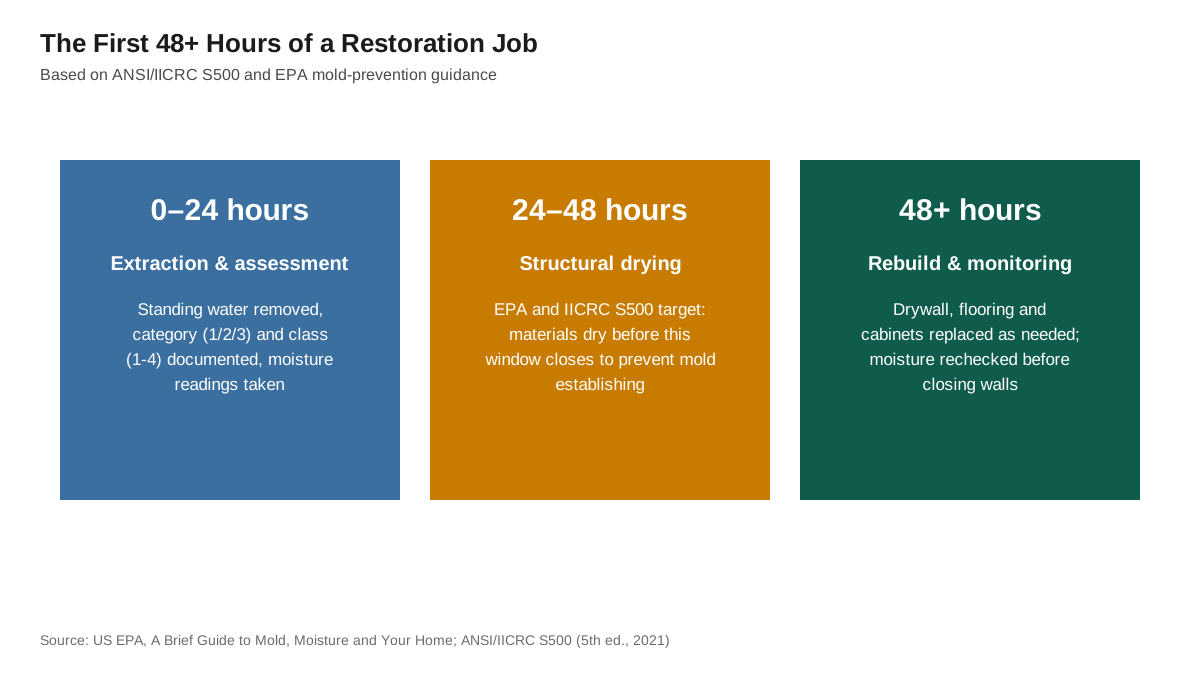
EPA and the IICRC S500 standard both treat the 24-to-48-hour mark as the deadline for getting structural materials dry enough to prevent mold from establishing.
The timeline above shows why the clock matters more than the mop: category and class both tend to worsen the longer water sits, and the window to prevent visible mold is short, not generous.
Why This Happens So Often in Houston and Harris County
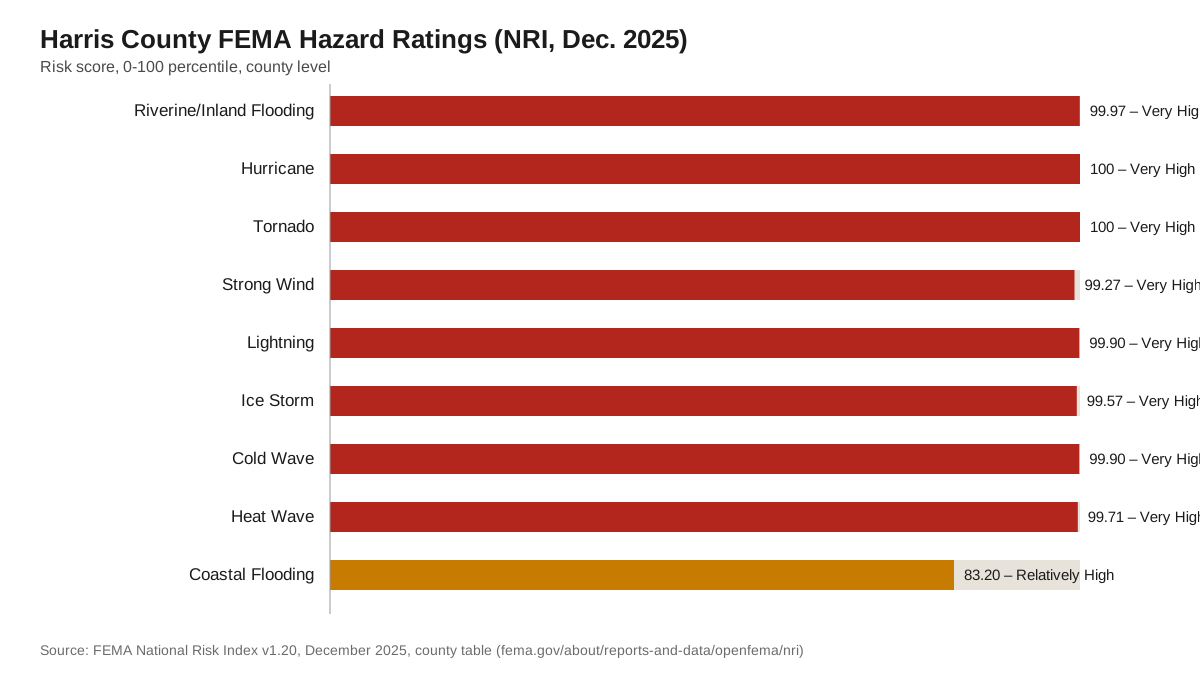
Zoom out to the numbers FEMA actually publishes for this county, and Houston's water problem stops looking like bad luck. Harris County's overall FEMA National Risk Index score sits at the 99.9th percentile nationally, a "Very High" composite rating, and two of the drivers are riverine/inland flooding and hurricane risk, both also rated Very High, with the flood hazard alone scoring 99.97 out of 100. Coastal flooding is rated Relatively High, one notch below, reflecting storm surge pushing up the bayous even without a direct hurricane hit.
Eight of Harris County's thirteen FEMA-rated hazards score Very High as of the December 2025 National Risk Index update, with coastal flooding and winter weather close behind at Relatively High; only wildfire rates as clearly low risk here.
The frequency numbers tell the rest of the story. FEMA models riverine flooding here at roughly 5.1 events a year across the county — not five floods at your address, but five somewhere in the watershed most years, which is why so many restoration calls originate from streets that never made a flood map. Add a hurricane risk score of 100 out of 100 and lightning striking often enough to register 74.6 modeled events a year, and you have a county exposed to water from the sky, the bayous, and the Gulf all at once.
Then there's the freeze problem, which surprises almost everyone who didn't live through it. Harris County averages just 4.8 days a year at or below 32°F, and the nearby station shows zero measurable snowfall in the current climate-normal record. That sounds like a county with nothing to worry about in winter. Instead, FEMA rates both ice storm and cold wave hazard here as Very High, because a place that almost never freezes also almost never insulates its pipes, and when a rare hard freeze does arrive, it hits thousands of exposed lines at once instead of a handful. That mismatch between normal winters and rare extreme ones is exactly why "frozen pipe burst cleanup" search volume spikes here in specific bad weeks rather than steadily all winter.
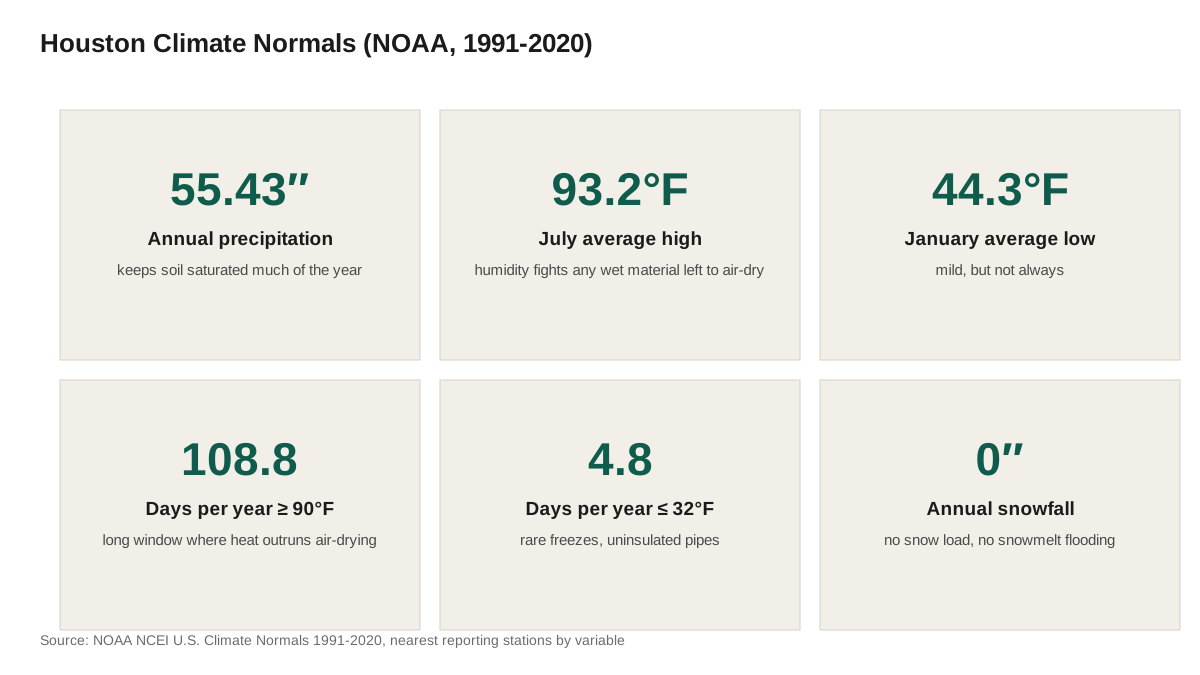
Heavy annual rainfall, near-constant summer heat, and almost no freeze days together decide which water damage failure modes are common in Houston and which are rare.
Summer works the water problem from the other side. Houston averages 108.8 days a year at or above 90°F and a July average high of 93.2°F, which keeps indoor humidity fighting any wet material that isn't actively being dried with commercial equipment. A wet closet that would slowly air-dry in a cooler, drier state instead sits at ideal mold-growth conditions for days.
What People in Houston Actually Search For When Water Shows Up
Type any water problem into a search bar at 11 p.m. in Houston and you'll find a mix of national franchise sites and thin, half-finished posts. Here's how those questions actually break down.
Emergency and after-hours calls
Searches for emergency water damage restoration, 24 hour water damage, same day water extraction, 24/7 water removal, emergency flood cleanup, and after hours water damage all mean roughly the same underlying question: is anyone actually going to show up tonight? Most established restoration outfits in this market run some form of after-hours dispatch, because Gulf Coast storms don't wait for business hours. The honest caveat: "24/7" means someone answers and dispatches, not that a crew lands at your door in twenty minutes on a night when half the metro called at once.
Symptoms that send people looking for help
A lot of what brings people here isn't a dramatic flood at all. It's a flooded basement (rarer in Houston than in the Midwest, since most homes here are slab-on-grade, but it happens in older housing stock with partial basements or in commercial buildings), a ceiling leaking water after a storm, a water stain on ceiling drywall that's been there for months, standing water in basement spaces and garages, crawl space flooding under a pier-and-beam house, or roof leak water damage after a summer storm takes a few shingles. Every one of those is worth investigating even if it looks minor, because a stain means water has already been sitting inside a wall or ceiling cavity long enough to leave a mark. It rarely means the leak just started.
Appliance floods
Washing machines, water heaters, dishwashers, and toilets cause a specific, very common category of Houston water damage: washing machine flood cleanup, water heater burst flooding, dishwasher leak water damage, and toilet overflow cleanup are all searches with a similar shape. A supply line or tank failed, the water is usually clean (Category 1) if caught quickly, and the damage is often contained to one room if someone was home. A water heater that fails while a family is on vacation is a different, much larger job, since a 40- or 50-gallon tank can run for days before anyone notices.
Structural failures
The bigger jobs start here: a burst pipe flooded house scenario, a basement sewage backup or general sewage backup cleanup, a sump pump overflow when a storm outlasts the pump's capacity, and the aftermath work of drywall water damage repair and hardwood floor water damage or wet carpet water damage once the water itself is gone. Sewage backups get their own category in the industry standard because they're Category 3, black water, by definition — contaminated water that requires different PPE, different disposal, and usually full removal of porous materials rather than drying them in place.
Commercial jobs, cost questions, and finding "the best" company
Property managers and business owners search commercial water damage restoration and commercial flood cleanup for a reason: a flooded server closet or a soaked retail floor has a revenue clock running that a homeowner's flooded bedroom doesn't. Everyone else searches water damage restoration cost, water damage repair estimate, water damage insurance claim help, and some version of best water damage company. That last one is worth being honest about upfront: no page, including this one, can tell you which specific company is "best" for your situation. What it can tell you is what to check before you sign anything, which is covered further down.
What a Houston Restoration Job Actually Involves
The terms overlap enough to confuse anyone outside the trade. A water removal service or water extraction service gets standing water out with pumps, wet-vacs, and extraction wands. Water mitigation is the broader first phase: extraction plus structural drying, the fans-and-dehumidifiers work of pulling moisture out of studs, subfloor, and drywall before it becomes mold. Water damage repair and full water damage restoration come after mitigation: rebuilding drywall, flooring, and cabinets that Category 2 or 3 water made unsalvageable. A water damage company that only handles the first phase and hands off the rebuild isn't cutting corners; that's a normal, IICRC-consistent division of labor (our repair vs. restoration vs. mitigation guide breaks this down further). One that skips straight to demolition without documenting moisture readings first is the one to worry about.
The industry standard for all of this is ANSI/IICRC S500, now in its fifth edition, and it classifies every job two ways before a technician touches anything. Category describes contamination: Category 1 is clean water from a supply line, Category 2 ("gray water") carries some contamination, a dishwasher or washing machine discharge for instance, and Category 3 ("black water") includes sewage backups and floodwater that's touched the ground, both of which require full PPE and usually full material removal rather than drying in place. Class describes how much of the structure absorbed water, from Class 1 (limited, low-absorption materials) up to Class 4 (deeply saturated materials like plaster and hardwood that need extended, specialized drying).
Category / Class
What it means
Typical Houston scenario
Category 1
Clean water, no contamination
Water heater burst flooding, caught same day
Category 2
"Gray water" with some contaminants
Washing machine flood cleanup, dishwasher leak water damage
Roof leak water damage after a storm blows off shingles
Class 4
Deep saturation in low-permeance materials
Plaster, brick, or hardwood after days of standing water
On the ground, a legitimate crew documents moisture content with a meter before and after drying, not just by feel. EPA guidance and the S500 standard both point to the same target: dry structural materials within roughly 24 to 48 hours of the water event to keep mold from establishing, and hold relative humidity in the drying zone below 60 percent, ideally in the 30-to-50 percent band. A crew that pulls equipment after one day "because it looks dry" is skipping the part of the job that actually prevents mold from water damage from showing up three weeks later as a smell nobody can locate.
For anything bigger than a single room — a flood damage restoration or flood cleanup service job after a named storm, or a storm damage restoration call involving wind-driven rain through a damaged roof — expect the timeline to stretch past a week: extraction and demolition first, then several days of monitored drying, then a rebuild phase that runs on its own schedule tied to permitting and material availability rather than the restoration crew's calendar. A basic water cleanup service call for a single flooded house cleanup after a supply-line failure, by contrast, is often extraction and equipment out within three to five days, with drywall and flooring repair scheduled separately.
What It Costs to Fix Water Damage in Houston
Nobody can price your job without seeing it, and anyone who quotes a firm number over the phone before inspecting the damage is guessing. What we can do is show you the real range from the national cost-survey firms that track this industry, then explain how Houston's specific cost position shifts that range. Treat every figure in the table below as a researched range pulled from those publishers, not a quote for your address — the only number that actually binds anyone is a written estimate from a contractor who has inspected the damage in person.
Job type
Typical range
What moves the price
Source
Overall water damage restoration, single room
$1,383 – $6,369
Category of water, square footage, how long it sat before extraction
HomeAdvisor
Extraction, per sq ft (Category 1, clean)
$3.50 – $6.00
Access, flooring type, equipment needed
HomeAdvisor / HomeGuide
Extraction, per sq ft (Category 3, black water)
$7.50 – $12.00
PPE, disposal requirements, material removal
HomeAdvisor / HomeGuide
Class 4 disaster-level drying
$20,000 – $100,000
Deep saturation of plaster, brick or structural wood; extended equipment runtime
HomeAdvisor
Drywall repair
$300 – $850
Square footage cut out, texture matching, paint
HomeAdvisor
Ceiling repair
$450 – $1,600
Water stain severity, whether insulation above is also wet
HomeAdvisor
Mold remediation
$1,100 – $9,000 (roughly $2,225 – $3,500 typical)
Square footage, whether HVAC is involved, containment needs
HomeAdvisor / Fixr
Sewage backup cleanup
$2,000 – $15,000+
Number of rooms, how long the sewage sat, whether a sewer camera inspection is needed
How we got these numbers: every row above comes straight from national cost-survey publishers, not a Houston-specific quote, since no publisher tracks restoration pricing at the city level. What we can add is context: the U.S. Bureau of Economic Analysis' regional price parity index puts the Houston-Pasadena-The Woodlands metro at 98.6 on an all-items basis (U.S. average = 100) for 2024, meaning overall costs here run slightly below the national average. Services tied to rent run a bit above it at 104.5, which matters because restoration labor pricing tracks local rent and wage costs more than the price of milk. Treat the national ranges above as your starting point and expect Houston quotes near the middle of them. Even inside Houston, the final price varies by neighborhood access, how much wall or flooring the crew has to open up to find hidden moisture, and the category and class of water involved once the job is underway.
One Texas-specific wrinkle worth knowing before you get a quote: under Texas Comptroller guidance, labor to repair, remodel, or restore residential real property is not taxable in this state, though materials are. A written estimate that separates labor and materials isn't just good practice; it affects what you're legally supposed to be charged sales tax on.
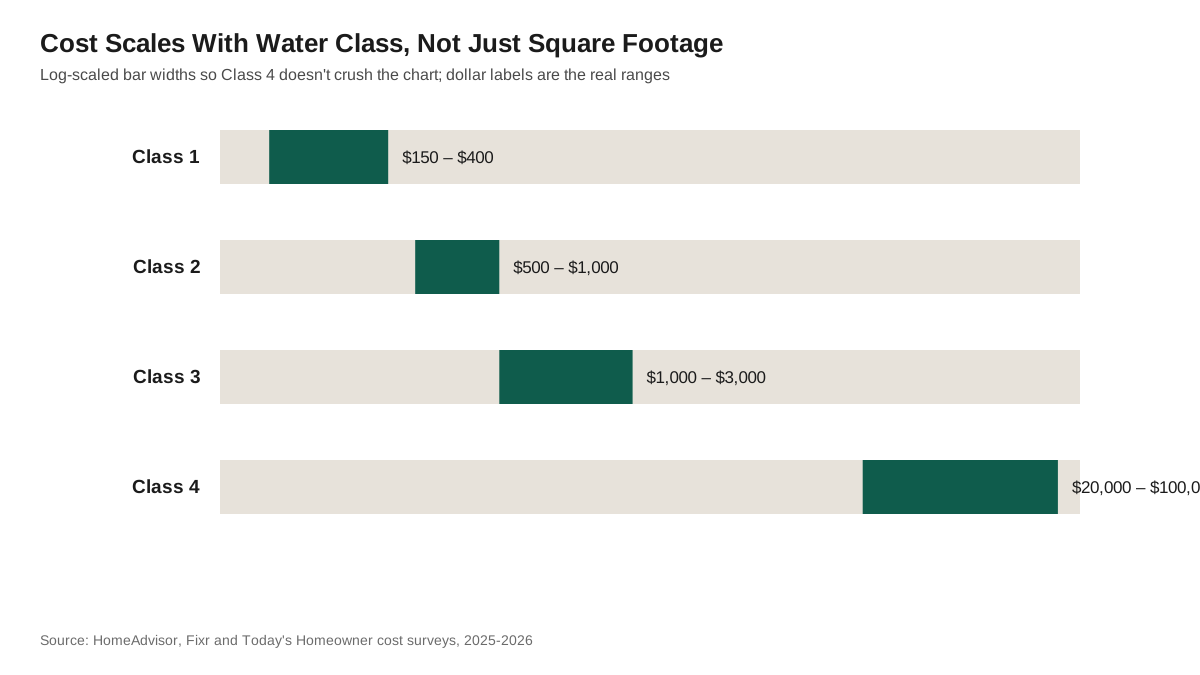
Cost scales with how deeply water penetrated the structure, not just square footage; Class 4 disaster-level saturation runs roughly a hundred times a Class 1 job.
Insurance and Claims in Texas
A standard HO-3 homeowners policy, the most common form written in Texas, typically covers sudden and accidental water damage: a pipe that bursts, a water heater burst flooding the utility closet, a washing machine supply line that lets go overnight. It typically excludes gradual damage (a slow roof leak nobody fixed for two years), sewer and drain backups unless you bought a separate endorsement, and, critically for this county, flood damage from rising water is excluded from every standard homeowners policy and requires a separate National Flood Insurance Program (NFIP) policy or private flood coverage. Given Harris County's Very High riverine and hurricane flood ratings from FEMA, that distinction between "water damage" and "flood" on your policy may be the single most consequential sentence in this section.
Typically covered by standard HO-3
Typically NOT covered
Burst pipe flooded house, sudden and accidental
Rising floodwater (needs NFIP or private flood policy)
Water heater burst flooding, appliance supply-line failures
Wind-driven rain through storm damage, a covered peril
Sewer or drain backup, unless a backup endorsement was purchased
Resulting mold from a covered water loss, usually with a sub-limit
Mold from a pre-existing or unreported leak
Nationally, water damage and freezing accounted for 27.6 percent of homeowners insurance losses in 2022, second only to wind and hail, per Insurance Information Institute figures drawn from ISO/Verisk data. The average severity of a water-damage-and-freezing claim, $13,954, runs slightly higher than the average wind and hail claim. FEMA puts it more bluntly for flood specifically: just one inch of standing water can cause roughly $25,000 in damage, and over 40 percent of NFIP claims come from outside the mapped high-risk flood zones. "I'm not in the flood zone" is not the same statement as "I don't need flood insurance" in a county rated Very High for riverine flooding.
Documentation makes or breaks a claim. Photograph and video everything before cleanup starts, keep the damaged materials (or photos of them) until the adjuster has seen them or told you in writing that you can dispose of them, save every receipt from emergency mitigation, and get a written scope of work from your restoration company that separates mitigation from repair. You're entitled to hire a public adjuster, a licensed professional who works for you rather than the insurer, for a percentage of the claim, to review a denial or a low offer instead of accepting the company adjuster's number as final. Our insurance claims guide and the Texas water damage hub both go deeper on the appeals process than fits here. For regulatory questions, or to check whether an insurer is licensed in Texas, the Texas Department of Insurance (TDI) is the state's regulator and consumer resource.
How to Choose a Water Damage Company in Houston
Texas does not license "water damage restoration" as its own trade, which surprises a lot of homeowners once they start calling around. What Texas does regulate, through the Texas Department of Licensing and Regulation, is mold: once a job moves from drying wet materials into assessing or remediating actual mold growth, the company handling that part needs a TDLR Mold Assessor or Mold Remediation Contractor license. There's a narrow exemption for a homeowner cleaning under roughly 25 contiguous square feet of visible mold, but a company doing that work for pay needs the license, full stop. If the job also touches plumbing, cutting into a supply line or replacing a water heater, that work legally requires a Texas State Board of Plumbing Examiners (TSBPE) licensed plumber.
Beyond state licensing, look for IICRC certification under the S500 water damage standard, and S520 if mold work is involved. This is an industry credential, not a state license, but it's the standard the whole trade is built on. Ask for proof of general liability insurance, not just a business card; a legitimate restoration company carries it and will hand you a certificate without being asked twice. Before signing anything, verify that license is current with TDLR and confirm the insurance certificate hasn't lapsed — a photo of an old one from a folder isn't proof it's still in force. A restoration company that serves Houston and answers the phone at odd hours is worth having in your contacts before you need one; you can reach one at 888-407-9931 to describe your situation and find out what happens next.
Red flags worth walking away from: a company that wants full payment before starting, one that pressures you to sign an insurance-proceeds assignment you haven't read, one that can't produce a state mold license when the job clearly involves mold, or one that quotes a firm price over the phone with no inspection. A legitimate written estimate includes the scope of work by room, the category and class of water involved, the equipment being used and for how long, whether mitigation and rebuild are billed separately, and language about what happens if the insurance payout comes in lower than the estimate.
What You Can Safely Do Yourself, and Where That Ends
Plenty of a small water event is genuinely DIY. If a supply line let go and you caught it within an hour, you can run a wet-vac on hard flooring, pull furniture off the wet area, open windows if the humidity outside is lower than inside (rare in a Houston August, common on a cool front), and run box fans and a dehumidifier for a few days. Replacing a soaked closet's worth of drywall yourself is a reasonable weekend project if you're comfortable with basic tools.
The line moves fast once contamination or scale enters the picture. If the water came from a sewer backup, a toilet overflow beyond clean supply-line water, or storm floodwater, or if visible mold covers more than roughly 10 square feet, the EPA's own DIY threshold, stop and call a licensed professional instead of finishing the job yourself.Category 3 water carries bacteria and pathogens that household cleaning doesn't reliably neutralize, and mold beyond that EPA threshold needs containment most homeowners don't have the equipment to build correctly. Add electrical hazards to that list: never operate anything electrical while standing in water, and don't reset a breaker that tripped near a wet area without having it checked first.
Structural warning signs are the other hard stop: a ceiling that's sagging or soft to the touch, a floor that feels spongy underfoot, or a wall that's visibly bowing. Any of those means water has compromised something load-bearing or close to it, and that's an inspection call, not a mop-and-fan job.
Preventing the Next One in This Climate
Prevention here means planning for both ends of Houston's weather, not just the summer storms. Ahead of hurricane season, which FEMA's hazard model rates a Very High risk category for this county alongside coastal flooding rated Relatively High, clear gutters and downspouts before June, confirm they discharge well away from the foundation, and know where your main water shutoff is before a storm, not during one. Basement waterproofing methods like interior French drains tied to a sump pump, exterior grading that slopes away from the foundation, and sealing foundation cracks apply to the county's smaller stock of homes with basements or partial basements, and to commercial buildings with below-grade space (see our basement waterproofing guide for the full method list).
Ahead of the rare hard freeze — this county averages under five days a year at or below freezing, which is exactly why most homes here aren't built for it — insulate exposed pipes in garages, attics, and crawl spaces, disconnect and drain outdoor hose bibs, and know how to drip faucets on the coldest nights. It's a fifteen-minute job that can prevent the kind of multi-day, citywide burst-pipe event this state has now seen more than once.
For the other 360 days a year, the bigger risk is quieter: a slow AC condensate line clog backing up into a ceiling, a washing machine hose that's been kinked and weeping for months, or a slab foundation crack letting groundwater wick into flooring. None of those show up as a single dramatic flood. They show up as a water stain on ceiling drywall or a musty smell that never quite goes away, and catching them early is the cheapest water damage repair you'll ever make.
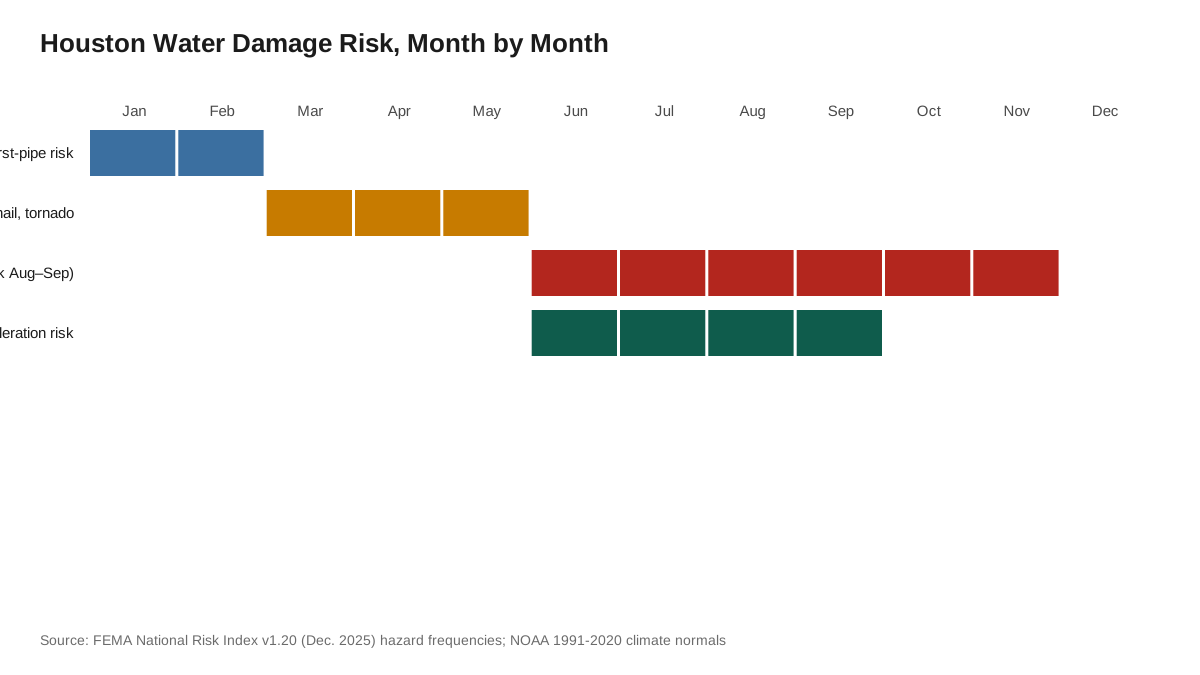
Overlaying FEMA's hazard frequencies onto the calendar shows Houston has no real off-season for water damage risk, just a rotation of which hazard is most active.
Frequently asked questions
How long does water damage restoration take in Houston?+
A single-room, Category 1 job usually runs three to five days: extraction the same day, then two to four days of monitored drying to hit EPA's 24-to-48-hour mold-prevention window, followed by separate rebuild work. Larger jobs, such as a flooded basement, storm damage restoration after a hurricane, or a Category 3 sewage backup cleanup, commonly stretch past a week for mitigation alone, with rebuild timelines running longer depending on permitting and material availability.
How much does water damage restoration cost in Houston?+
Nationally, homeowners typically spend $1,383 to $6,369 for a standard water damage restoration job, according to national cost-survey publishers, with per-square-foot extraction running $3.50 to $12 depending on water category. Houston's regional price index runs close to the national average overall, so treat those national ranges as your starting point and get a written local estimate before agreeing to anything.
Does homeowners insurance cover water damage in Houston?+
It depends on the cause: a standard HO-3 policy typically covers sudden, accidental water damage like a burst pipe or water heater burst flooding, but excludes gradual leaks and, critically, excludes flood damage from rising water entirely. Given Harris County's Very High FEMA flood rating, a separate NFIP or private flood policy is worth pricing even if your lender doesn't require it.
What does a water damage restoration company actually do?+
A restoration company extracts standing water, dries the structure to industry-standard moisture targets under the IICRC S500 standard, and documents the process for insurance, then either rebuilds damaged materials itself or hands that phase to a general contractor. Mold assessment or remediation, if the job needs it, legally requires a separate TDLR mold license in Texas.
Who fixes water damage in Houston, and do they need a license?+
Texas doesn't license general water damage restoration as its own trade, but any mold assessment or remediation work requires a TDLR Mold Assessor or Remediation Contractor license, and any plumbing work needs a TSBPE-licensed plumber. Beyond state licensing, look for IICRC S500 certification and proof of liability insurance before hiring anyone.
Can water damage be fixed, or does everything have to be replaced?+
Most Category 1 and 2 water damage can be dried and saved if a crew reaches it within the EPA's roughly 24-to-48-hour window, using moisture meters to confirm materials are actually dry rather than just dry to the touch. Category 3 water, deep saturation rated Class 4, and anything left standing more than a few days usually means porous materials like drywall, insulation, and carpet pad get replaced rather than dried.
Should I file an insurance claim for water damage, or pay out of pocket?+
That depends on the size of the loss relative to your deductible, a decision only you and your agent can make with full numbers in front of you. For context, the average water-damage-and-freezing claim nationally runs $13,954, so a job estimated well under your deductible may not be worth filing, while anything near or above it usually is.
How much does mold remediation cost after water damage in Houston?+
National cost surveys put mold remediation between roughly $1,100 and $9,000, with typical jobs landing near $2,225 to $3,500 depending on square footage and whether HVAC ductwork is involved. Under Texas rules, mold work beyond about 10 square feet of visible growth requires a TDLR-licensed mold professional rather than a DIY approach.
How do I deal with a water stain on ceiling drywall or an active ceiling leak?+
Find and stop the source first, often a roof leak, an AC condensate line, or a bathroom above, because painting over a stain without fixing the source guarantees it comes back. Once the leak is stopped, a contained wet spot can often be cut out and patched, while a ceiling that's sagging or soft needs a structural inspection before anyone touches it.
What should I do first if a pipe bursts or my basement floods?+
Shut off the water at the fixture or the main, cut power to the area at the breaker if water is near wiring, and start photographing the damage before you move anything. If the water is still coming in and you can't find the source, call a restoration company that serves Houston and describe exactly what you're seeing so they can advise you while a crew is dispatched.
Is a flooded basement common in Houston?+
Less common than in Midwestern cities, since most Houston homes are built slab-on-grade rather than over a basement, but it isn't rare either: older housing stock with partial basements, pier-and-beam homes with crawl spaces, and commercial buildings with below-grade space all see it, especially given Harris County's Very High FEMA rating for riverine and coastal flooding.