Type plumber Houston into Google and you'll get the same national cost ranges as anywhere else: a water heater runs $600 to $3,900 installed, drain cleaning $100 to $800. Harris County's flat, flood-prone ground and rare hard freezes decide which failures show up on your street. A licensed Texas plumber, verified through the state board, owes you a written estimate before work starts.
Houston plumbing complaints follow the weather here more than they follow the calendar. A cold snap in December can crack an exposed line that hasn't seen frost in years; a wet August week can push a marginal main line into a full backup. The plumbing Houston relies on runs through Harris County, part of the Houston-Pasadena-The Woodlands metro of roughly 2.39 million residents, where the ground stays flat and the rain, 55.43 inches a year on the 1991-2020 normal, doesn't always have anywhere fast to go.
This page is built to answer the two questions that actually matter once something's wrong: what should this cost, and who's actually qualified to fix it. Every dollar figure below traces to a national cost survey named in the sources at the bottom of the page; every claim about local risk traces to FEMA's National Risk Index or NOAA's climate normals for this county. Nothing here is a quote. For that, you need a written estimate from a plumber who's actually looked at the job.
Shutting Off Water and What Actually Matters Before a Plumber Shows Up
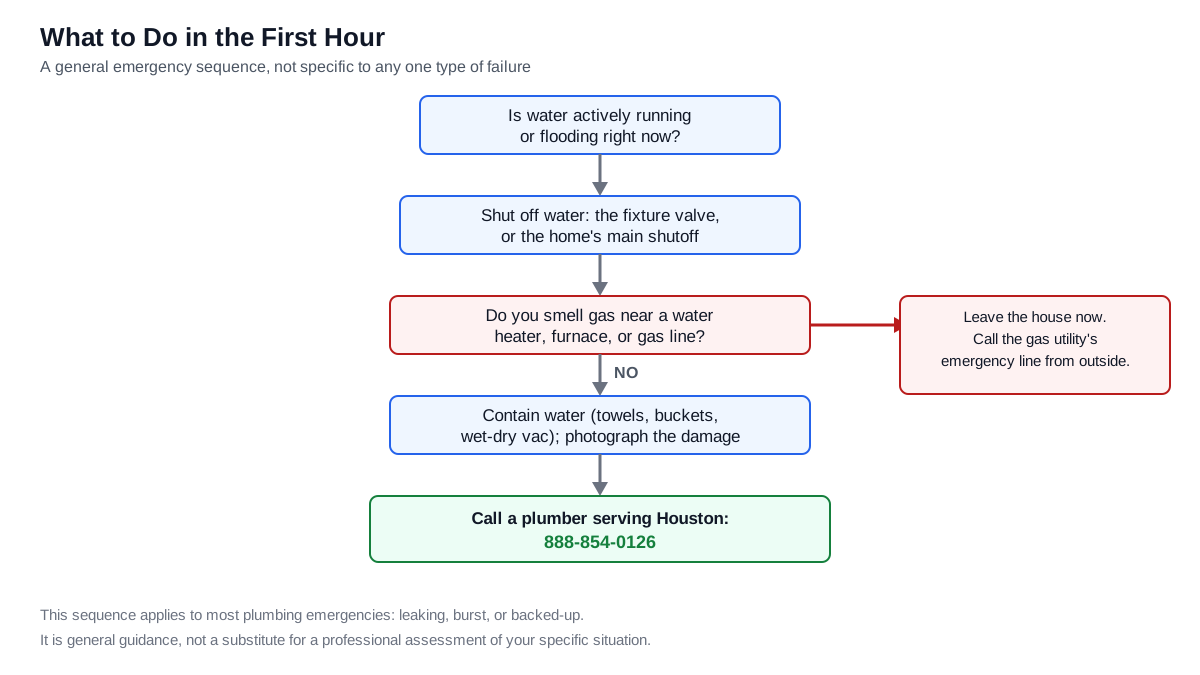
Water doesn't wait for business hours, and neither does the damage it causes. The first five minutes matter more than the next five hours, and the order is almost always the same regardless of what's actually failed.
General emergency decision sequence for a leaking, burst, or backed-up plumbing system.
Find the water and shut it off at the fixture if you can reach the valve, or at the home's main shutoff if you can't isolate it fast enough.
Cut power at the breaker to any area where water is near outlets, a water heater, or a panel.
Contain what's already out with towels, buckets, or a wet-dry vacuum before it reaches a finished floor, a ceiling below, or a wall cavity.
Photograph the damage before you start cleanup — insurers ask for this, and it's harder to reconstruct later.
Call. You can reach an emergency plumber that serves the Houston area at 888-854-0126 and describe exactly what you're seeing, including whether water is still moving and roughly where it started.
If you smell gas anywhere near a water heater, furnace, or gas line, leave the house immediately, call the gas utility's emergency line from outside, and only call a plumber after that. That one instruction outweighs everything else on this page.
Most main shutoffs in this area sit near where the supply line enters the house — a utility closet, a meter box out front, or occasionally a garage wall. If you've never located yours, do it today rather than during an actual burst pipe repair at midnight. A shutoff valve that's corroded shut from disuse is common enough that it's worth testing once a year, not just assuming it'll turn when you need it to.
Why Plumbing Problems Here Don't Match the National Pattern
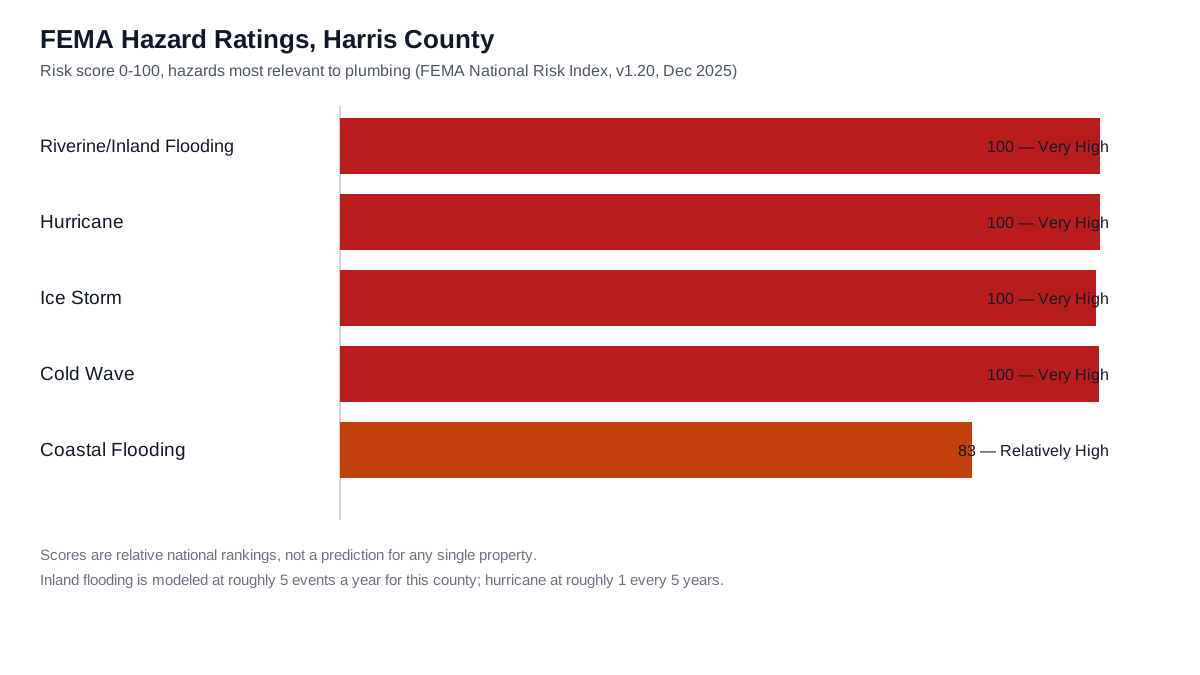
Start with the number nobody puts on a truck: Harris County's FEMA National Risk Index score for natural hazards overall is 99.94 out of 100, rated Very High — the top tier FEMA assigns. That's a composite score, but two of the hazards feeding it matter directly for pipes and drains. Riverine and inland flooding rates Very High, with an annualized frequency FEMA models at roughly five events a year for this county, and hurricane risk also rates Very High. FEMA National Risk Index county-level hazard scores relevant to plumbing, 0-100 scale, version 1.20, December 2025 release. Neither is abstract once you've watched a floor drain start pushing water back into a garage during a heavy system.
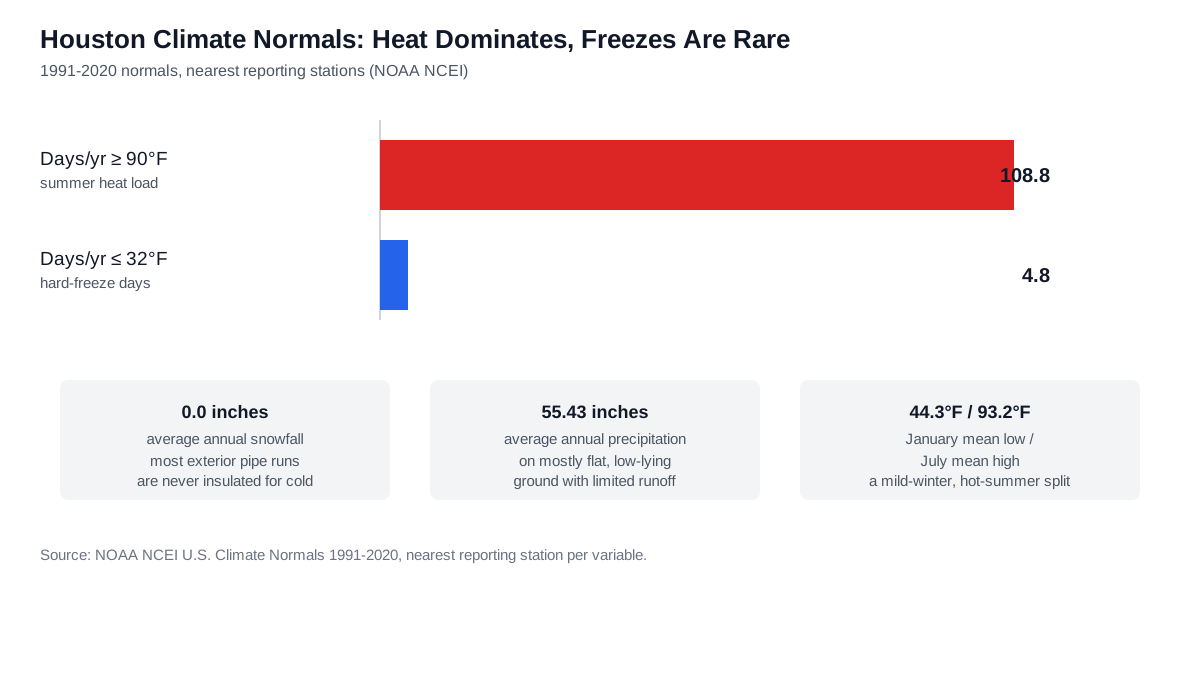
The climate side explains the rest. NOAA's 1991-2020 normals put this area at 55.43 inches of rain a year, essentially zero snowfall, and an average of only 4.8 days a year at or below freezing. That last figure is the trap: because a hard freeze is rare here, a lot of exposed supply lines, hose bibs, and attic runs were never insulated the way they would be in a colder state, so the handful of freeze nights that do happen — usually once or twice most winters — catch a disproportionate number of houses at once. NOAA NCEI U.S. Climate Normals, 1991-2020, nearest reporting station per variable. Compare that to summer: the same normals show 108.8 days a year at or above 90°F, and FEMA rates this county's heat wave hazard Very High too. That's less about pipes bursting and more about a water heater's thermostat and pressure-relief valve working overtime for five months straight.
Harris County also sits on flat, low-lying Gulf Coastal Plain ground with a lot of clay-heavy soil, and clay expands when saturated and contracts hard when it dries out. That cycle stresses rigid pipe joints and the water lines running under a slab foundation, which is a real part of why slab leak repair shows up here as its own search category instead of getting folded into general leak repair the way it might on rockier ground.
None of this changes what a water heater or a drain snake actually costs. It changes which repair you're likely to need, and how urgently.
The Problems People In Houston Actually Search For
Emergency, after-hours, and weekend calls
Searches for an emergency plumber, a 24 hour plumber, a same day plumber, an after hours plumber, and a weekend plumber all spike the same way here: right after a hard rain event, and again during a rare freeze week. Most of those searches need the same triage covered above — shut off water, contain what's out, then call. A same-day or after-hours plumber typically charges a dispatch premium on top of the base rate, covered in the choosing-a-company section below, and a legitimate company will state that premium before a truck leaves rather than after.
The everyday symptoms: clogs, drips, and no hot water
Most of what actually gets searched here is symptom-first, not brand-first: no hot water, a water heater leaking at its base, a slow draining sink, an overflowing toilet, a running toilet repair that won't stop cycling, and a dripping faucet repair that's quietly added to a summer's water bill. Almost all of those are inexpensive, single-visit fixes — a flapper, a cartridge, a trap cleared with a hand auger. One pattern matters more than the rest: a clogged drain repair or clogged toilet repair that returns within a couple of weeks of being cleared usually isn't a fresh local clog at all. It's a sign of a partial blockage further down the line, and running a snake through the same six feet of pipe again won't fix that.
Low water pressure repair calls split into two different jobs: pressure that's low at one fixture, almost always an aerator or a worn cartridge, and pressure that's low everywhere at once, which points to a pressure-reducing valve, a partially closed main valve, or, in older sections of a system, corrosion narrowing the pipe itself. A plumber can tell which one you have with a pressure gauge in about five minutes; guessing at it yourself usually means replacing parts that were never the problem, including a kitchen sink clogged aerator that gets swapped when the real issue is upstream.
The ones that mean something bigger
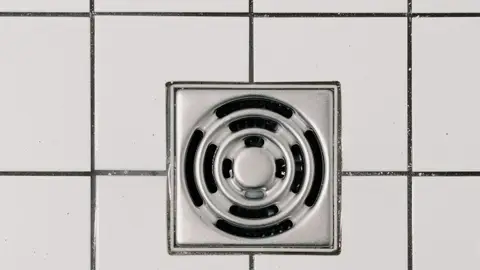
A handful of search phrases deserve their own paragraph because they're not $20-part problems: a pipe burst under sink, a frozen pipe repair after one of this area's rare hard-freeze nights, a main water line leak showing up as an unexplained wet patch in the yard or a water bill that jumped for no reason, a slab leak repair — a supply line failing under the concrete foundation itself — and a sewer backup repair paired with a smelly floor drain, which usually means a main-line blockage pushing wastewater or sewer gas back up the path of least resistance. All five warrant a licensed plumber, not a bigger wrench. A slab leak in particular needs acoustic or thermal leak detection service equipment to locate before anyone starts cutting concrete.
Water heaters and fixtures by brand
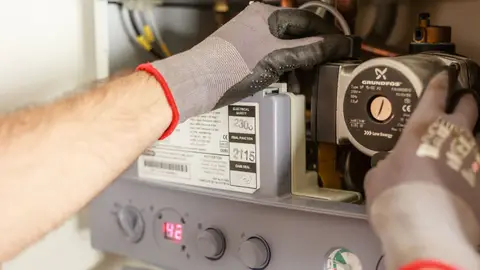
Brand-specific searches — rheem water heater repair, ao smith water heater repair, bradford white water heater repair, rinnai tankless water heater repair, and navien tankless repair — usually come from someone who already knows what's installed and wants a technician who's worked on that specific control board or ignition system, not a generalist. Tankless units fail differently than tank units: an error code on the unit's display is often the fastest way to narrow the problem before anyone drives out, and reading that code to whoever answers the phone saves a second trip. The same logic applies to fixtures: moen faucet repair, kohler toilet repair, and delta faucet repair searches are almost always someone trying to match a replacement cartridge or fill valve to a specific model, which a plumber, or a hardware store with the old part in hand, can usually do faster than guessing from a photo.
Commercial jobs and cost questions
Commercial plumber and commercial drain cleaning searches come from property managers and restaurant owners who can't afford a fixture down during business hours, and they tend to weigh responsiveness and backflow certification as heavily as price. On the cost side, water heater replacement cost, drain cleaning cost, and sewer line repair cost are covered in full in the table below, and best plumber searches are answered less by a ranking than by the verification steps in the choosing-a-company section: an active state license, current insurance, and a written estimate, checked yourself rather than taken on faith.
What the Work Actually Involves
A plumber who does this well diagnoses before touching a tool. That's the difference between a visit that fixes the actual problem and one that just makes the symptom go away for a few weeks.
Drain and sewer line work
For a single clogged fixture, a hand or motorized rooter service (a drain snake or auger) clears most blockages in under an hour. For a main line, the choice is usually between snaking, which cuts through a clog mechanically, and hydro jetting, which uses pressurized water to scour the full width of the pipe, including grease buildup and root intrusion that a snake typically punches a hole through rather than removes. A camera inspection before or after either method shows what actually caused the clog and whether it's really gone, not just pushed further down the line. When a section of pipe has failed rather than just clogged, repair options range from a localized dig-and-replace to trenchless methods like CIPP lining (cured-in-place pipe, a resin liner cured inside the existing pipe) or pipe bursting, both of which avoid trenching a full yard.
Water heater work
A proper water heater replacement isn't just unbolting the old tank. In municipalities that have adopted the state's IRC baseline, code work typically requires a permit, a code-compliant expansion tank on a closed system, correctly sized gas or electrical connections, and a temperature-and-pressure relief valve piped to within a few inches of the floor or outside the structure. A rushed installer skips the permit and the expansion tank; a good one explains why both matter before you're asked to sign anything.
Gas lines and sump systems
A gas line repair is not a homeowner project under any circumstances, and in Texas it isn't a job for an unlicensed contractor either — pressure-testing a line after any repair is standard practice, not an upsell. Sump pump installation comes up most in homes with a history of standing water in a garage, low-lying yard, or crawlspace during heavy rain, and a correctly sized system includes a battery or water-powered backup, since the moment you need a sump pump most is often the same moment a storm has already knocked out power.
What Plumbing Actually Costs in Houston
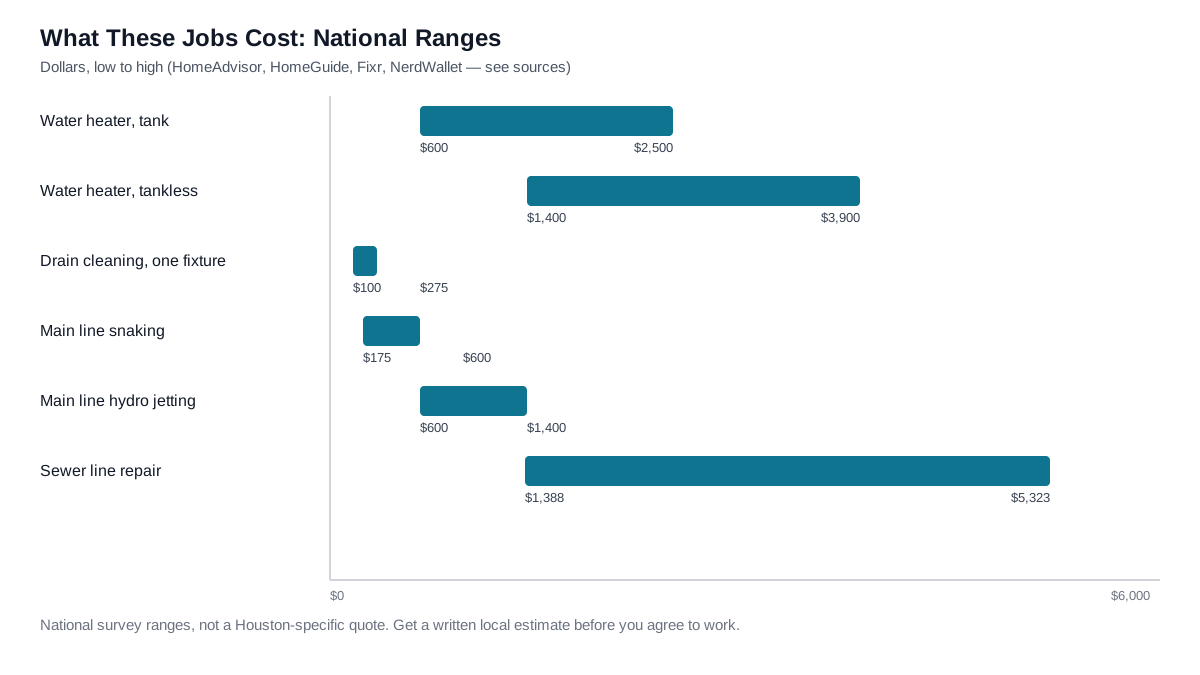
These are national survey ranges, not Houston-specific quotes — nobody publishes verified per-city plumbing pricing at this level of detail, and any page that claims otherwise is estimating. What we can say honestly: the Bureau of Economic Analysis's 2024 Regional Price Parity for the Houston-Pasadena-The Woodlands metro puts overall prices about 1.4% below the national average (index 98.6, where 100 is the U.S. baseline), and the "other services" component specifically sits at 95.6, a few points under the national mark. That doesn't set a local dollar figure, but it's a reasonable signal that labor-heavy jobs here tend toward the lower half of these ranges rather than the top, all else equal.
Job type
Typical range
What moves the price
Source
Water heater replacement, tank
$600 – $2,500 installed
Fuel type, tank size, and whether a code-required expansion tank is already in place
HomeAdvisor, NerdWallet
Water heater replacement, tankless
$1,400 – $3,900 installed
Gas line upsizing, new venting, and brand
HomeAdvisor, NerdWallet
Drain cleaning, single fixture
$100 – $275
Access, clog severity, and after-hours timing
HomeGuide
Main line snaking
$175 – $600
Line length, number of cleanouts, and how deep the clog sits
HomeGuide
Main line hydro jetting
$600 – $1,400
Root intrusion, grease buildup, and pipe material
HomeGuide
Sewer line repair or replacement
$1,388 – $5,323 (avg. $3,319)
Trenchless vs. open-trench method, footage, and depth
HomeAdvisor
Video or camera line inspection
$100 – $800
Bundled with a cleaning call vs. a standalone visit
Fixr
National cost survey ranges by job type; see sources for each publisher and date.
Our full breakdowns of water heater replacement cost and drain cleaning cost and methods go deeper on each scenario if the table above doesn't match your situation. A few jobs searched often here, notably fixture installation by brand and most gas line repairs, don't have a reliable national cost survey behind them, since pricing depends heavily on the specific fitting, run length, and whether a wall or slab has to be opened. For those, the honest answer is that you need a written estimate from someone who's actually seen the job. If a quote lands well outside the ranges above for a comparable job, ask what's driving the difference before you agree to anything.
Insurance and Claims in Texas
A standard HO-3 homeowners policy typically treats a sudden, accidental event — a supply line that lets go without warning — differently than a leak that's been dripping behind a wall for months. Sudden and accidental usually gets covered, sometimes with a cap on the resulting water damage; a slow leak a reasonable person should have caught gets treated as a maintenance failure and denied. That distinction is where most plumbing-related claim disputes actually happen, and it pays to understand it before anything fails, not after.
Situation
Typically covered under a standard HO-3
Typically excluded
Sudden pipe burst or supply line failure
Usually yes, plus resulting water damage
—
Long-term, gradual leak or seepage
Rarely
Usually excluded as a maintenance issue
Sewer or drain backup
Only with a backup endorsement added
Excluded from the base policy otherwise
Flood water entering from outside the home
Not covered
Needs separate NFIP or private flood coverage
That last row matters more here than in most places. Harris County's FEMA National Risk Index rating for riverine and inland flooding is Very High, with a Relatively High coastal-flooding rating layered on top, so a standard homeowners policy leaving flood water out entirely is not a small technicality for anyone in this county. It's the single biggest coverage gap most people don't discover until the water's already in the house.
If you do file a claim, document before you clean: photos and video of standing water, the source if you can identify it, and any damaged contents, before anything gets thrown away. Keep receipts for emergency mitigation work; most policies cover reasonable steps taken to prevent further damage. The Texas Department of Insurance regulates carriers operating in this state and publishes consumer guidance on the claims process. If a claim gets disputed and feels stuck, a public adjuster (who works for you, for a percentage of the settlement) is a different relationship than the insurance company's own adjuster (who works for the carrier), and knowing which one you're talking to changes how the conversation goes. For state-level licensing and hazard context beyond this one city, see our overview of plumbing in Texas.
How to Choose a Plumber in Houston
Texas requires a license to work as a plumber under Occupations Code Chapter 1301, enforced by the Texas State Board of Plumbing Examiners (TSBPE). Levels run from Tradesman Plumber-Limited up through Journeyman and Master, with a Responsible Master Plumber required on record for any plumbing company or plumbing services business operating legally. One exception: a homeowner working on their own homestead is exempt from the license requirement under Section 1301.051, which matters for the DIY section below but doesn't extend to hiring someone unlicensed to do it for you.
Ask for the plumber's or company's TSBPE license number and verify it yourself on the board's site rather than taking a truck decal as proof.
Confirm current general liability insurance, and ask for a certificate rather than a verbal assurance.
For any work touching the main water line or a backflow device, ask whether the technician carries backflow-prevention certification.
Get a written estimate that itemizes labor, parts, permit fees, and any after-hours premium separately, before work starts.
Ask how they document completed work — a pulled permit and a passed inspection protect you if the same system fails again later.
Red flags: a company that won't state its license number over the phone, anyone asking for full payment in cash before assessing the problem, and a verbal-only estimate with nothing to follow up in writing. A local plumber who works this market regularly will usually walk through these points without being asked twice.
What You Can Handle Yourself, and Where That Stops
Texas law lets a homeowner do plumbing work on their own homestead without a license (Occupations Code § 1301.051), which is different from most states and matters if you're the type to reach for a wrench before a phone.
Reasonable DIY territory: clearing a shower drain clogged with hair using a drain-cleaning tool rather than a harsh chemical that can damage older pipe; resetting a disposal after a garbage disposal not working jam (check the reset button on the bottom, and the hex-key hole for a manual unjam, before assuming it's dead); replacing a flapper or fill valve for a running toilet; and basic checks on a toilet not flushing at all, such as whether the shutoff valve behind it is actually open and whether the tank is filling. All of those are low-risk, low-cost, and reversible if you get them wrong.
Where it stops: anything involving a gas line, a main shutoff that won't fully close, water inside a wall cavity or under a slab, or a fixture actively flooding faster than you can contain it. A slab leak specifically needs leak-detection equipment most homeowners don't own and won't rent for a one-time job — guessing at where to cut concrete usually means cutting in the wrong place first, more than once. If a repair requires opening a wall, cutting concrete, or touching a gas connection, that's a licensed plumber's job regardless of how confident the how-to video made it look. Our guide on sewer line repair covers where trenchless options fit for anything beyond a simple clog.
Preventing the Failures This Climate Actually Causes
Prevention here isn't generic "have a plumber inspect your home annually" advice. It's specific to what actually fails in this county, and when.
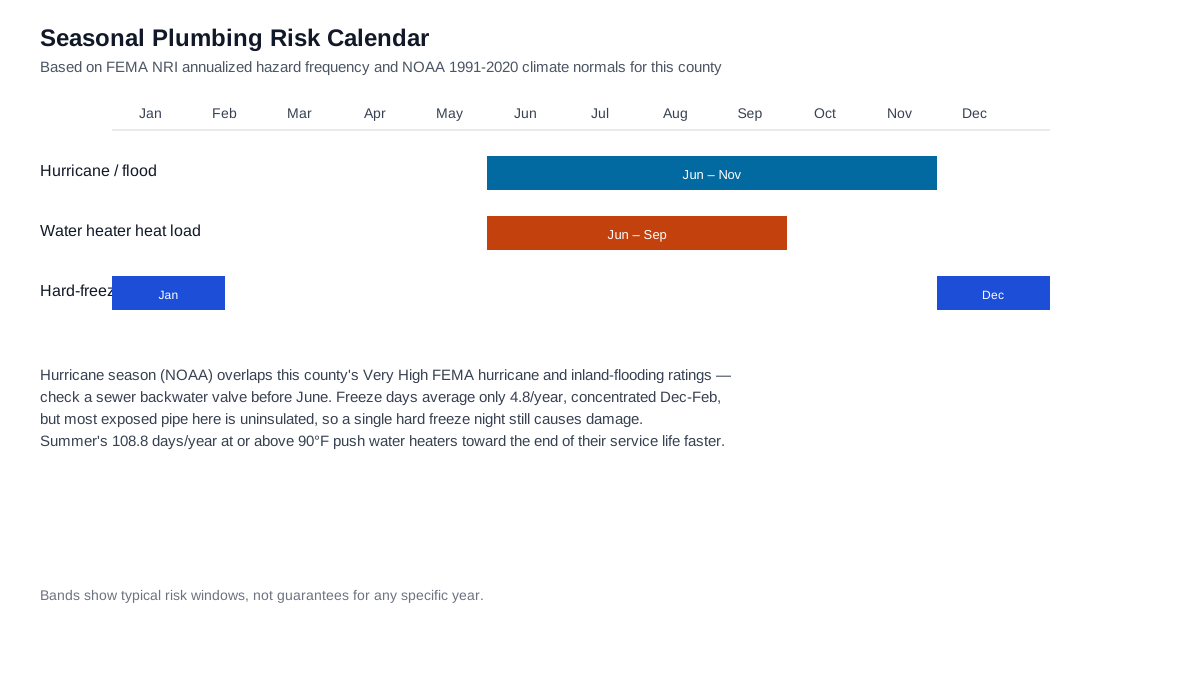
Seasonal risk windows based on FEMA NRI annualized hazard frequency and NOAA climate normals for this county.
Hurricane season runs June through November, and Harris County's FEMA hurricane rating is Very High along with a Relatively High coastal-flooding rating. A backwater or check valve on the main sewer line is inexpensive relative to what it prevents: without one, heavy rain that overwhelms the municipal system can push wastewater back into the lowest fixture in the house instead of out. That's a specific, buyable piece of prevention a generic "get your pipes checked" checklist won't mention.
The freeze side is smaller but not zero. With an average of 4.8 days a year at or below 32°F, most homes here were never built with the pipe insulation a colder climate treats as standard. Wrapping exposed hose bibs and any attic or garage-run pipe before the season's first hard freeze, and knowing where the main shutoff is before you need it in a hurry, covers most of the risk for what's genuinely a once-or-twice-a-winter event in most years.
On the heat side, 108.8 days a year at or above 90°F means a water heater's thermostat and pressure-relief valve run closer to their limits for longer than in a milder climate, and a tank water heater's service life tends to shorten under that kind of sustained load. A yearly flush to clear sediment and a check of the anode rod are cheap compared to an emergency drain cleaning or a water heater failure call in August.
Frequently asked questions
How much does a plumber charge to unclog a kitchen sink in Houston?+
Expect $100 to $275 for a single-fixture clog like a kitchen sink, based on national cost surveys from HomeAdvisor and HomeGuide. The price moves with how bad the clog is, whether it needs a motorized auger instead of a hand tool, and whether it's an after-hours call. There's no verified Houston-specific figure behind this range, so treat it as what to expect nationally and get a written estimate before work starts.
How much does it cost to replace a toilet in Houston?+
Toilet replacement itself isn't broken out separately in the national cost surveys behind this page, but clearing a clogged toilet typically runs $100 to $275, and a full swap adds the fixture and extra labor on top of that. The real cost driver is whether the shutoff valve, supply line, and wax ring are original and need replacing too. Ask for those as separate line items on any written estimate.
How much does it cost to have a plumber install a kitchen faucet?+
There's no reliable national cost survey specific to faucet installation in the data behind this page, so we won't guess at a number. Cost depends heavily on whether the existing shutoff valves still work, whether supply lines need replacing, and the faucet itself. Ask for a written estimate that separates labor from the fixture cost, and consider buying the faucet yourself if you want control over that half of the bill.
Do I need a licensed plumber for a small repair in Texas?+
For most repairs, yes. Texas Occupations Code Chapter 1301 requires a license to work as a plumber. The one exception is a homeowner working on their own homestead, exempt under Section 1301.051. That exemption doesn't extend to hiring someone unlicensed to do the work for you; anyone you pay to plumb your house needs an active Texas State Board of Plumbing Examiners license.
Is plumber's tape or plumber's putty the right fix for a leak?+
It depends on what's leaking. Plumber's tape (PTFE thread tape) seals threaded pipe connections, like where a showerhead or supply line screws in; plumber's putty seals flat, non-threaded joints, like under a sink strainer or a faucet base. Using tape where putty belongs, or the reverse, is a common reason a fresh repair still drips. If a connection keeps leaking after you've used the right one correctly, that usually points to a worn part, not the wrong sealant.
Will homeowners insurance cover a burst pipe or a slab leak in Houston?+
Usually yes for the sudden event itself under a standard HO-3 policy, since a burst pipe or a supply line failing under the slab typically counts as sudden and accidental. What often isn't covered is a slow leak that ran for months before anyone noticed, which insurers can treat as a maintenance failure instead. Document the damage with photos before cleanup, and confirm the specifics with your carrier or the Texas Department of Insurance.
Why are slab leaks a bigger deal in Houston than frozen pipes?+
Because the climate makes one common and the other rare. This area averages only 4.8 days a year at or below freezing, so frozen-pipe failures stay occasional, while flat, clay-heavy ground and slab-on-grade construction common in this region make foundation-level supply line failures, slab leaks, a recurring category instead. A slab leak needs acoustic or thermal detection equipment to locate before any concrete gets cut.
Does replacing a water heater require a permit in Houston?+
Usually, though Texas doesn't set a single statewide residential building code; permitting is handled at the municipal level, with most Texas cities adopting the International Residential Code as their baseline. That typically means a permit and inspection for a water heater swap, especially when it involves changing fuel type, venting, or adding a code-required expansion tank. Check with your specific municipality's permitting office, since requirements vary by city even within the same metro.
What's the difference between snaking and hydro jetting a drain?+
Snaking uses a mechanical cable to cut or punch through a clog; hydro jetting uses pressurized water to scour the full width of the pipe, clearing grease buildup and root intrusion that a snake typically pushes through rather than removes. Hydro jetting costs more, $600 to $1,400 for a main line versus $175 to $600 for snaking, but it's more thorough for a recurring or grease-heavy clog. A camera inspection helps determine which one a specific line actually needs.
How do I verify a plumber's license in Texas?+
Ask for the license number and look it up yourself on the Texas State Board of Plumbing Examiners' website rather than trusting a truck decal or a business card. The lookup shows whether the license is active, its level (Journeyman, Master, or Responsible Master Plumber), and whether it's in good standing. Doing this before work starts takes a couple of minutes and confirms you're not hiring someone operating under someone else's name.
Is a sewer backup covered by standard homeowners insurance?+
Not automatically. A standard HO-3 policy typically excludes sewer and drain backup unless you've added a specific backup endorsement, which is usually inexpensive relative to the damage a backup can cause. Given that Harris County rates Very High for inland flooding on FEMA's National Risk Index, that endorsement is worth asking about directly rather than assuming it's already part of a standard policy.