HVAC contractor Los Angeles households hire for a dead air conditioner in August or a furnace that won't ignite in January should expect repairs in the national $150 to $700 range and full replacements from roughly $2,900 to $9,000, verify a CSLB C-20 license before any deposit changes hands, and get every quote in writing before a crew starts work.
Type heating and air conditioning Los Angeles into Google at two in the morning with a dead furnace and a kid asking why it's cold, and you'll find plenty of ads before you find an answer. This page is built to be the answer instead: real national cost ranges, the specific hazards Los Angeles County actually carries on FEMA's books, and a straight walk through what a licensed HVAC contractor should and shouldn't be telling you.
Los Angeles doesn't get brutal winters. The mild climate is exactly why so many furnaces here fail on the first genuinely cold night — they've sat unused for eight or nine months, and nobody caught the cracked heat exchanger or dead ignitor before it mattered. Summer runs the opposite risk: an aging condenser that's limped along for years finally quits during a heat wave, the one week you actually needed it.
What follows covers AC repair and furnace repair costs, full replacement pricing, the insurance rules that apply in California, and how to check that the company knocking on your door is actually licensed to be there.
The First Hour: What to Check Before You Call Anyone
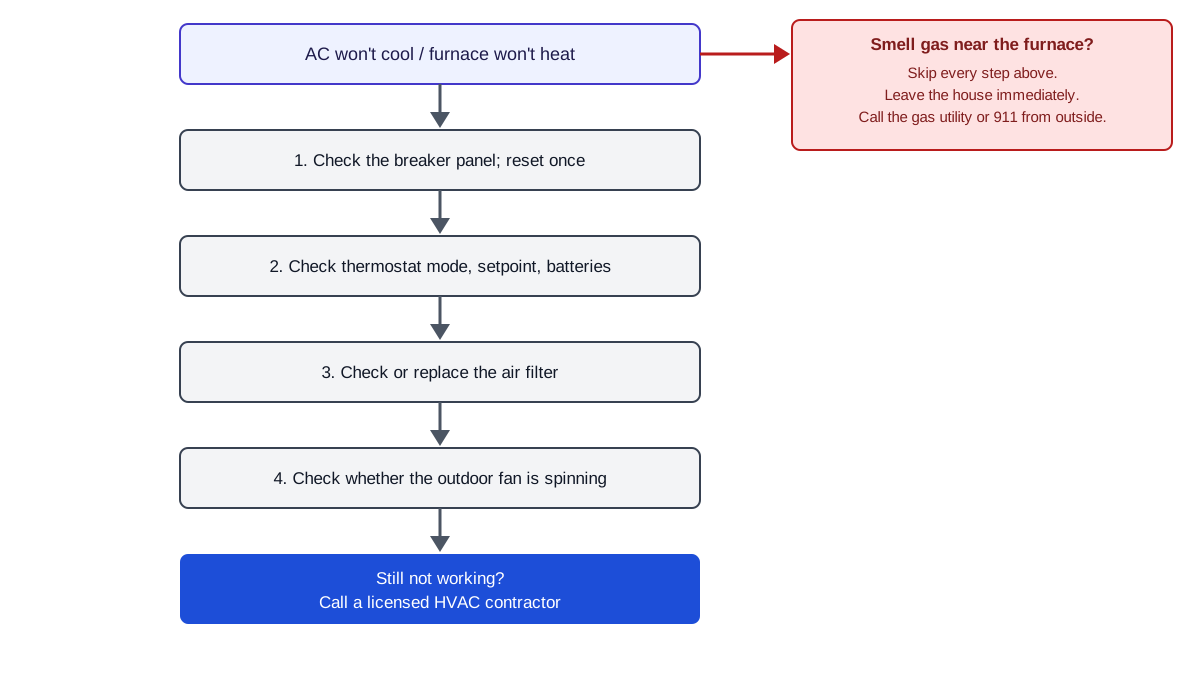
Start with the boring stuff, because it fixes more problems than people expect. A tripped breaker or a dead thermostat battery looks exactly like a failed compressor from the living room, and one takes thirty seconds to check while the other costs real money.
Go to the electrical panel and look for a tripped breaker on the AC or furnace circuit. Reset it once. If it trips again immediately, stop — that's an electrical fault, not something to keep flipping.
Check the thermostat: confirm it's set to Cool or Heat (not Off or Fan Only), the temperature setpoint actually differs from the room temperature, and — if it's battery powered — swap in fresh batteries before assuming the unit itself is dead.
Pull the air filter and hold it up to a light. If you can't see light through it, that's very likely your whole problem: a blocked filter starves the system of airflow, which is the single most common cause behind an ac not cooling or short-cycling call.
Walk outside and look at the condenser. If the fan isn't spinning at all while the indoor unit is running, don't stick anything into it — that's a job for a technician, not a screwdriver.
One situation skips this whole list: if you smell gas anywhere near the furnace or the utility meter. Leave the house immediately, don't flip any switches or light anything on your way out, and call the gas utility or 911 from outside once you're clear. That's not a judgment call to weigh against convenience.
A procedural checklist, not a substitute for professional diagnosis — if any step feels unsafe, stop and call a licensed technician.
None of this applies if you're dealing with a no cooling emergency during a heat wave and there's a medically vulnerable person in the house — an infant, someone elderly, or anyone with a heart or respiratory condition. In that case, skip straight to arranging emergency ac repair or same day ac repair and worry about the diagnosis later.
Why AC and Furnace Systems Fail the Way They Do Here
Los Angeles sits in Los Angeles County, inside the Los Angeles-Long Beach-Anaheim metropolitan statistical area, with the city itself home to roughly 3.88 million people as of the Census Bureau's 2024 estimate. That scale matters for HVAC: FEMA's National Risk Index gives the county an overall risk score of 100 out of 100, rated Very High, and a good share of that comes from sheer exposure — more buildings, more people, more dollar value in the hazard zone than almost anywhere else, not because any single hazard here is uniquely severe on its own.
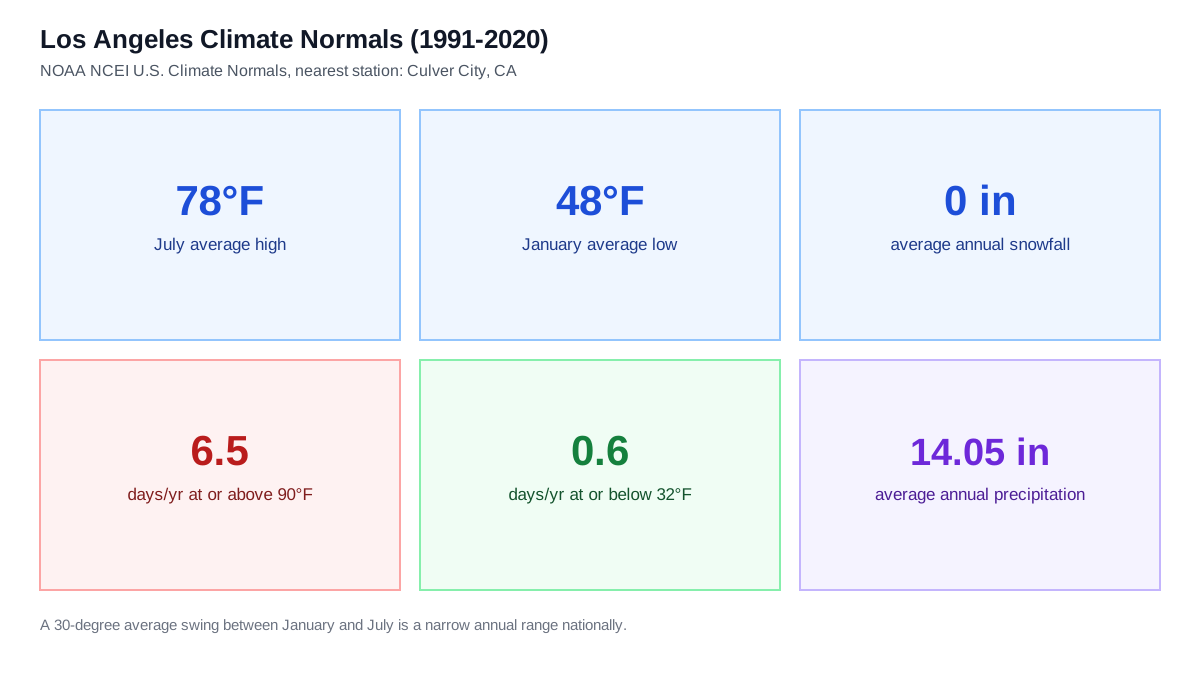
The climate itself is mild by any national measure. NOAA's 1991-2020 Climate Normals for the nearest reporting station, Culver City, about a mile from downtown, put the July average high at 78°F and the January average low at 48°F — a 30-degree swing across the year, which is narrow. The county averages just 6.5 days a year at or above 90°F and only 0.6 days a year at or below freezing. Annual snowfall averages zero inches, and annual precipitation averages 14.05 inches. A furnace here isn't stress-tested by regular use the way one is in Minneapolis, so a cracked heat exchanger or a dying ignitor can sit undetected for years before the first real cold snap exposes it.
NOAA NCEI U.S. Climate Normals (1991-2020), nearest reporting station Culver City, CA, about 1.6 km from downtown Los Angeles.
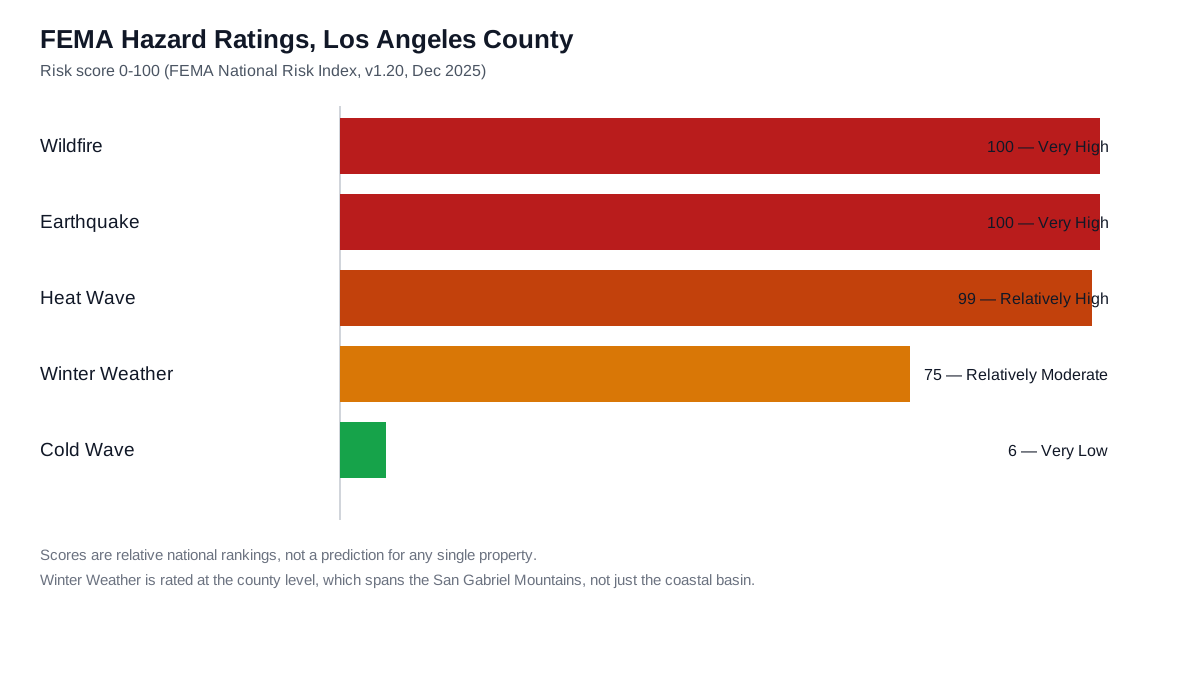
Two FEMA hazard ratings matter here before you think about your ductwork. Heat Wave is rated Relatively High for the county, with an annualized frequency of roughly 9.5 qualifying events a year in FEMA's model — that's the load your AC has to survive. Wildfire is rated Very High, and it matters to HVAC because smoke gets pulled straight into a home through the same return-air path that's supposed to deliver clean, conditioned air. Earthquake is also rated Very High, with a score of 100, one reason gas furnace connections and rooftop package units in this county tend toward flexible, seismically rated connectors instead of rigid ones.
One rating surprises people: Winter Weather comes in Relatively Moderate at the county level, even though the city of Los Angeles itself sees essentially no snow and almost no freeze days. Los Angeles County stretches from the coast up into the San Gabriel Mountains, and FEMA's rating covers the whole county, not just the basin — if your house sits in the flats, your own exposure to that particular hazard runs well below the county figure.
FEMA National Risk Index county-level hazard scores, 0-100 scale, version 1.20, December 2025 release.
None of this is abstract for your utility bill. The broader HVAC picture across California includes a regional cost index from the U.S. Bureau of Economic Analysis: this metro runs about 13.6% above the national average on overall prices and roughly 58.6% above average on services and utilities. It's not HVAC-specific, but it's a fair signal that repairs and replacements here trend toward the higher end of the ranges quoted below.
The Problems People Actually Search For in Los Angeles
Emergency and After-Hours Calls
Most people don't research hvac repair until something's already broken. Emergency hvac service, 24 hour ac repair, and same day ac repair are real search terms because failures don't wait for business hours, and a no cooling emergency in August with elderly residents in the house is a different situation than a mildly warm bedroom in October. Emergency furnace repair searches spike during the rare cold snaps — rarer here than almost anywhere else in the country, but the calls that do come in tend to involve a system that was already failing quietly.
AC Symptoms: Warm Air, Leaks, Noise and Frozen Coils
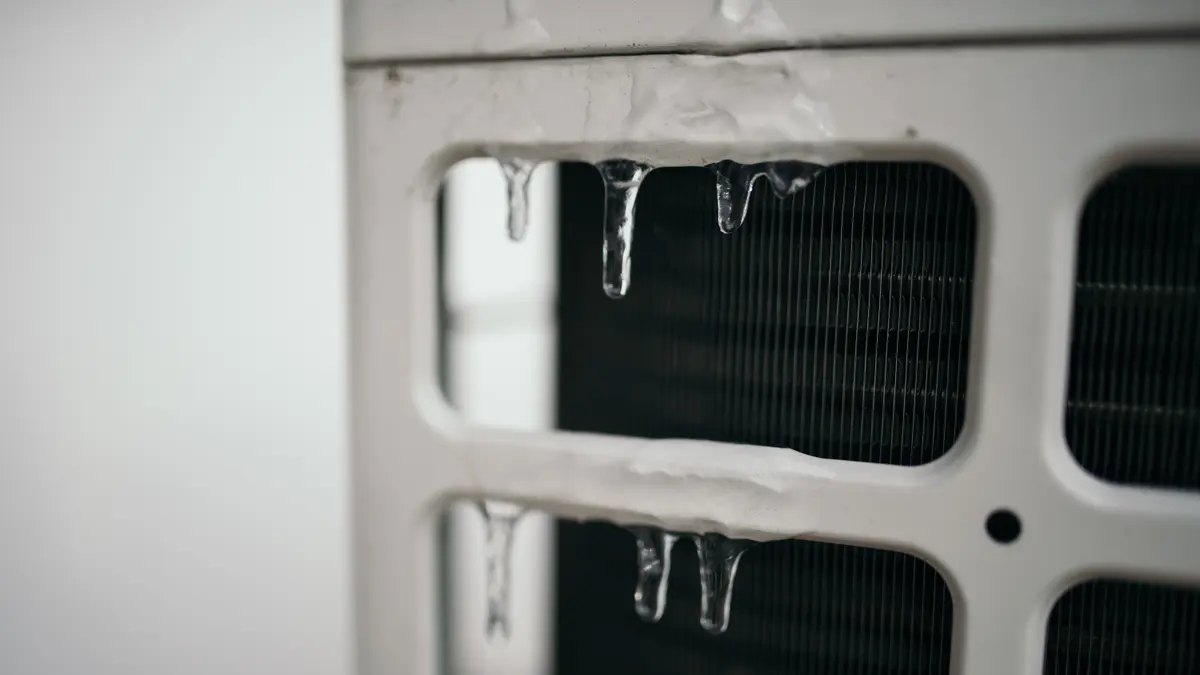
An ac blowing warm air complaint usually traces to a low refrigerant charge, a failed compressor, or a thermostat stuck in the wrong mode. Ac not turning on points toward the breaker, a blown disconnect fuse, or a failed capacitor, a small part that stores the charge a compressor needs to start; when it fails, the outdoor fan often just hums without spinning. Ac leaking water inside is almost always a clogged condensate drain line or a cracked drain pan, not refrigerant, and it can ruin drywall fast if ignored. Ac frozen up, visible ice on the indoor coil, comes from restricted airflow or low refrigerant, and running the system while frozen only makes it worse. Ac making loud noise spans a rattling cabinet (loose panels or debris), a squeal (belt or bearing), or a hard bang (a broken internal part). Ac short cycling points to an oversized unit, a dirty filter, low refrigerant, or a failing thermostat sensor, and outside ac unit not spinning is almost always the capacitor, the fan motor, or a tripped breaker.
Furnace, Heat Pump and Thermostat Symptoms
Furnace not igniting is the most common furnace complaint industry-wide: a dirty flame sensor, a failed ignitor, or a clogged vent, roughly in that order of likelihood. Furnace blowing cold air often means fan-only mode, a mid-cycle ignitor failure, or, on a heat pump, a stuck defrost cycle. Furnace short cycling shares causes with its AC counterpart. A heater not turning on or no heat in house call, especially the first cold week of the year, is disproportionately likely here to be a furnace nobody looked at during the eight or nine warm months it sat idle. Heat pump not heating adds a wrinkle: a system stuck in defrost or with a failed auxiliary heat strip can run a long time while producing barely any warm air. And thermostat not working spans dead batteries to a smart thermostat that isn't wired for the home's system, a genuine compatibility problem, not user error.
Component Failures Behind Most Service Calls
Underneath most of the above, a short list of parts does most of the failing. An ac refrigerant leak is diagnosed with an electronic detector or UV dye, not guesswork, and federal law restricts who can handle the refrigerant. Ac compressor not working is the single most expensive AC failure; on an older unit, a technician often recommends full replacement over a compressor swap. Ac capacitor replacement is, by contrast, one of the cheapest repairs here. An evaporator coil leak tends to show up as slowly declining cooling over weeks. Blower motor replacement is needed when airflow drops sharply even with a clean filter. And ac drain line clogged is the boring, cheap fix behind a surprising number of "my AC is leaking" calls.
Commercial and Rooftop Units, and the Brand Question
Commercial hvac repair and commercial ac repair cover a different animal — rooftop hvac unit repair on a packaged unit serving a restaurant or retail space means balancing downtime against the cost of the job, since a closed kitchen loses money every hour a walk-in or the dining room sits without climate control. As for the brand question: whether it's a Trane, Carrier, Lennox, Goodman, Rheem, York, American Standard, Bryant, Amana, or Ruud system, or a Daikin or Mitsubishi ductless mini-split, the brand mostly determines parts availability and warranty terms, not who's qualified to work on it. Any properly licensed, EPA-certified technician can service any of them.
Cost Questions and "Best Company" Searches
Ac replacement cost and new furnace cost are consistently among the highest-volume searches in this category, right alongside ac repair estimate — people want a number before they'll even pick up the phone. The best hvac company search is the hardest one to answer honestly: this page doesn't rate, rank, or endorse any specific company, because we don't have verified performance data on individual contractors in this market. What we can tell you is how to check credentials yourself, which the hiring section below walks through.
What a Proper Repair or Installation Actually Involves
A diagnostic visit should follow a sequence, not a guess. A competent technician checks electrical draw at the disconnect, verifies refrigerant pressures against the manufacturer's target using superheat and subcooling readings rather than just topping off the charge, and inspects the condensate system and ductwork before touching a single part. Topping off refrigerant without finding the leak is a shortcut, not a repair — the charge just leaks out again, and you pay for the same visit twice.
Installations and full replacements follow a different standard. Industry practice, laid out in the Air Conditioning Contractors of America's technical manuals, calls for Manual J to calculate a home's actual heating and cooling load and Manual S to match equipment to it. A crew that skips the load calculation and just installs "the same size as what was there" is doing it the fast way, not the right way. An oversized system short-cycles; an undersized one runs constantly and still can't keep up on the hottest days.
Anyone handling refrigerant on the job needs EPA Section 608 certification under the Clean Air Act. It's a federal requirement, not a nice-to-have, and it applies to anyone who could release refrigerant into the atmosphere while servicing equipment. Many of the better shops also carry technicians with NATE certification, which tests actual HVAC knowledge across fundamentals, electrical and controls, and installation. It's a voluntary credential, but it's a meaningful signal.
Timeline matters too. A same-day diagnostic call is normal, and a repair using an in-stock part can often finish the same visit. A full system replacement is a different project: expect a crew on-site for most of a day, a permit pulled through the city or county building department for anything involving new ductwork, electrical, or gas connections, and a final inspection before the job is officially closed. Duct cleaning is sometimes bundled into a replacement quote; it earns its cost when ducts are visibly contaminated or after rodent activity, and it's mostly a waste of money as a routine annual add-on.
What It Costs in Los Angeles
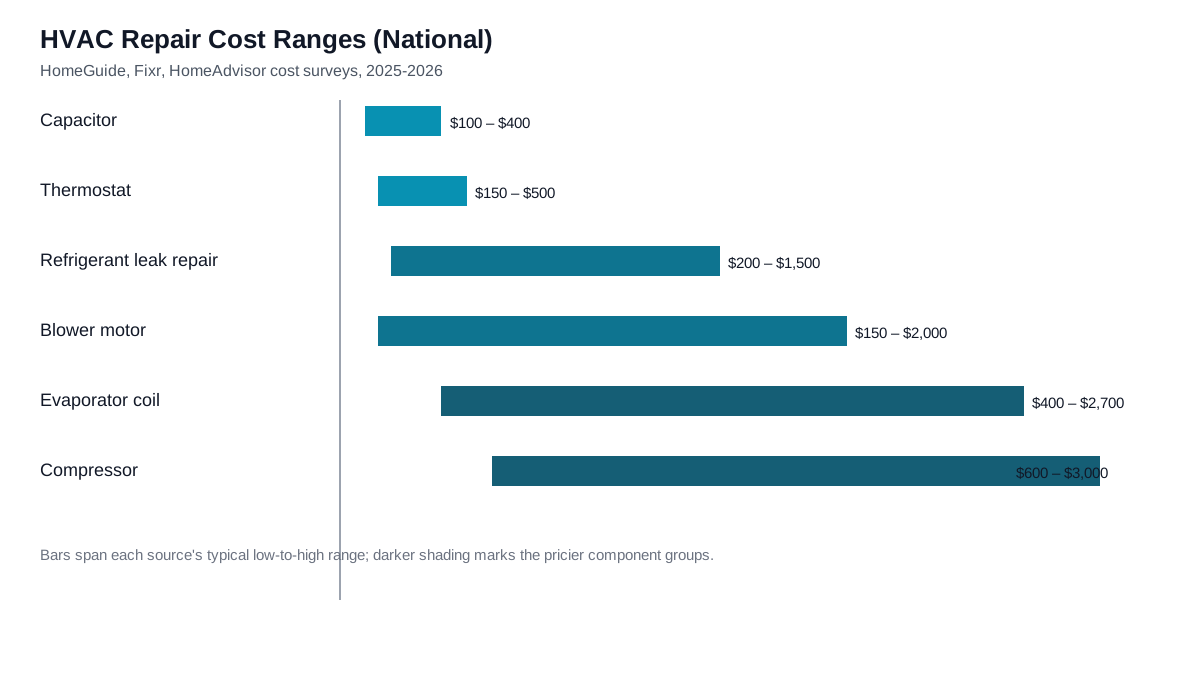
Nobody publishes an HVAC-specific price index for Los Angeles, so treat every number below as a national research range, not a local quote. These ranges come from three independent 2025-2026 cost surveys — HomeGuide, Fixr, and HomeAdvisor — cross-checked against each other, not pulled from a single source. The Los Angeles-Long Beach-Anaheim metro runs about 13.6% above the national average on overall prices and close to 59% above average on services and utilities, per the Bureau of Economic Analysis, so expect quotes here toward the upper half of these ranges more often than the lower. A written estimate from a licensed local contractor is the only number that actually applies to your house.
Repair / Job
Typical Range
What Moves the Price
Source
Basic service call / diagnostic
$75 – $200
Time of day, distance, complexity of the symptom
HomeGuide
AC repair (overall average)
$250 – $700
Which component failed, parts availability, unit age
Fixr
Furnace repair (overall average)
$349 – $650
Fuel type, part cost, access difficulty
Fixr
Capacitor replacement
$100 – $400
Capacitor size and rating, brand of unit
Fixr
Thermostat replacement
$150 – $500
Smart vs. basic model, wiring compatibility
Fixr
Blower motor replacement
$150 – $2,000
Variable-speed motors cost far more than standard ones
HomeAdvisor
Evaporator coil replacement
$400 – $2,700
Coil size, refrigerant type, labor to access it
Fixr
Compressor replacement
$600 – $3,000
Compressor size, whether the unit is still under warranty
Fixr
Refrigerant leak repair
$200 – $1,500
Leak location, refrigerant type, how much recharge is needed
Fixr
Furnace ignitor replacement
$100 – $250
Ignitor type, furnace brand and age
HomeGuide
Heat exchanger replacement
$1,000 – $3,000
Often close to replacement cost — ask about total system age first
HomeGuide
Emergency / after-hours labor rate
$140 – $300 per hour
Time of night, holiday, how far the crew has to travel
HomeGuide; Fixr
National cost ranges compiled from the repair cost table above (HomeGuide, Fixr, HomeAdvisor, 2025-2026 surveys). Local quotes in Los Angeles tend toward the upper half of these ranges.
Full replacement is a bigger decision, and the range widens accordingly.
System
Typical Range
Source
Central AC replacement (full system)
$2,900 – $9,000
HomeAdvisor
Ductless mini-split system
$1,900 – $16,100
HomeAdvisor
Gas furnace replacement
$3,800 – $10,000
Fixr
Electric furnace replacement
$1,800 – $7,300
Fixr
New ductwork (whole system)
$1,000 – $5,000 (avg. about $2,000)
HomeAdvisor
Annual maintenance plan / tune-up
$100 – $300
HomeAdvisor
One more figure worth knowing if you're weighing a bigger upgrade against resale value: national data from the 2025 Cost vs. Value report puts a full HVAC electrification conversion at an average job cost of $19,484, recouping about $14,053, roughly 72%, at resale. That's a national figure, not a Los Angeles one, and it's specific to full electrification projects, not a routine repair or like-for-like replacement.
Two more things worth knowing before you sign anything. Permits are required in California for HVAC work when the job costs $1,000 or more in labor and materials combined, needs a permit under the building code regardless of price, or is done using employees — that's the Contractors State License Board's threshold, and it applies here the same as anywhere else in the state. And California does not exempt most labor from sales tax: per the California Department of Tax and Fee Administration, many types of labor charges on tangible personal property are taxable, though construction-labor rules for work on real property, like a furnace installation, follow separate rules. Ask your contractor how the invoice breaks it out.
Insurance and Claims in California
Standard homeowners insurance in California, like most HO-3 policies nationally, typically covers sudden and accidental damage — a tree branch crushing a condenser, an electrical fire that takes out the furnace — while excluding ordinary wear and tear or mechanical breakdown from age. A compressor that quits after fifteen years of normal service is unlikely to be a covered claim; a system destroyed by a covered peril like fire or a burst pipe usually is. Wording varies by carrier and endorsement, so read your own declarations page rather than assuming either way.
The California Department of Insurance is the state regulator for homeowners insurance complaints and licensing questions, and its site is the place to verify an adjuster's license or file a complaint if a claim feels mishandled. If you do have a covered loss, keep dated photos of the damaged equipment before anything is removed, save the failed parts if the contractor will let you, get a written diagnosis explaining the cause of failure and not just the fix, and keep every invoice. A public adjuster, hired directly by you, works for your interests and typically takes a percentage of the settlement; the adjuster your insurance company sends works for the carrier. Neither is inherently wrong to use — they represent different sides of the same negotiation.
One more state-specific note: California's 2025 building code cycle, covering both the California Residential Code and the California Building Code and based on the 2024 model codes, took effect January 1, 2026, per the Department of General Services. If your HVAC replacement falls right around that code transition, ask your contractor which edition the permit is pulled under. It rarely changes a straightforward system swap, but it's worth confirming.
How to Vet an HVAC Contractor in Los Angeles
Every legitimate hvac contractor operating in California needs a Contractors State License Board license in the C-20 classification, the specific classification covering warm-air heating, ventilating and air-conditioning work, including ducts, controls, and filters. You can look up any contractor's license number, status, bond, and any disciplinary history through the state's public license search, covered on our California HVAC licensing page, before you let anyone into your house — it takes about two minutes.
Beyond the license, ask for proof of general liability insurance and, if they have employees, workers' compensation. If a technician is hurt on your property and the company isn't insured, that liability can land on you. Ask whether the technician doing refrigerant work is EPA Section 608 certified, federally required for anyone handling refrigerant, and whether the company has any NATE certified technicians on staff, a voluntary credential reflecting tested competence rather than a marketing claim.
An HVAC contractor Los Angeles homeowners can actually trust will hand you a written estimate before starting work, and that estimate should spell out the specific parts being replaced by make and model, not just "compressor"; labor cost separated from parts cost; whether a permit is included and who's pulling it; the warranty term on both parts and labor; and a firm total, not a range that can move once the truck is already in your driveway.
Red flags: a contractor who can't or won't provide a license number, anyone asking for full payment upfront, high-pressure "today only" pricing, a quote that skips the load calculation on a full replacement, and anyone unwilling to put the scope of work in writing. None of these alone proves a scam, but together they're a pattern worth taking seriously.
On the best hvac company question: we don't have verified, ongoing performance data on individual Los Angeles contractors, so we won't manufacture a ranking. The license lookup and the checklist above are the two tools that actually hold up.
What You Can Safely Handle Yourself, and Where That Stops
A reasonable amount of HVAC upkeep is legitimately DIY. Changing the filter every one to three months, clearing leaves and debris from around the outdoor condenser, keeping at least two feet of clearance around it, gently rinsing (not power-washing) the condenser fins with a garden hose, checking and replacing thermostat batteries, and clearing a condensate drain line from the outside access point with a wet/dry vacuum are all within reach of most homeowners with basic tools.
Situation
Try Yourself
Call a Licensed Pro
Thermostat blank or unresponsive
Replace batteries, check the breaker
If wiring or smart-thermostat compatibility is the issue
Weak airflow
Replace the filter
If airflow stays weak with a fresh filter
Outdoor fan not spinning
Clear debris and leaves around the unit
If the capacitor or fan motor is suspect
AC blowing warm air
Confirm thermostat is set to Cool, check the breaker
If refrigerant, the compressor, or wiring is involved
Water pooling near the indoor unit
Wet/dry-vac the exterior drain line opening
If the clog is inside the wall or the coil is frozen
Gas smell near the furnace
Nothing — leave the house
Always, plus the gas utility
Suspected refrigerant leak
Nothing — handling is federally restricted
Always
The line sits at anything involving refrigerant, gas, or the electrical components behind the disconnect panel. Refrigerant handling is federally regulated: Section 608 of the Clean Air Act restricts its purchase and handling to certified technicians, and that's not a suggestion, it's law. Gas line work, heat exchanger inspection, and control-board diagnostics all require tools, test equipment, and training that go well past what a weekend project covers. Opening the electrical disconnect without cutting power first is exactly the kind of shortcut that turns a $200 repair into an emergency-room visit.
One filter for deciding: does the fix touch refrigerant, gas, or anything behind a high-voltage panel? If so, it's a professional job regardless of how simple the symptom looks.
Preventing Breakdowns in This Particular Climate
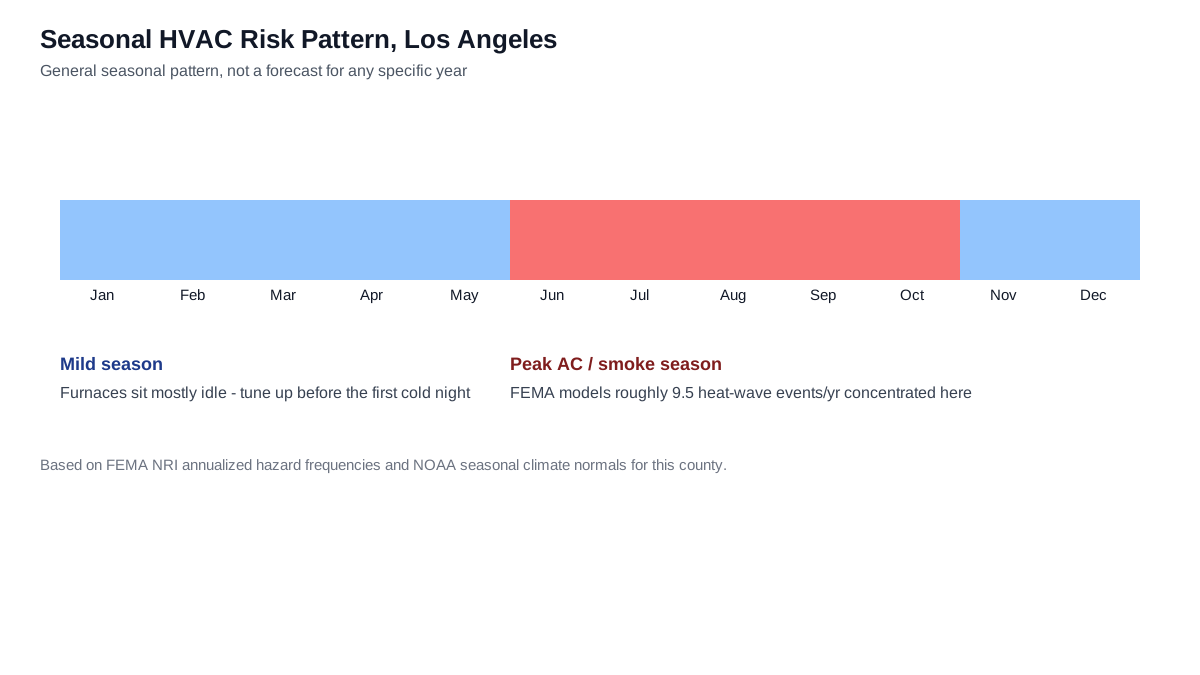
Because Los Angeles runs mild winters and increasingly hot, dry summers, the prevention calendar here looks different than in most of the country. Schedule an hvac maintenance tune-up before late spring, ahead of the county's heat-wave season rather than during it — FEMA models roughly 9.5 qualifying heat-wave events a year here, and a system already stressed going into that window is the one most likely to fail on the worst day to lose it. Clean or replace the filter more often than the package recommends near dry brush or heavy dust; low annual rainfall, about 14 inches, mostly winter, means outdoor coils accumulate dust between storms longer than in a wetter climate.
Wildfire is rated Very High for this county, and the practical HVAC angle is indoor air quality, not just structure loss: a MERV 13 filter (check your system's static-pressure rating first, since not every blower handles the added resistance) and a sealed, well-maintained duct system both cut down on smoke reaching your living space during a bad-air-quality stretch. Duct sealing and cleaning earns its cost here more than in cities with cleaner outdoor air year-round.
General seasonal pattern for this county based on FEMA NRI annualized hazard frequencies and NOAA seasonal climate normals, not a forecast for any specific year.
Because winters here are so mild, the furnace is the system most likely to get neglected — it's easy to forget a machine that only runs for a few weeks a year. A fall maintenance check before the first genuinely cold week catches a failing ignitor or a dirty flame sensor while it's a $100–$250 fix instead of a family finding out at six in the morning that the furnace won't start at all.
Earthquake risk, rated Very High for the county, is worth one line here even though it sits outside HVAC's usual scope: flexible gas connectors on furnaces and water heaters reduce the odds of a gas leak if the ground moves, and it's a cheap upgrade most licensed HVAC techs can handle during an unrelated service visit.
Frequently asked questions
How much does HVAC repair cost?+
HVAC repair typically runs $150 to $450 nationally, with AC service averaging around $319 and furnace service around $268, according to HomeGuide's cost survey. Simple fixes like a capacitor land near the bottom of that range; a compressor or heat exchanger replacement lands much higher. Los Angeles doesn't have its own HVAC price index, but the metro's overall cost-of-living index runs above the national average, so expect quotes toward the higher end. Get a written estimate before agreeing to anything.
How much does air conditioner repair cost?+
Air conditioner repair costs $250 to $700 on average nationally, per Fixr, with a typical average around $375. Minor fixes like a capacitor run $100 to $400; a compressor replacement can reach $3,000. The specific number depends on which part failed and how old the system is — a diagnostic visit, usually $75 to $200, is the only way to know which end of that range applies to your unit.
How much does furnace repair cost?+
Furnace repair averages $318 to $485 depending on the source, with a typical range of roughly $133 to $650 covering most jobs, according to HomeAdvisor and Fixr. An ignitor or flame sensor replacement sits near the low end, around $100 to $250; a cracked heat exchanger can run $1,000 to $3,000 and sometimes makes more financial sense to fold into a full furnace replacement.
How much does HVAC maintenance cost?+
A routine annual tune-up or maintenance plan typically costs $100 to $300, according to HomeAdvisor, and it's one of the cheaper ways to avoid a much larger repair bill. In a mild climate like this one, where furnaces sit unused for most of the year, a fall maintenance visit specifically is worth the cost because it catches small failures before the first cold snap turns them into an emergency call.
How much does an HVAC service call cost?+
A basic HVAC service call or diagnostic visit runs $75 to $200 nationally, per HomeGuide, before any repair work begins. That fee usually gets credited toward the repair cost if you go ahead with the work. Emergency or after-hours visits run higher, typically $140 to $300 per hour, since technicians are being called outside normal scheduling.
Does insurance cover HVAC repair or replacement?+
Usually not, if the cause is ordinary wear and age — standard HO-3 homeowners policies typically exclude mechanical breakdown from normal use. Coverage is more likely if the damage came from a covered peril, like a fire, a falling tree, or a burst pipe that took the system out with it. The exact language varies by carrier, so check your own policy's declarations page rather than assuming either way, and contact the California Department of Insurance if a claim decision seems wrong.
Why is HVAC repair so expensive?+
Parts, licensed labor, and liability insurance all cost more than people expect, and HVAC work requires federal EPA certification just to legally touch refrigerant. In a metro where overall costs run well above the national average, labor rates tend to sit toward the higher end of national ranges. The other factor: many "expensive" repairs are early-warning replacements in disguise, since fixing an old compressor can cost nearly as much as a new system.
Can I repair my own HVAC system?+
Some of it, yes — filter changes, clearing debris around the outdoor unit, resetting a tripped breaker, and swapping thermostat batteries are all reasonable DIY tasks. Anything involving refrigerant, gas lines, or the electrical components behind the disconnect panel is not: refrigerant handling is federally restricted to EPA-certified technicians, and gas or high-voltage work carries real safety risk that isn't worth the money saved.
How do I find a good HVAC company in Los Angeles?+
Start with California's Contractors State License Board to confirm the company holds an active C-20 license, then ask for proof of liability insurance and any NATE-certified technicians on staff. A trustworthy contractor gives you a written estimate that separates labor from parts and states a firm total, not a range. This page doesn't rank or endorse specific companies — verifying credentials yourself is the reliable part of the process.
What does HVAC maintenance actually involve?+
A proper maintenance visit checks refrigerant pressure, electrical connections and amp draw, the condensate drain, the blower and filter, and, on a furnace, the flame sensor, ignitor, and heat exchanger for cracks. It's not just a filter swap. Expect it to run $100 to $300 and take under an hour for a single system, per HomeAdvisor's cost data.