Water damage restoration in Los Angeles typically runs $1,200 to $6,369 per job, though small Class 1 jobs can cost under $500 and Class 4 disasters top $20,000. Los Angeles County carries a Very High FEMA rating for inland flooding, wildfire and earthquake risk, and most local jobs trace to slab leaks, roof failures and storm-timed floods rather than frozen pipes.
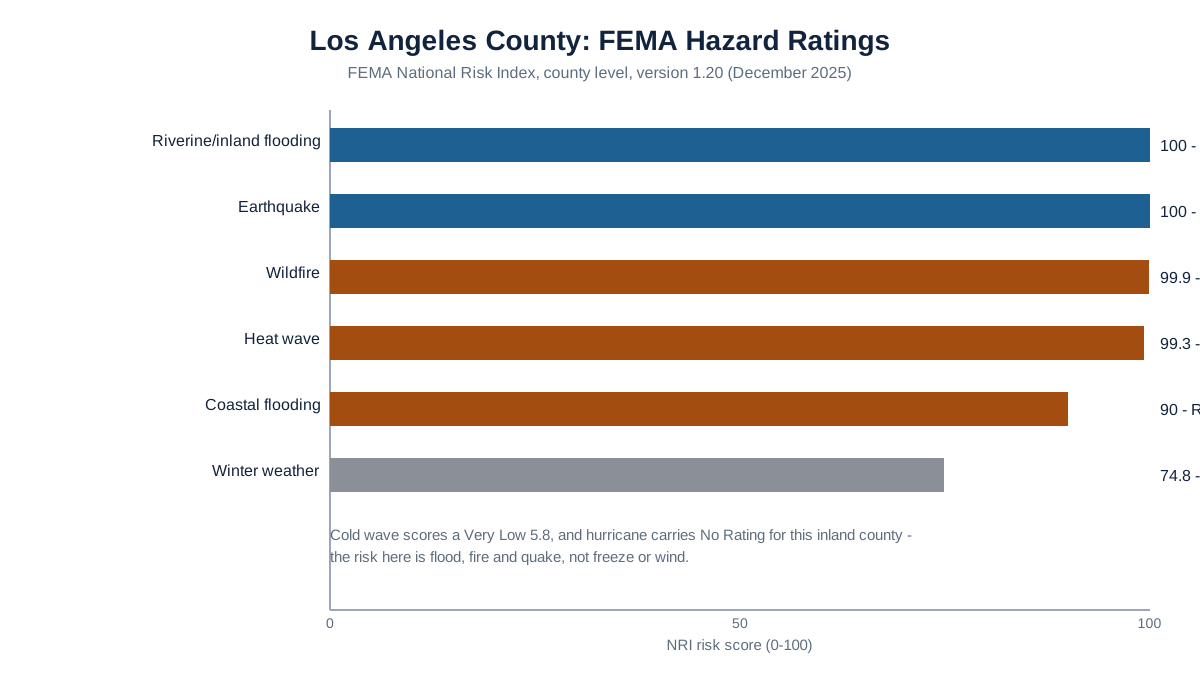
Type restoration company Los Angeles into your phone at 2 a.m. and you're just one of about 3.9 million residents; the U.S. Census Bureau's 2024 estimate for the city itself is 3,878,704 people, spread across a basin that sits inside Los Angeles County. Nationally, water damage and freezing caused 27.6% of homeowners insurance losses in 2022, according to the Insurance Information Institute, second only to wind and hail. Los Angeles County's own numbers help explain why local restoration crews stay busy: FEMA's National Risk Index gives the county a Very High overall hazard rating, driven in part by a riverine and inland flooding score that sits at the maximum, 100 out of 100, and a wildfire score of nearly 100 as well.
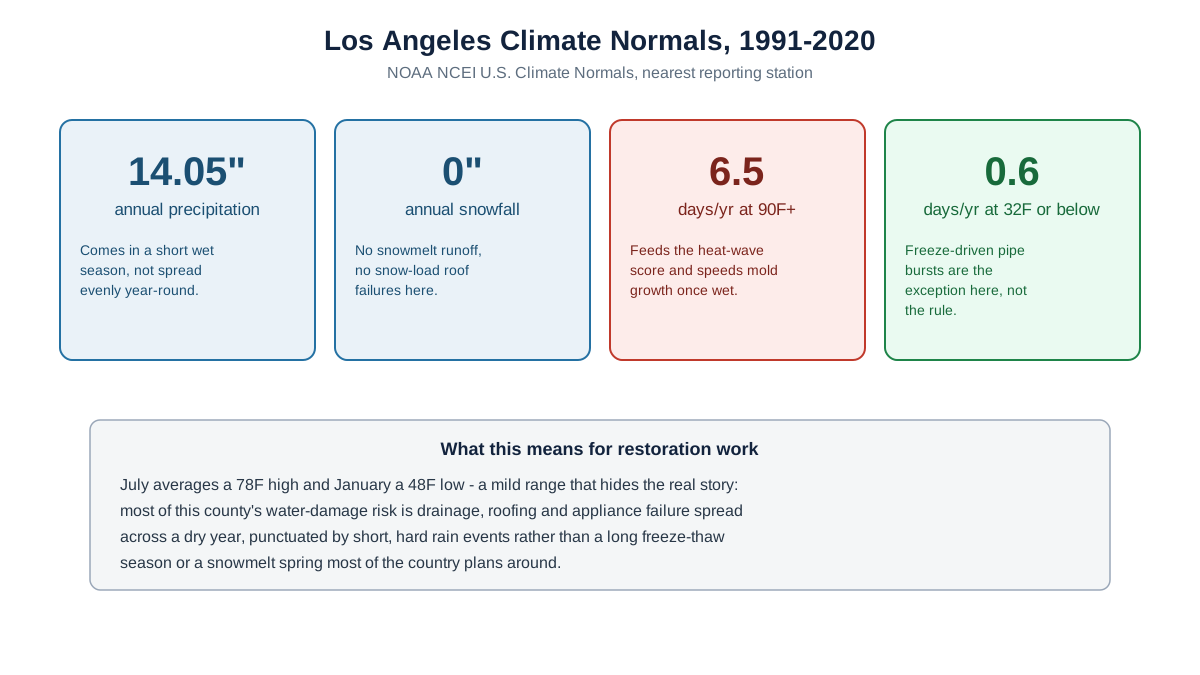
None of that matches LA's reputation for sunshine. NOAA's 1991-2020 climate normals put annual precipitation at just 14.05 inches and snowfall at zero. This isn't a freeze-and-thaw pipe-burst climate, and the numbers back that up: the nearest reporting station averages only about 0.6 days a year at or below 32°F. What the data does show is heat: 6.5 days a year hit 90°F or hotter, and the county's heat wave hazard score is a Relatively High 99.3. Stack a dry, hot, earthquake-and-wildfire county on top of a coastal flood risk rated Relatively High, and you get the specific mix of water damage restoration Los Angeles deals with most: more slab leaks, roof and appliance failures, and storm-timed floods than frozen pipes, plus faster mold growth once water does get in, because a 78°F July doesn't slow biology down.
Everything below comes from national cost-survey data, NOAA and FEMA records, and California's own contractor-licensing rules, not a quote and not a guess. Treat the dollar ranges as a starting point for comparing bids, not a promise from us or from anyone who calls you back.
What to Do in the First Hour After Water Damage Hits Your Los Angeles Home
The first sixty minutes decide how much this costs you. Find your main shutoff first. For LA's mostly slab-on-grade homes, that's usually a valve near the water meter at the curb or a fixture stop under the leaking sink or toilet. Turn it before you do anything else. If the water is anywhere near an outlet, a power strip, or your electrical panel, do not step in it; cut power at the breaker instead of pulling a plug — and if reaching that breaker means walking through the water, don't: stay clear and call an electrician, or 911 if you smell burning or see sparking. If the water is still coming in and you can't find the source, call 888-407-9931 to reach a restoration company that serves Los Angeles and describe what you see.
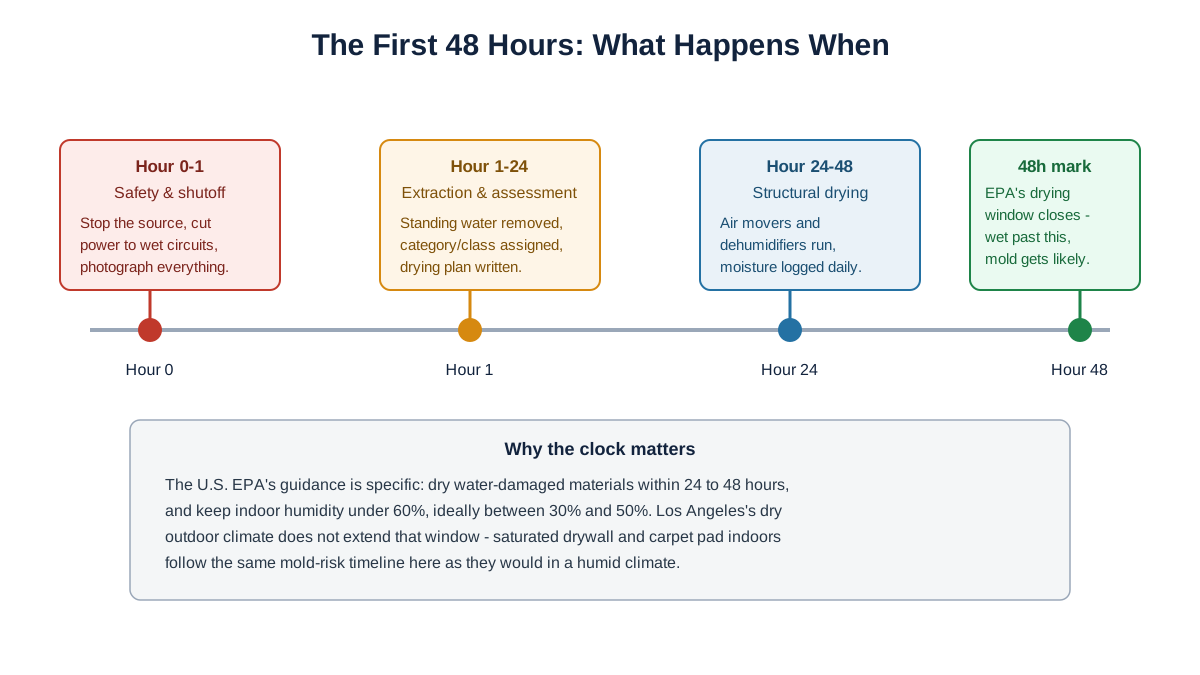
Once the source is stopped, the clock matters more than the mop. The EPA's 24-to-48-hour drying window sets the pace for every step after the water is shut off.
Photograph every wet surface, including baseboards and the underside of anything you move, before you touch it; insurers and public adjusters both ask for this later.
Move anything with legs (furniture, electronics, rugs) off the wet floor and onto foil or wood blocks so it stops wicking more water.
Open windows and run a box fan or your HVAC's fan-only setting if the outside air is drier than the room, which in Los Angeles is most of the year outside the rainy months.
Skip the shop vac on anything beyond a small spill if the water touched a toilet line, a sewer cleanout, or standing outdoor floodwater: that's likely Category 2 or 3 water under the industry classification, and it calls for a crew, not a sponge.
The U.S. EPA's guidance is blunt about the clock: dry water-damaged materials within 24 to 48 hours or mold becomes the likely outcome, and its target indoor humidity is under 60%, ideally between 30% and 50%. That window is the same in Los Angeles as anywhere else in the country. A dry climate outside doesn't buy you extra time once carpet padding or drywall is saturated indoors.
Why Water Damage Happens in Los Angeles Specifically
Los Angeles County's FEMA National Risk Index score is about as high as the scale goes: an overall risk rating of Very High, with a risk score of 100. That single number hides an unusual mix. Riverine and inland flooding scores 100 out of 100, Very High, with FEMA's own modeling putting the annualized frequency of flood-hazard events at roughly 4 per year for the county. Coastal flooding is close behind at a Relatively High rating and a score of 90. Wildfire sits at Very High too, with a score near 100, and earthquake matches it exactly at 100. Heat wave rounds out the picture at Relatively High. FEMA rates Los Angeles County Very High for flood, fire and earthquake — and only Relatively Moderate for winter weather, unlike most of the country.
Compare that to winter weather, which FEMA rates only Relatively Moderate here, and the picture gets clearer: this county's water damage doesn't mostly come from frozen pipes bursting in January. NOAA's 1991-2020 climate normals for the area put annual precipitation at 14.05 inches, snowfall at zero, and freeze days at 32°F or below at an average of just 0.6 per year. Essentially never. Almost zero freeze days and concentrated winter rain, not a freeze-thaw season, are what actually drive Los Angeles water damage.
What LA does get is heat and hard, infrequent rain. Summer highs average 78°F in July with 6.5 days a year hitting 90°F or hotter, and the region's dry stretches mean gutters, roof flashing, and yard drainage often go untested for months, then get hit all at once when a system finally moves through. Add California's cost of living into the mix: the Los Angeles-Long Beach-Anaheim metro's regional price parity index is 113.6 (U.S. average = 100), driven heavily by a services-and-rent index of 170.4, according to the Bureau of Economic Analysis. That doesn't set the price of drying out your den, but it's one honest reason a Los Angeles bid tends to land above the national average shown further down this page.
The Water Damage Problems Los Angeles Homeowners Search For Most
Type any of these into a search bar and you'll land on some version of this page: water damage restoration, water damage repair, a water damage company, water removal service, water mitigation, flood damage restoration, flood cleanup service, water extraction service, structural drying, storm damage restoration, basement waterproofing, or water cleanup service. They're mostly the same job described a dozen different ways: the two real exceptions are basement waterproofing, which is prevention rather than cleanup, and structural drying, which is one phase of a larger job, not the whole thing. What actually separates one Los Angeles case from the next is what happened and where.
Emergency, 24/7 and after-hours calls
Water doesn't wait for business hours, and neither does the search traffic. Emergency water damage restoration and 24/7 water removal sit right alongside same day water extraction, after hours water damage, and a straight 24 hour water damage search: different phrasing, same problem at 2 a.m. A legitimate restoration outfit answers a 3 a.m. call about the same way it answers a 3 p.m. one, and can usually get a truck moving within a couple of hours for an active leak. What you're paying for on an emergency flood cleanup is speed and a crew willing to show up in the dark, not different equipment. The extraction and drying gear is identical either way.
A flooded basement, wet carpet, or a stain that won't stop spreading
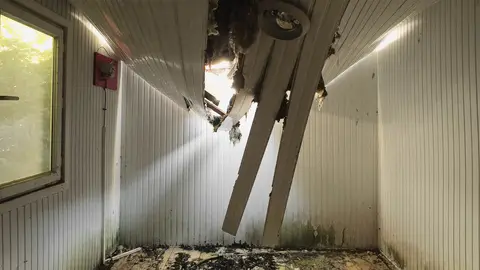
Most homes here don't have a true below-grade basement the way a Midwest house does, but plenty have sunken living rooms, garages, and lower-level additions that behave like one when a flooded basement or standing water in basement situation hits. Wet carpet water damage is often the first thing people notice, followed by a soft spot underfoot that means the pad underneath is already gone. A ceiling leaking water — or the slower version, a water stain on ceiling that just keeps growing — almost always means the source is above, not in the ceiling itself: a roof penetration, an upstairs bathroom, or an AC condensate line in a multi-family building. If the ceiling is bulging, sagging, or dripping in a steady stream rather than a slow drip, stay out from under it and call a professional before you go back in the room — trapped water can bring part of a ceiling down with no more warning than a creak.
Pipes, sump pumps and appliances that let go without warning
A burst pipe flooded house scenario is more often a slab leak or a corroded fitting here than a freeze — with well under one day a year, on average, at or below 32°F, a genuine frozen pipe burst cleanup is the exception, usually limited to an exposed exterior line during a rare cold snap. Appliances cause their own share of calls: a washing machine flood cleanup, a water heater burst flooding event once a tank finally rusts through, a dishwasher leak water damage claim from a worn door gasket, and a toilet overflow cleanup after a clogged line backs up. If a gas water heater is the one that lets go and you smell gas anywhere nearby, don't touch the pilot, a switch, or anything electrical — get everyone out and call the gas utility or 911 from outside. Sump pump overflow calls cluster in homes with a lower-level addition and an undersized or unmaintained pump. The one category that always needs a professional, no exceptions: sewage backup cleanup and basement sewage backup, because raw sewage is Category 3 water and carries real pathogen risk. A roof leak water damage claim, meanwhile, usually traces back to flashing or underlayment that finally failed after years of sun and UV exposure rather than storm damage in the moment.
Mold, drywall, hardwood floors and crawl spaces
Anything left wet past the EPA's 24-to-48-hour window risks becoming a mold from water damage problem, and California doesn't help you here with a state mold standard — more on that in the hiring section below. Drywall water damage repair is usually straightforward if the paper facing hasn't lost integrity: dry it in place and repaint, or cut and patch if it has. Hardwood floor water damage is less forgiving; cupping can sometimes be dried and sanded flat, but buckled boards usually need replacement. Crawl space flooding is its own animal in a region built on a mix of slab and raised foundations — it's the damage you don't see until the smell, or the humidity in the room above, gives it away.
Commercial losses, cost questions, and finding the right company
Commercial water damage restoration and commercial flood cleanup follow the same physics as a residential job but run on a business's timeline instead of a family's — every day a restaurant kitchen or a retail floor stays wet is lost revenue, so commercial crews often work in shifts to hit the same 24-to-48-hour drying target faster. Past the emergency, the next three sections cover what you likely came here for: a real flooded house cleanup and water damage restoration cost breakdown, how to read a water damage repair estimate, when you actually need water damage insurance claim help, and how to tell the best water damage company from the rest — in that order.
What the Work Actually Involves
Every legitimate water damage restoration job in Los Angeles follows the same basic script, whether it's a bathroom flood or a five-figure loss: assess, extract, dry, rebuild. The industry standard behind that script is the ANSI/IICRC S500, and it sorts every job by category (how contaminated the water is) and class (how much of the structure absorbed it).
Category
What it means
Example in an LA home
Category 1: clean water
From a sanitary source, low health risk
A burst supply line or overflowing sink
Category 2: gray water
Some contamination; can grow bacteria if untreated
A washing machine or dishwasher discharge line
Category 3: black water
Grossly contaminated; sewage or ground floodwater
A sewage backup or storm floodwater intrusion
A technician assigns that category, then works through a set order:
Assessment: moisture readings behind walls and under flooring with a meter, and a written drying plan.
Extraction: standing water comes out first, with truck-mounted or portable units; this is the step people mean when they search water extraction service.
Controlled demolition: anything that can't be dried economically (soaked drywall below the flood line, ruined pad, swollen baseboard) comes out now, not later.
Structural drying: air movers and dehumidifiers run continuously while a tech logs moisture readings daily; this is the water mitigation phase most homeowners never actually see happen.
Monitoring and reconstruction: once readings hold steady for 24 hours, drying equipment comes out and rebuild work (drywall, flooring, paint) begins.
A good crew documents moisture readings at every visit and shares them with you in writing; a crew that pulls equipment after one day without a second reading is guessing, not mitigating. Timelines vary with category and class, but a straightforward Category 1 job usually clears structural drying in three to five days, while a Category 3 or Class 4 loss can run two to three weeks before reconstruction even starts.
What Water Damage Restoration Costs in Los Angeles
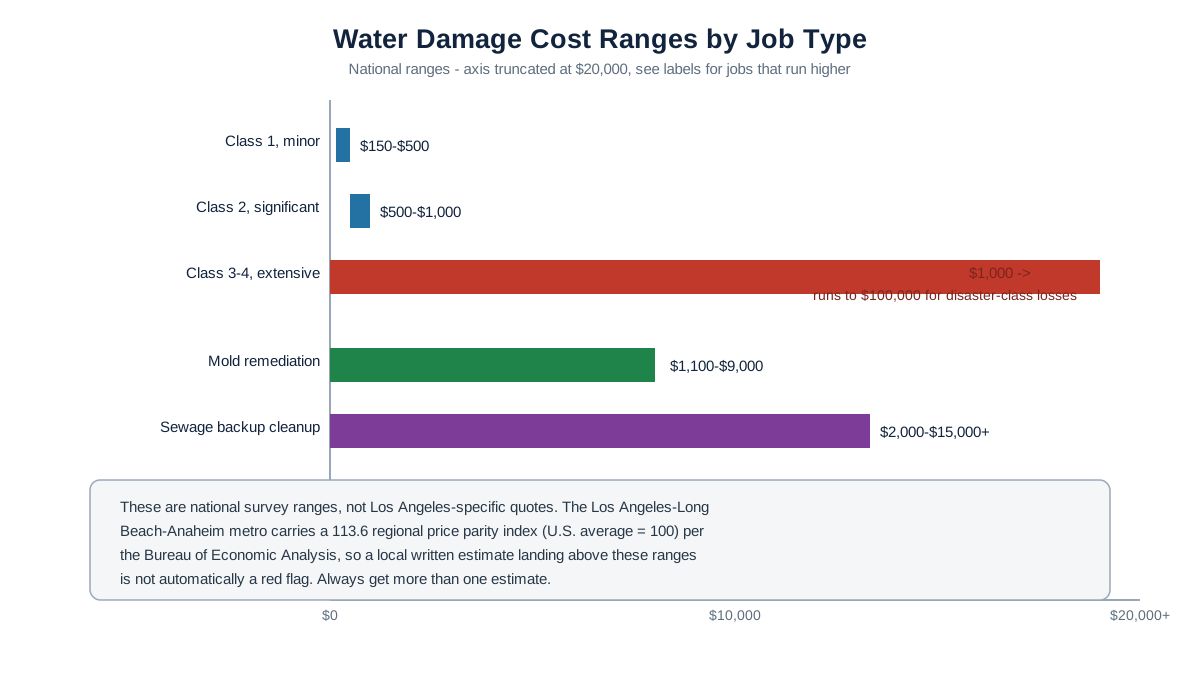
Nobody publishes a Los Angeles-specific dollar figure for this work, and anyone who quotes you a fixed local number sight unseen is guessing. What we can give you is the national range these jobs actually land in, from multiple 2025-2026 cost surveys, plus a way to think about where LA typically falls in that range.
Job type
Typical range
What moves the price
Source
Water damage restoration, overall
$1,200 – $6,369
Category of water, square footage, how long it sat
HomeAdvisor, HomeGuide, Fixr, Today's Homeowner
Class 1, minor (small area)
$150 – $500
Limited to one material, little absorption
HomeGuide, Today's Homeowner
Class 2, significant (whole room)
$500 – $1,000
Carpet, pad, and lower-wall wicking
HomeAdvisor, Fixr, Today's Homeowner
Class 3-4, extensive to disaster
$1,000 – $100,000
Full-room saturation from overhead, or a structural/flood event
National cost-survey ranges for common water damage jobs, aggregated from HomeAdvisor, HomeGuide and Fixr. How we got these numbers: the range in each row spans the low and high figures reported across four national cost-survey publishers — HomeAdvisor, HomeGuide, Fixr and Today's Homeowner — so one outlier estimate doesn't set the number. The one local data point we do have is the Los Angeles-Long Beach-Anaheim metro's regional price parity index of 113.6 against a U.S. average of 100, from the Bureau of Economic Analysis: prices here run roughly 14% above the national baseline. A written local estimate that lands in the upper half of these ranges, rather than the bottom, is not automatically a red flag; get more than one estimate anyway. For a deeper breakdown by material and region, see our full water damage restoration cost guide.
Insurance and Claims for Water Damage in California
A standard HO-3 homeowners policy generally covers water damage that's sudden and accidental (a pipe that bursts without warning, a water heater that fails, a washing machine hose that blows), but it typically excludes water that seeps in gradually from a slow leak you should have caught, and it always excludes flood: rising water from outside the structure, whether from a storm or a channel overflowing. That exclusion matters here, given the county's Very High riverine and coastal flood ratings; covering that specific risk takes a separate National Flood Insurance Program policy, and the cleanup that follows, flood damage restoration after an actual flood, gets filed as an NFIP claim rather than a standard homeowners one.
California's insurance market is regulated by the California Department of Insurance (CDI), which licenses adjusters and investigates complaints against carriers. If a claim gets denied or lowballed, CDI is the agency to escalate to, not the contractor and not the adjuster's manager. Nationally, the Insurance Information Institute reports the average water-damage-and-freezing claim runs about $13,954, and FEMA notes that just one inch of floodwater can cause roughly $25,000 in damage. Those numbers are worth knowing before you decide whether a small loss is even worth filing, since a claim can affect your renewal rate regardless of size.
Document everything before cleanup starts: date-stamped photos of standing water and the source, a written inventory of damaged items, and receipts for any emergency mitigation you pay out of pocket (most policies reimburse this if you kept receipts and acted reasonably). A company adjuster works for the insurer and evaluates the claim on the insurer's behalf; a public adjuster is a licensed professional you hire, usually for a percentage of the settlement, to advocate for a larger payout on complex or disputed losses. For a straightforward burst-pipe claim, most homeowners don't need one; for a Class 4 disaster claim running into five figures, it's worth a call to at least ask what one would cost. See our water damage insurance claims guide and the California water damage hub for more detail than fits on this page.
How to Choose a Water Damage Company in Los Angeles
California requires a Contractors State License Board (CSLB) license for anyone doing repair or reconstruction work worth $1,000 or more, work that needs a permit, or work done with employees, which covers almost every real water damage company job once you're past a same-day extraction. Ask for the license number and check it yourself on the CSLB's public lookup before you sign anything; that step alone screens out most of the operators who show up, extract water, and disappear. There's a wrinkle specific to this state worth knowing: California has no state-issued mold license or state mold-exposure standard (the state's public health department concluded in 2005 that the science didn't support one and has held that position since), so mold remediation is regulated as general contracting rather than its own licensed trade, and a written estimate from a properly CSLB-licensed contractor is your main protection.
Beyond the license number, look for IICRC certification: the S500 water damage restoration standard and, where relevant, the S520 mold remediation standard, along with proof of general liability insurance, and a written estimate that itemizes equipment, labor, and material separately rather than one lump "mitigation" line. A red flag worth walking away from: anyone who asks you to sign an insurance-assignment document before they've even given you a category and class assessment, or who won't put a start date and a daily-rate stop point in writing. If the water is still active and you need a restoration company that serves Los Angeles right now, 888-407-9931 is a reasonable place to start describing the job.
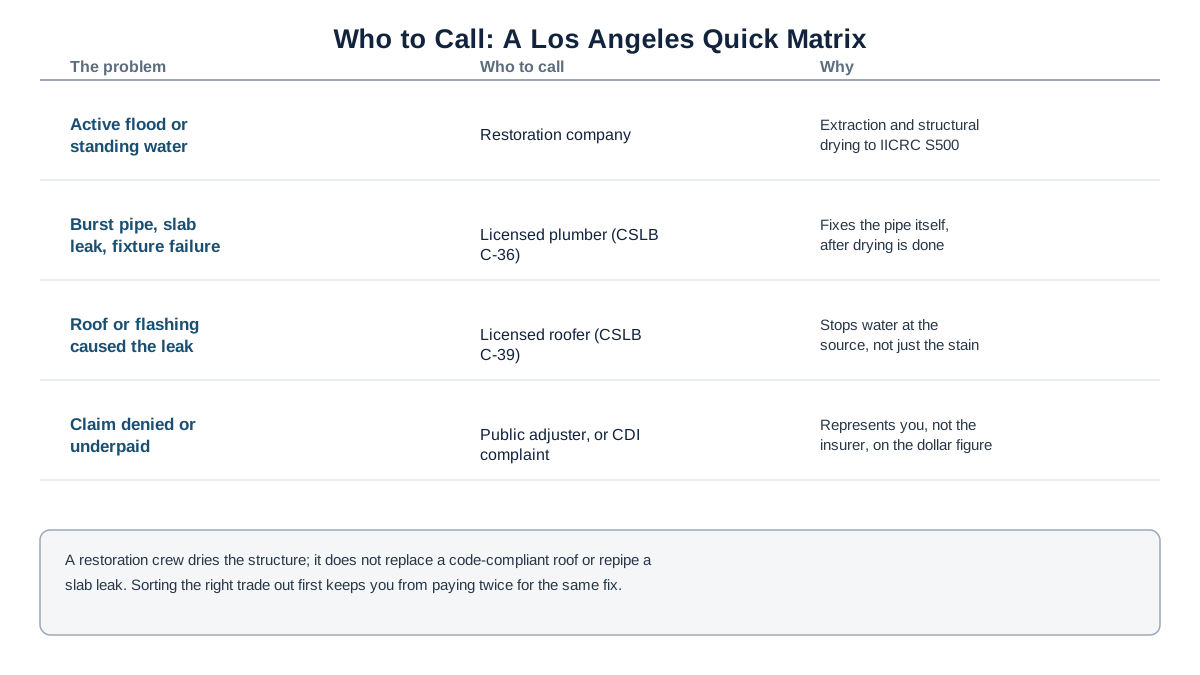
The right first call depends on what actually caused the water, not just where it ended up. Not every problem needs the same trade. A slab leak needs a licensed plumber (CSLB C-36) to fix the pipe itself, even after a restoration crew dries the structure. A failing roof needs a C-39 roofing contractor. A denied or underpaid claim is a job for a public adjuster, not a second contractor's opinion. Sorting that out up front keeps you from paying one crew to fix a problem a different trade actually caused.
What You Can Safely Handle Yourself — and Where It Ends
You can extract standing water with a wet/dry vac, run fans, and pull up a small, already-ruined area rug without calling anyone. The EPA's own threshold for do-it-yourself mold cleanup is under about 10 square feet (roughly a 3-by-3-foot patch) with gloves, eye protection, and the material bagged and removed, not scrubbed and left. Past that size, or if mold keeps returning after you clean it, professional remediation is the right call, not a bigger bottle of cleaner.
Never run a wet/dry vac, a fan, or any plugged-in tool anywhere near standing water until you've confirmed the circuit is dead at the breaker — electrocution, not mold, is what actually kills people in a flooded room. That's the one rule on this page worth remembering above every other one.
Past the electrical question, the honest limits are about materials, not effort. You generally can't out-dry a soaked subfloor, insulation behind a wall, or anything that's been wet more than 48 hours with a box fan and an open window. That's exactly the gap professional structural drying equipment — commercial-grade dehumidifiers and air movers, run and monitored daily — is built to close. Our guide to drying out water damage yourself walks through the full decision tree in more depth than fits here.
Preventing Water Damage in a Dry Climate That Floods Anyway
Basement waterproofing here usually means a sunken room, a garage, or a lower-level addition rather than a true basement, but the fix is the same: grading that slopes away from the foundation, a functioning perimeter drain if one exists, and a sump pump with a battery backup for the handful of storms a year that actually deliver LA's 14.05 annual inches of rain in short bursts rather than spread evenly across twelve months. Clean gutters and check roof flashing before the wet season starts, not after the first leak shows up — handle the gutters yourself from a ladder on solid, level ground, but leave the roof itself, especially after a storm, to a licensed roofer (CSLB C-39); a damp or damaged roof deck is a fall risk, not a weekend project. Roof flashing rarely fails all at once — it's usually cumulative sun damage that finally shows itself the first time real rain puts it to the test.
Two hazards specific to this county compound each other in ways a generic prevention checklist misses. First, the same FEMA index that rates wildfire risk Very High here also rates riverine and coastal flooding Very High: burned hillsides shed water and debris faster than vegetated ones, so a property below a recent burn scar faces a real storm damage restoration risk even in a normal rain year. Second, with the county's earthquake score sitting at the maximum 100, a water heater that isn't strapped to the wall studs is a two-disaster risk: a moderate shake can tip it, snap the connections, and start a flood on top of whatever else just happened. Strapping a water heater is inexpensive; unstrapping one after the fact is not.
A few habits carry real weight: replace rubber supply hoses on washing machines and dishwashers with braided stainless steel every five to ten years, know where your main shutoff is before you need it in the dark, and walk your attic and crawl space once a year looking for the slow stains that turn into a much bigger claim if nobody catches them early.
Frequently asked questions
How long does water damage restoration take?+
A straightforward Category 1 job usually finishes structural drying in three to five days, based on daily moisture monitoring against the IICRC S500 standard. A Category 3 or Class 4 loss (sewage, a major flood, or extensive structural damage) can take two to three weeks to dry before reconstruction even starts, and rebuild work adds more time on top of that.
How much does water damage restoration cost in Los Angeles?+
National cost surveys put the typical range at $1,200 to $6,369 per job, with minor Class 1 drying under $500 and Class 4 disaster-level losses running $20,000 to $100,000. No publisher tracks a Los Angeles-specific figure, so treat these as a starting point and get a written local estimate before comparing bids.
Does homeowners insurance cover water damage in California?+
A standard HO-3 policy generally covers sudden, accidental water damage (a burst pipe or failed appliance) but excludes gradual leaks and flood from outside the structure. Flood coverage requires a separate NFIP policy. Check your declarations page or ask your agent directly, since exact terms vary by carrier.
What water damage is covered by insurance?+
Sudden losses are typically covered: a pipe that bursts, a water heater that fails, an appliance hose that blows. Damage from a slow, unaddressed leak, from poor maintenance, or from an outside flood is typically excluded from a standard homeowners policy and needs separate flood coverage or a maintenance-related claim isn't covered at all.
Should I make an insurance claim for water damage?+
It depends on the size of the loss relative to your deductible and how a claim might affect your renewal rate, so filing isn't automatically the right move for a small loss. Document everything regardless, then weigh the repair cost against your deductible before deciding; a public adjuster can help on larger, disputed claims.
Who fixes water damage?+
A restoration company handles extraction and structural drying under the IICRC S500 standard; a licensed plumber (CSLB C-36 in California) repairs the pipe or fixture that caused it; a roofer (CSLB C-39) fixes a roof-caused leak. Most jobs need at least two of these, in sequence, not just one.
Can water damage be fixed?+
Almost always, yes — drywall, flooring, and framing can typically be dried, repaired, or replaced through standard restoration and reconstruction work. The real question is cost and time, not possibility: a Category 3 or Class 4 loss can be fixed, it just costs more and takes longer than a small Category 1 leak.
How do I repair water damage on a ceiling?+
First find and stop the source above the stain (a roof leak, an upstairs bathroom, or a condensate line) because repainting over an active leak just hides it temporarily. Once dry, a small stain can often be primed and painted; sagging or soft drywall needs to be cut out and replaced, not patched over.
Is water damage repair tax deductible?+
Sometimes, if the loss is federally declared as a disaster and exceeds certain thresholds under casualty-loss rules, but this varies by tax year and individual situation. This isn't tax advice. Check current IRS casualty-loss guidance or talk to a tax professional about your specific claim before assuming a deduction applies.
What does a water damage restoration company do?+
It assesses the water's category and the structure's damage class, extracts standing water, sets up structural drying equipment (air movers and dehumidifiers), monitors moisture daily until materials reach a dry standard, and coordinates or performs the reconstruction that follows, the sequence set out in the IICRC S500 standard.