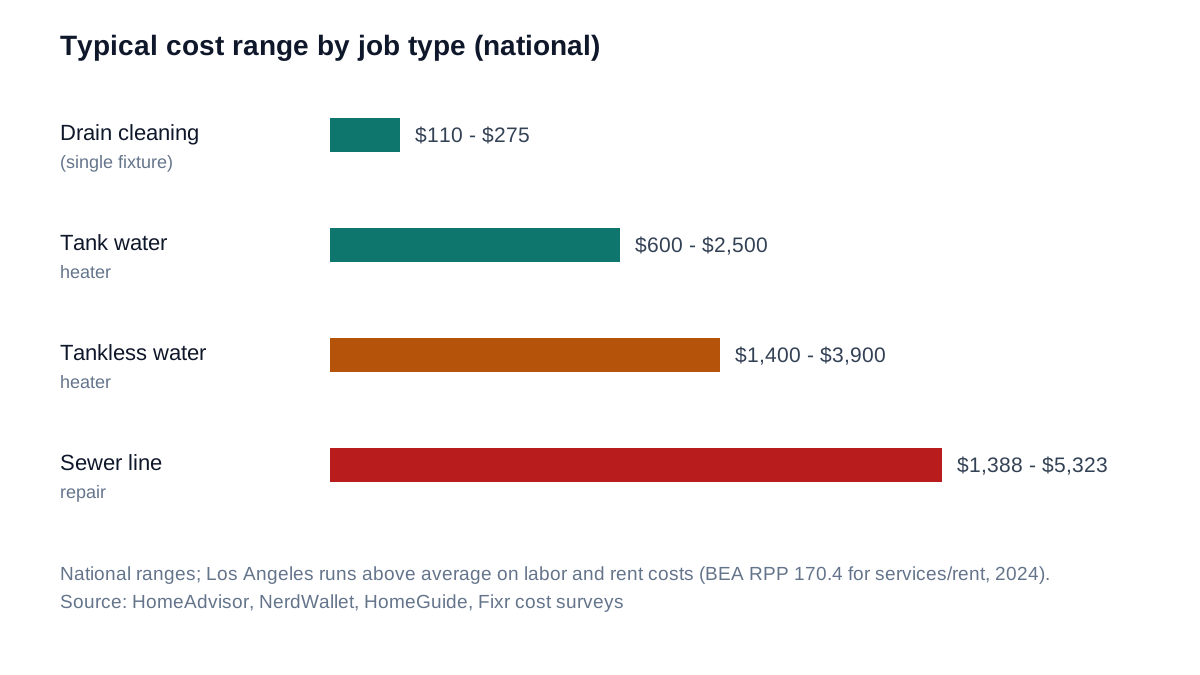
A plumber in Los Angeles typically charges $600 to $2,500 for a tank water heater, $147 to $352 for drain cleaning, and $1,388 to $5,323 for sewer line repair. Shut off water at the main, cut power to wet circuits, and call a licensed California plumber the same day. Los Angeles County carries a Very High FEMA earthquake and flood risk, so fast action matters.
Los Angeles doesn't get the kind of weather that makes a plumber's phone ring the way a Gulf Coast hurricane or a Chicago deep freeze does. What it gets instead is 3,878,704 people packed into a city built largely on slab foundations and aging copper supply lines, inside a county that FEMA rates a Very High earthquake risk — the kind of ground movement that stresses rigid pipe joints long before anyone notices a crack. A slab leak under a 1960s ranch in Mar Vista, a water heater that finally gives out in a Highland Park garage, a kitchen line backing up into a 1920s duplex in Boyle Heights: the causes are ordinary, but the county's hazard profile and the city's housing stock shape which ones show up and how bad they get.
This page covers what to do in the first hour of a plumbing emergency, why Los Angeles and Los Angeles County produce the specific problems they do, what the real cost ranges look like based on national cost surveys, how California's contractor-licensing and insurance rules work, and how to separate a licensed plumber who'll do the job right from a truck with a magnetic sign on the door. Every figure below traces to a cost survey, FEMA, NOAA, or California state agency named in the sources at the bottom of this page.
What to Do in the First Hour When a Pipe Lets Go
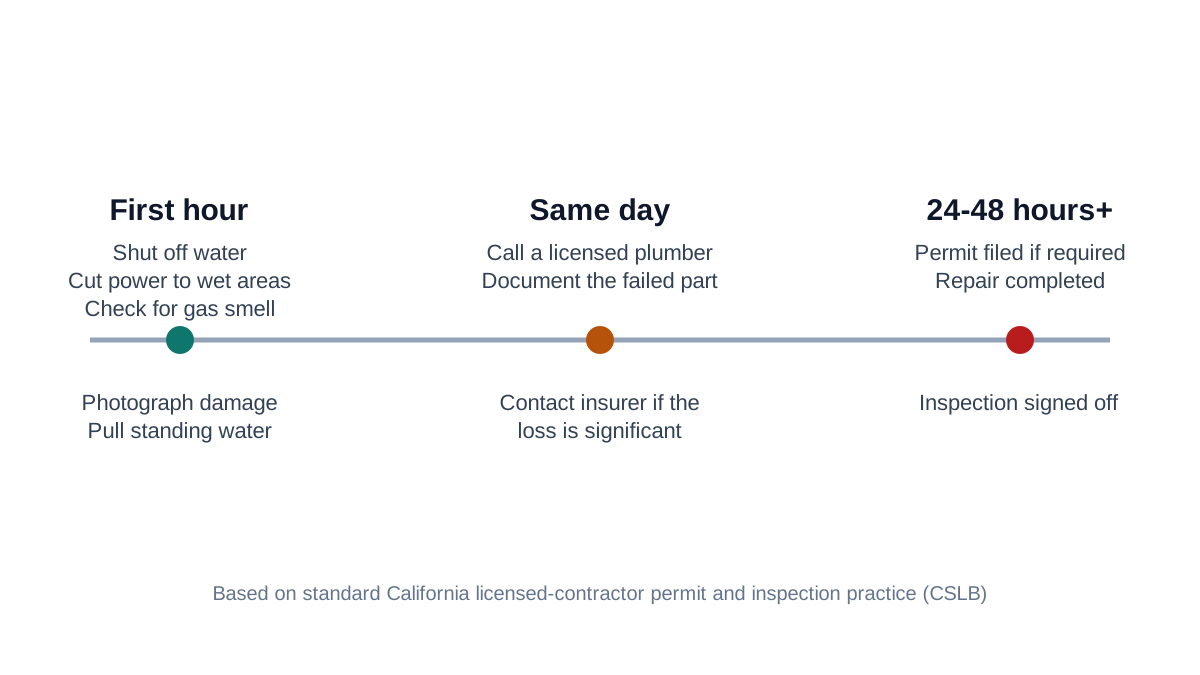
What you do in the first hour decides how much of the repair bill you avoid, and it's the same first move no matter what failed. Find your main shutoff before you need it. For most single-family homes in Los Angeles, it's near where the supply line enters the house, often by the water meter at the curb or in a utility area along the side of the house; for a condo or apartment, it may be a unit-level valve or a building-wide shutoff the property manager controls. A running toilet or a dripping faucet can wait until morning. A supply line that's let go under a sink cannot.
Shut off the water at the main, or at the fixture's own stop valve if you can reach it without wading through standing water.
Cut power at the breaker to any outlet, switch, or fixture sitting in or near water; never mix electricity and standing water.
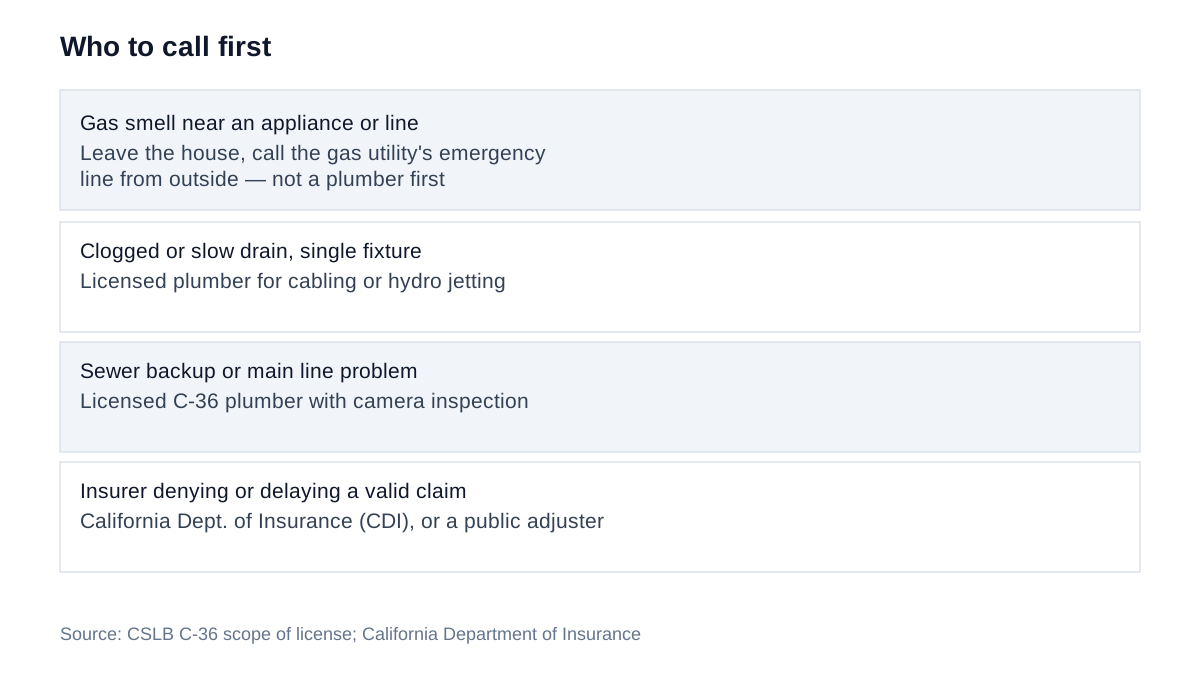
If you smell gas, a rotten-egg odor near an appliance or line, leave the house immediately, don't flip a switch or light anything, and call the gas utility's emergency line from outside; never try to locate or repair a gas leak yourself.
Photograph the damage and the failed part before you move or repair anything, for your own records and any insurance claim.
Pull standing water with towels or a wet-dry vacuum and move rugs or boxes off wet flooring.
Call a licensed plumber the same day, even if the leak looks minor. A slow leak behind a wall doesn't announce itself until the drywall already has to come out.
If the water's still coming in and you can't find the shutoff, call 888-854-0126 and describe what you're seeing — a licensed plumber who serves Los Angeles can often talk you through locating a shutoff while someone's on the way. Emergency plumber and 24 hour plumber searches spike hardest for exactly this scenario: a failure that can't wait until Monday.
The first hour, the same day, and the 24-48 hours after that: what to do and when.
Why This Happens in Los Angeles and Los Angeles County
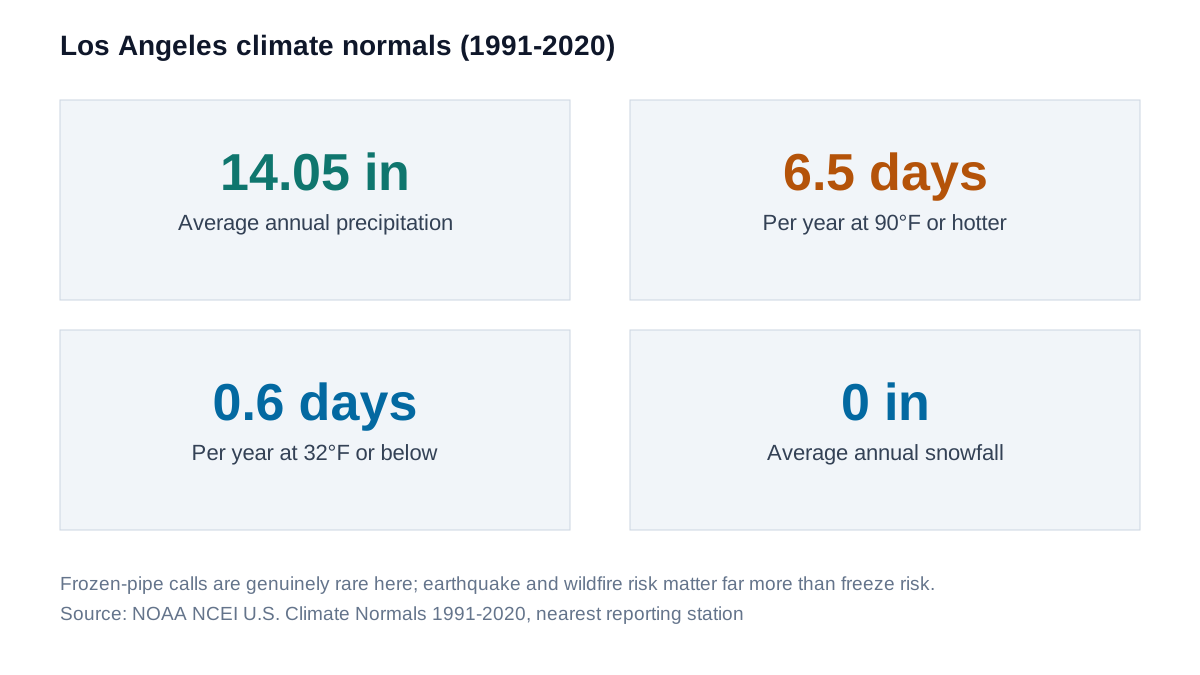
Start with the numbers NOAA keeps on this city. Los Angeles averages 14.05 inches of precipitation a year, virtually none of it as snow, with a mild July average high of 78°F and a January average low of 48°F. The city logs an average of just 6.5 days a year at 90°F or hotter and a startling 0.6 days a year at or below freezing. That last number matters for plumbing specifically: burst-pipe calls tied to hard freezes are genuinely rare here, unlike Dallas or Atlanta, where an occasional deep cold snap catches exposed lines off guard every few winters.
Why frozen-pipe calls are rare in Los Angeles, in four numbers (source: NOAA NCEI).
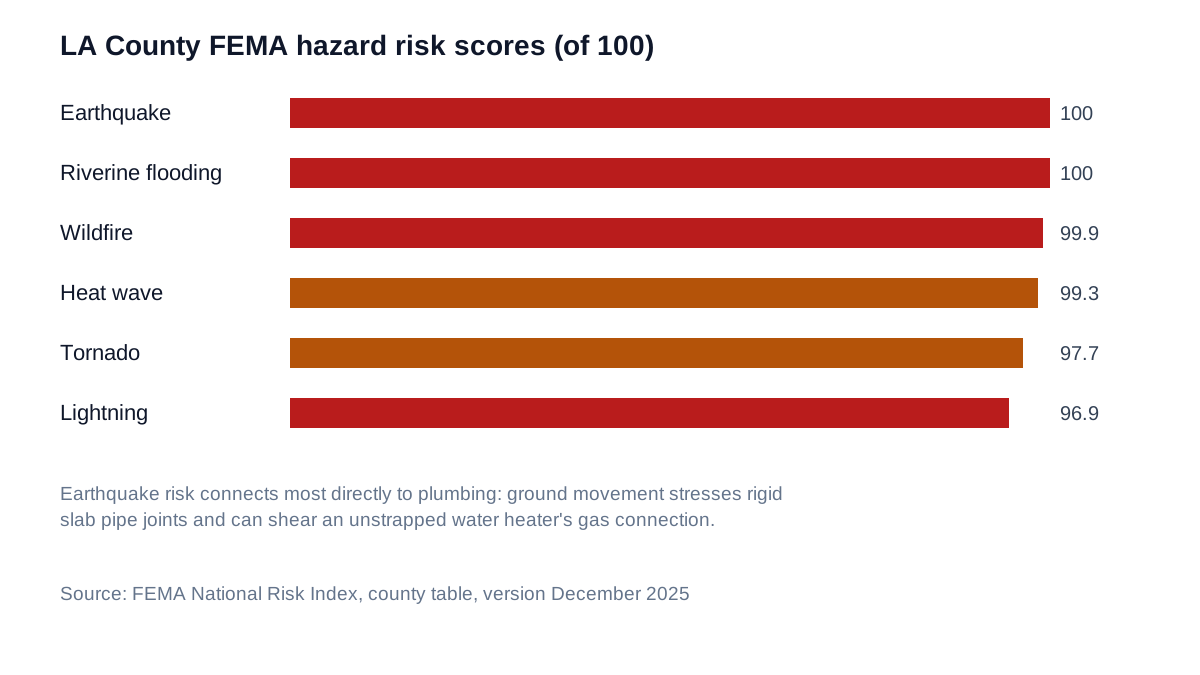
What replaces freeze risk on FEMA's National Risk Index is almost everything else. Los Angeles County's overall NRI rating is Very High (score 100 of 100), and several specific hazards drive that: riverine and inland flooding rates Very High (score 100, modeled at roughly four events a year county-wide), earthquake rates Very High (score 100), wildfire rates Very High (score 99.9), and heat wave rates Relatively High (score 99.3). Even tornado risk rates Relatively High here (score 97.7), genuinely surprising for a city that isn't known for twisters, and a reminder that FEMA's NRI scores relative risk against other U.S. counties, not a forecast of frequent funnel clouds. Plumbing conditions vary by city across California, and Los Angeles County's mix of hazards is its own combination.
Six of LA County's FEMA hazard ratings, all Relatively High or Very High (source: FEMA NRI).
Earthquake risk is the one that connects most directly to plumbing. A lot of the city's housing sits on slab foundations, and ground movement — even movement too small to notice — stresses the rigid joints where a slab-set copper or galvanized line meets a fixture, which is a big part of why slab leak repair is such a common search term here: the first sign is usually a warm patch on the floor or an unexplained jump in the water bill, not standing water. A water heater that isn't strapped to wall studs is also a real seismic hazard, not just a plumbing inconvenience: a tank that tips can shear its own gas line.
The Plumbing Problems Angelenos Search For Most
Type "plumber Los Angeles" or "plumbing Los Angeles" into Google from anywhere between the Valley and the harbor, and the results split into national franchises and independent local crews. The volume behind these searches is enormous: plumber alone draws hundreds of thousands of searches a month nationally, and the specific phrasing people use tells you a lot about what's actually going on in their house.
Emergency, after-hours and same-day calls
Emergency plumber, 24 hour plumber, same day plumber, after hours plumber, weekend plumber, and emergency drain cleaning are all searched by someone dealing with an active problem right now, not someone comparison-shopping. A real emergency line should have a live dispatcher, not a voicemail that says "we'll call you back," and should give an honest arrival window instead of a vague promise. Same-day service is realistic for most residential calls in Los Angeles; after a major storm system moves through the county and several households call in within the same few hours, response times can slip.
Clogged, slow and overflowing fixtures
Clogged toilet repair, clogged drain repair, overflowing toilet, toilet not flushing, shower drain clogged, kitchen sink clogged, and slow draining sink cover the bulk of routine service calls. Hair and soap scum are the usual culprits in a shower drain; grease and food particles clog a kitchen sink; a toilet that won't flush or keeps running usually comes down to a worn flapper, a misaligned float, or a partial blockage in the trap. Running toilet repair and dripping faucet repair are both jobs a lot of homeowners can do themselves with a $10 part, a fact plumbers won't hide from you, because it's the emergency calls and the diagnosis-heavy jobs that actually need a license. Moen faucet repair, Kohler toilet repair, and Delta faucet repair searches usually mean a specific cartridge or fill-valve part has failed; our brand-specific fixture repair guide covers what's replaceable versus what means a new fixture. Low water pressure repair is a different animal from a single slow drain: if it's just one fixture, the aerator or cartridge is probably clogged with mineral scale, but if it's the whole house, the cause is more likely a failing pressure regulator or, in older sections of the housing stock still running galvanized supply pipe, decades of internal corrosion narrowing the pipe from the inside.
Water heaters and no hot water
Water heater repair, water heater replacement, water heater leaking, and no hot water are searched constantly because a water heater has a hard life and usually fails without much warning. Sediment builds up in the tank over years, the anode rod wears out, and one day the pilot won't relight or the tank starts weeping at a seam. Rinnai tankless water heater repair, Rheem water heater repair, AO Smith water heater repair, Navien tankless repair, and Bradford White water heater repair are brand-specific versions of the same search, usually run by someone who's already found the nameplate on their unit. Tankless units solve the "ran out of hot water" problem but come with their own service needs; periodic descaling in a hard-water area matters more than most owners realize. See our tankless water heater problem guide and brand repair guide for the differences.
Leaks, bursts and slab leaks
Leak detection service, pipe burst under sink, burst pipe repair, main water line leak, slab leak repair, and frozen pipe repair all describe water going somewhere it shouldn't. A pipe burst under a sink is usually a supply line or a P-trap connection failing under normal water pressure, not dramatic, but it can dump gallons onto a cabinet floor in minutes. A main water line leak, the line between the street meter and the house, often shows up as a wet patch of lawn or a meter that keeps spinning with every fixture in the house off. Frozen pipe repair calls are genuinely uncommon given how few days a year the county sees freezing temperatures, but an occasional hard cold snap can still catch an exposed exterior line off guard. Gas line repair is its own category and the one where licensing matters most. California's C-36 plumbing contractor classification specifically covers gas piping from the utility meter to gas appliances, and this is not a category to shop on price.
Drains, sewer lines and odors
Drain cleaning, rooter service, hydro jetting, sewer line repair, sewer backup repair, and smelly floor drain are searched by people dealing with something further down the line than a single fixture. A smelly floor drain is often just a dried-out trap. The P-trap under a floor drain holds a small amount of water specifically to block sewer gas, and if the drain hasn't been used in a while, that water evaporates and the smell comes right up through it; running water down it for a minute usually fixes it without a service call. A real sewer backup, where multiple fixtures back up at once or water comes up through a floor drain when you run the washing machine, points to a blockage or a break further down the main line and needs a professional camera inspection, not a bottle of drain cleaner. Garbage disposal not working and sump pump installation round out this group. A jammed disposal is often a five-minute reset with the hex key that came with the unit, while a sump pump is less common in Los Angeles than in wetter climates but still shows up in homes with below-grade spaces in low-lying areas.
Finding and paying for the right company
Plumber, plumbing company, plumbing services, licensed plumber, local plumber, commercial plumber, and commercial drain cleaning are the searches people run once they've decided to hire someone rather than fix it themselves, and best plumber is the version run by someone who's been burned before. Water heater replacement cost, drain cleaning cost, and sewer line repair cost are the planning-stage searches, the ones this page is built to actually answer, in the section below, with real numbers instead of a lead-generation form.
Matching the situation to the right first call, from a gas leak to a disputed claim.
What the Work Actually Involves
California's adopted plumbing rules sit inside the 2025 California Building Standards Code (Title 24), which the state's Building Standards Commission based on the 2024 model codes from the ICC and IAPMO, effective January 1, 2026. In practice, that means the pipe sizing, venting, and materials a plumber uses in a Los Angeles home follow a code cycle updated every three years, not a plumber's personal preference. A permit and inspection are required for most work that alters a home's plumbing system, replacing a water heater, rerouting a supply line, or repairing a section of sewer main, while very minor repairs under California's contractor-licensing threshold may not need one. Whether a specific job needs a permit is worth confirming with your plumber or the local building department before work starts, not after.
Drain and sewer work breaks into three real methods, and which one applies changes both the job and the price. Cabling or snaking uses a rotating steel cable to punch through and break up a clog, fast and cheap, but it doesn't scrub the pipe wall clean. Hydro jetting uses high-pressure water to blast grease, roots, and scale off the full interior of the pipe, which is why it costs more but lasts longer for a chronically slow line. A camera inspection doesn't clear anything by itself, but it's how a plumber confirms what's actually wrong, root intrusion, a bellied section, a collapsed joint, before recommending a fix instead of guessing.
Method
Best for
Typical cost range
Source
Cabling / snaking
A single clogged fixture or a straightforward main-line clog
$100 – $500
Fixr, HomeGuide
Hydro jetting
Grease buildup, root intrusion, or a line that clogs repeatedly
$250 – $1,400
HomeGuide, Fixr
Video camera inspection
Diagnosing the actual cause before recommending a repair
$100 – $800
HomeAdvisor, Fixr
For a repair rather than just clearing, a modern sewer line doesn't always mean digging up the yard. Trenchless methods, cured-in-place pipe (CIPP) lining or pipe bursting, pull a new liner or pipe through the old one from two access points instead of excavating the whole run, which matters a great deal in a dense Los Angeles neighborhood with mature trees and a driveway sitting right over the line.
What It Costs in Los Angeles
Nobody in this business can honestly quote a single "Los Angeles price" over the phone without seeing the job, and any company that does is guessing at your expense. What follows are national ranges pulled from independent cost surveys, plus the real reason to expect the higher end of them here: the U.S. Bureau of Economic Analysis prices the Los Angeles-Long Beach-Anaheim metro area at 113.6 on its Regional Price Parity index for all goods and services combined (U.S. average = 100, 2024 data), and at a striking 170.4 for services tied to housing and rent specifically, one of the highest such readings of any major metro in the country. Labor-heavy trade work like plumbing tracks closer to that services number than to the overall index, which is the honest reason a Los Angeles quote tends to land above the midpoint of a national range rather than at it.
Job type
Typical range
What moves the price
Source
Water heater replacement, tank
$600 – $2,500
Tank size, gas vs. electric, permit needs
NerdWallet, HomeAdvisor
Water heater replacement, tankless
$1,400 – $3,900
Gas line upsizing, venting changes, unit capacity
NerdWallet, HomeAdvisor
Water heater replacement, national average
$881 – $1,825 (avg. $1,347)
Type installed, labor, and expansion tank if required
HomeAdvisor
Drain cleaning, single fixture
$110 – $275
Access, clog location, method used
HomeAdvisor, HomeGuide
Drain cleaning, overall average
$147 – $352 (avg. $246)
Number of fixtures affected, method
HomeAdvisor
Main sewer line cleaning
$175 – $600
Snaking vs. hydro jetting, line length
HomeGuide, Fixr
Sewer line repair or replacement
$1,388 – $5,323 (avg. $3,319)
Trenchless vs. open trench, linear footage, depth
HomeAdvisor
Trenchless repair, per linear foot
$60 – $250
CIPP lining vs. pipe bursting, access points
HomeAdvisor
Sewer video inspection
$100 – $800
Line length, whether it's a standalone visit
HomeAdvisor, Fixr
The pack of cost surveys behind this table has no Los Angeles-specific number for gas line repair, sump pump installation, slab leak repair, garbage disposal replacement, or individual faucet and toilet repairs, and for those, the honest answer is that price depends on accessibility, pipe material, and whether a permit is required, and a written, itemized local estimate is the only way to get a real figure. One more local wrinkle worth knowing before you sign anything: California generally taxes labor charged for producing or fabricating tangible personal property, but applies different rules to labor performed on real property like a house, per the state tax agency's guidance. That's exactly why a legitimate estimate should break out labor from materials rather than quote one lump number.
National cost ranges by job type, before Los Angeles's above-average labor costs are factored in.
Insurance and Claims in California
A standard HO-3 homeowners policy typically covers plumbing damage that's sudden and accidental: a supply line that bursts without warning, a water heater that fails and floods a garage. It typically excludes damage from a problem that developed gradually and should have been caught, such as a slab leak that ran for months before anyone noticed the water bill climbing, and it treats sewer or drain backup as a separate line item that many policies don't cover automatically. Check for a sewer backup endorsement specifically, because its absence is one of the more common coverage gaps homeowners discover only after a claim.
Typically covered
Typically excluded or limited
Sudden pipe burst or supply-line failure
Gradual leaks the homeowner should have caught
Water heater that fails without warning
Wear-and-tear failures from deferred maintenance
Resulting drywall, flooring, and cabinet damage
Sewer or drain backup without a specific endorsement
Emergency mitigation costs after a covered loss
The cost of the failed part or pipe itself, in most policies
If you're filing a claim in California, the California Department of Insurance (CDI) is the state regulator to contact if an insurer is delaying unreasonably or handling a claim in bad faith. Before you call, build a documentation file: photos and video of the damage before cleanup, the make and approximate age of the failed part, any invoice from the plumber who diagnosed it, and a written account of when you first noticed the problem. Your insurer will send its own adjuster to evaluate the claim; you're also entitled to hire an independent public adjuster, who works for you rather than the carrier, typically for a percentage of the settlement. For a small, clear-cut claim it usually isn't worth the fee — for a large or disputed loss involving structural repair, a second opinion can be worth the cost.
How to Choose a Plumber in Los Angeles
Any plumber doing more than the most minor fix in Los Angeles should carry a current Contractors State License Board (CSLB) C-36 Plumbing Contractor license. Under California law, a contractor's license is required for anyone who takes on work valued at $1,000 or more in labor and materials combined, work that requires a building permit, or work performed using employees, a threshold most real jobs clear the moment a water heater, a sewer repair, or a re-pipe is involved. The C-36 classification specifically covers water supply and waste systems, gas piping from the meter to appliances, and water heating equipment, which is why gas line work in particular should never go to anyone without it. Verify a specific license number directly with the CSLB before signing anything; a license lookup takes less than a minute and tells you whether the license is active, what classification it covers, and whether there's a history of disciplinary action.
Beyond the license, ask for proof of general liability insurance and workers' compensation coverage. If a technician is injured on your property and the company doesn't carry workers' comp, that liability can land on you as the homeowner. A written estimate before work starts should spell out the scope of the job, the parts being used, whether a permit is included, labor separated from materials, and payment terms. Red flags worth walking away from: a company that can't produce a current CSLB license number, one that demands full payment in cash before starting, one that pressures you to skip a permit on a job that clearly needs one, or one that won't put the scope of work in writing. If you want to talk through your specific situation before committing to anyone, you can call 888-854-0126 to reach a licensed plumber that serves Los Angeles and ask these same questions directly. Our full guide to choosing a licensed plumber goes deeper on the red flags.
What You Can Handle Yourself, and Where That Ends
You can safely handle a real share of routine plumbing yourself. Plunging a toilet, replacing a worn flapper or fill valve on a running toilet, snaking a single slow drain with a hand auger, tightening a loose supply-line fitting under a sink, and resetting a jammed garbage disposal with its hex key are all reasonable weekend jobs with parts that cost less than a service call. Running toilet repair and dripping faucet repair are the two searches on this page most likely to end with a homeowner fixing it themselves in under half an hour.
Where DIY should stop: anything involving gas piping is a licensed-contractor job in California, full stop. The risk isn't hypothetical, and the C-36 license exists specifically because gas work done wrong can kill someone in the house or next door. Add to that list any work that opens a wall or slab, a suspected slab leak (which needs leak-detection equipment, not a guess), a sewer line problem beyond a single fixture, and anything that requires a permit under the state building code. If you're not sure which side of that line a job falls on, that uncertainty is itself the answer — call a licensed plumber and ask before you start cutting into anything.
Preventing Plumbing Problems in an Earthquake and Wildfire Climate
Prevention here looks different than it would in a place that floods every spring or freezes every winter. Los Angeles County's FEMA hazard profile rates earthquake, wildfire, and riverine flooding as Very High and heat wave as Relatively High. None of them are traditional "plumbing" risks on their face, but each one shapes what a smart homeowner checks. Earthquake risk is the big one: make sure your water heater is properly strapped to wall studs (an unstrapped tank can tip and shear its own gas connection), and know exactly where your main shutoff valve is and keep a wrench near it. During a significant quake, a cracked line you can shut off in thirty seconds is a repair; one you can't find for an hour is a flood.
For the flooding side, the county's Very High riverine and inland flooding rating means storm-driven surges through older sewer infrastructure are a real, if intermittent, risk. A licensed plumber can install a backwater valve on a main line for homes in lower-lying areas that have had backup problems before. On the routine-maintenance side that applies everywhere: replace rubber washing-machine hoses with braided stainless-steel ones every five years regardless of how they look, have an aging water heater inspected before it fails rather than after, and consider a leak-detection sensor near the water heater and under sinks — it costs less than a single service call and can flag a slow leak hours or days before you'd notice the water bill.
Frequently asked questions
How much does it cost to hire a plumber in Los Angeles?+
National cost surveys put drain cleaning around $147 to $352, a tank water heater replacement between $600 and $2,500, and sewer line repair between $1,388 and $5,323, with the exact number depending on the job. Los Angeles runs above the national average on labor and rent costs specifically, so expect the higher end of these ranges rather than the low end, and get a written, itemized estimate before work starts.
Do I need a permit to replace a water heater in Los Angeles?+
Most water heater replacements require a permit and inspection under California's adopted building code, especially when venting or gas line connections change. A licensed C-36 plumber will typically pull the permit as part of the job. If a contractor suggests skipping the permit to save time or money, treat that as a red flag rather than a favor.
How do I verify a plumber's license in California?+
Look up the license number directly with the Contractors State License Board (CSLB), which regulates the C-36 Plumbing Contractor classification statewide. The lookup shows whether the license is active, what classification it covers, and any disciplinary history. Do this before signing a contract, not after a deposit has changed hands.
Is a permit always required for plumbing work in California?+
No. California requires a licensed contractor and typically a permit for work valued at $1,000 or more in labor and materials, work that needs a permit regardless of cost, or any job using employees. Very minor repairs under that threshold, done without hired help, may not need either, but gas line work is effectively always licensed-contractor territory given the safety stakes.
Does homeowners insurance cover a burst pipe in Los Angeles?+
Usually yes, if the failure was sudden and accidental: a standard HO-3 policy typically covers a pipe that bursts without warning. It typically does not cover a slow leak that ran for weeks or months before discovery, since that falls under gradual damage most policies exclude. Sewer and drain backup often needs a separate endorsement, so check your specific policy rather than assuming.
Why do slab leaks happen so often in Los Angeles homes?+
A lot of the city's housing sits on slab foundations, and Los Angeles County carries a Very High FEMA earthquake risk rating — even minor, unnoticed ground movement stresses the rigid pipe joints embedded in a slab. The first sign is usually a warm spot on the floor or an unexplained jump in the water bill, not visible water, which is why slab leaks often go undetected longer than a supply-line leak under a sink.
What should I do if I smell gas near a plumbing fixture?+
Leave the house immediately, don't flip a light switch or light anything, and call your gas utility's emergency line from outside. Never try to locate or repair a suspected gas leak yourself. Gas piping in California falls under the C-36 plumbing contractor license specifically because a mistake here isn't a minor repair error, it's a life-safety issue.
Can I unclog a drain myself, or should I call a plumber?+
A single slow fixture is often fine to try yourself with a plunger or a hand auger. If multiple fixtures back up at once, water comes up through a floor drain, or the same drain keeps clogging every few months, that points to a problem further down the line that needs a camera inspection and possibly hydro jetting — tools most homeowners don't own and shouldn't need to.
How is hydro jetting different from snaking a drain?+
Snaking uses a rotating cable to punch a hole through a clog and restore flow quickly and cheaply. Hydro jetting uses high-pressure water to scour grease, roots, and scale off the entire interior wall of the pipe, which costs more upfront but lasts longer for a line that clogs repeatedly. A plumber who suggests jetting for a one-time simple clog may be upselling; ask why.
Is a tankless water heater worth the extra cost in Los Angeles?+
Tankless units typically cost $1,400 to $3,900 installed versus $600 to $2,500 for a tank, largely because gas line and venting upgrades are often needed. They solve running out of hot water and take up less space, but need periodic descaling to perform well long-term. Whether the extra upfront cost pays off depends on household hot-water demand and how long you plan to stay in the home.